
European larch (Larix decidua, )
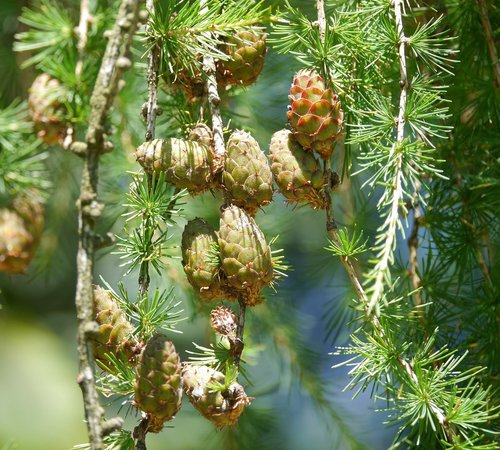
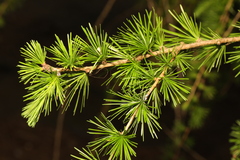
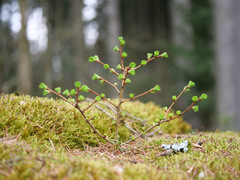
European larch (Larix decidua) is a large conifer in the Pinaceae, native to the Alps and Carpathians. This native European conifer loses all its needles each winter. Fresh green foliage returns the following spring, turning gold and then orange in fall before it drops completely.
Read moreEuropean larch and common larch


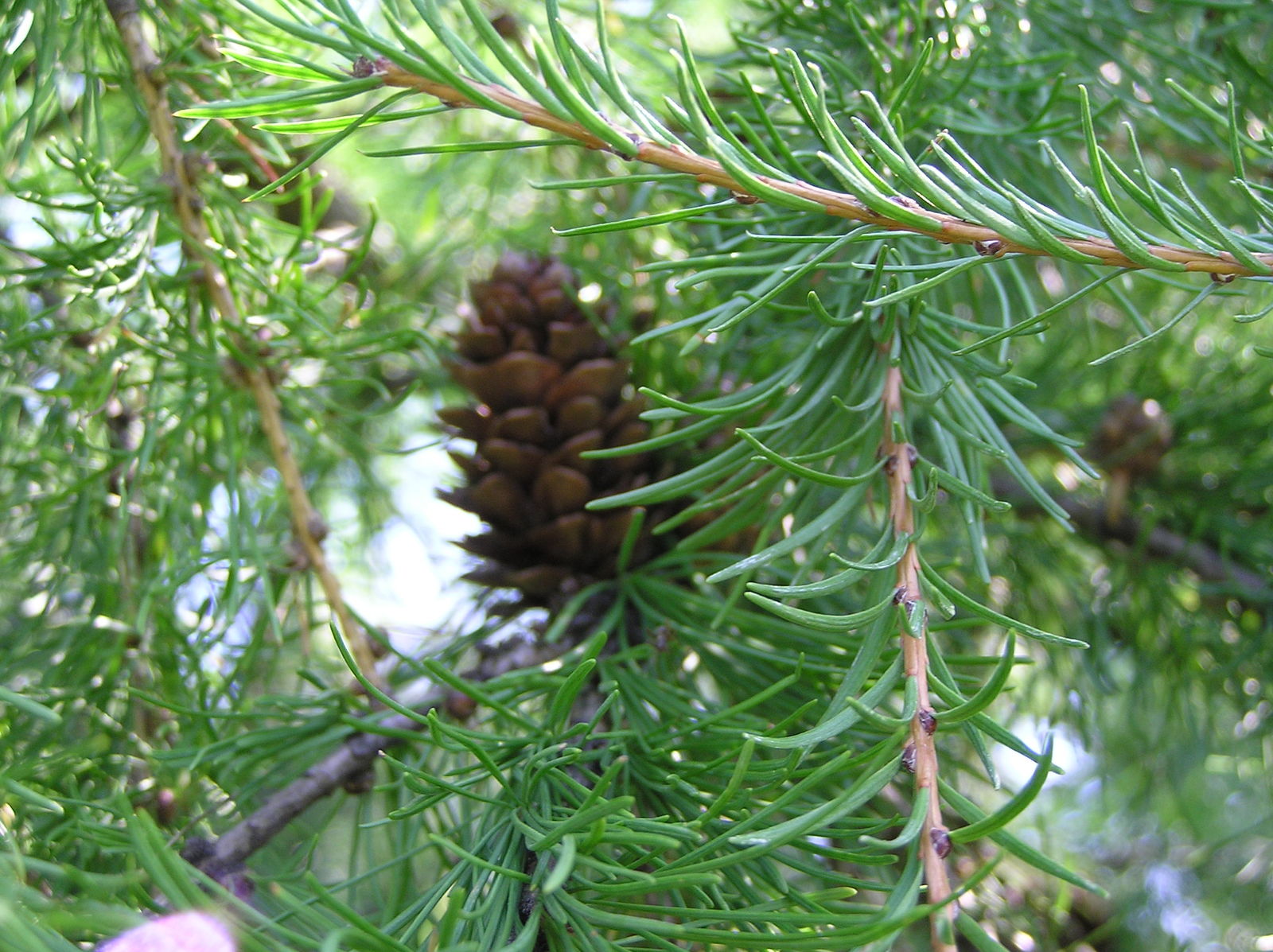
© photo
(c) reddad, some rights reserved (CC BY-NC), uploaded by reddad · cc-by-nc
Stephen James McWilliam · cc0
Wolfgang Jauch · cc-by
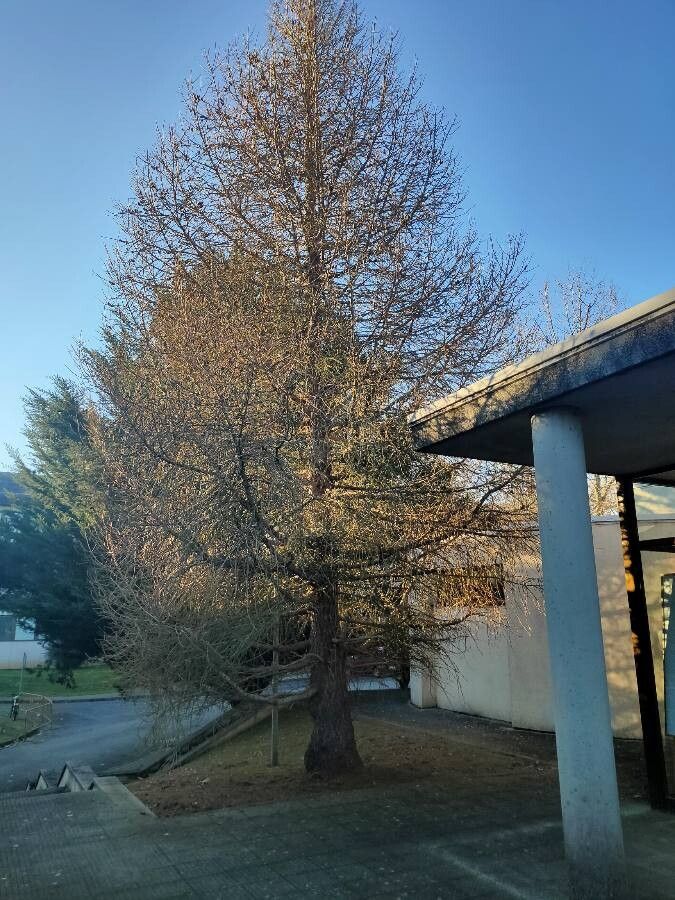
Taken Apr 2, 2015 by Tela Botanica − Yoan MARTIN (cc-by-sa)
Taken Feb 20, 2017 by Yoan MARTIN (cc-by-sa)
Taken Apr 23, 2022 by Petr Harant (cc-by-sa)
© copyright of the Board of Trustees of the Royal Botanic Gardens, Kew.




Global distribution
The native range of Larix decidua covers the Alps and Carpathians, with rare, disjunct lowland populations in northern Poland. Widely planted beyond that range for timber and ornament, it has naturalized locally in temperate Europe and is also grown as a forestry tree as far afield as North America.
- Native7
- Introduced1
- France
- Switzerland
- Italy
- Austria
- Poland
- Slovakia
- Romania
- United Kingdom
Hexagons: regions where the plant occurs. Green dots: native range.1
Identity
The European larch (Larix decidua Mill., 1768), also called common larch or, in France's Hautes-Alpes, pin de Briançon, is a large conifer in the Pinaceae. This native European conifer loses all its needles each winter, immediately distinguishing it from the spruces and firs that grow beside it in the mountains. 1 2
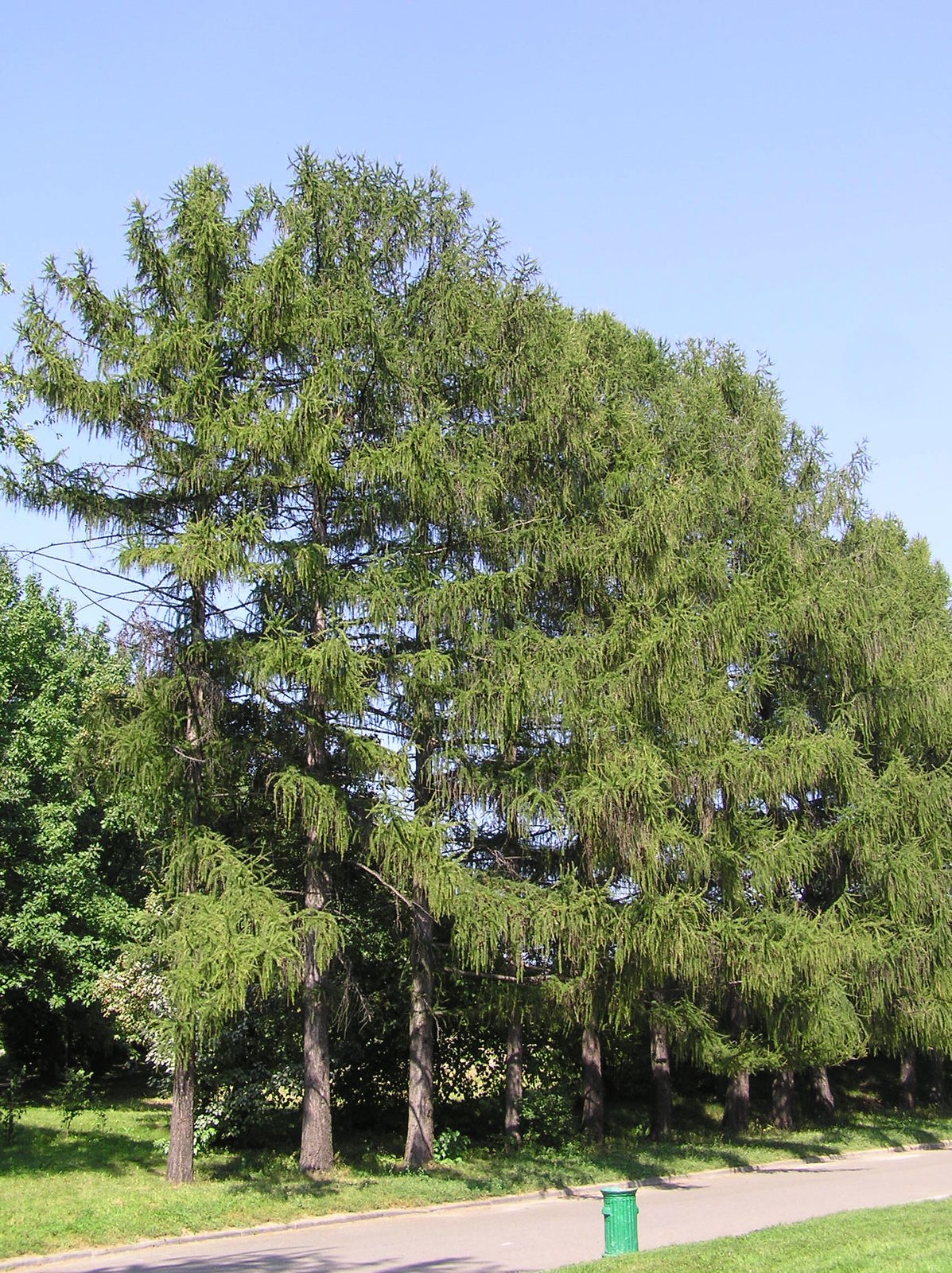
Under favorable mountain conditions, trees can reach 40–45 m (131–148 ft), with a trunk broad at the base and a crown that starts conical before spreading with age. Some European specimens exceed 500 years, as several Alpine surveys confirm. 4 5
The French mountain term rose du mélèze, or larch rose, does not describe a flower. It names the young female cone, upright and pink or red in spring, before it hardens and browns as maturity approaches. 3
Recognition
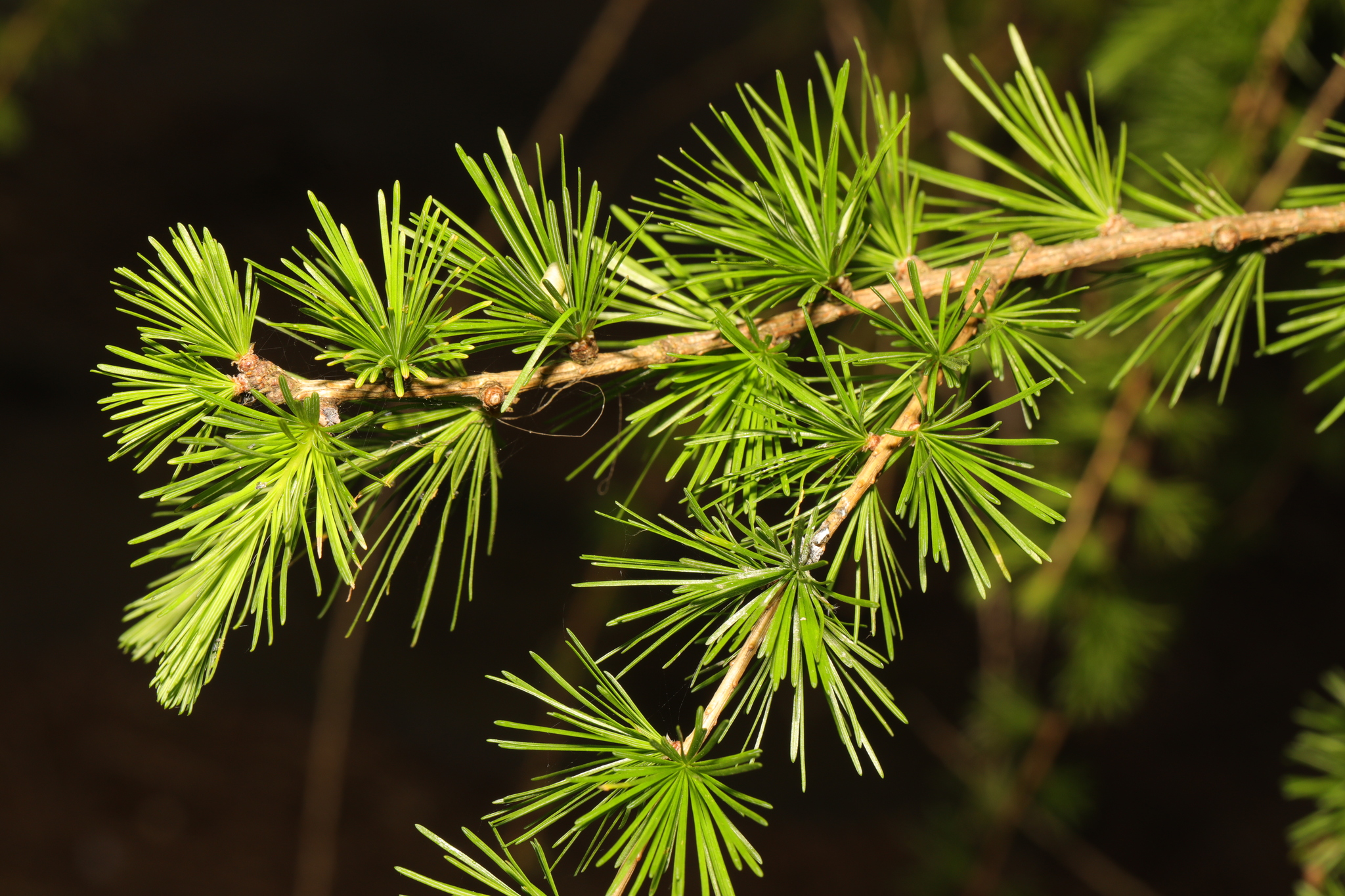
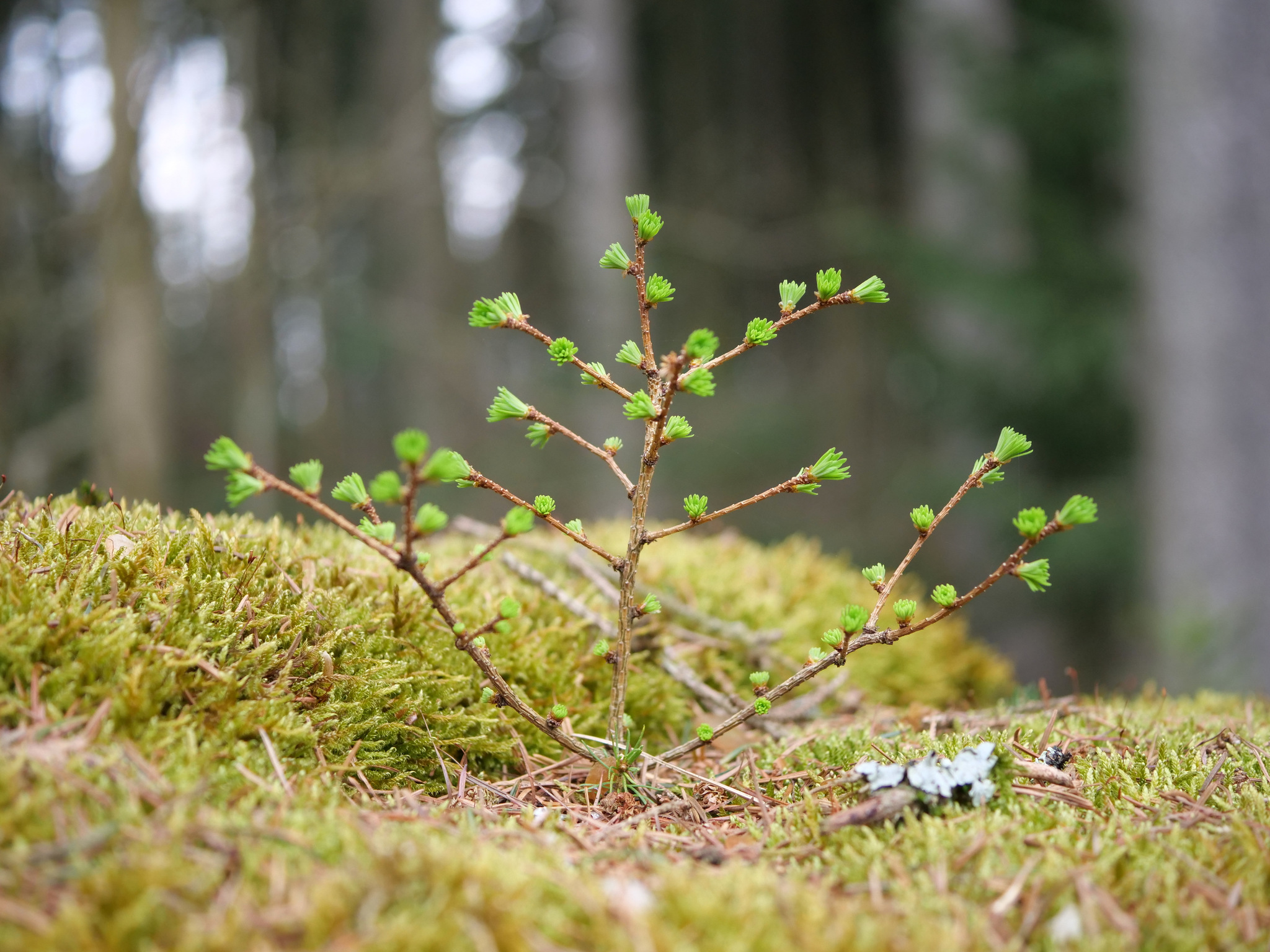
Soft, flat needles without sharp points provide the first clue. They form dense tufts on short shoots, while growing singly in a spiral on the current year's long shoots. Fresh green at spring budbreak, the foliage turns golden yellow, then orange in fall before dropping completely. 2 5
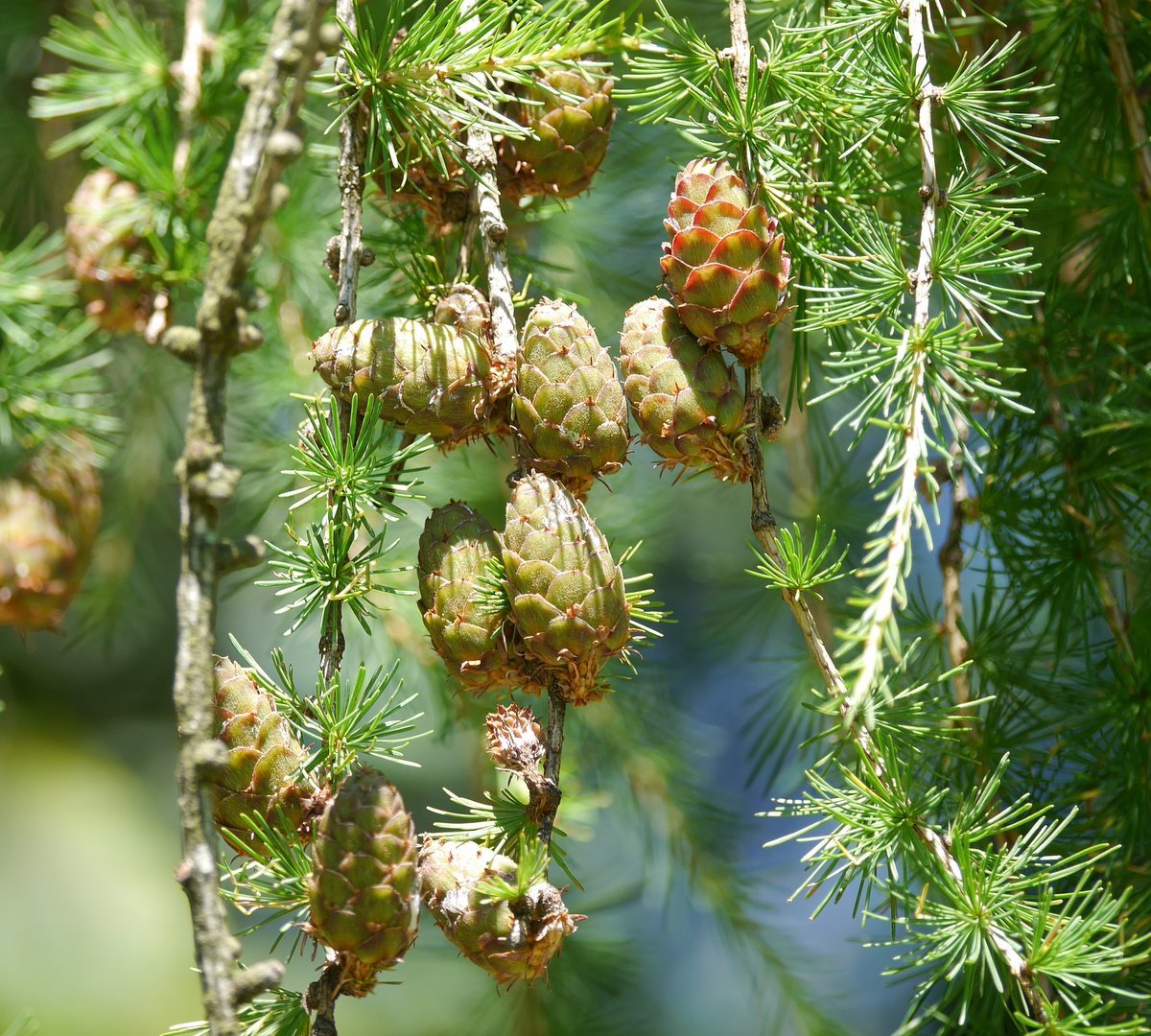
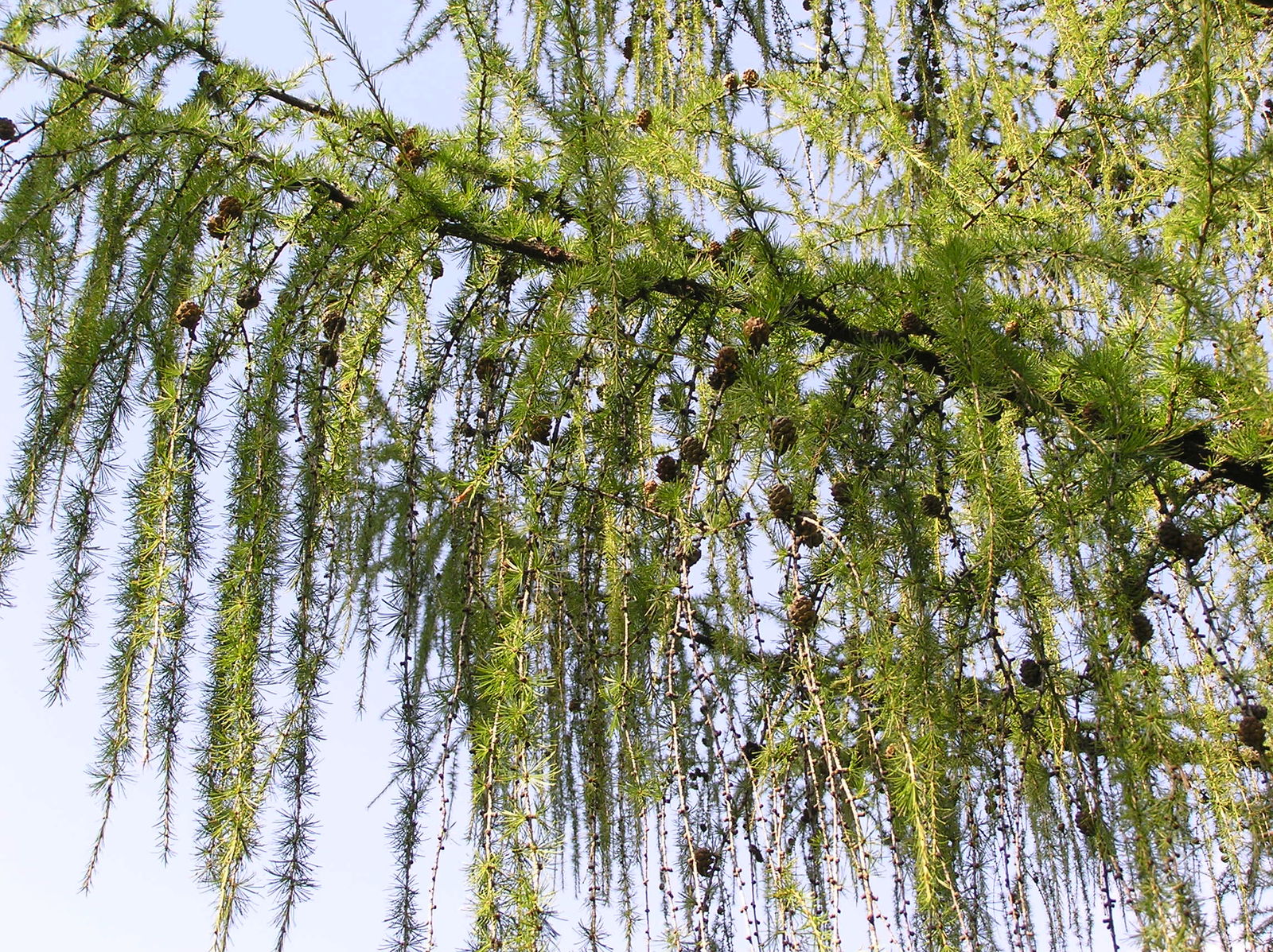
Male and female cones appear on the same tree in spring, before the new needles fully open. The small, upright, egg-shaped female cones become reddish brown at maturity and are usually 2–4 cm (0.8–1.6 in) long. Slender bracts project slightly between the scales, helping distinguish them from hanging spruce cones. 2 5
Smooth gray bark on a young tree becomes reddish brown, thick and deeply fissured into broad plates with age. It remains a useful identifying feature after winter needle loss, when foliage provides no clue. 5 6
Useful taxonomy
Philip Miller described Larix decidua in 1768. The accepted name remains stable despite the variety of names associated with regional populations in the Alps, Sudetes and Carpathians. The following entries combine historical synonyms and an accepted botanical variety:
- Larix decidua subsp. sudetica (Domin) Domin
- Larix decidua subsp. carpatica (Domin) Silba
- Larix decidua var. polonica (Racib. ex Wóycicki) Ostenf. & Syrach
- Larix europaea DC.
- Larix decidua var. pendula (Aiton) Regel
These names belong within the same species, but their ranks and statuses differ. POWO accepts Larix decidua var. polonica as a botanical variety, alongside var. decidua and var. carpatica; the subspecies name carpatica listed above should not be confused with the latter combination. At species rank, Larix decidua remains the stable reference for identification and purchasing. 1
Habitat and range
The Alps and Carpathians, with rare, disjunct lowland populations in northern Poland, make up its native range. Open, often pure stands grow at high altitude up to the tree line, frequently alongside Swiss stone pine. 1 4
As a pioneer, larch colonizes unstable slopes, avalanche tracks and former high-altitude pastures before more shade-tolerant trees move in behind it. It needs moist, well-drained soil and full sun. Under a dense canopy, growth slows and foliage thins, unlike beech or fir, which thrive in shade. Permanently waterlogged soil is equally unsuitable. 4 3
Timber and ornamental planting have taken it far beyond its native range. It has naturalized locally in temperate Europe, notably the United Kingdom, and is grown as a forestry or avenue tree as far afield as North America. 3 6
Life cycle and reproduction
Yellowish male cones shed windborne pollen in spring, even before the needles fully open. Female cones receive pollen at the same time and mature within one season. Winged seeds disperse in fall and winter, often carried far across snow by the wind. 4 2
Nurseries chiefly use seed to propagate the typical species. Several weeks of cold stratification substantially improve emergence; without it, germination is irregular. Selected cultivars, particularly weeping forms such as Pendula, are usually propagated by grafting onto a rootstock of the typical species, the only method that guarantees their characteristics. 3 8
Juvenile growth remains rapid through the first few decades, slowing markedly at maturity. The first cones generally appear between 15 and 20 years, well before the tree reaches its adult size. 4
Uses and risks
Larch produces some of the most durable timber among European conifers, with good resistance to wood-boring insects. Traditional uses include structural beams, exterior cladding and mountain chalet construction, where durability outdoors is especially valuable. 3
Incisions in the bark also yield abundant resin, once harvested to make turpentine for varnishes and timber protection. The same resin entered traditional preparations for respiratory complaints. This describes its historical use. 3 2
The species is not considered toxic to the main domestic animals. Prolonged contact with resin or wood dust can nevertheless cause allergic dermatitis in sensitive people. Excessive internal use of bark is also documented as posing a risk to the kidneys. 3
Varieties, look-alikes and related plants
Three cultivars suit rather different garden settings. Pendula has long, weeping branches and is usually grafted onto a straight trunk to create its cascading outline. Fastigiata is narrow and columnar, much more compact than the typical species. For a container or bonsai, Little Bogle remains the only genuinely dwarf choice: its irregular form suits both small gardens and pot cultivation. 8 3
The main look-alikes are:
- Larix kaempferi, Japanese larch, whose young shoots are reddish brown rather than the yellow-green of Larix decidua;
- young spruces (Picea abies) and firs before fall needle loss, the clearest distinction between larch and its evergreen neighbors;
- spruce cones, which hang downward and have smooth scales, unlike the small, upright, bracted cones of larch.
Against the evergreen spruces and firs mentioned above, the seasonal clue is particularly useful: larch loses all its needles in winter and regrows fresh green foliage in spring. 2 5
Main sources
- Plants of the World Online / Kew, Larix decidua Mill.
- Royal Horticultural Society, Larix decidua - European larch
- Plants For A Future, Larix decidua
- USDA Forest Service FEIS, Larix decidua species review
- NC State Extension, Larix decidua (Common Larch, European Larch)
- Missouri Botanical Garden, Larix decidua
- Tela Botanica, Larix decidua Mill.
- American Conifer Society, Larix decidua cultivar database
Frequently asked questions
Does European larch really lose all its needles in winter?
Yes. Larix decidua is a native European conifer that loses all its foliage each fall, after turning gold and then orange. Fresh, soft foliage returns the following spring.
Is European larch a pine?
No. Despite the regional French name pin de Briançon used in the Hautes-Alpes, Larix decidua belongs to Larix, a genus separate from Pinus within the same family, Pinaceae.
How do you distinguish European larch from a spruce or fir?
Complete absence of needles identifies it in winter. In summer, soft needles clustered on short shoots distinguish it from spruces and firs, whose needles remain single and evergreen throughout the year.
Is European larch toxic?
It is not considered toxic to the main domestic animals. Resin and sap can nevertheless irritate the skin of sensitive people on contact.
Where does European larch grow naturally?
Its native range covers the Alps and Carpathians, with rare lowland populations in northern Poland. Today it is widely planted and sometimes naturalized far beyond its original range.
How old can a European larch become?
Some European trees exceed 500 years, an age confirmed by dendrochronological surveys in the Alps. Growth is fast in the first few decades, then slows markedly.
Can European larch be grown as bonsai or in a small garden?
Yes. Little Bogle is dwarf and suited to a large container or bonsai, while the weeping Pendula and columnar Fastigiata suit a medium-sized garden.
Similar plants

If you are unsure about a plant’s toxicity, ask a botanist or veterinarian for advice.