
manuka (Leptospermum scoparium, )
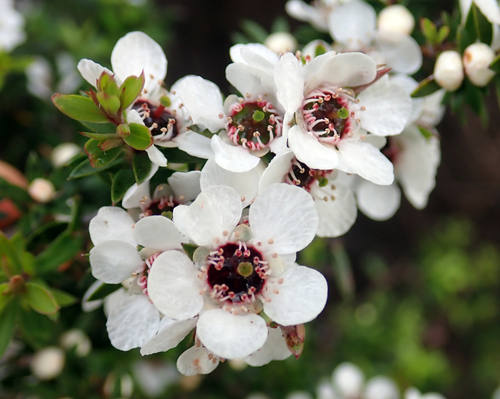

Manuka (Leptospermum scoparium) is an evergreen shrub or small tree in the Myrtaceae, native to New Zealand and southeastern Australia. Its five-petaled white flowers, sometimes pink or red in cultivars, open in spring and summer and supply the nectar for manuka honey.
Read moremanuka, New Zealand tea tree, broom tea-tree and mānuka
Allow a few hours of direct sun per day, preferably morning or evening.
Full sun essential


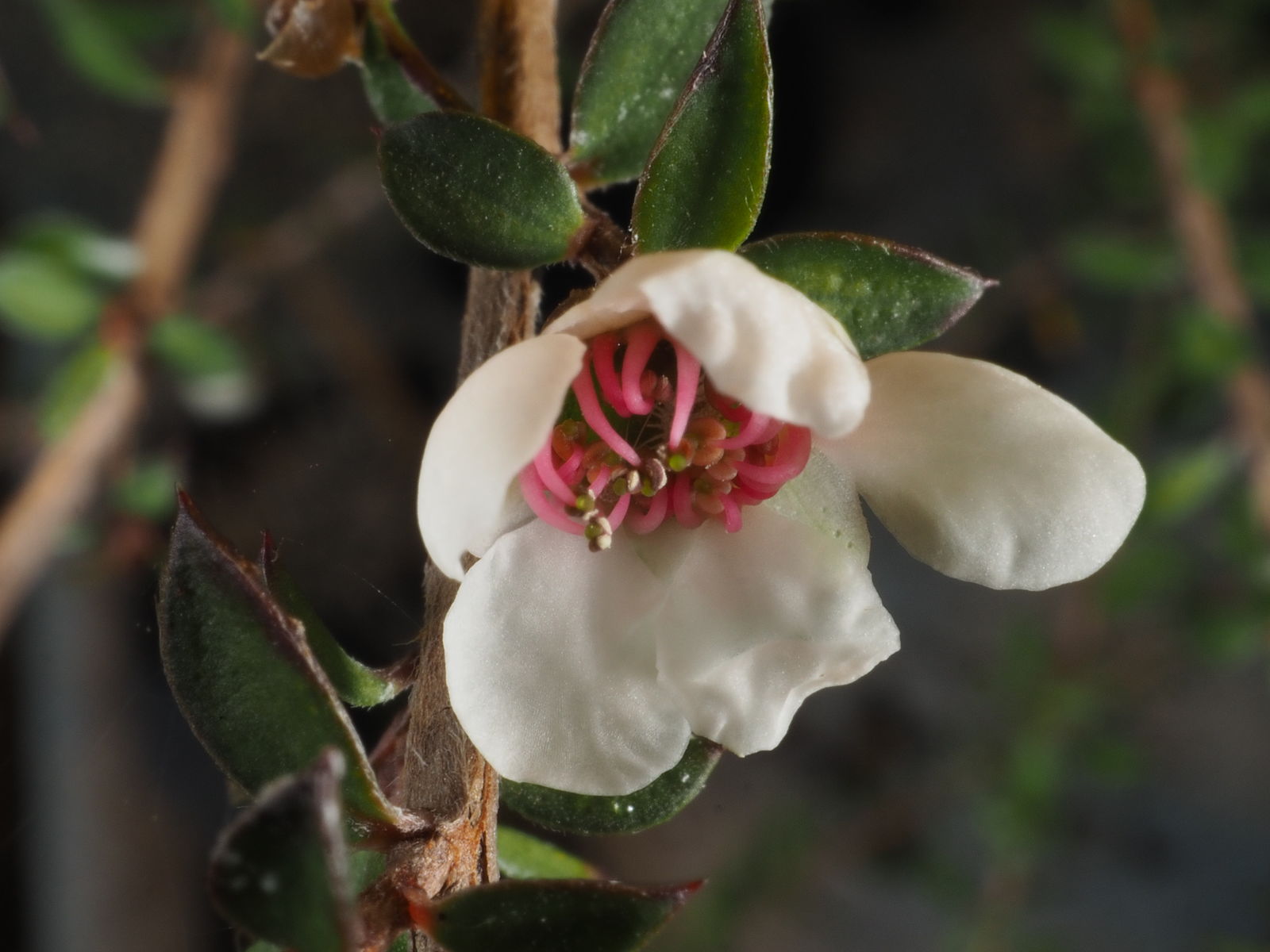

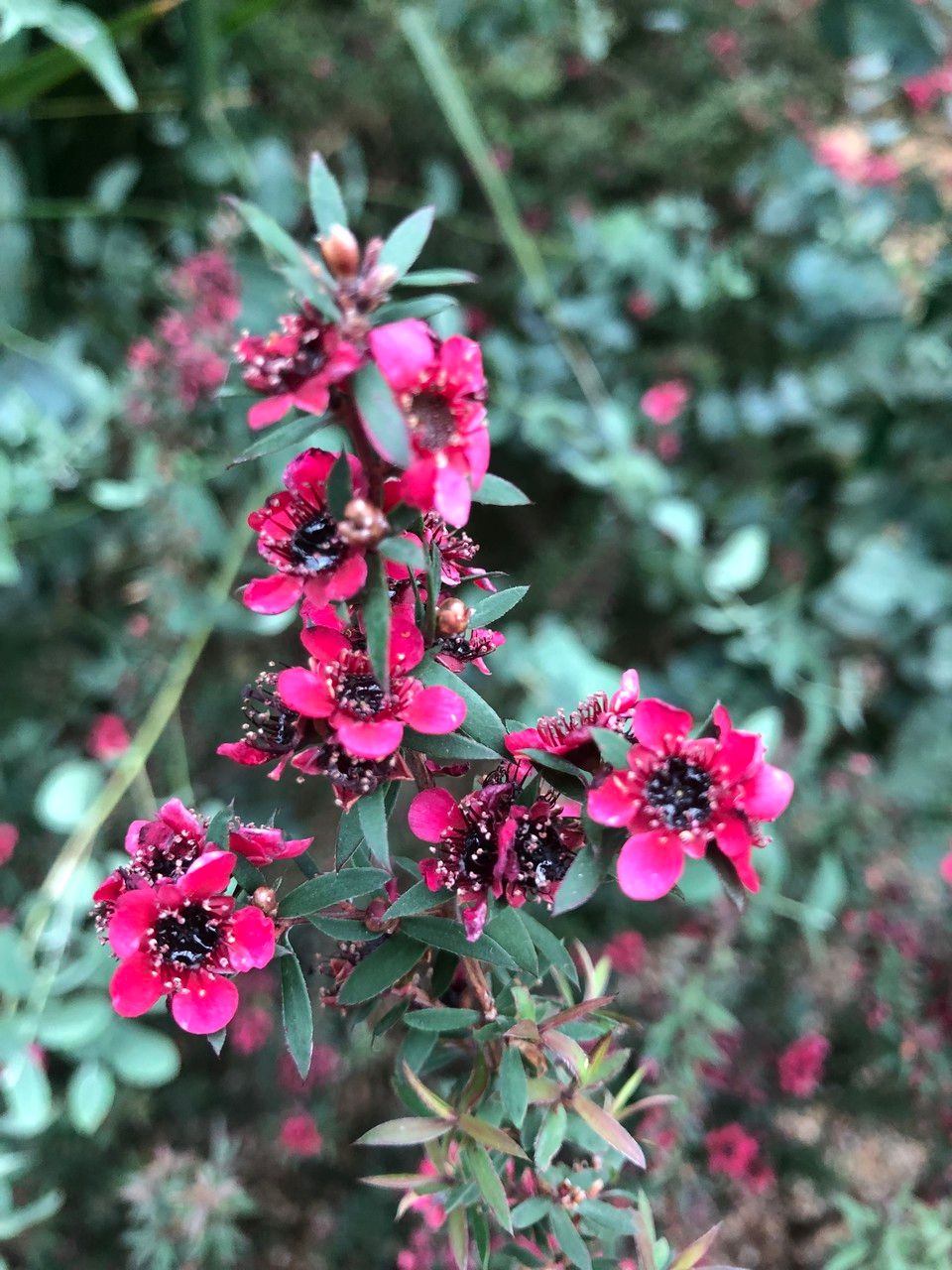
© photo
no rights reserved, uploaded by Peter de Lange · cc0
Richard Littauer · cc0
Diana Studer · cc-by
Taken Aug 27, 2021 by R. de Castro Ricardo (cc-by-sa)
Taken Mar 22, 2021 by Mireille ROBBE (cc-by-sa)
Taken May 24, 2020 by pepitruix (cc-by-sa)
Taken Jun 3, 2020 by ghazal Jason (cc-by-sa)
Taken Nov 7, 2020 by Baobab Obesum (cc-by-sa)
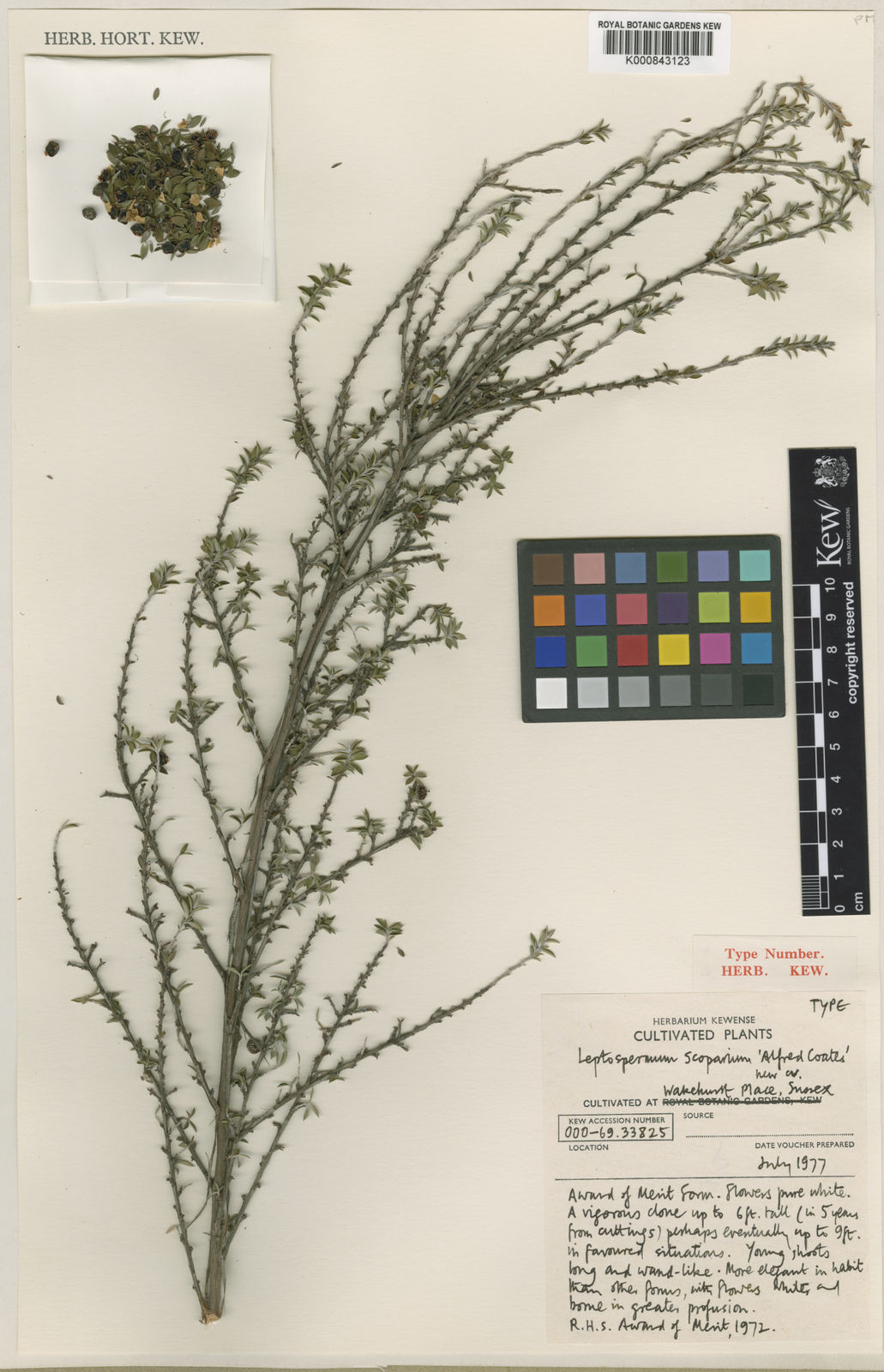
© copyright of the Board of Trustees of the Royal Botanic Gardens, Kew.




Global distribution
Leptospermum scoparium is native to New Zealand, from the North and South Islands to Stewart and the Chatham Islands, and to southeastern Australia. Widely cultivated beyond that range for ornament and honey, it has naturalized in several tropical regions, including Hawaii, where it is considered invasive.
- Native2
- Introduced1
- Invasive1
- New Zealand
- Australia
- South Africa
- Hawaii
Hexagons: regions where the plant occurs. Green dots: native range.1
Identity
Nectar-rich flowers make manuka (Leptospermum scoparium J.R.Forst. & G.Forst., 1776), also called New Zealand tea tree, a familiar evergreen shrub or small tree in the Myrtaceae. Johann Reinhold Forster and Georg Forster described it in 1776, during Captain Cook's second Pacific voyage. 1
Cook's crew brewed the aromatic leaves as a substitute when true tea was unavailable, giving rise to the English name tea tree. The Māori name mānuka is more specific in horticultural and scientific writing than tea tree or broom tea-tree, names used interchangeably and sometimes confused with other Myrtaceae. These different names refer to the same plant, while the broader tea-tree name needs a scientific name beside it. 7 6
Recognition
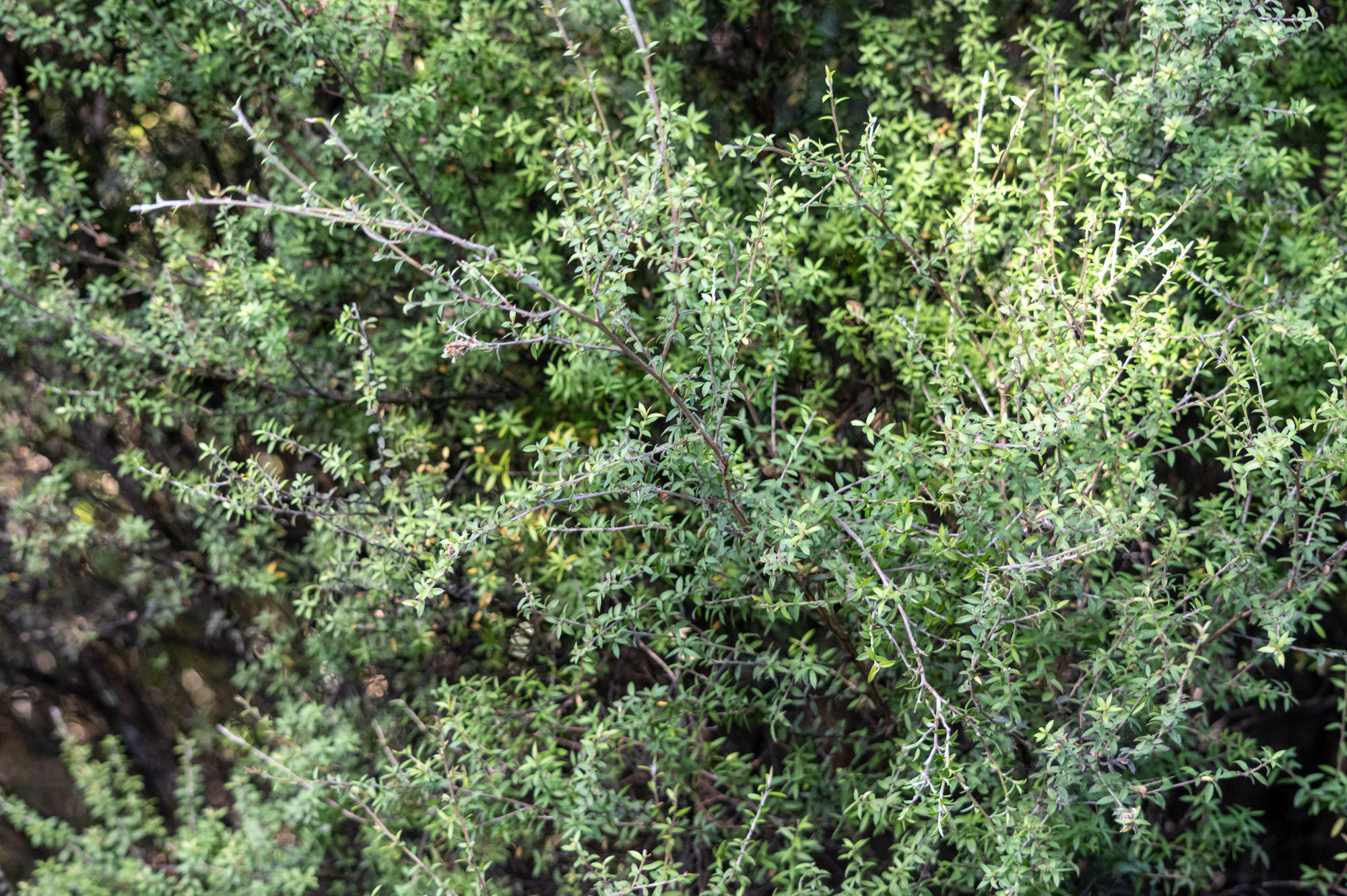
Dense, upright branching produces a shrub 50 cm–2.5 m (20 in–8 ft) tall in cultivated gardens, compared with trees reaching 10 m (33 ft) in favorable wild settings. Reddish-brown bark peels in thin, papery strips, a useful contrast with the longer, more leathery strips of its close relative kānuka. 5 7
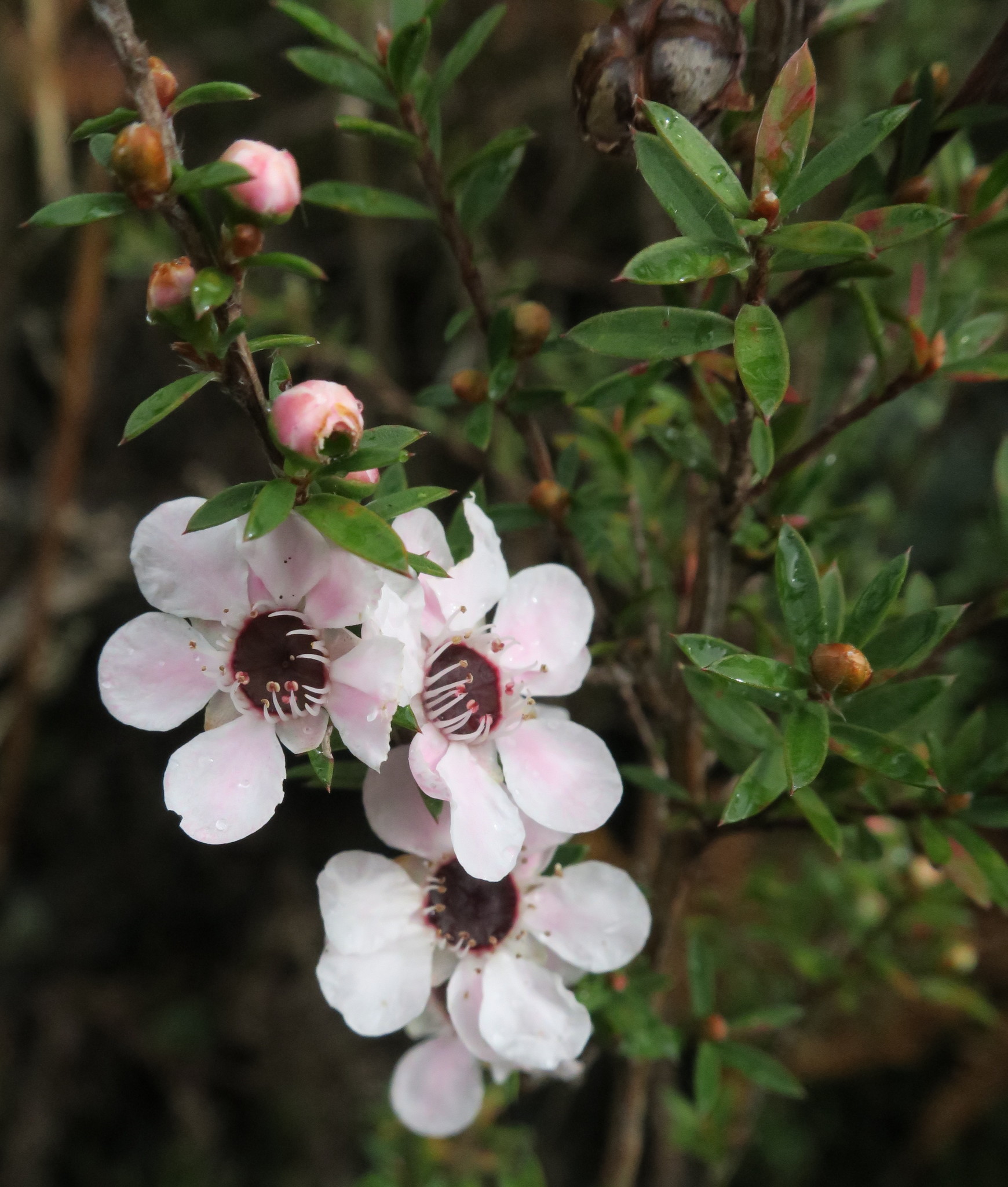
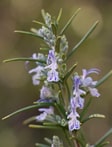
Small alternate leaves, less than 2 cm (0.8 in) long, are lance-shaped, leathery and sharply pointed, releasing a distinct aroma when crushed. Solitary flowers are white in the wild form, pink or red in many cultivars. They open in spring and summer, with five rounded petals around central stamens often tinged dark red. 2 7
After flowering, woody capsules remain closed on the branches for several seasons, whereas kānuka capsules open and fall within a few months. Persistent capsules provide the most reliable field distinction between the two, clearer than leaf shape or flower color. Checking the older branches therefore remains useful even when the plant is no longer flowering. 7
Useful taxonomy
Leptospermum scoparium J.R.Forst. & G.Forst. is the name accepted by POWO/WCVP. An unusually large number of infraspecific forms have been described, almost all now reduced to synonymy:
- Leptospermum scoparium var. incanum Cockayne
- Leptospermum scoparium var. eximea B.L.Burtt
- Leptospermum scoparium f. angustifolium Miq.
- Leptospermum rotundifolium var. scoparium Maiden & Betche
- Leptospermum scoparium var. myrtifolium W.T.Aiton
New Zealand and Australian forms were long treated as separate populations on either side of the Tasman Sea. POWO now groups them under one binomial despite documented differences between the two areas. The accepted name Leptospermum scoparium remains the stable reference when comparing those populations or older botanical treatments. 1
Habitat and range
Its native range spans New Zealand, from the North and South Islands to Stewart and the Chatham Islands, and southeastern Australia. Coastal heath, bogs, riverbanks and poor soils provide habitats from sea level to 1,800 m (5,900 ft) elevation. These sites range from wet ground to exposed terrain, reflecting the variety of settings occupied by the species. 7 1
In New Zealand, manuka acts as a pioneer after fire, felling or landslides. It colonizes bare ground within a few years, then provides shade and shelter in which slower-growing forest trees establish. As those trees grow taller, manuka gradually gives way to them. Its role in regeneration extends beyond simply covering disturbed soil. 7
Grown for ornament and honey production, it has also naturalized outside its native range, notably in Hawaii, where it is considered invasive. In France and the United Kingdom, by contrast, it remains a garden plant, with no spontaneous naturalization documented to date. Check its local status before planting outside those regions. 5
Life cycle and reproduction
Flowering falls in spring and summer, from May to July in Northern Hemisphere gardens. Nectar-rich flowers attract a wide variety of bees and other pollinating insects; bees use the nectar to make manuka honey. For cultivation elsewhere, the relevant stages are the local spring and summer rather than a universal May-to-July calendar. 2
Manuka honey owes its reputation to high methylglyoxal concentrations. This antibacterial compound forms through the natural conversion of dihydroxyacetone in the nectar. Its concentration varies greatly between harvests and determines the grade assigned under the commercial Unique Manuka Factor system. 8
Propagation chiefly uses seed or semi-ripe cuttings taken in late summer. Numerous tiny seeds remain viable for several years inside the woody capsules before release, linking the persistent seed-bearing structures seen on older branches with the plant's capacity to reproduce. Seasonal cutting advice refers to the local late summer. 6
Uses and risks
Besides honey, manuka supplies an essential oil studied for antibacterial properties and used in cosmetics and aromatherapy. Māori traditionally used its hard, reddish wood for paddles, weapons and building posts, while waterproof bark covered roofs. These traditional material uses sit alongside its better-known modern association with honey. 7
Manuka is not listed as toxic to cats, dogs or horses. No dangerous active principle is known in the aromatic foliage following accidental ingestion, an unusual profile compared with many other ornamental shrubs rich in essential oils. Do not assume that other plant parts or forms of exposure carry the same risk. 5
In gardens, provide full sun and light, freely draining soil that is acidic to neutral. Stagnant winter moisture is its main cause of decline, more important than cold or drought once the plant has established. In colder climates, the limited hardiness described in the growing guidance also matters when deciding between open-ground and container cultivation. 2
Varieties, look-alikes and related plants
Nurseries offer many cultivars selected for a compact habit or flower color. 'Kiwi', in the Nanum Group, makes a low cushion with pink flowers; 'Red Damask', with dark red double flowers, has the RHS Award of Garden Merit. 'Nichollsii Nanum' combines dark purple foliage with red flowers. 3 4
The most frequent confusion is with kānuka (Kunzea ericoides), formerly placed in the same genus. Kānuka has softer leaves without a prickly tip, smaller flowers in much more numerous clusters, bark peeling in long, leathery strips, and capsules that open at maturity instead of remaining closed on the plant. Several characters together make the comparison clearer than flower color alone. 7
The English name tea tree also invites confusion with Melaleuca alternifolia, another Australian Myrtaceae and the source of commercial tea tree oil. The two share that common name but belong to separate genera, so a tea-tree label alone does not identify either the plant or its oil.
Main sources
- Plants of the World Online / Kew, Leptospermum scoparium J.R.Forst. & G.Forst.
- Royal Horticultural Society, Leptospermum scoparium
- Royal Horticultural Society, Leptospermum scoparium (Nanum Group) Kiwi
- Royal Horticultural Society, Leptospermum scoparium Red Damask (d)
- Missouri Botanical Garden Plant Finder, Leptospermum scoparium
- Plants For A Future, Leptospermum scoparium
- New Zealand Department of Conservation, Manuka, kahikatoa and kanuka
- PLOS ONE, Antibacterial activity of Australian Leptospermum honey correlates with methylglyoxal levels
Frequently asked questions
Is manuka (Leptospermum scoparium) toxic to cats and dogs?
No. Manuka is not listed among plants toxic to cats, dogs or horses; no poisoning symptoms are documented following accidental ingestion of its foliage.
How does manuka differ from kānuka?
Kānuka (Kunzea ericoides) has softer leaves without a prickly tip, smaller flowers in much more numerous clusters, and capsules that open at maturity rather than remaining closed as manuka capsules do.
Why is manuka honey so highly regarded?
Manuka nectar lets bees produce honey rich in methylglyoxal, an antibacterial compound much rarer in other floral honeys. Its concentration underlies the commercial Unique Manuka Factor grading system.
Are manuka and tea tree (Melaleuca alternifolia) the same plant?
No. Both share the English name tea tree and belong to the Myrtaceae, but they are different genera with different uses. Commercial tea tree essential oil comes from Melaleuca alternifolia, not manuka.
Can manuka be grown in cooler regions?
Yes, where winters are mild and the soil is acidic to neutral and well drained, including suitable parts of France. Limited hardiness, around -10 °C (14 °F) depending on the variety, calls for winter protection or a pot brought indoors in colder areas.
Why is my manuka not flowering?
Insufficient light or overly lime-rich, fertile soil is the most common cause. Manuka needs full sun and a poor, acidic substrate to flower abundantly.
Is manuka invasive?
Not in its native range, where it acts as a pioneer plant. Introduced to Hawaii, however, it has naturalized and is monitored as an alien species.
Similar plants
If you are unsure about a plant’s toxicity, ask a botanist or veterinarian for advice.