
glossy privet (Ligustrum lucidum, )
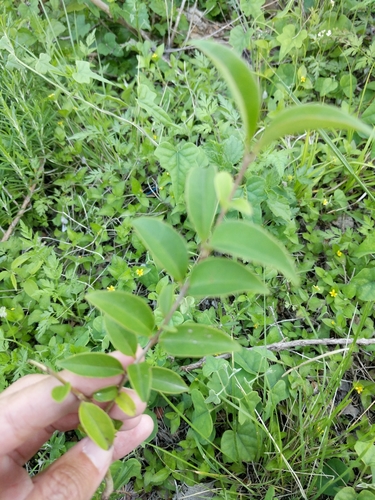
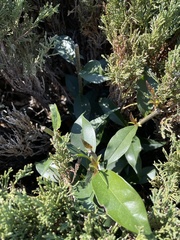
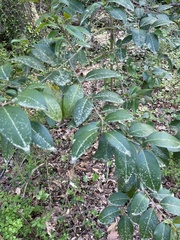
Glossy privet (Ligustrum lucidum W.T.Aiton, 1810) is a large evergreen shrub or small tree in the Oleaceae, native from Nepal through central and southern China to Hainan and South Korea. Planted worldwide as a hedge or specimen for its glossy foliage, it has also become naturalized and invasive in several temperate and subtropical regions.
Read moreglossy privet, Chinese privet and white wax tree
Allow a few hours of direct sun per day, preferably morning or evening.
Full sun to partial shade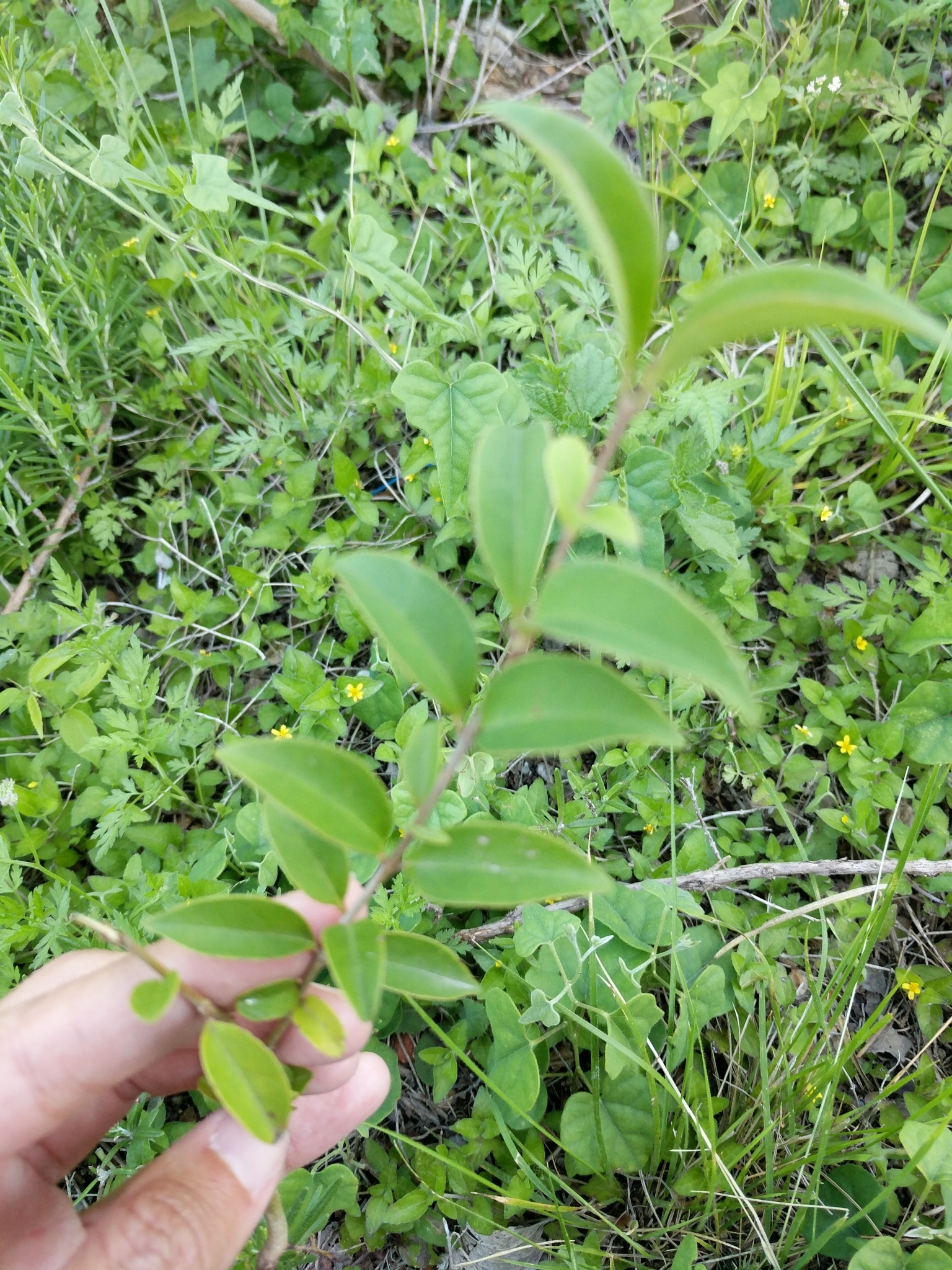


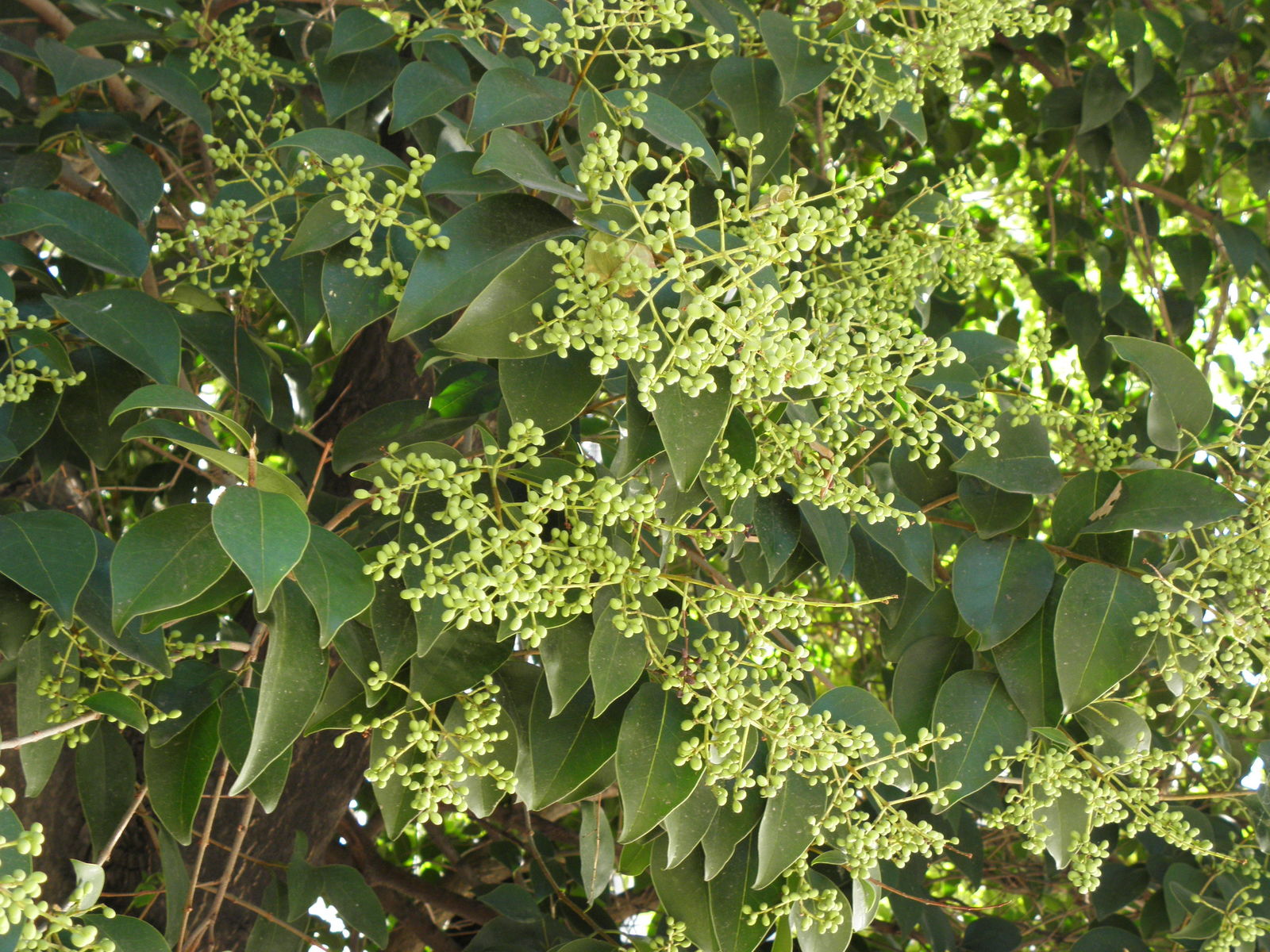
© photo
Alison Northup · cc0
iNaturalist User · cc-by
Elliot Greiner · cc-by
Taken Nov 13, 2014 by Tela Botanica − Marie PORTAS (cc-by-sa)
Taken Oct 31, 2014 by Tela Botanica − Dominique RICHARD (cc-by-sa)
Taken Jun 18, 2018 by Ferronato Angelo (cc-by-sa)
Taken Jan 25, 2016 by Tela Botanica − Moras Vincent (cc-by-sa)
© copyright of the Board of Trustees of the Royal Botanic Gardens, Kew.




Global distribution
POWO/WCVP places the native range of Ligustrum lucidum from Nepal through central and southern China to Hainan and South Korea; some horticultural sources also include Japan. Widely planted as a hedge or ornamental tree, glossy privet has become naturalized, sometimes invasively, in the southeastern United States, Argentina, Australia, New Zealand, southern Africa and several Mediterranean islands and coastal areas. In mainland France it remains cultivated, without a documented national invasive status.
- Native3
- Invasive4
- China
- South Korea
- Nepal
- United States (Southeast, Texas, California)
- Eastern Australia
- Argentina
- South Africa
Hexagons: regions where the plant occurs. Green dots: native range.↗
Identity
A tall evergreen hedge or a small tree with gleaming leaves, glossy privet (Ligustrum lucidum W.T.Aiton, 1810) belongs to the olive family, Oleaceae. POWO/WCVP places its native range from Nepal through central and southern China, including Hainan, to South Korea. 1 Its foliage is noticeably shinier than that of common privet, Ligustrum vulgare, the European native, a feature reflected in the French name troène luisant.
The name Chinese privet can cause genuine confusion: in North American catalogs it usually means another species, Ligustrum sinense, which is smaller and even more invasive in the United States. The scientific name Ligustrum lucidum is a safer guide than a common name whose meaning changes between countries. 4
Recognition
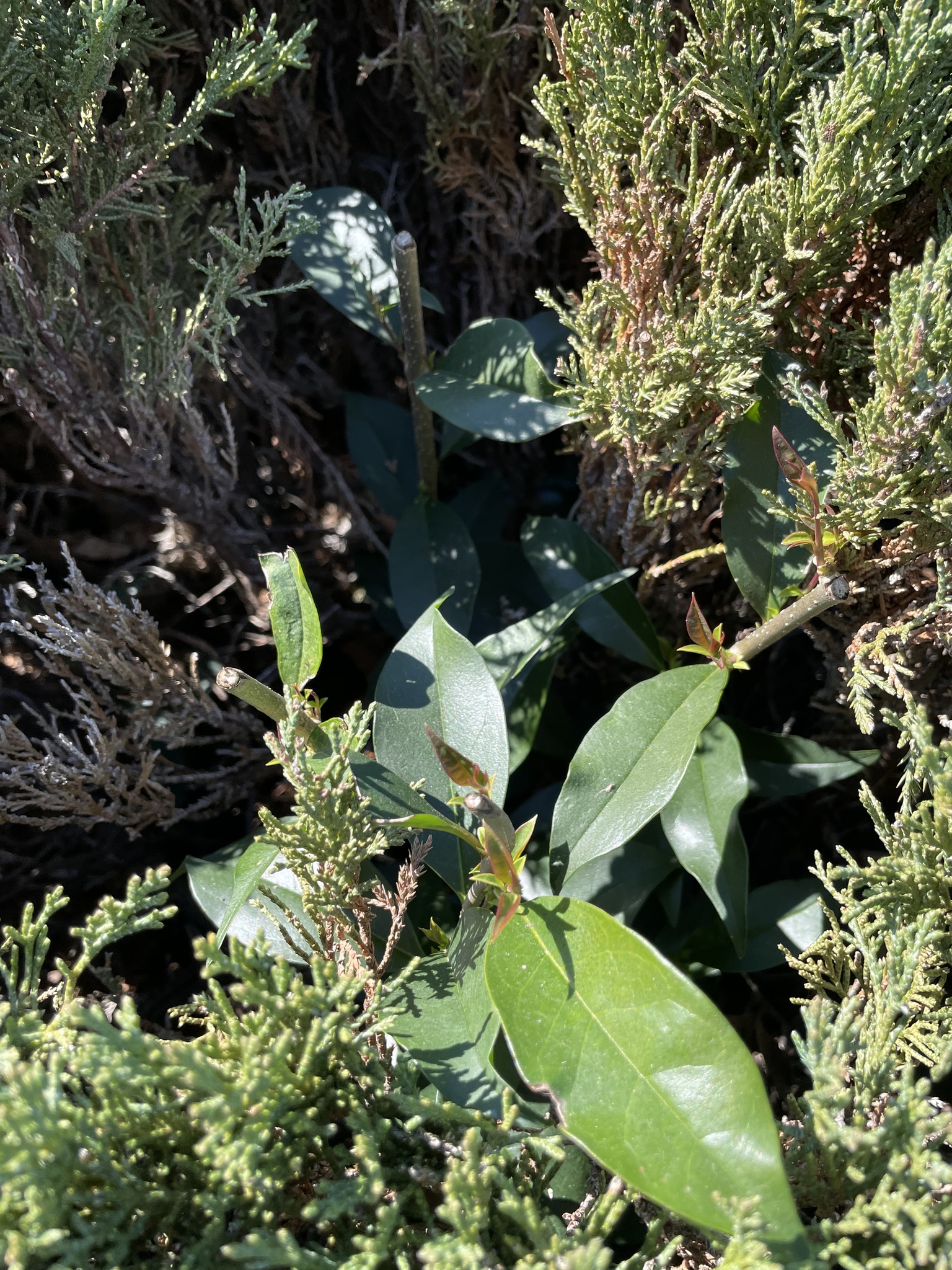
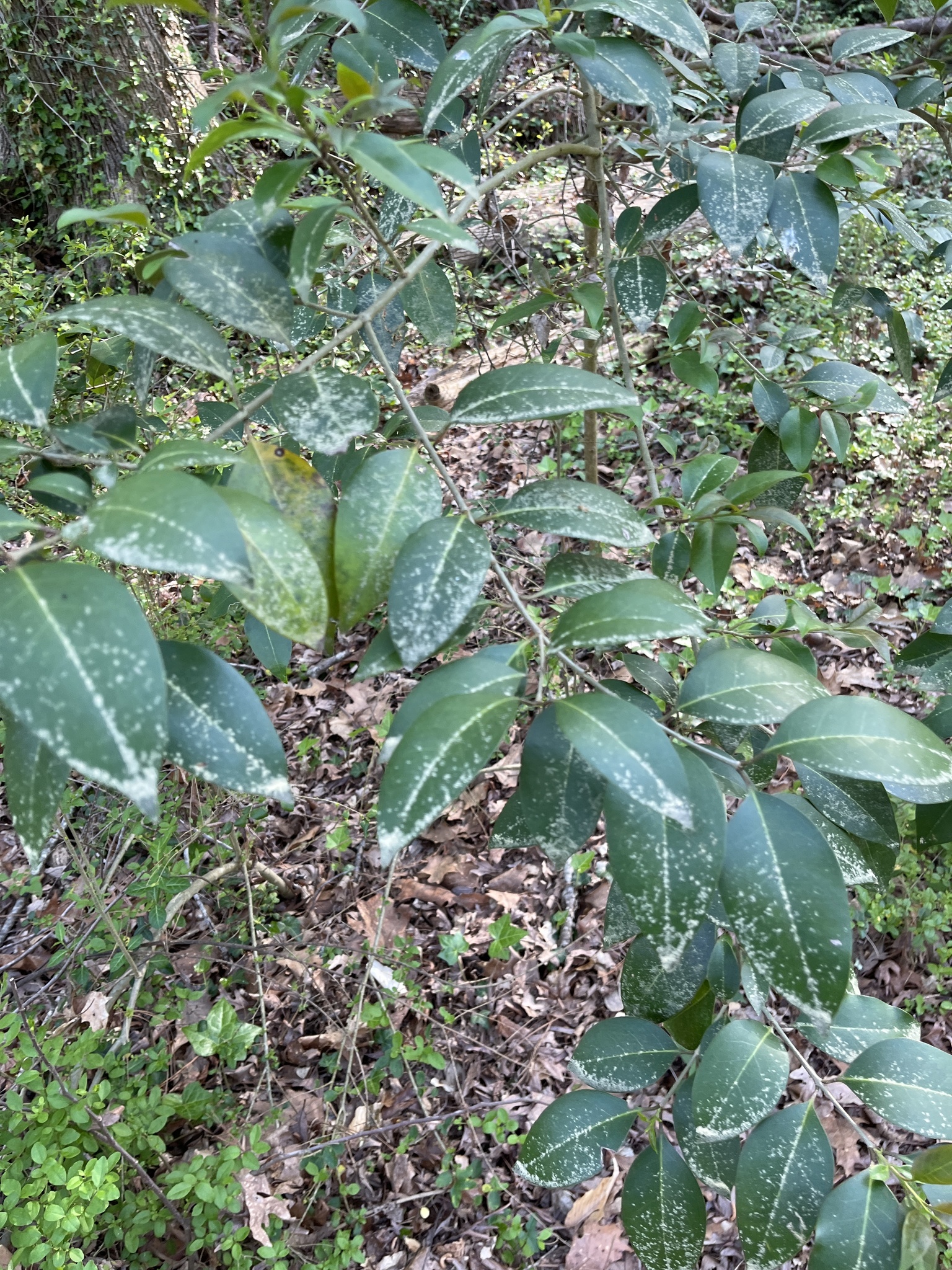
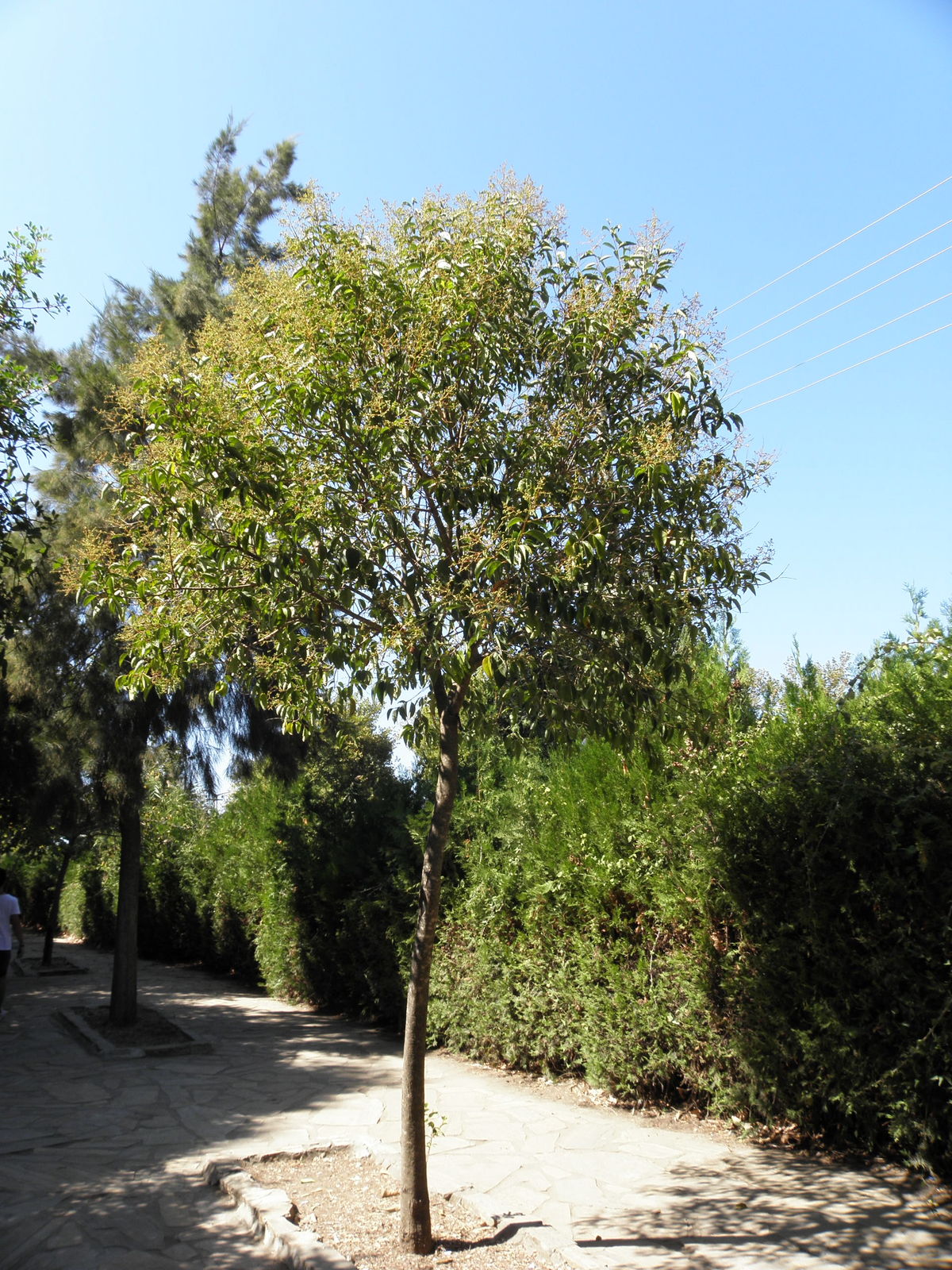
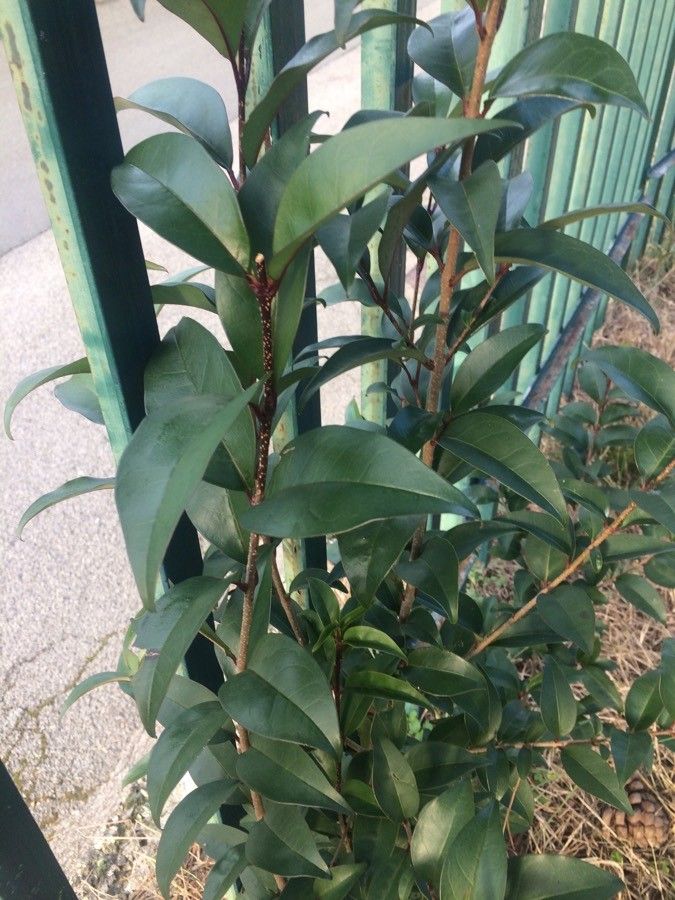
Depending on whether it is clipped as a hedge or grown as a specimen tree, Ligustrum lucidum commonly reaches 4–12 m (13–39 ft) tall, with a spread of 3–8 m (10–26 ft). 5 3 Its opposite, oval to lance-shaped leaves are leathery and very glossy, 7–15 cm (2.8–5.9 in) long, with distinctly sunken lateral veins that are translucent when held to the light, and a thin opaque rim around the blade. 4
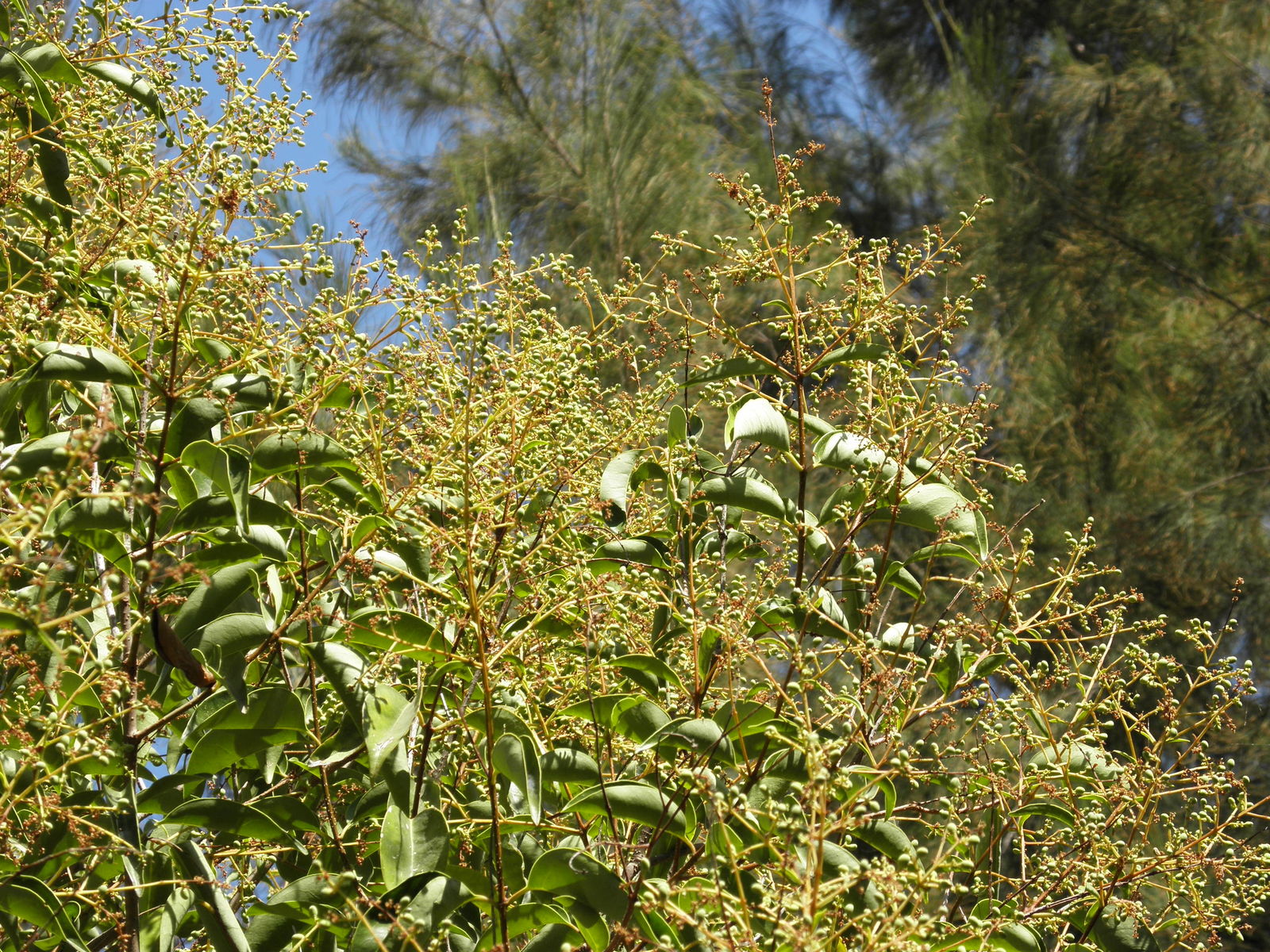
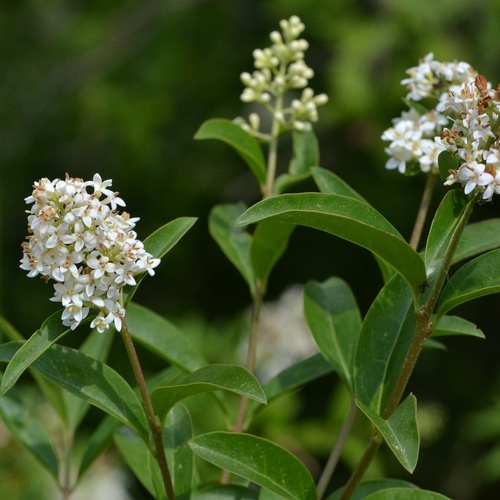
Small, four-lobed, tubular creamy white flowers form upright panicles 10–20 cm (4–8 in) long. Their strong scent often reaches you before the hedge comes into view and can be unpleasant beneath an open window. 4 3 The resulting fruit is a blue-black drupe about 0.6–1 cm (0.24–0.39 in) long. Clusters persist through much of winter, making this late fruiting pattern a useful identification feature outside the flowering season. 3
Foliage retained throughout the year separates glossy privet from European common privet, which is semi-evergreen and loses its leaves in cold winters. Its larger, shinier leaves also distinguish it from its Asian relatives Ligustrum sinense and Ligustrum japonicum, which have finer leaves. 2
Taxonomy and names
GBIF and POWO/WCVP recognize Ligustrum lucidum W.T.Aiton as the accepted name. 1 The Latin epithet lucidum means bright or shining, referring directly to the glossy foliage that also gives the species its French name.
Several members of the genus are commonly confused in horticulture. Ligustrum vulgare, Europe's only native privet, is much smaller and semi-evergreen. Ligustrum sinense, smaller and often more invasive in North America, sometimes receives the name Chinese privet instead of L. lucidum. Ligustrum japonicum is a more compact shrub with finer leaves and is explicitly named in the ASPCA's privet toxicity entry. 6 4 Leaf size helps separate these relatives in the field: those of Ligustrum lucidum are 7–15 cm (2.8–5.9 in) long, substantially larger than the finer leaves of the other two species. 4
Habitat and distribution
In its native range, the species grows along roadsides, in valley bottoms and at forest edges, reaching 2,900 m (9,514 ft) in the Chinese mountain areas described by the sources. 2 This broad elevational range helps explain its tolerance of varied climates when introduced elsewhere.
Extensively planted beyond its native range as a hedge or ornamental tree, Ligustrum lucidum has become naturalized and invasive in the southeastern United States, Texas and southern California. Dense growth reduces the light and water available to native understory plants. 4 3 In Florida, it appears on the Florida Invasive Species Council's invasive plant list. Monitoring excludes cultivated specimens so that maps show only naturalized wild populations. 7 Comparable naturalization is documented in Argentina, eastern Australia and southern Africa. In mainland France it remains cultivated, without a documented national invasive status; that French status does not describe its behavior elsewhere.
Life cycle, ecology and cultivation
Growth ranges from fast to moderate according to the soil. Fertile, well-drained ground promotes establishment, while poor, compacted soil slows it. 2 Propagation is by seed, semi-ripe cuttings taken in summer, or grafting to maintain a particular horticultural form such as 'Excelsum Superbum'.
Winter fruit feeds several bird species, which in turn disperse the seeds very effectively. 3 This mechanism helps explain both the plant's ornamental success and its documented invasiveness outside its native range. Each winter, a single planted specimen can give rise to dozens of spontaneous seedlings that need removal before they establish in woodland understories.
Uses and risks
Ornamental planting is its main use: an evergreen screening hedge or a small specimen tree valued for its tolerance of poor soil and urban pollution. 4 Historically, white insect wax associated with the name white wax tree, collected from the branches of several privets, including Ligustrum lucidum, was used to make candles and polish pottery. 2
The dried fruit, called nu zhen zi, has been used in traditional Chinese medicine for more than a thousand years for liver and kidney complaints, as well as dizziness and insomnia. Modern research also explores a protective effect on bone marrow during chemotherapy. 2 Traditional use of the dried fruit does not cancel the documented toxicity of fresh fruit and leaves. The ASPCA specifically lists Ligustrum japonicum as toxic to cats, dogs and horses, with gastrointestinal upset, incoordination and an increased heart rate. That attribution to a different species does not make glossy privet safe. 6 In humans, eating the fruit most often causes moderately severe abdominal pain, nausea and vomiting, a milder pattern than that described in dogs or cats. 4
Cultivars and similar plants
Two variegated forms are sold in horticulture. 'Excelsum Superbum' has broad creamy yellow leaf margins and holds a Royal Horticultural Society Award of Garden Merit. 'Tricolor' has pinkish white variegation as the leaves emerge and is more sensitive to cold than the typical species. 5
This large evergreen privet is most often confused with its smaller relatives Ligustrum sinense and Ligustrum japonicum, both with finer, less glossy leaves, and with European common privet, Ligustrum vulgare, which is much smaller and semi-evergreen. Before planting a privet hedge, checking the scientific name remains the only reliable way to anticipate its behavior: allow for a mature height of 4–12 m (13–39 ft) in Ligustrum lucidum, compared with a much smaller outline in its relatives, without assuming that they pose a lower risk of invasive seedlings, particularly L. sinense in the United States. 4
Main sources
- GBIF Backbone Taxonomy, Ligustrum lucidum W.T.Aiton
- Plants For A Future, Ligustrum lucidum database entry
- Missouri Botanical Garden Plant Finder, Ligustrum lucidum
- NC State Extension Gardener Plant Toolbox, Ligustrum lucidum
- Royal Horticultural Society, Ligustrum lucidum plant details
- ASPCA, Privet (Ligustrum japonicum) toxicity entry
- Atlas of Florida Plants, Ligustrum lucidum invasive status
Frequently asked questions
Is glossy privet toxic?
Yes. Its fruit and leaves contain terpenoid glycosides toxic to dogs, cats and horses, with gastrointestinal upset and an increased heart rate described in animals. In humans, eating the fruit chiefly causes moderately severe gastrointestinal symptoms.
Can glossy privet be confused with other privets?
Yes, often with Ligustrum sinense and Ligustrum japonicum, two smaller species with finer, less glossy leaves. European common privet, Ligustrum vulgare, differs in its semi-evergreen foliage and much smaller size.
Is glossy privet invasive?
It is naturalized and often classed as invasive in the southeastern United States, Argentina, Australia and southern Africa, where bird-dispersed fruit leads to dense thickets. In mainland France it remains cultivated without a documented national invasive status.
How is glossy privet fruit used in Chinese medicine?
The dried fruit is called nu zhen zi and has been used in traditional Chinese medicine for more than a thousand years for liver and kidney complaints. This traditional use does not cancel the documented toxicity of fresh fruit to people and animals.
How long does glossy privet take to become a tree?
Left unclipped, it develops the form of a small tree in 20–50 years, depending on climate and soil, generally reaching a mature height of 4–12 m (13–39 ft).
Does a glossy privet hedge need clipping several times a year?
One annual trim in late winter or after flowering is generally enough, unlike common privet, which often needs two trims a year to stay dense.
Why do many young privets appear around a planted specimen?
Birds eat the winter drupes and disperse the seeds widely. This produces many spontaneous seedlings around the parent plant and partly explains the species’ invasiveness beyond its native range.
Similar plants
If you are unsure about a plant’s toxicity, ask a botanist or veterinarian for advice.