
lychee (Litchi chinensis, )


Lychee (Litchi chinensis) is an evergreen fruit tree in the Sapindaceae, native to southern China. The sole species of Litchi, it produces fruit with a prized sweet aril. Unripe fruit has also been associated with documented poisoning in malnourished children in India.
Read morelychee and litchi
Place in full sun, with intense direct light all day long.
Full sun for fruiting


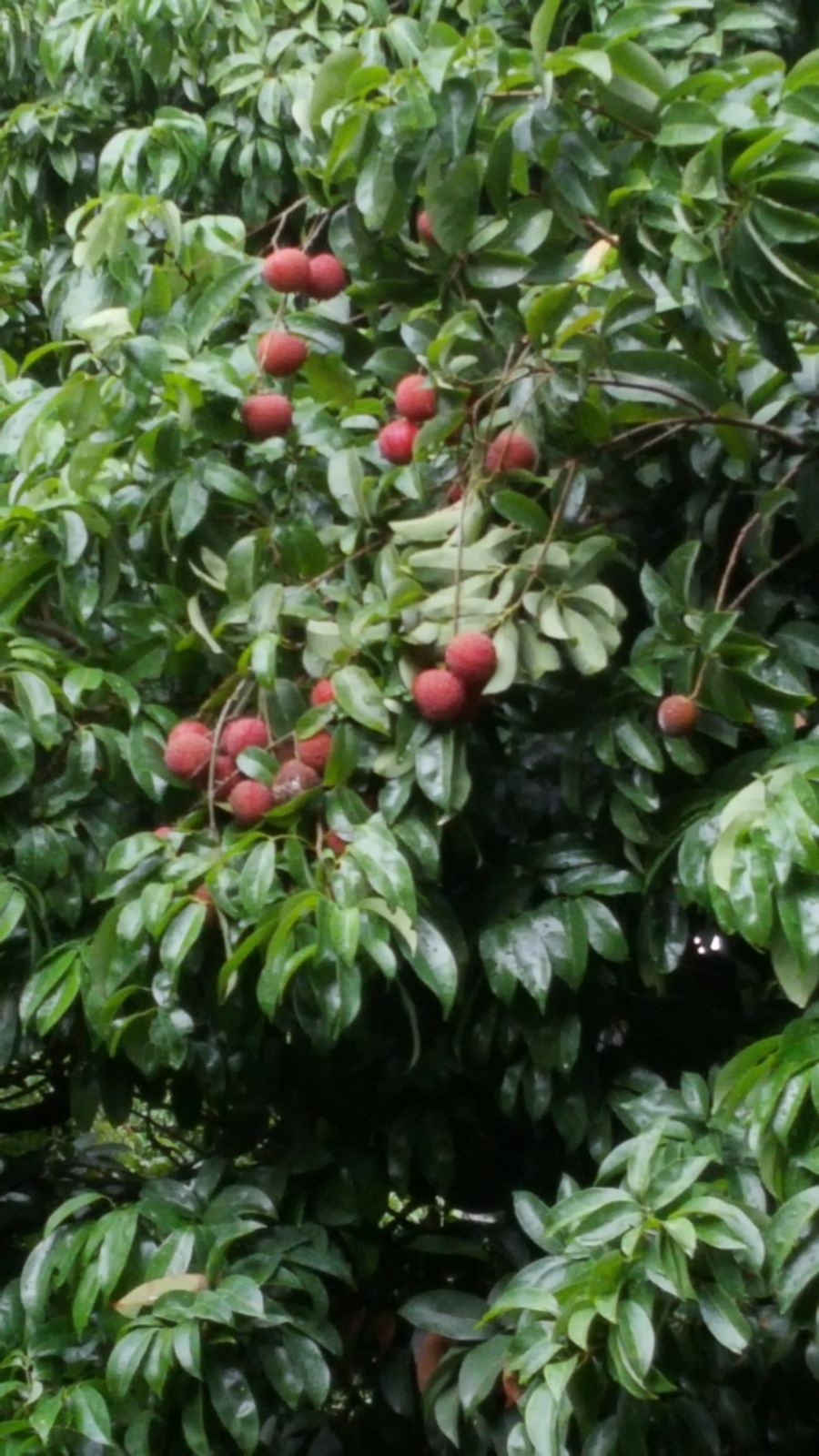

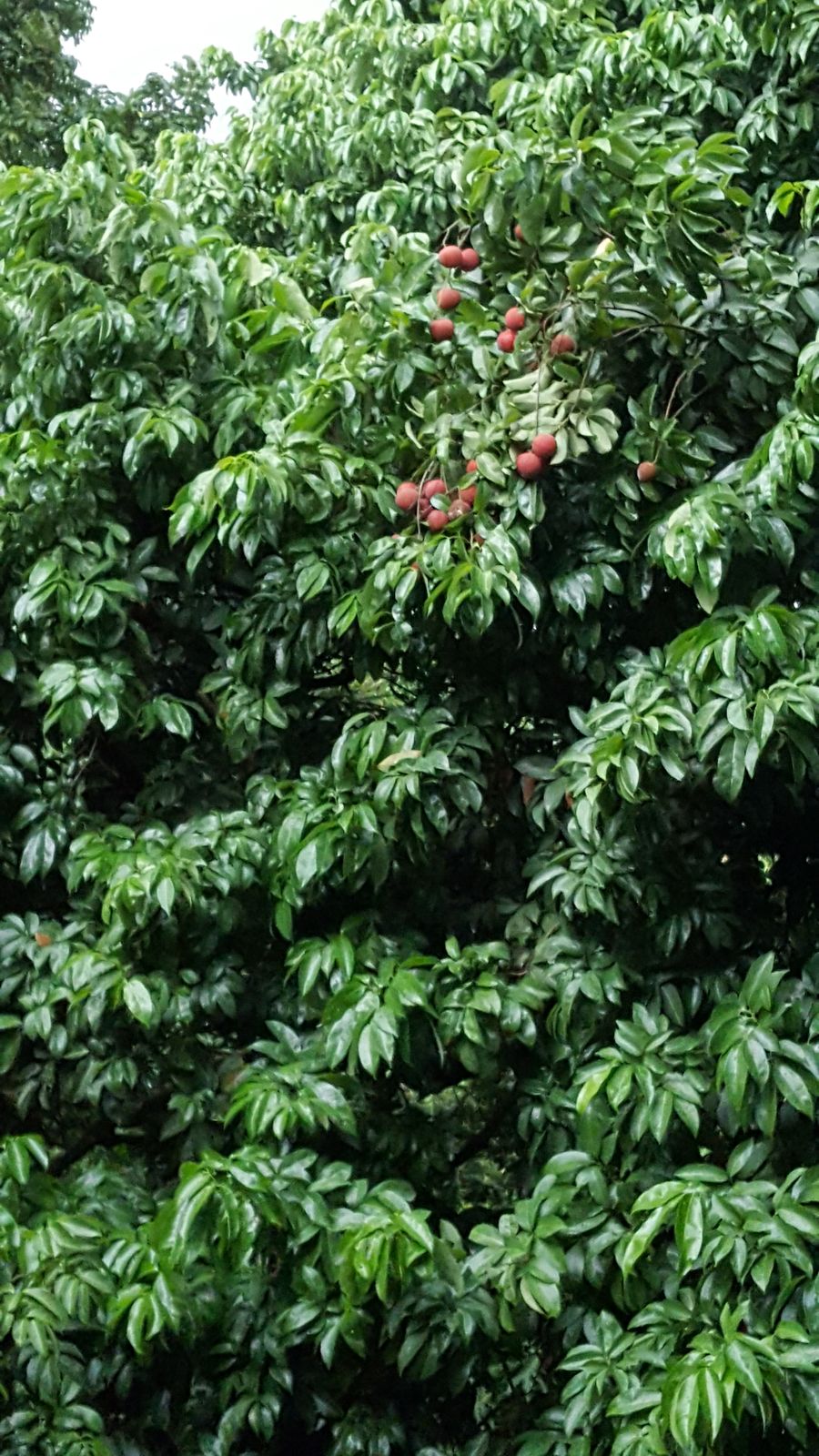
© photo
Wikimedia Commons · CC BY-SA or Public Domain
Taken Sep 9, 2015 by Tela Botanica − Anziz AHMED ABDOU (cc-by-sa)
Taken Jan 15, 2014 by Tela Botanica − Liliane Roubaudi (cc-by-sa)
Taken Jan 24, 2006 by Tela Botanica − Liliane Roubaudi (cc-by-sa)
© copyright of the Board of Trustees of the Royal Botanic Gardens, Kew.


Global distribution
The strict native range of Litchi chinensis extends from southern China, including Guangdong and Fujian, to the Malay Peninsula, Borneo and the Philippines according to POWO. Long-established commercial cultivation in China later spread to India, Southeast Asia and tropical regions worldwide. Native range, domestication center and more recent growing regions should therefore be distinguished.
Identity
Sweet, translucent flesh surrounds the seed of lychee (Litchi chinensis Sonn., 1782), an evergreen fruit tree in the Sapindaceae. Also spelled litchi, it is the sole species in Litchi, a monotypic genus with no other species as closely related to it. French naturalist Pierre Sonnerat published the name in 1782 in the account of his travels to the East Indies and China. The authority Sonn. has remained attached to the binomial ever since. 1 4
Its fruit immediately distinguishes it from the closely related longan (Dimocarpus longan). A lychee is a berry 2.5–5 cm (1–2 in) across, with red to pink, bumpy skin that becomes brittle when dry. Longan has a noticeably smaller fruit with a smooth, light brown shell. 3
The word litchi comes from Chinese 荔枝 (lìzhī). Portuguese and Spanish travelers' accounts brought it to Europe in the 16th century, and it was recorded in French by the end of that century. The English spelling lychee has the same root and refers to exactly the same species, with no botanical distinction between the spellings. 5
Recognition
Managed orchard trees commonly reach 9–15 m (30–49 ft), compared with 20 m (66 ft) or more when little pruned. The dense, rounded crown retains its leaves throughout the year. Grayish bark develops fissures with age, a useful feature when recognizing a mature tree. 3 4
Alternate, pinnately compound leaves measure 12–20 cm (5–8 in) long and carry four to eight leaflets. Elliptic to lance-shaped, the leaflets are glossy dark green above and paler beneath. Tiny, petal-less, greenish to whitish flowers gather in large terminal panicles, sometimes exceeding 30 cm (12 in), making a flowering tree readily recognizable. 3
Round to oval berries 2.5–5 cm (1–2 in) across change from green to red or pink as they ripen. Their thin, leathery, bumpy skin turns brittle on drying. Beneath it, a white, translucent, juicy aril surrounds one brown seed. In some cultivars the seed aborts, shrinking into the form called a “chicken tongue,” which increases the edible proportion of the fruit. 3 4
Useful taxonomy
Within Litchi, POWO accepts only Litchi chinensis, with a native range extending from southern China to the Malay Peninsula, Borneo and the Philippines. Three subspecies organize its diversity: subsp. chinensis, the source of almost all commercial cultivars; subsp. philippinensis, wild in the Philippines and locally called alupag; and subsp. javensis, cultivated in Malaysia and Indonesia and bearing smoother fruit. 1 4
So long and continuous has lychee cultivation been in China that reliable traces of truly wild populations of the type subspecies have been lost. The accepted species name therefore remains the stable taxonomic reference. Cultivar and subspecies names describe horticultural or geographical variation rather than separate species. 2 4
Habitat and range
Southern China's Guangdong and Fujian provinces lie within the native range, which extends to the Malay Peninsula, Borneo and the Philippines. Low elevations, riverbanks and coastal areas are characteristic habitats. This original range should be distinguished from the much wider area in which the tree is now cultivated. 1 3
Chinese cultivation dates back at least to 1059, when the fruit was already described and illustrated in Chinese literature. It spread to Burma in the 17th century and to India about a century later. Lychee subsequently reached the West Indies in 1775, Hawaii in 1873 and Florida in 1883. 3
A hot, humid summer followed by a cool, dry winter provides the seasonal contrast that triggers flowering. Permanently waterlogged soil instead causes root rot, while excess soil salt is also poorly tolerated. Beyond its original range, lychee is now grown in India, Vietnam, Madagascar, South Africa, Florida, Hawaii and French overseas territories such as Réunion. These cultivation requirements depend on local conditions rather than a single English-speaking country's calendar. 3
Life cycle and reproduction
One tree bears three flower types: male flowers, hermaphroditic flowers functioning as females, and hermaphroditic flowers functioning as males. They open in an irregular sequence. Without synchronized timing between these types, an isolated tree self-fertilizes poorly, making cross-pollination necessary. Honeybees carry most of the pollen in orchards. 3
Fruit ripens about 80–112 days after flowering. In commercial orchards, an air-layered tree first fruits in two to five years, compared with eight to twelve years, sometimes longer, for an ungrafted seedling. A seedling also fails to reproduce the parent tree's fruit reliably. That difference helps explain why commercial propagation avoids seed except for rootstocks. 3 2
Air layering, practiced in China for centuries, remains the standard propagation method. A girdled branch is wrapped in moist soil and kept watered, developing its own roots in about 100 days before separation from the parent tree. Grafting, long considered difficult in lychee, is making progress in more recent commercial orchards. 3 2
Uses and risks
Ripe fruit is eaten fresh, in desserts and fruit salads, or canned in syrup. Dried fruit turns cinnamon brown and is eaten like a raisin. Amber-colored, fragrant honey from bees visiting lychee orchards is another valued product where the tree is grown extensively. 3
The documented risk concerns unripe fruit and the seed. Both contain hypoglycin A and MCPG, compounds that disrupt fatty-acid metabolism and cause severe hypoglycemia. In the 2014 Muzaffarpur outbreak in India, 390 children meeting the case definition, with new-onset seizures or altered consciousness, were admitted to the two study hospitals; 122 died, about 31%. In the case-control study of 104 cases and 104 age-matched controls, lychee consumption and the absence of an evening meal in the 24 hours before illness were associated with illness. These associations do not necessarily describe the exposures of every one of the 390 hospitalized children. 8 7
No notable toxicity is documented in cats or dogs from the flesh of ripe lychee, while the status in horses remains poorly described. The main caution therefore concerns malnourished children during harvest season who have not eaten in the evening, rather than ordinary consumption of ripe fruit by a well-nourished adult. The human outbreak evidence should not be turned into an animal toxicity classification. 8
Varieties, look-alikes and related plants
Mauritius, also called Kwai Mi, dominates production in South Africa and Hawaii. Brewster, introduced from China to Florida in the early 20th century, tolerates light frost better. No Mai Tsze and Haak Yip remain historical standards in China, while Shahi is central to Indian production around Muzaffarpur. 3 4
The most frequent confusion is with Dimocarpus longan, a related Sapindaceae whose smaller fruit has smooth, light brown skin rather than lychee's characteristic bumps. A smooth-skinned fruit sold as lychee deserves a closer check before buying. Whether the seed is fully developed or reduced to a “chicken tongue” should likewise be considered in relation to the cultivar being sold. 3
Main sources
- Plants of the World Online / Kew, Litchi chinensis Sonn.
- Plants For A Future, Litchi chinensis
- Purdue University NewCROP / Julia Morton, Fruits of Warm Climates - Lychee
- Wikipedia EN, Litchi
- Wikipédia FR, Litchi
- Wikidata, Litchi chinensis (Q13182)
- Spencer & Palmer, 2017, The enigma of litchi toxicity, Lancet Global Health
- Shrivastava et al., 2017, Association of acute toxic encephalopathy with litchi consumption, Muzaffarpur 2014, Lancet Global Health
Frequently asked questions
Is lychee toxic to people?
Ripe fruit presents no known risk. Unripe fruit and seed contain hypoglycin A and MCPG, compounds associated with acute encephalopathy in malnourished children who ate unripe lychees without an evening meal, notably in India.
Is lychee dangerous to cats and dogs?
No notable toxicity is documented in cats or dogs from ripe fruit flesh. Its status in horses remains poorly documented, so caution is appropriate after ingestion of large quantities.
Why does my lychee fail to fruit?
The most frequent cause is a lack of sufficiently cool, dry winter rest to trigger flowering, or a tree raised from seed that is still too young. A seedling may take eight to twelve years to fruit.
How does lychee differ from longan?
Longan (Dimocarpus longan) is a related Sapindaceae, but its smaller fruit has smooth, light brown skin without the bumps characteristic of lychee.
Where does the name lychee come from?
It comes from Chinese 荔枝 (lìzhī). Portuguese and Spanish travelers brought the word to Europe in the 16th century; the French spelling litchi was recorded by the end of the same century.
How is lychee propagated in cultivation?
Air layering, practiced in China for centuries, remains the standard method. It preserves the cultivar and allows a first harvest in two to five years, compared with eight to twelve years for a seedling.
Where is lychee grown today?
Its native range extends from southern China to the Malay Peninsula, Borneo and the Philippines. It is now cultivated in India, Vietnam, Madagascar, South Africa, Florida, Hawaii and some French overseas territories such as Réunion.
Similar plants
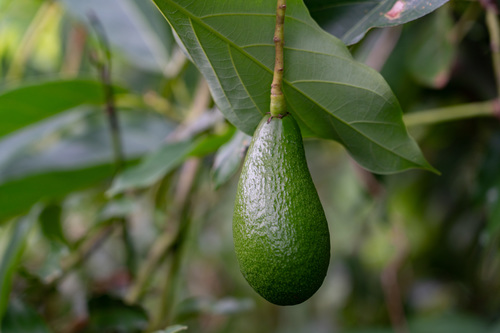
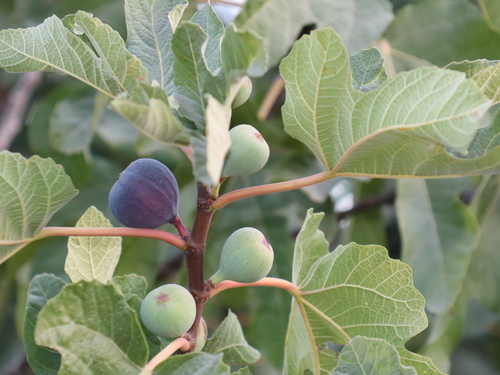
If you are unsure about a plant’s toxicity, ask a botanist or veterinarian for advice.