
Avocado (Persea americana, )
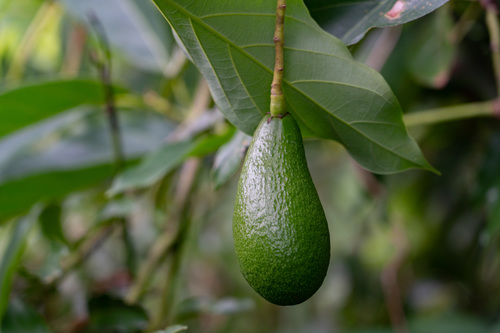
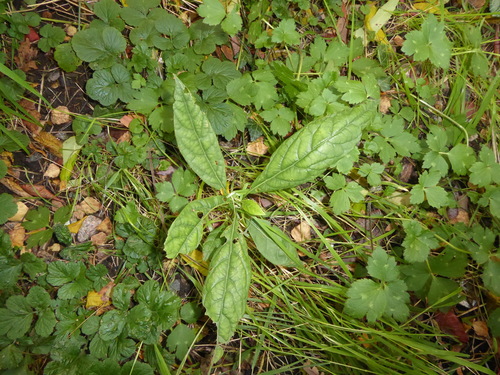
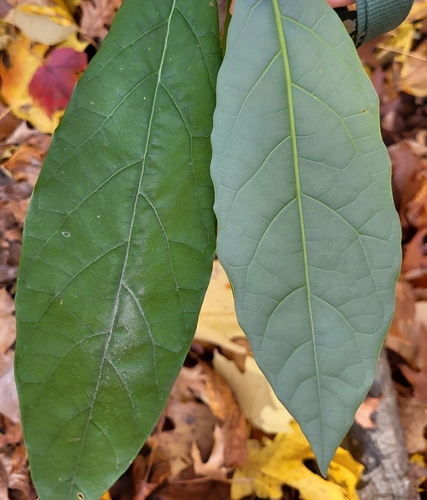
The avocado (Persea americana) is an evergreen tree in the laurel family, Lauraceae, native to southern Mexico and Central America. Its oil-rich fruit is now grown throughout the tropics and in several Mediterranean-climate regions, even though its toxicity to many animals is well documented.
Read moreAlligator pear and Avocado pear
Place in full sun, with intense direct light all day long.
Global distribution
According to POWO, the strict native range of Persea americana runs from central Mexico to Costa Rica. Horticultural and archaeological accounts often stretch the story from Mexico to Peru, so native range, areas of early domestication and regions of recent commercial cultivation need to be kept apart.
- Native3
- Introduced1
- Mexico
- Guatemala
- Costa Rica
- Peru
Hexagons: sourced regions. Green dots: native range. Statuses according to POWO (Kew).
Identity
The avocado (Persea americana Mill., 1768) is an evergreen tree in the laurel family, Lauraceae, related to the camphor tree and to bay laurel. One trait sets it sharply apart from these similar-leaved cousins: each avocado flower opens in two stages, female on one day and male the next, a form of dichogamy that prevents a single flower from pollinating itself. Its adult size, 8–20 m (26–65 ft) depending on how it is managed, and its fruit with one large seed make it easy to tell from other ornamental Lauraceae. The authority Mill. refers to the English botanist Philip Miller, who published the name in his Gardener's Dictionary in 1768. 1 2
Behind the word avocado lies the Spanish aguacate, borrowed from the Nahuatl āhuacatl, which originally meant testicle, after the shape of the fruit. Guacamole shares that root: ahuacamolli literally means "avocado sauce." The old English name alligator pear describes the dark, pebbly skin of some fruits. 3 2
Recognition
Orchard trees kept in shape commonly reach 8–12 m (26–40 ft), and lightly pruned or wild trees can grow to 20 m (65 ft). The grayish bark cracks with age, and the crown stays dense and leafy all year, even though some older leaves drop when the new flush appears. 3 4
The alternate, elliptic leaves measure 20–30 cm (8–12 in) long, dark green and glossy above, duller beneath. Depending on the horticultural race, crushed leaves may or may not smell of anise. That makes a handy clue: the Mexican race has a distinct anise scent, while the Guatemalan and West Indian races do not. 5 3
Tiny greenish yellow flowers gather in dense panicles in the leaf axils. The fruit, a single-seeded berry, is 7–20 cm (3–8 in) long and weighs 100 g to 1 kg (3.5 oz to 2.2 lb), pear-shaped to ovoid depending on the cultivar. 3
Useful taxonomy
POWO accepts a single name, Persea americana, with a native range given as central Mexico to Costa Rica. Yet three historical horticultural races shape all the diversity in cultivation: the Mexican race (the most cold-hardy, with thin skin and anise-scented leaves), the Guatemalan race (thick, pebbly skin) and the West Indian race (the least cold-tolerant, with pliable skin and low oil content). 1 5
The three races cross readily, and most commercial cultivars, Hass and Fuerte among them, descend from such hybrids. The stable taxonomic reference remains the accepted name; race and cultivar describe horticultural behavior, not separate species. 1
Habitat and range
Strictly native from southern Mexico to Guatemala and Costa Rica, the avocado grows in tropical and subtropical forest with a marked dry season. It favors well-drained hillsides and does not tolerate waterlogged soil. 1 4
People have domesticated it for at least 10,000 years, judging by remains found at Huaca Prieta in Peru and in the Coxcatlán cave in Mexico, and it later spread far beyond its original range. Today the avocado is grown from Mexico to Peru, in California, Israel, South Africa and Spain, and even along parts of the French Mediterranean coast. The IUCN lists the species as Least Concern. 2 6
Life cycle and reproduction
Avocado flowering is a rare case of two-type protogynous dichogamy: in type A cultivars, the flower opens as female on the morning of the first day, closes, then reopens as male on the afternoon of the second day; in type B cultivars, the order is reversed. On a lone tree, this offset prevents nearly all self-pollination, because female and male flowers on the same tree never open together. 2 5
Growers pair a type A cultivar (Hass, Reed, Pinkerton) with a type B cultivar (Fuerte, Bacon, Zutano) to encourage the cross-pollination this dichogamous species needs. A seedling grown alone can bloom heavily without ever setting a single fruit. 5
Commercial propagation relies on grafting onto seedling rootstock, which fixes the cultivar and brings the first harvest forward to 2 to 3 years, compared with 6 to 8 years for a seedling. The fruit ripens mainly after picking, never truly on the tree, so it can be harvested well before it is eaten. 4 5
Uses and risks
Rich in fat, the ripe fruit is eaten fresh, mashed into guacamole or pressed for cooking oil; the leaves are sometimes used for tea or as a seasoning. Nothing points to a particular risk for people once the fruit has ripened properly, apart from rare allergic reactions. 4 3
Animals face most of the risk. Leaves, bark, pit and unripe fruit contain persin, a toxin that has caused mastitis, edema and respiratory distress in horses, goats, cattle and rabbits, sometimes fatal within just a few hours. The ASPCA lists avocado as toxic to horses in particular, and pet birds are also highly sensitive. 7 5 8
Poorly drained or overwatered soil favors Phytophthora cinnamomi, the pathogen behind root rot and the main threat in orchards; anthracnose and fruit flies round out the common problems. Soil that stays soggy after rain is a more reliable warning sign than leaf symptoms, which show up only once root rot has already taken hold. 5
Varieties, look-alikes and related plants
Hass, a type A cultivar with pebbly skin that turns black when ripe, now dominates the world market. Fuerte, a type B cultivar with thinner skin, drove the California boom before Hass. Bacon, Zutano and Ettinger offer better cold tolerance and often serve as pollinators. 5
Avocado foliage can be confused with other Lauraceae of similar habit and texture, such as the camphor tree or bay laurel; only the pear-shaped fruit with its large seed settles the question beyond doubt. A pit-grown seedling, often kept as a houseplant curiosity, does not come true to the cultivar of the original fruit and usually takes 6 to 8 years to bear, if it ever does. 2 4
Main sources
- Plants of the World Online / Kew, Persea americana Mill.
- Plants For A Future, Persea americana
- NC State Extension, Persea americana, Avocado
- ASPCA, Avocado toxicity entry
- Purdue University NewCROP / Julia Morton, Fruits of Warm Climates, Avocado
- Wikipedia EN, Avocado
- Wikipedia FR, Avocatier
- Wikidata, Persea americana (Q37153)
- IUCN Red List, Persea americana assessment
Frequently asked questions
Is avocado toxic to animals?
The leaves, bark and pit contain persin, a toxin documented in horses, goats, cattle and pet birds. Cats and dogs are less sensitive, but digestive upset is still possible if they eat it.
Can you grow an avocado tree from a pit?
Yes, the pit sprouts easily, but the seedling does not come true to the cultivar of the original fruit and often takes 6 to 8 years to bear, compared with 2 to 3 years for a grafted tree.
Why is my avocado tree not producing fruit?
The most common cause is the lack of a compatible pollinator. Type A and type B flowers open at different times, so a lone tree can bloom without ever setting fruit.
What do type A and type B avocado cultivars mean?
They describe the order in which the flowers open. In type A, the flower is female in the morning and then male the following afternoon; in type B, the order is reversed. Planting both types improves pollination.
Where does the word avocado come from?
It comes from the Spanish aguacate, itself from the Nahuatl āhuacatl, which meant testicle, after the shape of the fruit. Guacamole shares the same root.
Is unripe green avocado fruit dangerous?
For people, no major risk is documented beyond rare allergic reactions. For many animals, however, the unripe fruit is still affected by persin toxicity, just like the leaves and bark.
Where does the avocado grow around the world?
Its native range runs from central Mexico to Costa Rica. Today it is grown from Mexico to Peru, and in California, Spain, Israel, South Africa and along parts of the French Mediterranean coast.
Similar plants
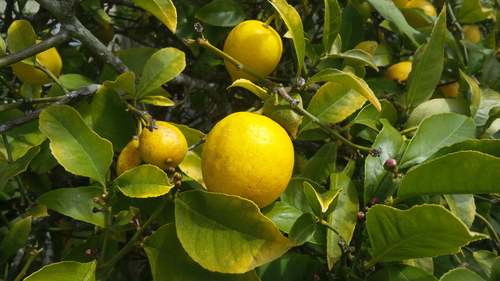
Botanical data compiled from reference sources (RHS, Kew Gardens, POWO). This profile is for guidance only and is not a substitute for advice from a botanist or veterinarian if you have concerns about toxicity.