
Henry's honeysuckle (Lonicera acuminata, )
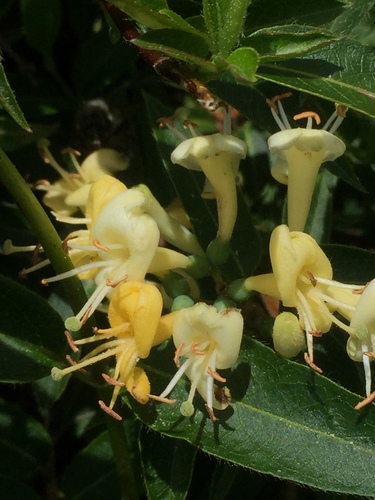

Henry's honeysuckle (Lonicera acuminata) is a vigorous climber in the Caprifoliaceae family, native from the Himalayas through China to Southeast Asia. Also known as Lonicera henryi, it has semi-evergreen foliage and needs a strong support.
Read moreHenry's honeysuckle, Lonicera henryi, Fragrant grove honeysuckle and Vine honeysuckle
Allow a few hours of direct sun per day, preferably morning or evening.
Gentle sun to bright partial shade; avoid a hot, dry root zone.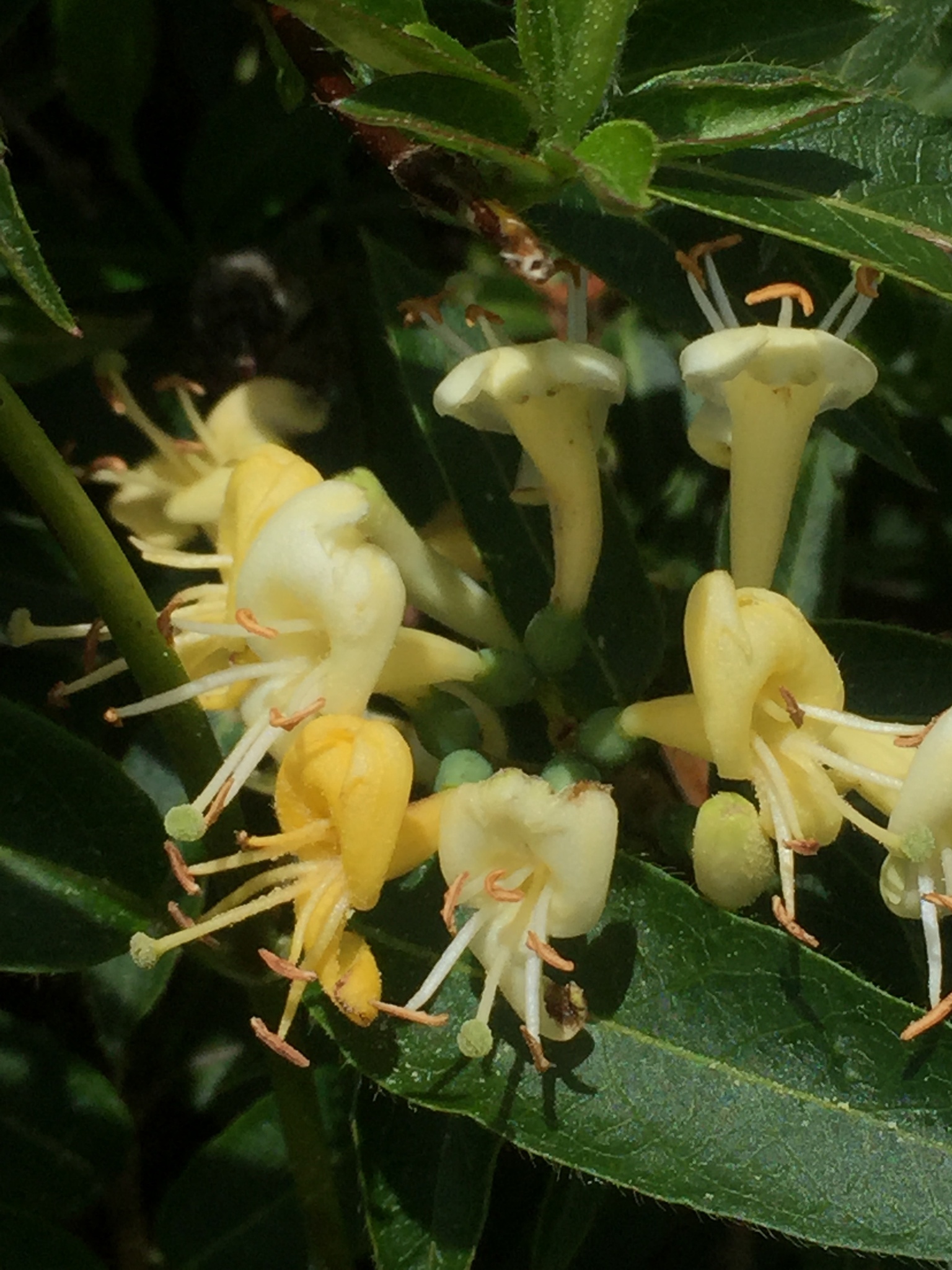




© photo
(c) jenchai, some rights reserved (CC BY-NC) · cc-by-nc
Wikimedia Commons · CC BY-SA or Public Domain
Wikipedia · CC BY-SA
Taken Oct 3, 2006 by Royal Botanic Garden Edinburgh - Anonymous (cc-by-nc)
© copyright of the Board of Trustees of the Royal Botanic Gardens, Kew.




Global distribution
POWO accepts Lonicera acuminata as native from the Himalayas to China and western Malesia, and introduced in several European countries. Lonicera henryi is included among its synonyms.
- Native4
- Introduced1
- Eastern Himalayas
- Central and southern China
- Myanmar and Vietnam
- Java, Sumatra, and the Philippines
- Great Britain, Ireland, and Germany
Hexagons: regions where the plant occurs. Green dots: native range.2
Identity
Henry's honeysuckle (Lonicera acuminata Wall., 1824) is a climbing species in the Caprifoliaceae family. POWO accepts this name and gives a broad native range from the Himalayas to China and Southeast Asia. The familiar horticultural name Lonicera henryi is treated here as a synonym. 2 4
Nursery labels and older garden descriptions often use Lonicera henryi. Retaining that name alongside Lonicera acuminata helps identify the plant without confusing its horticultural name with a different species. The synonym explains why seemingly different labels can refer to the same vigorous climber. 3 1
This species is a climbing honeysuckle, often sold for evergreen or semi-evergreen foliage. Its needs for support and pruning, and the precautions surrounding berries, belong in that context. A shrubby honeysuckle grown as a hedge has a different habit and should not be confused with it. 5 6
Within Lonicera, both shrubs and climbing vines occur. A genus name alone does not establish how a plant grows. Fragrant grove honeysuckle, also called vine honeysuckle, is considered here as a climber for a substantial support rather than as a free-standing hedge shrub. 7 8
Lonicera henryi and the accepted name
POWO includes Lonicera henryi among the synonyms of Lonicera acuminata. The accepted species name and familiar nursery name therefore belong together when reading a plant label. Their different wording should not be taken as evidence of two distinct garden plants with separate identities. 2
For gardeners, Henry's honeysuckle provides a readable common name, while Lonicera acuminata identifies the accepted taxon used here. Keeping both in view connects horticultural advice under the older name with the vigorous climbing plant encountered under its accepted botanical name.
Older descriptions may emphasize vigorous growth and evergreen leaves. Those observations need a climate qualification: foliage persists under mild conditions but becomes less persistent in cold winters. Synonymy establishes identity; it does not promise the same seasonal behavior in every garden where the plant grows.
The familiar name Lonicera henryi remains useful even when treated as a synonym. A gardener can connect it with Lonicera acuminata and consider the climbing habit, seasonal foliage, and support needs together. The name history is most useful when it helps recognize the actual plant. 2 1
Recognition
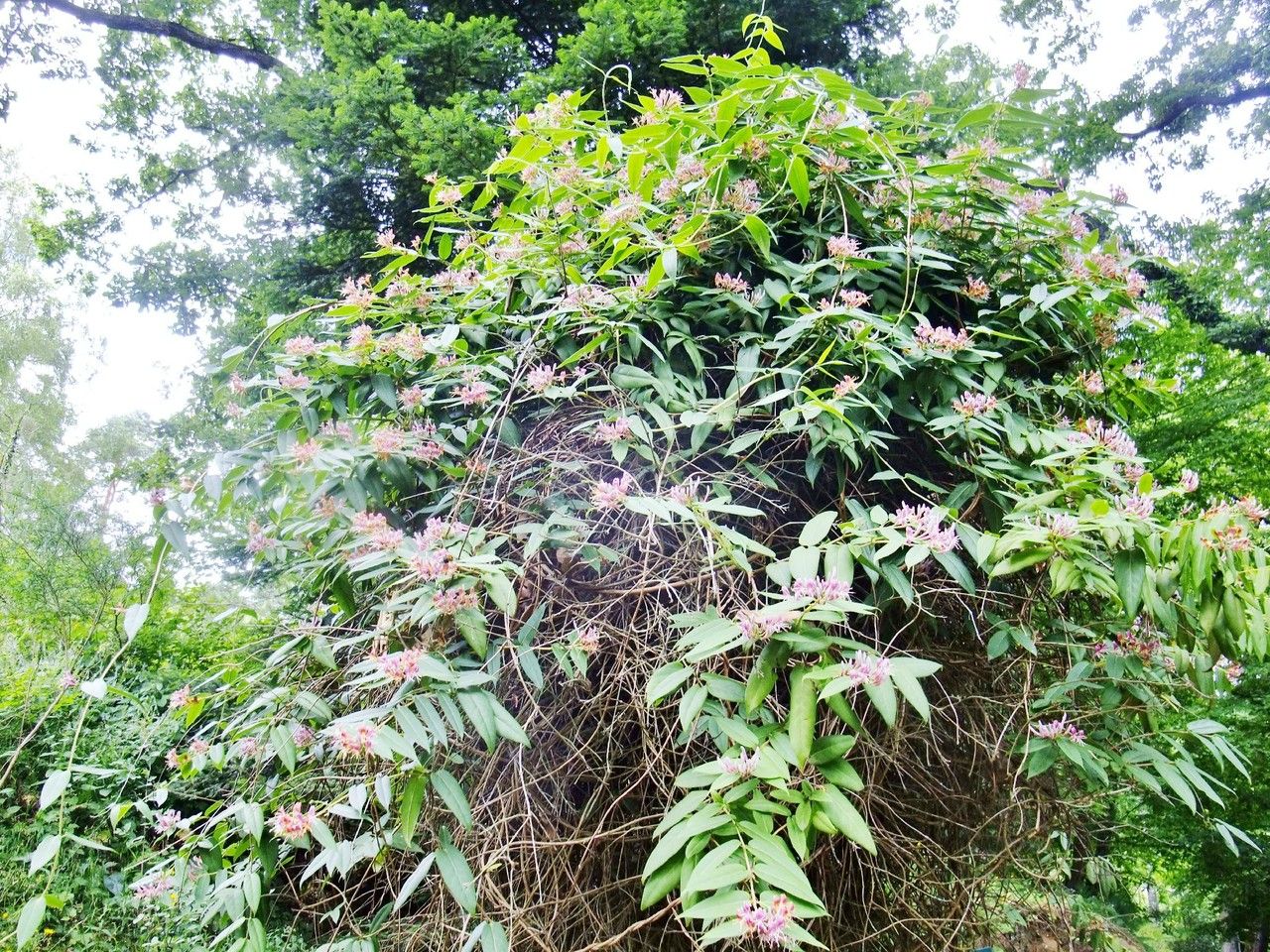
Woody twining stems make Lonicera acuminata a climbing vine. Shoots wind around and rest on available supports; without guidance, growth becomes tangled. Opposite leaves are fairly leathery. Their persistence depends on climate, and cold winters may leave the plant only semi-evergreen instead of fully clothed in leaves. 5
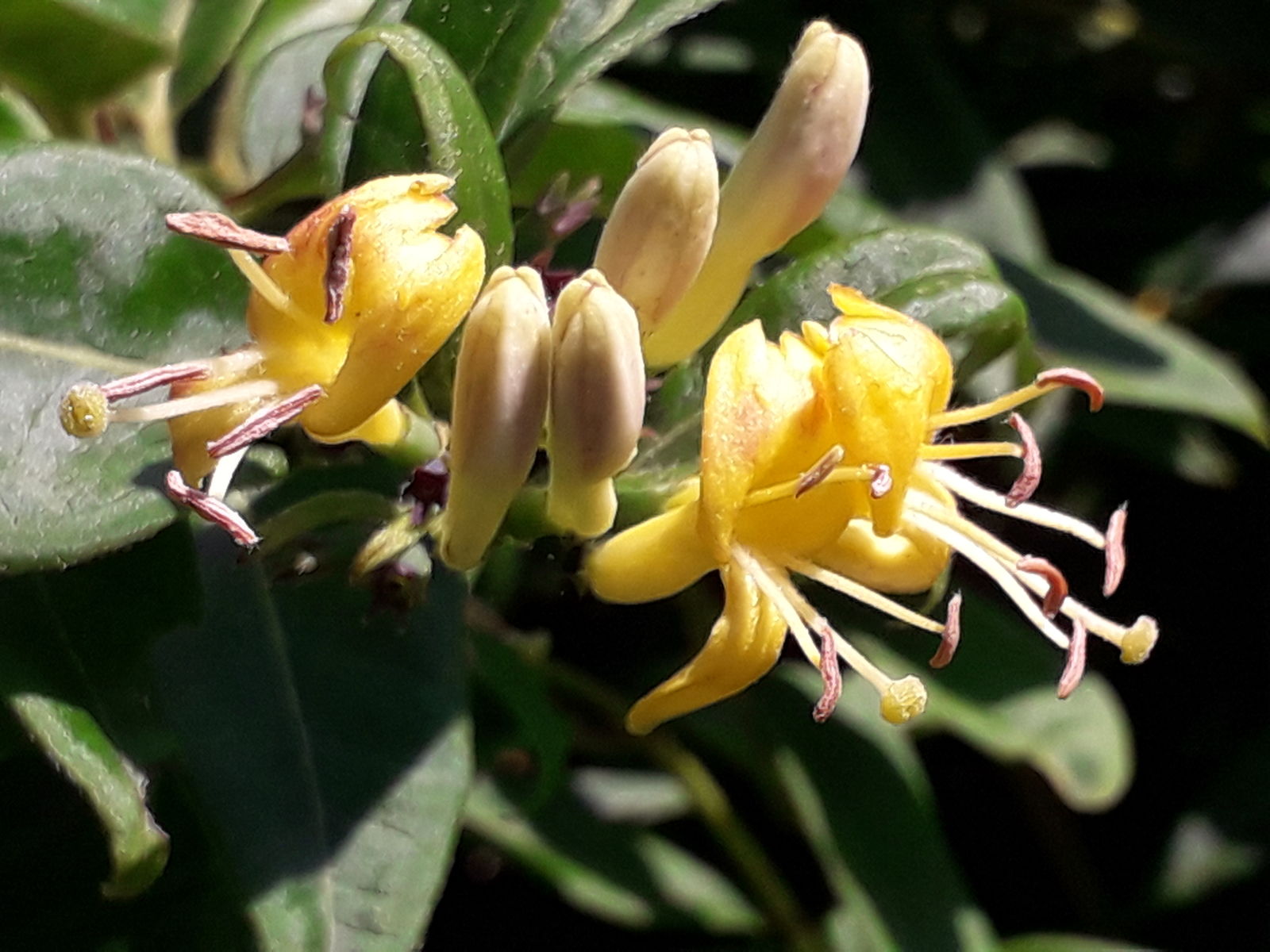
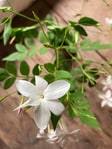
Tubular flowers have the characteristic honeysuckle shape, are often fragrant, and attract insects. Botanical and horticultural descriptions give colors ranging from yellow to reddish or purplish tones. The berries that follow are not table fruit and should not be treated as an edible garden harvest. 5 6
Vigorous growth needs to be anticipated before planting. A small lightweight arch can soon carry too much growth. A pergola, strong fence, or substantial screen provides a more suitable framework, allowing the vine to form a living screen on a structure capable of supporting it.
Mild winters may leave much of the foliage in place, while marked cold causes more leaf fall. Semi-evergreen is therefore a useful description. It acknowledges leaf retention under favorable conditions without guaranteeing an evergreen screen in every climate or through every winter. 5 2
Growing and support
A cool, moist root zone, fertile well-drained soil, and bright light suit this honeysuckle. Full sun can work if sufficient water is available; bright partial shade reduces summer stress. Deep shade encourages leaves while reducing the number of flowers the plant produces. 6
Install the support when planting. Strong wires, a securely fixed grid, or a stable pergola prevent the need to relocate established twining stems later. Soft ties are preferable to tight fastenings, which can constrict young shoots as the stems increase in thickness during growth.
Pruning maintains an open framework. Remove dead wood, shorten overly long stems, and thin growth winding around itself. Left unpruned, a vigorous vine can shade its own branches and develop crowded growth that favors powdery mildew. Keeping the framework open also makes the plant easier to inspect. 5
Container growing is possible but more demanding. Provide a large container, substantial trellis, regular watering, and partial renewal of the growing medium. A small decorative pot against a hot wall is poorly suited to a climber with this vigor and need for root moisture.
Light regular pruning is preferable to a drastic cut after years of neglect. It keeps young flowering shoots accessible, reduces tangled knots of stems, and offers a chance to check whether growth is reaching a gutter or neighboring tree beyond the intended support. 6 7
Safety and berries
Available sources do not establish major species-specific toxicity comparable to highly poisonous garden plants such as aconite or oleander. This warrants caution, rather than a claim of edibility. The reliable advice for garden use is to keep berries and leaves out of food. 5
In gardens used by children or animals, keep tempting berries out of reach. After an isolated ingestion, watch for digestive symptoms; a substantial quantity calls for medical or veterinary advice. Insects visiting flowers for nectar do not make the plant suitable for cooking. 6
Structural problems can be more familiar than ingestion: broken branches, bent supports, or shoots reaching a gutter. Annual pruning helps prevent these problems and keeps the vine manageable. A strong framework and regular checks are part of accommodating a vigorous climbing plant.
Choosing a garden climber
An evergreen-climber label bearing Lonicera henryi refers here to the accepted species Lonicera acuminata. The familiar name remains useful, but botanical identity is the starting point for understanding the plant. Its vigor and support needs deserve attention before selecting a planting site. 2 3
Leaf retention, support strength, and inedible berries are practical considerations when choosing this vine. Evergreen behavior depends on climate; the climbing framework must be substantial; and berries should stay out of food. These details explain what to expect beyond the name on the label.
The older name remains a useful way to recognize the plant, while the accepted name brings its identity together. Read both as connected names for one species, then judge its suitability by available space, the strength of the support, and the conditions in the garden. 4 1
Main sources
Frequently asked questions
Is Lonicera henryi a different species?
Lonicera henryi is treated here as a synonym of the accepted species Lonicera acuminata. The familiar horticultural name remains useful for identifying the plant.
Does it keep its leaves all year?
It is semi-evergreen to evergreen depending on climate. Cold winters can cause some foliage to fall.
Are the berries edible?
They should not be eaten. Keep them away from curious children and animals.
Where should I plant it?
Choose a pergola, fence, or sturdy trellis with moist, well-drained soil.
Is it invasive in France?
It is not classified as invasive in France here, but its vigorous growth requires pruning and monitoring in naturalistic gardens.
Can it grow in a container?
Yes, in a large, well-drained container, but it needs a sturdy support and more regular watering than a plant in the ground.
Similar plants
If you are unsure about a plant’s toxicity, ask a botanist or veterinarian for advice.