
blue honeysuckle (Lonicera caerulea, )

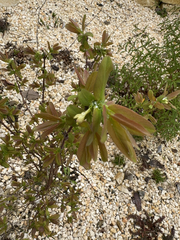

blue honeysuckle (Lonicera caerulea), also called honeyberry or haskap, is a deciduous fruit shrub in the Caprifoliaceae family, native across the cool temperate Northern Hemisphere. Its elongated blue berries are edible, unlike the toxic berries of many ornamental honeysuckles. This very cold-hardy shrub needs two nearby cultivars for effective cross-pollination.
Read moreblue honeysuckle, Honeyberry and Haskap


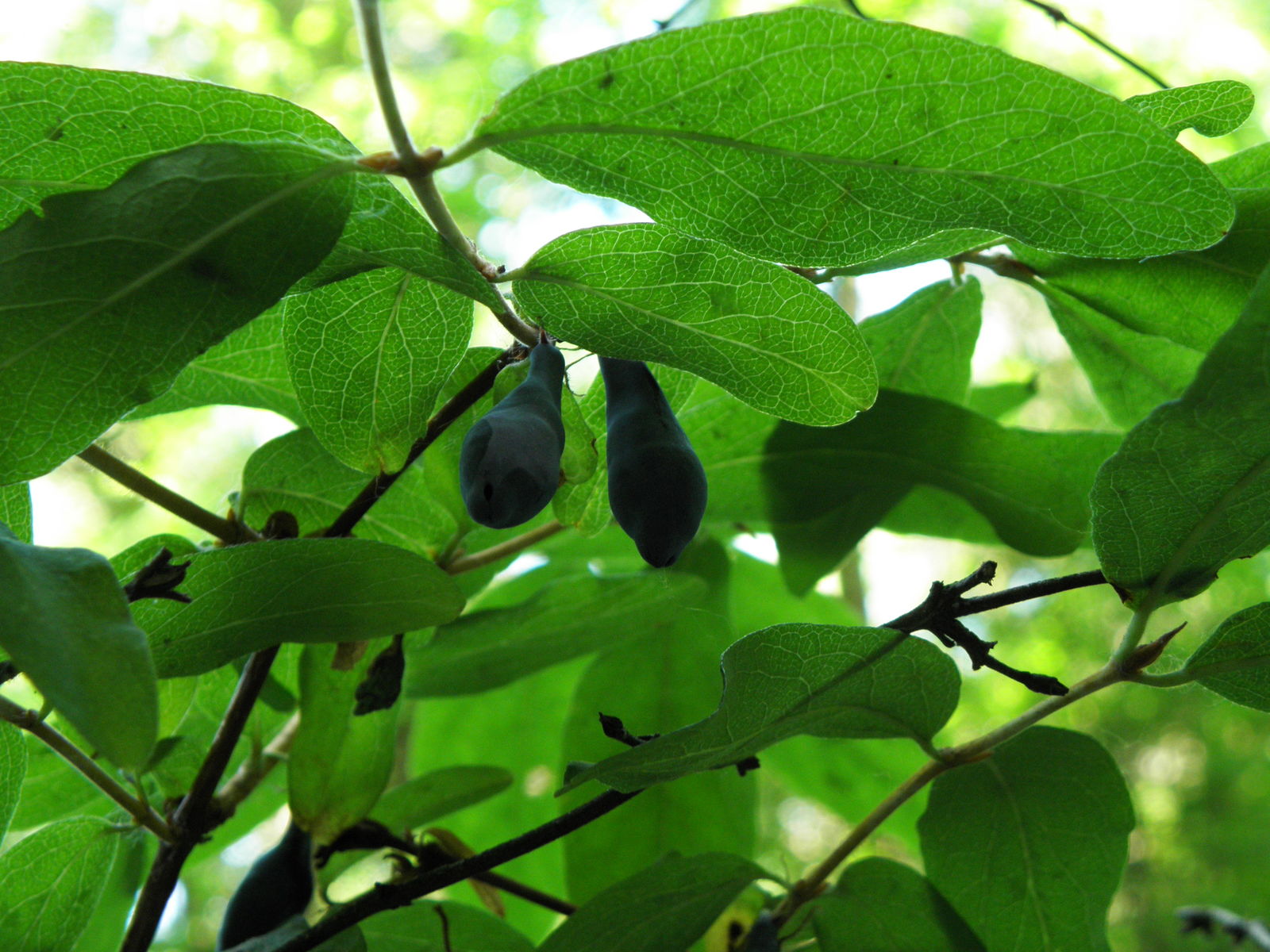
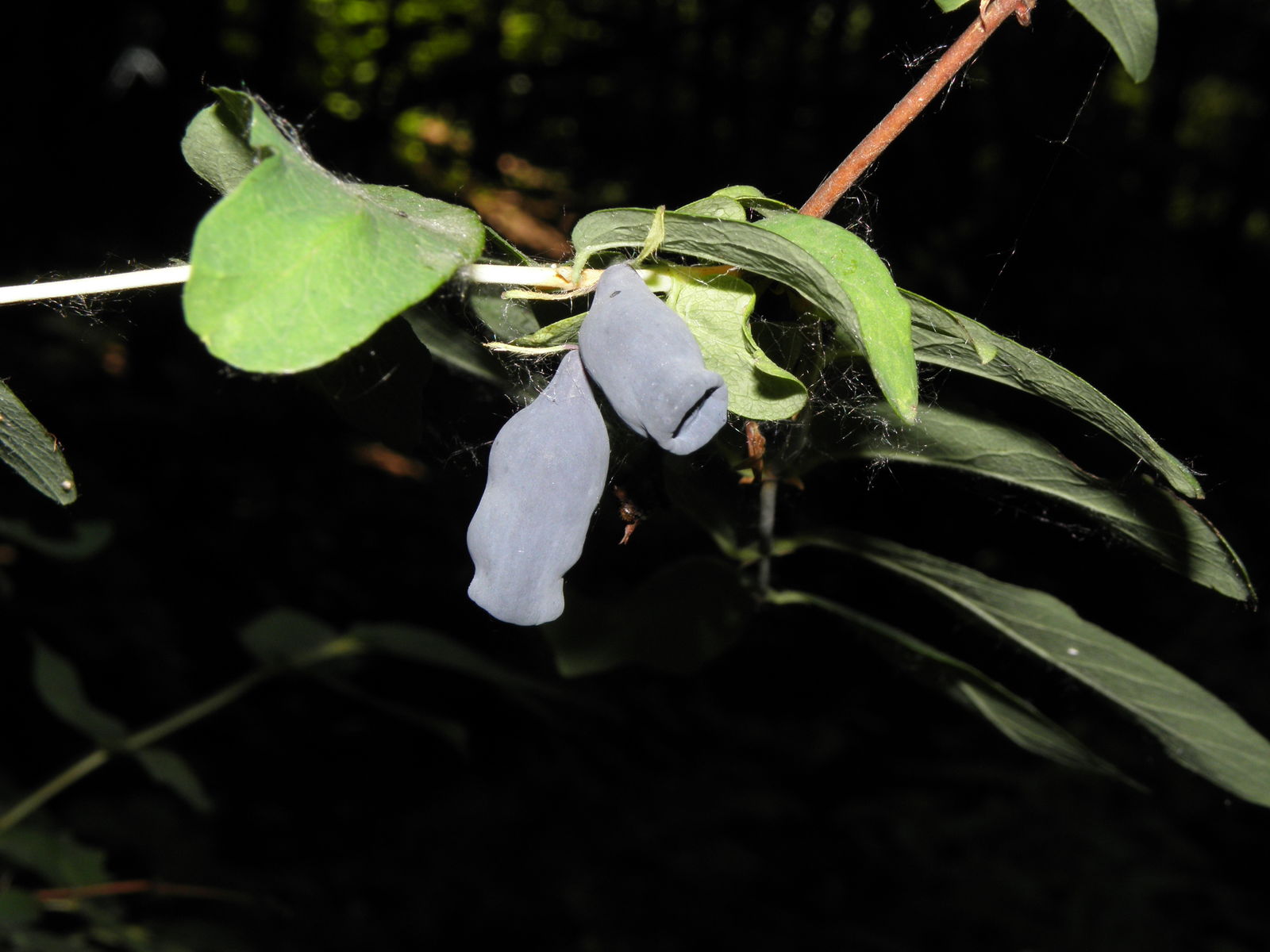
© photo
(c) 2008 Barry Breckling, some rights reserved (CC BY-NC-SA) · cc-by-nc-sa
Codrin Bucur · cc-by
Wikimedia Commons · CC BY-SA or Public Domain
Taken Jul 10, 2007 by Tela Botanica − Michel POURCHET (cc-by-sa)
Taken Jan 1, 1970 by Photoflora - L'Abbé COSTE (©)
Taken Aug 5, 2019 by Pe Roberta (cc-by-sa)
© copyright of the Board of Trustees of the Royal Botanic Gardens, Kew.




Global distribution
Lonicera caerulea has a circumpolar native range across cold and temperate parts of the Northern Hemisphere, from central and northern Europe through Siberia and Japan to boreal North America. Widely planted for its berries beyond that range, it should be distinguished from the regions where it occurs naturally.
- Native7
- Metropolitan France
- Poland
- Russia
- Finland
- Japan
- Canada
- United States
Hexagons: regions where the plant occurs. Green dots: native range.1
Identity
blue honeysuckle (Lonicera caerulea L., 1753), also known as honeyberry or haskap, is a deciduous fruit shrub in the genus Lonicera, family Caprifoliaceae. Its elongated, edible blue berries ripen before most other small fruits. 1 4
Among honeysuckles, it stands out as an edible exception: most ornamental species produce toxic red berries. Rather than climbing, blue honeysuckle forms a dense bush of upright branches, usually 1–2 m (3–6.5 ft) tall. That distinction matters when choosing a place for it in a fruit garden. 2 3
Recognition
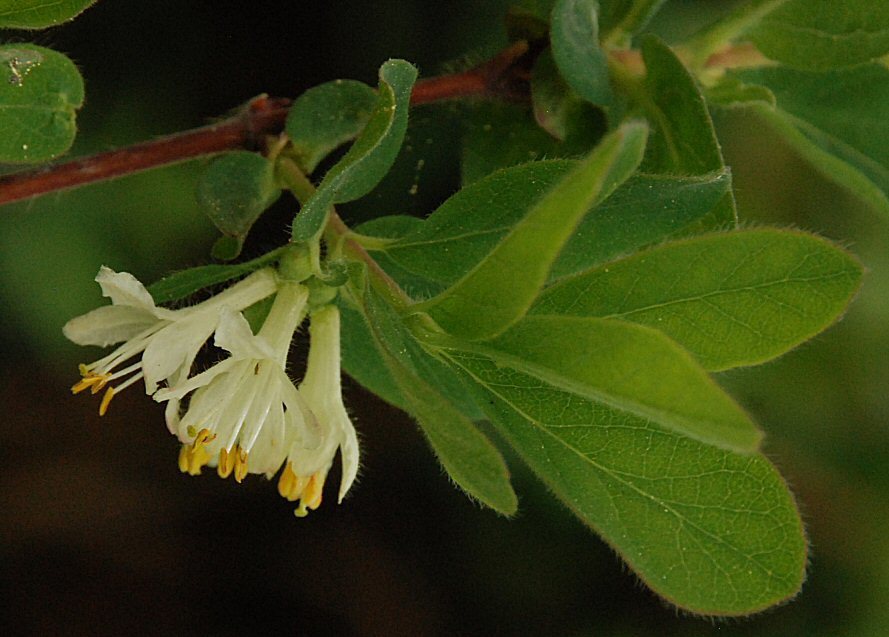
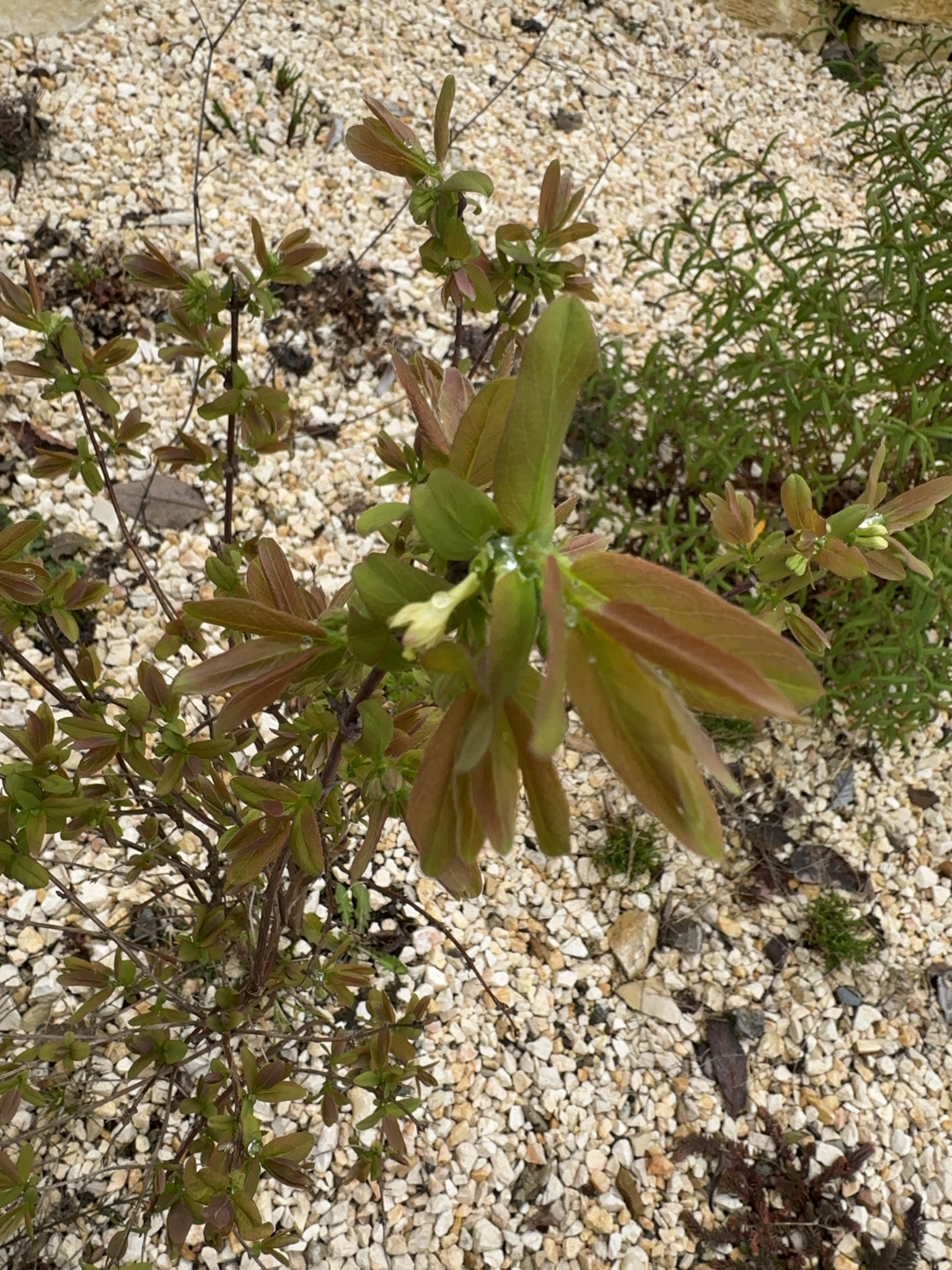
Opposite, oval leaves give Lonicera caerulea its characteristic gray-green, slightly waxy appearance. They measure 3–8 cm (1–3 in) long. The thornless shrub has a compact framework of branches arising from the base, quite unlike the twining honeysuckles in the same genus. 3 5
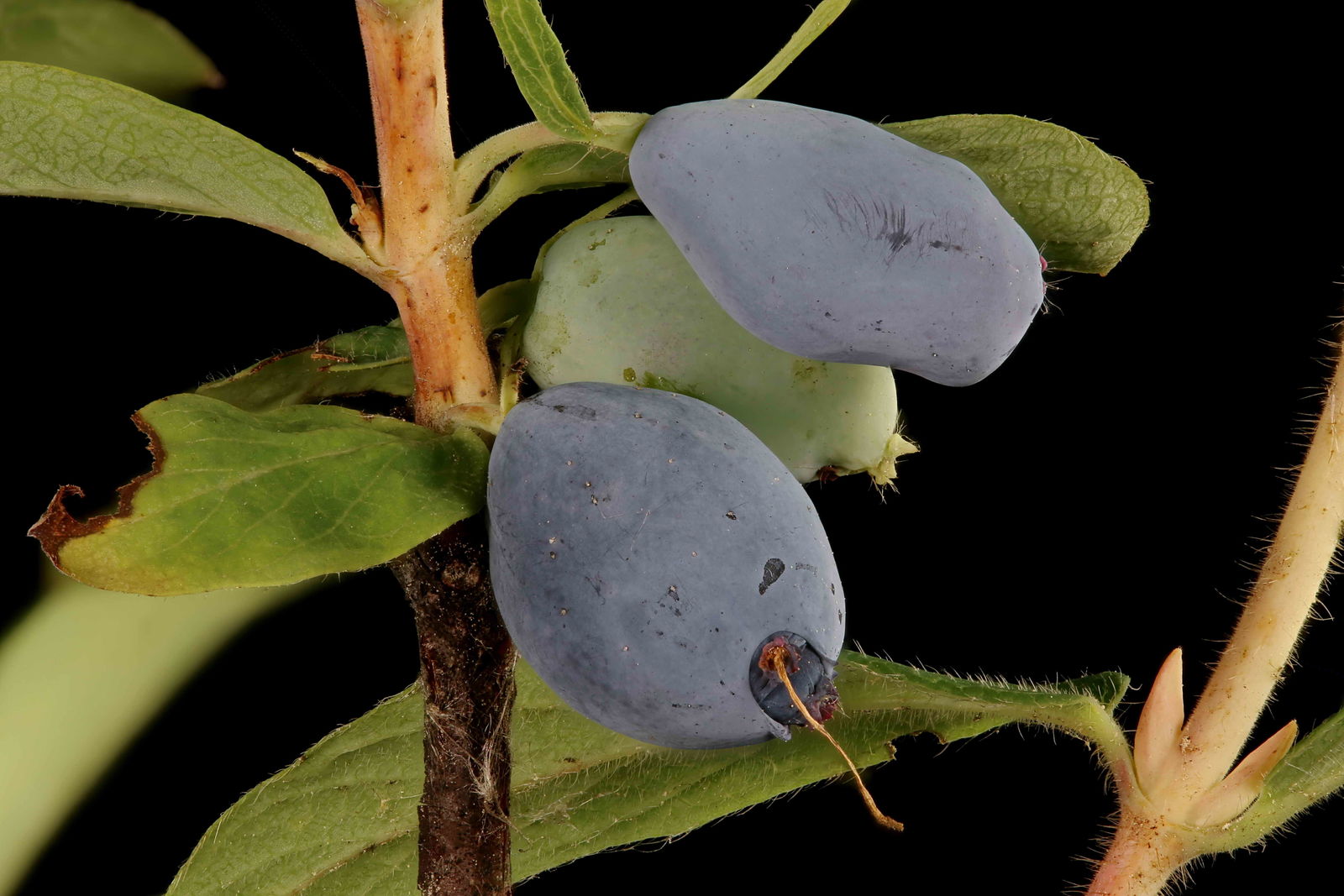
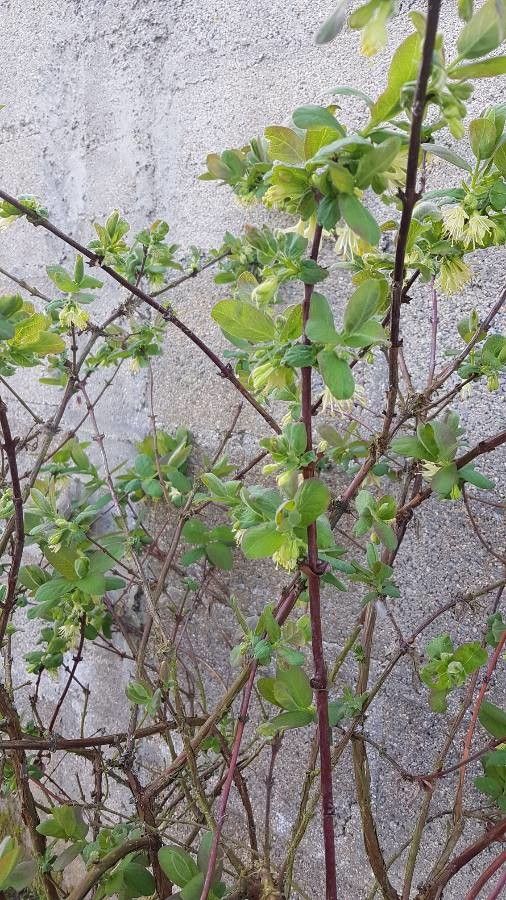
Small yellowish to whitish flowers open in pairs very early in the local spring and withstand frost remarkably well. They are followed by nearly cylindrical blue berries, about 1 cm (0.4 in) long, with a bluish waxy bloom. The fruits often appear as fused pairs. 4 2
Ripe berries have purple to blue flesh inside, a useful sign that they are ready to pick. Their tart blueberry-and-black-currant flavor and elongated shape distinguish them from the round fruits borne in clusters by nearby Ribes. Check the flesh as well as the outer color when assessing ripeness. 5 3
Useful taxonomy
The name Lonicera caerulea L. dates to Linnaeus's description in 1753. The honeysuckle genus Lonicera belongs to Caprifoliaceae. POWO's current treatment distinguishes synonyms of the species name from accepted taxa below species rank. It lists five homotypic synonyms:
- Caprifolium caeruleum (L.) Lam.
- Chamaecerasus caerulea (L.) Delarbre
- Euchylia caerulea (L.) Dulac
- Isika coerulea (L.) Medik.
- Xylosteon caeruleum (L.) Dum.Cours.
POWO separately accepts the following six infraspecific taxa; these are not the species-name synonyms listed above:
- Lonicera caerulea subsp. altaica (Pall.) Gladkova
- Lonicera caerulea subsp. borbasiana (Kuntze) E.Mayer
- Lonicera caerulea subsp. caerulea
- Lonicera caerulea var. cauriana (Fernald) B.Boivin
- Lonicera caerulea subsp. pallasii (Ledeb.) Browicz
- Lonicera caerulea subsp. stenantha (Pojark.) Hultén ex A.K.Skvortsov
Ranks differ between taxonomic treatments. GRIN lists Lonicera caerulea var. edulis, var. emphyllocalyx, and var. kamtschatica among its conspecific taxa. Those combinations should not be automatically equated with subspecies in another classification or all presented as synonyms of the species name.
The accepted scientific name, Lonicera caerulea, remains the dependable reference. Names such as Tundra and Borealis identify horticultural selections, rather than separate botanical species. Keeping those two kinds of names distinct makes it easier to understand plant labels and choose compatible fruiting cultivars. 1 7
Habitat and distribution
Across the Northern Hemisphere, Lonicera caerulea occupies cold and temperate regions in a circumpolar range: central and northern Europe, Siberia, Japan, and boreal North America. Its habitats include moist boreal forests, peatlands, and cool streambanks. This is a shrub of cool northern landscapes, rather than a tropical fruit crop. 1 6
Wild plants favor moist soils, often acidic and peaty, at damp woodland edges or beneath light tree cover. That boreal background helps explain the shrub's exceptional cold hardiness and very early flowering, suited to short, cold springs. In a garden, its tolerance of cold should not be mistaken for tolerance of dry soil. 3 5
Widely cultivated for its berries, particularly in Canada, Russia, and Japan, blue honeysuckle is now planted far beyond its original range. Those cultivated areas remain distinct from its native Eurasian and North American distribution. A plant growing in a local fruit garden does not, by itself, indicate that the species is native there. 6 4
Life cycle and reproduction
One of the first fruit shrubs to flower in the local spring, blue honeysuckle opens yellowish flowers that tolerate frost. It is largely self-incompatible: at least two different cultivars with overlapping flowering times must grow nearby for effective cross-pollination and good fruit set. Simply planting two examples of the same cultivar does not meet that requirement. 2 3
Pollinated flowers develop into elongated blue berries, usually ripe in late spring or early summer, ahead of most other small fruits. Follow the local season rather than transferring Northern Hemisphere dates directly to another climate. Pick them fully ripe, when the flesh inside is purple, for fresh eating or processing. Seed propagation is possible and is used chiefly in breeding. 5 4
In cultivation, hardwood cuttings are the more usual method: pieces of mature shoot about 15 cm (6 in) long are planted outdoors in the local fall, rooting through winter to produce young plants in spring where conditions allow. Growth is fairly slow, with full production reached three to four years after planting. 2 5
Uses and risks
For most growers, blue honeysuckle is primarily a food crop. Its berries are eaten raw or cooked and made into jams, jellies, juice, ice cream, and baked goods. Their tart flavor, reminiscent of blueberries and black currants, makes them especially valued in cold regions where few other small fruits perform as well. 4 5
Identification is the main safety concern. Most ornamental Lonicera, including Lonicera tatarica and Lonicera xylosteum, carry toxic red berries that should not be eaten. Within this comparison, Lonicera caerulea, with elongated blue berries, is the recognized edible species. No toxicity is reported for its fruit in humans or common domestic animals; that statement concerns this species and its fruit, rather than honeysuckles as a whole. 3 2
Varieties, look-alikes, and related plants
Fruit cultivars come from Canadian, Russian, and Japanese breeding programs; they are selections of the species, not separate species. Tundra and Borealis are productive selections with large berries. Aurora is vigorous and useful as a pollinator, while Indigo Gem bears firm berries with a balanced flavor. Because the species is self-incompatible, always combine at least two cultivars whose flowering times overlap.
The most consequential look-alikes are ornamental honeysuckles with red, toxic berries:
- Lonicera tatarica, Tatarian honeysuckle, bears red berries that are not edible;
- Lonicera xylosteum, fly honeysuckle, is a wild shrub with toxic red berries;
- Lonicera periclymenum, European woodbine, is a climber with red berries.
An elongated blue berry, purple flesh at full ripeness, and a bushy, non-climbing habit remain the clearest features for confirming edible blue honeysuckle, Lonicera caerulea. Consider those traits together rather than treating berry color alone as sufficient identification. The shrub's growth habit is particularly helpful when comparing it with a honeysuckle that twines around a support. 3 1
Main sources
- Plants of the World Online / Kew, Lonicera caerulea L.
- Royal Horticultural Society, Lonicera caerulea
- Missouri Botanical Garden, Lonicera caerulea
- Encyclopaedia Britannica, honeysuckle
- Plants For A Future, Lonicera caerulea
- USDA PLANTS Database, Lonicera caerulea L.
- USDA GRIN Taxonomy, Lonicera caerulea L.
Frequently asked questions
Are blue honeysuckle berries edible?
Yes. The elongated blue berries of Lonicera caerulea are edible, fresh or processed. It is an edible exception in Lonicera, a genus in which most ornamental species have toxic red berries.
Do I need more than one blue honeysuckle to harvest fruit?
Yes. The species is largely self-incompatible. Plant at least two different cultivars that flower at the same time to ensure cross-pollination and good fruit set.
How cold-hardy is blue honeysuckle?
It is one of the hardiest cultivated fruit shrubs, tolerating cold of around -45 °C (-49 °F). Its early flowers also tolerate late-winter frost.
When are blue honeysuckle berries harvested?
Harvest falls in late spring or early summer, before most other small fruits. The berries are ripe when the flesh inside has turned purple to blue; use local seasons rather than a fixed calendar date.
Where should I plant blue honeysuckle?
Full sun gives the best harvests, but the shrub tolerates partial shade, as in its cool woodland habitat. Moist, rich soil matters as much as sunlight.
What do haskap berries taste like?
Their tart flavor recalls blueberries and black currants, sometimes with a hint of grape. Eat them fresh or use them in jams, juices, ice cream, and baked goods.
Which plants can be confused with blue honeysuckle?
The main confusion is with other Lonicera honeysuckles that bear toxic red berries. Elongated blue berries and purple flesh remain the key features of this edible species.
Similar plants
If you are unsure about a plant’s toxicity, ask a botanist or veterinarian for advice.