
European honeysuckle (Lonicera periclymenum, )
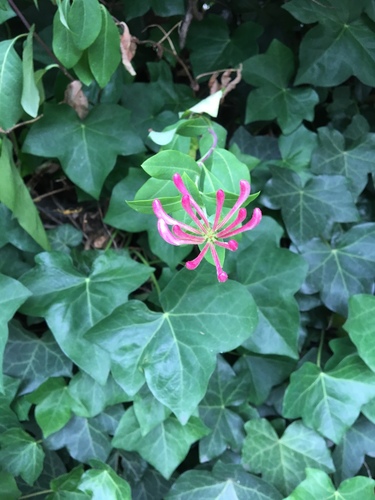
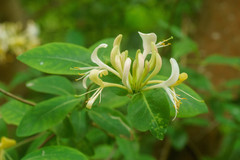
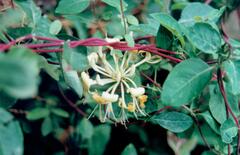
European honeysuckle (Lonicera periclymenum) is a woody twining vine in the Caprifoliaceae family, native to western and southern Europe south to Morocco. Its tubular cream-white to yellow flowers are intensely fragrant, especially at night, opening throughout summer before red berries develop in fall.
Read moreEuropean honeysuckle, Common honeysuckle and Woodbine
Give plenty of ambient light without direct sun on the leaves.
Roots in shade, flowering shoots in sun or partial shade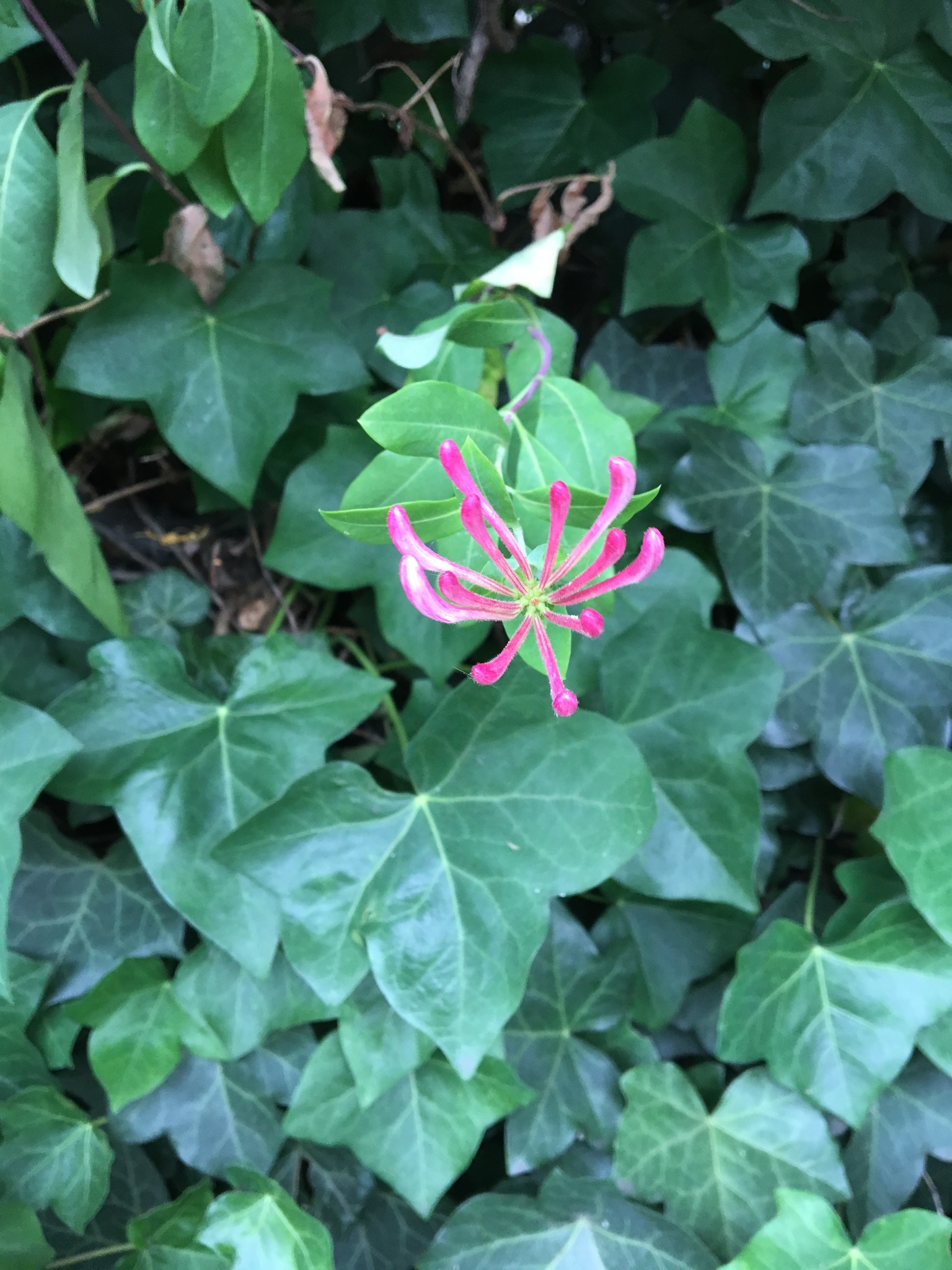
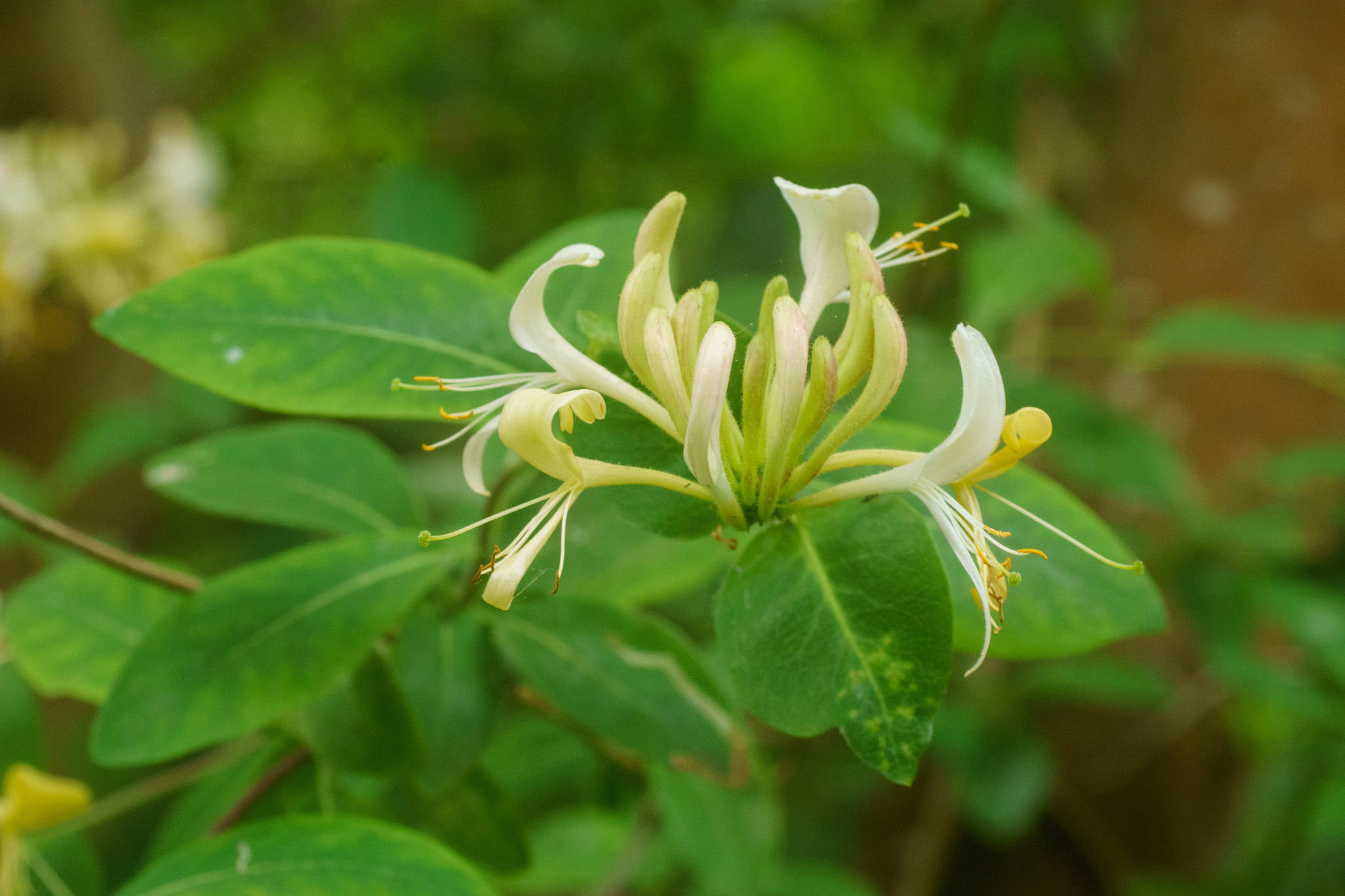
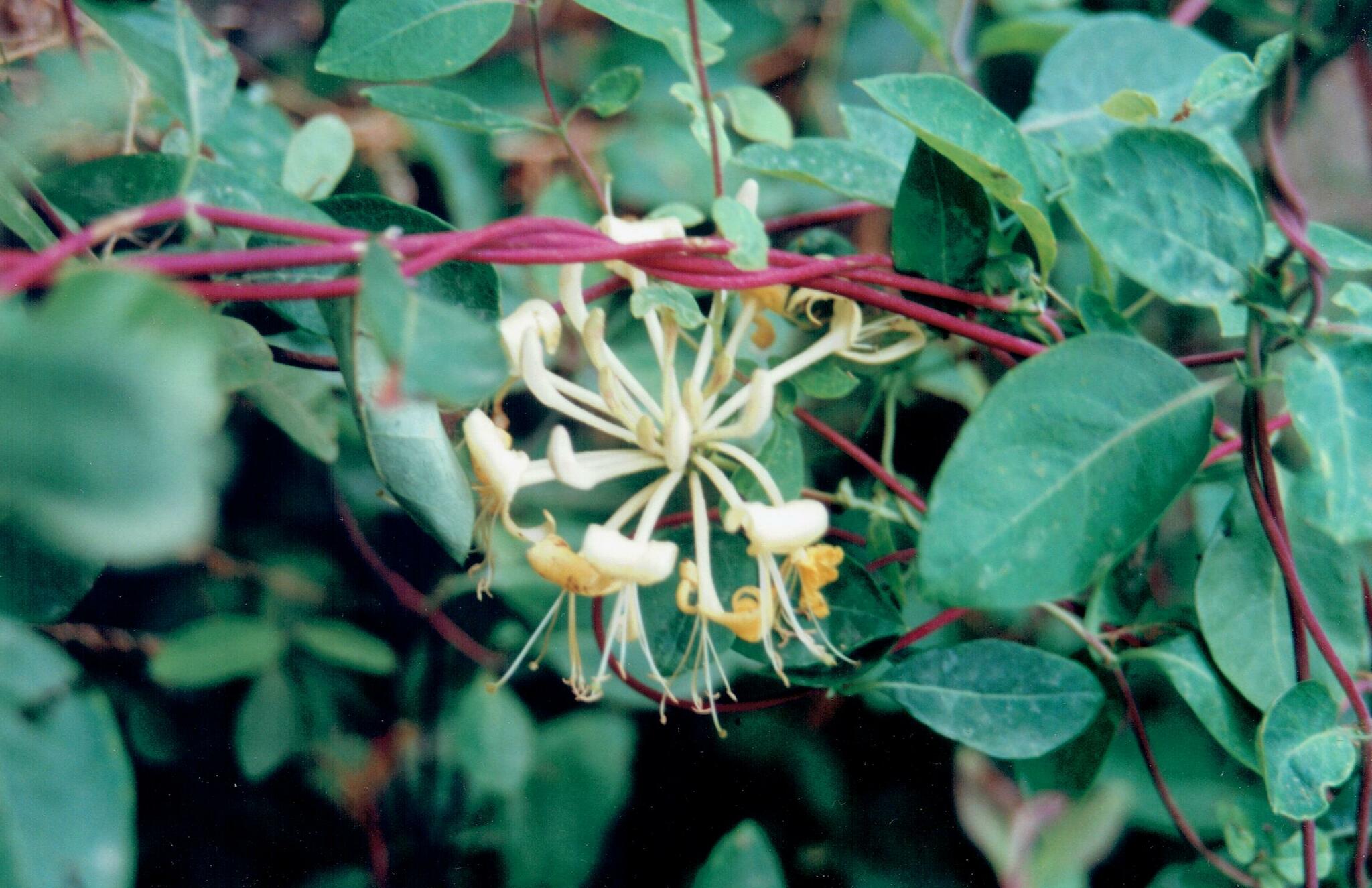
© photo
Carrie Seltzer · cc0
Derek Winterburn · cc-by
zebedeugalinha · cc-by
(c) Derek Winterburn, some rights reserved (CC BY) · cc-by
(c) zebedeugalinha, some rights reserved (CC BY) · cc-by
Global distribution
The native range of Lonicera periclymenum covers western and southern Europe, from southern Scandinavia to Morocco, extending east to Turkey and the Caucasus. In France it occurs almost throughout the country except along the Mediterranean fringe, where other honeysuckles take its place.
- Native7
- France
- United Kingdom
- Spain
- Morocco
- Germany
- Norway
- Turkey
Hexagons: regions where the plant occurs. Green dots: native range.1
Identity
European honeysuckle (Lonicera periclymenum L., 1753), also known as common honeysuckle or woodbine, is a woody twining vine in the Caprifoliaceae family. The genus Lonicera honors the 16th-century German botanist Adam Lonitzer. The Greek-derived epithet periclymenum refers to the plant winding around its support. 1 8
In the United Kingdom, Lonicera periclymenum is the only truly native honeysuckle species. In A Midsummer Night’s Dream, Shakespeare’s woodbine probably refers to this species in Act II, scene 1; in Act IV, scene 1, the identification is uncertain and may refer to a bindweed. Honeysuckle’s cultural familiarity also owes much to its fragrance, which becomes intense after dark. 7
Recognition
This deciduous vine has slender, woody, hollow stems. A left-twining climber, it winds around a support without tendrils or holdfasts. Established plants grow quickly, commonly reaching 3–8 m (10–26 ft) high with a spread of 2–4 m (6.5–13 ft). 3 8
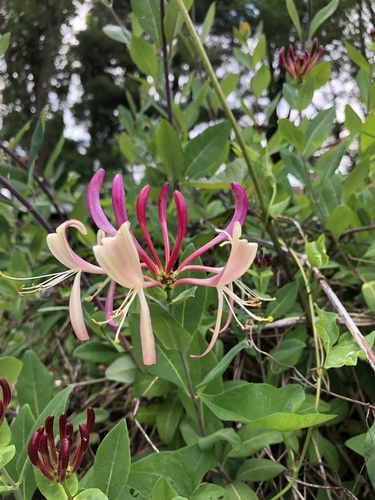
Opposite, oval to elliptical leaves have short stalks or none at all. Their bases remain separate, including immediately below the flowers. The tubular, two-lipped flowers form dense terminal whorls of 4–17 flowers, each 3–5 cm (1.2–2 in) long. Creamy white to yellowish when they open, often flushed reddish purple outside, they become yellower with age. 7 3
A faint daytime scent becomes powerful at night, attracting long-tongued moths; long-tongued bees can also reach the nectar deep inside the floral tube. Bright red berries follow in small clusters, ripening in late summer and fall. 7
Useful taxonomy
Published in Species Plantarum in 1753, Lonicera periclymenum L. is the name accepted by POWO/WCVP. Several regional varieties and forms have been described, notably in the Iberian Peninsula and Morocco, where plants are sometimes distinguished as Lonicera periclymenum subsp. hispanica (Boiss. & Reut.) Nyman. 1 2
Leaves near the flowers remain separate in Lonicera periclymenum. In its close relative Lonicera caprifolium, the upper leaves fuse into a collar around the stem. This difference in leaf structure is clearer than flower color and often settles identification in the field. 4
Habitat and range
Western and southern Europe, from southern Scandinavia south to Morocco, form the native range, with an eastward extension to Turkey and the Caucasus. In France, the species occurs across almost the whole country except the Mediterranean zone, where honeysuckles better adapted to dry summers take its place. 7 8
Woodland edges, hedgerows, scrub, and shady thickets provide its typical habitat. In the wild it generally avoids strongly calcareous soils. Garden plants are considerably more tolerant, growing in clay, loam, or sand, whether calcareous or not. 4 3
Thrushes and bullfinches eat the berries, dispersing the seeds after digestion. The hazel dormouse, a small woodland rodent, weaves the fibrous bark into its summer nest and drinks the flower nectar. Outside its native range the vine is cultivated as an ornamental and is seldom reported as problematic, unlike Lonicera japonica, which is invasive in several temperate regions. 7
Life cycle and reproduction
Summer into early fall is the main flowering season, corresponding to June–September in the Northern Hemisphere conditions described. In mild climates flowering may continue until the first frosts; the calendar shifts with hemisphere and local conditions. Flowers are hermaphroditic and self-fertile. Long-tongued moths and long-tongued bees pollinate the flowers, reaching nectar deep in the floral tube; honeybees are largely excluded. 4 7
Bright red berries ripen in late summer and fall. Each berry is about 8 mm (0.3 in) across, with several gathered into small clusters. Garden propagation mainly uses stem cuttings with a node, taken from semi-ripe wood in summer. This is faster and more reliable than seed, which germinates slowly and irregularly after cold stratification. 8 4
Uses and risks
Walls, pergolas, wire fences, and old countryside hedges can all support European honeysuckle in a naturalistic or wildlife garden. Its traditional growing rule is simple: keep the roots shaded while allowing the flowering shoots to reach sun or light partial shade. 3 5
Dried flowers were historically used in herbal teas for coughs and respiratory ailments. The red berries are mildly toxic: large quantities have a purgative effect in humans. They are also considered toxic to dogs and cats and should remain out of young children’s reach. 4 8
Serious pest or disease problems are generally uncommon, although the vine remains susceptible to honeysuckle aphids, thrips, whiteflies, and powdery mildew. Mildew develops particularly when the roots lack water and air stagnates inside dense growth. 5
Varieties, look-alikes and related plants
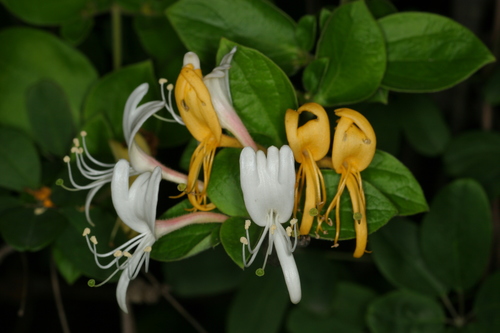
Two cultivars dominate the horticultural trade described: 'Serotina', with early, prolonged flowering and reddish-purple outer petals, and 'Graham Thomas', flowering later with creamy-white blooms that age to golden yellow. Both have received the Royal Horticultural Society’s Award of Garden Merit. 3
Several hedgerow climbers can be confused with this species. Asian Lonicera japonica is semi-evergreen and twines in the same direction, but becomes invasive outside its native range, unlike Lonicera periclymenum. Clematis vitalba climbs with its leaf stalks rather than winding its stems around a support. Hedera helix anchors itself with clinging aerial roots, a very different mechanism from honeysuckle’s twining growth. 7
How the plant attaches to a support is a more reliable identification feature than flower or berry color alone. These contrasting climbing mechanisms help distinguish Lonicera periclymenum in the field throughout the year.
Main sources
- Plants of the World Online / Kew, Lonicera periclymenum L.
- International Plant Names Index, Lonicera periclymenum L.
- Royal Horticultural Society, Lonicera periclymenum (wd)
- Plants For A Future, Lonicera periclymenum
- NC State Extension Gardener Plant Toolbox, Lonicera periclymenum
- Missouri Botanical Garden Plant Finder, Lonicera periclymenum
- Wikipedia (EN), Lonicera periclymenum
- Wikipedia (FR), European honeysuckle
Frequently asked questions
How can I tell Lonicera periclymenum from Lonicera caprifolium?
In Lonicera caprifolium, the leaves below the flowers are fused into a collar around the stem. In Lonicera periclymenum, the leaves always remain separate, even close to the flower cluster.
Is European honeysuckle poisonous?
The red berries are mildly toxic in large quantities, with a purgative effect described in humans. They are also considered toxic to dogs and cats and should be kept away from young children.
Why does my honeysuckle produce few or no flowers?
Insufficient light at the top of the vine and pruning before flowering are the two most common causes. Flowers form on the previous year’s wood, so pruning should wait until after flowering.
Which way does European honeysuckle twine?
The stem twines to the left around its support, without tendrils or holdfasts. This differs from a clematis, which climbs with its leaf stalks, or ivy, which anchors itself with aerial roots.
Is European honeysuckle invasive in France?
No. It is native to almost all of France outside the Mediterranean region. Invasive status mainly concerns Lonicera japonica, a related but distinct Asian species, outside its native range.
What is the difference between ‘Serotina’ and ‘Graham Thomas’?
‘Serotina’ flowers early and for a long period, with reddish-purple outer petals. ‘Graham Thomas’ flowers later in the season, with creamy-white flowers that age to golden yellow.
Can European honeysuckle grow in a container?
Yes, in a large container with a stake or small trellis, provided it is repotted regularly and watering is monitored. Potting mix dries out faster than soil in the ground.
Similar plants
If you are unsure about a plant’s toxicity, ask a botanist or veterinarian for advice.