
Fly honeysuckle (Lonicera xylosteum, )
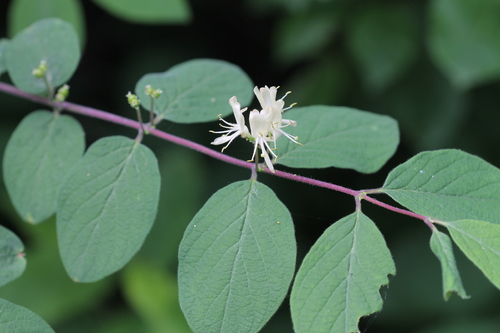
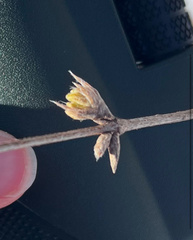
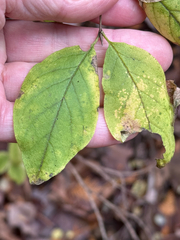
Fly honeysuckle (Lonicera xylosteum) is a deciduous shrub in the Caprifoliaceae family, native across most of Europe east to central Siberia and northeastern Turkey. It forms dense countryside hedges on calcareous soil, bearing white flowers that turn yellow in spring and glossy red berries in summer. Its wood is among the hardest in Europe, reflected in a species name that literally recalls bone. The berries are poisonous if eaten by people and several animals.
Read moreFly honeysuckle and Dwarf honeysuckle

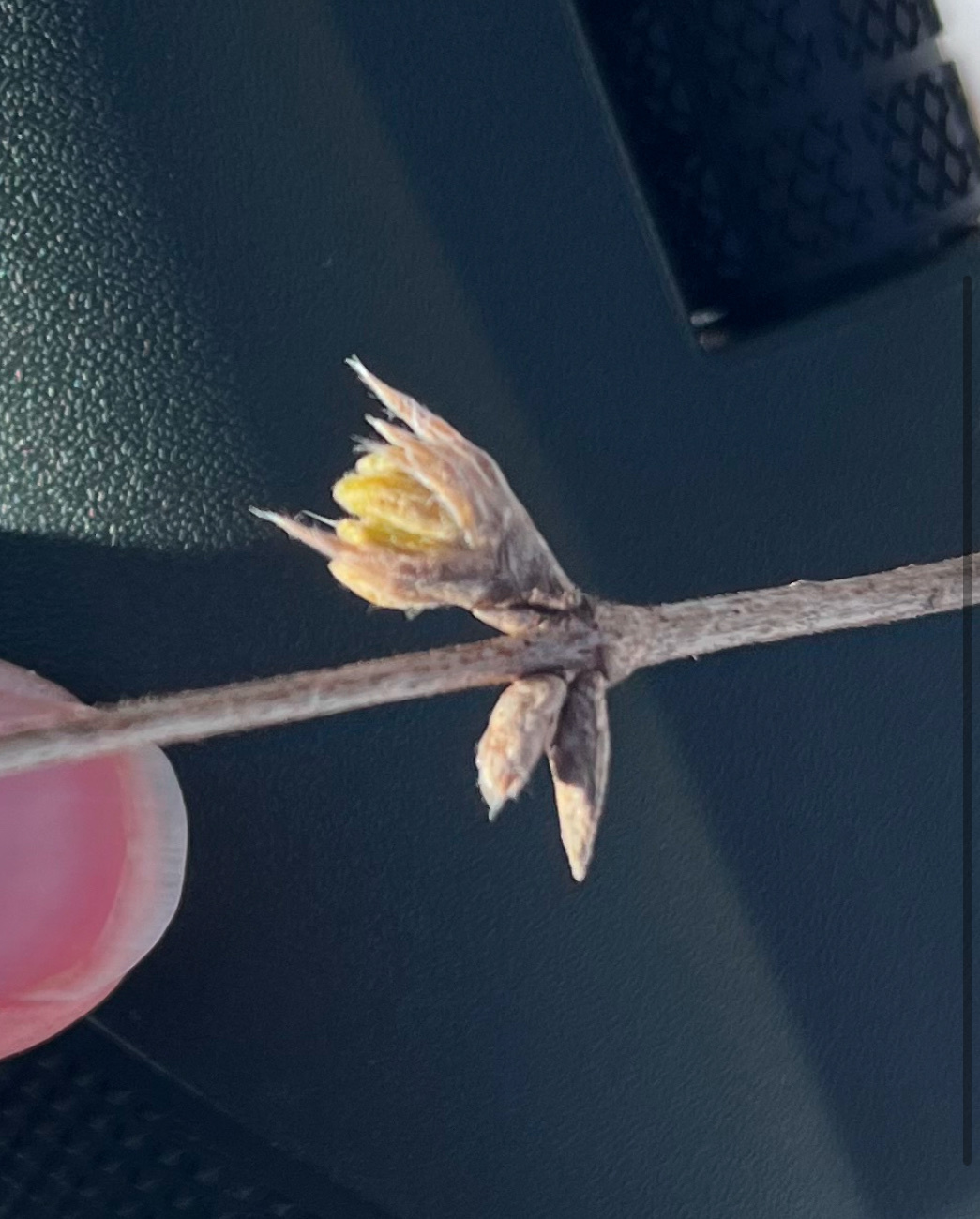


© photo
(c) Rob Routledge, some rights reserved (CC BY-NC), uploaded by Rob Routledge · cc-by-nc
iNaturalist User · cc0
Patrice Dupont · cc-by
Taken May 23, 2013 by Tela Botanica − Françoise CARLE (cc-by-sa)
Taken May 9, 2014 by Tela Botanica − Paul FABRE (cc-by-sa)
Taken Jun 1, 2013 by Tela Botanica − Françoise CARLE (cc-by-sa)
Taken May 27, 2021 by Alain Bigou (cc-by-sa)
Taken Jul 16, 2020 by nimye (cc-by-sa)
© copyright of the Board of Trustees of the Royal Botanic Gardens, Kew.


Global distribution
POWO/WCVP places the native range of Lonicera xylosteum across Europe, except the Mediterranean fringe and the far northeast, east to central Siberia (Altai) and northeastern Turkey. Introduced to North America as an ornamental shrub, it has naturalized in several northeastern and Midwestern states, where it is considered potentially invasive and discouraged for gardens.
- Native6
- Introduced1
- Invasive1
- Metropolitan France
- Germany
- Poland
- United Kingdom
- Russia (western Siberia)
- Northeastern Turkey
- Canada
- United States (Northeast and Midwest)
Hexagons: regions where the plant occurs. Green dots: native range.1
Identity
Fly honeysuckle (Lonicera xylosteum L., 1753) is a deciduous shrub in the Caprifoliaceae family, also called European fly honeysuckle or dwarf honeysuckle. Its French names include chèvrefeuille des haies, camérisier des haies, and chèvrefeuille à balais. The epithet xylosteum combines Greek xylon (wood) and osteon (bone), referring to yellowish wood so hard that it was once fashioned into pegs, spindles, and pipe stems. 1 9
Usually 1–3 m (3–10 ft) tall, occasionally reaching 4 m (13 ft) in favorable conditions, the shrub forms a dense bush with four-angled branches that turn from gray to reddish brown. Its young stems are hollow, distinguishing it from Lonicera nigra, which has solid pith, and from the introduced Lonicera tatarica, with hairless leaves. 2 3
Recognition
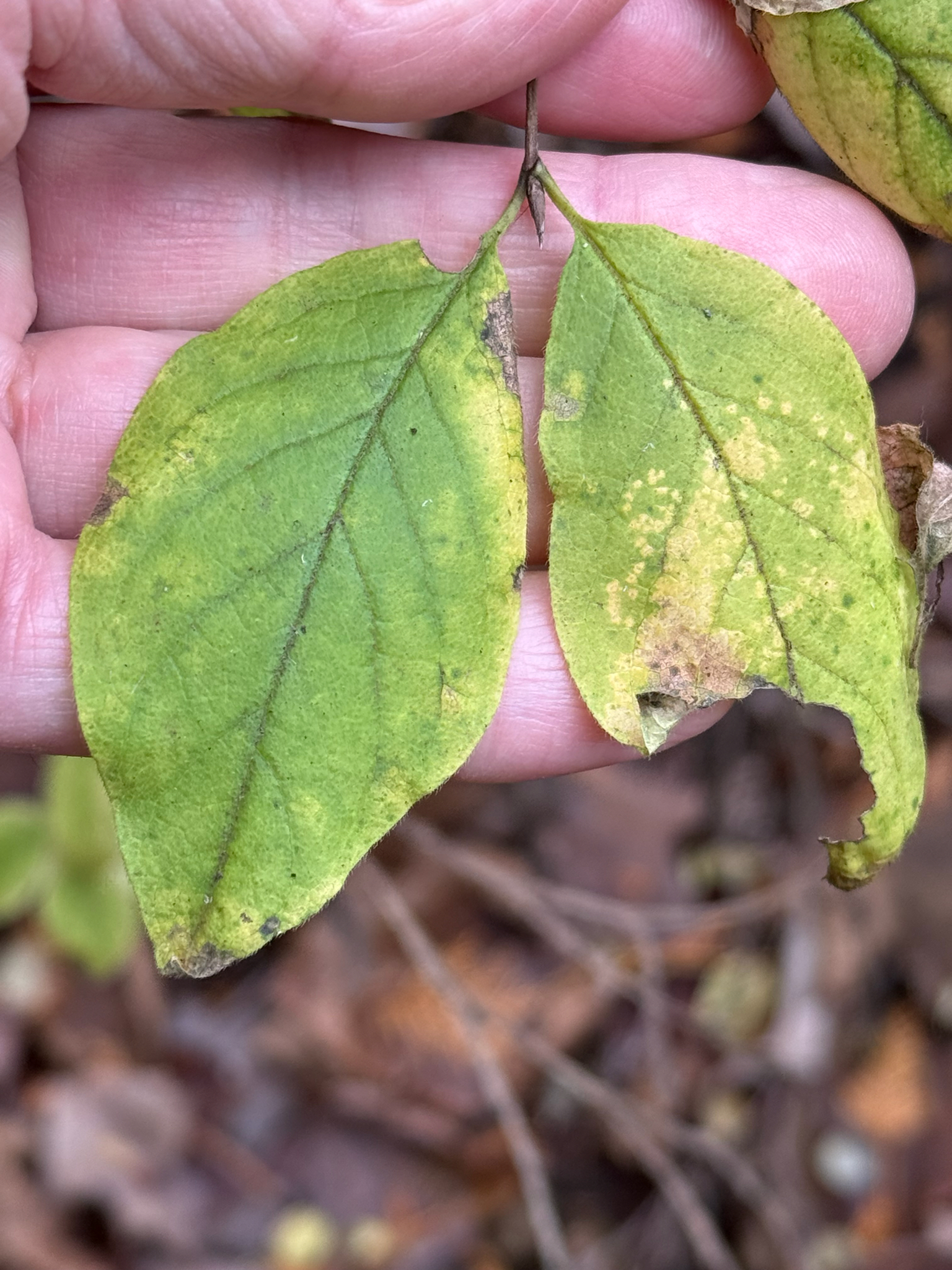
Opposite, oval to elliptical leaves measure 3–7 cm (1.2–2.8 in) long. Dense hairs cover their undersides, while only scattered hairs occur above. This difference can be felt before it is readily seen. 9
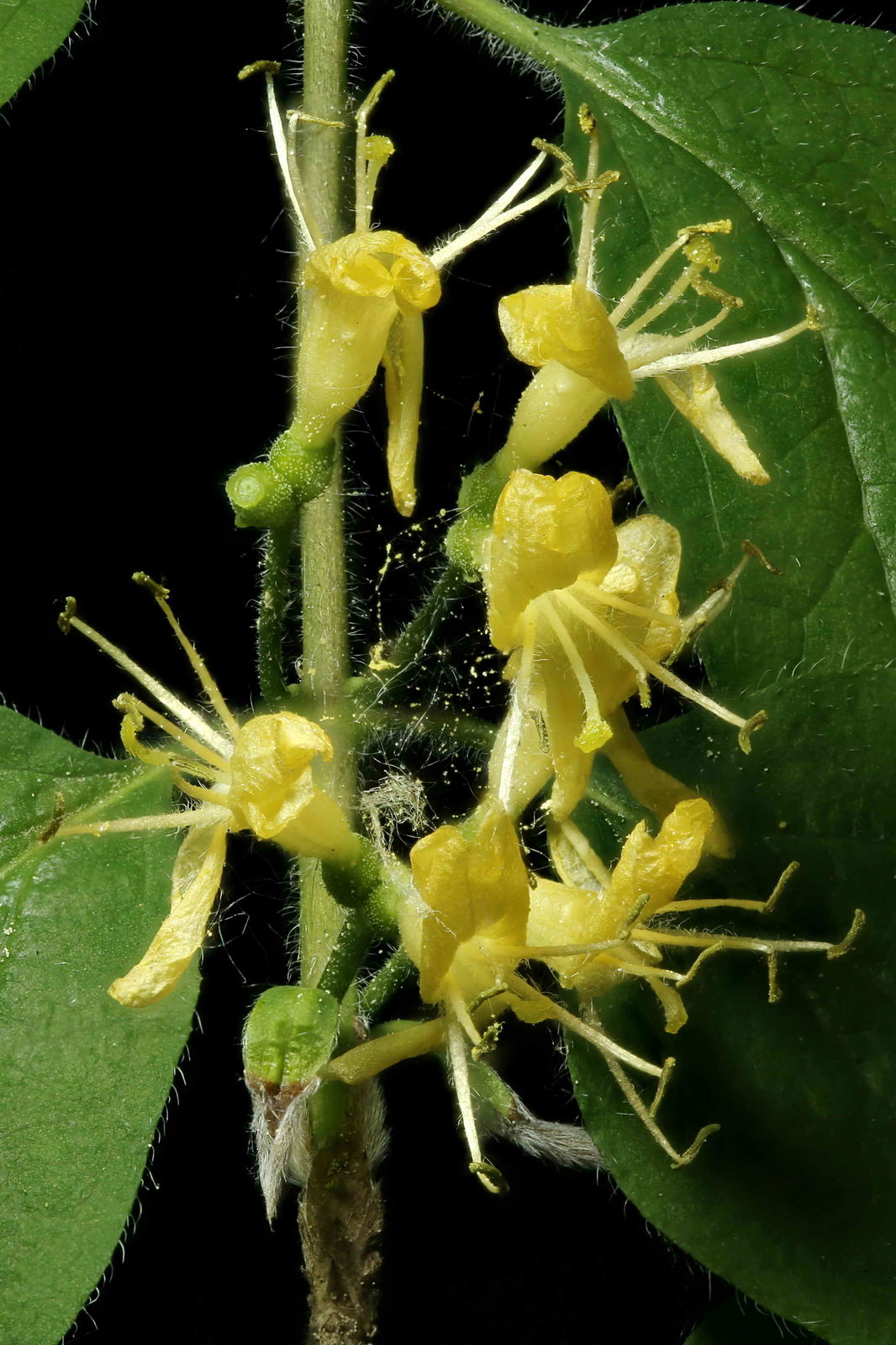
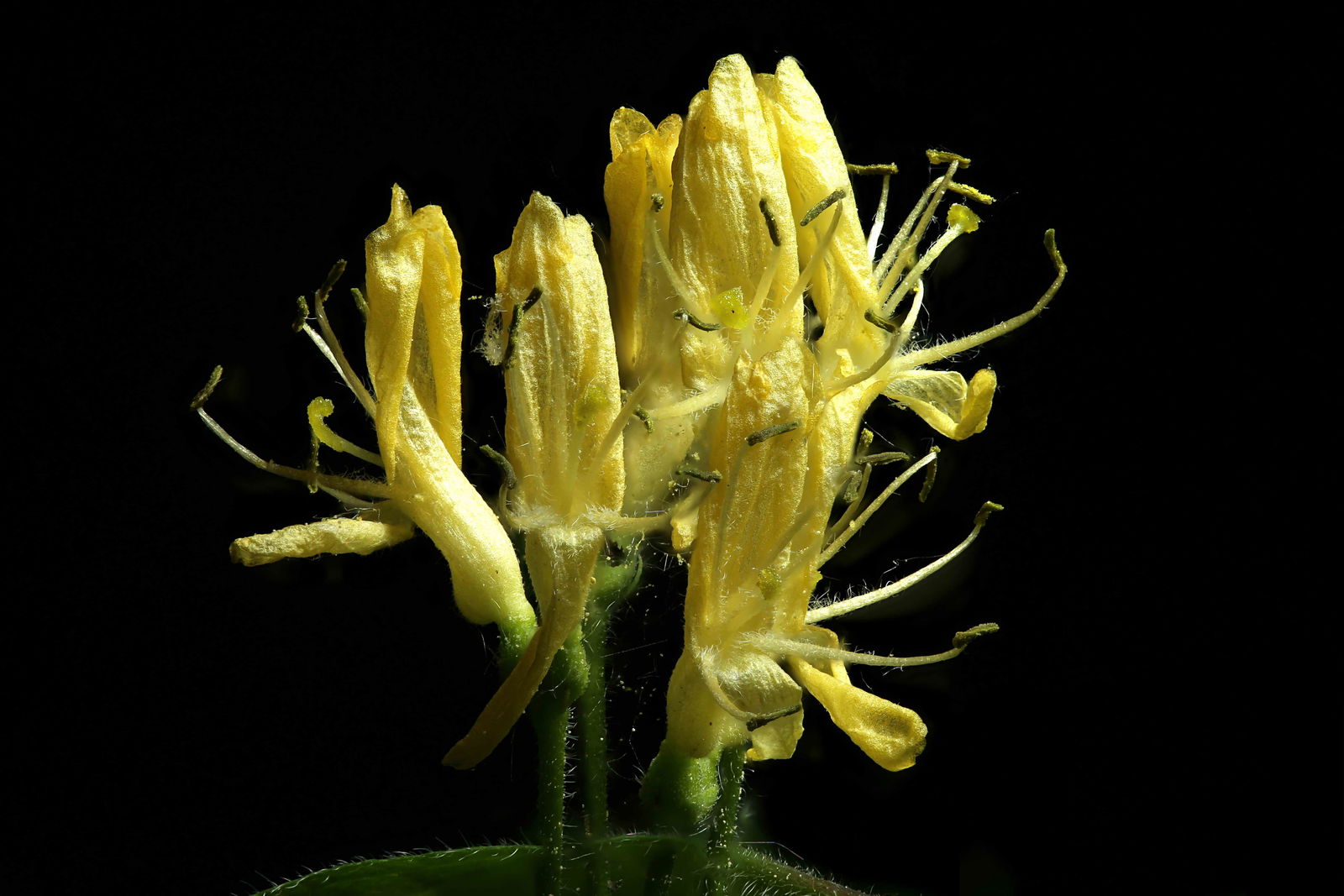
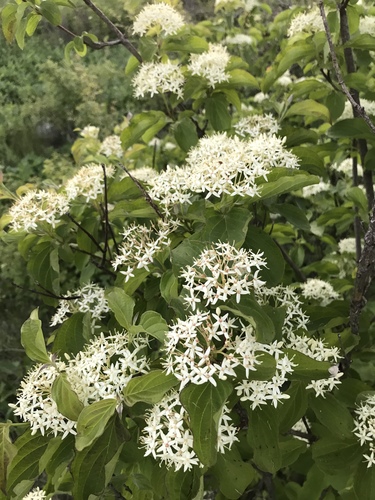
Spring into early summer brings pairs of tubular, two-lipped flowers in the leaf axils, corresponding to April–June in the Northern Hemisphere conditions described. Each flower is about 1–1.5 cm (0.4–0.6 in) long. White when newly open, they yellow with age, allowing several generations of flowers to be distinguished on the same branch at once. 2 9
The round berries are bright, glossy red, 6–8 mm (0.2–0.3 in) across, and joined in pairs at their bases. A rarer form described as xanthocarpa produces yellow berries instead of red ones. 3 2
Taxonomy and names
Within Caprifoliaceae, POWO/WCVP accepts the name Lonicera xylosteum L., 1753. Its synonymy includes several forms and varieties once described separately, including Lonicera xylosteum var. xanthocarpa DC., for yellow-fruited plants, and Lonicera xylosteum f. glabrescens Zabel, for plants with less hairy leaves. 1
Older scientific names now placed in synonymy include Caprifolium xylosteum and Chamaecerasus xylosteum. 9
French names such as chèvrefeuille des haies, chèvrefeuille à balais, and camérisier des haies partly overlap with names for other Lonicera species, making the Latin binomial the safest reference. The French word camérisier also refers to Lonicera caerulea, a species with edible blue berries. Sharing a name therefore says nothing about whether the berries of Lonicera xylosteum are safe to eat. 8
Habitat and range
Across Europe, apart from the Mediterranean fringe and the far northeast, the native range reaches east to central Siberia (Altai) and northeastern Turkey, according to POWO/WCVP. 1 Within this range, the shrub grows in countryside hedges, open woodland edges, and calcareous scrub, from lowland sites into upland country. 9
Ornamental introductions to North America have naturalized in several northeastern and Midwestern states. Missouri Botanical Garden considers Lonicera xylosteum potentially invasive and discourages planting it in gardens in that region. That recommendation concerns a particular introduced range, rather than its native European habitats. 3
Life cycle, ecology and cultivation
Flies carry out most pollination, explaining the name fly honeysuckle. 3 Birds later feed on the red berries and disperse the seeds. Czech Wikipedia nevertheless also lists birds among the animals susceptible to the fruit’s toxicity. 9
In cultivation, the shrub tolerates chalk, clay, loam, and sand and grows in full sun or partial shade. Hardiness to −20 °C (−4 °F) means established plants generally need no winter protection after their first year where winter lows remain within that tolerance. 2 Fly honeysuckle can be propagated from softwood cuttings in summer or hardwood cuttings in fall. Light pruning immediately after flowering preserves the following year’s flower buds. These seasonal operations follow local growth rather than a universal calendar. 2
Uses and risks
Once planted in informal countryside hedges, fly honeysuckle has fallen out of favor with nurseries. Vigorous growth, suckering, and limited ornamental interest after flowering explain why it is seldom recommended for clipped hedges today: it requires disproportionately more maintenance than other hedge species. 9 It nevertheless retains value in polluted urban settings, where tolerance of air pollution and salt spray can justify keeping it. 9
The berries are poisonous if ingested. Czech Wikipedia suggests saponins as the probable cause of their toxicity and reports chest pain after five berries, as well as poisoning after about thirty, with severe manifestations including vomiting, abdominal pain, diarrhea, fever, and cold sweats. 9 The FDA bibliographic index lists this species in its record of R. Jaspersen-Schib’s 1984 article on poisonous plants in autumn. 7 Czech Wikipedia also reports an experiment in which a handful of berries caused fatal paralysis in rabbits; it lists toxicity to horses, hares, and several rodents without assigning them that same dose or outcome. 9
Cultivars and look-alikes
Unlike related species such as Lonicera caerulea, Lonicera xylosteum has no horticultural cultivar that is widely marketed today. Its main notable variation is the yellow-fruited form, listed in WCVP synonymy as xanthocarpa. It occurs in the wild and is rarely offered by nurseries. 1
Hollow branches distinguish Lonicera xylosteum from Lonicera nigra, with black berries and solid pith. Hairless leaves point instead to the introduced Lonicera tatarica. Fruit color alone presents a third trap: guelder rose (Viburnum opulus), from a different family, carries similar red berries but has lobed leaves, quite unlike the oval foliage of fly honeysuckle. 8
Main sources
- Plants of the World Online / Kew, Lonicera xylosteum L.
- Royal Horticultural Society, Lonicera xylosteum (fly honeysuckle)
- Missouri Botanical Garden, Lonicera xylosteum
- GBIF, Lonicera xylosteum L. species page
- Integrated Taxonomic Information System (ITIS), Lonicera xylosteum L.
- USDA PLANTS Database, Lonicera xylosteum L. (LOXY)
- FDA Poisonous Plant Database, bibliographic record of Jaspersen-Schib (1984), Lonicera xylosteum (archived)
- Wikipedia FR, Chèvrefeuille à balais (Lonicera xylosteum)
- Wikipedia CS, Zimolez obecný (Lonicera xylosteum)
Frequently asked questions
Is Fly honeysuckle poisonous?
Yes. Its red berries contain saponins that are toxic if ingested by people, horses, hares, and several rodents. Czech Wikipedia reports chest pain after five berries and poisoning after about thirty, with manifestations including vomiting, abdominal pain, diarrhea, fever, and cold sweats.
How can I distinguish Fly honeysuckle from Lonicera nigra?
Young Fly honeysuckle branches are hollow, while those of Lonicera nigra have solid pith. Ripe fruit color, red rather than black, is another reliable distinction.
Why do the flowers change color?
Fly honeysuckle flowers open white and yellow as they age. This often makes several generations of flowers visible on a single branch at the same time.
Is Fly honeysuckle invasive?
It is native in France and is not invasive there. Introduced to North America as an ornamental shrub, it has naturalized in several northeastern and Midwestern states, where it is considered potentially invasive.
Why is this species seldom recommended for clipped hedges today?
Vigorous growth and numerous suckers require substantial maintenance, while its ornamental value is limited once spring flowering ends. Other hedge species give a comparable result with less work.
What does the name xylosteum mean?
The epithet comes from the Greek xylon (wood) and osteon (bone), referring to the yellowish, extremely hard wood of old branches, once shaped into small objects such as pegs and spindles.
What soil suits Fly honeysuckle?
It tolerates chalk, clay, loam, or sand, preferring well-drained soil with a neutral to alkaline pH. It also tolerates urban pollution and salt spray.
Similar plants
If you are unsure about a plant’s toxicity, ask a botanist or veterinarian for advice.