
Siberian crabapple (Malus baccata, )
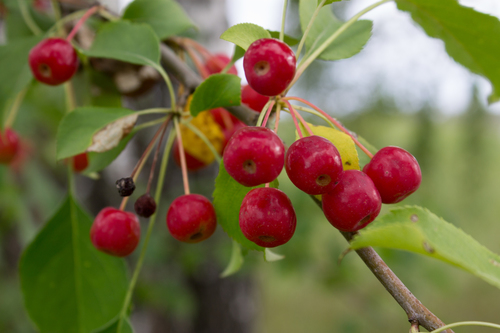
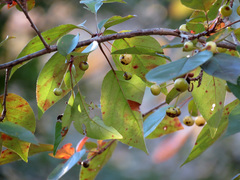
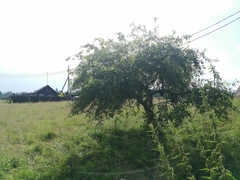
Siberian crabapple (Malus baccata (L.) Borkh., 1803) is a deciduous tree in the Rosaceae, native from Siberia to the Himalayas through China, Korea and Japan. Its fragrant white flowers open early in spring, before those of many cultivated apples. The species has long been valued as a rootstock for its extreme hardiness, and its tiny red or yellow fruits often remain on the tree for part of winter.
Read moreSiberian crabapple, Siberian crab apple, Siberian crab and Manchurian crab apple
Allow a few hours of direct sun per day, preferably morning or evening.
Full sun gives better flowering and fruiting than partial shade
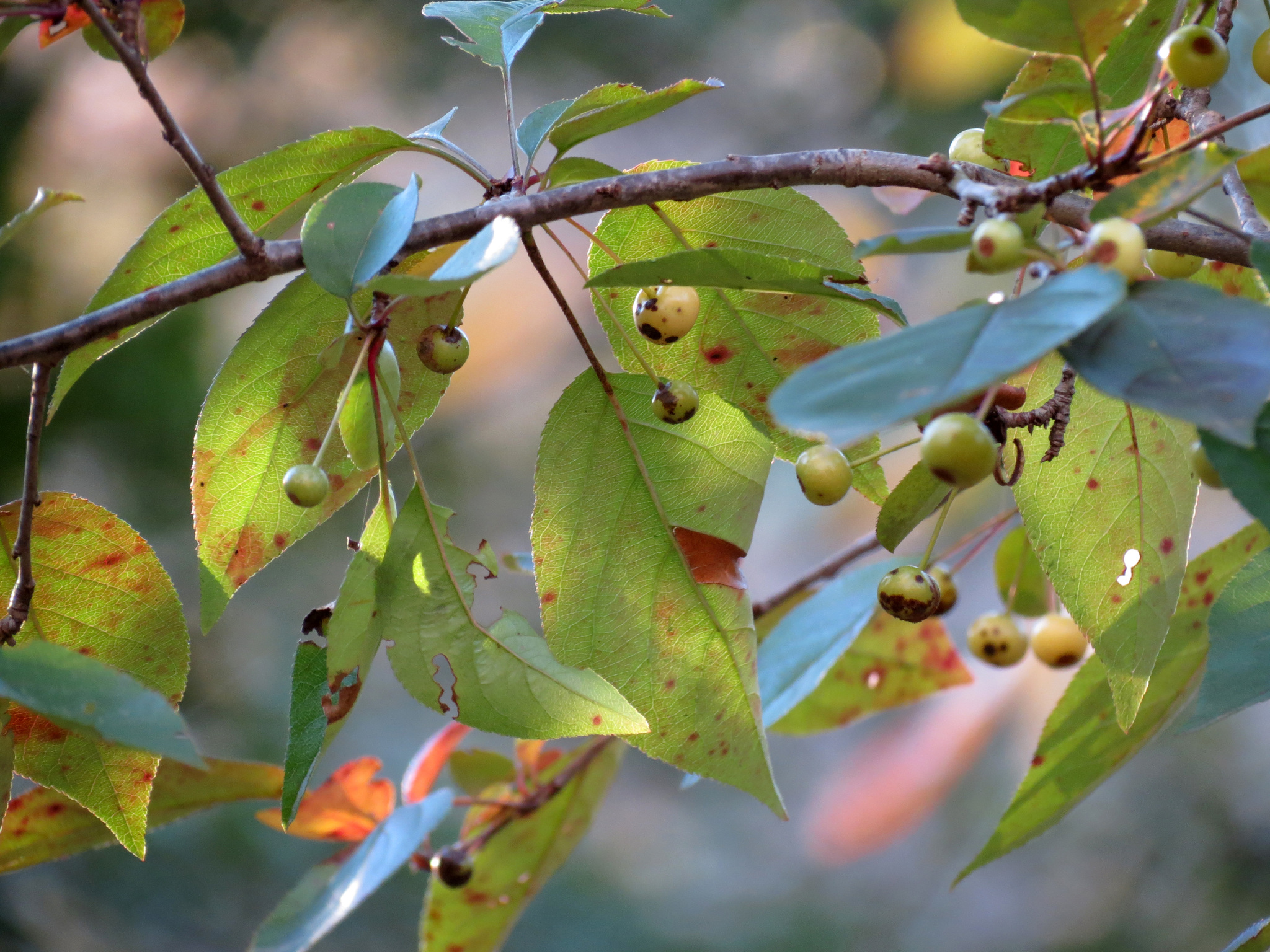
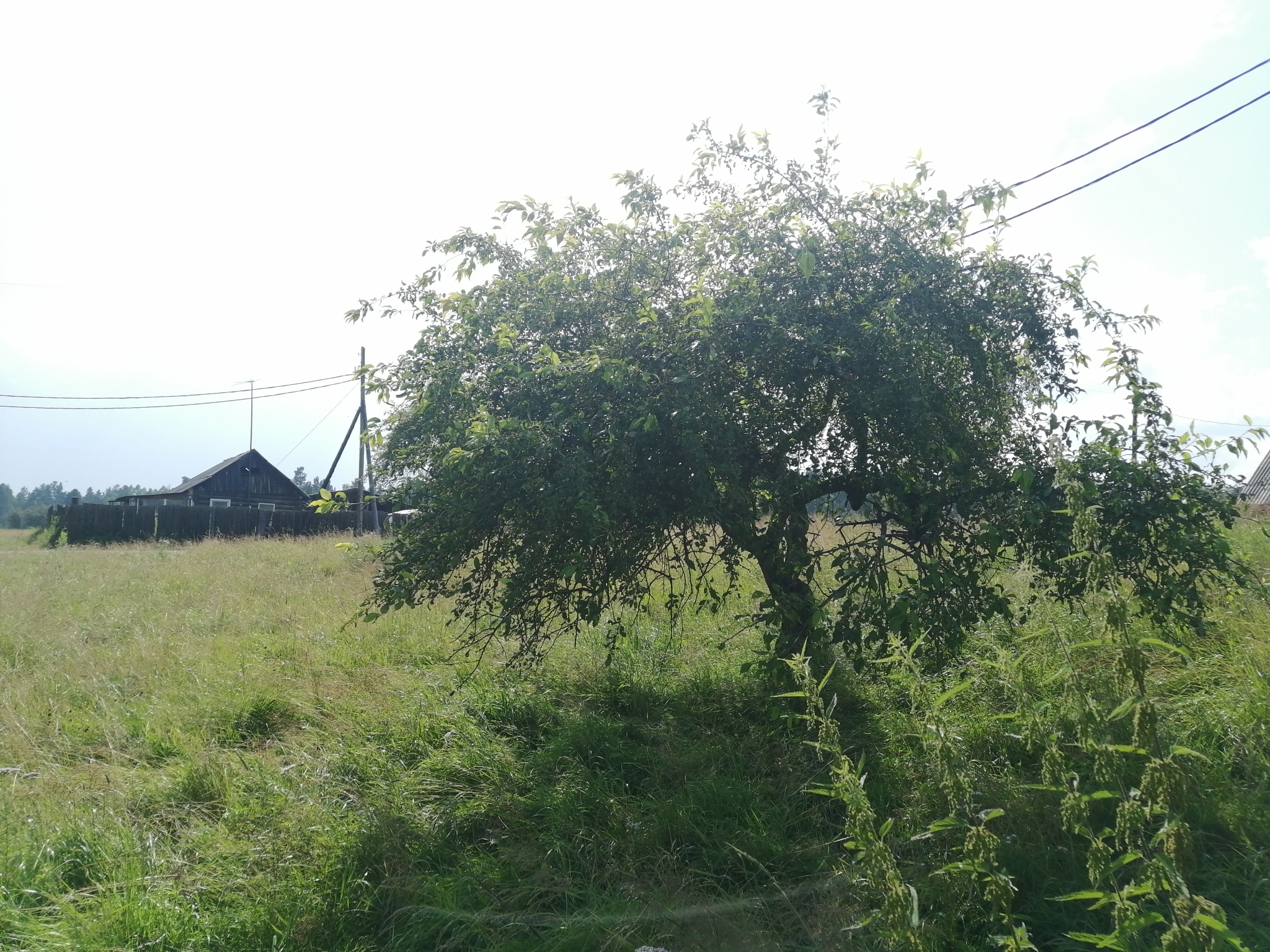


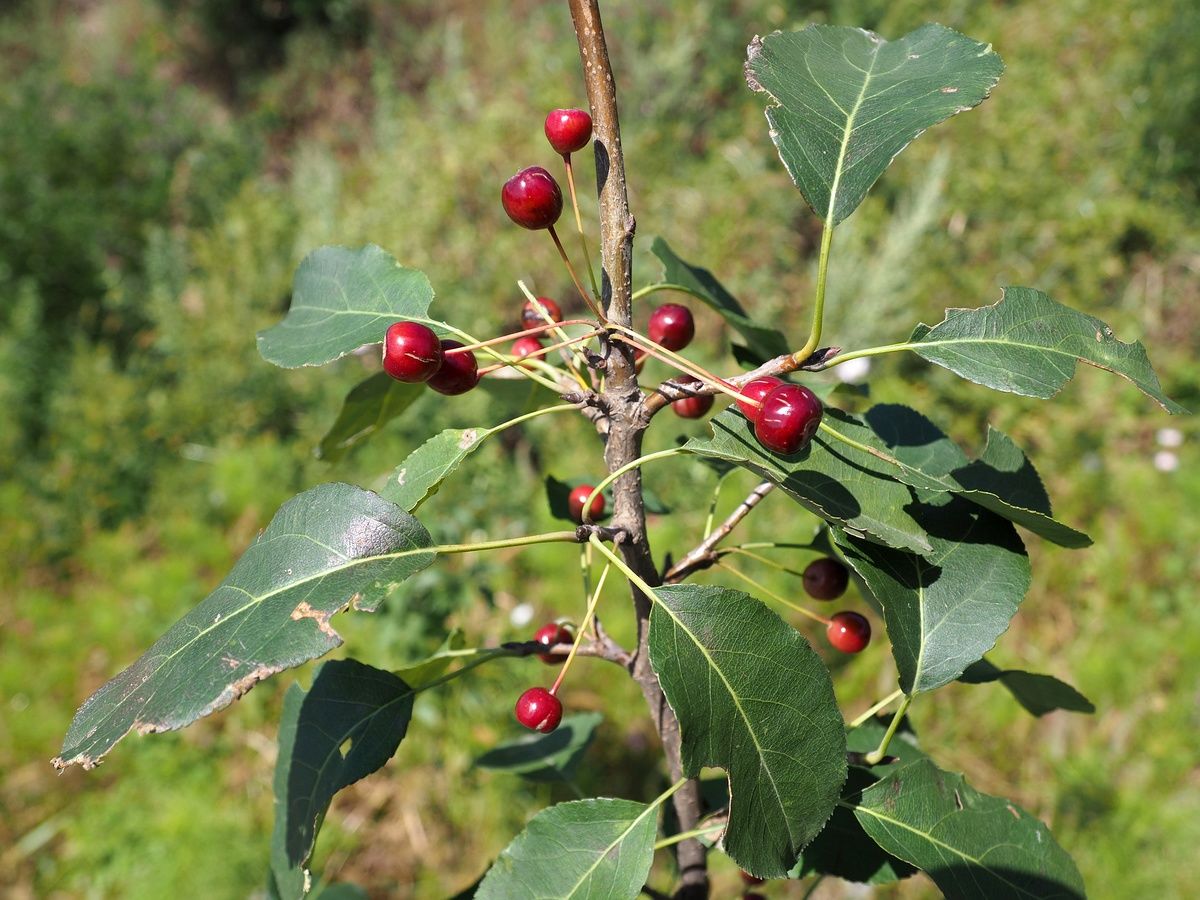
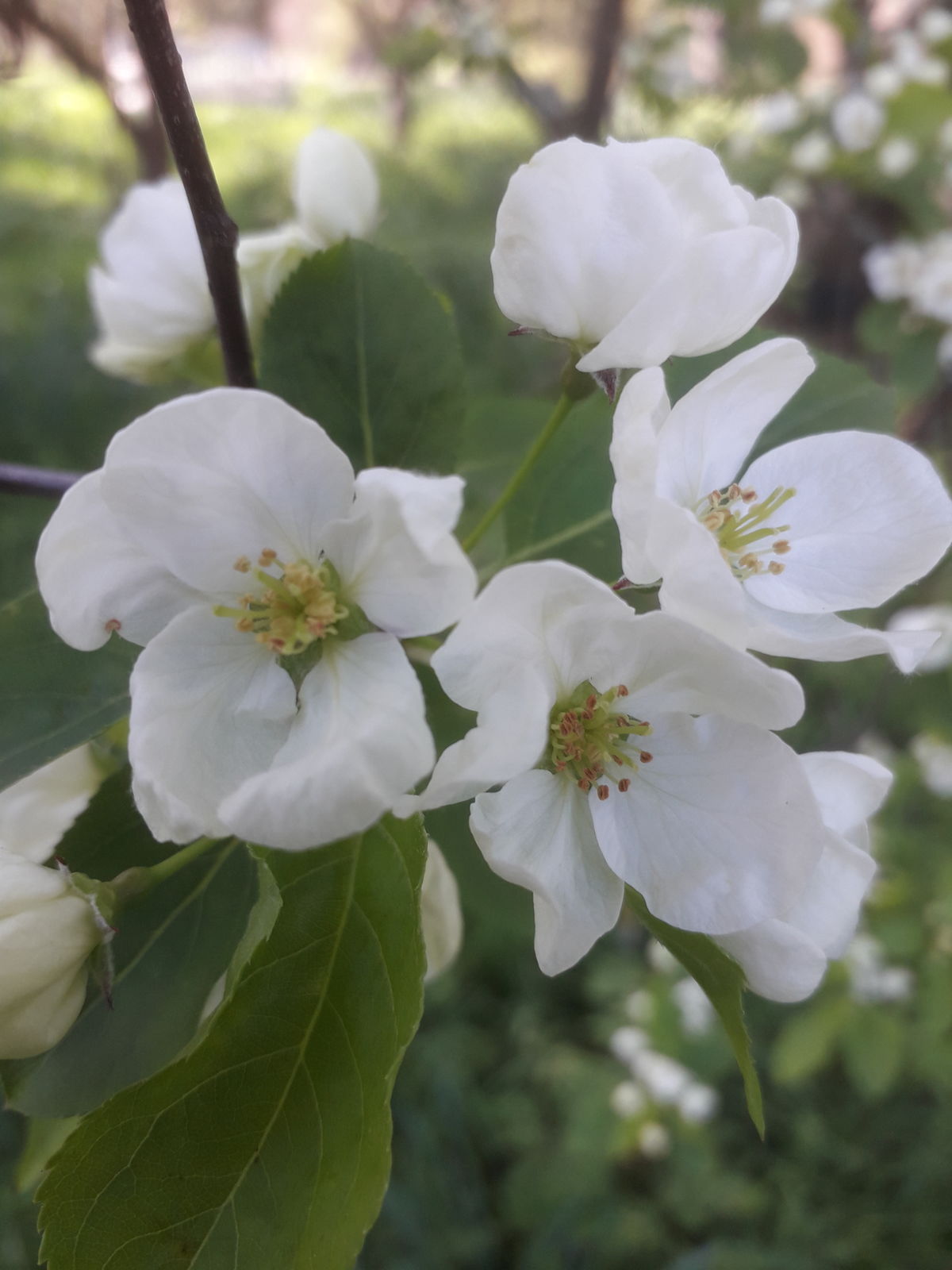

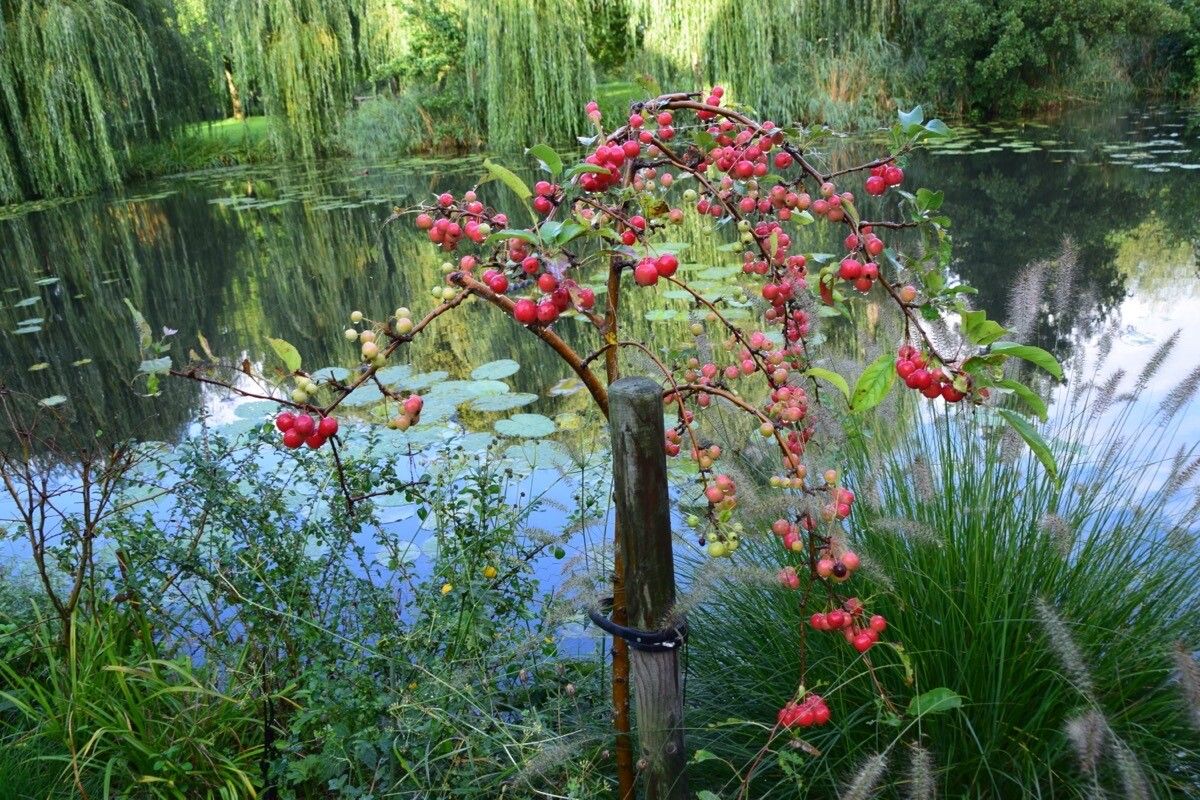
© photo
(c) Александр Скачко, some rights reserved (CC BY-NC), uploaded by Александр Скачко · cc-by-nc
Katja Schulz · cc0
Roman A. Lagazyuk (Роман А. Лагазюк) · cc-by
Taken Jun 19, 1968 by Royal Botanic Garden Edinburgh - Mark Francis Watson (cc-by-nc)
Taken Aug 3, 1981 by Royal Botanic Garden Edinburgh - Mark Francis Watson (cc-by-nc)
Taken Sep 10, 2020 by Stephane Groulx (cc-by-sa)
© copyright of the Board of Trustees of the Royal Botanic Gardens, Kew.




Global distribution
The native range of Malus baccata extends from Siberia and the Russian Far East to southern China, through Mongolia, Korea, Japan and the Himalayas (Nepal, Bhutan and northeastern India). In France it remains a cultivated tree for streets or specimen planting, rather than a native apple species.
- Native6
- Introduced1
- Siberia and Russian Far East
- Northern and central China
- Mongolia
- Korea
- Japan
- Himalayas (Nepal, Bhutan, northeastern India)
- North America
Hexagons: regions where the plant occurs. Green dots: native range.1
Identity
Siberian crabapple (Malus baccata (L.) Borkh., 1803), also known as Siberian crab apple, Siberian crab or Manchurian crab apple, is a deciduous tree in the Rosaceae. POWO accepts the name and places its native range from Siberia to the Himalayas through Mongolia, northern and central China, Korea and Japan. 1
Linnaeus first described the taxon in 1767 as Pyrus baccata, probably from a specimen of Russian origin. Moritz Balthasar Borkhausen transferred it to Malus in 1803, establishing the current author citation “(L.) Borkh.” 5
The epithet baccata, from the Latin bacca, “berry,” describes the tiny round fruits, much smaller than those of cultivated apple (Malus domestica) or even European crab apple (Malus sylvestris).
Recognition
Rounded crowns and arching, sometimes drooping branches give Malus baccata its outline. The tree reaches 6–15 m (20–49 ft), typically about 10 m (33 ft). Its elliptical to oval leaves are finely toothed and 3–8 cm (1.2–3.1 in) long. 5 3
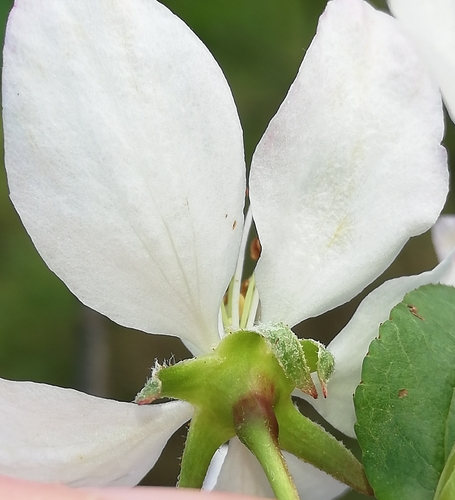
Fragrant white flowers open in spring, typically April–May in the Northern Hemisphere, in groups of 4–6. Each measures 3–4 cm (1.2–1.6 in) across. Their early appearance distinguishes a flowering tree from a nearby cultivated apple that flowers later, and attracts the season’s first pollinators. 2 5
The fruit is tiny, 0.8–1.6 cm (0.3–0.6 in) across, red or yellow, and carried on a long stalk. Its calyx falls before the fruit is fully ripe, a useful confirmation on a fruiting tree: in most other apples, the sepals generally remain attached until harvest. 7 3
Useful taxonomy
Two nomenclatural steps established the scientific name. Linnaeus published the basionym Pyrus baccata in 1767; Borkhausen transferred the taxon to the genus Malus in 1803, establishing its current author citation. 1
POWO recognizes the autonymous variety Malus baccata var. baccata and treats several regional names long used in local floras as synonyms. These include Malus baccata subsp. himalaica (Maxim.) Likhonos, Malus baccata subsp. sikkimensis (Wenz.) Likhonos and Malus baccata subsp. toringo (Siebold) Koidz.. 1
Those regional variants and the horticultural hybrids M. × floribunda and M. × robusta explain why a tree sold under a name close to Malus baccata may belong to a hybrid lineage rather than the botanical species in its strict sense. 5
Habitat and range
Siberia and the Russian Far East, southern China, Mongolia, Korea, Japan and the Himalayas (Nepal, Bhutan and northeastern India) lie within its native range. In cold continental climates it grows in mixed forests on slopes and in valley thickets, from sea level to 1500 m (4900 ft) in China and higher farther south. 1 4
Introduced to Kew in 1784, the species quickly reached European nurseries because of its extreme hardiness, the highest in the genus Malus. It tolerates temperatures down to about −40 °C (−40 °F), a cold-climate trait rather than a guarantee of suitability in every growing region. 5 4
In France, Siberian crabapple remains a cultivated tree, planted along streets or as a specimen for its early flowers. Unlike European crab apple (Malus sylvestris), it is not among the country’s native apple species.
Life cycle and reproduction
Early-spring flowers are hermaphroditic and grouped in fours to sixes. Their strong scent draws pollinators before nearby cultivated apples flower. The small fruits ripen in fall, typically September–October in the Northern Hemisphere, and often remain attached for part of winter, providing birds with food when other resources are scarce. 3 2
Fresh seed germinates well when sown directly in fall. Stored seed needs three months of cold stratification at 1 °C (34 °F) to break dormancy. Mature-wood cuttings taken in late fall, November in the Northern Hemisphere, are also possible. Grafting nevertheless remains the standard method for preserving a named cultivar or producing uniform rootstocks. 4
A genome-sequencing study published in 2019 showed that Malus baccata carries disease-resistance and cold-tolerance genes absent or less developed in cultivated apple. Breeders now draw on these resources to improve modern cultivars’ resistance while retaining productivity. 8
Uses and toxicity
Ornamental planting is the principal use: street trees, garden specimens and bonsai valued for early, abundant flowers. Siberian crabapple also serves as a rootstock for apple cultivars more sensitive to cold, a horticultural role directly linked to its hardiness. 3 4
The fruit flesh can be eaten raw or cooked and has a tart flavor. Traditionally, the fruits are dried for winter or made into jelly. 4
Like other apples, the whole species is listed by ASPCA as a plant to watch around dogs, cats and horses under the general “Apple” entry. Cyanogenic glycosides concentrate in seeds and wilted foliage; the entry gives no safe consumption threshold. Keeping seeds and wilted foliage out of animals’ reach reduces that risk. After massive ingestion, clinical signs include brick-red mucous membranes, dilated pupils and respiratory distress. 6
Varieties, look-alikes and related plants
Several horticultural selections derive from the wild type: ‘Gracilis’, with a weeping habit; ‘Jackii’, a robust, free-flowering Korean introduction often used as a rootstock; and ‘Street Parade’, with a narrow crown suited to urban street planting. 5
Malus baccata is also a parent of two widespread horticultural hybrid groups, Malus × floribunda and Malus × robusta. The latter arose from a cross with Malus prunifolia. 5
Frequent look-alikes include:
- European crab apple (Malus sylvestris), with hairless mature leaves and a larger, more astringent fruit than Malus baccata;
- Chinese apple (Malus prunifolia), whose fruit often retains its calyx, unlike Malus baccata;
- Malus × robusta hybrids, which have intermediate features between their parents.
The deciduous calyx of ripe Malus baccata fruit, 0.8–1.6 cm (0.3–0.6 in) across, is more reliable than color or fruit size alone. This feature is absent from most neighboring species, whose sepals persist until the fruit is fully mature.
Main sources
- Plants of the World Online / Kew, Malus baccata (L.) Borkh.
- Royal Horticultural Society, Malus baccata - Siberian crab apple
- Missouri Botanical Garden Plant Finder, Malus baccata
- Plants For A Future, Malus baccata
- Trees and Shrubs Online, Malus baccata
- ASPCA, Apple (Malus species) toxicity entry
- Go Botany / Native Plant Trust, Malus baccata
- PMC, Sequencing of a wild apple (Malus baccata) genome — disease resistance and cold tolerance
Frequently asked questions
Is Siberian crabapple the ancestor of the cultivated apple?
No. The cultivated apple descends mainly from Malus sieversii, native to Central Asia. Malus baccata contributes to modern breeding through its cold-hardiness and disease-resistance genes, passed on through hybridization; its use as a rootstock is distinct from this genetic transmission.
Is Siberian crabapple toxic to dogs and cats?
The fruit flesh poses no problem, but ASPCA lists the whole plant as one to watch around dogs, cats and horses. Seeds and wilted foliage contain cyanogenic glycosides, for which the entry gives no safe consumption threshold.
How can Malus baccata be distinguished from other apples?
The most reliable feature is the fruit calyx, which falls before full maturity in Malus baccata but often persists in many other apples. Tiny fruits, under 2 cm (0.8 in), and very early flowering often confirm identification.
Why is Siberian crabapple used as a rootstock?
Its hardiness, the greatest in the genus Malus, allows it to tolerate temperatures down to about −40 °C (−40 °F). The species is used as a rootstock for its cold tolerance. Its disease-resistance genes also interest hybrid breeding, informed by genomic studies; grafting does not transfer those genes to the cultivar.
Can Siberian crabapple fruits be eaten?
Yes, raw or cooked, with a tart flavor. They are traditionally dried for winter or made into jelly, although their small size makes them less practical than cultivated apples.
Where does Siberian crabapple grow in France?
It is not native to France. It is cultivated as a specimen or street tree for early flowering and robustness, particularly in regions with harsh winters.
Which plants are confused with Malus baccata?
Common look-alikes include Malus sylvestris, the European wild apple with hairless mature leaves; Malus prunifolia, the Chinese apple with a persistent calyx; and Malus × robusta hybrids with intermediate features.
Similar plants
If you are unsure about a plant’s toxicity, ask a botanist or veterinarian for advice.