
European crab apple (Malus sylvestris, )
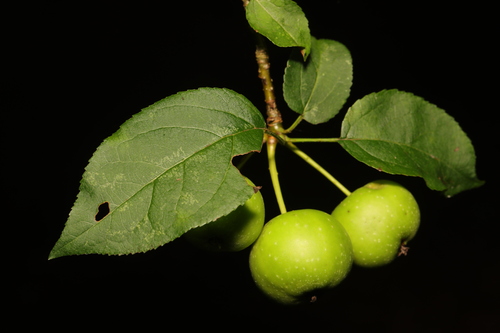
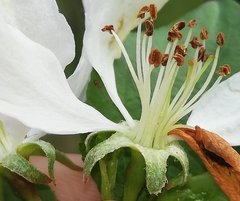

European crab apple (Malus sylvestris (L.) Mill., 1768) is a small deciduous tree in the Rosaceae, native across much of Europe to Türkiye. Often thorny and bushy, it grows at woodland edges, in hedgerows and open coppice on calcareous soil. Long described as the direct ancestor of cultivated apple, it is instead a secondary genetic contributor, revealed through centuries of hybridization with orchards.
Read moreEuropean crab apple, crab apple and wild crab


© photo
no rights reserved, uploaded by Stephen James McWilliam · cc0
Thomas · cc0
Wikimedia Commons · CC BY-SA or Public Domain
Taken Oct 1, 2022 by Ydwig (cc-by-sa)
Taken Feb 6, 2021 by Sandu Milian (cc-by-sa)
Taken Nov 4, 2019 by Bron (cc-by-sa)
Taken Aug 28, 2019 by joanne Jo (cc-by-sa)
Taken May 17, 2022 by Olga Olga (cc-by-sa)
© copyright of the Board of Trustees of the Royal Botanic Gardens, Kew.


Global distribution
POWO/WCVP places the native range of European crab apple in temperate Europe, from Scandinavia and the British Isles to Spain, Greece and Türkiye. Native to France, it remains scattered in calcareous woodland and hedgerows rather than dominant.
- Native5
- Western Europe and Scandinavia
- France
- Southern Europe
- Türkiye
- United Kingdom and Ireland
Hexagons: regions where the plant occurs. Green dots: native range.1
Identity
European crab apple (Malus sylvestris (L.) Mill., 1768), also called crab apple or wild crab, is a small deciduous tree in the Rosaceae. POWO accepts the name and places its native range from western Europe to Türkiye. Philip Miller made the combination in 1768 from a Linnaean basionym. 1
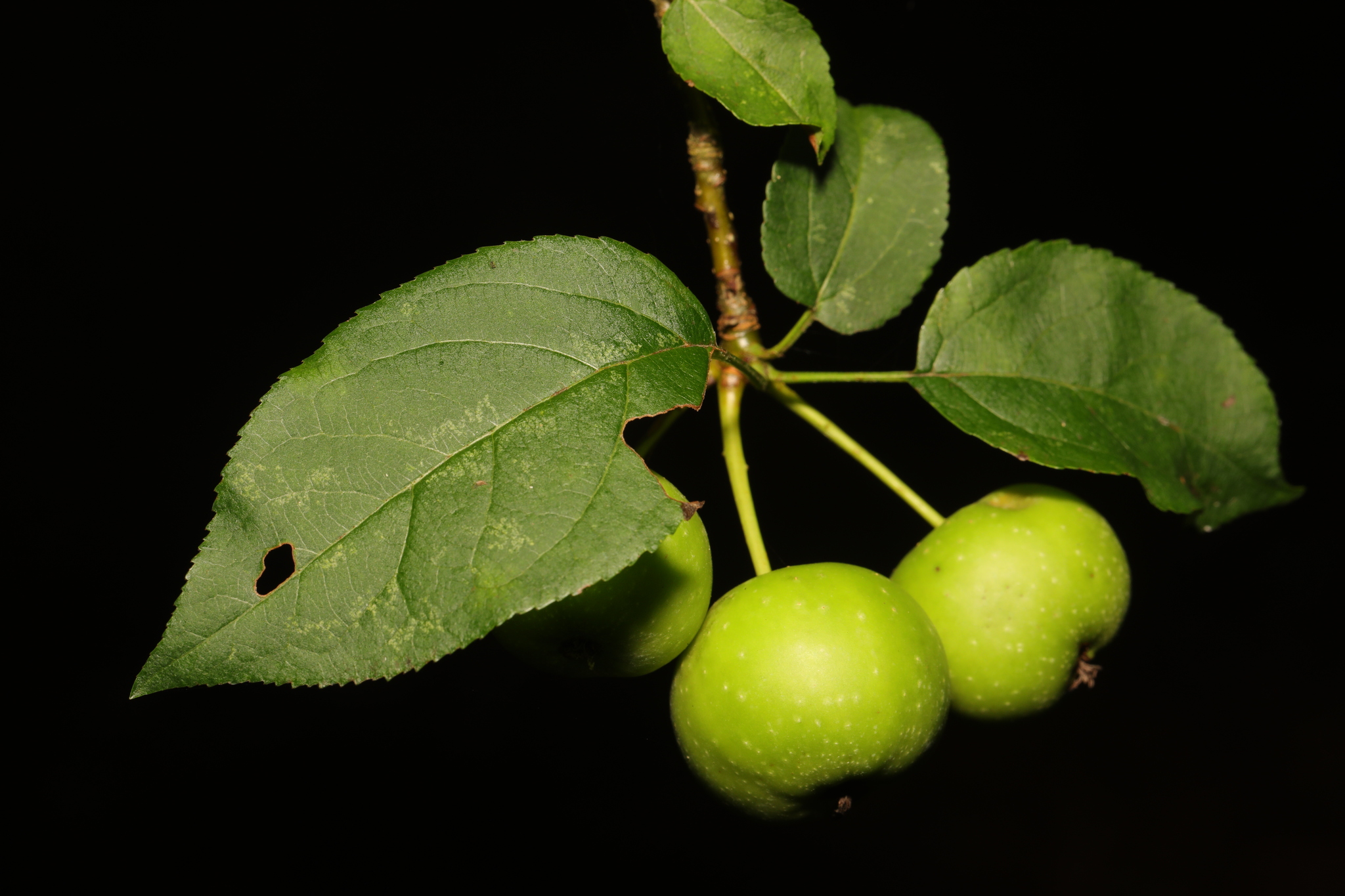
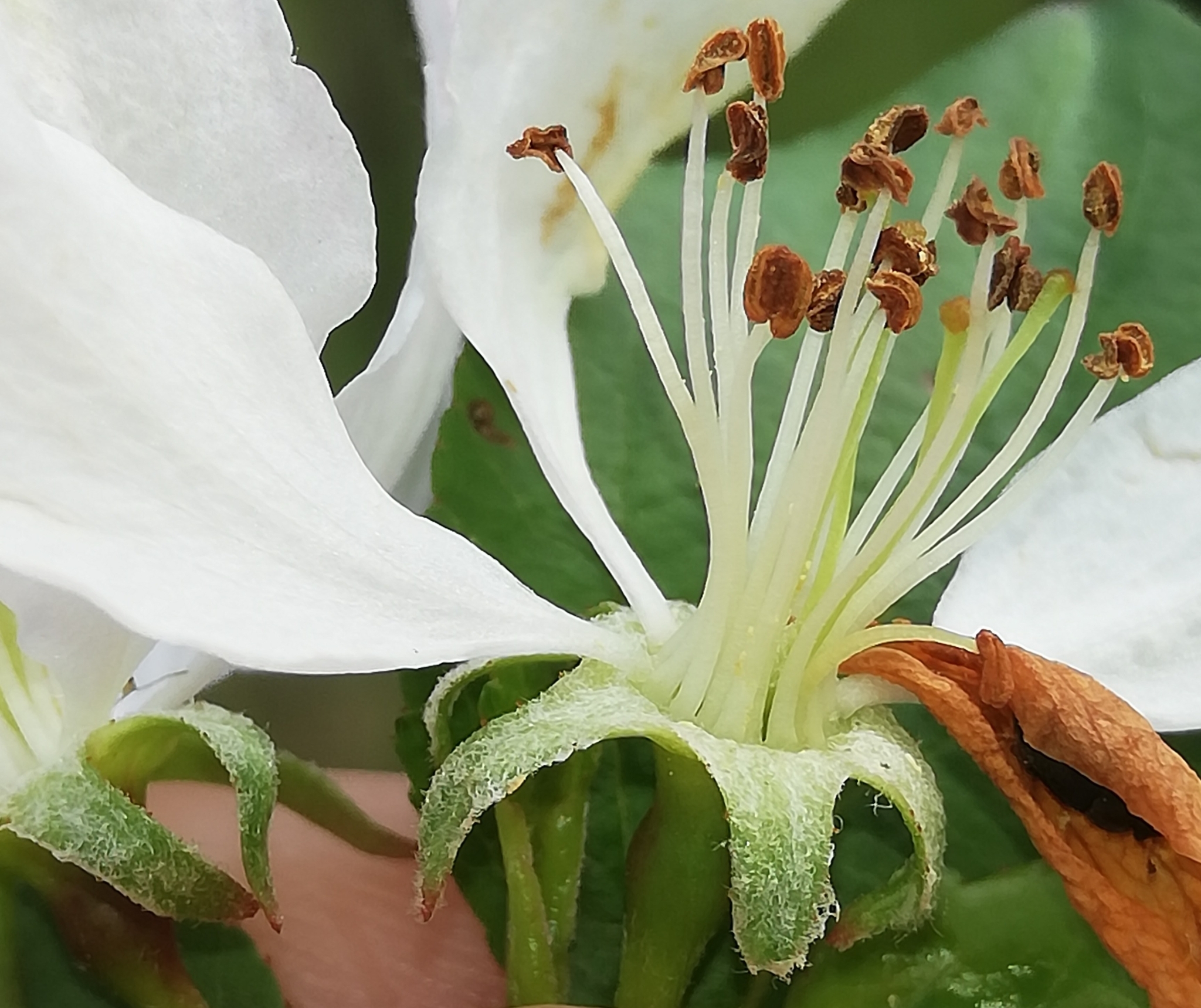
Its mature leaves are hairless, unlike the distinctly hairy foliage of cultivated apple (Malus domestica). Sepals need separate examination: their inner surface may bear hairs even when mature foliage is hairless. 6
The epithet sylvestris, from Latin silvestris, “of forests or woods,” describes the species’ woodland habitat, as opposed to the orchard setting of its domesticated cousin. An apple growing at a woodland edge or in a hedgerow is therefore more likely to be wild than one planted in an orchard.
Recognition
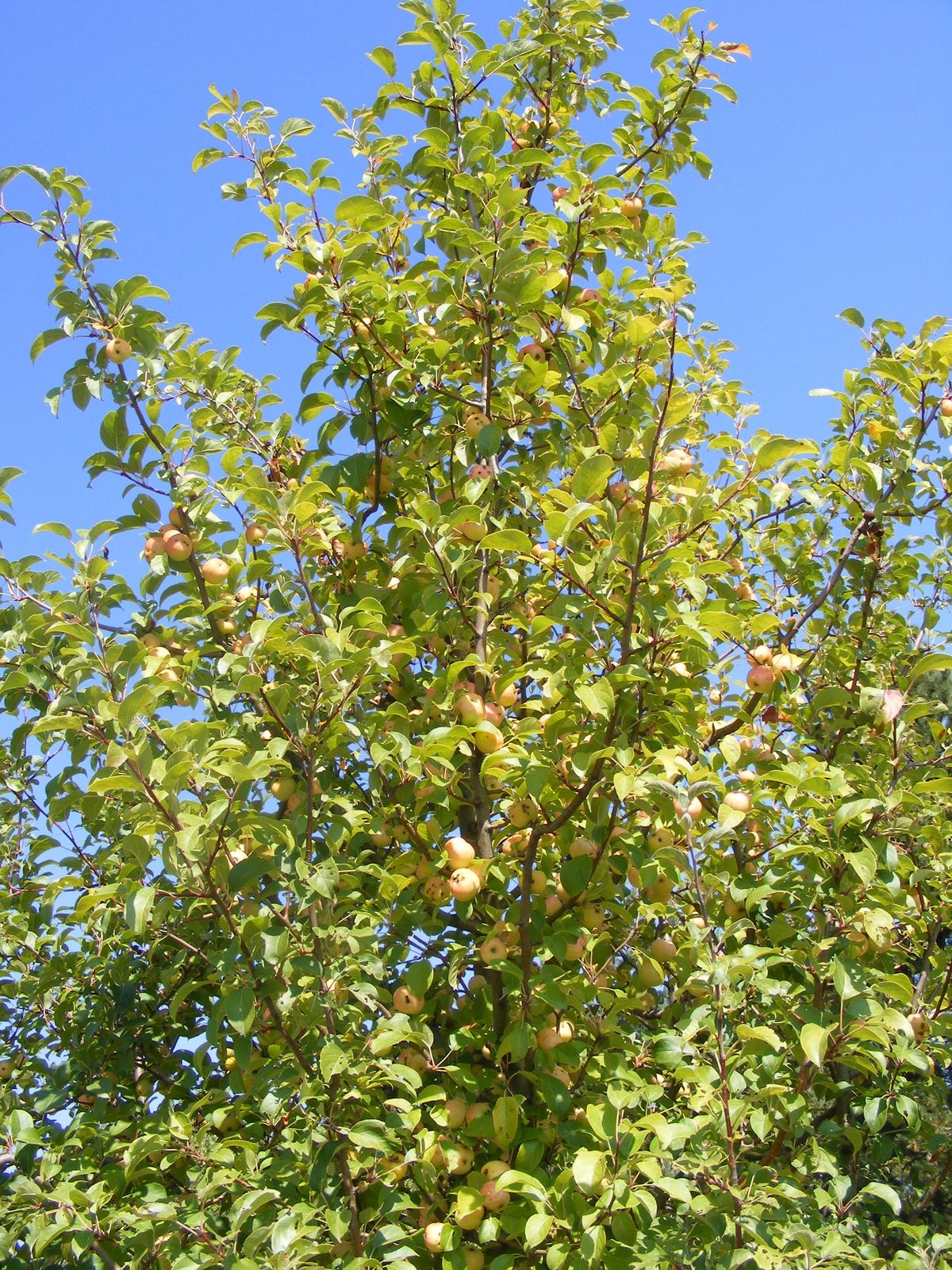
Bushy outlines and frequently thorny branches characterize Malus sylvestris, a small tree or large shrub reaching 6–10 m (20–33 ft), occasionally taller in central European forests. The finely toothed leaves are oval to nearly round and 3–11 cm (1.2–4.3 in) long. 6 2
Hairiness separates wild and cultivated apples most reliably on mature leaves. Young European crab apple shoots carry a light down that disappears with age, a familiar trap when identifying a tree too early in the season. 6
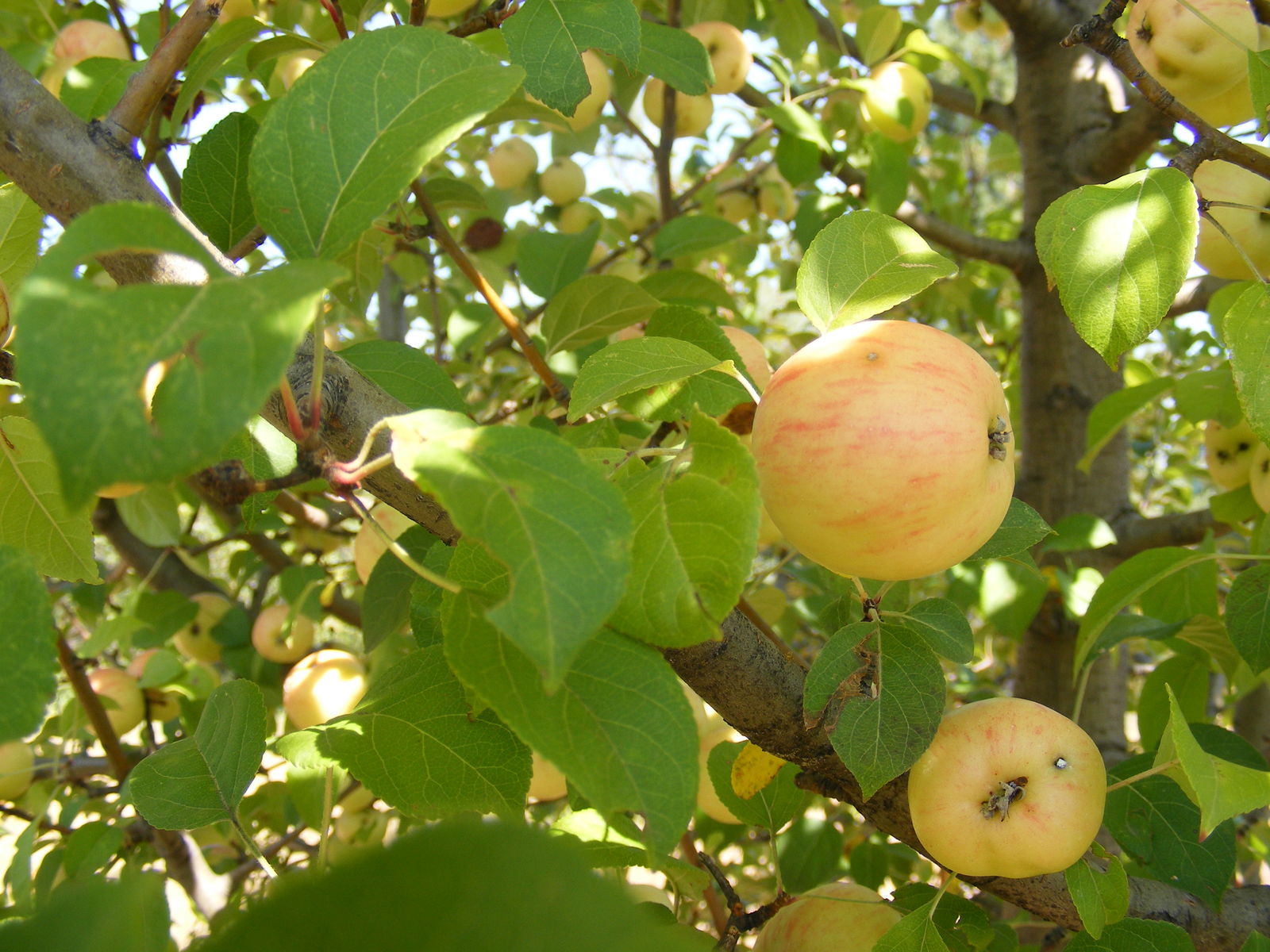
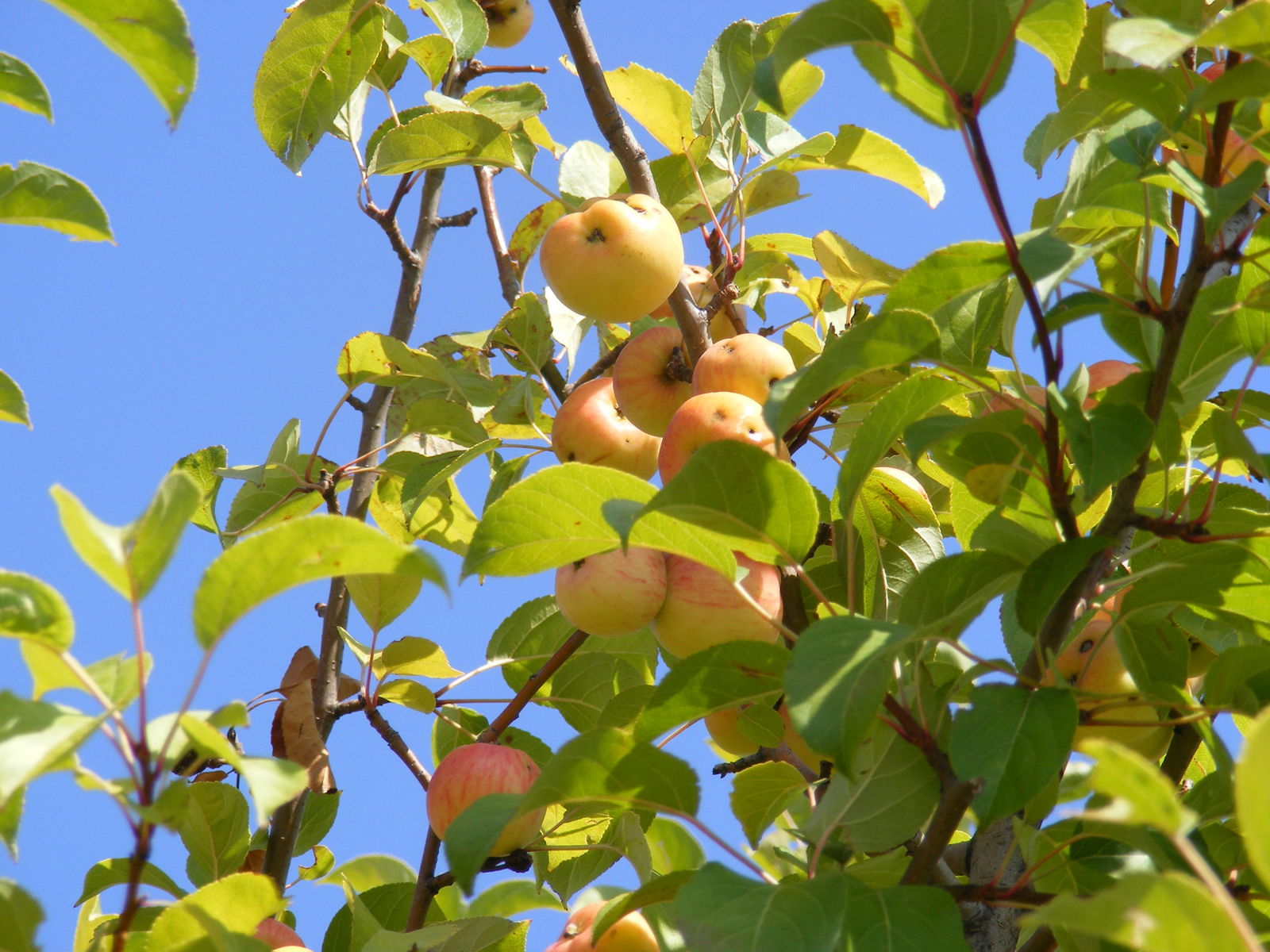
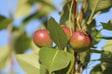
White to pink flowers open in spring, typically April–May in the Northern Hemisphere, in small umbels of flowers 3–4 cm (1.2–1.6 in) across. The fruit is a small, round pome 2–4 cm (0.8–1.6 in) across, greenish yellow and sometimes flushed red, with firm flesh that is very astringent raw. 2 4
Useful taxonomy
A Linnaean variety became the species name in two steps. Linnaeus published the basionym Pyrus malus var. sylvestris in 1753, and Miller raised it to species rank within Malus in 1768, establishing the current author citation “(L.) Mill.” 1
Names frequently encountered in older floras include Malus acerba Mérat, Malus communis var. sylvestris (L.) Beck and Pyrus sylvestris (L.) Gray. Cultivated apple, Malus domestica, was itself long treated as a variety of this wild species before genetics clarified their separation. 1
Habitat and range
Scandinavia and the British Isles, Spain, Greece and Türkiye fall within the broad European native range recognized by POWO. In temperate climates the species grows in open woodland, at woodland edges and in coppice, with a marked preference for neutral to calcareous soil. 1 3
Native but scattered in France, European crab apple grows chiefly in open oak woods, hedgerows and at the edges of small woods, rarely in dense stands. Near orchards it frequently hybridizes with cultivated apple. In parts of western Europe, this makes “pure” populations difficult to identify by appearance alone. 4
Life cycle and reproduction
Spring flowers are hermaphroditic, opening in April–May in the Northern Hemisphere. Insect-mediated cross-pollination favors fruit set and is essential for an abundant crop. An isolated tree far from other apples fruits less freely than one near a mixed hedgerow because it receives too little outside pollen. 3
Seeds ripen inside the fruit in fall, typically September–October in the Northern Hemisphere. Germination remains irregular without stratification: three months of moist cold break embryo dormancy. A seed sown directly produces a tree close to the wild type, never an exact copy of a particularly fine parent. 3
A population-genetics study published in PLoS Genetics in 2012 overturned the familiar domestication story. Cultivated apple descends chiefly from the Central Asian Malus sieversii, not European crab apple. Yet the European species made a secondary but substantial contribution through centuries of hybridization with expanding orchards. Modern varieties are now genetically closer to it than to their original Asian ancestor. 7
Uses and toxicity
Countryside planting is the main use: informal hedges, woodland margins and hardy rootstocks for other apples. The raw fruit is too astringent to enjoy directly. Cooking it into jelly or juice, or harvesting it after frost has softened its acidity, makes it edible. Traditionally, it is valued for the pectin that helps preserves set. 3 2
Fruit flesh poses no toxicity problem. ASPCA nevertheless lists the whole species under “Apple (Malus sylvestris)” as a plant to watch around dogs, cats and horses. Cyanogenic glycosides concentrate in seeds, stems and particularly wilted foliage; the entry gives no safe consumption threshold. Reported clinical signs include brick-red mucous membranes, dilated pupils and respiratory distress. 5
Varieties, look-alikes and related plants
Unlike cultivated apple, European crab apple has undergone no formal horticultural selection. The thorny habit and small, astringent fruit remain the wild reference type, never selected by nurseries for fruit growing. Most variation encountered outdoors consists of intermediate hybrids with Malus domestica, frequent near orchards and impossible to resolve without genetic analysis. 6
The most frequent look-alikes include:
- young Malus domestica growing spontaneously outside cultivation, whose leaf hairs reveal its horticultural origin;
- wild pear (Pyrus pyraster), with a similar outline but more elongated fruits and gritty flesh;
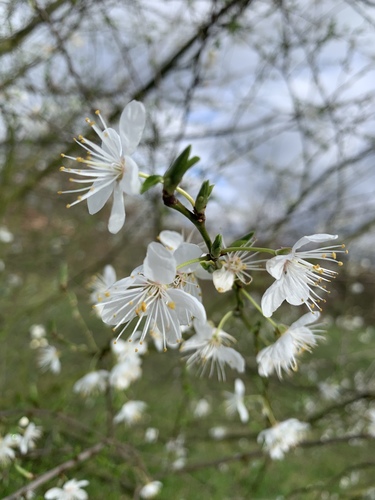
- blackthorn (Prunus spinosa), also thorny and found in the same hedges, but with small, round, blue-black fruits quite unlike an apple pome.
The same hairiness test distinguishes hairless mature leaves in European crab apple from the distinctly hairy foliage of cultivated apple. It offers a quick field check before examining thorns or overall shape. The inner sepal surface may remain hairy and must be distinguished from this leaf character.
Main sources
- Plants of the World Online / Kew, Malus sylvestris (L.) Mill.
- Royal Horticultural Society, Malus sylvestris - crab apple
- Plants For A Future, Malus sylvestris
- NC State Extension Gardener Plant Toolbox, Malus sylvestris
- ASPCA, Apple (Malus sylvestris) toxicity entry
- Trees and Shrubs Online, Malus sylvestris
- Cornille et al., 2012, PLoS Genetics — secondary contribution of the European wild apple to the genome of cultivated apple
Frequently asked questions
Is European crab apple the ancestor of cultivated apple?
Not strictly. The principal ancestor of cultivated apple is Malus sieversii from Central Asia. A 2012 study showed that European crab apple contributed mainly through secondary hybridization during centuries of contact with orchards, to the point that modern varieties are genetically closer to it than to their Asian ancestor.
Is European crab apple toxic to dogs and cats?
Fruit flesh poses no problem, but ASPCA lists the whole plant as one to watch around dogs, cats and horses. Seeds and wilted foliage contain cyanogenic glycosides, for which the entry gives no safe consumption threshold.
How can a wild apple be distinguished from a cultivated apple?
The most reliable feature is mature leaf hairiness: leaves are hairless in European crab apple and distinctly hairy in cultivated apple. Sepals alone cannot settle identification: their inner surface may bear hairs in European crab apple. A thorny, bushy outline and small, astringent fruit often confirm identification.
Can European crab apple fruits be eaten?
Raw, they are small, hard and very astringent. Cooked into jelly or juice, or after frost mellows their acidity, they become edible and are traditionally collected for their high pectin content, useful in preserves.
Where does European crab apple grow in France?
It is native in open woods, woodland edges and hedgerows on neutral to calcareous soil, especially oak woodland. It remains scattered rather than dominant, often mixed with hedgerow shrubs such as hawthorn and blackthorn.
Is European crab apple thorny?
Its branches are often thorny, especially young shoots and ungrafted trees, a feature almost always absent from horticultural cultivars of cultivated apple.
Why are wild apples found near orchards?
European crab apple and cultivated apple often hybridize where they grow together. The resulting intermediate individuals make identification by appearance alone difficult and sometimes require genetic analysis.
Similar plants
If you are unsure about a plant’s toxicity, ask a botanist or veterinarian for advice.