
Black mulberry (Morus nigra, )
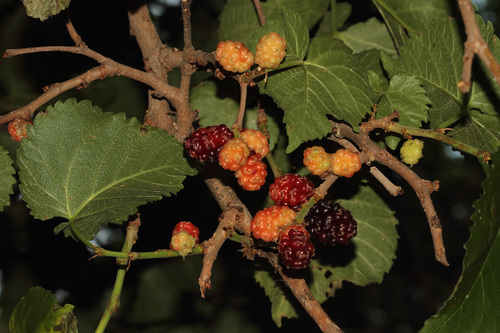
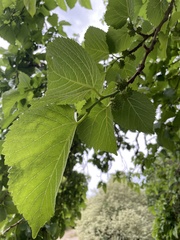
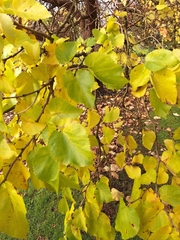
Black mulberry (Morus nigra) is a deciduous fruit tree in the Moraceae family, originating in southwestern Asia. It has been cultivated for so long that its precise wild range remains unknown. Its fleshy, dark red to black multiple fruits have a sweet-tart flavor and ripen in late summer. Distinct from white mulberry and blackberry, it is primarily an orchard and garden tree.
Read moreBlack mulberry, Blackberry and Persian mulberry



© photo
(c) Mehmet Çelik, some rights reserved (CC BY-NC), uploaded by Mehmet Çelik · cc-by-nc
iNaturalist User · cc0
Rachel L · cc0
Taken May 12, 2016 by Tela Botanica − Liliane ROUBAUDI (cc-by-sa)
Taken May 30, 2015 by Tela Botanica − Liliane ROUBAUDI (cc-by-sa)
Taken Feb 8, 2021 by Martinez leti (cc-by-sa)
Taken May 29, 2021 by Martins Helder (cc-by-sa)
Taken Jul 21, 2022 by Oğuzhan (cc-by-sa)
© copyright of the Board of Trustees of the Royal Botanic Gardens, Kew.


Global distribution
Black mulberry is an ancient cultivated plant from southwestern Asia. Its long cultivation history has obscured its original wild range. Spread westward since antiquity, it is now planted throughout the warm temperate regions of the world. Records of its presence refer to planted trees rather than clearly wild populations.
- Native2
- Introduced1
- Iran
- Turkey
- United States
Hexagons: regions where the plant occurs. Green dots: native range.1
Identity
Black mulberry (Morus nigra L., 1753) is a deciduous fruit tree in the Moraceae family and the genus Morus. Cultivation in southwestern Asia goes back so far that its strictly wild range can no longer be defined. It is grown for its edible fruit, fleshy and dark red to black, with a sweet-tart flavor when ripe in late summer. 1 3
Whether planted in an orchard or a garden, black mulberry develops a stocky, spreading shape and an often twisted trunk, gaining ornamental character with age. The names black mulberry and Persian mulberry reflect its fruit color and West Asian origins. Its fruit is sometimes called a blackberry, although that name also refers to the unrelated fruit of brambles. 2 4
Recognition
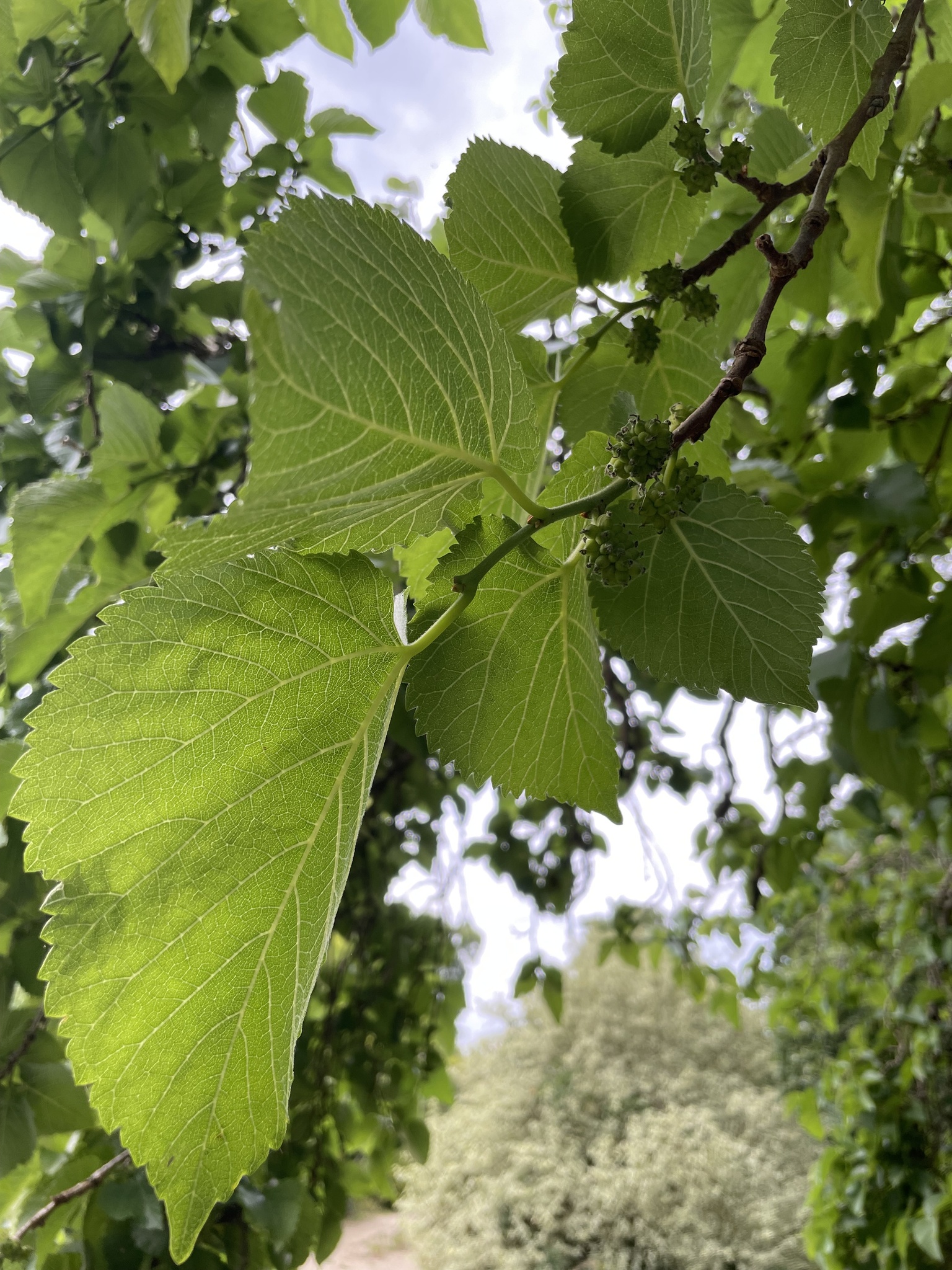
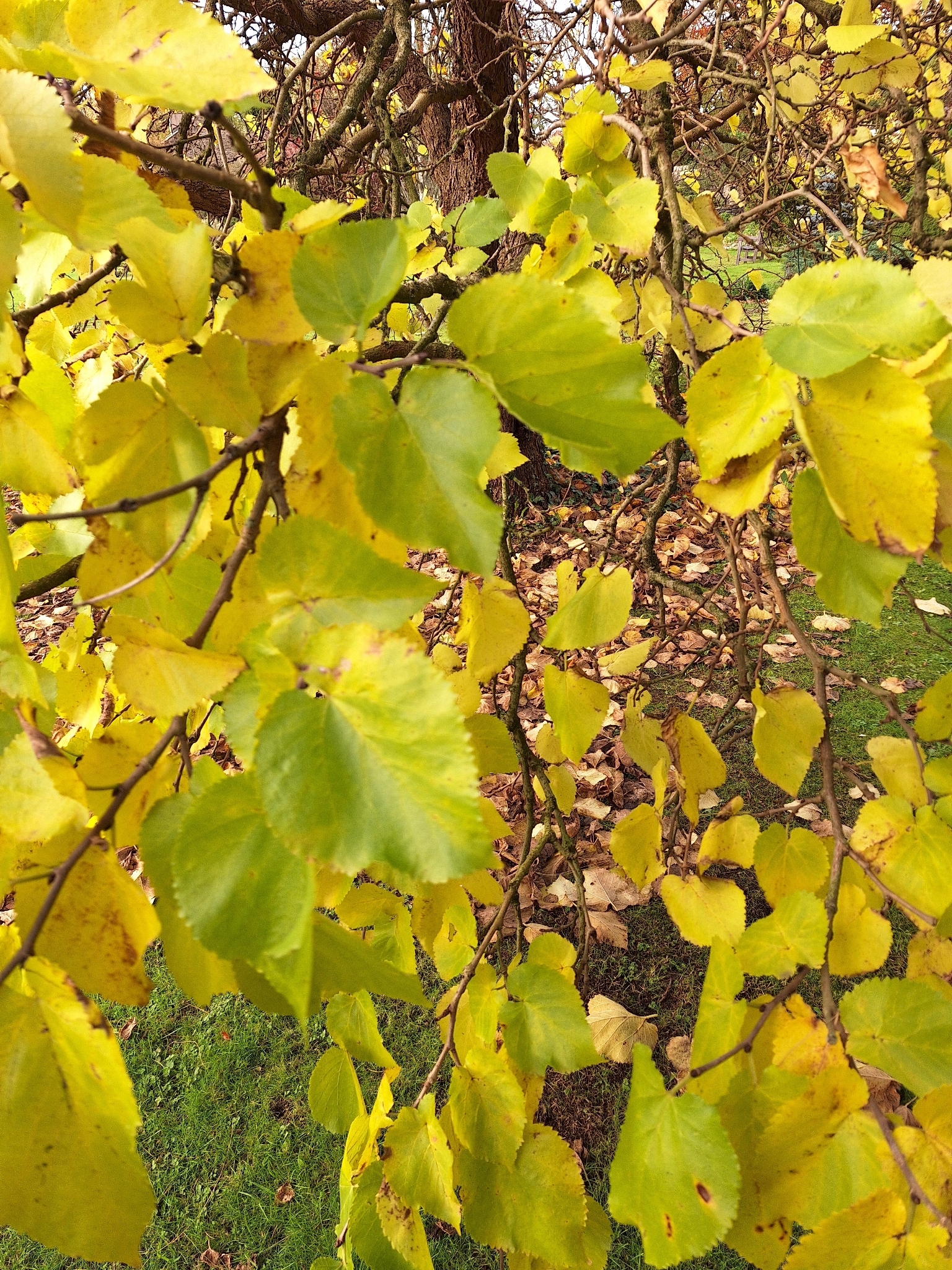
Rough, heart-shaped leaves with distinctly toothed margins provide an immediate clue to Morus nigra. They are dull green above, paler and slightly hairy below, and turn yellow in fall. A broad, low crown sits above a thick, knotted trunk with fissured, orange-brown bark. 2 4
The clearest identifying feature is its fruit: a sorosis, a fleshy multiple fruit measuring 2 to 3 cm (0.8 to 1.2 in), made up of many small fused units. Green at first, it turns red and then very dark red, almost black, at maturity. The juicy, sweet-tart flesh releases a purplish-red juice that strongly stains fingers. Like other Moraceae, the tree exudes milky sap whenever a twig or leaf is wounded. 3 4
Mature black mulberry trees commonly reach 8 to 12 m (26 to 39 ft) tall with a comparable spread, becoming larger with age. Their spring flowers, borne in small greenish catkins and pollinated by wind, are easily overlooked. 2 3
Useful taxonomy
Linnaeus described black mulberry in 1753 as Morus nigra L. A profusion of regional names and horticultural varieties has long complicated the taxonomy of Morus, and several older synonyms remain in circulation. The main names to recognize are:
- Morus laciniata Mill.
- Morus siciliana Mill.
- Morus petiolaris Raf.
-
Morus nigra var. laciniata (Mill.) Moretti
- Morus cretica Raf.
One striking biological feature is black mulberry's exceptionally high chromosome number among seed plants. This results from extensive polyploidy and sets it apart from other species in the genus. The accepted scientific name, Morus nigra, remains the reliable reference: labels such as Chelsea and Jerusalem identify horticultural selections, not separate species. 1 5
Habitat and range
Southwestern Asia is the area of origin of Morus nigra, particularly western and southwestern Iran and Asia Minor, where it has been cultivated since antiquity. Its long domestication has blurred the boundaries of its wild range so thoroughly that these can no longer be located with certainty. 1 3
From its West Asian center, the tree spread westward in antiquity, reaching the Mediterranean basin and later warm temperate regions more widely. It became particularly important in Italy, where it was planted for silk production before white mulberry, better suited to silkworm feeding, replaced it. 3 6
Most black mulberries encountered today are planted trees in orchards, gardens, rows or parks, growing in deep, well-drained soil in warm positions. The species rarely naturalizes and does not form substantial spontaneous stands, unlike genuinely wild species. 2 4
Life cycle and reproduction
Seasonal changes shape this deciduous tree's life cycle: buds open and flowers appear in spring, fruit develops in summer, and leaves turn distinctly yellow before falling in autumn. The inconspicuous flowers form small greenish catkins and rely on wind pollination, with little involvement from insects. 2 4
Each pollinated female inflorescence develops into a sorosis, the characteristic multiple fruit, swelling and darkening to red-black as it ripens. Ripe fruit is so delicate that it drops at the slightest touch and must be eaten quickly because it stores poorly. Ripening extends through late summer, sometimes into early autumn depending on the climate. 3 2
Growers mainly propagate black mulberry from stem cuttings, which retain the qualities of a fruiting cultivar, or from seed that has first undergone cold stratification. Seed propagation is slower and produces variable results. Either route calls for patience: growth remains slow to moderate, and regular fruiting often takes 8 to 15 years in seed-grown trees, less in selected cuttings. The reward is a very long-lived tree capable of cropping for decades. 4 5
Uses and risks
Eating the ripe fruit is the principal use of Morus nigra. It can be enjoyed fresh or cooked, in jam, syrup or baked goods. Its sweet, slightly tart flavor makes black mulberry one of the most valued orchard mulberries. Historically, the tree also supported silk production in the Mediterranean regions where it was introduced, before white mulberry replaced it as silkworm feed. 3 4
For humans, fully ripe fruit is safe to eat. In contrast, unripe green fruit and raw milky sap from leaves and twigs may cause mild digestive upset or temporary irritation, so harvest only dark, soft fruit. The ASPCA also lists mulberry among plants whose unripe parts may upset pets if ingested; ripe fruit poses no serious risk to humans. In the garden, the main nuisance is practical: ripe fruit leaves lasting stains on paving, patios and clothing, making a position away from walkways preferable. 7 2
Varieties, look-alikes and related plants
Nursery offerings are fruiting selections rather than separate species. Chelsea and Jerusalem are fertile, large-fruited cultivars selected for flavor and relatively early cropping. King James refers to an old English line associated with 17th-century plantings. Before buying, check the cultivar, its hardiness and its ability to fruit in your climate.
Several plants are commonly confused with black mulberry:
- Morus alba, white mulberry, has smoother leaves and often pale fruit, and is cultivated to feed silkworms;
- Rubus fruticosus, a bramble, bears blackberries on a thorny shrub in the rose family rather than on a tree;
- Morus rubra, red mulberry from North America, is another species in the genus with comparable fruit.
Red-black fruit formed as a sorosis, rough heart-shaped leaves and milky sap remain the most reliable clues for identifying black mulberry, Morus nigra. 1 3
Main sources
Frequently asked questions
Is black mulberry poisonous?
Ripe fruit is edible and safe for humans. Unripe green fruit and raw milky sap, however, may cause mild digestive upset. Eat only fully ripe fruit and keep the foliage away from pets and young children.
How do black mulberry and white mulberry differ?
Black mulberry (Morus nigra) bears fleshy, tart, dark red to black fruit on a stocky tree with rough leaves. White mulberry (Morus alba) has smoother foliage and often pale, less flavorful fruit; it is the species grown to feed silkworms.
Are mulberries and blackberries the same fruit?
No. Blackberries belong to Rubus, a thorny shrub in the rose family. Black mulberry fruit is a sorosis, a multiple fruit borne by a tree in the Moraceae family. The fruits look similar but have different botanical origins.
How long does black mulberry take to bear fruit?
Black mulberry generally takes several years to fruit, often 8 to 15 years for a seed-grown tree and less for a cutting of a selected cultivar. It grows slowly and rewards patience with a very long life.
Where should I plant black mulberry?
Full sun is essential for a good harvest. Choose a warm, sheltered position with deep, well-drained soil. Keep the tree away from patios because ripe fruit leaves lasting stains.
Why does my mulberry bleed after pruning?
Like other Moraceae, black mulberry releases milky sap from wounds. Pruning while sap is flowing actively causes heavy bleeding and poor wound closure. Light pruning during winter dormancy is preferable.
How tall does black mulberry grow?
This stocky tree commonly reaches 8 to 12 m (26 to 39 ft) tall with a similar spread, sometimes more with age. Its spreading crown and twisted trunk make it recognizable in old gardens.
Similar plants
If you are unsure about a plant’s toxicity, ask a botanist or veterinarian for advice.