
Nutmeg (Myristica fragrans, )
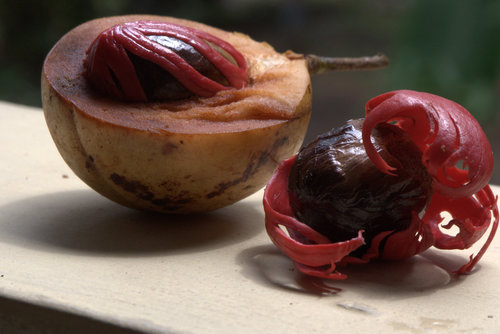

Nutmeg (Myristica fragrans), also called the nutmeg tree, is a slow-growing evergreen in the Myristicaceae family, native only to the Banda Islands in Indonesia’s Maluku archipelago. Male and female flowers grow on separate trees. Its fruit yields two spices: the dried seed supplies nutmeg, and its scarlet aril supplies mace.
Read moreNutmeg, Nutmeg tree, Nuez moscada and Pala
Give plenty of ambient light without direct sun on the leaves.
Partial shade when young; tolerates full sun when mature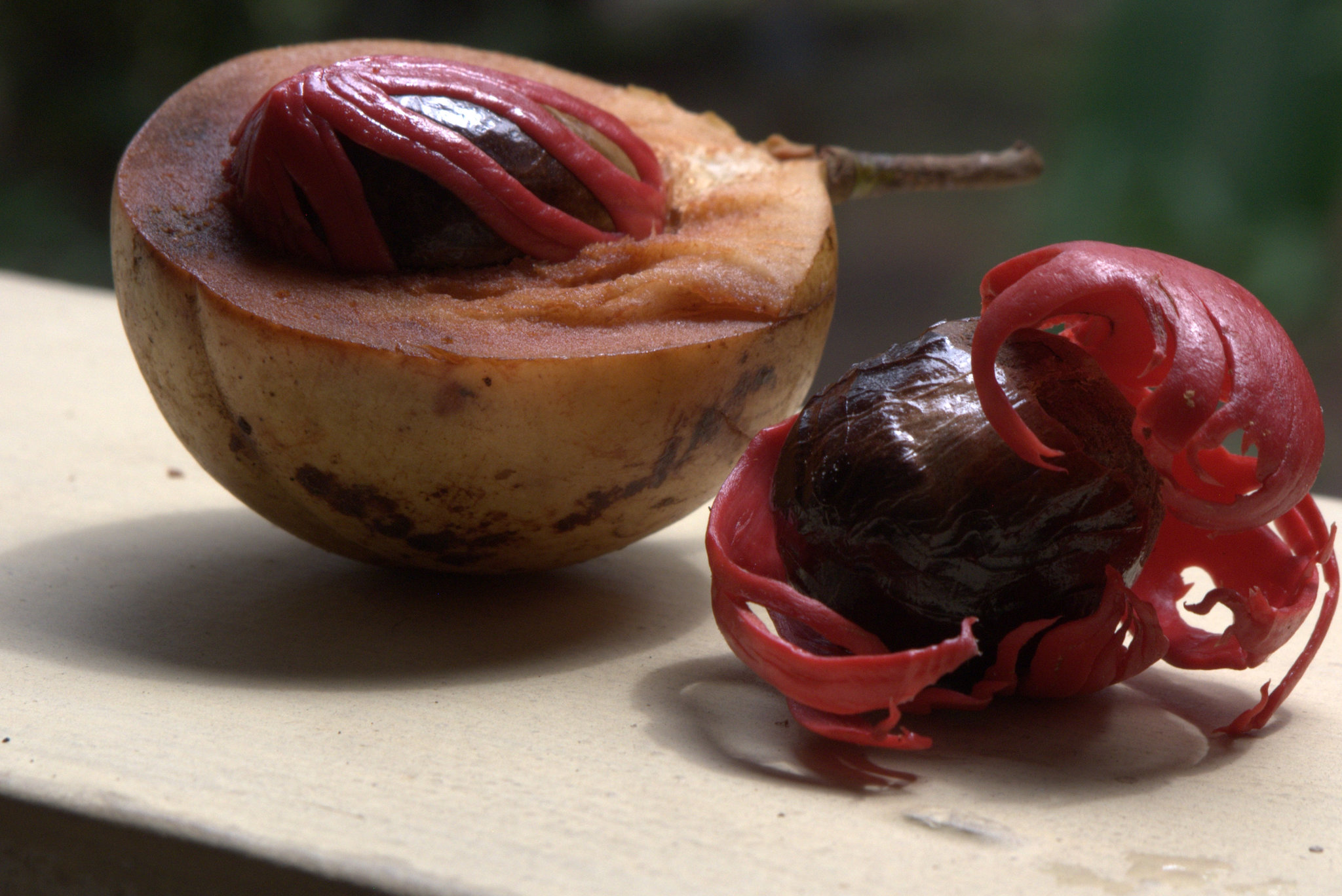


© photo
(c) Jim, some rights reserved (CC BY-NC-ND) · cc-by-nc-nd
Wikimedia Commons · CC BY-SA or Public Domain
Wikipedia · CC BY-SA
Taken Oct 13, 2006 by OTS - O. Vargas (cc-by-nc-sa)
Taken May 20, 2015 by Tela Botanica − Anziz AHMED ABDOU (cc-by-sa)
Taken Dec 27, 2008 by Tela Botanica − Liliane Roubaudi (cc-by-sa)
© copyright of the Board of Trustees of the Royal Botanic Gardens, Kew.




Global distribution
Myristica fragrans is native strictly to the Banda Islands in Indonesia’s Maluku archipelago. Once the world’s sole source of nutmeg under a Dutch monopoly, it was introduced to Mauritius and Réunion in 1770, then to Grenada in 1843, where it is now grown on a large scale.
- Native1
- Introduced5
- Indonesia
- Grenada
- India
- Sri Lanka
- Mauritius
- Tanzania (Zanzibar)
Hexagons: regions where the plant occurs. Green dots: native range.1
Identity
Nutmeg (Myristica fragrans Houtt., 1774), also called the nutmeg tree, is an evergreen member of the Myristicaceae family native only to the Banda Islands in Indonesia’s Maluku archipelago. 1 4
The genus name comes from ancient Greek myristikos, suitable for anointing, while fragrans refers to the powerful scent of the dried seed. The French name muscadier derives from medieval Latin muscus, musk, to which its fragrance was long compared. 5
A single nutmeg fruit yields two distinct spices: its dried seed supplies nutmeg, and the scarlet aril surrounding it supplies mace. No other common spice comes from one seed in two forms sold separately in this way. 3
Recognition
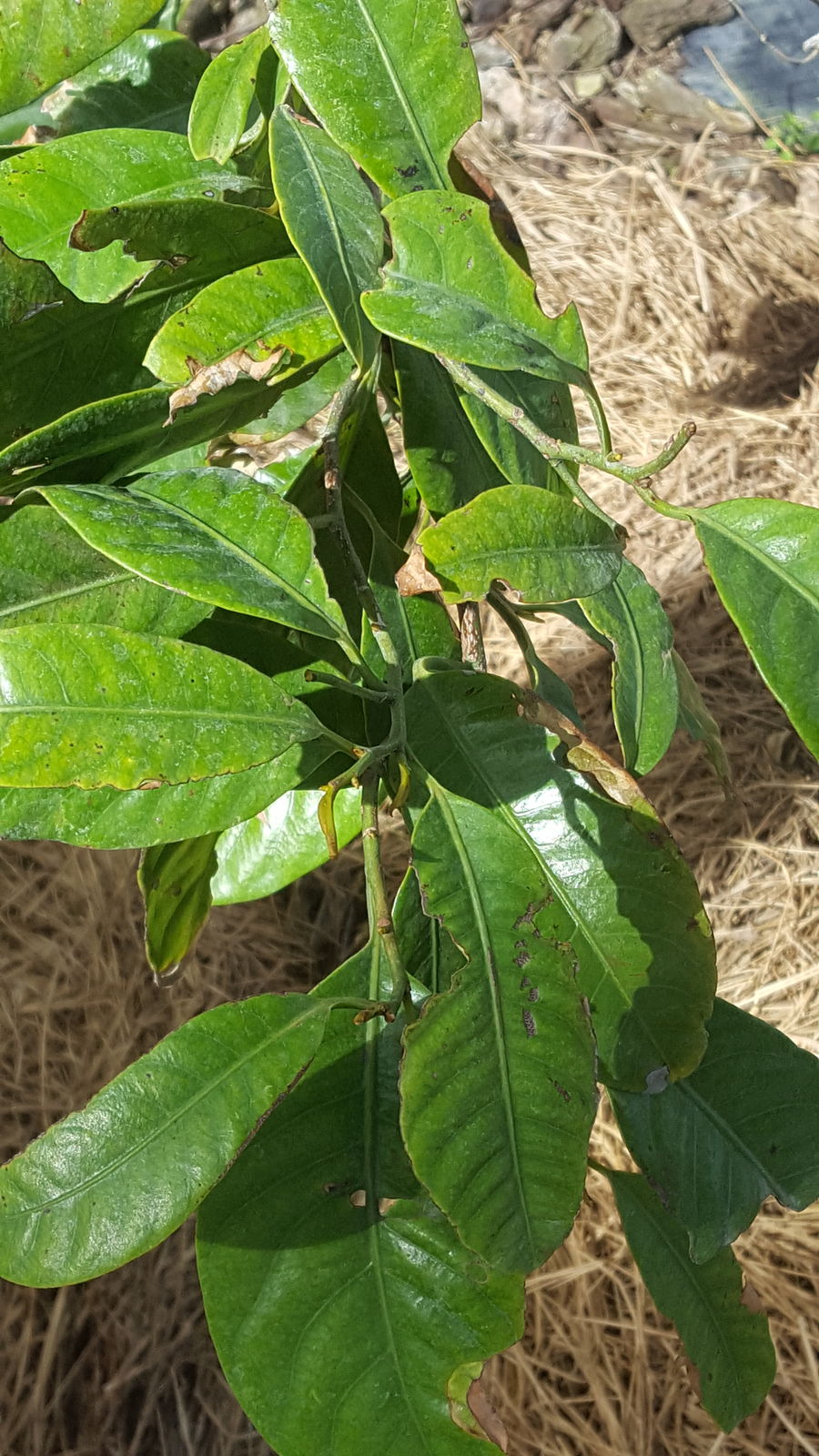
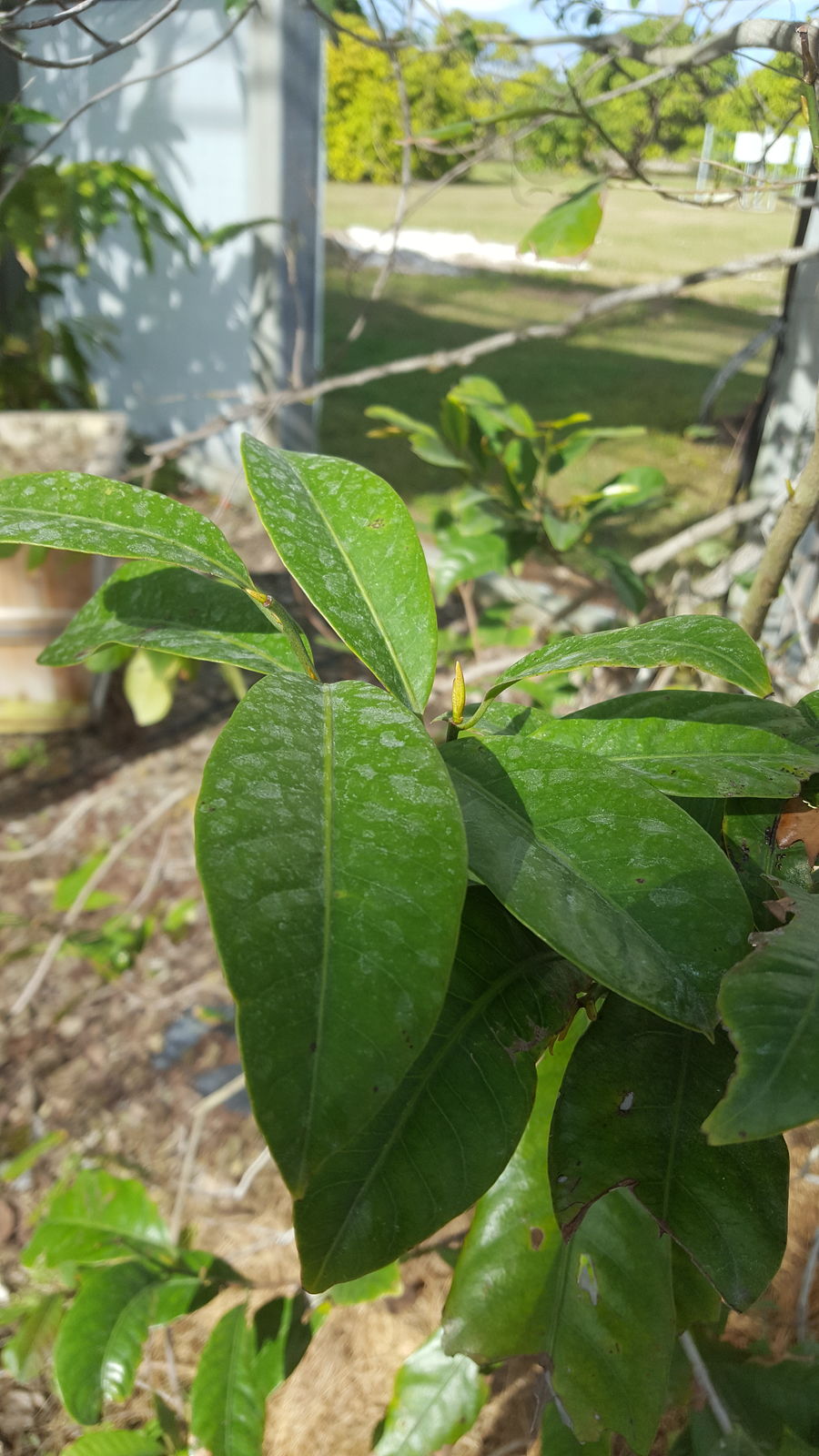
Usually 5–15 m (16–49 ft) tall, the tree can exceptionally reach 20 m (66 ft). Alternate, glossy dark green leaves measure 5–15 cm (2–6 in) long and 2–7 cm wide. Crushing them releases a recognizable aromatic scent. 4
Nutmeg is dioecious: male and female flowers develop on separate trees, never on the same individual. Pale yellow, waxy, bell-shaped male flowers occur in groups of one to ten; the slightly larger female flowers, up to 1 cm long, appear alone or in groups of two or three. 4
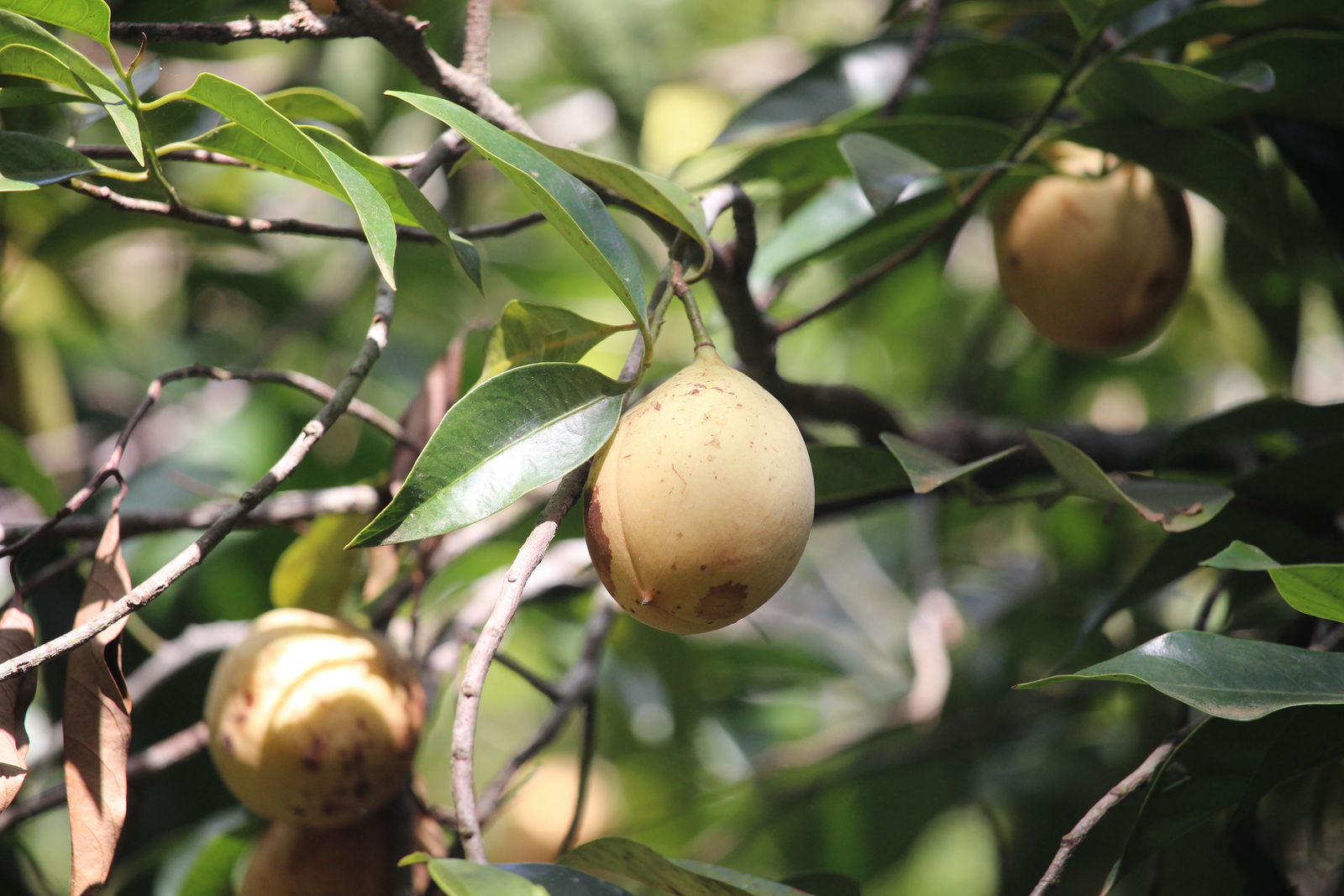
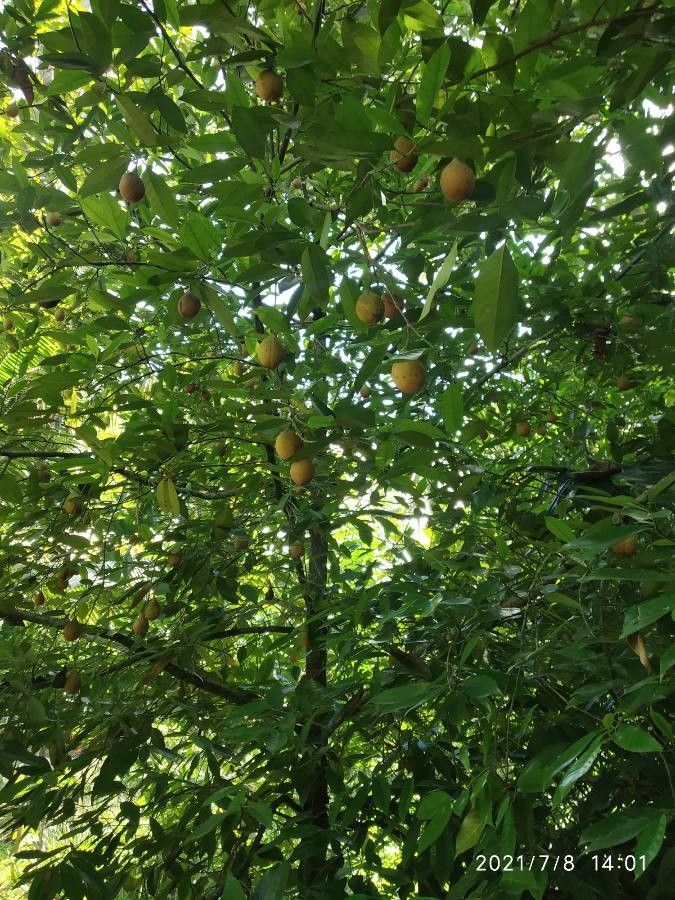
The yellow, oval drupe measures 6–9 cm (2.4–3.5 in) long and 3.5–5 cm across. At maturity it splits into two valves along a seam, exposing a shiny purple-brown seed wrapped in a fleshy, deeply divided scarlet aril. 4 3
Useful taxonomy
POWO/Kew accepts Myristica fragrans Houtt., 1774, described by Dutch naturalist Martinus Houttuyn. Historical synonyms include Myristica aromatica Sw., Myristica officinalis L.f., Myristica moschata Thunb., Myristica amboinensis Gand. and Palala fragrans (Houtt.) Kuntze. 1 2
More than 150 tropical tree species belong to Myristica, but only M. fragrans is grown on a large scale for both spices. Two relatives, Myristica argentea and Myristica malabarica, produce less sought-after aromatic seeds sometimes used to adulterate true nutmeg. 10
The IUCN lists nutmeg as Data Deficient, because wild populations cannot clearly be distinguished from the centuries-old Banda plantations. 7
Habitat and range
Only the Banda Islands, a small volcanic archipelago in Indonesia’s Maluku Islands, form the tree’s strict native range. There it grows in lowland tropical rainforest on deep volcanic soils. 1 6
Throughout the seventeenth century, the Dutch East India Company enforced a complete nutmeg monopoly by destroying trees outside Banda and strictly limiting local production. In 1667, the Treaty of Breda ceded Run, the last nutmeg-producing island outside Dutch control, to the Dutch Republic in exchange for England relinquishing New Amsterdam, the future Manhattan. 4
That monopoly ended in the eighteenth century. In 1770, French botanist Pierre Poivre succeeded in introducing hundreds of nutmeg plants from the Maluku Islands to Mauritius and Réunion. English merchants then established the species on Grenada in 1843; the Caribbean island remains the world’s second producer after Indonesia. 8
Life cycle and reproduction
Seed-grown nutmeg reveals its sex only at first flowering, around 6–8 years old; roughly half the seedlings prove male and therefore do not bear fruit. Grafting a scion from a confirmed female brings production forward to 4–5 years, rather than 6–8 from seed, and secures future yield. 3 4
Insect-pollinated flowers produce fruit that takes several months to ripen. The yellow husk then opens into two valves, revealing the seed and scarlet aril. In a stable equatorial climate, a mature productive tree bears almost year-round, with two distinct annual harvest peaks. 4
A well-established, well-maintained nutmeg tree remains productive for 60 years or more, reaching peak yields between 15 and 20 years. 4
Uses and risks
Cooking is the main use for both spices from the fruit: the dried seed, grated for use, and mace, its flat-dried aril, with a finer, more delicate flavor. Both season béchamel, pastries, mulled wine and slow-cooked dishes, nutmeg as coarse powder and mace as subtler strips. 3
Available information does not document the seed as toxic to cats or dogs; the main risk concerns humans consuming high doses of myristicin, a compound metabolized into an amphetamine-like substance that inhibits an enzyme in the nervous system. Effects vary greatly with individual sensitivity: below 10 g of powder they remain limited, yet hallucinations, tachycardia and seizures have been documented from 5 g up to 30 g, with symptoms lasting as long as 60 hours in severe cases. 9
Varieties, look-alikes and related plants
Traditional trade distinguishes Banda nutmeg, long considered the quality benchmark, from Grenada nutmeg, produced since 1843 and now accounting for most global volume. Modern plantations mainly use grafted clones from high-yielding female trees: grafting removes the uncertainty of seedling sex and guarantees a productive tree after 4–5 years. 8
Two related species cause commercial confusion: Myristica argentea, Papuan nutmeg, has a longer, weakly aromatic seed; Myristica malabarica, Bombay nutmeg, lacks aroma and is sometimes used to adulterate commercial nutmeg or mace. 10
Main sources
- Plants of the World Online / Kew, Myristica fragrans Houtt.
- International Plant Names Index, Myristica fragrans Houtt.
- Missouri Botanical Garden Plant Finder, Myristica fragrans
- Wikipedia EN, Myristica fragrans
- Wikipedia FR, Muscadier
- INPN MNHN, Myristica fragrans Houtt., 1774
- IUCN Red List of Threatened Species, Myristica fragrans
- Encyclopaedia Britannica, Pierre Poivre
- American College of Emergency Physicians, TikTok nutmeg challenge leads to intoxication
- PMC, Identification and cytotoxic evaluation of nutmeg and its substituents
Frequently asked questions
Is nutmeg toxic to cats and dogs?
No. Available information does not document the seed as toxic to cats or dogs. The main risk concerns humans who consume large quantities of grated nutmeg.
Why is nutmeg dangerous in large doses?
It contains myristicin, a compound metabolized into an amphetamine-like substance that inhibits an enzyme in the nervous system. Hallucinogenic and cardiac effects occur from 5–10 g of powder, with severe cases documented above 20 g.
How does one nutmeg tree produce two spices?
The dried seed provides nutmeg, while its scarlet covering, the aril, becomes mace when dried flat. The spices come from the same fruit but differ in flavor and culinary use.
Do I need male and female trees to get fruit?
Yes. Nutmeg has separate male and female trees. Only females bear fruit, and a male nearby is needed for pollination. Sex becomes visible only at first flowering, around 6–8 years from seed.
Where did nutmeg originally come from?
It is native only to the Banda Islands in Indonesia’s Maluku archipelago. The Dutch East India Company imposed a strict monopoly throughout the seventeenth century before cultivation spread to Mauritius, Réunion and the Caribbean.
Which species resemble true nutmeg?
Myristica argentea, Papuan nutmeg, and Myristica malabarica, Bombay nutmeg, are relatives sometimes used as less aromatic substitutes or as adulterants in nutmeg and mace.
Can I grow nutmeg in mainland France?
Only in a warm, humid greenhouse throughout the year. Frost is fatal, and regular fruiting remains uncommon outside a stable tropical climate.
Similar plants
If you are unsure about a plant’s toxicity, ask a botanist or veterinarian for advice.