
Coconut palm (Cocos nucifera, )
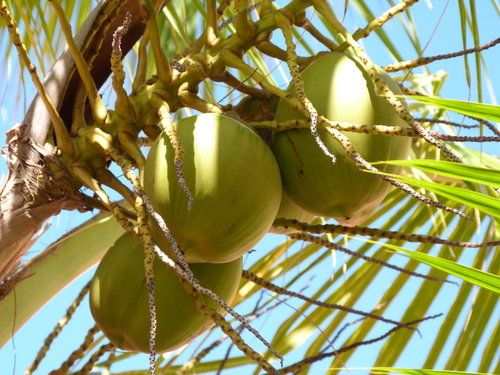
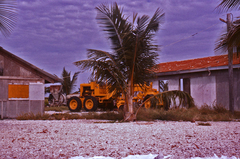

Coconut palm (Cocos nucifera) is the only living species of Cocos, in the Arecaceae. Originating in the tropical Indo-Pacific, it now grows along most of the world's tropical coasts, dispersed first by ocean currents and later by human cultivation. Its ringed trunk, pinnate fronds and three-pored fruit make it one of the world's most recognizable palms.
Read moreCoconut palm



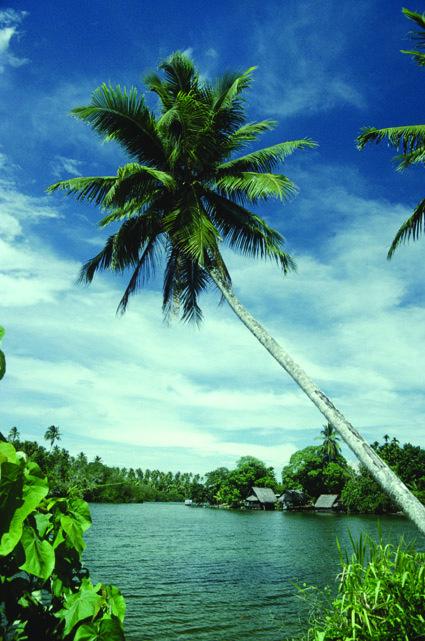

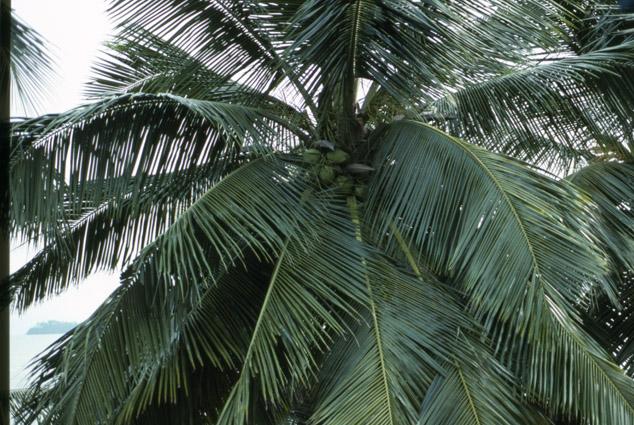
© photo
(c) Kimberlie Sasan, some rights reserved (CC BY-ND), uploaded by Kimberlie Sasan · cc-by-nd
David Anderson · cc-by
Akiva · cc-by-sa
Taken Jun 16, 2022 by Trap Hers (cc-by-sa)
Taken May 28, 2021 by Sébastien TRASBOT (cc-by-sa)
Taken Jan 29, 2021 by Guerreiro FerNanda (cc-by-sa)
Taken Jan 19, 2020 by Diego Alex (cc-by-sa)
Taken Nov 4, 2022 by Fozame (cc-by-sa)
© copyright of the Board of Trustees of the Royal Botanic Gardens, Kew.


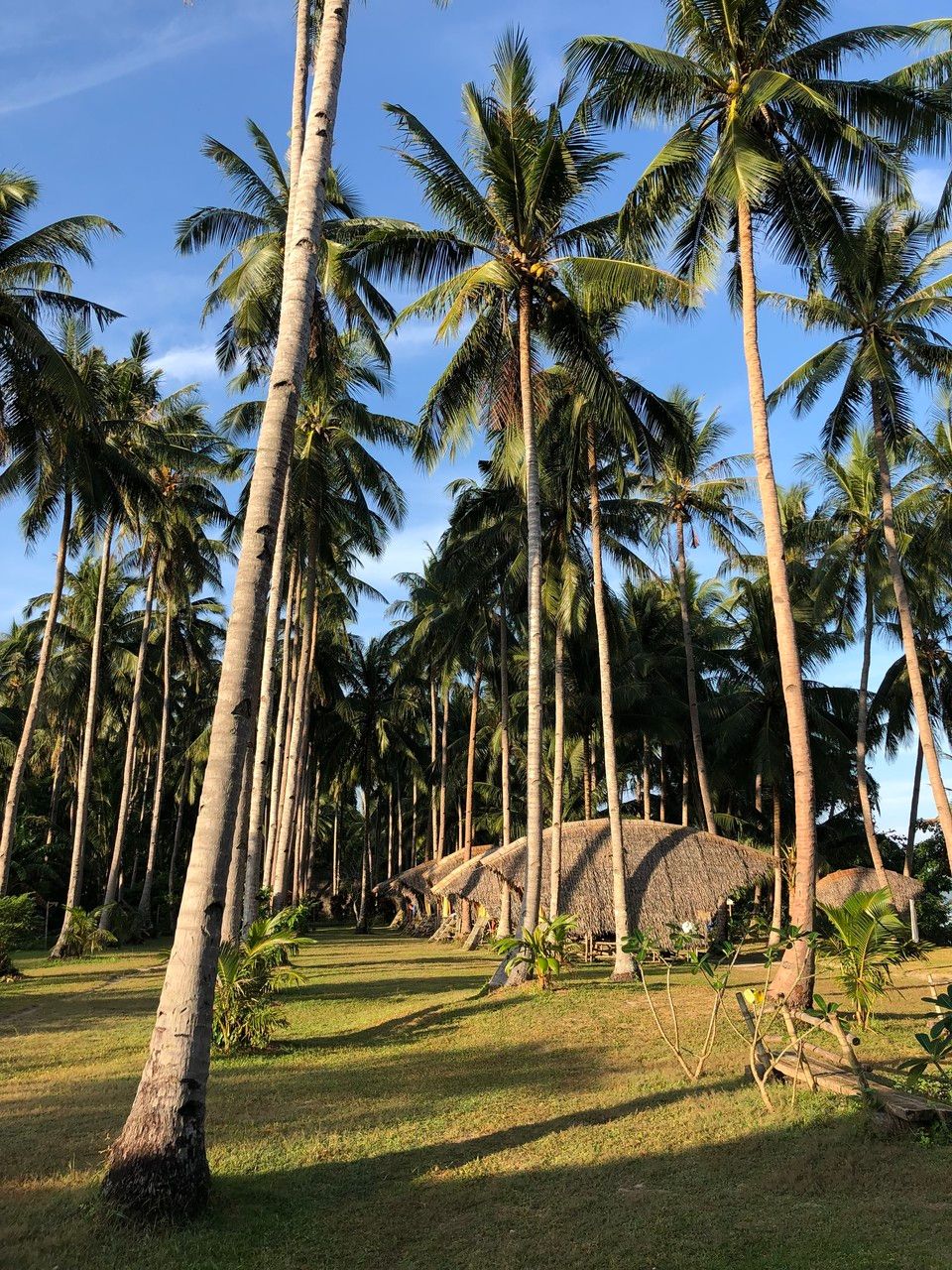


Global distribution
The center of genetic diversity lies in the central Indo-Pacific, from island Malaysia to Melanesia. The exact native range remains debated because ocean-borne fruits spread long before human intervention, followed by extensive dispersal through navigation and coastal cultivation.
- Native3
- Introduced2
- Indonesia
- Malaysia
- Papua New Guinea
- Brazil
- Florida (United States)
Hexagons: regions where the plant occurs. Green dots: native range.1
Identity
Coconut palm (Cocos nucifera L., 1753) is the only living species of Cocos, in the Arecaceae. Strictly speaking, this single-stemmed monocot does not form a tree trunk through secondary wood growth, and its trunk never branches. 1 6
The name is thought to come from Portuguese sailors. The three dark pores at the base of the fruit suggested a grimacing face, recalling the figure called coco in popular folklore. French subsequently added the tree-name suffix -tier to form cocotier, distinguishing the palm from its fruit. 7
Recognition
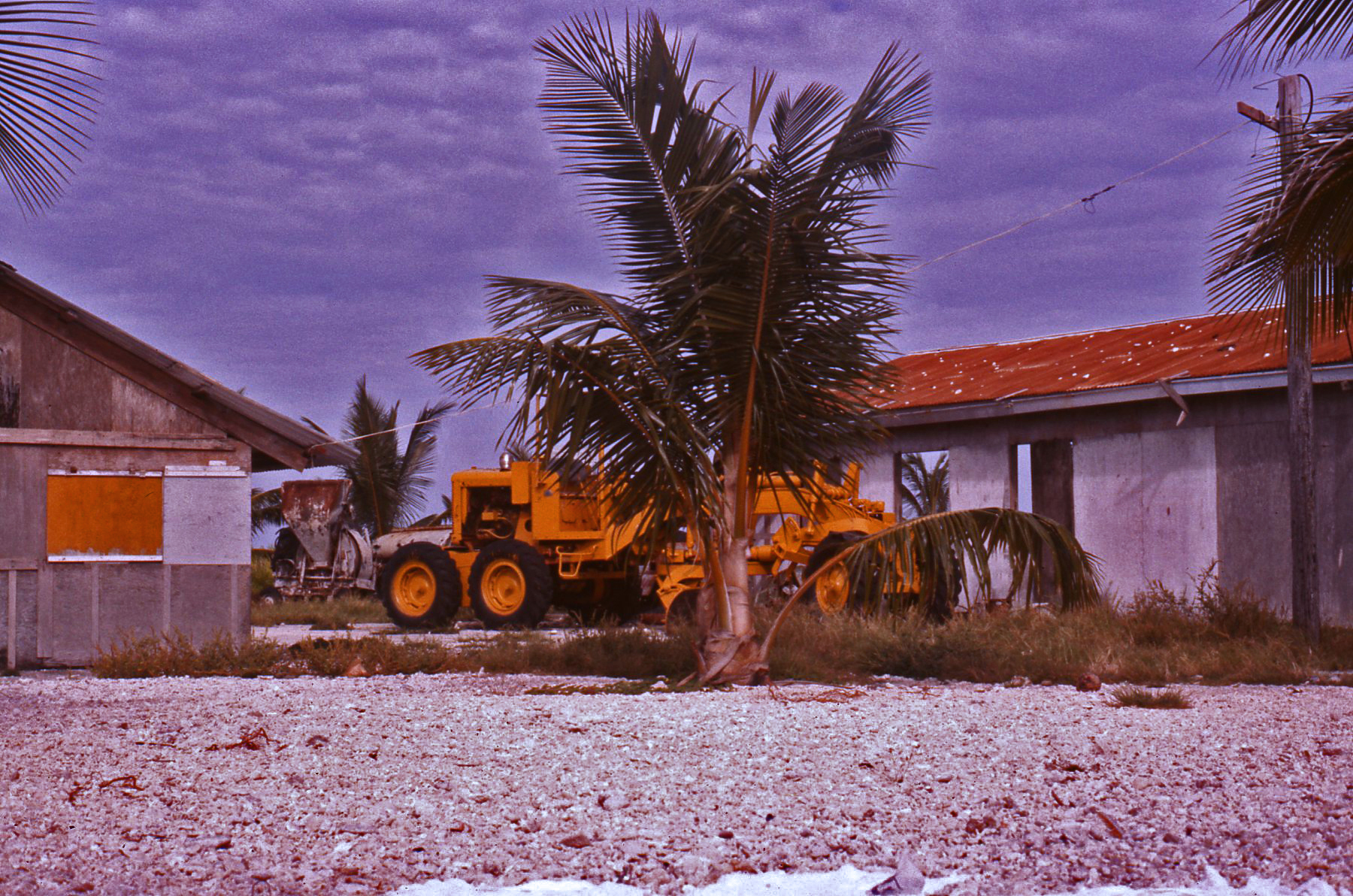
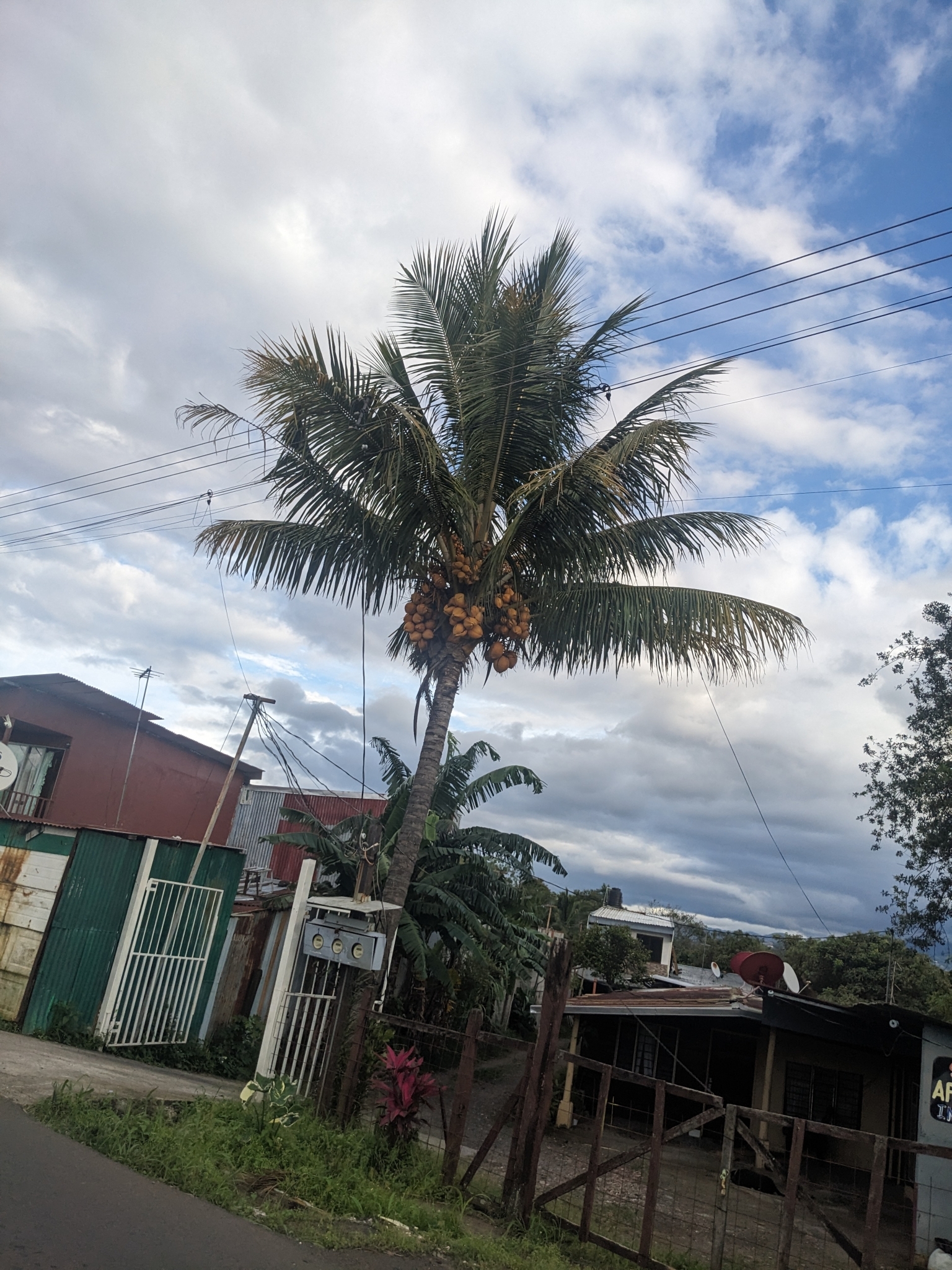
A single, ringed trunk records the scars left by fallen fronds and has no lateral branches. Tall varieties can exceed 30 m (100 ft), compared with only 2–4 m (6.5–13 ft) for mature dwarf cultivars. 5 4
An adult crown carries about twenty pinnate fronds, each 4–6 m (13–20 ft) long, arching outward from the top of the stem. In cultivated varieties, the fruit usually measures 20–30 cm (8–12 in) long. It is a fibrous drupe, not a true nut: an outer fibrous husk encloses a hard shell with three germination pores, two of which remain permanently sealed. 5 7
Inside the fruit, liquid endosperm forms coconut water, while solid endosperm forms the white flesh dried to make copra. This combination of liquid water and solid flesh within one shell distinguishes it from most other palms, which produce only dry flesh. Coconut milk is different from coconut water: it is obtained by pressing grated mature flesh, never by collecting a naturally occurring liquid. 5 8
Useful taxonomy
Although Cocos nucifera is the genus's only living member, the group's taxonomic history is broader. The queen palm, Syagrus romanzoffiana, was long placed in Cocos before being transferred to Syagrus. The two palms still share superficially similar arching fronds. 6
Fossils related to the genus, such as the Miocene Cocos zeylandica, have been found in New Zealand and India, indicating a much wider ancient distribution. The old botanical names Palma cocos Mill. and Calappa nucifera Kuntze are now treated simply as synonyms of Cocos nucifera. 6 1
Habitat and range
Coconut's center of genetic diversity lies in the central Indo-Pacific, from island Southeast Asia around Malaysia to Melanesia. Its exact native range remains debated: waterproof, buoyant fruits traveled on ocean currents long before human intervention, blurring the distinction between wild and introduced populations. 1 5
The palm favors sandy, well-drained soils, often near the coast, with a high water table; it avoids waterlogged ground. As a halophyte, it tolerates salt spray well, explaining its almost constant association with coasts rather than inland plains. 3 4
Human navigation has spread coconut since antiquity. It has been cultivated in India since the 6th century and on East African coasts since the 10th century, before Spanish and Portuguese navigators introduced it to the Americas in the 16th century. It now grows along almost all tropical coasts, below 1,000 m (3,300 ft) and within 26° north or south of the equator. 7 4
Life cycle and reproduction
The coconut palm is monoecious: one inflorescence bears both male and female flowers. A healthy adult can produce up to 15 inflorescences a year. On average, eleven months pass between the opening of the female flowers and harvest of the ripe fruit. 5
Propagation relies exclusively on seed. Cuttings and division do not work because there is no replacement terminal bud. Fresh coconuts germinate readily at 27–30 °C (81–86 °F) without dormancy, the radicle emerging through the one functional pore. 3 4
Tall varieties are cross-pollinated and genetically diverse. They begin fruiting after 6–10 years and remain productive for 60–100 years. More intensively selected, self-pollinating dwarf cultivars bear earlier but live substantially shorter lives. 5
Uses and risks
Almost every part of the palm has a use. Coconut water and fresh flesh or dried copra provide food; oil serves cooking and cosmetics; husk fiber, or coir, becomes rope and doormats; and the trunk supplies construction material. Mature flesh is rich in potassium, iron, magnesium and zinc, helping account for its central place in tropical cooking. 4 7 8
No data classify Coconut palm as toxic to humans or domestic animals; the Useful Tropical Plants Database lists no documented hazard. A separate risk is mechanical: a heavy, ripe fruit falling from high above the ground can cause injury. Regular pruning of palms in busy places addresses that risk. 4 2
The palm itself faces pests including red palm weevil and rhinoceros beetle. Lethal yellowing, a phytoplasma disease transmitted by insects, has destroyed entire coconut plantations in the Caribbean and Florida. 2
Varieties, look-alikes and related plants
Cultivated coconuts fall into two broad groups: Tall varieties, or Typica, which are cross-pollinated and robust; and earlier-bearing, self-pollinating Dwarf cultivars, or Nana. Maypan, a hybrid between the groups, was selected for tolerance of lethal yellowing after Caribbean epidemics. 5 2
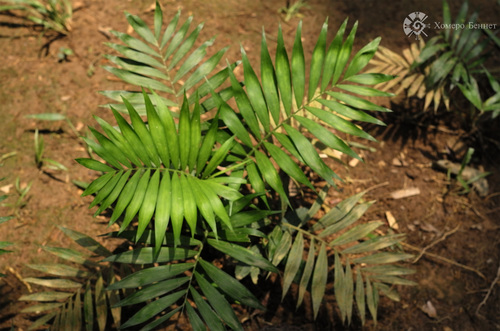
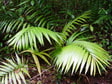
The best-documented look-alike is the queen palm, Syagrus romanzoffiana, formerly placed in Cocos itself and similar in its arching fronds. The name coco also invites confusion with coco de mer, Lodoicea maldivica, a Seychelles palm in a different genus that produces the largest seed in the plant kingdom. 6
Main sources
Frequently asked questions
Is coconut palm poisonous to cats and dogs?
No data classify Coconut palm as toxic to domestic animals or humans. The main risk is mechanical: a heavy ripe fruit can cause injury when it falls.
Can coconut palm live indoors?
Only a young plant is suited to a humid conservatory or a bright, heated greenhouse. After a few years, insufficient light and warmth halt its growth, and it develops neither a true trunk nor fruits.
Where does coconut palm really come from?
Its center of genetic diversity lies in the central Indo-Pacific between island Malaysia and Melanesia. The exact native range remains debated because floating fruits traveled on ocean currents long before cultivation.
Is a coconut really a nut?
No. Botanically it is a fibrous drupe, like an enlarged peach or plum, with an outer skin, fibrous husk and hard inner shell enclosing the kernel and coconut water.
How long before the first coconut harvest?
Tall varieties begin fruiting after 6–10 years and remain productive for 60–100 years. Self-pollinating dwarf cultivars start earlier but remain productive for a shorter time.
Why are some coconut palms more disease-resistant?
Hybrids such as Maypan, a cross between tall and dwarf types, were selected after Caribbean outbreaks of lethal yellowing, a phytoplasma disease that destroys entire coconut plantations.
Which palm is most often mistaken for coconut palm?
Queen palm, Syagrus romanzoffiana, with similar arching fronds. It was formerly placed in Cocos before being transferred to Syagrus.
Similar plants
If you are unsure about a plant’s toxicity, ask a botanist or veterinarian for advice.