
Parlour palm (Chamaedorea elegans, )
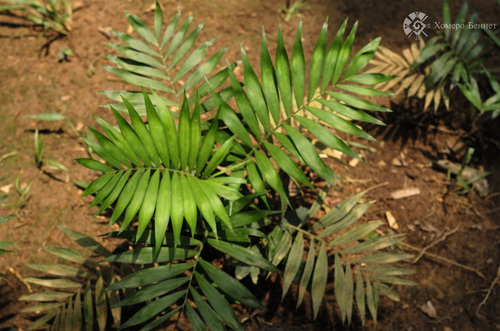
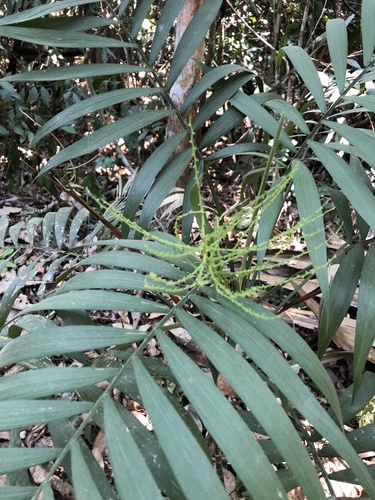
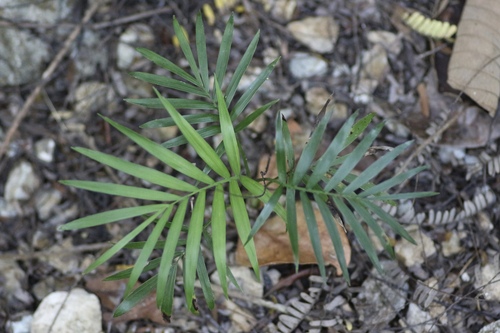
The parlour palm (Chamaedorea elegans) is a small palm in the family Arecaceae, native to the humid forests of southern Mexico and Guatemala. Its slender cane stems carry arching pinnate leaves; it is one of the most shade-tolerant indoor palms, non-toxic and slow-growing.
Read moreParlor palm, Neanthe bella and Good luck palm
Global distribution
The native range of Chamaedorea elegans lies in southern and eastern Mexico, Guatemala and Honduras, in the understory of humid tropical forest. The species is now grown as a houseplant worldwide; those cultivated regions remain distinct from its Central American home range.
- Native4
- Mexico
- Guatemala
- Honduras
- Belize
Hexagons: sourced regions. Green dots: native range. Statuses according to POWO (Kew).
Identity
The parlour palm (Chamaedorea elegans Mart., 1830), also spelled parlor palm, is a small palm in the genus Chamaedorea, family Arecaceae. In a pot it rarely tops 1–3 m (3–10 ft), which sets it apart at a glance from the large single-trunked indoor palms such as the kentia (Howea forsteriana), a far bulkier plant. The genus name comes from the Greek khamai (on the ground) and dorea (gift), a nod to the fruit borne low, within easy reach on this short species. 1 2
For decades the plant was sold as Neanthe bella, a label it carried through the twentieth-century North American trade before the accepted name Chamaedorea elegans took over. Its tolerance of low light, unusual among palms, explains the Victorian fashion for the species and its lasting reputation as an office plant. 3 4
Recognition
Look first at the stems: slender and cane-like, clustered from the base, pale green and marked with regular rings, like miniature bamboo. Each stem carries a few arching pinnate leaves, with narrow lance-shaped leaflets spread in a light fan along either side of the rachis. 2 3
Potted specimens seldom exceed 1–3 m (3–10 ft) in height, with a spread of about 60 cm–1 m (2–3 ft). Growth is slow: the plant makes only a few new leaves a year, so it keeps a compact habit for a long time and fits small indoor spaces well. 4 2
The species is dioecious: male and female flowers grow on separate plants, in small, round yellow clusters that emerge from the stem between the leaves. Indoors, flowering is rare, and fruiting rarer still, occurring only when a male and a female plant stand close to each other. 3 2
Useful taxonomy
German botanist Carl Friedrich Philipp von Martius described the species in 1830, during his major work on the palms of the Americas. Chamaedorea elegans then passed through several different genus names before the current classification settled:
- Chamaedorea elegans Mart., the accepted name
- Collinia elegans (Mart.) Oerst.
- Neanthe elegans (Mart.) O.F.Cook and Neanthe bella O.F.Cook, trade names common in the twentieth century
- Nunnezharia elegans (Mart.) Kuntze
The stable reference is the accepted scientific name, Chamaedorea elegans: labels reading Collinia or Neanthe bella refer to the same plant under an older genus name, not to a different species. 1 3
Habitat and range
In the wild, Chamaedorea elegans ranges across southern and eastern Mexico, Guatemala and Honduras, in the understory of humid tropical forest, from sea level up to about 1,500 m (4,900 ft). There it forms dense stands on the forest floor beneath the lower canopy, out of direct sun. 1 4
That shaded origin accounts for the strong tolerance of low light behind the parlour palm's success indoors: few house palms cope as well with offices and rooms that get no direct sun. 2 3
Beyond its native range, the species is now grown as a houseplant in Florida, France, Spain and Japan, on continents far from its Central American home. Where winters bring frost, the parlour palm stays a container plant: it does not tolerate temperatures below 10 °C (50 °F) and cannot live outdoors year-round. Growing it in the ground is realistic only in frost-free climates, roughly USDA zones 10 to 12. 4
Life cycle and reproduction
Only mature plants flower, after several years of growth. The inflorescence forms small, round, fragrant yellow clusters held in the leaf axils; male and female flowers appear on separate plants, since the species is strictly dioecious. 3 2
The fruits are small drupes that turn black when ripe, and only on pollinated female plants. Indoors, the usual absence of a nearby male plant makes fruit rare; the fruit juice can irritate the skin of sensitive people on direct contact. 2 3
In cultivation, propagation is by seed only. Seeds germinate slowly and unevenly, over 2–6 months, with bottom heat of 25–30 °C (77–86 °F). That is why nursery pots hold several seedlings sown together, giving a dense, bushy clump from the start. 4 2
Uses and risks
As an ornamental, the parlour palm earns its place in living rooms and offices through its tolerance of low light and its low, compact habit. The ASPCA lists it as non-toxic to cats and dogs, with no major toxic compound known; only the fruit juice may occasionally irritate the skin on direct contact. 5 2
Wild plants serve a different purpose: the leaves of Chamaedorea elegans are among those harvested as xate for the export floral trade, notably to North America and Europe. This forest harvest, separate from pot cultivation, has prompted managed-harvest programs in Guatemala and Belize, as export demand puts pressure on wild populations of the species. 6 1
Varieties, look-alikes and related plants
Almost all plants in cultivation are the straight species: no named cultivar is widely available, apart from the horticultural label Bella, which growers use for the compact potted form and which has no separate botanical standing. Commercial plants are seed-raised, often several to a pot for a bushier look. 4
Mix-ups mostly involve other small clumping indoor palms, starting with the bamboo palm (Chamaedorea seifrizii), which is taller and has more numerous stems. The lady palm (Rhapis excelsa) differs in its broad, palmately arranged leaflets; the kentia palm (Howea forsteriana), in its single, much taller trunk.
A low habit and a clump of thin, ringed stems remain the most reliable signs that a palm sold as a parlour palm really is Chamaedorea elegans. Age offers one last clue: a young seedling keeps entire, strap-shaped leaves, whereas an intermediate plant of 40–80 cm (16–31 in) already shows clearly pinnate leaflets and visible cane stems, a sign it is nearing maturity. 3 2
Main sources
- Plants of the World Online / Kew, Chamaedorea elegans Mart.
- Royal Horticultural Society, Chamaedorea elegans, parlour palm
- Missouri Botanical Garden Plant Finder, Chamaedorea elegans
- North Carolina Extension Gardener Plant Toolbox, Chamaedorea elegans
- ASPCA, Parlor palm (Chamaedorea elegans) non-toxic entry
- Rainforest Alliance, Xate (Chamaedorea spp.) species profile
Frequently asked questions
Is the parlour palm toxic to cats and dogs?
No. The ASPCA lists the parlour palm (Chamaedorea elegans) as non-toxic to cats and dogs. Only the juice of the fruit may irritate the skin on direct contact.
Why is my Chamaedorea elegans growing so slowly?
That is normal. Chamaedorea elegans is a slow-growing palm that puts out only a few new leaves a year. Adequate indirect light and a light summer feed support that pace best.
Why does my parlour palm never flower?
The species is dioecious and takes several years to reach flowering age. Indoors, flowers are rare and fruit rarer still, since it needs a male and a female plant growing close together.
How much light does an indoor parlour palm need?
Moderate to low indirect light suits it best. The parlour palm is among the most shade-tolerant palms, but it does not thrive in direct sun, which scorches its leaflets.
Where does the parlour palm come from?
Its native range stretches from southern and eastern Mexico to Guatemala and Honduras, in the understory of humid tropical forest, sometimes up to 1,500 m (4,900 ft) above sea level.
Do nursery parlour palms come from wild seed?
Potted plants on the market overwhelmingly come from nursery-sown seed. In the wild, it is mainly the leaves that are harvested, under the name xate, for the export floral trade, a use separate from pot cultivation.
How do you propagate a parlour palm?
Only from seed. The seeds germinate slowly and unevenly, over several months, with bottom heat. This clumping palm cannot be layered and divides poorly once established.
Similar plants
Botanical data compiled from reference sources (RHS, Kew Gardens, POWO). This profile is for guidance only and is not a substitute for advice from a botanist or veterinarian if you have concerns about toxicity.