
ZZ plant (Zamioculcas zamiifolia, )


ZZ plant (Zamioculcas zamiifolia) is a perennial, rhizomatous member of the Araceae family with almost no visible stem, native to tropical eastern and southern Africa. Its thick, glossy compound leaves emerge from fleshy water-storing rhizomes, helping explain its tolerance of indoor shade and missed watering.
Read moreZZ plant, Zamioculcas, Eternity plant, Zanzibar gem, Aroid palm and Arum fern
Place in indirect light or in a shaded room.
Indirect light to light shade


© photo
Wikimedia Commons · CC BY-SA or Public Domain
Taken Apr 23, 2020 by stepanek denis (cc-by-sa)
Taken Oct 29, 2020 by Pineda Cristina (cc-by-sa)
Taken Dec 23, 2021 by Stefano Lazzaretti (cc-by-sa)
Taken Jul 24, 2022 by alisa turner (cc-by-sa)
Taken May 4, 2017 by Rémi Knaff (cc-by-sa)
© copyright of the Board of Trustees of the Royal Botanic Gardens, Kew.




Global distribution
POWO places the native range of Zamioculcas zamiifolia from Kenya to KwaZulu-Natal in a seasonally dry tropical biome. Trefle lists Kenya, KwaZulu-Natal, Malawi, Mozambique, Tanzania and Zimbabwe; horticultural accounts often summarize the range as tropical eastern and southern Africa.
Identity
ZZ plant (Zamioculcas zamiifolia (G.Lodd.) Engl., 1905) is a perennial in the Araceae family. POWO accepts this name and places the species in Zamioculcas; GBIF records the same combination and its 1905 publication in Das Pflanzenreich. 1 2
Two useful distinctions lie behind its scientific name. Zamioculcas recalls Zamia, an unrelated cycad genus with superficially similar compound leaves. Sales names such as aroid palm, cardboard palm and Zanzibar gem do not change its classification. Also called eternity plant or arum fern, ZZ plant is a rhizomatous aroid, rather than a palm, a cycad or a succulent in the strict botanical sense. 3 7
Recognition
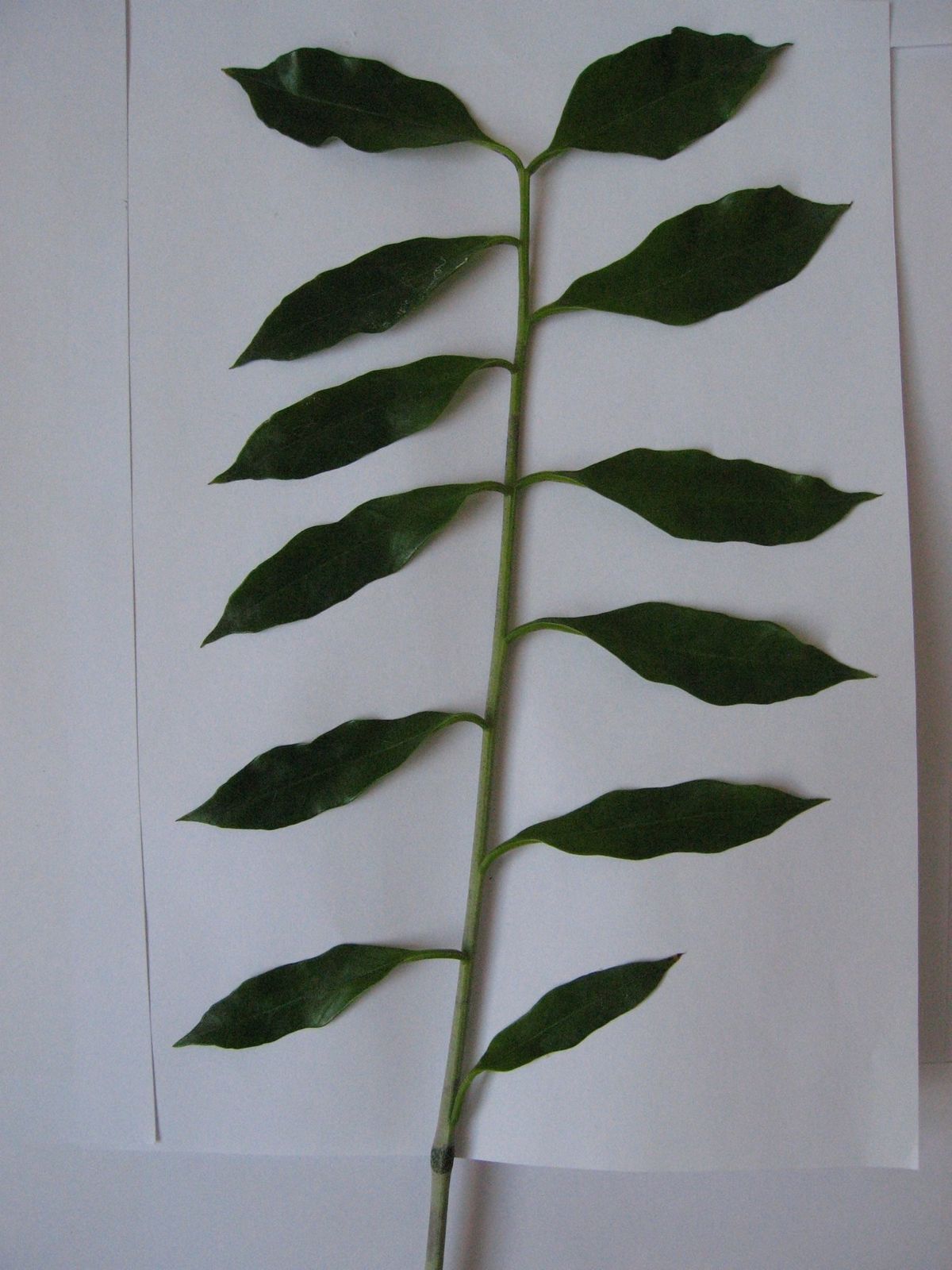
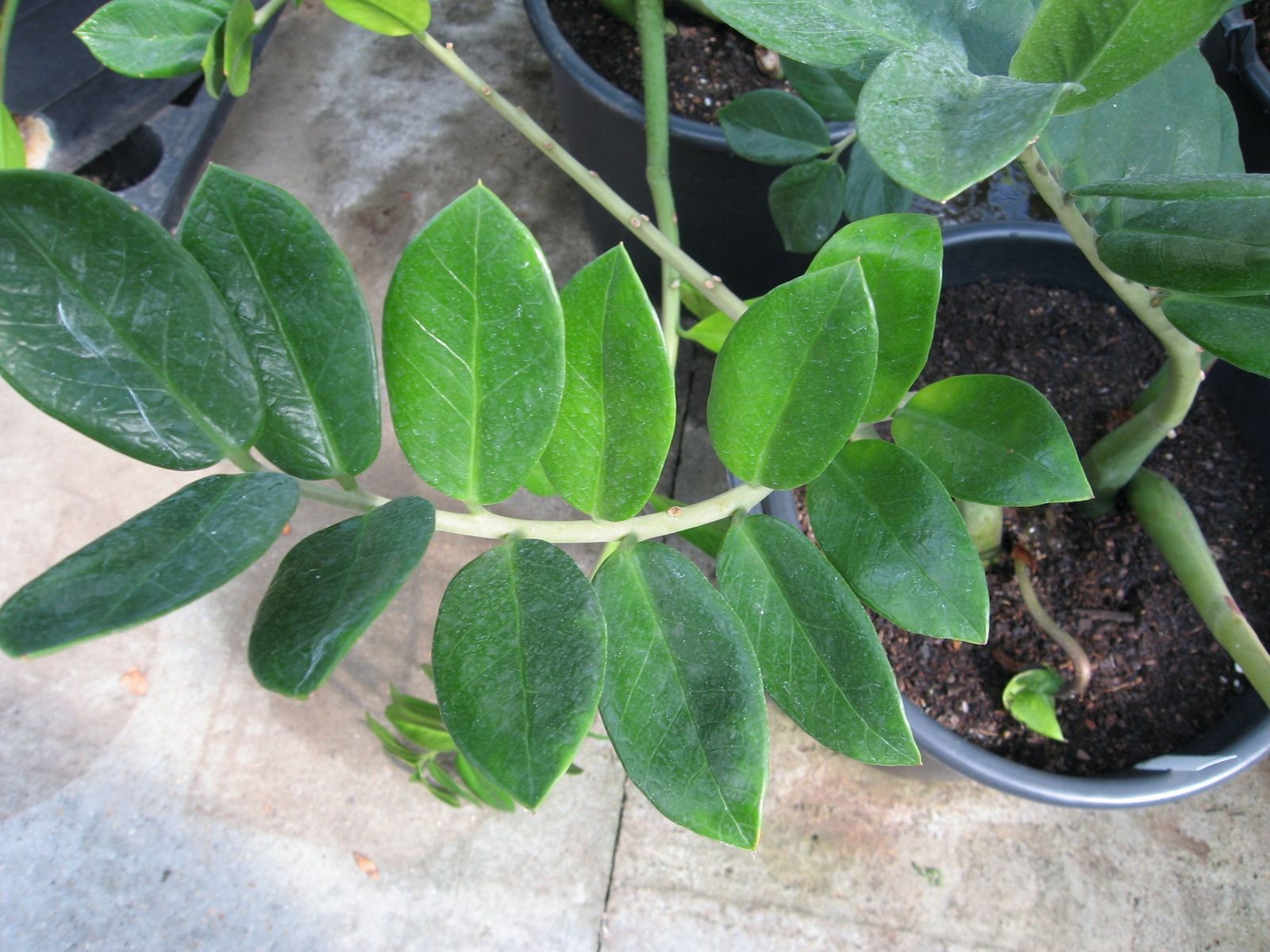
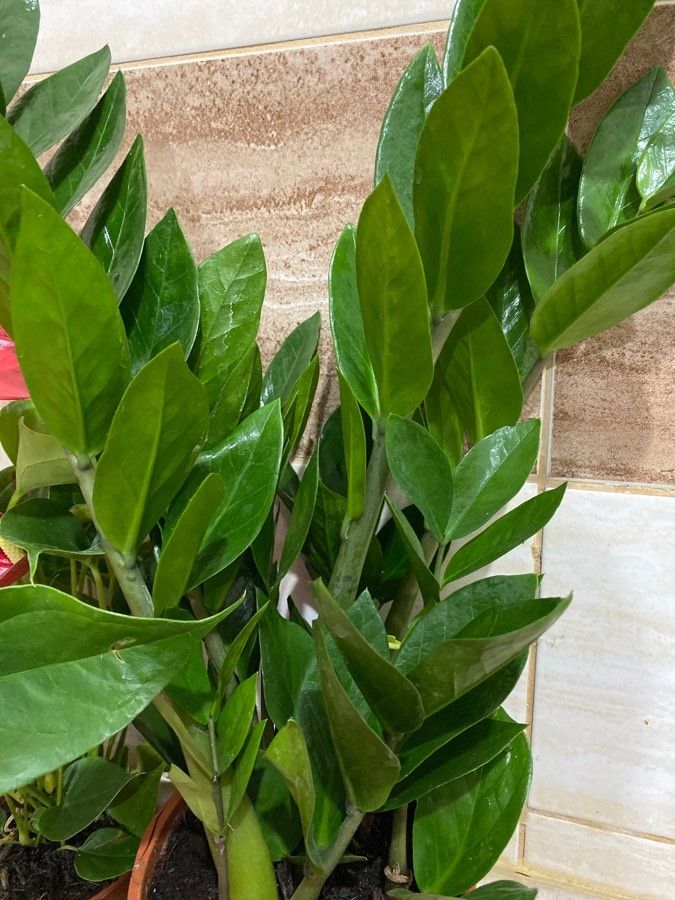
Look at the base of Zamioculcas zamiifolia: the leaves do not emerge from a trunk. Upright petioles rise directly from fleshy underground rhizomes. Thick, elliptical, dark green and highly glossy leaflets are regularly arranged along these pinnate compound leaves. 4 7
Mature plants commonly stand 60–90 cm (2–3 ft) tall, sometimes reaching about 1.2 m (4 ft) in very good indoor conditions. Descriptions generally give 6–8 pairs of leaflets per leaf, with individual leaflets up to about 15 cm (6 in) long. This structure explains a common mistake: what is often called a stem is largely a fleshy petiole, while the main storage organ lies underground. 3 6
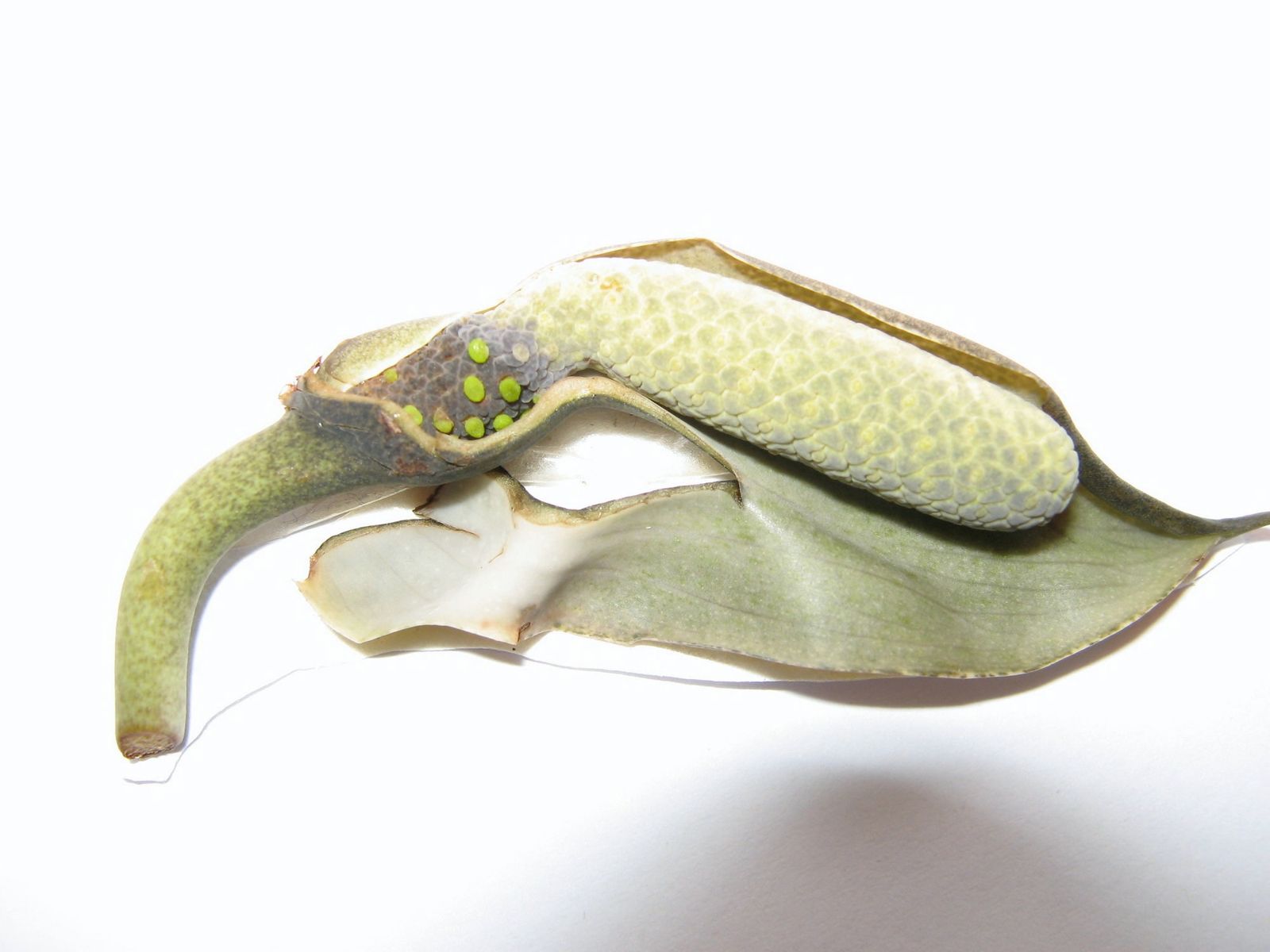
Flowers are easy to overlook. As in many aroids, the inflorescence combines a spadix and a spathe, appearing very low near the potting mix and sometimes hidden by the leaf bases. It is rare or absent in dim interiors, occurring mainly on mature plants with adequate light and without stress from standing water. 4 7
Useful taxonomy
The author citation (G.Lodd.) Engl. preserves the naming history. George Loddiges published the basionym Caladium zamiifolium in 1829; Adolf Engler transferred the plant to Zamioculcas zamiifolia in 1905. Important synonyms to recognize include: 1 2
- Caladium zamiifolium G.Lodd. (the original name)
- Zamioculcas loddigesii Schott (a synonym)
- Zamioculcas lanceolata Peter (a synonym)
WCVP resolves Zamioculcas boivinii to Gonatopus boivinii, so it should not automatically be attached to Zamioculcas zamiifolia. Keeping the accepted scientific name as the reference avoids mixing historical names, sales labels and unrelated plants with cycad-like foliage.
Habitat and range
From Kenya to KwaZulu-Natal, POWO places ZZ plant in a seasonally dry tropical biome. Trefle details Kenya, KwaZulu-Natal, Malawi, Mozambique, Tanzania and Zimbabwe, while Missouri Botanical Garden summarizes the habitat as eastern African grasslands and dry forests. 1 7
Water storage explains its behavior in cultivation. Fleshy rhizomes hold reserves, thick waxy leaflets limit transpiration, and the petioles may shed leaflets during drought stress before growth resumes from the rhizome. The plant tolerates dry periods, but not cold, saturated potting mix. 4 5
In metropolitan France, Zamioculcas zamiifolia is cultivated indoors or in a warm conservatory. The cited references do not establish invasive status there, nor do they support a broad introduced range comparable to that of widely naturalized tropical vines. That French status should not be extended to other countries without evidence.
Life cycle, flowering and propagation
Evergreen in stable cultivation, ZZ plant is perennial but can slow markedly when light, warmth or available water decrease. Growth remains slow even in good conditions. New leaves emerge in flushes from the rhizomes; the leaflets then harden and develop their characteristic glossy finish. 4 5
Its inflorescence follows the aroid pattern: a spathe surrounds or accompanies a spadix bearing small flowers. Descriptions place it near the base and give green, cream, yellow or brown tones depending on the source and developmental stage. No edible use of the fruit is supported by the cited references. 6 7
Propagation mainly uses rhizome division or leaflet cuttings. A leaflet cutting can develop a small rhizome at its base, but this takes time. Selling a single leaf as an already established plant would therefore be misleading if it has neither a rhizome nor roots. 5 4
Uses and risks
Offices, entrance halls and dim living rooms are common settings for this ornamental foliage plant, especially where watering is irregular. ZZ plant tolerates light shade better than many tropical foliage plants. That does not mean it grows without light: under low light, it mainly survives at a slower pace. 5 4
Chewing or swallowing the plant is the main concern. UF/IFAS describes it as rich in calcium oxalates; NC State assigns medium toxicity for cats and dogs; and the ASPCA includes Zamioculcas spp. among houseplants containing insoluble oxalate raphides. It is therefore best described as irritating to toxic if chewed, especially for pets and children, with possible mouth pain, drooling, vomiting or diarrhea. 6 3 8
Severity should remain qualified. The ASPCA has no dedicated species entry for Zamioculcas zamiifolia, and Perenual does not flag toxicity in its indicators. The more explicit specialist accounts take precedence, without supporting claims of severe systemic poisoning or risk to horses in the absence of a specific source.
Varieties, buying and look-alikes
Horticultural labels describe forms rather than species. Raven, often associated with the cultivar name 'Dowon', produces pale new leaves that turn purple-black. Chameleon has young golden leaves that become green, Lucky has wider, rounded leaflets, and Variegata denotes variegation that should be checked on the actual plant. 3 4
Before buying, check the scientific name and the base: firm rhizomes, no rotting smell, a pot with drainage holes, and glossy leaflets that have not been painted. ZZ plant does not need leaf polish; healthy foliage has a naturally varnished appearance. 5
Common sources of confusion include:
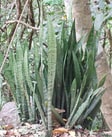
- Zamia spp., true cycads sometimes called cardboard palm;
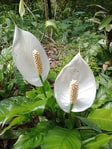
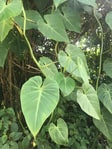
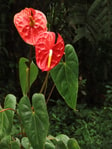
- Epipremnum aureum, Spathiphyllum and other indoor aroids, related at family level but different in habit;
- plants marketed as palms, although Zamioculcas zamiifolia produces neither a palm trunk nor a cycad cone;
- dark or variegated cultivars, which remain horticultural forms of ZZ plant.
For identification, retain Zamioculcas zamiifolia as the stable name. Labels such as eternity plant, Zanzibar gem and aroid palm are useful commercially, but they cannot replace observation of the compound leaves, rhizome and low inflorescence.
Main sources
- Plants of the World Online / Kew, Zamioculcas zamiifolia
- GBIF Backbone Taxonomy, Zamioculcas zamiifolia
- NC State Extension Gardener Plant Toolbox, Zamioculcas zamiifolia
- UF/IFAS, Florida Foliage House Plant Care: ZZ Plant
- UF/IFAS, Cultural Guidelines for Commercial Production of Interiorscape ZZ
- UF/IFAS, Common Poisonous Houseplant Species in Florida
- Missouri Botanical Garden Plant Finder, Zamioculcas zamiifolia
- ASPCA, These Houseplants Can Cause Trouble for Your Pets
Frequently asked questions
Is ZZ plant a palm?
No. Despite names such as aroid palm or cardboard palm, Zamioculcas zamiifolia belongs to Araceae, not to the palms or cycads.
Why can ZZ plant survive with little water?
Its fleshy rhizomes store water and its thick leaflets limit water loss, adaptations consistent with its seasonally dry tropical habitat.
Is ZZ plant toxic to cats and dogs?
Horticultural and veterinary sources describe it as irritating to toxic if chewed because of calcium oxalate raphides. The ASPCA has no dedicated species entry, so caution is needed when describing severity.
Does ZZ plant flower indoors?
Mature plants can flower, but the blooms are discreet and less frequent in low light. The inflorescence appears near the base and consists of a spathe and spadix.
Is Raven a different species?
No. Raven, often linked with the cultivar name Dowon, is a dark-leaved cultivar of Zamioculcas zamiifolia, not a taxonomic rank equivalent to a species.
Can any part of ZZ plant be eaten?
None of the cited references supports an edible use. The plant is treated as unsuitable for food and irritating if chewed.
Is ZZ plant invasive in France?
None of the cited references supports describing it as invasive in metropolitan France. There, it remains a cultivated indoor or conservatory plant.
Similar plants


If you are unsure about a plant’s toxicity, ask a botanist or veterinarian for advice.