
Jicama (Pachyrhizus erosus, )
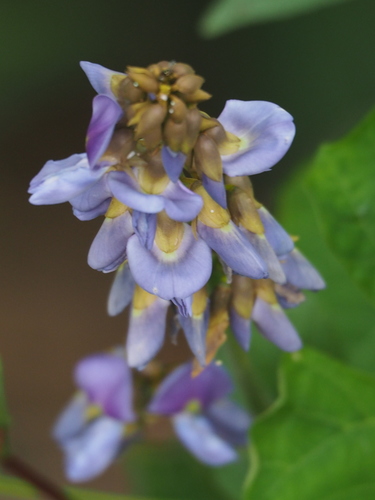

Jicama (Pachyrhizus erosus) is a climbing vine in the Fabaceae, native to Mexico and Central America. Grown for its large, white, crunchy tuberous root, it also produces highly toxic pods and seeds rich in rotenone, contrasting with the edible root.
Read moreJicama, Yam bean and Mexican turnip
Place in full sun, with intense direct light all day long.


© photo
no rights reserved, uploaded by 葉子 · cc0
Wikimedia Commons · CC BY-SA or Public Domain
Wikipedia · CC BY-SA
Taken Oct 15, 2010 by OTS - Oviedo-Brenes, Federico (cc-by-nc-sa)
Taken Oct 12, 2019 by Nelson Zamora Villalobos (cc-by-nc)
© copyright of the Board of Trustees of the Royal Botanic Gardens, Kew.


Global distribution
Pachyrhizus erosus is native to Mexico and Central America. Introduced to the Philippines by the Spanish in the 17th century, it later spread to China and the rest of Southeast Asia, where it is now widely cultivated and sometimes naturalized.
- Native2
- Introduced5
- Mexico
- Guatemala
- Philippines
- Indonesia
- China
- India
- United States
Hexagons: regions where the plant occurs. Green dots: native range.1
Identity
Jicama (Pachyrhizus erosus (L.) Urb., 1905), also called yam bean or Mexican turnip, is a climbing vine in the Fabaceae and the genus Pachyrhizus. Carl von Linnaeus first described it as Dolichos erosus. Ignatz Urban transferred the species to Pachyrhizus in 1905, establishing the name still used today. 1 2
Derived from Nahuatl xīcamatl, jicama primarily names the edible tuberous root, rather than the whole vine. The French name pois patate, literally pea-potato, captures its two contrasting structures: legume pods above ground and a root that swells like a potato below. That root can be eaten raw or cooked, but pods and seeds on the same vine contain high concentrations of rotenone, a natural insecticide toxic to humans. These names describe one plant with contrasting edible underground and toxic aboveground parts. 5
Recognition
Fine hairs cover the herbaceous vine, which can climb 4–5 m (13–16 ft) with strong support. Without a trellis, it trails along the ground and its finely hairy stems become tangled rather than climbing. Alternate leaves carry three leaflets, the terminal one markedly larger than the two side leaflets, with irregularly toothed or lobed margins. 3
Blue, lilac or occasionally white flowers measure about 2 cm (0.8 in) and form upright clusters in the leaf axils. Linear pods reach 14 cm (5.5 in) and contain almost square reddish-brown seeds. Flowers and pods resemble those of many climbing legumes and cannot identify the species alone. The tuberous root is more distinctive: papery yellow-brown skin covers crunchy white flesh, and its weight can reach 20 kg (44 lb). 4 3
Useful taxonomy
Repeated reclassification within Pachyrhizus has left a long synonymy beneath the accepted name:
- Dolichos erosus L. (the basionym)
- Cacara erosa (L.) Kuntze (a synonym)
- Pachyrhizus angulatus DC. (a synonym)
- Pachyrhizus bulbosus (L.) Kurz (a synonym)
- Pachyrhizus erosus var. palmatilobus (DC.) R.T.Clausen (a varietal name)
- Stizolobium bulbosum (L.) Spreng. (a synonym)
Two other species, Pachyrhizus tuberosus and Pachyrhizus ahipa, are also grown for their roots, contributing to frequent overlap among local common names. The accepted scientific name, Pachyrhizus erosus, provides a consistent reference from country to country. 1 2
Habitat and range
Mexico and Central America form jicama's native range. There it climbs on rocky slopes and along the edges of tropical deciduous forests. Cultivation in this region dates back to pre-Hispanic times. 5 3
Spanish introduction to the Philippines in the 17th century was followed by cultivation in China and then the rest of Southeast Asia. The root became a familiar ingredient in local cuisines. The species has sometimes naturalized outside cultivated areas without becoming truly invasive. 5 4
Frost abruptly stops root growth as colder conditions arrive. Producing large roots takes about nine frost-free months; where the season is shorter, a root can still form, but it will be smaller. The length of the warm growing period therefore matters more than a calendar date shared across different climates. 4
Life cycle and reproduction
Propagation relies exclusively on seed, rather than cuttings or division. Seeds germinate in soil warmer than 20 °C (68 °F), and bottom heat noticeably speeds emergence. 4
Shortening days trigger flowering late in the growing season. Flower production uses energy that would otherwise contribute to the tuberous root, so growers remove flowers as soon as they appear to direct that energy toward root enlargement. 4
One plant generally develops a single large root, unlike a potato plant, which produces several tubers. Early removal of flowers further favors that single root. The distinction matters when judging the crop: the harvested organ belongs to one expanding root rather than a cluster of potato-like tubers. 3
Uses and risks
Peeled jicama root is eaten raw in salads or as sticks with salt and lemon, and cooked in soups and stir-fries. Its flesh is about 90% water and rich in vitamin C, accounting for its crisp, refreshing texture. 5 4
Aboveground parts carry a very different risk. Mature seeds, pods and leaves concentrate rotenone, a substance long used as an insecticide and fish poison. It remains dangerous to humans if swallowed; the edible root should not be taken as evidence that other parts are food. 7
Stored dry at 12.5–15 °C (55–59 °F), the root can keep for up to four months. Refrigerated, it lasts about three weeks, but more intense cold discolors it and damages the texture. 6
Varieties, look-alikes and related plants
Growers distinguish two cultivated forms by the consistency of the root juice. Jícama de agua has translucent juice and a top-shaped root, making it the preferred fresh-market form. Jícama de leche has milky juice and a more elongated root and is less widely sold fresh. 5
Common naming overlaps involve the following plants:
- Pachyrhizus tuberosus and Pachyrhizus ahipa, two other species in the same genus grown for their tuberous roots;
- yacon (Smallanthus sonchifolius), an unrelated South American member of the daisy family, sometimes called jícama in Ecuador and Peru.
The full scientific name, Pachyrhizus erosus, identifies the species unambiguously when buying seeds or plants. The common name jícama can refer to a completely different plant depending on the country, so a shared name alone does not establish botanical identity. 1
Main sources
- Plants of the World Online / Kew, Pachyrhizus erosus (L.) Urb.
- Royal Horticultural Society, Pachyrhizus erosus - yam bean
- Missouri Botanical Garden Plant Finder, Pachyrhizus erosus
- University of California ANR Small Farm Program, Jicama
- UF/IFAS Gardening Solutions, Jicama
- National Center for Home Food Preservation (Univ. of Georgia), Using and Preserving Jicama
- Jaiswal, Chauhan & Lee, 2021, The Bioactivity and Phytochemicals of Pachyrhizus erosus (L.) Urb., Antioxidants
Frequently asked questions
Is jicama toxic?
The peeled root is edible and safe. The seeds, pods and leaves, however, contain high concentrations of rotenone, a substance historically used as an insecticide and fish poison.
Can you eat jicama seeds?
No. Mature seeds contain more rotenone than any other part of the plant. They must never be eaten; the root is the only part harvested for food.
How long does jicama take to reach harvest?
Allow about nine frost-free months for a large root. In cooler climates, a five-month season can still produce a crop, but the roots will be smaller.
Why remove jicama flowers?
Flowering and pod development use some of the plant's energy. Removing flowers as soon as they appear redirects that energy toward enlarging the root, the part harvested.
Are jicama and yacon the same plant?
No. In Ecuador and Peru, jícama sometimes means yacon, a member of the daisy family with sweet tubers, unrelated to Pachyrhizus erosus in the Fabaceae.
How do jícama de agua and jícama de leche differ?
The two cultivated forms differ in their root juice. De agua has translucent juice and a top-shaped root favored for the fresh market; de leche has milky juice and a more elongated root.
Where did cultivated jicama originate?
Native to Mexico and Central America, it was introduced to the Philippines by the Spanish in the 17th century, then spread to China and the rest of Southeast Asia, where it remains widely grown.
Similar plants
If you are unsure about a plant’s toxicity, ask a botanist or veterinarian for advice.