
Purple passionflower (Passiflora incarnata, )
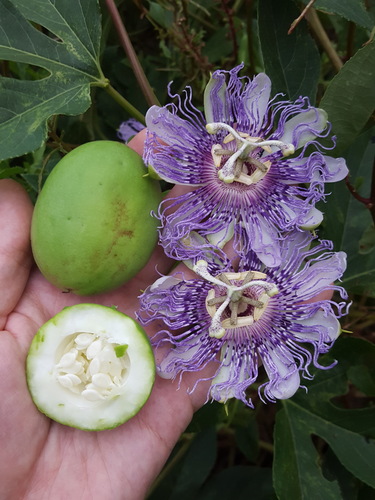
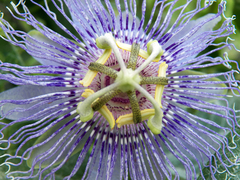
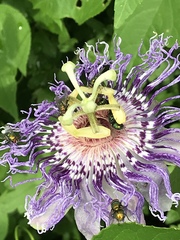
Purple passionflower (Passiflora incarnata L.) is a perennial herbaceous vine in the Passifloraceae family, native to the central and eastern United States. Unlike its tropical relatives, it dies back completely in winter and regrows from the rootstock in spring. Large white and purple flowers precede the edible maypop fruit. It is among the hardiest passionflowers and the most widely studied member of the genus in herbal medicine.
Read morePurple passionflower, Maypop, True passionflower, Wild apricot and Wild passion vine
Allow a few hours of direct sun per day, preferably morning or evening.
Full sun preferred; partial shade reduces flowering.
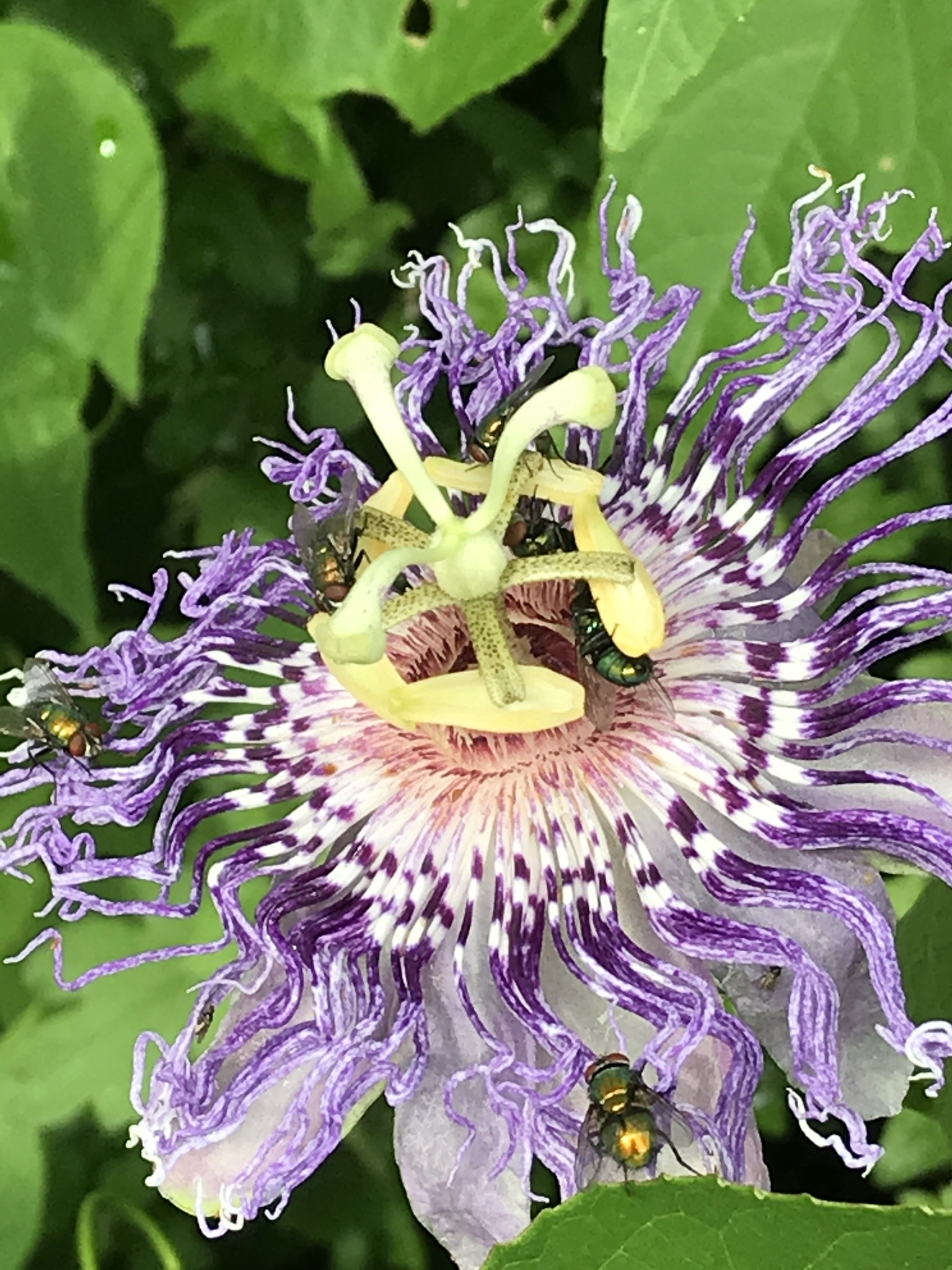
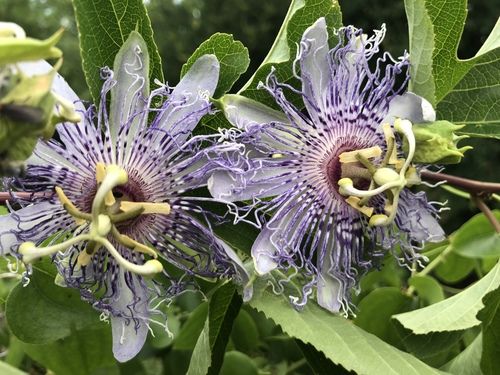
© photo
(c) Alex Abair, some rights reserved (CC BY), uploaded by Alex Abair · cc-by
Diana Foreman · cc0
Jeffrey A Ewick · cc0
© copyright of the Board of Trustees of the Royal Botanic Gardens, Kew.
Global distribution
POWO places the native range of Passiflora incarnata in the central and eastern United States, including Bermuda. It is now cultivated much farther afield, including cooler temperate regions such as northern France.
Identity
Purple passionflower (Passiflora incarnata L., 1753), also called maypop, is an accepted species in the Passifloraceae family. POWO places its native range in the central and eastern United States and Bermuda, while IPNI traces the name to Linnaeus's Species Plantarum of 1753. This tendril climber can reach 6 m (20 ft) in a season. Frost kills the aerial growth in winter, and new shoots rise from the rootstock in spring, unlike its semi-evergreen tropical relatives. 1 2
The name maypop refers to the sharp sound of ripe fruit bursting underfoot, rather than to spring flowering. True passionflower, wild apricot and wild passion vine are other English names. The European and British Pharmacopoeias recognize this species as a mild sedative; it is the most documented temperate passionflower in herbal medicine. 6 4
Garden labels can blur the distinction between Passiflora incarnata, Passiflora caerulea and Passiflora edulis. Their hardiness, winter behavior and practical toxicity differ considerably, even though all three may be sold as passionflowers. 8
Recognition
Alternate, palmately three-lobed leaves, 6 to 15 cm (2.4 to 6 in) long, characterize this herbaceous vine. Two nectaries sit at the base of the petiole. Axillary tendrils coil around slender supports such as wire, mesh or fencing. 6 3
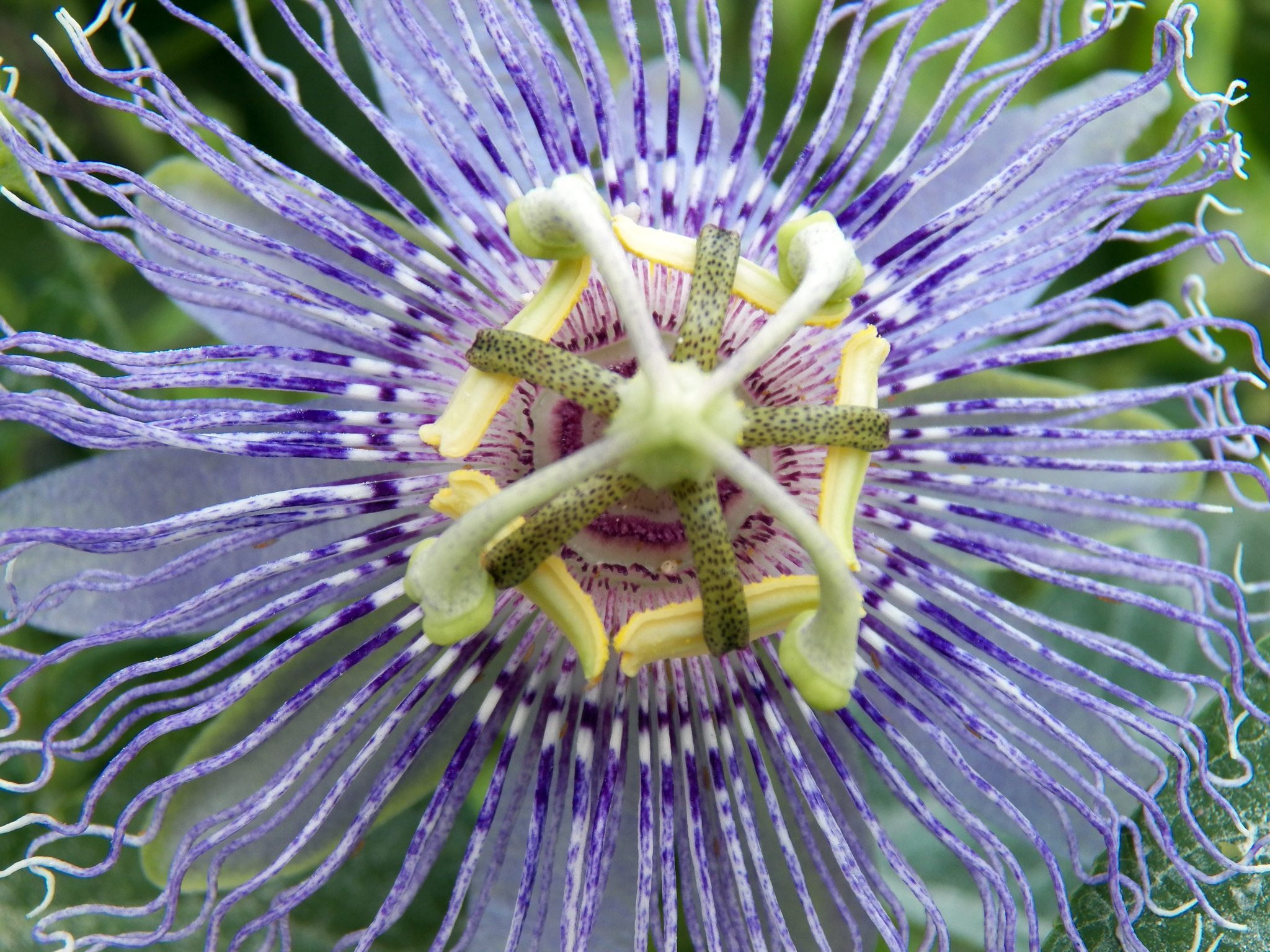
Flower structure provides a clearer distinction from Passiflora caerulea than foliage alone. Blooms span 5 to 8 cm (2 to 3 in), with five bluish-white petals and five sepals around a fringed white and purple corona. Five stamens and three upright central styles contributed to the Christian interpretation of the Passion flower among seventeenth-century missionaries. 4 9
An egg-shaped maypop berry measures 4 to 7 cm (1.6 to 2.8 in), roughly the size of a hen's egg. It changes from green to yellow-orange when ripe, between July and October in the northern growing season described by the sources. Missouri Botanical Garden likewise explains the name through the popping sound of crushed fruit, with no connection to May. 4 3
Useful taxonomy
Passiflora incarnata is the type species of Passiflora, named by Linnaeus in the first edition of Species Plantarum. Important botanical synonyms include:
- Granadilla incarnata (L.) Medik., a historical generic combination
- Passiflora incarnata var. major Sweet
- Passiflora incarnata var. integriloba DC.
- Passiflora incarnata f. alba Waterf.
- Passiflora keri Spreng.
- Passiflora rigidula J.Jacq.
In commerce, the plant is almost always labeled Passiflora incarnata. The larger-fruited variety major and white-flowered form alba remain botanical curiosities rather than common horticultural choices. 1 2
Habitat and ecology
Central and eastern United States habitats, together with Bermuda, make up the native range recorded by POWO. PFAF describes sandy thickets, fields, roadsides and sunny hedges. Passiflora incarnata does not tolerate dense shade. 1 5
Carpenter bees and bumblebees are the principal flower visitors involved in pollination, being among the few insects heavy enough to operate the flowers. Without them, plentiful blooms can yield little fruit. 6
Gulf Fritillary caterpillars depend on this passionflower as a host, while Variegated Fritillary caterpillars share it with other hosts. Chewed foliage therefore does not necessarily indicate disease. 6
Life cycle and cultivation
Unlike semi-evergreen Passiflora caerulea, purple passionflower is a herbaceous vine that dies back at the first frost. Growth returns from the rootstock in spring, around April or May in northern temperate gardens. In the Paris region, the species tolerates temperatures near -20 °C (-4 °F) in well-drained soil, substantially colder than P. caerulea. A dormant rootstock should not be mistaken for a dead plant. 9 3
NC State Extension and Missouri Botanical Garden give USDA zones 5 to 9 for this species. Full sun to partial shade and ordinary, well-drained soil suit it, with good drought tolerance once established. 3 4
Suckers emerge from spreading roots around the original crown, a habit Missouri Botanical Garden describes as aggressive. A root barrier or regular removal of suckers limits its spread through a shared bed. 4
Uses and herbal medicine
Ripe maypops can be eaten raw or made into jelly. PFAF also records cooked young leaves and flowers as vegetables, a traditional use that should not be confused with eating immature parts raw, which is discouraged. 5
Dried aerial parts are listed as a mild sedative in the European and British Pharmacopoeias for anxiety and insomnia. A 2013 review cited by Wikipedia describes a favorable safety profile at the doses studied, while documenting interactions with sedatives, anticoagulants and MAO inhibitors. 6
Herbal preparations use standardized dry extracts, rather than fresh garden leaves. NC State rates fresh leaves and stems as moderately toxic, making the distinction between a pharmaceutical preparation and the raw plant essential. 3
Toxicity and look-alikes
Fresh leaves and stems contain cyanogenic glycosides, according to NC State Extension, which reports moderate toxicity for cats, dogs, horses, children and sensitive adults. Reported symptoms after ingestion include severe nausea, vomiting, drowsiness and possible disturbances of heart rhythm. 3
Ripe fruit is treated separately from those toxic parts and remains the established food use. Keep fresh leaves and stems away from animals inclined to chew on vines. 5 3
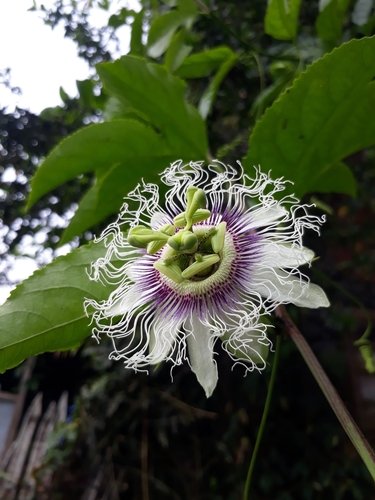
Common field look-alikes include the bluer, semi-evergreen Passiflora caerulea and Passiflora lutea, a small native passionflower with inconspicuous yellow-green flowers. The full scientific name is a safer reference than the broad common name passionflower before any medicinal or food use. 8 7
Main sources
- Plants of the World Online / Kew, Passiflora incarnata L.
- International Plant Names Index, Passiflora incarnata L.
- NC State Extension Gardener Plant Toolbox, Passiflora incarnata
- Missouri Botanical Garden Plant Finder, Passiflora incarnata
- Plants For A Future, Passiflora incarnata
- Wikipedia EN, Passiflora incarnata
- Wikipedia FR, Passiflora incarnata
- Wikidata, Passiflora incarnata
- Jardins de France, La passion des fleurs de la Passion
Frequently asked questions
Is purple passionflower toxic to pets?
NC State reports moderate toxicity from cyanogenic glycosides in fresh leaves and stems for cats, dogs and horses. Ripe fruit is treated separately and remains the established edible part.
Why does my purple passionflower disappear in winter?
This is normal. Unlike Passiflora caerulea, this herbaceous species dies back completely at the first frost and regrows from the rootstock in spring, around April or May in northern temperate gardens.
Can you eat maypop fruit?
Yes, ripe fruit can be eaten raw or made into jelly. Maypop refers to the popping sound made when a fruit is crushed underfoot, rather than the month of May.
How does it differ from Passiflora caerulea?
Passiflora incarnata is native to the United States, herbaceous and dormant above ground in winter. Passiflora caerulea is South American, semi-evergreen and less studied in herbal medicine.
Why are there flowers but no fruit?
Pollination depends mainly on carpenter bees, heavy enough to operate the flower. Without them, hand pollination with a brush can improve fruit set.
Will purple passionflower take over a garden bed?
Spreading roots produce suckers that can colonize a mixed bed. It has no recognized invasive status in mainland France, but a root barrier can be useful.
Is this the passionflower used in herbal medicine for anxiety?
Yes, its dried aerial parts appear in the European and British Pharmacopoeias. This use concerns standardized dry extracts, rather than fresh leaves picked in the garden.
Similar plants
If you are unsure about a plant’s toxicity, ask a botanist or veterinarian for advice.