
Common passionfruit (Passiflora edulis, )
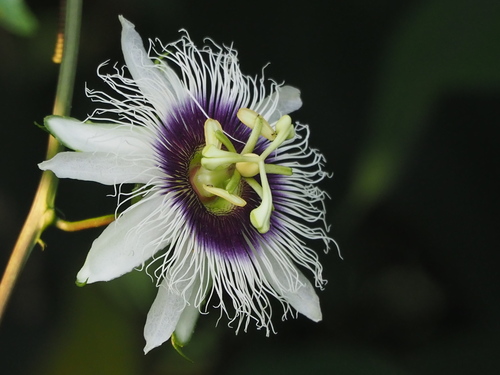
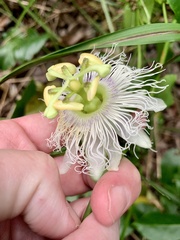
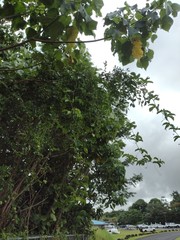
Common passionfruit (Passiflora edulis) is a perennial vine in the Passifloraceae family, native to southern Brazil, Paraguay and northern Argentina. Reddish tendrils anchor its stems, which carry three-lobed leaves and striking flowers with a white and purple corona, followed by edible purple or yellow fruit depending on the cultivated form.
Read moreCommon passionfruit, Passion fruit, Purple granadilla, Maracuja and Lilikoi



© photo
葉子 · cc0
James Hardee · CC BY-NC
Kevin Faccenda · cc-by
Taken Oct 27, 2022 by Sajuzz (cc-by-sa)
Taken Jul 6, 2020 by D Kari (cc-by-sa)
Taken Aug 24, 2021 by sg (cc-by-sa)
Taken Jan 30, 2022 by Mel Mun (cc-by-sa)
Taken Aug 16, 2014 by EOL − colinmorita (cc-by-nc)
© copyright of the Board of Trustees of the Royal Botanic Gardens, Kew.




Global distribution
The strict native range of Passiflora edulis covers southern Brazil, Paraguay and northern Argentina. Commercial cultivation later spread it through almost all tropical and subtropical regions, where it is cultivated without being native.
- Native3
- Introduced2
- Brazil
- Paraguay
- Argentina
- United States
- Australia
Hexagons: regions where the plant occurs. Green dots: native range.1
Identity
Common passionfruit (Passiflora edulis Sims, 1818), also called Purple granadilla, is a perennial vine in the Passifloraceae family. It climbs 5–10 m (16–33 ft) using axillary tendrils and fruits about 80 days after flowering. Its passionflower name reflects Christian symbolism: around 1700, missionaries in Brazil interpreted the corona filaments as the crown of thorns and the stamens as the five wounds of Christ, naming it flor das cinco chagas, the flower of the five wounds. 3
The name Maracuja, also used in French overseas territories, derives from Tupi murukuiá through Brazilian Portuguese; granadilla comes from the Spanish for little pomegranate, referring to the seed-filled pulp. Passion fruit and Lilikoi are further names used for this plant. The epithet edulis means edible, distinguishing it from many other Passiflora whose fruit is not food. 1
Recognition
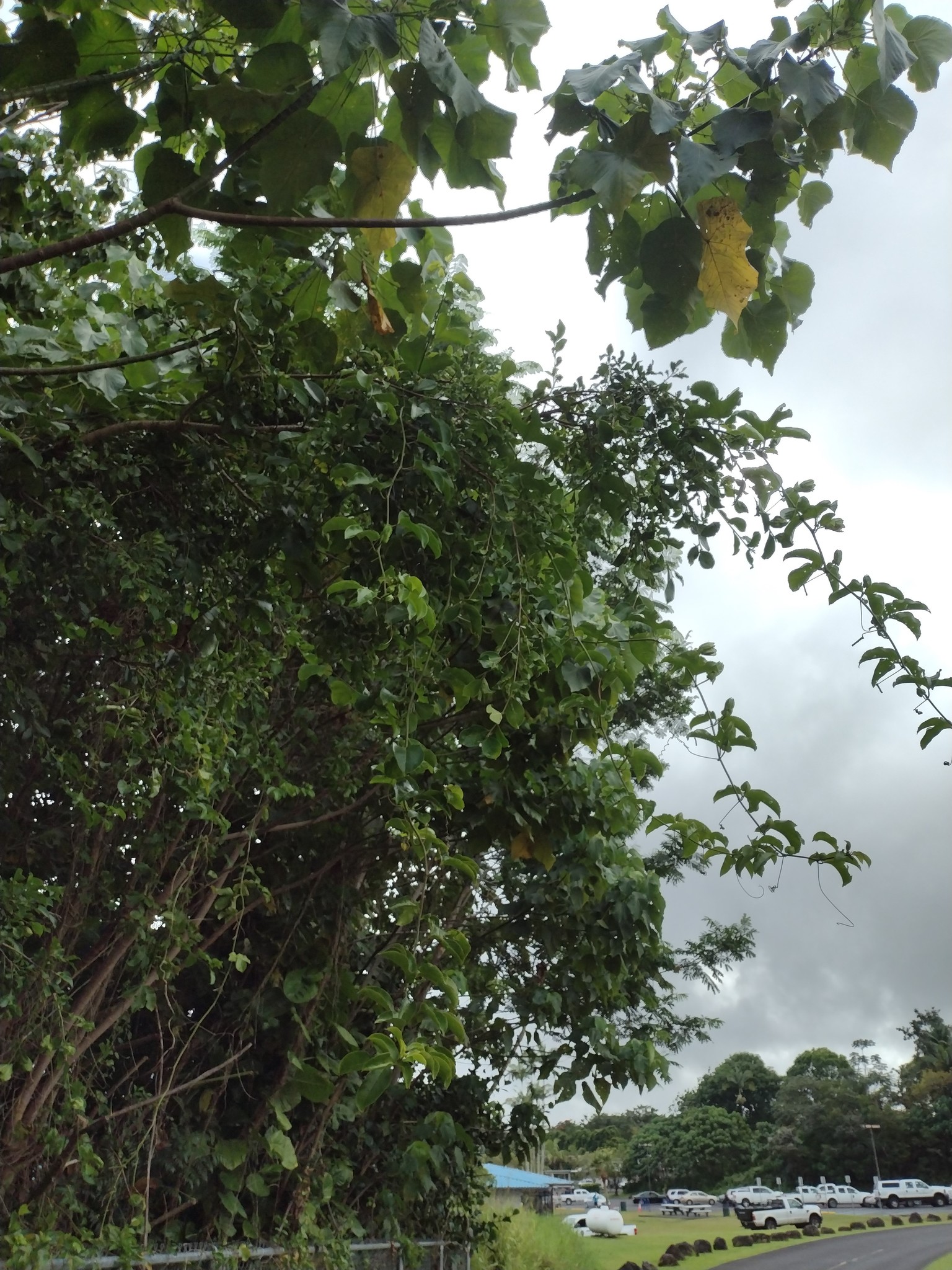
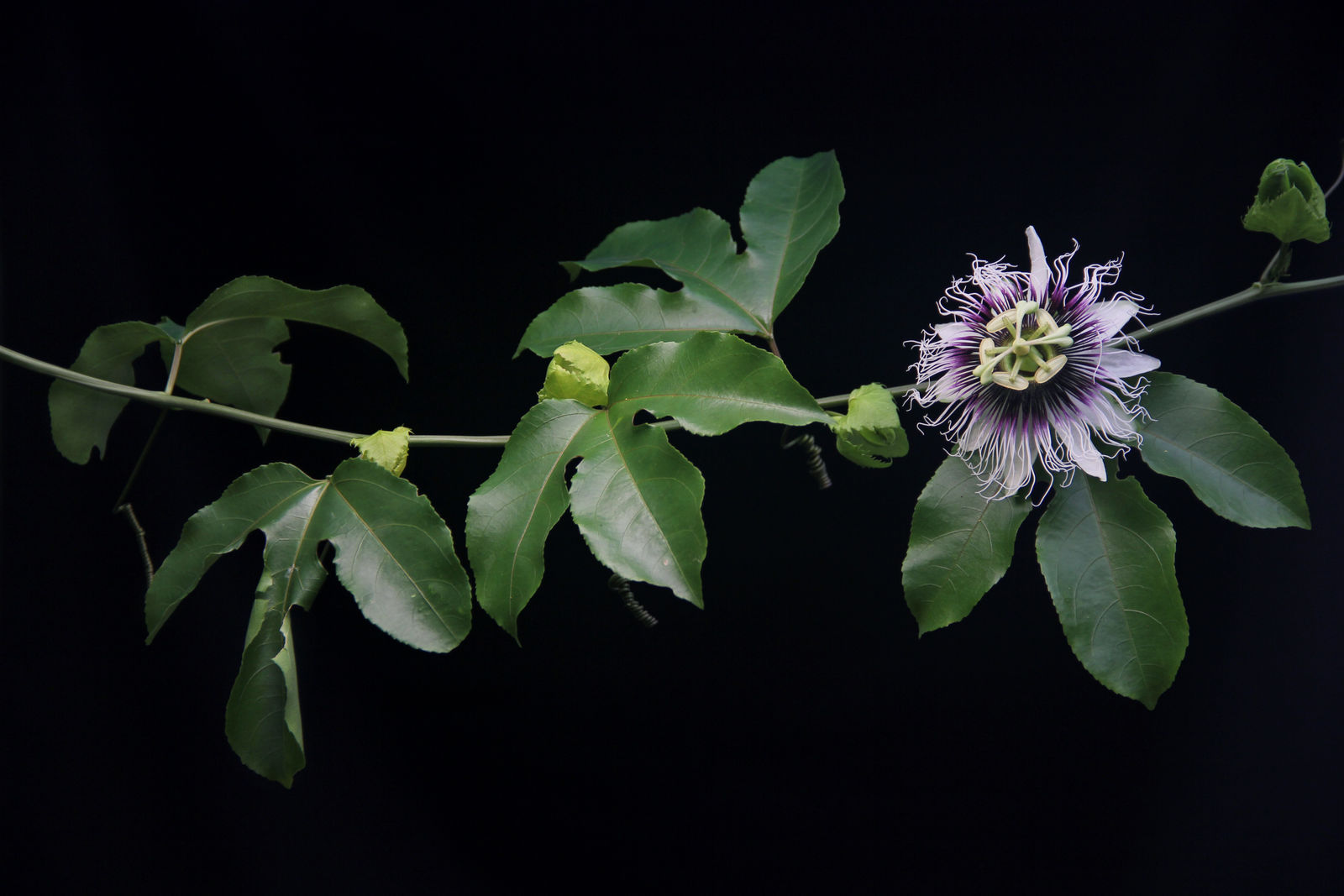
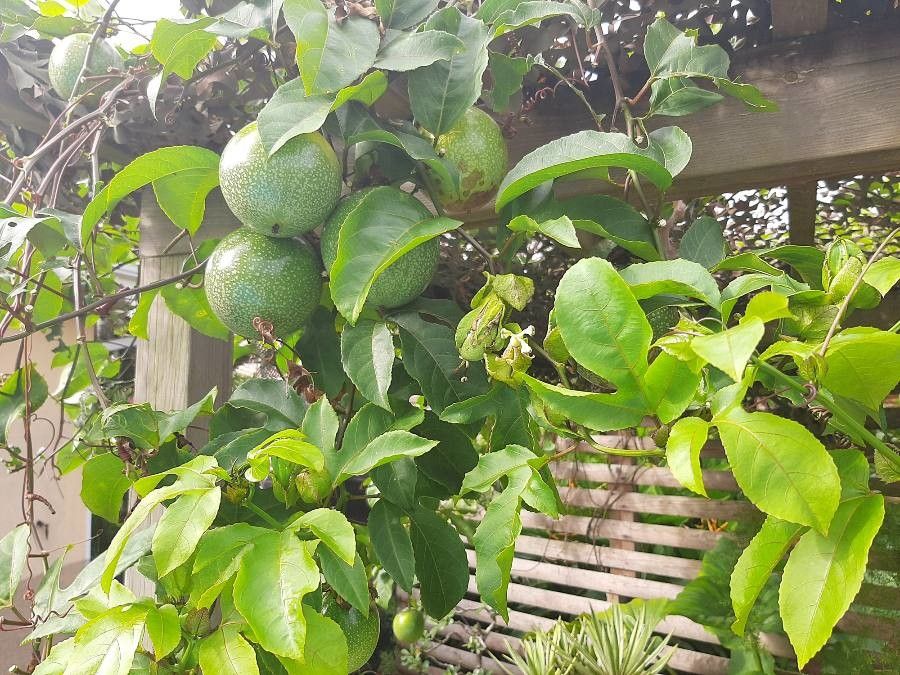
Woody at the base, this climbing vine anchors itself with axillary tendrils, reddish or purple on young shoots. Alternate leaves are deeply divided into three toothed lobes. 3
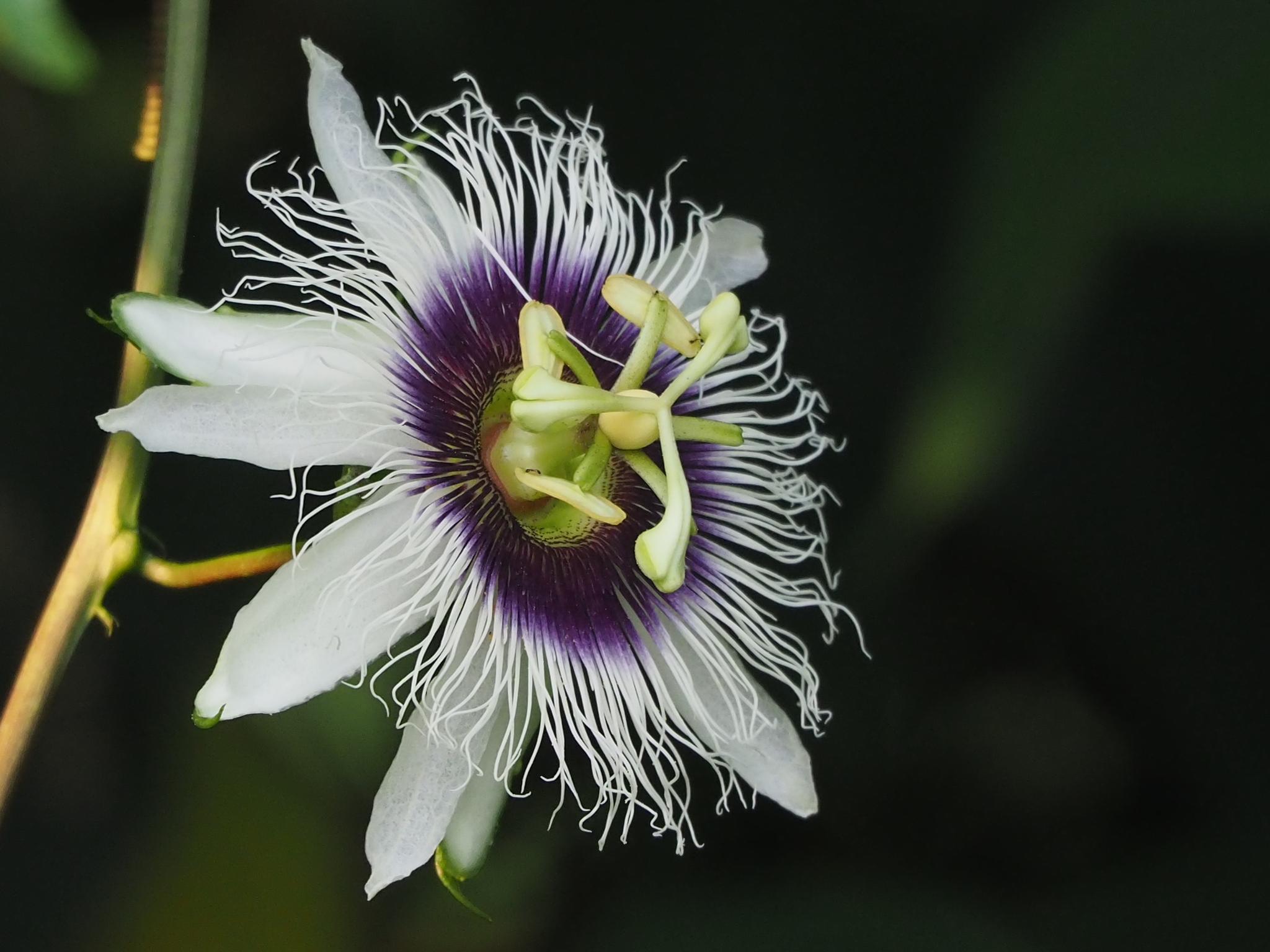
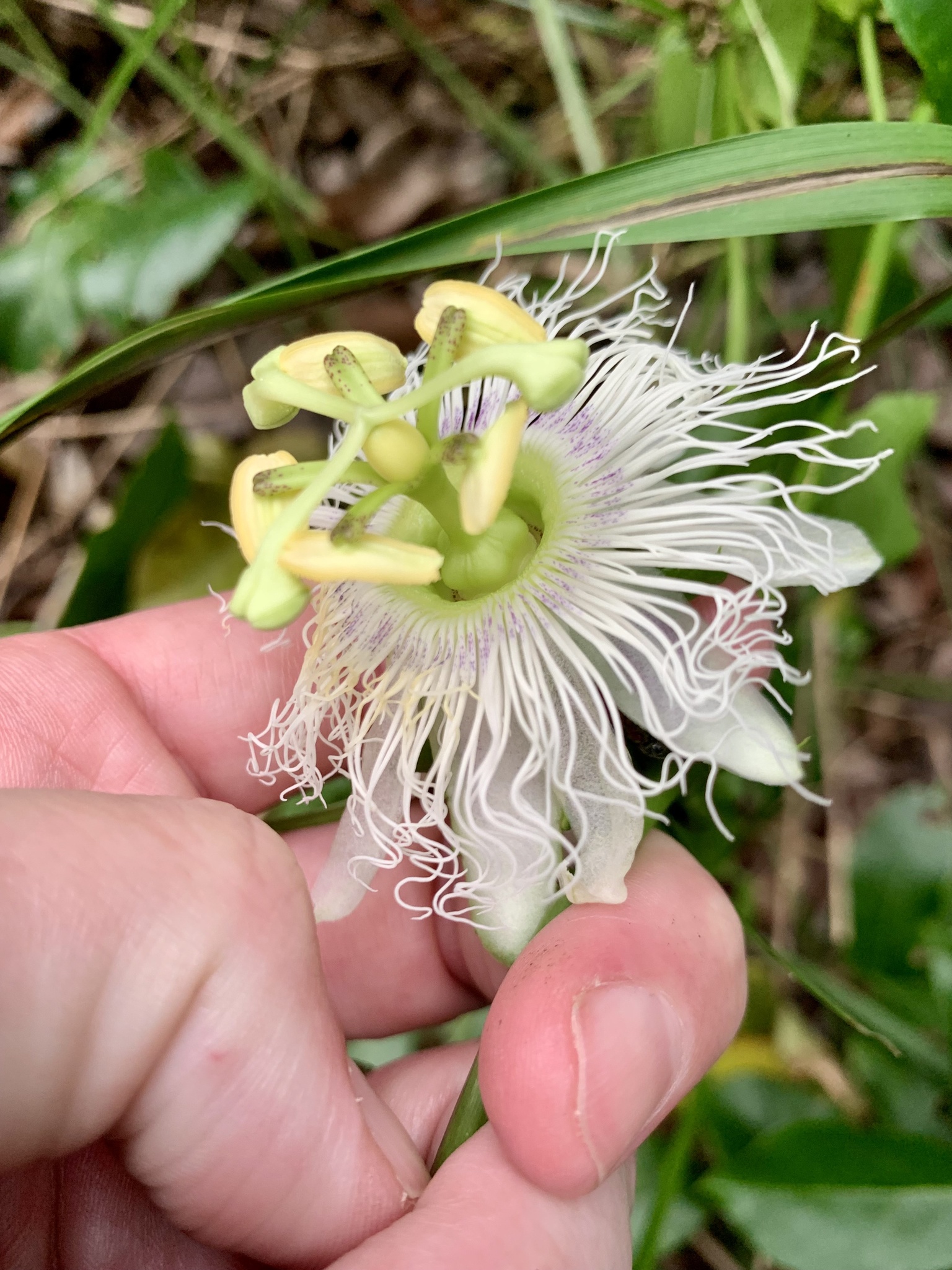
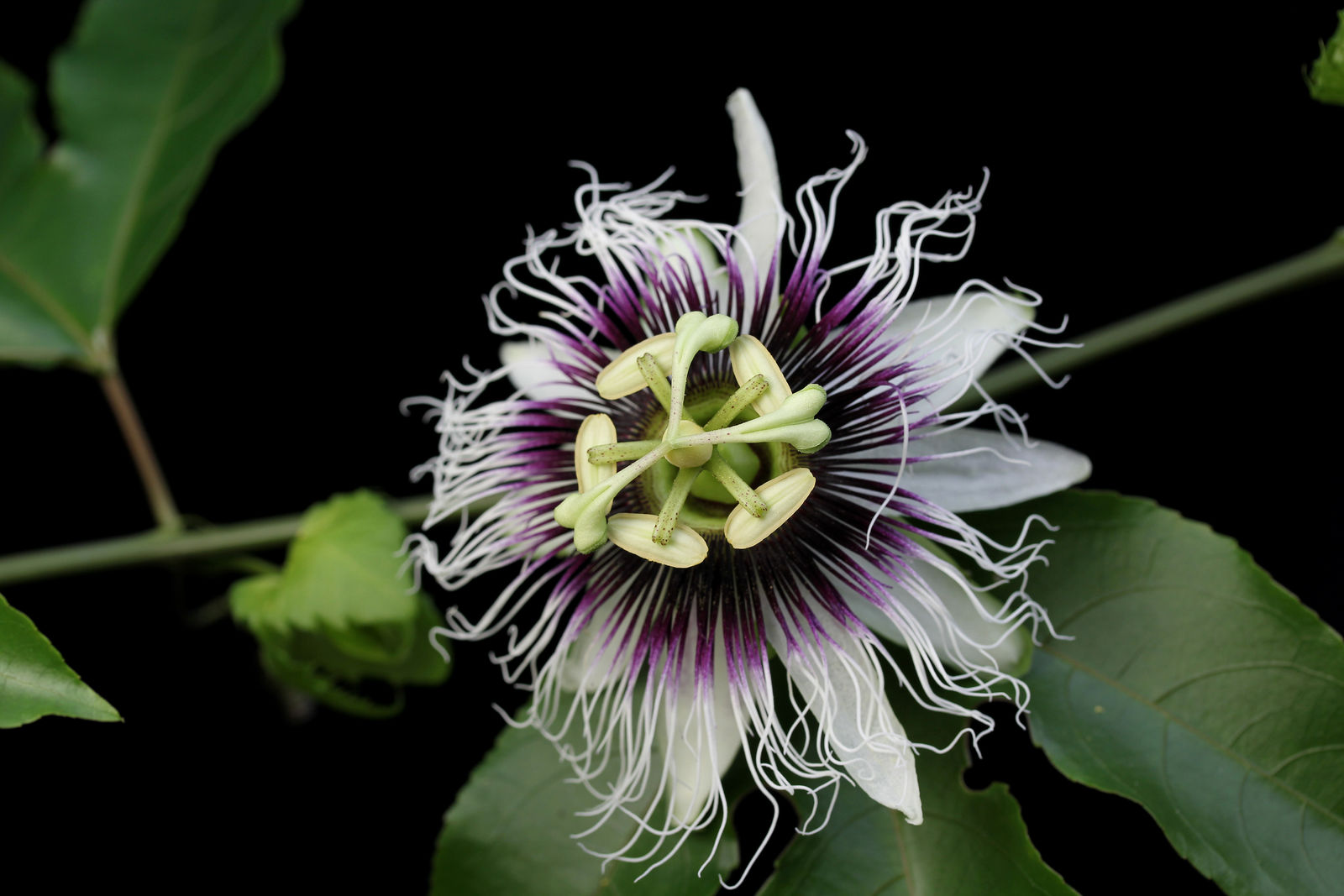
At each node, a solitary flower measures 5–9 cm (2–3.5 in) across. Five green sepals, five white petals and a purple base support a corona of white and purple filaments around five stamens and a style with three curved branches. 3
Round to oval fruit is a pepo-type berry 4–7.5 cm (1.6–3 in) across. Purple fruit averages 35 g (1.2 oz), yellow fruit about 80 g (2.8 oz). The smooth, leathery rind, 9–13 mm (0.35–0.51 in) thick, encloses juicy orange pulp around about 250 brown seeds, each 2.4 mm (0.09 in) long. 3
Useful taxonomy
Kew and GBIF accept the name Passiflora edulis Sims in the Passifloraceae family. Historical names and synonyms found in horticultural catalogs include: 1 2
- Granadilla edulis (Sims) Ser., a historical botanical name
- Passiflora edulis f. flavicarpa O.Deg., a historical botanical name
- Passiflora edulis var. pomifera (M.Roem.) Mast., a historical botanical name
- Passiflora rubricaulis J.Jacq., a historical botanical name
- Passiflora pomifera M.Roem., a historical botanical name
These are historical botanical names used for this taxon.
The name Passiflora incarnata was long misapplied to this species in some horticultural works. This helps explain persistent confusion with the distinct North American purple passionflower. 1
Habitat and range
Southern Brazil, Paraguay and northern Argentina make up its native range. There the vine grows along the edges and in clearings of humid tropical forests. 1
Commercial cultivation subsequently spread through almost all tropical and subtropical regions worldwide. In the United States, the species is grown in Florida, Hawaii and California, where it is introduced, rather than native. The Atlas of Florida Plants specifically confirms its non-native status in Florida. 4 6 5
Life cycle and reproduction
Flowering starts after several months of growth and continues through summer. Pollination separates the two main forms: yellow flowers are self-sterile and require a pollinator, while purple flowers are self-compatible and can fertilize themselves. Carpenter bees provide much of the effective pollination in California. 4
Following pollination, fruit takes about 80 days to ripen. Without suitable pollinating insects, a flowering vine may set no fruit, a frequent problem in temperate-climate greenhouses. 3
Horticultural propagation chiefly uses seed, which germinates in 2–3 weeks, or semi-ripe stem cuttings, a faster way to reproduce a selected cultivar faithfully.
Uses and risks
Food is the main use: tart, musky pulp is eaten fresh or made into juice and sauces, and supplies vitamin C. The ASPCA does not classify ripe fruit as toxic to cats, dogs or horses. 4 7
Unripe yellow fruit needs a separate caution. Its skin and juice contain cyanogenic glycosides, including prunasin, identified in a study in the Journal of Agricultural and Food Chemistry. These compounds in green skin support waiting for full ripeness; avoid the skin and green fruit. 8
Disease can seriously affect the vine. Woodiness virus, Fusarium wilt and stem anthracnose are among the longstanding problems, spread through aphids, contaminated soil or pruning tools. Healthy planting material and disinfected tools are the main preventive measures, since no reliable cure exists once the vine is infected. 4
Varieties, look-alikes and related plants
Purple and yellow forms dominate production. The purple form (P. edulis f. edulis) has smaller, less acidic fruit with a richer aroma. The larger yellow form (P. edulis f. flavicarpa) is often used as rootstock for purple passion fruit in Australia. 3
Established cultivars in production include Frederick, Possum Purple and Panama Red, selected for early cropping, cold tolerance or fruit size.
Likely look-alikes include:
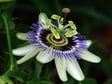
- Passiflora caerulea, Blue passionflower, widely grown as an ornamental with bland fruit and bluer flowers;
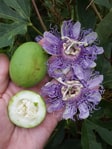
- Passiflora incarnata, purple passionflower, hardier, with a fringed filamentous corona and smaller fruit;
- Passiflora quadrangularis, giant granadilla, with angular stems and much larger fruit.
Against its relatives, the most reliable identification combines three features: reddish tendrils, smooth thin-rinded fruit and a white and purple corona. Neither Passiflora caerulea, Passiflora incarnata nor Passiflora quadrangularis combines all three in the same way as Passiflora edulis. 1
Main sources
- Plants of the World Online / Kew, Passiflora edulis Sims
- GBIF Backbone Taxonomy, Passiflora edulis Sims
- Britannica, purple passion fruit
- Purdue Center for New Crops, Morton, Fruits of Warm Climates — Passionfruit
- Atlas of Florida Plants, Passiflora edulis
- USDA PLANTS Database, Passiflora edulis (PAED)
- ASPCA, Toxic and Non-Toxic Plants — Passion Flower
- Chassagne et al. 1996, J. Agric. Food Chem., cyanogenic glycosides in passion fruit
Frequently asked questions
Is Common passionfruit toxic to cats and dogs?
No. The ASPCA lists Passiflora edulis as non-toxic to cats, dogs and horses. Unripe yellow fruit contains cyanogenic compounds in its skin, so wait until it is fully ripe.
How do purple and yellow passion fruit differ?
They are two forms of the same species. The purple form (f. edulis) produces smaller, more aromatic and less acidic fruit; the yellow form (f. flavicarpa) has larger, more acidic fruit and is often used as rootstock.
Why does Common passionfruit flower without setting fruit?
The yellow form is self-sterile and needs an outside pollinator, such as a carpenter bee. Where suitable insects are absent, hand pollination with a brush often solves the problem.
Can you eat passion fruit before it ripens?
No. Green fruit, especially the yellow form, contains cyanogenic glycosides in the skin and juice. Wait until the rind wrinkles or the fruit detaches easily.
How much cold can Common passionfruit tolerate?
The species is frost-sensitive and grows outdoors in USDA zones 9b–11. Temperatures below 0 °C (32 °F) generally kill the top growth, although some cultivars regrow from the base after hard pruning.
How can I recognize Common passionfruit?
Reddish tendrils, smooth thin-rinded fruit and a white and purple corona distinguish it from relatives such as Blue passionflower with bland fruit, or giant granadilla with angular stems.
What does it offer a garden without a fruit harvest?
Its striking flowers attract pollinators and suit a trellis or pergola in warm climates, even when fruit production is not the aim.
Similar plants
If you are unsure about a plant’s toxicity, ask a botanist or veterinarian for advice.