
Blue passionflower (Passiflora caerulea, )
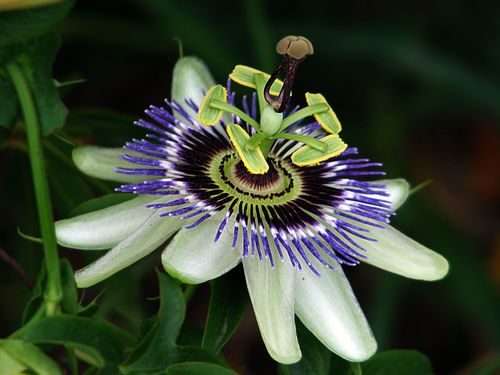
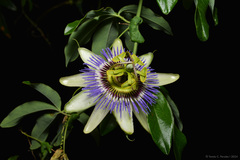
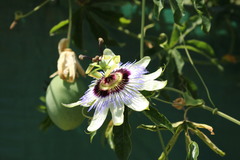
Blue passionflower (Passiflora caerulea L.) is a perennial vine in the Passifloraceae family, native to South America. It climbs with tendrils, bears palmate leaves and produces large ornamental blue, white and purple flowers, followed by orange fruit when ripe.
Read moreBlue passionflower, Bluecrown passionflower, Common passion flower and Flower of the five wounds
Place in full sun, with intense direct light all day long.
Sun to warm partial shade; heat and shelter improve flowering
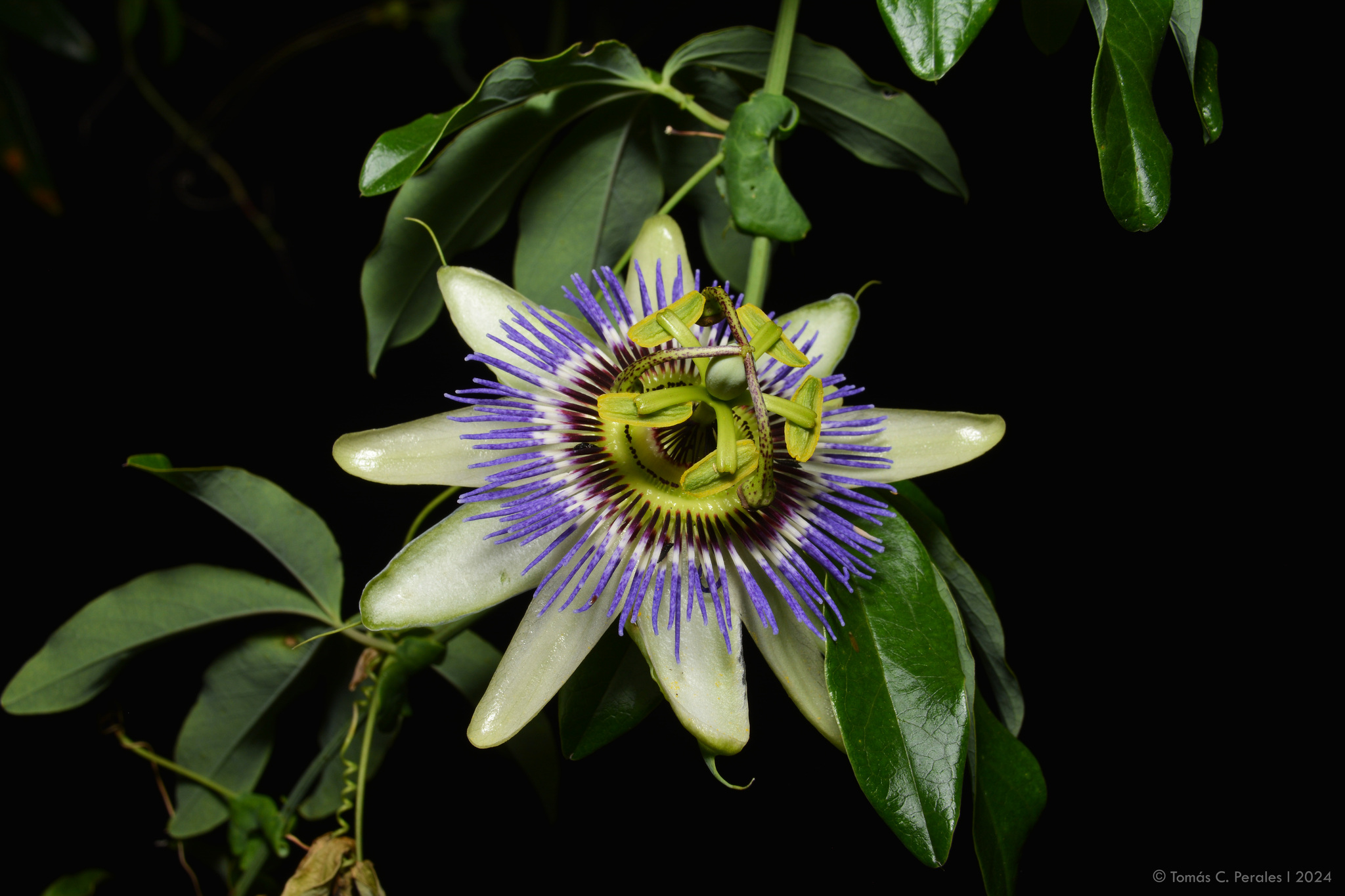


© photo
(c) Gustavo Fernando Durán, some rights reserved (CC BY-NC-SA) · cc-by-nc-sa
Tomás Carranza Perales · cc-by
Victoria Prosdocimo · cc-by
Taken Dec 21, 2021 by Tristan Jaton-Maria (cc-by-sa)
Taken Jan 21, 2022 by Monteiro Henrique (cc-by-sa)
Taken Dec 25, 2021 by Fabrice Rubio (cc-by-sa)
Taken Jun 14, 2018 by jose (cc-by-sa)
Taken Feb 19, 2019 by Irabert López (cc-by-sa)
© copyright of the Board of Trustees of the Royal Botanic Gardens, Kew.




Global distribution
POWO records a native range from Bolivia to Brazil and northern Argentina, including Paraguay in its detailed native distribution. The species is introduced in many regions, including Spain, Italy, Great Britain, California and Hawaii.
- Native4
- Introduced3
- Bolivia
- Brazil
- Argentina
- Paraguay
- Spain
- Italy
- California
Hexagons: regions where the plant occurs. Green dots: native range.1
Identity
Blue passionflower (Passiflora caerulea L.) is an accepted species in the Passifloraceae family. POWO records its native range from Bolivia to Brazil and northern Argentina, while IPNI links the name to Species Plantarum in 1753. 1 3
The epithet caerulea refers to the blue filaments in the flower. Bluecrown passionflower highlights this colorful central corona; Common passion flower and Flower of the five wounds are other English names. The French names passiflore bleue and passiflore bleuâtre designate the same species. 5 6
Species identity matters when choosing a climber. Blue passionflower differs from the broader genus Passiflora, from Passiflora edulis and from Passiflora incarnata: their fruit, hardiness, uses and toxicity are not interchangeable. 2 7
Recognition
Rapid growth and coiling tendrils characterize this perennial vine, described by NC State as reaching 3–12 m (10–39 ft), depending on support. Its alternate leaves may be deciduous or semi-evergreen. Tendrils grip wire or mesh; they do not adhere to bare walls. 4 5
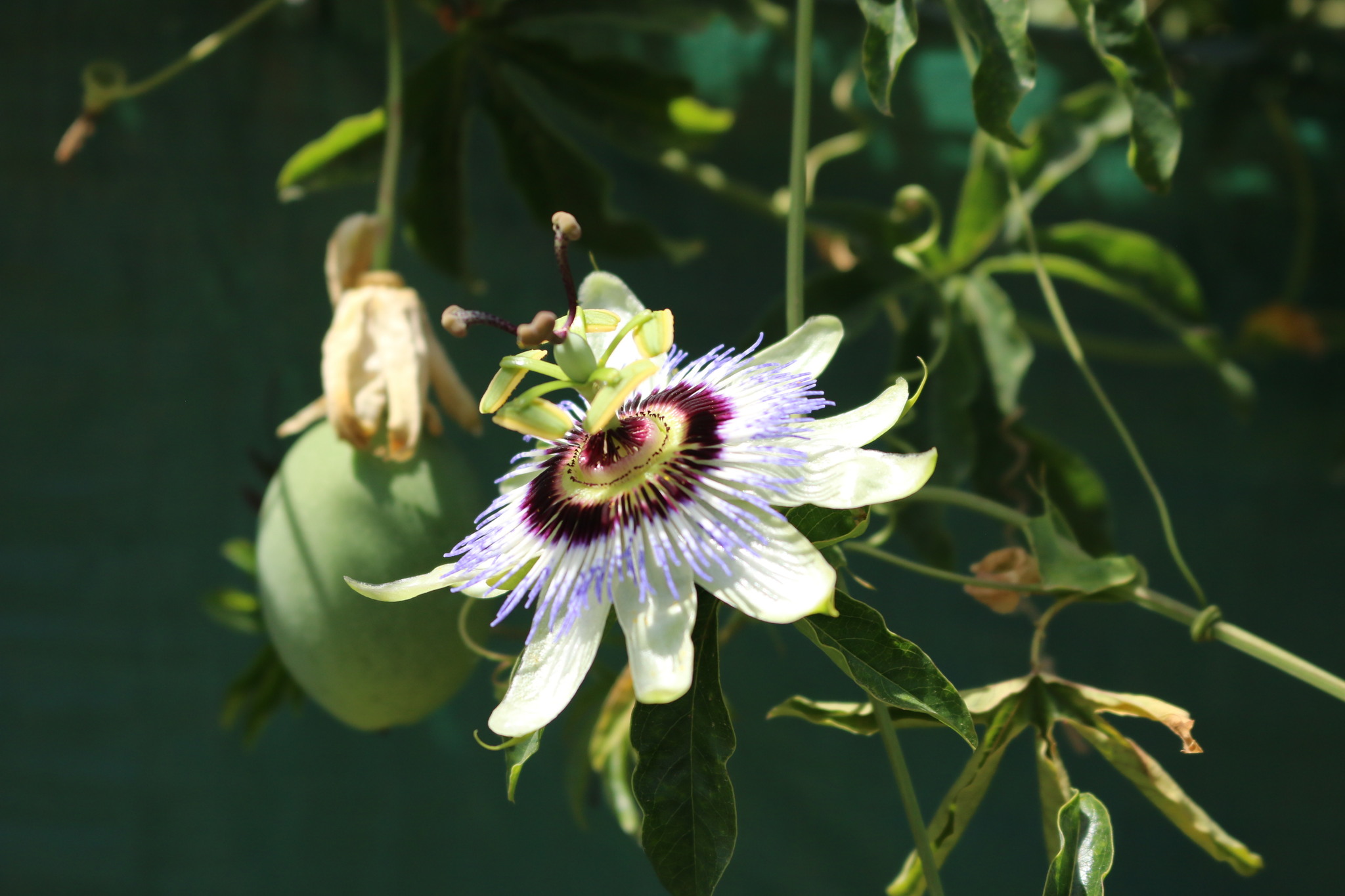
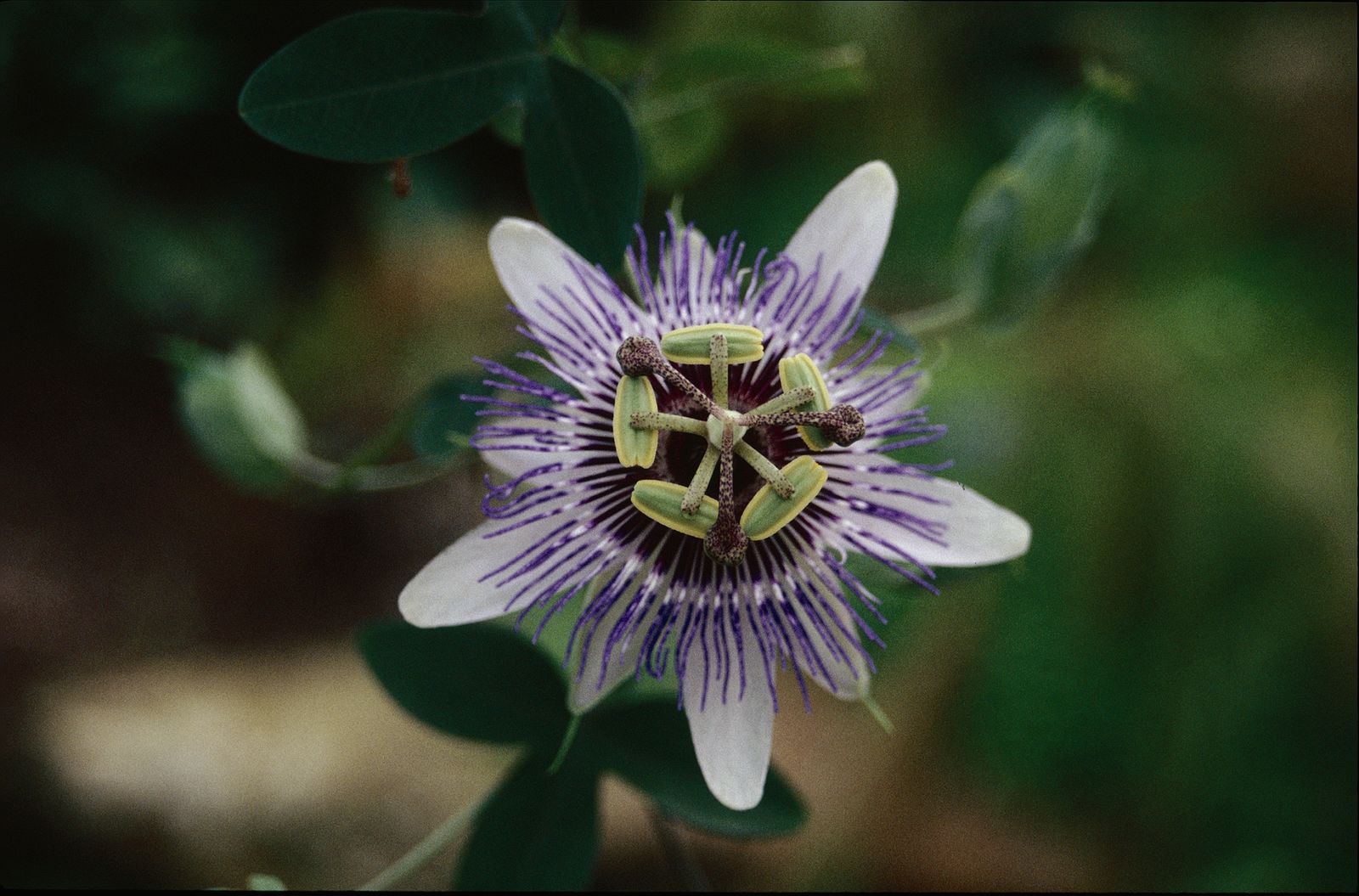
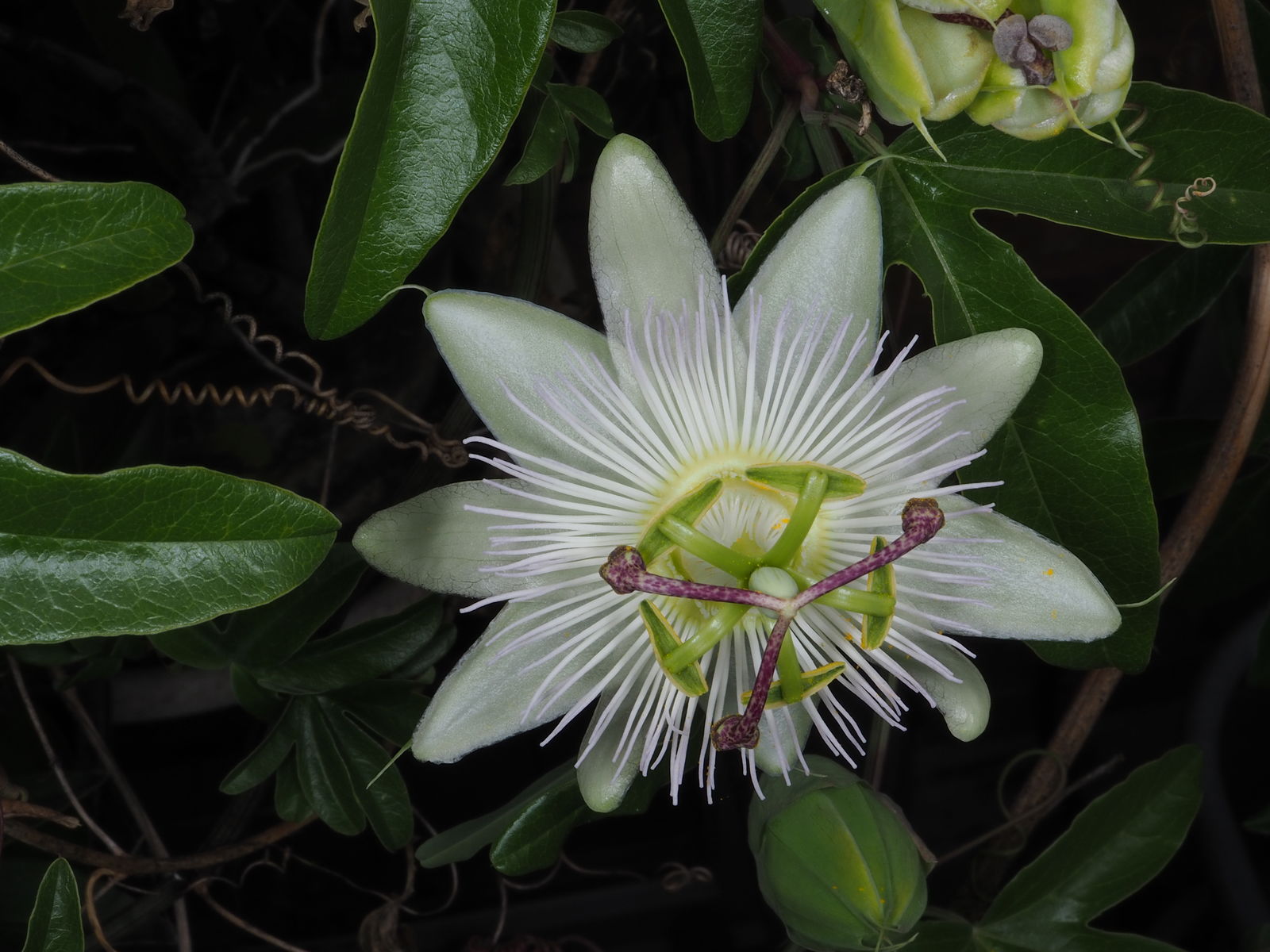
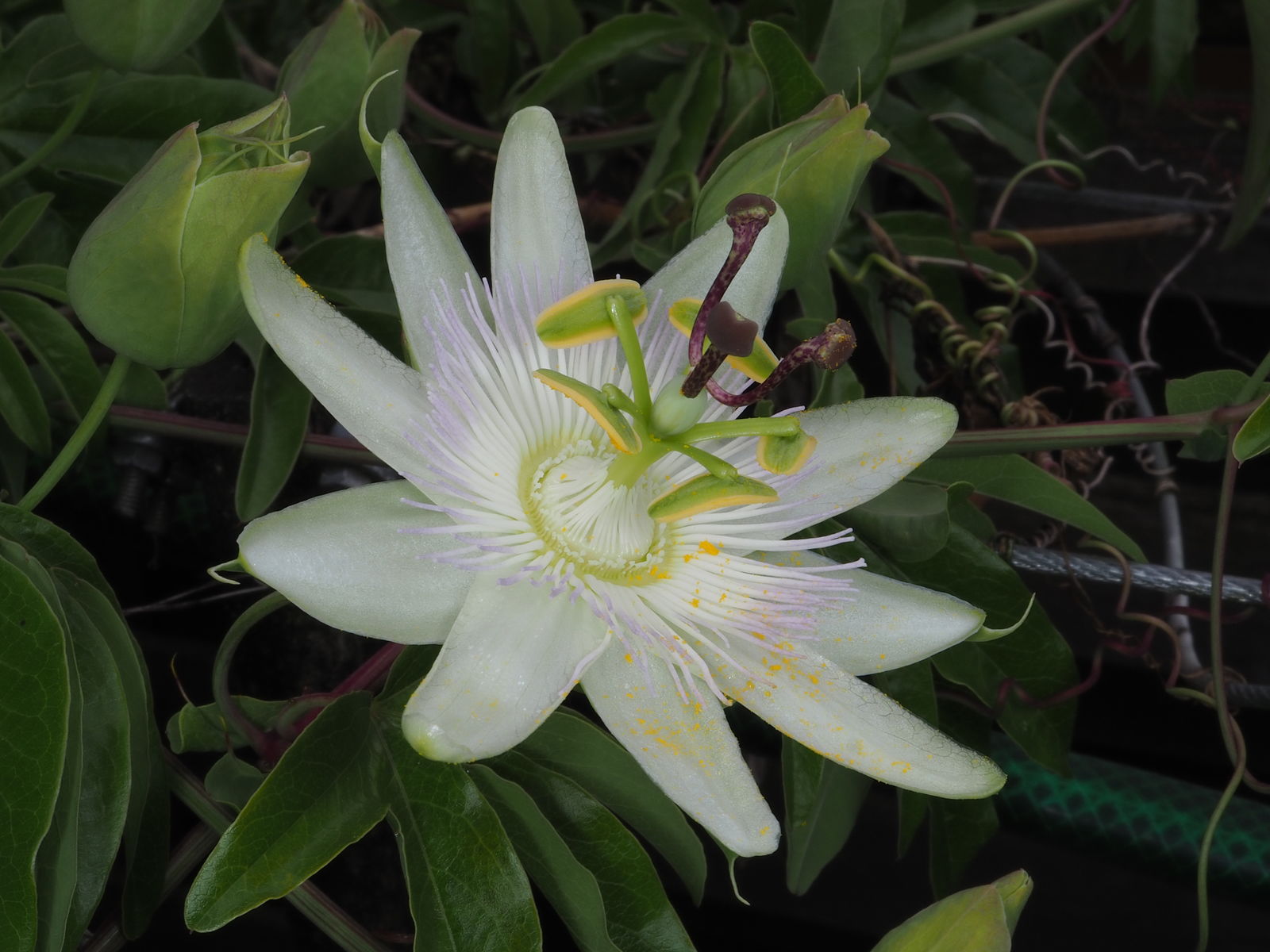
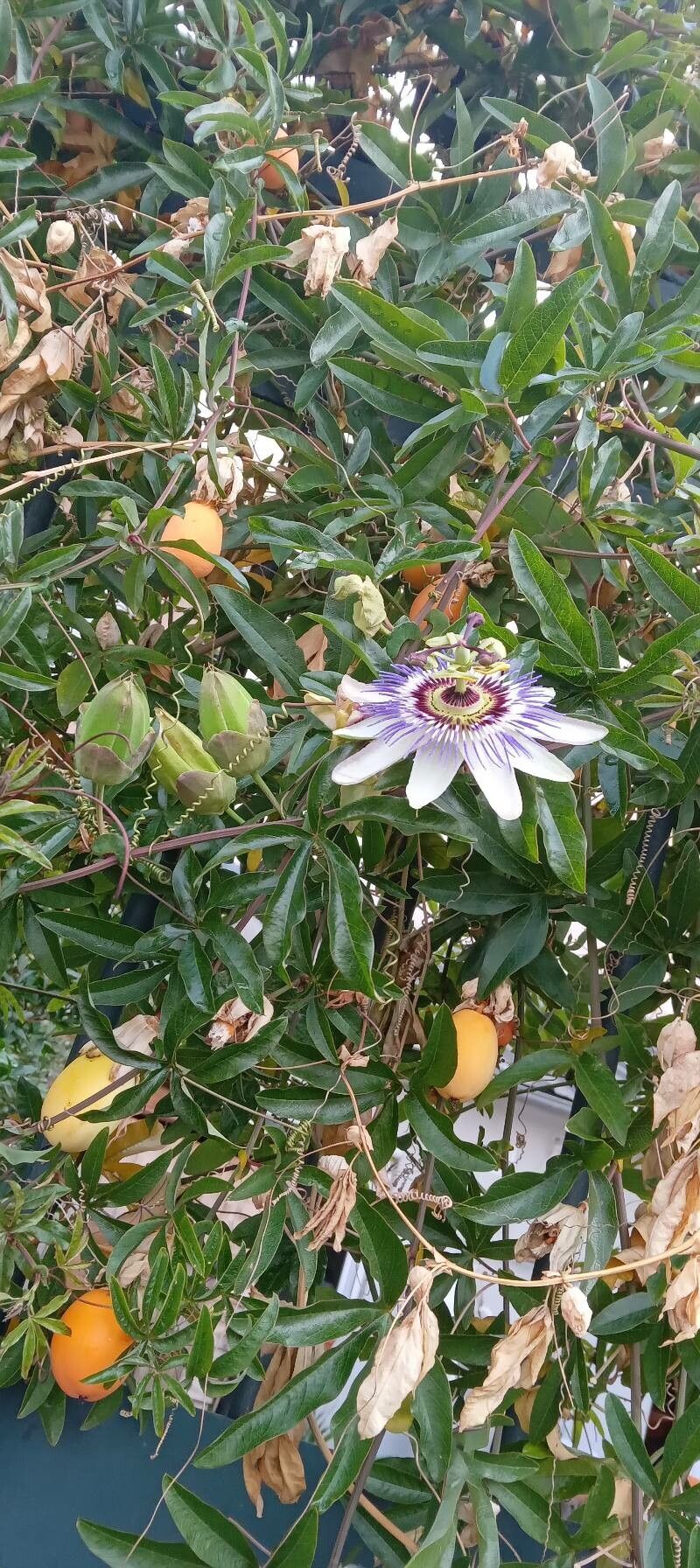
Flower structure offers the clearest identification: a broad cup 6–10 cm (2.4–4 in) across, white to pinkish tepals and a corona of blue, white and dark-purple filaments, with five prominent stamens and three styles. This arrangement underlies the religious names associated with passionflowers. 4 6
Glossy, hairless leaves usually have five lobes, occasionally three, seven or nine. NC State also describes decorative oval fruit that turns from green to yellow or orange, with deeply colored pulp surrounding the seeds. 4 5
Growing on a trellis
For reliable flowering, Blue passionflower needs sun, warmth and a narrow support. NC State lists full sun to partial shade, well-drained to moist soil and USDA zones 6–10. A warm wall, pergola, fence or trellis suits it; protect the base where winters are cold. 4 8
Fertile soil must also drain freely. Regular summer watering supports flowering in the ground; containers need closer attention because their soil volume is limited. Reduce watering in winter and avoid a waterlogged crown. 4
A narrow support makes a practical difference. Tendrils grasp wire, mesh, netting or slender trellis bars, but slip over wide boards and cannot attach to smooth render. Install the support network against a building before the vine produces its long summer shoots. 4 5
Pruning keeps this vigorous climber manageable. Left alone, it can quickly cover its support, become tangled and produce unwanted stems. Shorten growth in late winter, remove cold-damaged or weak wood, and guide new shoots to display the flowers clearly. 5 8
Near its winter limits, green foliage can give a misleading impression of evergreen growth. Leaves may persist through a mild fall and then drop suddenly after moderate cold. The rootstock can still regrow if its base is protected and good drainage prevents rot. 4 5
Fruit and mistaken identity
Ripe Blue passionflower fruit is described as edible but bland. That assessment does not extend to leaves or stems, and the fruit should not be confused with commercial passion fruit, chiefly produced by Passiflora edulis. 4 5
Medicinal uses often lead to confusion with Passiflora incarnata. POWO records environmental, medicinal and food uses for P. caerulea, but plant parts, doses and species cannot be treated as interchangeable. 1 4
The white-flowered cultivar Constance Elliott belongs to Passiflora caerulea. Its horticultural characteristics deserve separate consideration; descriptions of the species alone refer primarily to the blue-flowered type. 4 5
Distribution and vigilance
Bolivia, Brazil, Paraguay and northern Argentina form the native distribution listed by POWO. Introductions include Spain, Italy, Great Britain, California, Hawaii and numerous subtropical regions. 1 2
Vigor warrants regular attention in cultivation. Wikipedia reports invasiveness in some warm settings; in gardens, sprawling stems, suckers and tangles on the support can also become everyday problems. 5 8
Contain that growth by installing a defined support at planting, avoiding a mixture with another very vigorous vine and pruning before the tendrils bind several plants together. 4
A seasonal screen is a suitable role for Blue passionflower, provided there is enough root space. It needs fertile soil and a deep container when not planted in the ground. Guide it deliberately as a curtain, over a pergola or along a trellis to manage its powerful growth. 4 8
Toxicity
NC State identifies Blue passionflower as problematic for cats, dogs, horses, children and humans, with moderate toxicity. The toxic principles are cyanogenic glycosides in the leaves and stems. 4
Reported symptoms include severe nausea, vomiting, drowsiness and episodes of irregular heartbeat. Keep the vine beyond the reach of animals that chew stems, even though its ripe fruit may be described as edible. 4
Edibility depends on the plant part: ripe fruit is edible but unappealing, while vegetative parts should be avoided. Treat this ornamental vine as toxic around animals and children because its leaves and stems contain cyanogenic glycosides. 4 5
Main sources
- Plants of the World Online / Kew, Passiflora caerulea L.
- World Flora Online, Passiflora caerulea
- International Plant Names Index, Passiflora caerulea L.
- NC State Extension Gardener Plant Toolbox, Passiflora caerulea
- Wikipedia EN, Passiflora caerulea
- Wikipedia FR, Passiflora caerulea
- Wikidata, Passiflora caerulea
- Royal Horticultural Society, Passiflora caerulea
Frequently asked questions
Is Blue passionflower evergreen?
It may remain semi-evergreen in mild climates, but loses its leaves or regrows from the base after cold weather. It should not be treated as strictly evergreen in cold areas.
Is Blue passionflower toxic to animals?
Treat it as toxic. NC State reports problems in cats, dogs and horses, with cyanogenic glycosides in the leaves and stems.
Can you eat Blue passionflower fruit?
The ripe fruit is described as edible but bland. This does not make the leaves and stems edible.
Can it climb a wall without support?
No. Its tendrils coil around wires, mesh or narrow trellises; a smooth wall needs an installed support.
How does it differ from Passiflora edulis?
Passiflora edulis is the main species grown for passion fruit. Blue passionflower is chiefly ornamental, with less appealing fruit.
Does it need pruning?
Yes, especially in a small garden. Late-winter pruning removes damaged wood and restrains vigorous growth.
Similar plants
If you are unsure about a plant’s toxicity, ask a botanist or veterinarian for advice.