
Indian gooseberry (Phyllanthus emblica, )
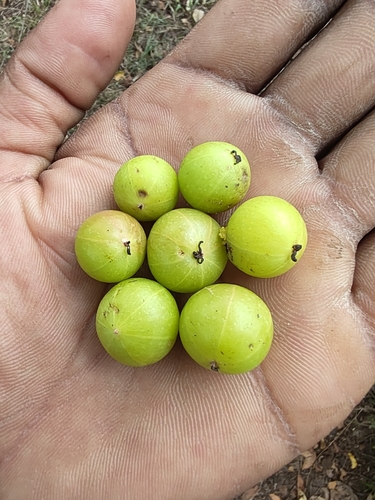


Indian gooseberry (Phyllanthus emblica), better known in Ayurveda as amla, is a deciduous fruit tree in the Phyllanthaceae family, native to tropical and subtropical Asia. Its pale green fruit is rich in vitamin C and supports both Indian subcontinent cooking and a long medicinal tradition, although its botanical synonyms often cause confusion.
Read moreIndian gooseberry, Amla, Emblic myrobalan, Emblic and Amalaki
Allow a few hours of direct sun per day, preferably morning or evening.
Full sun required; does not tolerate dense shade


© photo
rajesh rocky · cc-by
Wikimedia Commons · CC BY-SA or Public Domain
Taken Nov 23, 2019 by Dieter Albrecht (cc-by-sa)
Taken Feb 6, 2022 by Dr Sandeep Kumar Yadav (cc-by-sa)
Taken Oct 12, 2021 by Gomes Alex (cc-by-sa)
Taken Jun 29, 2022 by MG LASER (cc-by-sa)
© copyright of the Board of Trustees of the Royal Botanic Gardens, Kew.




Global distribution
The native range of Phyllanthus emblica spans tropical and subtropical Asia, from the Indian subcontinent to southern China, Indochina and the Malay Archipelago, according to POWO and GRIN. It has been cultivated for centuries as a fruit and medicinal tree throughout this range, with more scattered introductions in tropical and subtropical regions outside Asia.
- Native9
- Introduced1
- India
- Bangladesh
- Southern China
- Taiwan
- Myanmar
- Thailand
- Vietnam
- Malaysia
- Indonesia
- Florida (United States)
Hexagons: regions where the plant occurs. Green dots: native range.1
Identity
Indian gooseberry (Phyllanthus emblica L., 1753), better known by its Ayurvedic name amla, is a deciduous fruit tree in the Phyllanthaceae family. The common name evokes the acidity of its fruit, but the tree is not closely related to true gooseberries of the genus Ribes, which belong to an entirely different family. 1 2
Dried amla fruit, called emblic myrobalan, circulated for centuries under that name in Arab-Islamic and later European medicine alongside other dried myrobalans. Today the species is especially known as a concentrated dietary source of vitamin C. Its ascorbic acid content can reach 1–1.8% of the fruit's fresh weight. 3
Recognition
A modest to medium-sized tree, Phyllanthus emblica commonly reaches 3–15 m (10–50 ft) depending on soil and climate. Its trunk is often twisted, with grayish to greenish bark that flakes off in thin plates on older specimens. Bark and overall height help establish its tree habit before the finer foliage is examined. 3
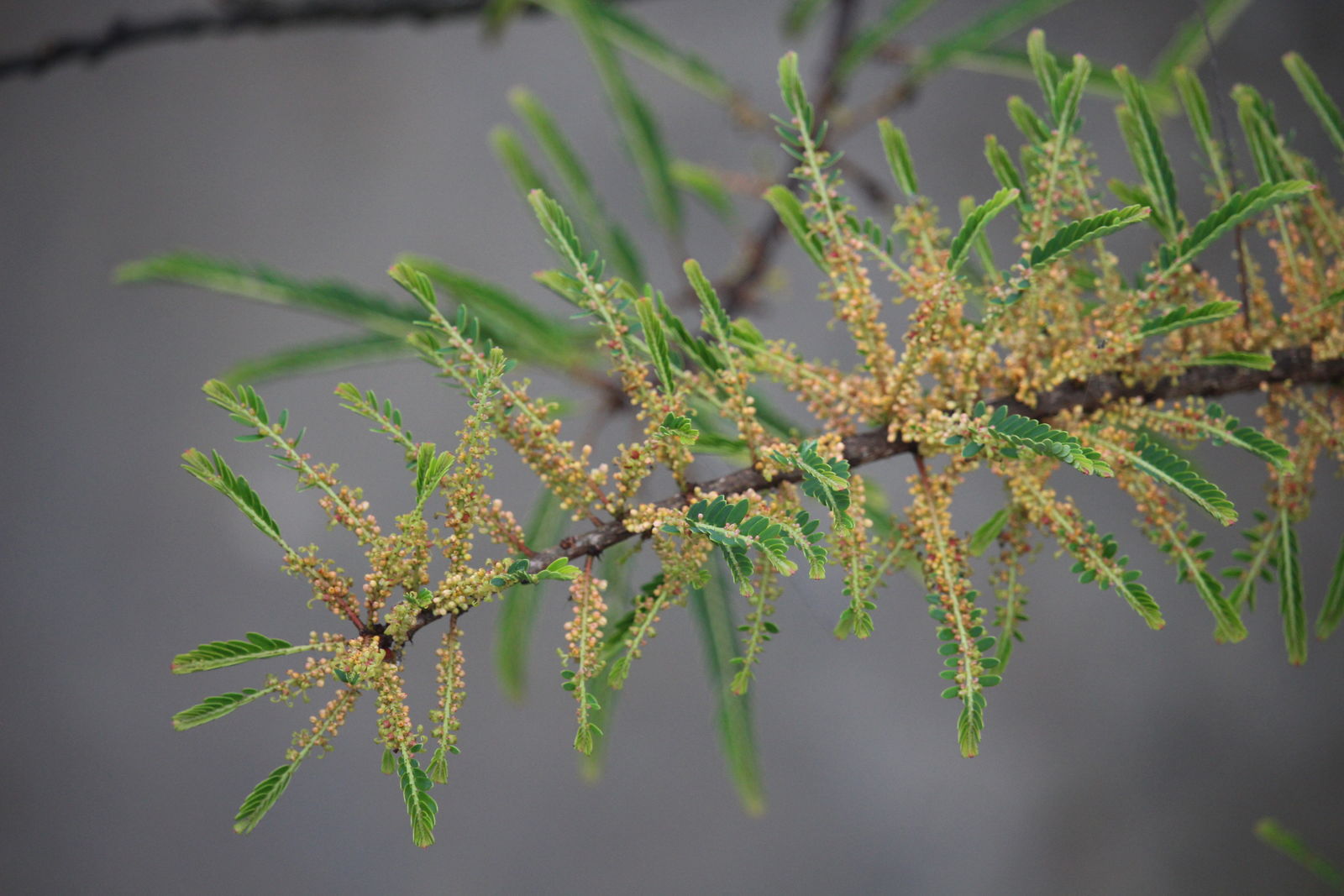
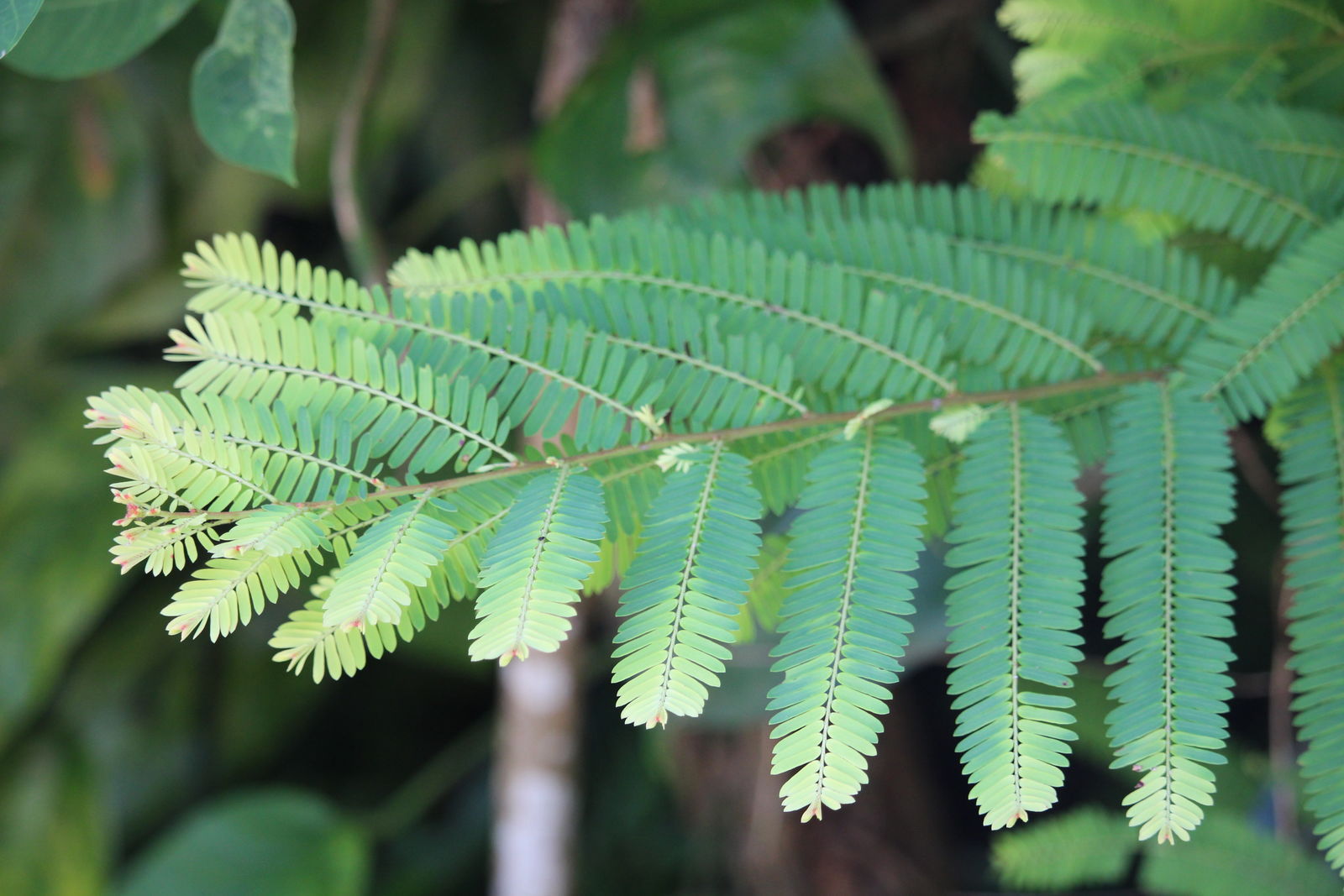
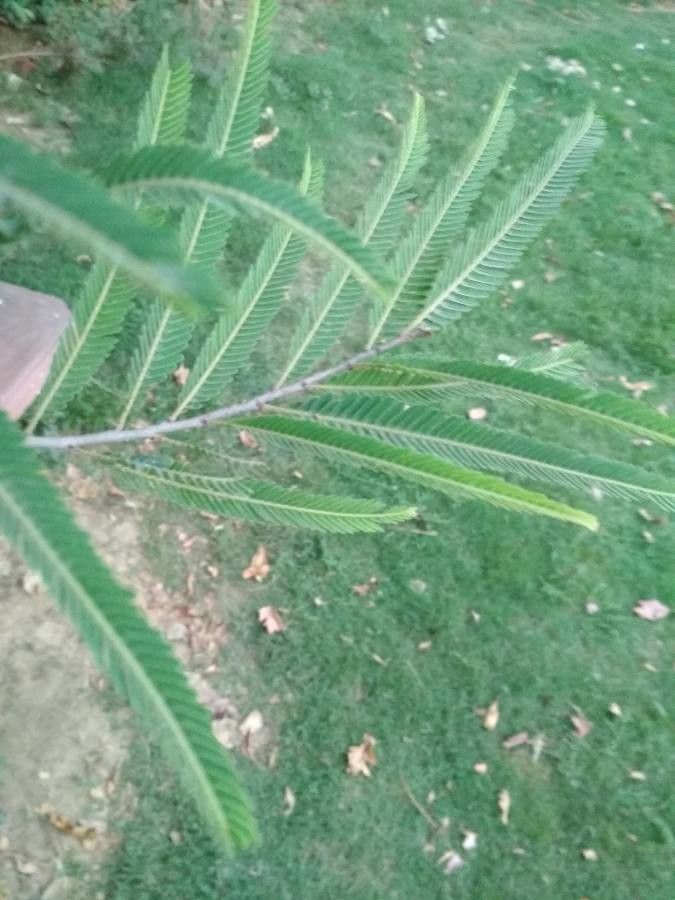
Slender, deciduous branchlets, 10–20 cm (4–8 in) long, carry two rows of small, delicate, simple leaves. From a distance each branchlet resembles a single pinnate leaf. The whole branchlet, leaves included, falls as a unit at the end of the growing season. This grouped shedding reduces foliage water loss as the dry season begins and clearly distinguishes amla from evergreen tropical fruit trees that may grow in the same orchard. 3
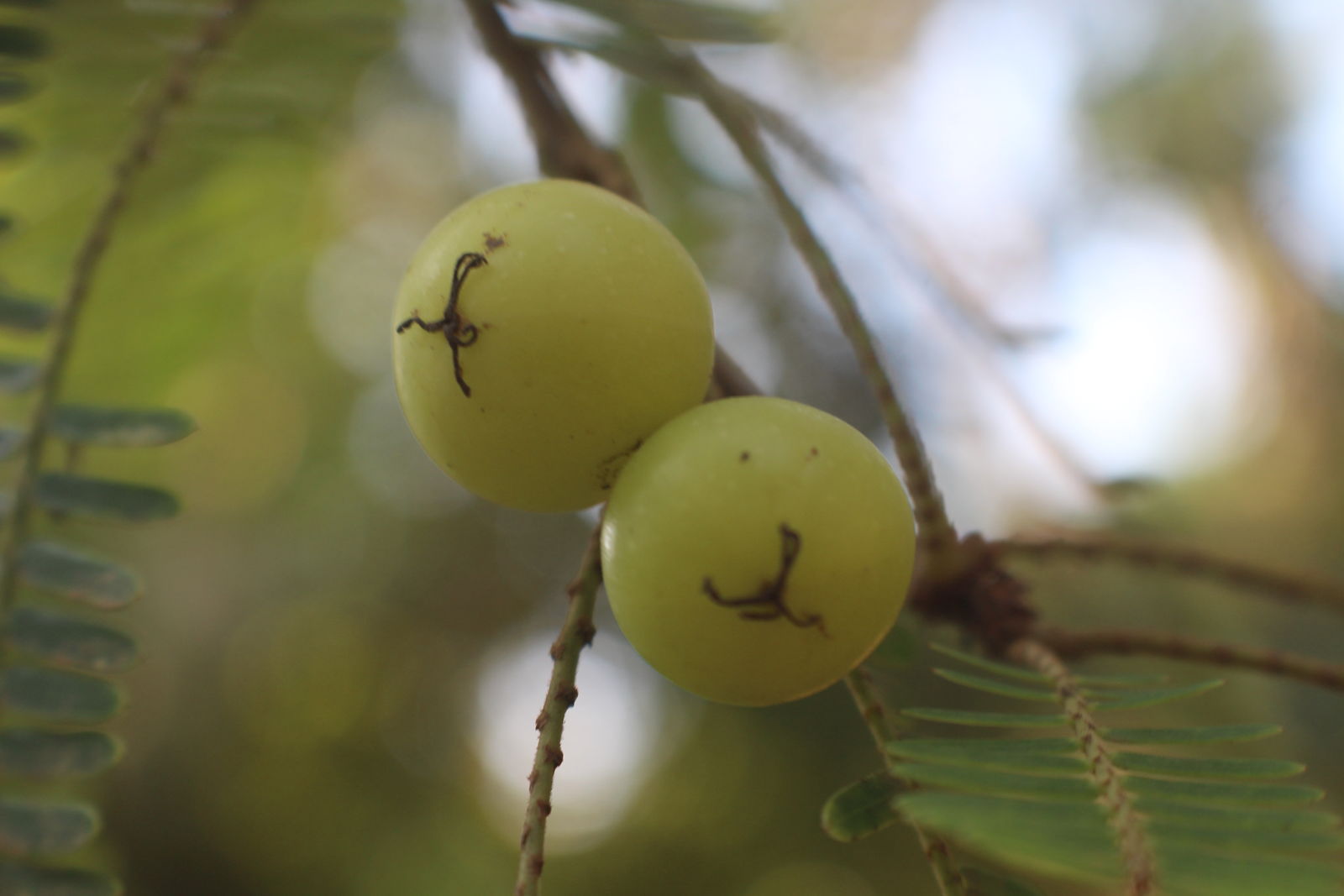
Small greenish-yellow flowers appear in spring in the leaf axils. The fruit that follows is a spherical berry 2–2.5 cm (0.8–1 in) across, pale green before turning yellowish when ripe. Its six conspicuous lengthwise grooves provide a useful identification feature both on the tree and at a market stall. 2 3
Useful taxonomy
For this species, Plants of the World Online currently accepts the binomial Phyllanthus emblica. Yet that accepted name coexists with the synonym Emblica officinalis Gaertn., still widely used in medical literature. Another synonym, Cicca emblica (L.) Kurz, appears mainly in older sources. The invalid name Mirobalanus embilica Burm. survives only in historical references. 1 2
Of these three names, Emblica officinalis creates the greatest practical difficulty because the other two have largely fallen out of use. It remains printed on dietary supplement labels and cited in pharmacological studies published after Emblica was included in Phyllanthus. The accepted POWO name, Phyllanthus emblica, remains the most stable reference when comparing these publications and products. 5 1
Habitat and range
Tropical and subtropical Asia form the native range, stretching from the Indian subcontinent through southern China and Indochina to the Malay Archipelago. Mixed forests and dry forests support the tree from sea level to approximately 2,300 m (7,500 ft) elevation. 1 2
Poor, dry and sometimes calcareous soils are tolerated, including sites where most tropical fruit trees fail. This ecological resilience, rather than particularly demanding growing requirements, explains its long-standing presence in degraded forests and disturbed ground across South and Southeast Asia. 3
The IUCN classifies the species as Least Concern. That assessment is consistent with its broad natural distribution and extensive cultivation as a fruit and medicinal tree throughout its native range. 4
Life cycle and reproduction
Spring flowering accompanies renewed growth on the deciduous branchlets. The small greenish-yellow flowers are followed by fruits that ripen toward the end of the year. Harvest generally falls between October and February, with the exact period depending on latitude and climate rather than a single fixed calendar date. 2
Commercial orchards almost always use grafting onto seed-grown rootstocks. A grafted tree begins producing in 3–4 years, compared with 7–10 years for a seedling grown on its own roots. Seed propagation is therefore mainly used to raise rootstocks, rather than as a direct route to a fruiting orchard tree. 3
Uses and risks
Strong astringency limits the amount of raw fruit people usually eat. Traditionally it is preserved with salt and spices, a process that softens the astringency and helps it keep. Related preparations include chutney, juice and sweet preserves such as Indian murabba. In Ayurveda, dried fruit also forms part of classic preparations including triphala and chyawanprash. 3
The fruit's high levels of tannins and phenolic compounds such as gallic acid have prompted several preclinical studies of antioxidant activity. These include reduced oxidative stress in diabetic rats and protective effects reported in an experimental model of acute pancreatitis. Results obtained in rats do not replace medical advice about therapeutic use in people, nor establish the same effects in human patients. 7 8
No toxicity is recorded in people or domestic animals. The documented drawback of unprocessed raw fruit is its pronounced astringency in the mouth, caused by tannins. This strong sensation is distinct from an established toxic hazard. 3
Varieties, look-alikes and related plants
Western ornamental horticulture offers no widely distributed ornamental cultivars of this species, unlike several other tropical fruit trees. The most frequent confusion concerns names in documents: Phyllanthus emblica and its synonym Emblica officinalis still appear side by side in pharmacological publications and on commercial packaging. 1
A Malaysian legend reported by the Forest Research Institute Malaysia connects the species with the founding of Malacca. Parameswara is said to have established his city after watching a mouse-deer stand up to his hunting dogs beneath one of these trees, giving present-day Melaka its name. The account belongs to the cultural history of the tree. 6
Compared with other sour Asian fruit trees, such as citron (Citrus medica), amla is identified in the field by its deciduous, pinnate-looking branchlets and six-grooved fruit. Together these visible features distinguish it from neighboring fruit trees without requiring genetic analysis.
Main sources
- Plants of the World Online / Kew, Phyllanthus emblica L.
- USDA GRIN Global Taxonomy, Phyllanthus emblica L.
- Plants For A Future, Phyllanthus emblica
- IUCN Red List, Phyllanthus emblica assessment (2020)
- Integrated Taxonomic Information System, Phyllanthus emblica L.
- Forest Research Institute Malaysia, The Legendary Melaka Tree
- Rao et al., 2005, Journal of Medicinal Food, amla extracts and oxidative stress in diabetic rats
- Sidhu et al., 2011, Journal of Medicinal Food, Emblica officinalis in experimental acute pancreatitis
Frequently asked questions
Is Indian gooseberry toxic?
No toxicity is established in people or domestic animals. Raw fruit is simply very astringent because of its tannins, which explains why it is almost always processed before eating.
How much vitamin C does amla contain?
The fruit is among the richest known plant sources of vitamin C. Plants For A Future reports ascorbic acid contents reaching 1–1.8% of fresh fruit weight.
Is Indian gooseberry related to true gooseberries?
No. The common name refers to the sour fruit. Phyllanthus emblica belongs to Phyllanthaceae, a different family from Ribes gooseberries in Grossulariaceae.
How do Phyllanthus emblica and Emblica officinalis differ?
Botanically, they do not. Emblica officinalis is a heterotypic synonym of Phyllanthus emblica, the accepted scientific name according to POWO. The older name remains common in pharmacological studies and on supplement labels.
Can you eat the fruit raw?
Raw fruit is edible but very sour and astringent. It is more often preserved, dried, made into chutney or juiced, preparations that soften its flavor considerably.
What connects this tree with Malacca?
A legend reported by the Forest Research Institute Malaysia says that the founder Parameswara established the city beneath a Phyllanthus emblica after seeing a mouse-deer challenge his hunting dogs, giving Melaka its name.
Similar plants
If you are unsure about a plant’s toxicity, ask a botanist or veterinarian for advice.