
Moso bamboo (Phyllostachys edulis, )
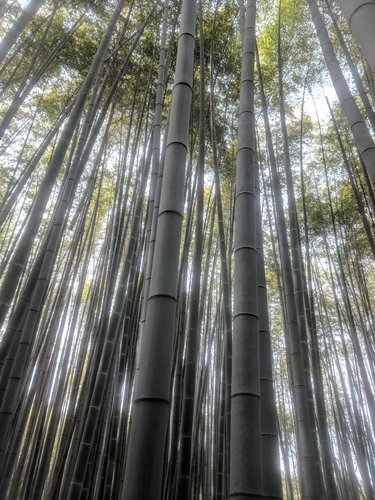
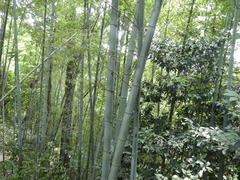
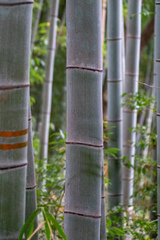
Moso bamboo (Phyllostachys edulis) is a giant rhizomatous grass in the Bambusoideae subfamily of Poaceae, native to central and southeastern China and Taiwan. Its running rhizomes produce some of the tallest and fastest-growing culms among hardy bamboos, and its edible young shoots are harvested from late winter onward.
Read moreMoso bamboo, Tortoise-shell bamboo and Mao zhu
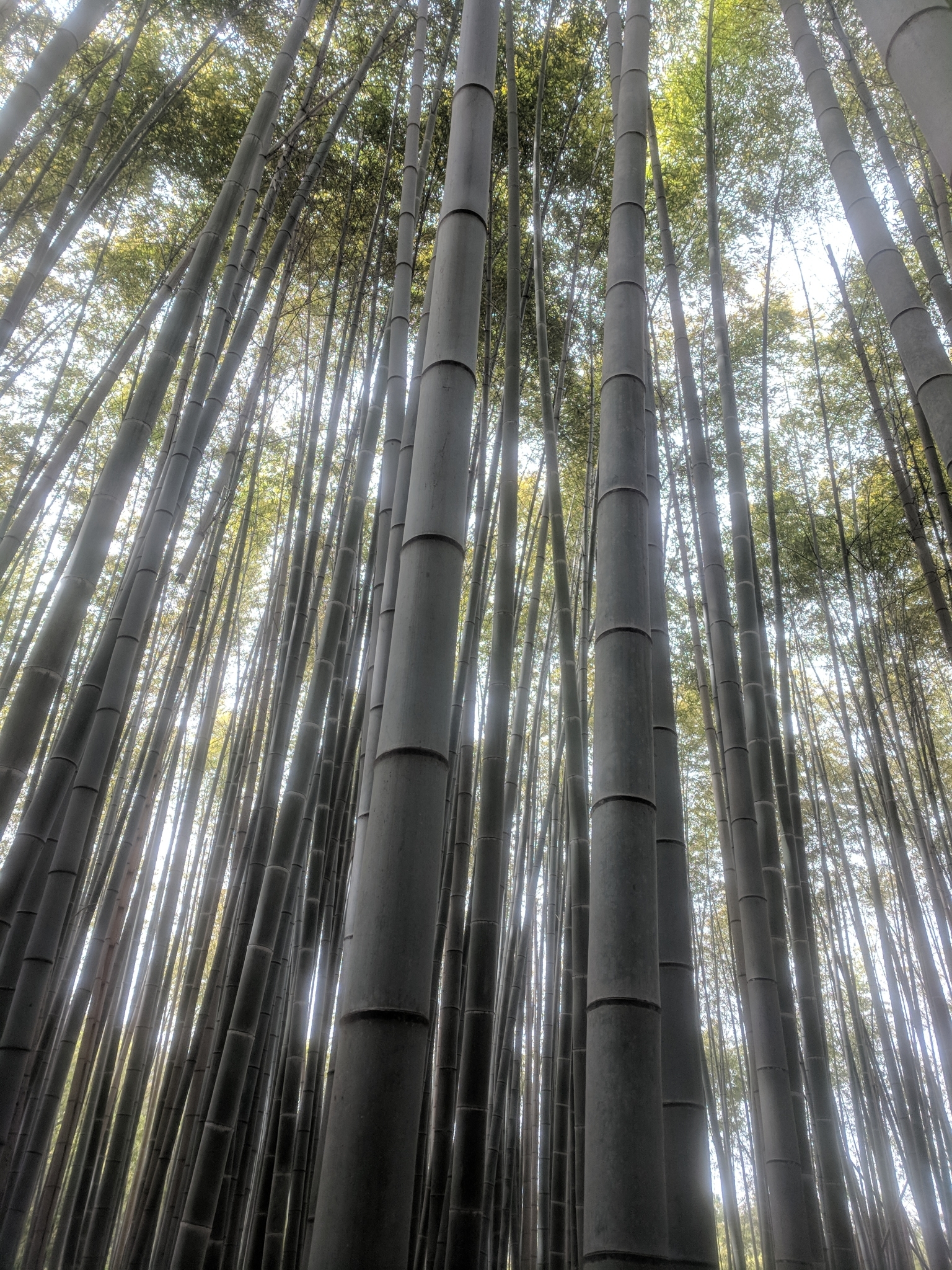
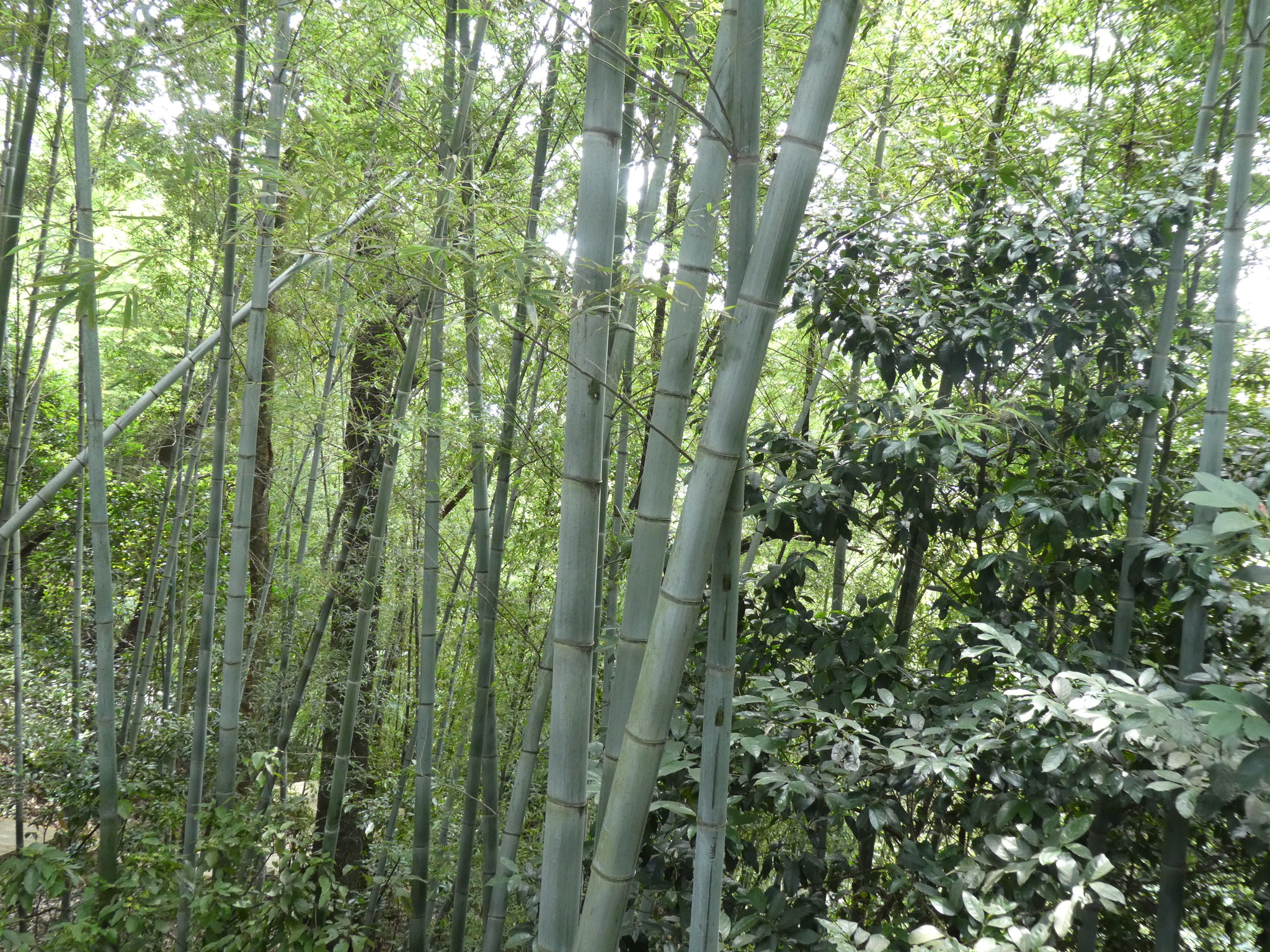
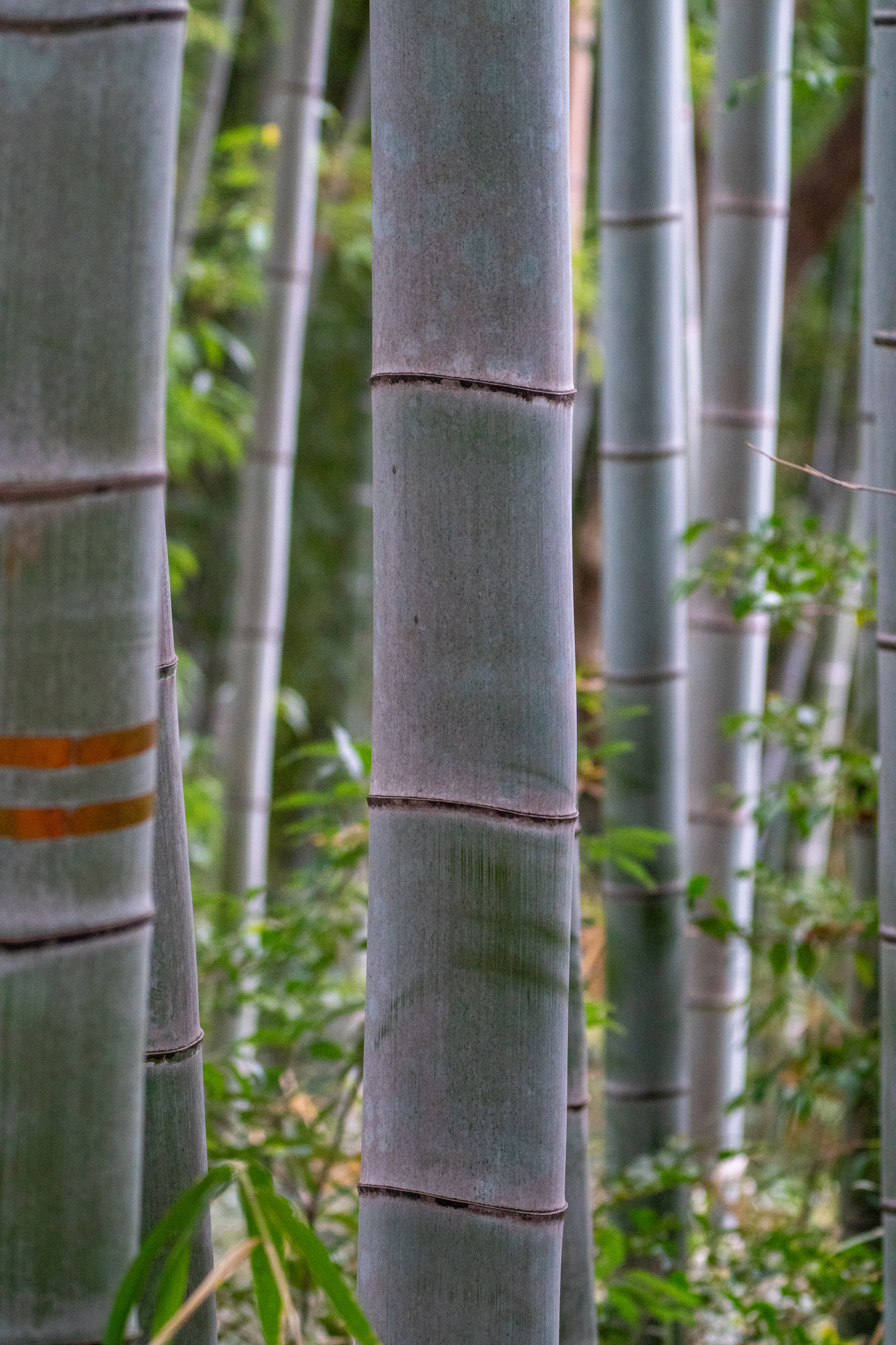


© photo
(c) Eric Knight, some rights reserved (CC BY), uploaded by Eric Knight · cc-by
Aaron Liston · cc0
WATANABE Hitoshi 渡辺仁 · cc-by
© copyright of the Board of Trustees of the Royal Botanic Gardens, Kew.


Global distribution
The native range of Phyllostachys edulis covers central and southeastern China south of the Yangtze River, and Taiwan. Introduced to Japan in the 18th century, it has become widely naturalized there. Elsewhere it is mainly cultivated, occasionally escaping gardens in mild, humid climates.
- Native2
- Introduced3
- China
- Taiwan
- Japan
- South Korea
- United States
Hexagons: regions where the plant occurs. Green dots: native range.1
Identity
Moso bamboo (Phyllostachys edulis (Carrière) J.Houz., 1906) is a giant rhizomatous grass in the Bambusoideae subfamily of Poaceae. French botanist Élie-Abel Carrière first described the species as Bambusa edulis in 1866. Belgian botanist Jean Houzeau de Lehaie transferred it to Phyllostachys in 1906, giving it the combination used today. 1 2
The Latin epithet edulis means “edible” and refers to the young shoots harvested in late winter and spring. Native to central and southeastern China, this is now the most widely cultivated and economically important Chinese bamboo, grown for its timber, shoots and textile fibers. The names tortoise-shell bamboo and mao zhu also occur in use. 5 7
Recognition
Exceptionally thick culms distinguish Moso bamboo from many other hardy bamboos. Their diameter commonly exceeds 10 cm (4 in) and may reach 18 cm (7 in) in vigorous plants within its native region. Under temperate cultivation, height is usually more modest at 4–8 m (13–26 ft), while established stands in milder climates can exceed 18 m (59 ft). 3 7
Young culms bear hanging, brown-mottled, densely hairy sheaths. These fall away as the culm matures and turns a golden yellow-green. Fine, lance-shaped leaves form light fans near the tops of mature canes. A whitish waxy bloom below the nodes marks young culms before their surface hardens, offering another useful identification feature. 4
At peak shoot growth, a culm may gain more than 90 cm (3 ft) per day, making this one of the fastest-growing woody plants known. That burst ends abruptly once the final height is reached, in just a few weeks. The diameter of that individual culm will not increase afterward. 4
Useful taxonomy
Three older names remain common in horticultural literature and catalogs for the accepted species Phyllostachys edulis:
- Phyllostachys pubescens Mazel ex J.Houz., an older synonym;
- Phyllostachys heterocycla (Carrière) Mitford, another synonym;
- Bambusa edulis Carrière, the original name.
Phyllostachys pubescens is especially frequent in nursery catalogs and older scientific publications, but denotes exactly the same plant as Phyllostachys edulis. The English name tortoise-shell bamboo refers to a natural culm variation with asymmetrical, swollen internodes. This was long treated separately as heterocycla before being brought into synonymy. 1 6
Habitat and range
Central and southeastern China south of the Yangtze River, together with Taiwan, form the native range of Moso bamboo. It grows in dense bamboo groves on subtropical hills, reaching about 1,600 m (5,250 ft) above sea level. These are the native landscapes behind a plant now familiar in cultivation far beyond eastern Asia. 1 6
Introduced to Japan in the 18th century, it has become widely naturalized from southern Hokkaido to Kagoshima. Elsewhere, notably in the southeastern United States, it remains primarily a cultivated plant that sometimes persists or spreads beyond original plantings. Its horticultural spread is distinct from an ecological invasive designation; the source does not identify it as a recognized ecological invasive in France. 6
Life cycle and reproduction
Monopodial, running rhizomes give Moso bamboo its spreading habit. These leptomorph rhizomes advance underground and send up separate culms along their route instead of producing a compact clump. This growth pattern allows a planting to colonize a whole garden if no physical barrier limits its progress. 4
Flowering is exceptional, reported at intervals of 48–67 years depending on the population. It can occur gregariously over large areas and is almost always followed by extensive dieback of the affected culms. In cultivation, such rarity makes rhizome division and basal culm cuttings the two dependable methods of propagation. Seed propagation depends on the uncommon flowering events observed in cultivated plants. 7 5
Uses and risks
Harvested before they emerge fully from the ground, young shoots are the principal food product of this species in China and Japan. Raw shoots contain cyanogenic glycosides that release hydrogen cyanide when chewed. Prolonged boiling destroys this heat-sensitive compound and makes the shoots safe to consume; they should not be eaten raw. 5 8
The culms also support a substantial industry producing panels, flooring, furniture, scaffolding and utensils. Textile production is particularly important: bamboo fibers are processed into viscose or rayon rather than simply used as unprocessed plant fibers. 5 7
Garden spread is the main horticultural hazard. Without a rigid rhizome barrier buried 60–70 cm (24–28 in) deep, the running bamboo can cross its original boundaries and enter neighboring gardens. The plant is not considered toxic to cats or dogs, and properly cooked shoots are edible for people. This distinguishes it from heavenly bamboo (Nandina domestica), an unrelated plant whose leaves and fruit are toxic through cyanogenesis. 9
Varieties, look-alikes and related plants
Culm shape, rather than foliage, separates several horticultural forms. 'Kikko', also sold as heterocycla, has swollen, asymmetrical internodes resembling a tortoise shell. 'Bicolor' has green-and-yellow-striped culms. 'Nabeshimana' and 'Subconvexa' remain collection forms whose status varies between authors. 7
The most frequent sources of confusion are:
- Phyllostachys pubescens and Phyllostachys heterocycla, exact synonyms of the same species rather than different plants;
- other large running Phyllostachys, distinguished more precisely by culm-sheath color and texture;
- Nandina domestica, called heavenly or sacred bamboo, which is not a grass or a true bamboo despite its common names.
Two field characters are especially useful together: running rhizomes that align separate canes rather than forming a compact clump, and culm diameters commonly above 10 cm (4 in) in suitable conditions. These contrast with the smaller dimensions of many ornamental bamboos grown in temperate gardens.
Main sources
- Plants of the World Online / Kew, Phyllostachys edulis (Carrière) J.Houz.
- International Plant Names Index, Phyllostachys edulis (Carrière) J.Houz.
- Royal Horticultural Society, Phyllostachys edulis
- Missouri Botanical Garden Plant Finder, Phyllostachys edulis
- Plants For A Future, Phyllostachys edulis
- Flora of the Southeastern United States (UNC Herbarium), Phyllostachys edulis
- Guadua Bamboo, Phyllostachys edulis species profile
- Food Standards Australia New Zealand, Cyanogenic glycosides in cassava and bamboo shoots
- ASPCA, Heavenly Bamboo (Nandina domestica) toxicity entry
Frequently asked questions
Does Moso bamboo spread aggressively?
Its running rhizomes can colonize a whole garden without a physical barrier. This is a well-documented horticultural risk, although it is not recognized as ecologically invasive in France; install a rhizome barrier when planting.
Is Moso bamboo toxic to cats and dogs?
It is not considered a toxic plant. However, do not confuse it with heavenly bamboo, Nandina domestica, which is not a true bamboo and is toxic through cyanogenesis.
Can bamboo shoots be eaten raw?
No. Raw shoots contain cyanogenic glycosides that release hydrogen cyanide. Prolonged boiling destroys this heat-sensitive compound and makes the shoots safe to eat.
Are Phyllostachys edulis and Phyllostachys pubescens different plants?
No. Phyllostachys pubescens is an exact synonym of Phyllostachys edulis, still widely used in nursery catalogs and older horticultural literature.
Why does Moso bamboo grow so fast?
A culm does not increase in thickness after emerging; its energy goes into elongation, which can exceed 90 cm (3 ft) per day at the seasonal peak. It reaches its final height in just a few weeks.
Does Moso bamboo flower often?
No. Flowering is exceptional, reported at intervals of 48–67 years depending on the population, and often followed by extensive dieback of the affected culms.
Does Moso bamboo need a rhizome barrier?
Yes, when planted in the ground. Without a rigid barrier buried 60–70 cm (24–28 in) deep, running rhizomes eventually spread far beyond the intended planting area.
Similar plants

If you are unsure about a plant’s toxicity, ask a botanist or veterinarian for advice.