
Large-flowered tomatillo (Physalis philadelphica, )
Large-flowered tomatillo (Physalis philadelphica) is an annual herbaceous plant in the Solanaceae family, cultivated in Mexico and Central America since pre-Columbian times. Its green or purplish fruit remains enclosed in an inflated papery calyx until harvest, and successful pollination depends on a second genetically distinct plant.
Read moreLarge-flowered tomatillo, Tomatillo, Mexican husk tomato, Miltomate and Mexican groundcherry
Allow a few hours of direct sun per day, preferably morning or evening.
Full sun, at least 6 hours daily



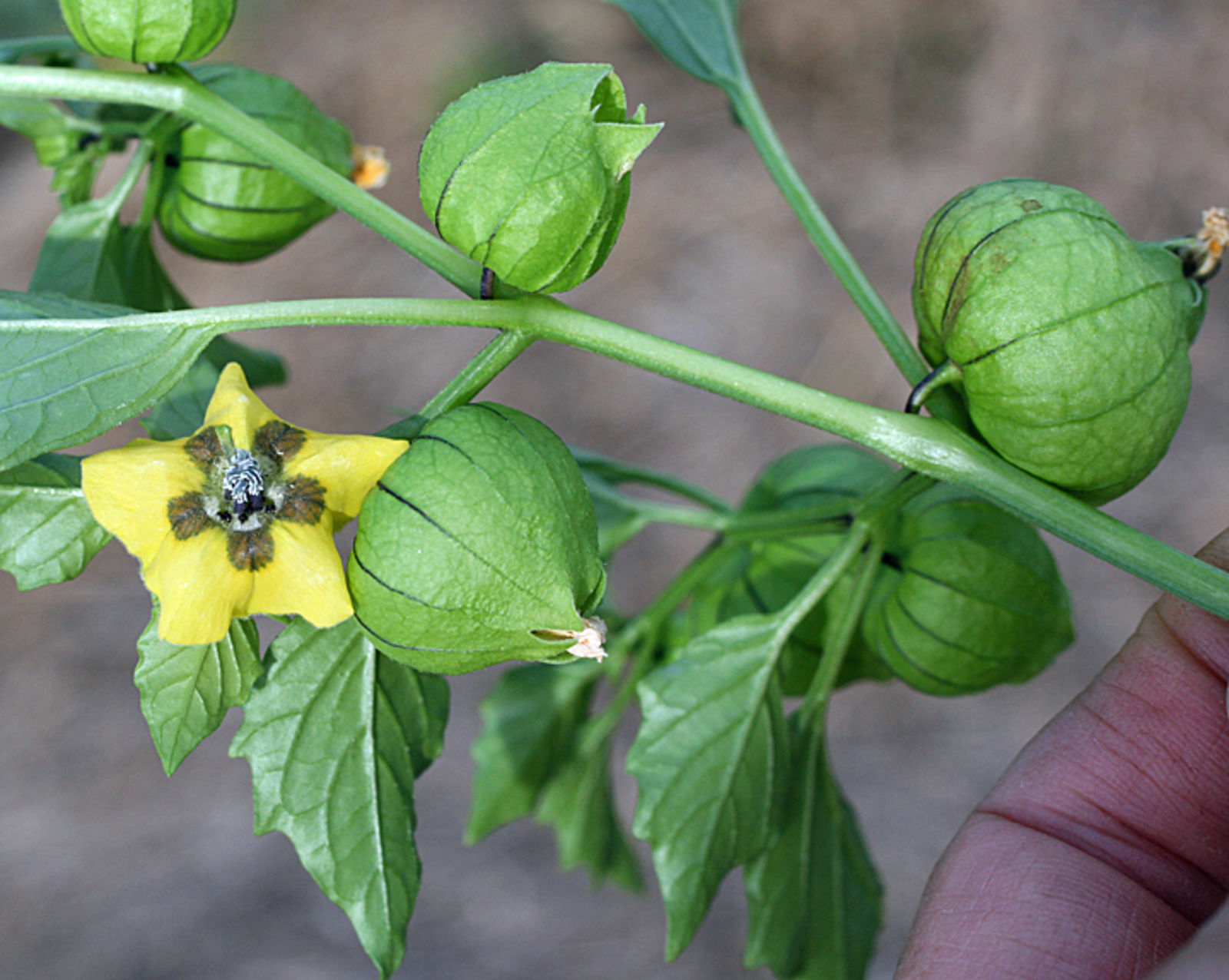
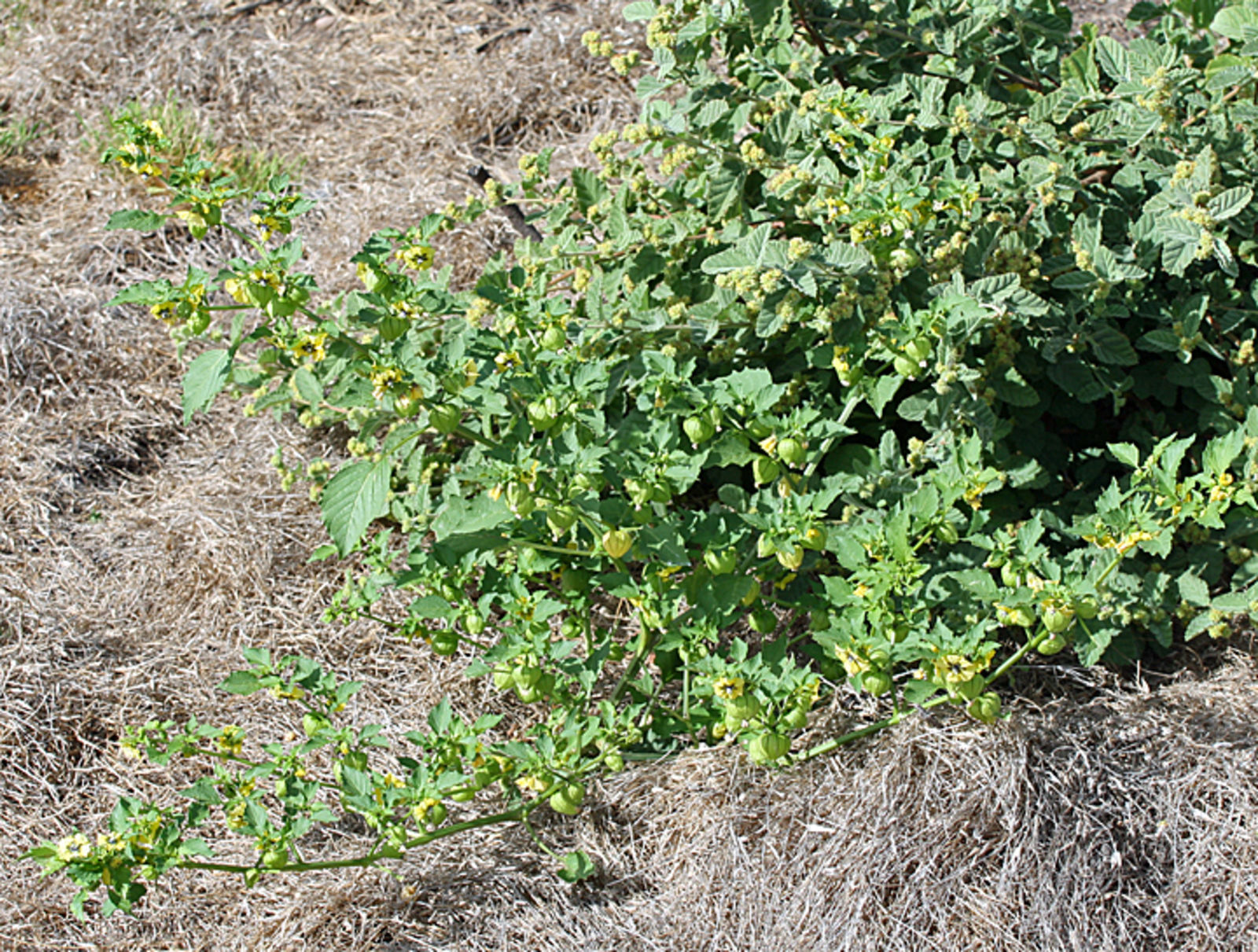
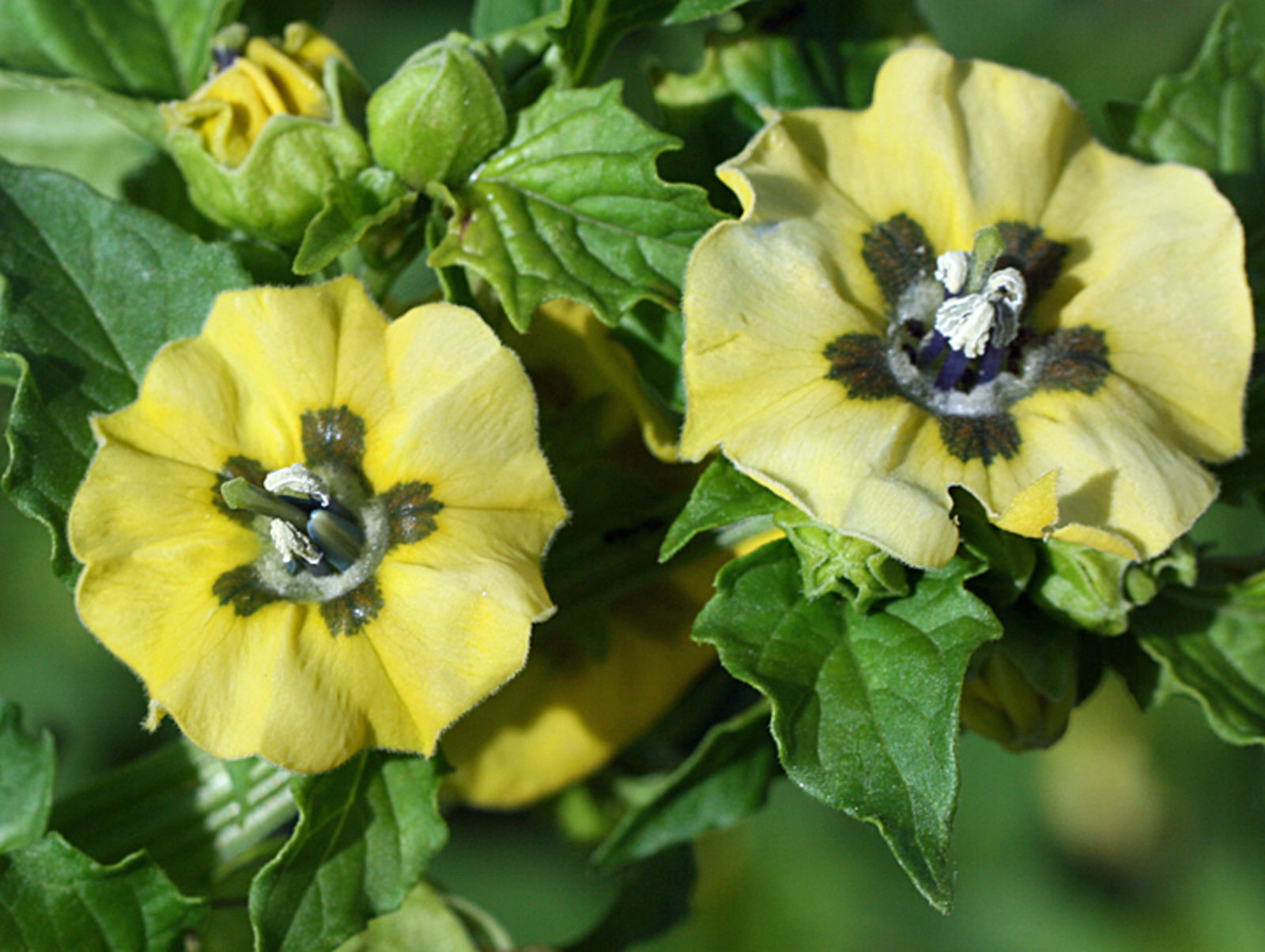
© photo
(c) carnifex, some rights reserved (CC BY), uploaded by carnifex · cc-by
iNaturalist User · cc0
Andre Hosper · cc-by-nc
Taken May 23, 2020 by Aaron Harp (cc-by-sa)
Taken Sep 15, 2019 by huy HO (cc-by-sa)
© copyright of the Board of Trustees of the Royal Botanic Gardens, Kew.


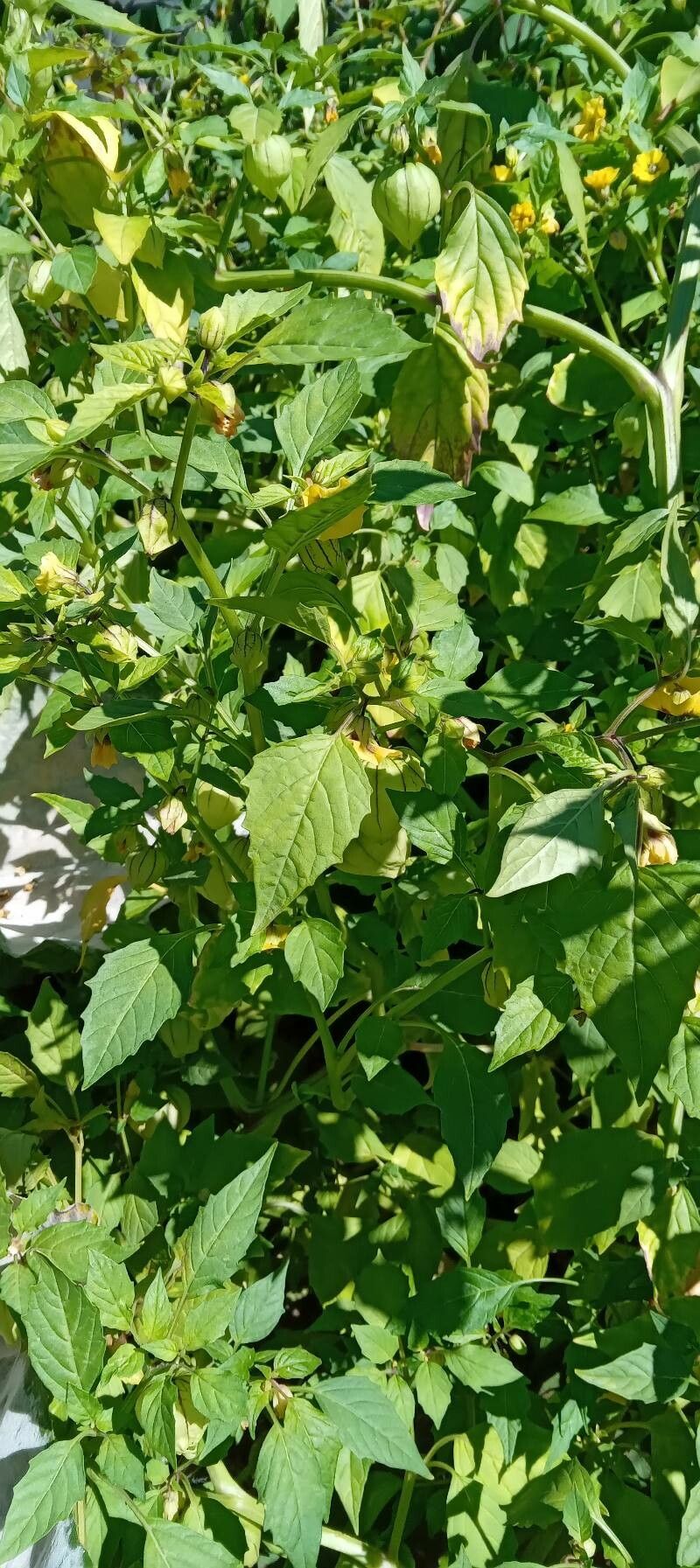


Global distribution
According to POWO/WCVP, the native range of Physalis philadelphica extends from Mexico to Central America, with separate records in Cuba and Haiti. Domesticated in pre-Columbian Mesoamerica, it held greater culinary importance than the tomato among the Aztecs and Maya. Cultivation later spread far beyond this native range to North America, India, Australia and Africa.
- Native4
- Introduced3
- Mexico
- Guatemala
- Cuba
- Haiti
- United States
- South Africa
- Kenya
Hexagons: regions where the plant occurs. Green dots: native range.1
Identity
Large-flowered tomatillo (Physalis philadelphica Lam., 1786), usually called tomatillo, is an annual herbaceous member of the genus Physalis, family Solanaceae. It reaches 60 cm–1.5 m (2–5 ft) in warm climates. Each flower produces a fruit 2.5–6 cm (1–2.4 in) across, enclosed in an inflated papery calyx that protects it until maturity. This husk is characteristic of the genus, while the green or purplish harvest for savory dishes contrasts with the sweet, fully orange fruit of Cape gooseberry. 1 6
Domesticated in pre-Columbian Mesoamerica, tomatillo held a more important culinary place than tomato among the Aztecs and Maya. Miltomate derives from the Nahuatl words milli, meaning field, and tomatl, meaning round fruit. That older name long predates the Spanish term tomatillo and reflects the crop's deep history in cultivated landscapes. 5
Recognition
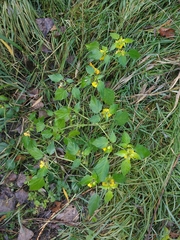
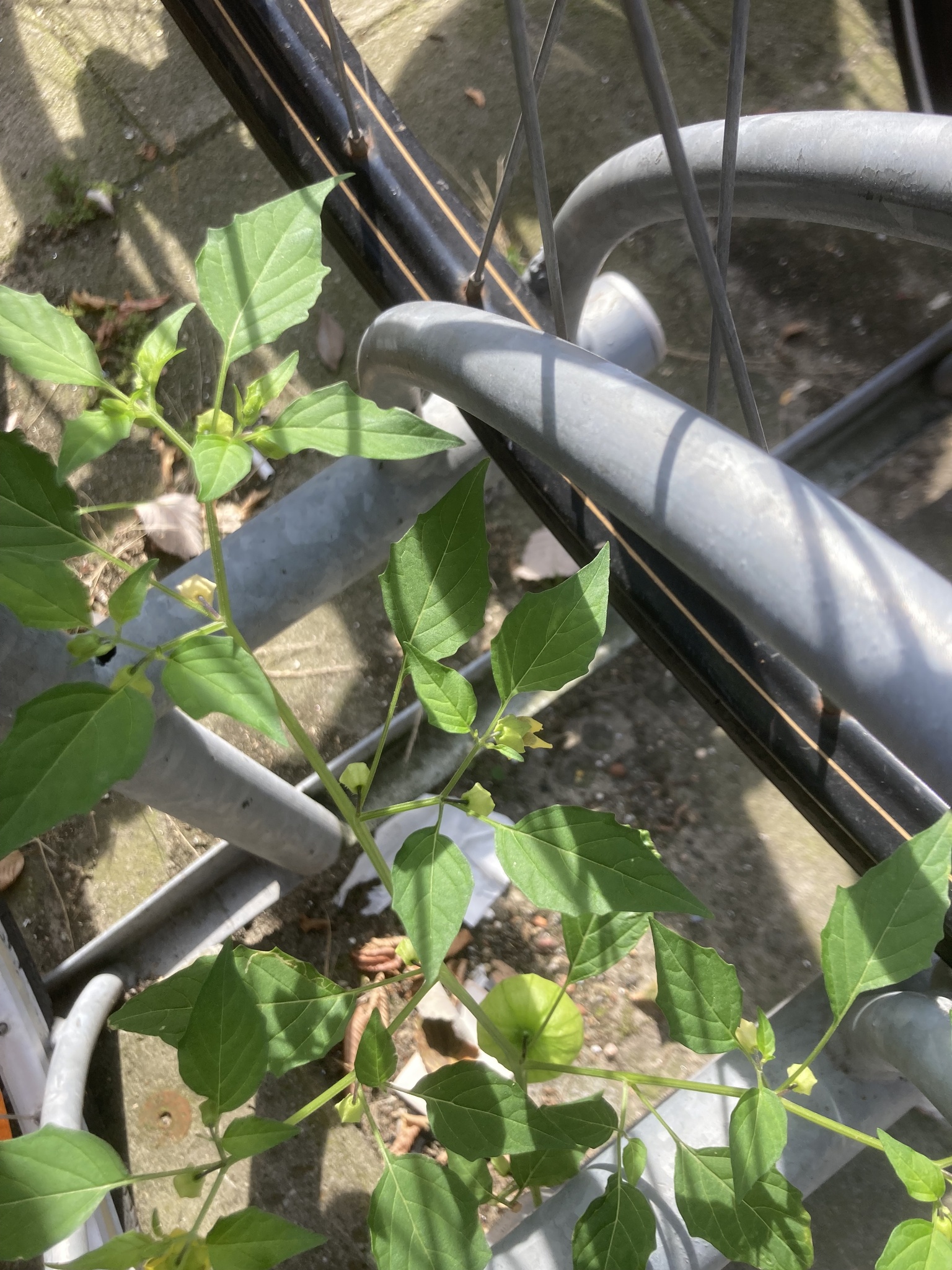
Spreading, partly woody branches give tomatillo its semiwoody, sprawling habit, usually 60 cm–1.5 m (2–5 ft) tall. Without support, angular stems may root where they touch the soil. Oval leaves with irregularly toothed margins alternate along the branching stems, and the plant spreads 60 cm–1.2 m (2–4 ft) wide. A plant's outline therefore depends partly on whether it is supported or allowed to sprawl. 6 5
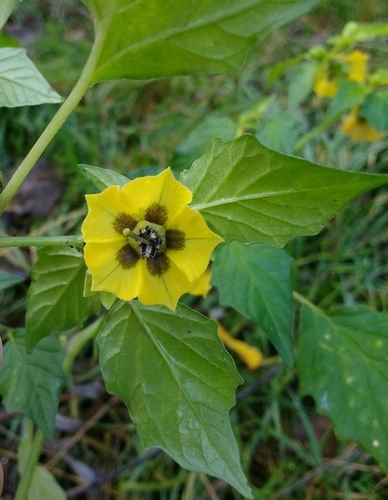
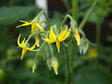
The solitary, bell-shaped flowers are pale yellow with purple-brown spots at the base of the corolla. This pattern differs from the unspotted flowers of tomato and eggplant. Following pollination, the calyx rapidly expands into a papery pouch around the entire fruit. As the berry fills that space, it may eventually split the surrounding husk. 5
Spherical and slightly flattened, the berry measures 2.5–6 cm (1–2.4 in) across and has sticky skin. Depending on the variety, its color is green, yellow or purplish, never red; red fruit indicates another member of the Solanaceae. Numerous small seeds lie in the pale, tangy flesh. Flavor ranges from acidic to sweet according to ripeness, making harvest stage relevant to the intended dish. 5
Useful taxonomy
Several names accumulated during revisions of Physalis are placed by POWO/WCVP under the accepted Physalis philadelphica Lam.:
- Physalis philadelphica var. minor Dunal, a former variety;
- Physalis angulata var. philadelphica (Lam.) A.Gray, an older placement;
- Physalis philadelphica f. pilosa Waterf., a named form;
- Physalis mexicana Molina ex Colla, a synonym;
- Physalis laevigata M.Martens & Galeotti, a synonym;
- Physalis chenopodiifolia Willd., another synonym.
One distinction is especially useful: POWO/WCVP treats Physalis ixocarpa Brot. ex Hornem. as separately accepted, rather than as a synonym of Physalis philadelphica. Seed commerce often overlooks that distinction, using both names on packets sold simply as tomatillo. A shared commercial name should therefore not be taken as proof that the botanical names are interchangeable. 1 4
Habitat and range
Mexico through Central America forms the native range recorded by POWO, with separate occurrences in Cuba and Haiti. Tomatillo occupies cultivated fields, agricultural waste ground and roadsides. Self-sown populations near vegetable plots are more typical than occurrences in undisturbed natural vegetation, reflecting its close association with agriculture. 1 3
The Mexican states of Morelos and Hidalgo are major areas of cultivation. The plant had also naturalized in the western United States before 1863. Outside its region of origin, it now grows in India, Australia, South Africa and Kenya, although it has not achieved the commercial success there that it retains in Mexico. 5
Life cycle and reproduction
Strong self-incompatibility explains why a solitary tomatillo can flower normally yet set almost no fruit, even when its own flowers are hand-pollinated. At least two genetically distinct plants grown close together allow cross-pollination and a regular harvest. Simply having plentiful flowers does not overcome this reproductive barrier in an isolated plant. 5
In temperate climates, flowering extends through summer into early autumn, with seed ripening from late summer through autumn. Fruit develops 60–75 days after transplanting. The growing berry gradually fills its calyx; at full maturity the surrounding case browns and dries. Seasonal timing depends on climate, while the elapsed time after transplanting remains a useful guide to the crop's development. 7 6
Uses and risks
Only the fruit at full size is intended for eating. Picked green with its husk still closed, it is used raw or cooked in salsa verde, soups, stews and salads. The papery calyx is not edible and must always be removed before preparation, regardless of whether the recipe involves cooking. 5
Other parts are toxic: leaves, stems, the calyx and immature fruit contain solanine- and solanidine-type glycoalkaloids. Ingestion can cause headache, digestive pain, vomiting and diarrhea. The edible crop is the full-sized fruit after removal of its calyx; the surrounding green parts should not be treated as edible simply because the fruit is a food crop. 6
In the garden, noctuid caterpillars, cutworms and whiteflies are the main pests. Whiteflies can transmit viral diseases to nearby Solanaceae in irrigated plots. Even so, compared with tomato, tomatillo remains relatively little affected by disease. This relative resilience does not eliminate the need to observe pests when several related crops grow together. 5 6
Varieties, look-alikes and related plants
Seed selections differ in habit, yield and fruit color. 'Toma Verde' is a standard green-fruited selection; 'Rendidora' grows more upright and yields more than wild strains; 'Purple de Milpa' has purplish fruit. 'Pineapple' is sold for its small, sweet, golden-yellow fruit intended for fresh eating rather than sauces. 5
Common points of confusion include:
- Physalis ixocarpa, treated as a distinct species by POWO/WCVP but sold under the same commercial name, tomatillo;
- Physalis peruviana, Cape gooseberry, harvested orange and sweet rather than green and tangy;
- Physalis pruinosa, a North American ground cherry with small golden fruit, sometimes confused in English when culinary uses are not clearly distinguished.
The practical contrast is between green or purplish fruit used for sauces and orange, sweet fruit eaten as a dessert fruit. These harvest characteristics help separate culinary roles among neighboring species, alongside the botanical identity. 4
Main sources
- Plants of the World Online / Kew, Physalis philadelphica Lam.
- International Plant Names Index, Physalis philadelphica Lam.
- Integrated Taxonomic Information System, Physalis philadelphica Lam.
- USDA GRIN Global, Physalis philadelphica taxonomy detail
- Purdue University NewCrop / Morton, Mexican Husk Tomato (Physalis ixocarpa)
- NC State Extension, Physalis philadelphica (Tomatillo)
- Plants For A Future, Physalis philadelphica
Frequently asked questions
Is large-flowered tomatillo toxic?
Leaves, stems, the calyx and unripe fruit contain solanine- and solanidine-type glycoalkaloids. Only fruit that has reached full size and been removed from its green husk is intended for eating; remove the calyx before preparation.
Why does my tomatillo flower but produce no fruit?
Physalis philadelphica is strongly self-incompatible. A single plant flowers normally but almost never sets fruit. Grow at least two genetically distinct plants close together to obtain a crop.
Should I remove the husk before eating a tomatillo?
Yes. The papery calyx around the fruit is not edible and must be removed before preparation, including before cooking salsa verde.
Are Physalis philadelphica and Physalis ixocarpa the same plant?
POWO/WCVP accepts Physalis philadelphica and treats Physalis ixocarpa as a separate botanical name. The seed trade and many horticultural sources nevertheless use the names interchangeably for tomatillos.
Is large-flowered tomatillo annual or perennial?
It is grown as an annual and killed by the first frost. In warm frost-free climates it can behave as a short-lived perennial, but it is still usually raised anew from seed each year.
How can I tell when a tomatillo is ready to harvest?
The fruit fills and often splits its calyx, which remains green or begins to brown depending on the variety. The skin becomes a stronger green, yellow or purplish color and feels slightly sticky.
How does tomatillo differ from Cape gooseberry?
Large-flowered tomatillo, Physalis philadelphica, is harvested green or purplish for savory dishes. Cape gooseberry, Physalis peruviana, is picked fully ripe and orange for sweet uses. Both have papery calyces but different culinary roles.
Similar plants
If you are unsure about a plant’s toxicity, ask a botanist or veterinarian for advice.