
Sitka spruce (Picea sitchensis, )
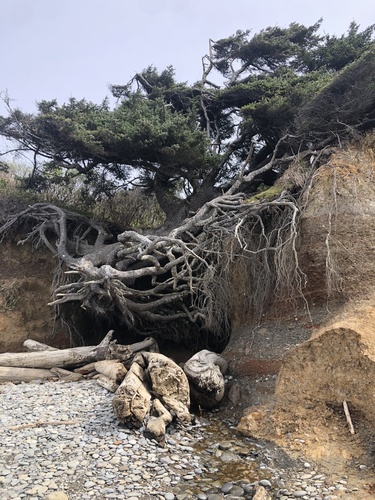
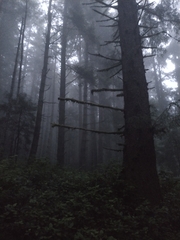
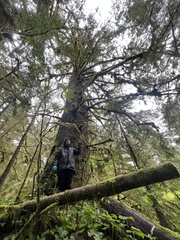
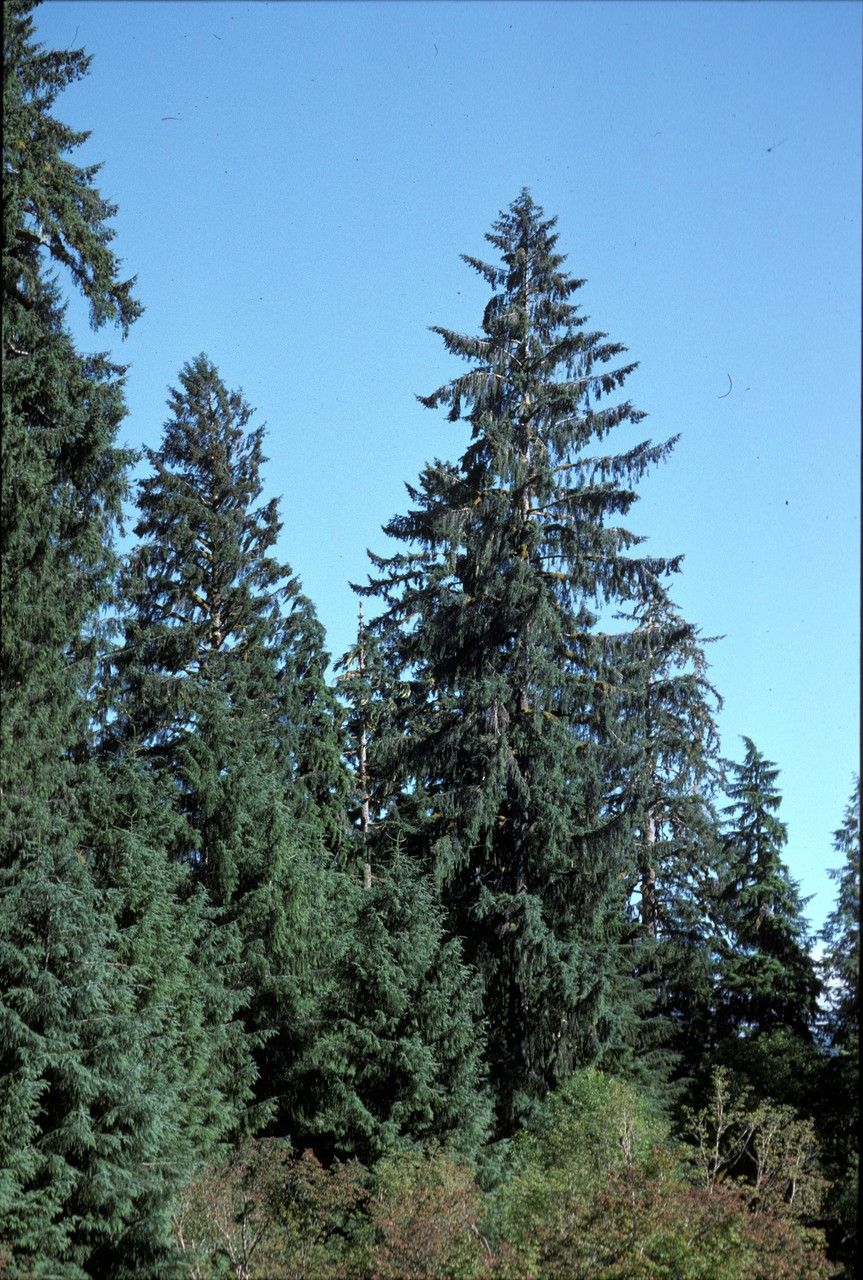
Sitka spruce (Picea sitchensis) is the tallest conifer in the Pinaceae family, native to the North American Pacific coast from Alaska to northern California. Its very sharp, flattened needles and cylindrical cones with thin, toothed scales are distinctive. Widely introduced in Britain and Ireland for its rapid growth, it also supplies prized tonewood for musical instruments.
Read moreSitka spruce, Tideland spruce, Coast spruce and Yellow spruce
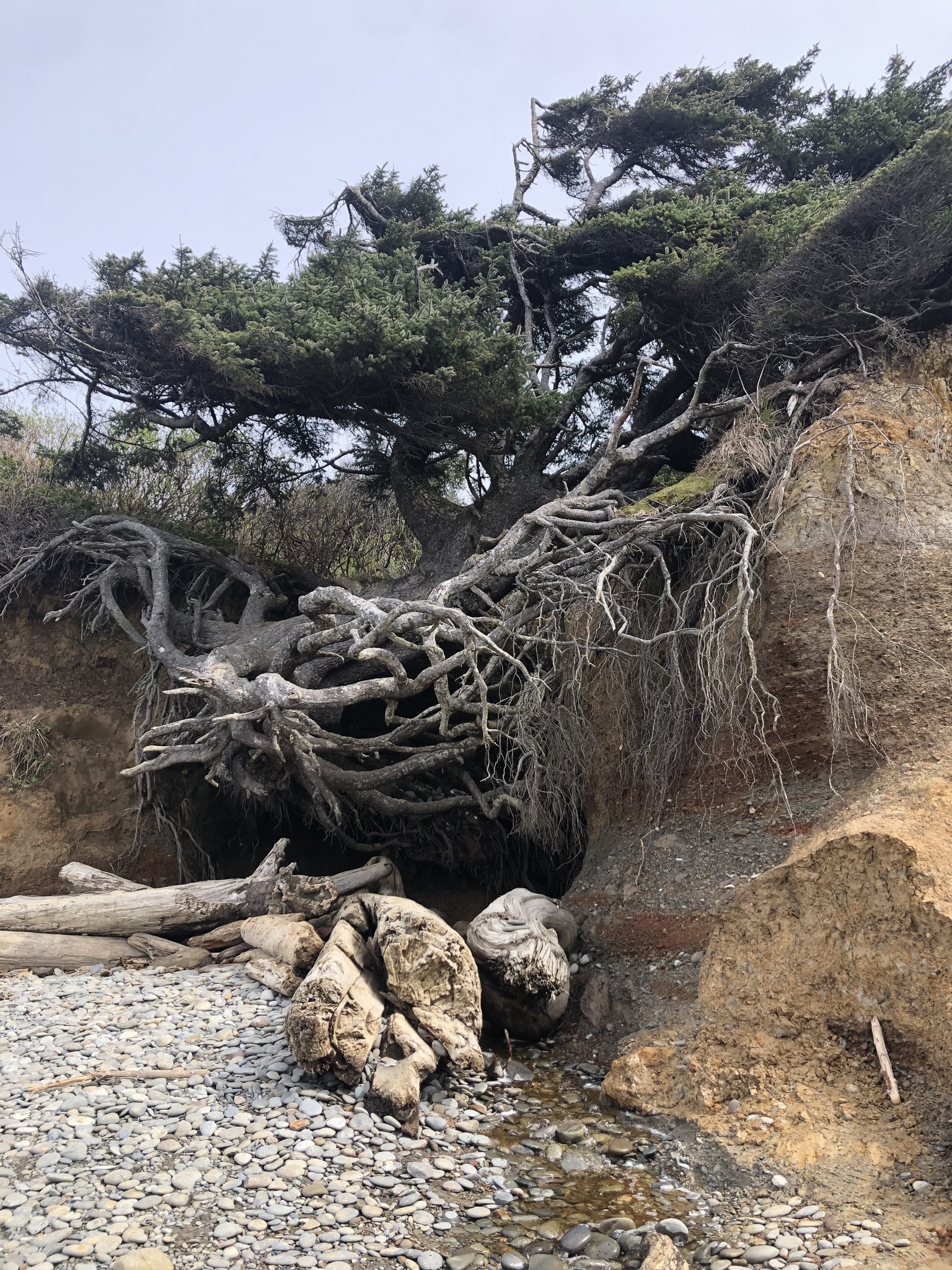



© photo
EJ Burns · cc0
Drew Meyer · cc0
Aiva Noringseth · cc-by
Taken Apr 15, 2006 by Photoflora - Jean-Luc TASSET (©)
Taken Nov 15, 2004 by Photoflora - Jean-Luc TASSET (©)
Taken Feb 26, 2015 by Tela Botanica − Michel GAUBERT (cc-by-sa)
© copyright of the Board of Trustees of the Royal Botanic Gardens, Kew.




Global distribution
The native range follows the North American Pacific coast from Kodiak Bay, Alaska, to northern California, rarely more than 80 km inland. Sitka spruce has also been widely introduced for forestry in oceanic Europe, particularly Britain and Ireland.
- Native5
- Invasive1
- Alaska (United States)
- British Columbia (Canada)
- Washington (United States)
- Oregon (United States)
- California (United States)
- United Kingdom
Hexagons: regions where the plant occurs. Green dots: native range.1
Identity
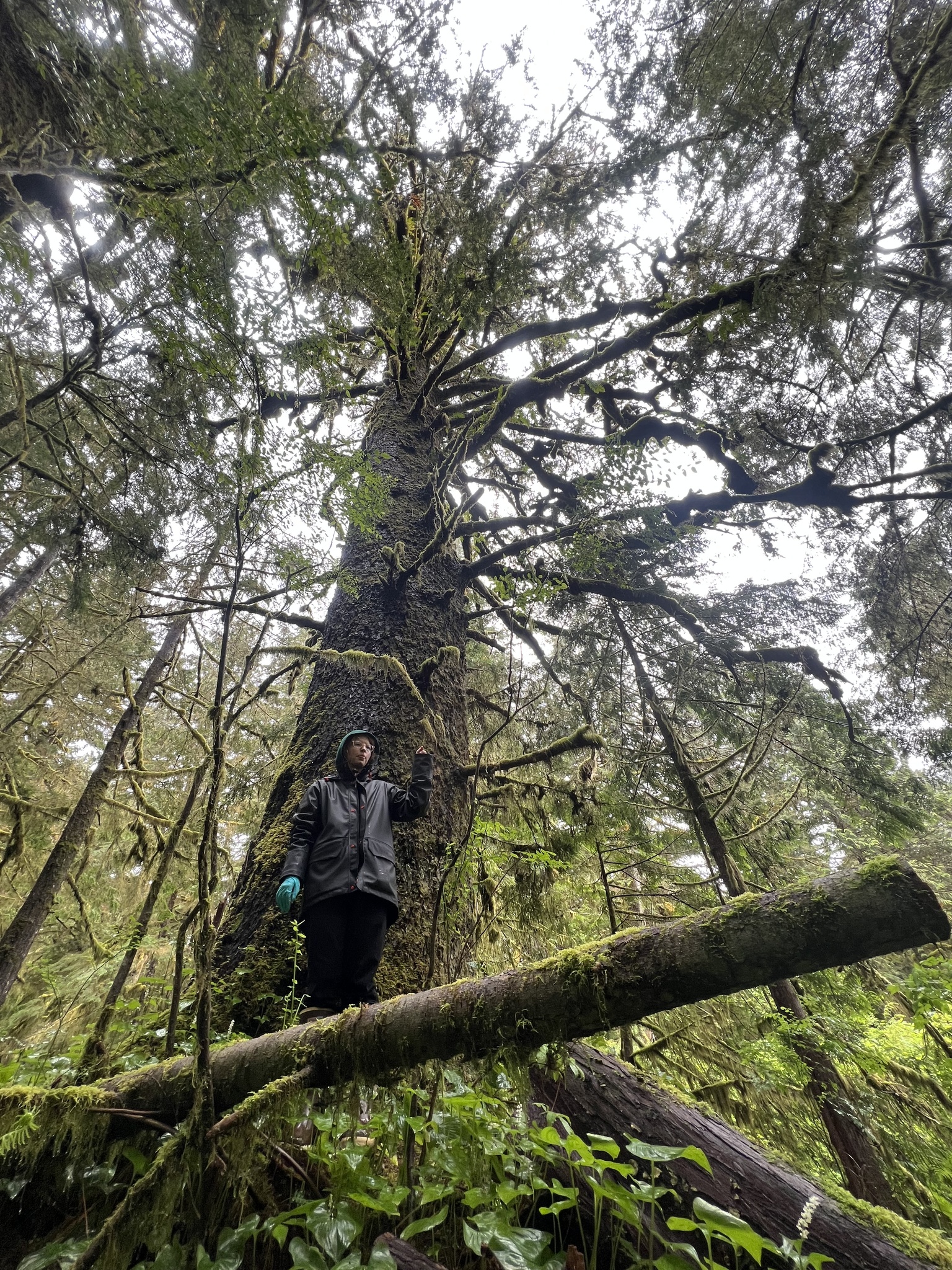
Sitka spruce (Picea sitchensis (Bong.) Carrière, 1855) is a large conifer in the Pinaceae family and the genus Picea. It is the largest known spruce species: mature trees commonly exceed 60–80 m (197–262 ft), making it the fifth-tallest conifer in the world. 1 5
Sitka, an Alaskan community where this tree is abundant, gives the species its name. August Bongard collected the type material there and published it as Pinus sitchensis in 1832; Elie-Abel Carrière transferred it to Picea in 1855. Other English names include Tideland spruce, Coast spruce and Yellow spruce. 2 8
Recognition
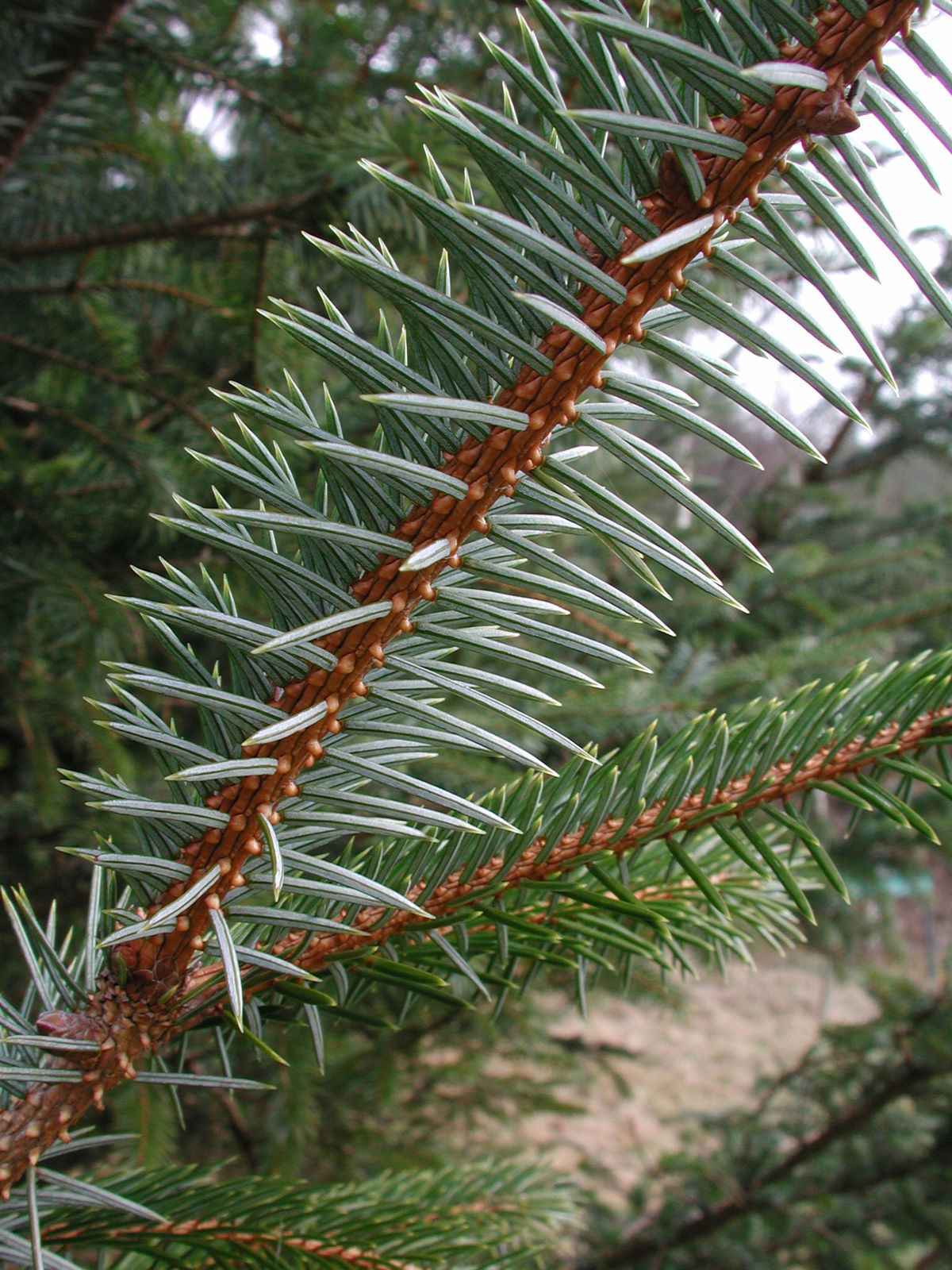
Touching a twig reveals the characteristic very sharp needles, 15–20 mm (0.6–0.8 in) long, with a flattened diamond-shaped cross-section and pointed tip. This is the sharpest of commonly cultivated spruces. The upper surface is green to blue-green, while the underside bears two whitish stomatal bands. 5 7
Cylindrical cones measure 5–9 cm (2–3.5 in) long, changing from yellowish green to pale brown. Thin, papery scales have irregularly toothed edges, useful for distinguishing related spruces. Gray-brown bark, reddish brown when broken, flakes into small, thin, rounded plates. 3 7
Favorable sites produce trees exceeding 60–80 m (197–262 ft), with trunk diameters at breast height approaching 4–5 m (13–16 ft) in old specimens. A California tree measured 100.2 m (329 ft) in 2021; the British record that year was 65.8 m (216 ft) in Morayshire. 5
Useful taxonomy
Bongard described this species as Pinus sitchensis in 1832. It subsequently passed through Abies and Tsuga before Carrière placed it in Picea in 1855. Historical names include:
- Pinus sitchensis Bong., the basionym
- Abies sitchensis (Bong.) Lindl. & Gordon, a historical combination
- Tsuga sitchensis (Bong.) Regel, a historical combination
- Picea menziesii (Douglas ex D.Don) Carrière
Use Picea sitchensis as the accepted scientific reference. Where their ranges overlap, it hybridizes with white spruce (Picea glauca), producing Lutz spruce (Picea × lutzii), described in 1950 from Alaska’s Kenai Peninsula. 1 2 6
Habitat and range
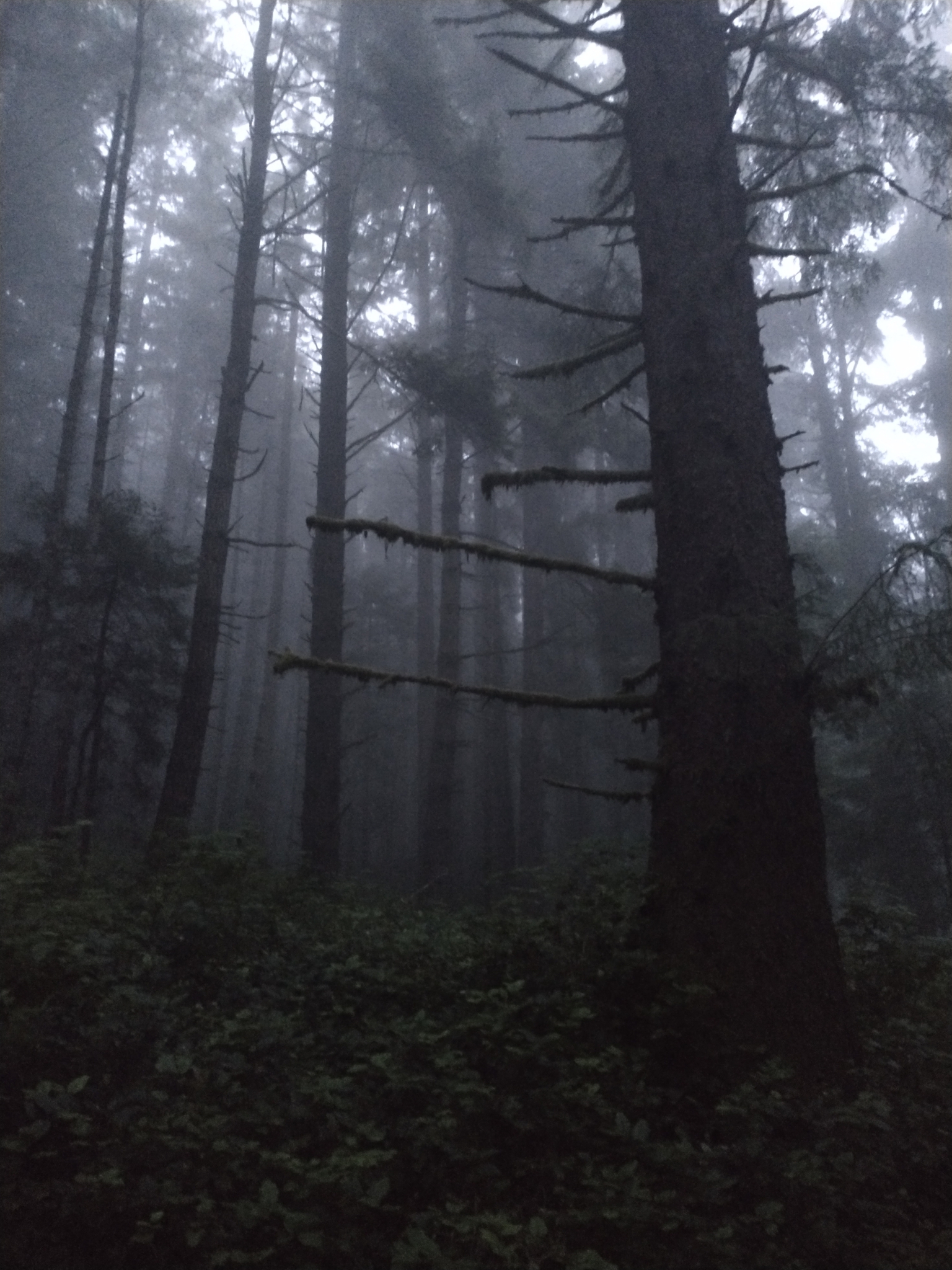
A narrow Pacific coastal strip supports native Sitka spruce, from Kodiak Bay in Alaska to northern California, rarely extending more than 80 km (50 miles) inland. Habitats include coastal temperate rainforest, floodplains and coastal peatlands, from sea level to about 900 m (2,950 ft). 5 4
Old-growth forests on the Olympic Peninsula illustrate the importance of nurse logs: up to 90% of young Sitka spruce and western hemlock seedlings root on decaying fallen trunks rather than bare ground. Rotten wood holds moisture and reduces root competition in woodland with few available nutrients. Without it, seedlings germinate less often and establish more slowly. 9
British forestry adopted the species following its nineteenth-century introduction. It now accounts for about 50% of planted conifer area there, three-quarters of it in Scotland. Rapid growth suits oceanic climates, but seedlings also spread into nearby peatlands, creating conservation concerns for Scottish heathland and bogs. 7
Life cycle and reproduction
Separate male and female cones grow on each tree: Sitka spruce is a monoecious gymnosperm, pollinated by wind in spring. Unlike some pines, its cones mature within one season and release winged seeds in the autumn following flowering. 3
Shaded seedlings grow slowly while establishing roots, then accelerate once they reach open light. In a favorable oceanic climate, young trees may gain 1.5 m (5 ft) a year. Regular cone production begins at about 20–40 years. 7 9
Protected old-growth stands contain trees living 700–800 years, an age difficult to judge from size because early growth is rapid. Horticultural propagation uses seed after cold stratification, or grafting for dwarf cultivars such as Papoose. 9 4
Uses and risks
Lightweight, evenly grained timber makes this species valuable for guitar, violin and piano soundboards. It also shaped aviation history: the 1903 Wright Flyer, many Allied aircraft in the First World War, and the laminated wing spar of the Second World War De Havilland Mosquito used Sitka spruce. 7
Indigenous Northwest Coast peoples, including the Tlingit, harvested fine roots in spring and autumn, peeled and split them, then wove watertight baskets. Resin served as canoe caulking and was chewed like gum. 9
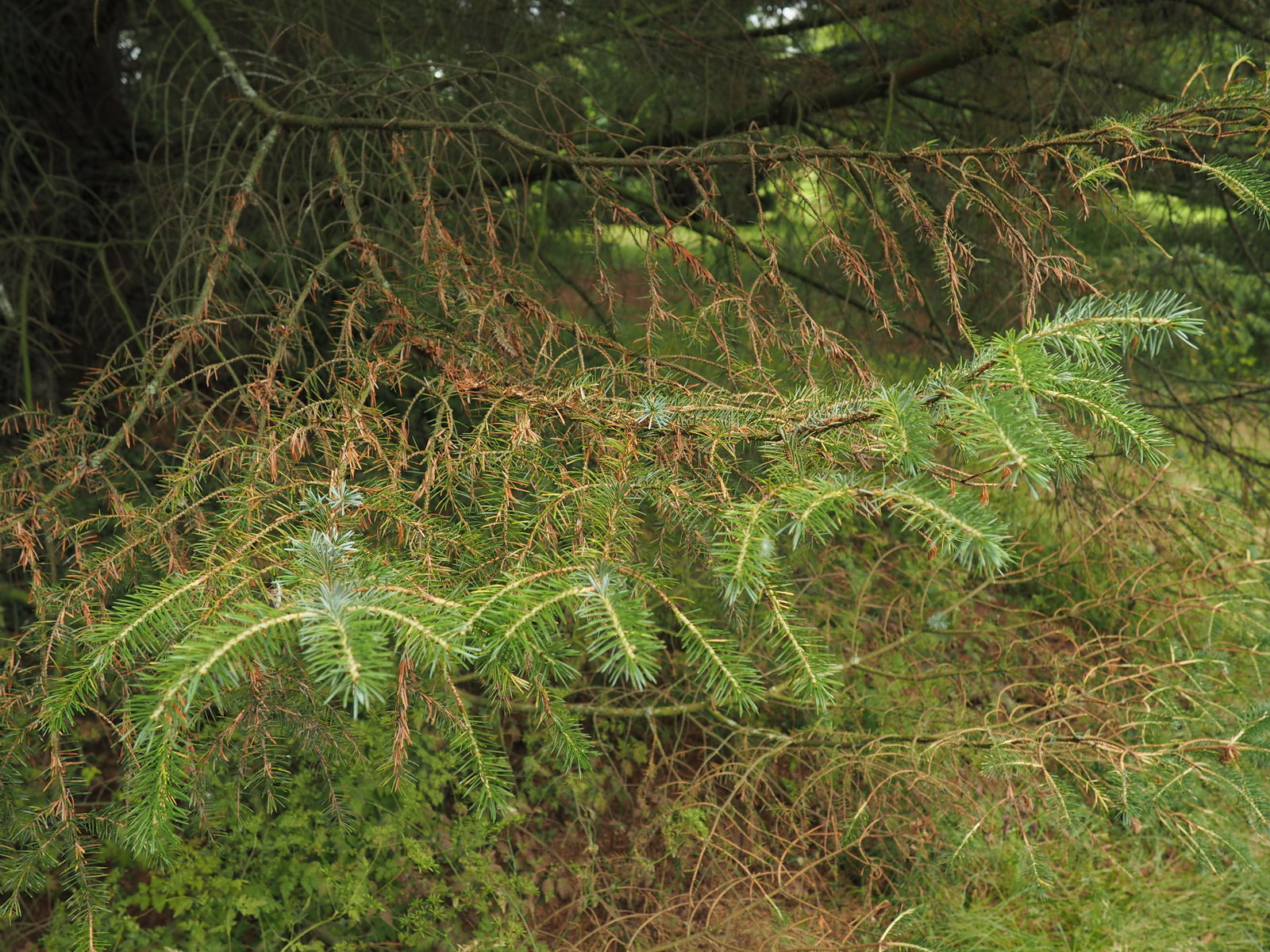
Ingestion is non-toxic for people and domestic animals, although repeated resin contact may irritate skin. A major threat to the tree is green spruce aphid (Elatobium abietinum), which strips older needles in spring. Unlike Norway spruce, Sitka spruce did not coevolve with this continental European pest and is more susceptible, losing over 50% of older needles in severe years. 4
Varieties, look-alikes and related plants
Dwarf selections dominate ornamental cultivation: Papoose has a compact, spreading habit, while Tenas grows very slowly into an irregular rounded form. They suit rock gardens and small gardens; the wild type needs several tens of meters of space at maturity. 4
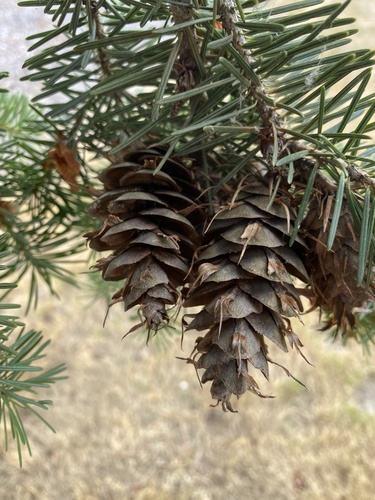
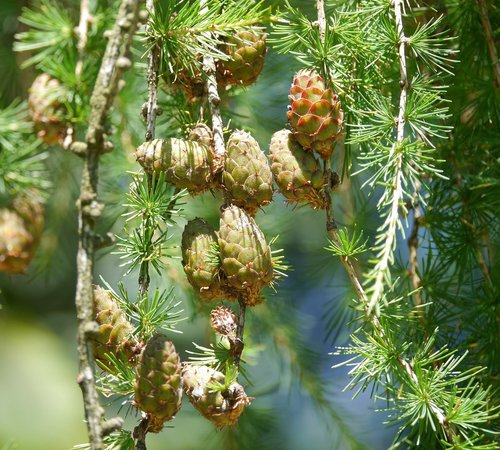
Compare sharpness and needle shape to distinguish neighboring conifers. Norway spruce (Picea abies) has less prickly needles and longer hanging cones; white spruce (Picea glauca) has softer needles with an unpleasant smell when crushed. Western hemlock (Tsuga heterophylla), a frequent coastal forest companion, has unequal needles and a drooping leader. Sitka spruce’s flattened, sharply pointed, 15–20 mm (0.6–0.8 in) needles remain the most useful field clue, even on fallen twigs. 5
Main sources
- Plants of the World Online / Kew, Picea sitchensis (Bong.) Carrière
- International Plant Names Index, Picea sitchensis (Bong.) Carrière
- Royal Horticultural Society, Picea sitchensis
- NC State Extension, Picea sitchensis (Sitka Spruce)
- Trees and Shrubs Online / International Dendrology Society, Picea sitchensis
- Trees and Shrubs Online / International Dendrology Society, Picea × lutzii
- Forestry and Land Scotland, Sitka spruce
- Tela Botanica, Picea sitchensis (Bong.) Carrière
- University of Washington Campus Tree Tours, Sitka Spruce
Frequently asked questions
Is Sitka spruce poisonous?
No. It is not toxic to people or domestic animals. Only its resin may irritate skin after prolonged contact, as with many resinous conifers.
How tall can Sitka spruce grow?
Mature trees commonly exceed 60–80 m (197–262 ft). The tallest documented specimen, measured in California in 2021, reached 100.2 m (329 ft), with a trunk diameter of 2.73 m (9 ft).
How can I tell Sitka spruce from Norway spruce?
Sitka spruce needles are much sharper and have a flattened diamond-shaped cross-section. Its thin cone scales, toothed around their edges, are another useful distinction.
Why is Sitka spruce used for guitars?
Its pale, lightweight, evenly grained wood combines strength with low weight and transmits vibrations well, making it prized for guitar, violin and piano soundboards.
Is Sitka spruce invasive?
Not in its native range. In Britain, seedlings spread into peatlands beside large plantations, raising conservation concerns for Scottish heathland and bogs.
Where does Sitka spruce grow naturally?
Its native range closely follows the North American Pacific coast from Kodiak Bay in Alaska to northern California, rarely more than 80 km (50 miles) inland.
How long can Sitka spruce live?
In protected old-growth forests it can live 700–800 years. Rapid growth in its early decades makes age hard to judge by sight compared with slower-growing conifers.
Similar plants
If you are unsure about a plant’s toxicity, ask a botanist or veterinarian for advice.