
Japanese andromeda (Pieris japonica, )
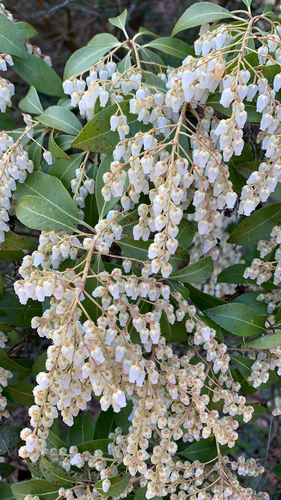
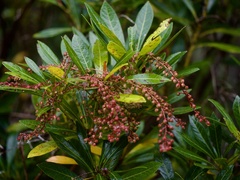

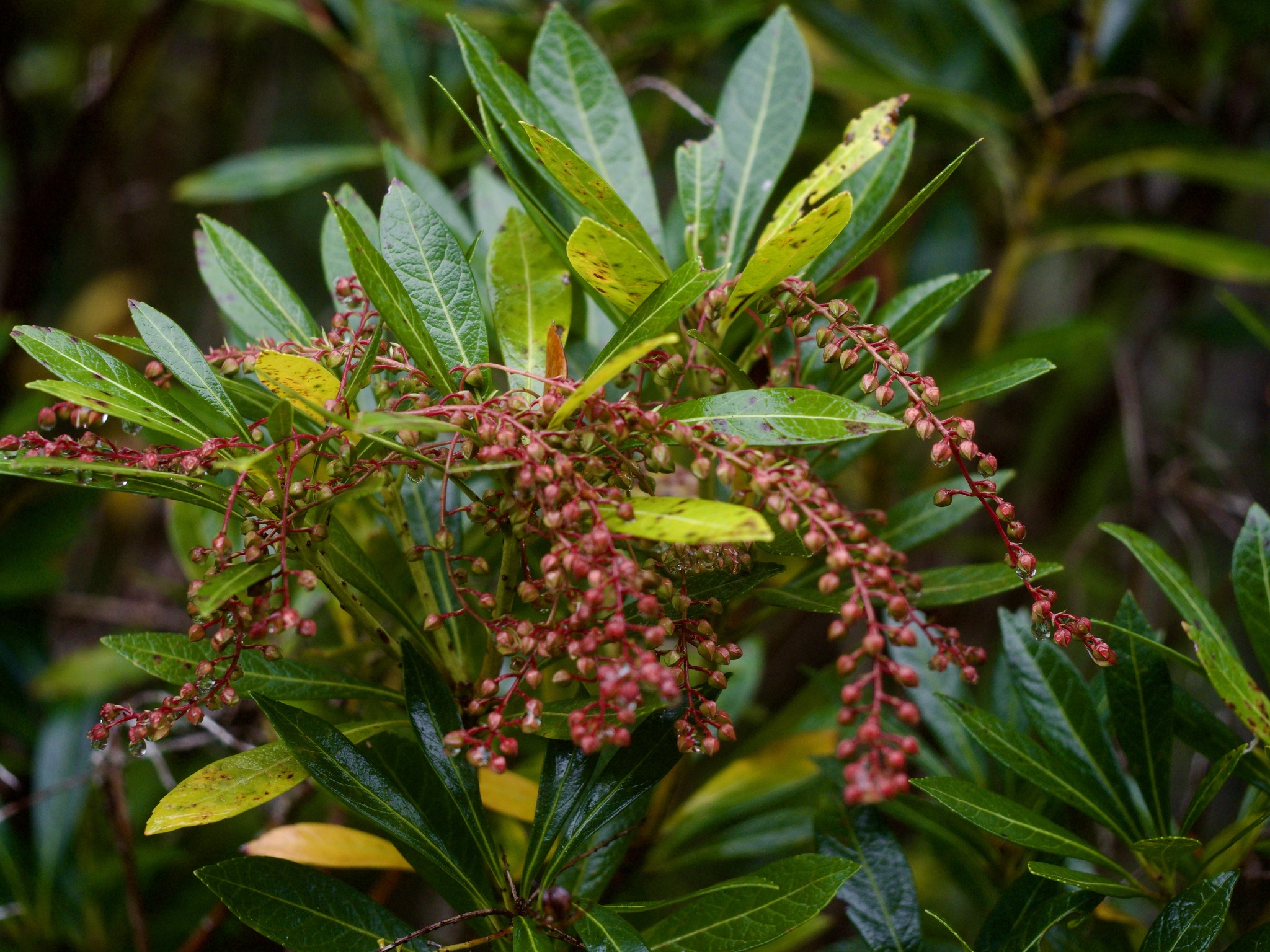
Japanese andromeda (Pieris japonica (Thunb.) D.Don ex G.Don, 1834) is an evergreen shrub in the Ericaceae family, native to eastern China, Taiwan and Japan, where it grows in mountain thickets. It has hanging clusters of small white bell-shaped flowers and young leaves that often emerge coppery or reddish before turning dark green.
Read moreJapanese andromeda, Japanese pieris, Lily-of-the-valley shrub and Asebi
Give plenty of ambient light without direct sun on the leaves.
Filtered sun to partial shade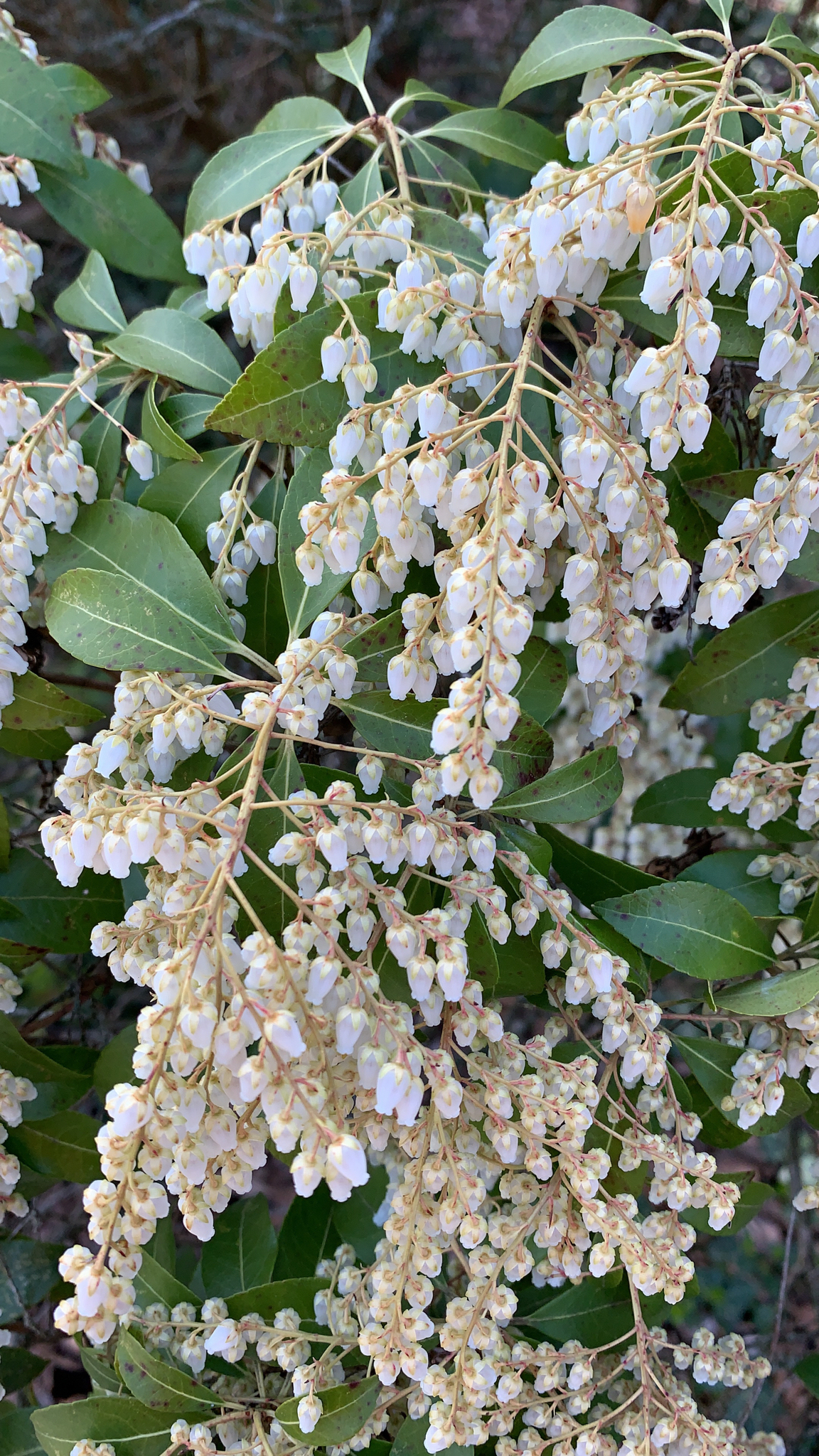


© photo
(c) ghegarty, some rights reserved (CC BY-NC) · cc-by-nc
りなべる · cc-by
Wikimedia Commons · CC BY-SA or Public Domain
Taken Jun 3, 2020 by Kathy Persaud (cc-by-sa)
Taken Sep 12, 2021 by Robin N (cc-by-sa)
Taken Apr 19, 2021 by Rosen Denev (cc-by-sa)
Taken Mar 13, 2022 by Dave Flack (cc-by-sa)
Taken Mar 10, 2021 by kija (cc-by-sa)
© copyright of the Board of Trustees of the Royal Botanic Gardens, Kew.




Global distribution
Native to southeastern China, Japan and Taiwan. Introductions are recorded outside this East Asian range, including the eastern United States. In metropolitan France it is cultivated as an ornamental, with no documented invasive status.
- Native3
- Introduced1
- Southeastern China
- Japan
- Taiwan
- Eastern United States
Hexagons: regions where the plant occurs. Green dots: native range.1
Identity
Japanese andromeda (Pieris japonica (Thunb.) D.Don ex G.Don, 1834) is an evergreen shrub in the genus Pieris and the Ericaceae family. Carl Peter Thunberg first described it; D.Don and G.Don transferred it to Pieris in 1834. POWO and ITIS recognize this as the accepted name. 1 6
Andromeda in the common name recalls the earlier synonym Andromeda japonica, still used in the ASPCA’s toxicity entry. Pieris honors the Pierides, muses of Greek mythology. That mythological reference has no connection with the plant’s actual East Asian range. 5 1
Japanese populations grow wild on Honshu, Shikoku and Kyushu, where the shrub is called Asebi (アセビ). Known in English as Japanese pieris and Lily-of-the-valley shrub, it is widely grown in mild temperate gardens in Europe and North America, often with rhododendrons and camellias in acidic beds. 3
Recognition
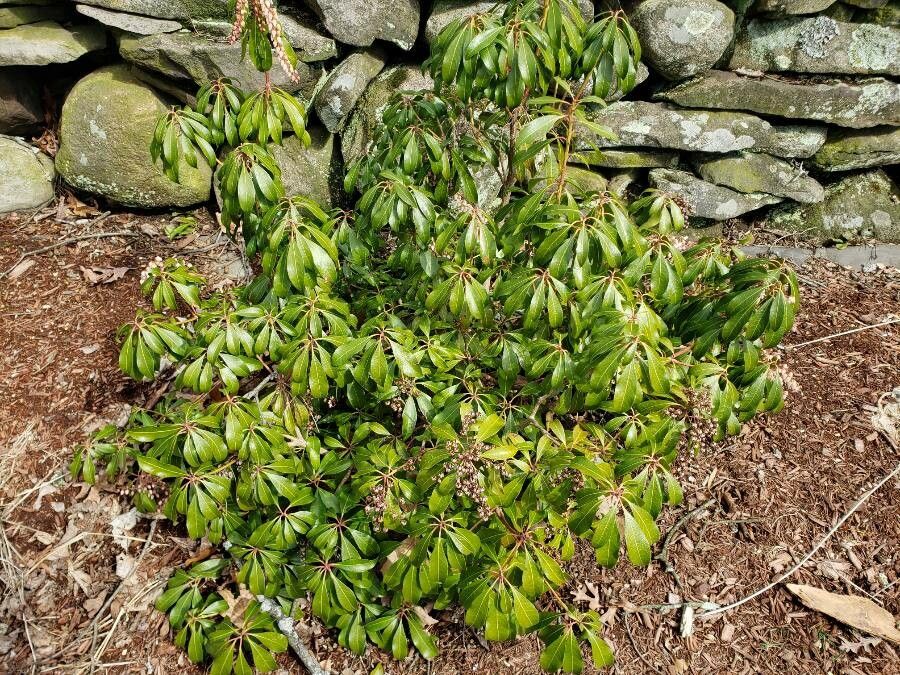
Slow growth produces a dense evergreen shrub. NC State gives a mature height of 2.5–3 m (8–10 ft) and spread of 2–2.5 m (6.5–8 ft); RHS records plants reaching 4 m (13 ft) after ten to twenty years in favorable conditions. 3 2
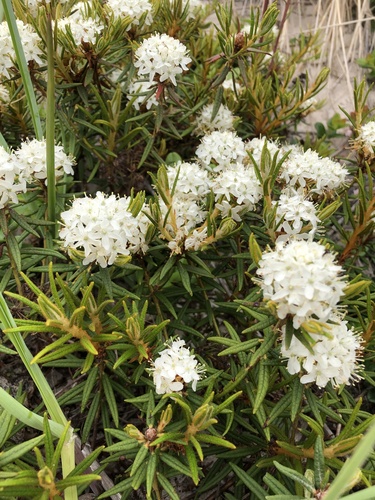
Leathery, alternate leaves cluster into dense rosettes at the shoot tips. NC State describes bronze, red or pink new growth turning glossy dark green within weeks. This color contrast helps identify the plant even before it flowers. 3
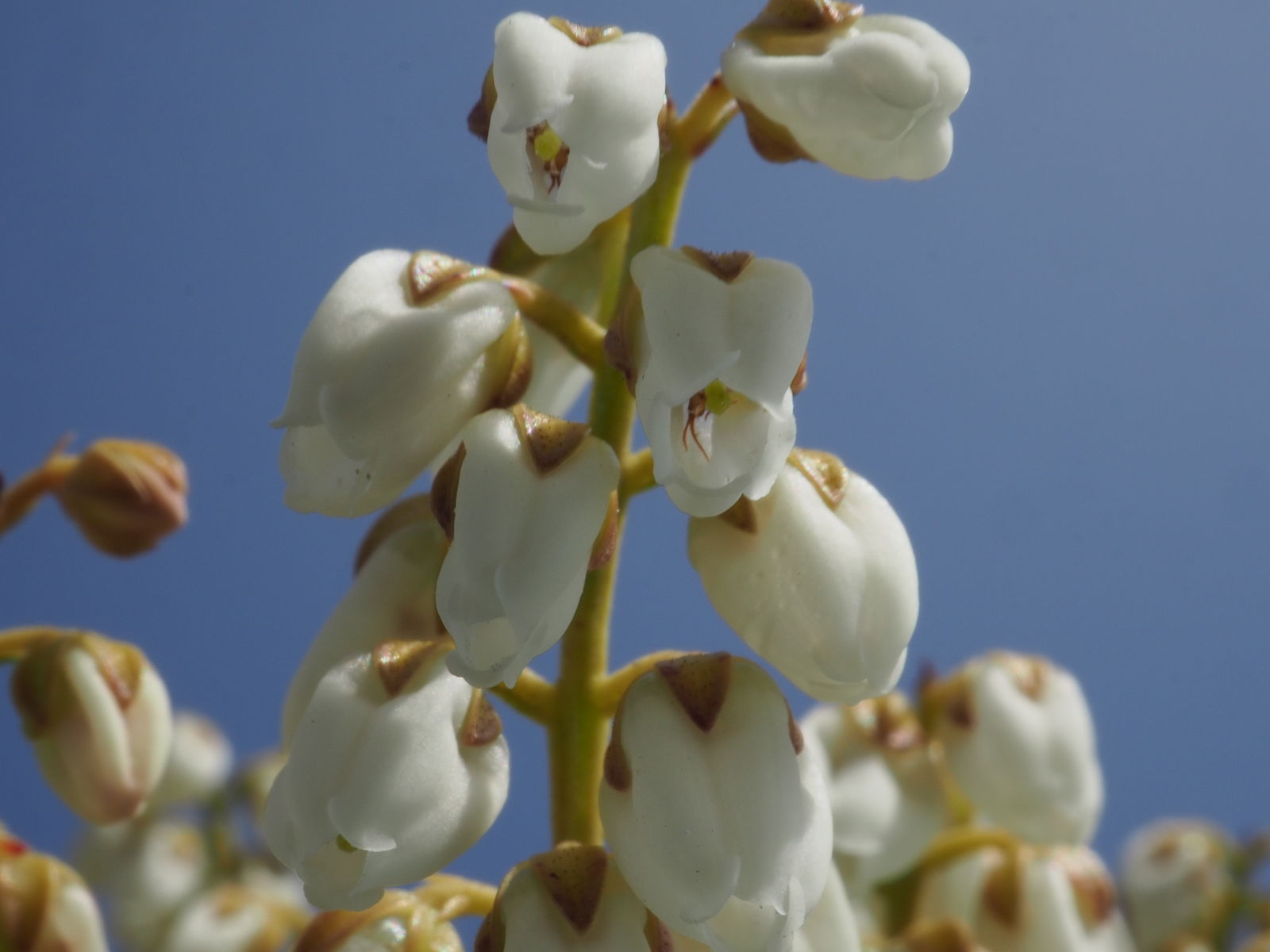
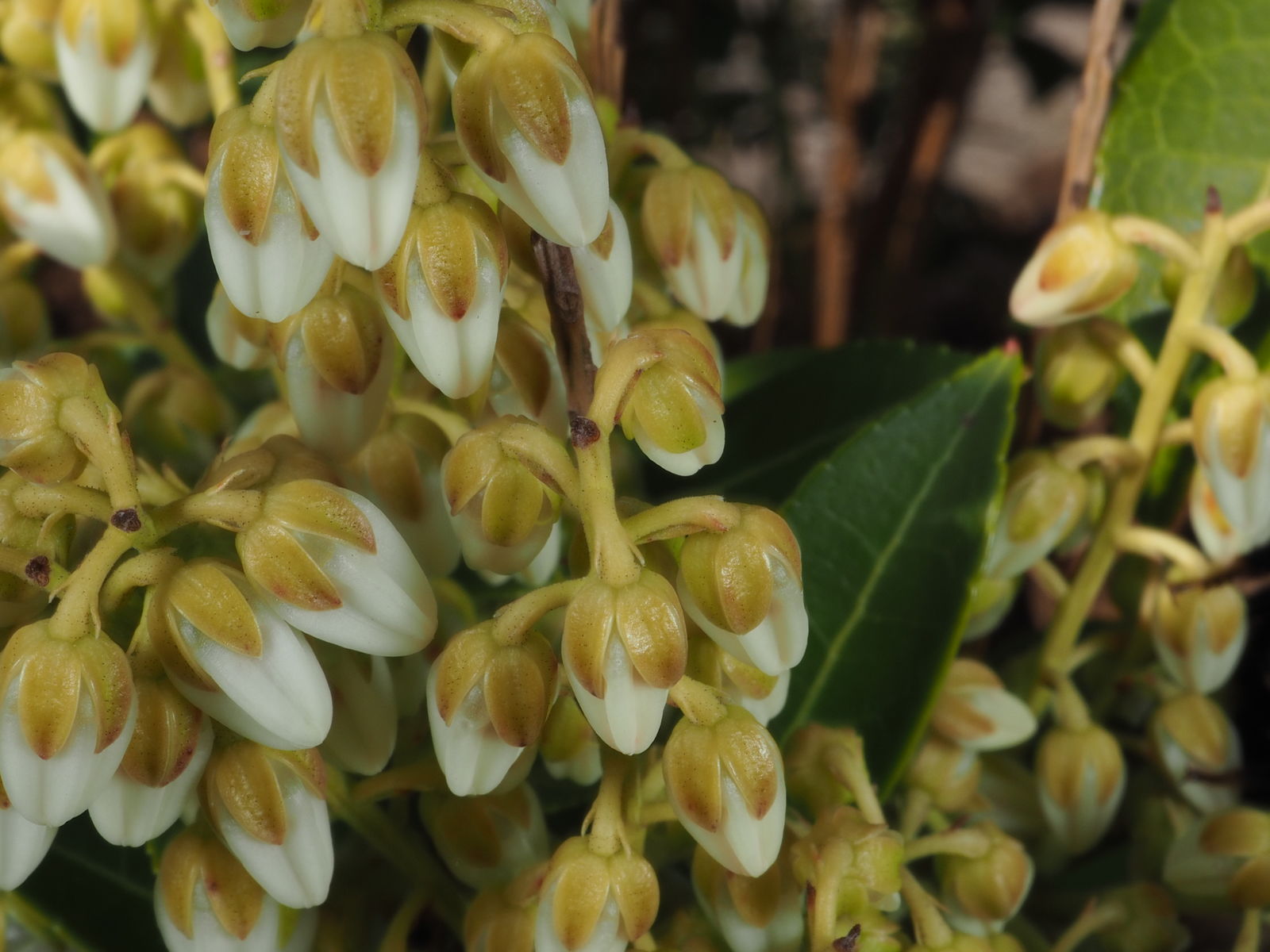
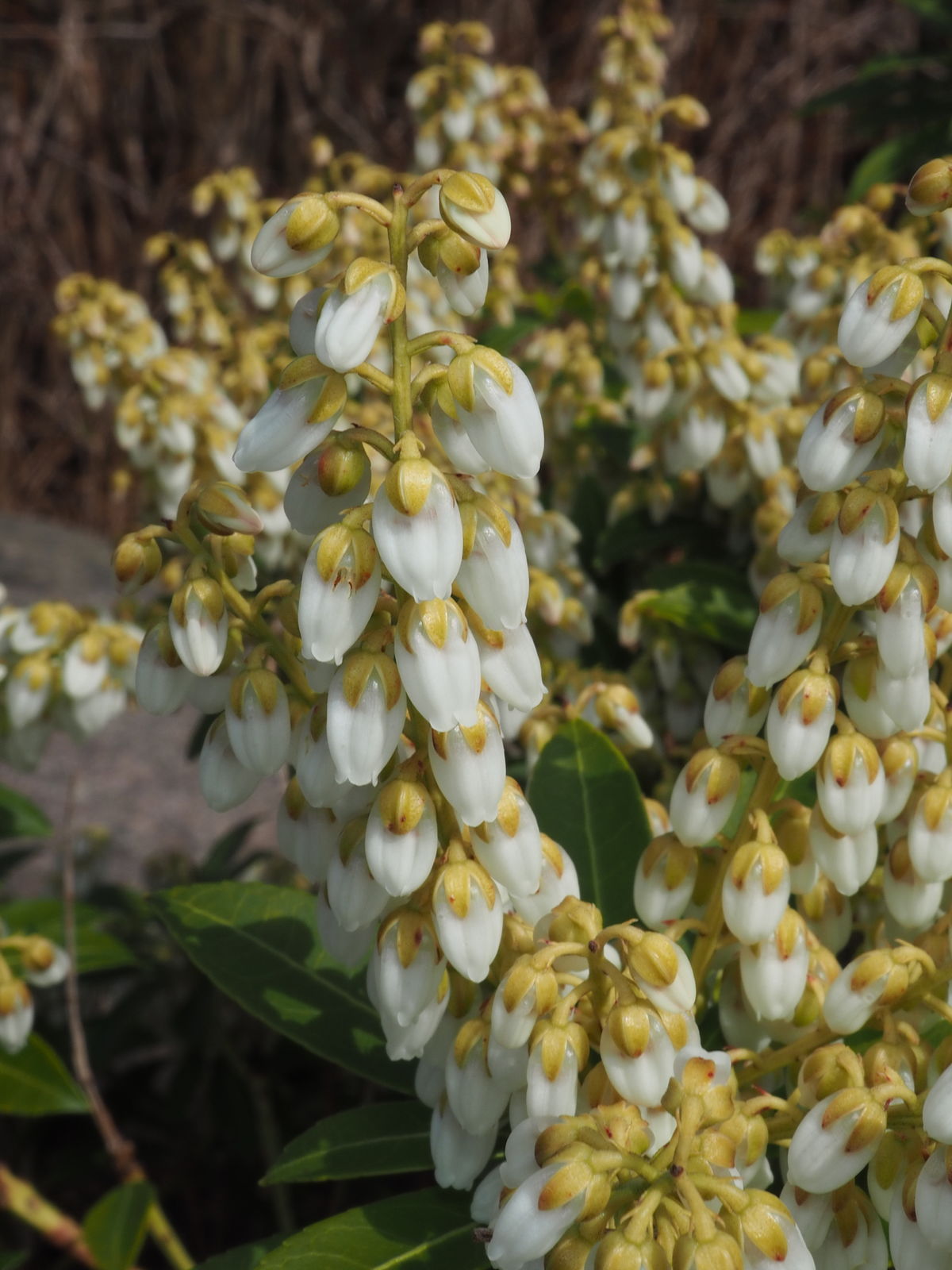
Hanging clusters of small white or pink bells, depending on the cultivar, resemble lily-of-the-valley flowers. They belong to a woody evergreen shrub rather than an herbaceous plant. RHS describes fragrant clusters in late winter and spring. 2 3
Winter identification also benefits from the visible flower buds, formed in late summer and retained until the following spring. Missouri Botanical Garden highlights the winter interest of these bud-bearing evergreen shoots. 4
Useful taxonomy
For botanical identification, retain Pieris japonica (Thunb.) D.Don ex G.Don. POWO accepts the name and lists several synonyms and infraspecific names:
- Andromeda japonica Thunb., the historical name published by Thunberg
- Pieris japonica var. yakushimensis T.Yamaz., native to Yakushima
- Pieris japonica subsp. koidzumiana (Ohwi) Hatus.
- Pieris japonica f. variegata (Carrière) Rehder
- Pieris taiwanensis Hayata, a Taiwanese synonym
POWO recognizes the variety yakushimensis as a distinct accepted taxon. Natural forms from Yakushima therefore need to be distinguished from horticultural labels using a similar name. 1
Other cultivated species belong to Pieris, including Pieris formosa, with larger leaves. A sales label reading only “pieris” cannot establish the species; the complete binomial is the reliable reference. 1 2
Habitat and range
East Asia is the native home identified by POWO and ITIS: southeastern China as far as Hubei, central and southern Japan, and Taiwan. There the shrub grows in mountain thickets, open woodland and forest margins at temperate elevations. 1 6
Its Asian woodland habitat explains the preference for acidic, well-drained but moist soil, filtered light and shelter from wind. RHS recommends loam to sandy soil without lime to recreate these conditions in cultivation. 2 3
For metropolitan France, the references retained here document no invasive status. Cultivation is concentrated in acidic gardens, particularly along the Atlantic coast and in temperate oceanic climates, where mild winters limit water stress. 9 3
Life cycle and flowering
As a woody evergreen perennial, Japanese andromeda grows slowly without shedding its foliage for dormancy. Flower buds form from late summer, remain through winter and open in spring. Autumn pruning therefore removes the following year’s flowers. 4 2
Spring is the main flowering season: Missouri Botanical Garden records a peak in April in its Northern Hemisphere context, sometimes beginning in late winter depending on climate and cultivar. Hanging flower clusters last several weeks unless frost damages the open buds. 4 3
Propagation chiefly uses summer semi-hardwood cuttings in an acidic, free-draining medium, or layering to preserve a named cultivar. Seed is possible but produces variable plants, so ornamental nurseries use it less often. 2 3
Uses and risks
Acidic beds, specimen planting, woodland margins and large containers are its principal ornamental settings, often beside rhododendrons and camellias. Evergreen foliage, colorful new shoots and early flowers explain its appeal in mild temperate gardens. 2 3
People and animals face a toxicity risk from Pieris japonica. All parts, including leaves and flowers, contain grayanotoxins (andromedotoxin), compounds that block sodium channels in nerve and muscle cells. 3 5
Cats, dogs and horses are listed as susceptible by the ASPCA; reported signs include drooling, vomiting and weakness. In a veterinary study, goats fed fresh leaves equivalent to 0.1% of body weight developed colic and aspiration pneumonia, following one fatal and one nonfatal farm case. 5 8
Colorado State University’s Guide to Poisonous Plants reports human symptoms ranging from tingling in the mouth to heart disturbances after substantial ingestion. In a small animal, only a few leaves may be enough to cause digestive problems. 7 3
Cultivars and look-alikes
Flower and foliage colors vary widely among cultivars. NC State and RHS list Mountain Fire, with bright red new shoots, Valley Valentine, with deep pink flowers, and dwarf forms such as Cavatine, Debutante and Prelude, better suited to small gardens. 3 2
New growth on Flaming Silver adds red and silver variegation. This feature does not make a separate species: Flaming Silver remains a selection of Pieris japonica, just like Mountain Fire and Valley Valentine. 3
Dwarf rhododendrons and evergreen azaleas cause the most frequent garden confusion, sharing its preference for acidic soil. Look for dense leaf rosettes at the shoot tips rather than looser foliage, and hanging clusters of bell-shaped flowers rather than trumpet-shaped flowers arranged in corymbs. 2
Main sources
- Plants of the World Online / Kew, Pieris japonica (Thunb.) D.Don ex G.Don
- Royal Horticultural Society, Pieris japonica - lily-of-the-valley bush
- NC State Extension Gardener Plant Toolbox, Pieris japonica
- Missouri Botanical Garden Plant Finder, Pieris japonica
- ASPCA, Toxic and Non-toxic Plants: Pieris
- Integrated Taxonomic Information System, Pieris japonica TSN 565622
- Colorado State University, Guide to Poisonous Plants, Japanese Pieris
- PubMed, Japanese pieris poisoning in the goat
- Oregon State University Landscape Plants, Pieris japonica
Frequently asked questions
Is Japanese andromeda poisonous to cats and dogs?
Yes. The ASPCA lists Pieris japonica as toxic to cats, dogs and horses because grayanotoxins occur throughout the plant, including its leaves and flowers.
Why are the leaves on my Japanese andromeda turning yellow?
The most common cause is soil that is too alkaline or drains poorly. Japanese andromeda needs acidic soil below pH 6, similar to that used for rhododendrons.
When should I prune Japanese andromeda to keep its flowers?
Prune just after spring flowering, never in late summer. Buds for the following year form from late summer onward, so late pruning removes them.
How can I distinguish Japanese andromeda from a dwarf rhododendron?
Pieris japonica has leaves clustered into dense rosettes at the shoot tips and hanging clusters of bell-shaped flowers. Rhododendrons have trumpet-shaped flowers grouped in corymbs.
Is Japanese andromeda invasive in France?
No French invasive status is retained for this species. It is treated as an ornamental shrub for acidic soil, although POWO and other sources record introductions beyond its native range.
Where does the name Andromeda japonica come from?
It is a historical synonym associated with Thunberg’s original description, before D.Don and G.Don transferred the species to Pieris in 1834.
Similar plants
If you are unsure about a plant’s toxicity, ask a botanist or veterinarian for advice.