
Bigleaf hydrangea (Hydrangea macrophylla, )
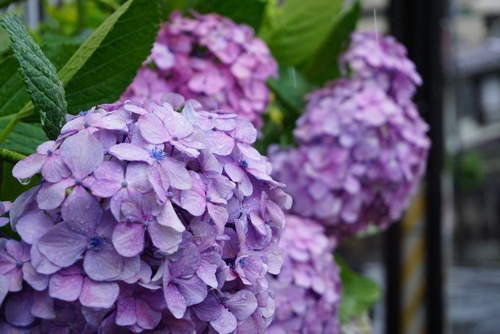
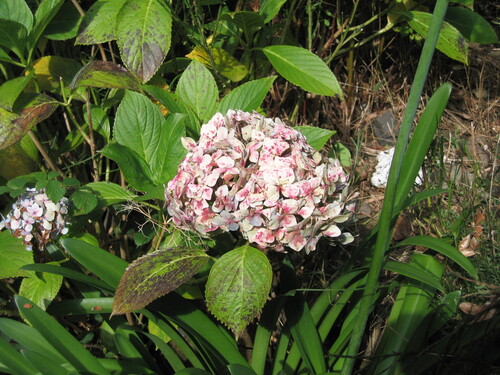
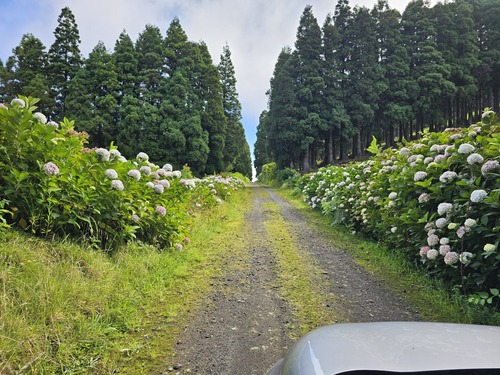
The bigleaf hydrangea (Hydrangea macrophylla (Thunb.) Ser.) is a deciduous shrub in the Hydrangeaceae, native to Japan according to POWO. Gardeners know it by its large opposite leaves, its summer flower heads in mophead balls or flat lacecaps, and colors that often shift with soil pH and available aluminum.
Read moreFrench hydrangea, Mophead hydrangea, Lacecap hydrangea and Hortensia
Place in indirect light or in a shaded room.
Global distribution
POWO gives a strict native range in southern and central Japan, out to Izu Ōshima and the Kazan Rettō. Wider ranges in horticultural sources often blend cultivation history, introductions and naturalizations.
- Native3
- Introduced2
- Invasive3
- Japan
- Izu Ōshima
- Kazan Rettō
- China
- Korea
- New Zealand
- Azores
- Madeira
Hexagons: sourced regions. Green dots: native range. Statuses according to POWO (Kew).
Identity
Botanically, the bigleaf hydrangea is Hydrangea macrophylla (Thunb.) Ser., an accepted species of the genus Hydrangea in the family Hydrangeaceae. POWO ties the name to Seringe's publication in A. P. de Candolle's Prodromus in 1830, with Viburnum macrophyllum Thunb. as its historical basionym. 1 2
Garden names come in several flavors. Bigleaf hydrangea, French hydrangea, mophead hydrangea and lacecap hydrangea mostly describe horticultural use and the shape of the flower heads, while the old name hortensia survives in Europe and in the trade. 2 3
The epithet macrophylla literally means "large-leaved." It is a good field clue, not a full identification: several hydrangeas have big leaves, and group names such as mophead or lacecap describe the flower head, not a separate species. 4 5
Recognition
Expect a rounded, deciduous, usually multi-stemmed shrub. Published sizes vary with climate, pruning and cultivar: NC State and the Missouri Botanical Garden commonly give 0.9–1.8 m (3–6 ft) in height and width, while the RHS lists an ultimate height and spread of about 1.5–2.5 m (5–8 ft). 3 4 5
The leaves are opposite, simple and stalked, ovate to elliptic or obovate, coarsely toothed, medium to dark green. Growing guides often put them at around 10–20 cm (4–8 in) long, which explains the "bigleaf" name. 3 5
Terminal flower heads are the most visible feature. Lacecap forms carry a center of small fertile flowers ringed by large, showy sterile ones; mophead forms make balls composed almost entirely of showy sterile flowers. Garden colors run from white through pink, blue, violet and purple, depending on cultivar and soil. 5 3
Useful taxonomy
The stable reference is the accepted name Hydrangea macrophylla (Thunb.) Ser. Taxonomic lists keep many synonyms and older names, including Hydrangea hortensia, Hydrangea hortensis, Hydrangea macrocephala, Hydrangea sieboldii and several combinations under Hortensia. 1 2
So hortensia can turn up as a common name, an old Latin name or a horticultural group name. In practice, that means keeping the botanical species, the cultivar on sale and the flower-head form apart. A plant tagged "blue hydrangea" is not a reliable taxon without the cultivar name or at least the species. 6 3
Older sources often blur it with Hydrangea serrata: Japanese mountain forms were at times treated close to H. macrophylla. The two species are kept separate here, and Japanese amacha-type uses need their own verification, since they do not make the garden bigleaf hydrangea edible. 7
Habitat and range
POWO restricts the native range to Japan, from the south of the central archipelago out to Izu Ōshima and the Kazan Rettō, and describes the species as a shrub of the temperate biome. That is the source followed for native origin, since several horticultural profiles give wider ranges that mix cultivation, introduction and naturalization. 1 5 3
In the garden, the relevant ecology is that of a shrub for moist soil: organic matter, decent drainage, steady moisture and shelter from scorching sun. The RHS recommends moist but well-drained soil in partial shade, or in sun if moisture stays reliable; the Missouri Botanical Garden follows similar logic, with a preference for part shade. 5 4
Beyond Japan, the species is planted very widely and can escape. No invasive status is recorded for metropolitan France, yet caution is warranted: NZPCN lists Hydrangea macrophylla as an environmental weed in New Zealand, and other sources report naturalization or localized invasion on oceanic islands. Local status elsewhere should be checked with regional authorities. 8 1
Color and cultivation
Flower color is not simply fixed by variety. NC State, the RHS and the Missouri Botanical Garden agree on one horticultural principle: many pink or blue cultivars respond to soil pH and aluminum availability. Acidic soil makes aluminum more available and favors blues; less acidic or alkaline soil favors pinks, with violet shades in between. 3 4
That rule has two important limits. It does not transform every cultivar, and white forms respond little or not at all. Changing a soil also takes time and restraint; horticultural sources advise acting well before bloom and keeping the soil healthy rather than dumping amendments on it. 4
Pruning explains many flowering failures. Classic forms bloom mainly on the previous year's wood, so a hard spring cut can remove the buds. NC State notes, however, that some reblooming cultivars flower again later on new wood, which is why pruning advice should follow the actual cultivar label. 3 4
Life cycle, uses and risks
A woody, deciduous perennial, Hydrangea macrophylla is propagated in horticulture mainly by stem cuttings or layering, to keep the cultivar's traits. Seedlings do occur, but they do not guarantee the same color, form or reblooming habit. 5 3
Its main use is ornamental: part-shade borders, foundation plantings, low hedges, outdoor containers, cut or dried flowers. NC State adds some garden wildlife value when hollow dead stems are left for stem-nesting bees; that should not hide the fact that heavily sterile mophead forms are grown first for display. 3 4
Toxicity needs precise wording. The ASPCA lists hydrangea as toxic to dogs, cats and horses, citing cyanogenic glycosides and mainly digestive signs. Pet Poison Helpline describes the risk as generally mild in dogs and cats, with possible lethargy, vomiting and diarrhea. 9 10
For people, NC State rates Hydrangea macrophylla as low-severity toxicity, mostly when large amounts are eaten, with nausea, abdominal pain, vomiting and sweating. No food or medicinal use of the garden bigleaf hydrangea is recommended, despite historical or ethnobotanical mentions that need checking taxon by taxon. 3 1
Cultivars and look-alikes
Cultivars are numerous, and their names often describe color, form or reblooming habit. NC State lists, among others, 'Nikko Blue', 'Ayesha', 'Mariesii Perfecta', 'Fuji Waterfall', 'Lady in Red', 'Lemon Daddy', 'Penny Mac', 'TwistNShout' and the Endless Summer series. None of these names marks a separate species. 3
Choosing between mophead and lacecap mainly changes the look of the flower head. A mophead gives a highly decorative ball; a lacecap shows off the small fertile flowers in the center. For pollinators, visible fertile flowers matter more than the size of the bloom. 5 3
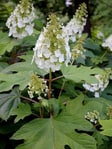
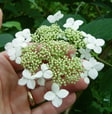
Mix-ups worth knowing involve Hydrangea serrata, often more compact and long grouped near H. macrophylla in some classifications, and the other garden hydrangeas: H. paniculata, H. arborescens, H. quercifolia and H. anomala. Before buying, check the scientific name, the cultivar, whether it blooms on old or new wood, and its hardiness where you live; USDA zones 6 to 9 give the usual frame. 7 3
Main sources
- Plants of the World Online / Kew, Hydrangea macrophylla (Thunb.) Ser.
- GBIF Backbone Taxonomy, Hydrangea macrophylla (Thunb.) Ser.
- Royal Horticultural Society, Hydrangea macrophylla (H)
- NC State Extension Gardener Plant Toolbox, Hydrangea macrophylla
- Missouri Botanical Garden Plant Finder, Hydrangea macrophylla
- ASPCA, Hydrangea toxicity entry
- Pet Poison Helpline, Hydrangea
- New Zealand Plant Conservation Network, Hydrangea macrophylla
Frequently asked questions
Is Hydrangea macrophylla the true garden hydrangea?
Yes, it is one of the main garden hydrangeas, especially for the big mophead forms and the lacecaps. The word hydrangea, though, can cover several species or horticultural groups.
Why does my hydrangea change color?
In many pink or blue cultivars, soil acidity and the availability of aluminum change the color. White forms and some cultivars respond little or not at all.
When should Hydrangea macrophylla be pruned?
Classic forms flower mainly on the previous year's wood, so a hard spring cut can remove the blooms. Reblooming cultivars should be handled according to their label.
Is bigleaf hydrangea toxic?
Yes for animals according to the ASPCA, and it calls for caution in people. The described risk is mainly digestive after eating large amounts, with cyanogenic glycosides involved.
Is Hydrangea macrophylla invasive?
No invasive status is recorded for metropolitan France. The species is, however, reported as an environmental weed or invasive in some territories, notably New Zealand and Macaronesia.
Can hydrangea be eaten?
No. Reports of food or medicinal uses are not precise enough to recommend eating garden Hydrangea macrophylla.
Similar plants

Botanical data compiled from reference sources (RHS, Kew Gardens, POWO). This profile is for guidance only and is not a substitute for advice from a botanist or veterinarian if you have concerns about toxicity.