
Panicle hydrangea (Hydrangea paniculata, )
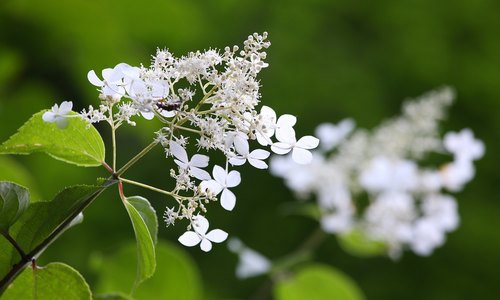


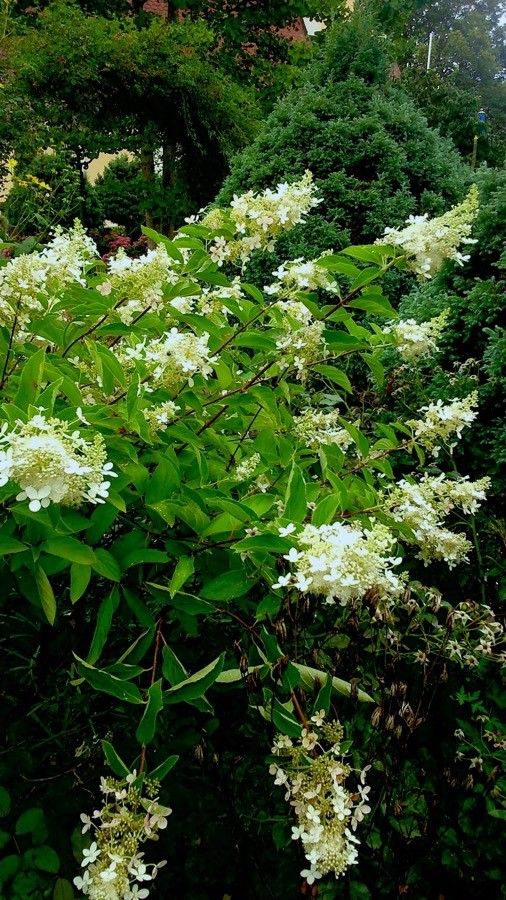
Panicle hydrangea (Hydrangea paniculata Siebold) is a deciduous shrub in the Hydrangeaceae family, sometimes trained as a small tree, native to East Asia. Large conical flower clusters appear in late summer, opening white or cream and often turning pink or brown with age. It flowers on the current season’s shoots.
Read morePanicle hydrangea, Panicled hydrangea and Peegee hydrangea
Allow a few hours of direct sun per day, preferably morning or evening.
Sun to partial shade; best flowering with ample light and moist soil



© photo
(c) 空猫, some rights reserved (CC BY-NC), uploaded by 空猫 · cc-by-nc
Marco Mussita · cc-by-nc
Wikimedia Commons · CC BY-SA or Public Domain
Taken Aug 16, 2020 by Meg S (cc-by-sa)
Taken Aug 28, 2022 by Heinz Lausmann (cc-by-sa)
Taken Jul 20, 2021 by Giode Tonpino (cc-by-sa)
Taken Aug 25, 2019 by Sue Sue Knight (cc-by-sa)
Taken Aug 8, 2021 by Veronique Falzon (cc-by-sa)
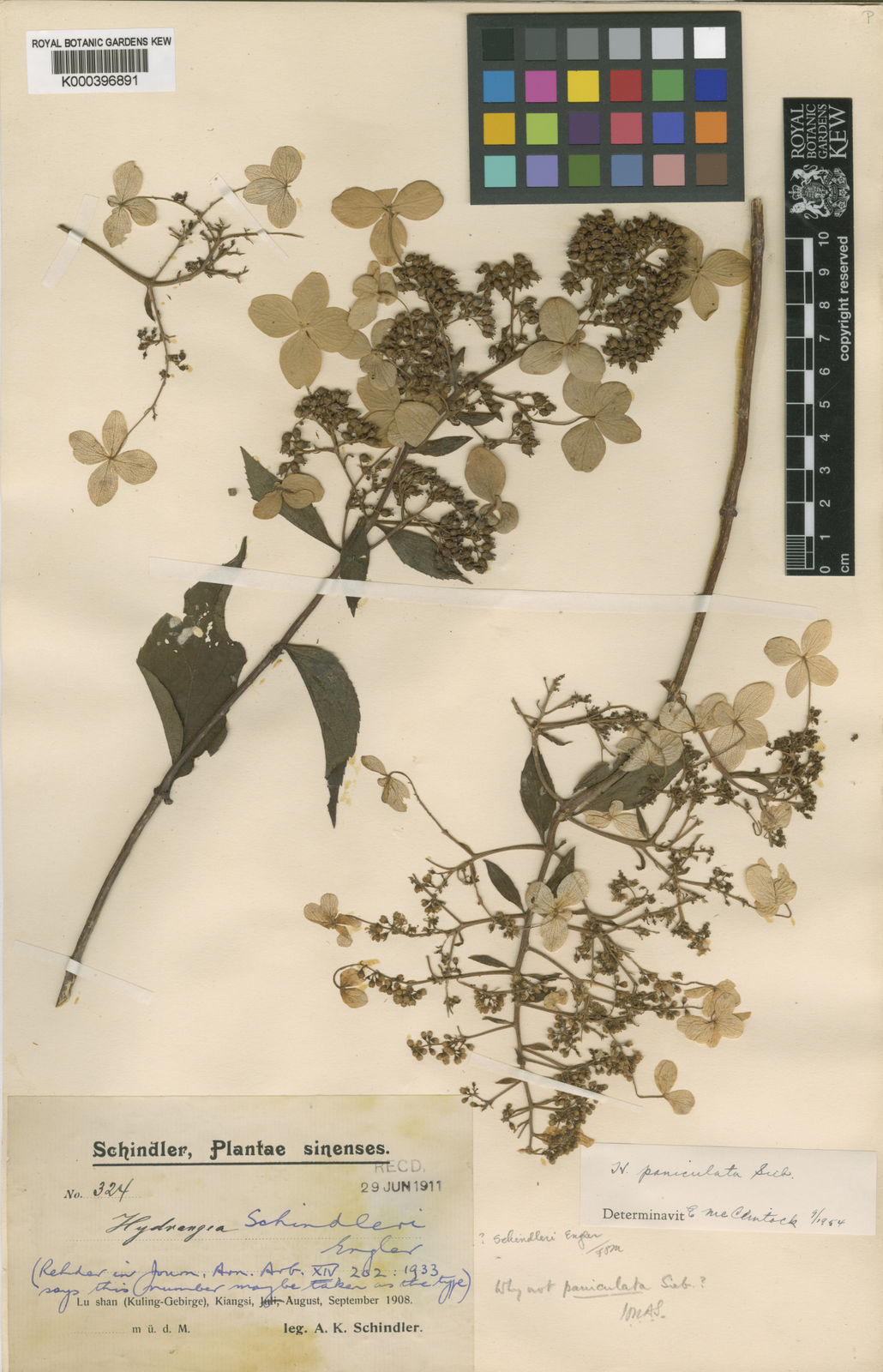
© copyright of the Board of Trustees of the Royal Botanic Gardens, Kew.




Global distribution
POWO records a native range in central and southern China, from Sakhalin to Japan, the Kuril Islands and Taiwan. Horticultural references mainly describe it as cultivated outside that range, with documented introductions including Korea and North America.
- Native7
- Introduced2
- North-central China
- South-central China
- Southeastern China
- Japan
- Kuril Islands
- Sakhalin
- Taiwan
- Korea
- Northeastern North America
Hexagons: regions where the plant occurs. Green dots: native range.1
Identity
Panicle hydrangea (Hydrangea paniculata Siebold) is an accepted species in the genus Hydrangea, family Hydrangeaceae. POWO records its first publication in Nova Acta Physico-Medica Academiae Caesareae Leopoldino-Carolinae Naturae Curiosorum, while GBIF lists it at species rank within the order Cornales. 1 2
English references use both panicle hydrangea and panicled hydrangea, names that describe the branching flower clusters. GBIF also records French common names. NC State includes Peegee hydrangea, although that horticultural name needs care because it is often associated with forms such as ‘Grandiflora’. 2 4 3
The epithet paniculata refers to flowers arranged in panicles. Their shape quickly separates this species from hydrangeas with rounded flower heads: the outline is elongated, conical or pyramidal, rather than a compact ball. 4 5
Recognition
A woody, deciduous shrub is the usual form, although it can be trained as a small tree. The RHS gives an ultimate height of 2.5–4 m (8–13 ft) and a spread of 1.5–2.5 m (5–8 ft). NC State and Missouri Botanical Garden describe typical plants of about 2.4–4.5 m (8–15 ft), with some reaching 7.5 m (25 ft) in favorable conditions. 3 4 5
Simple leaves grow in opposite pairs, sometimes in groups of three near shoot tips. They are oval to ovate, toothed, dark green above and paler beneath. NC State also notes hairs on the undersides, especially near the veins. 4 3
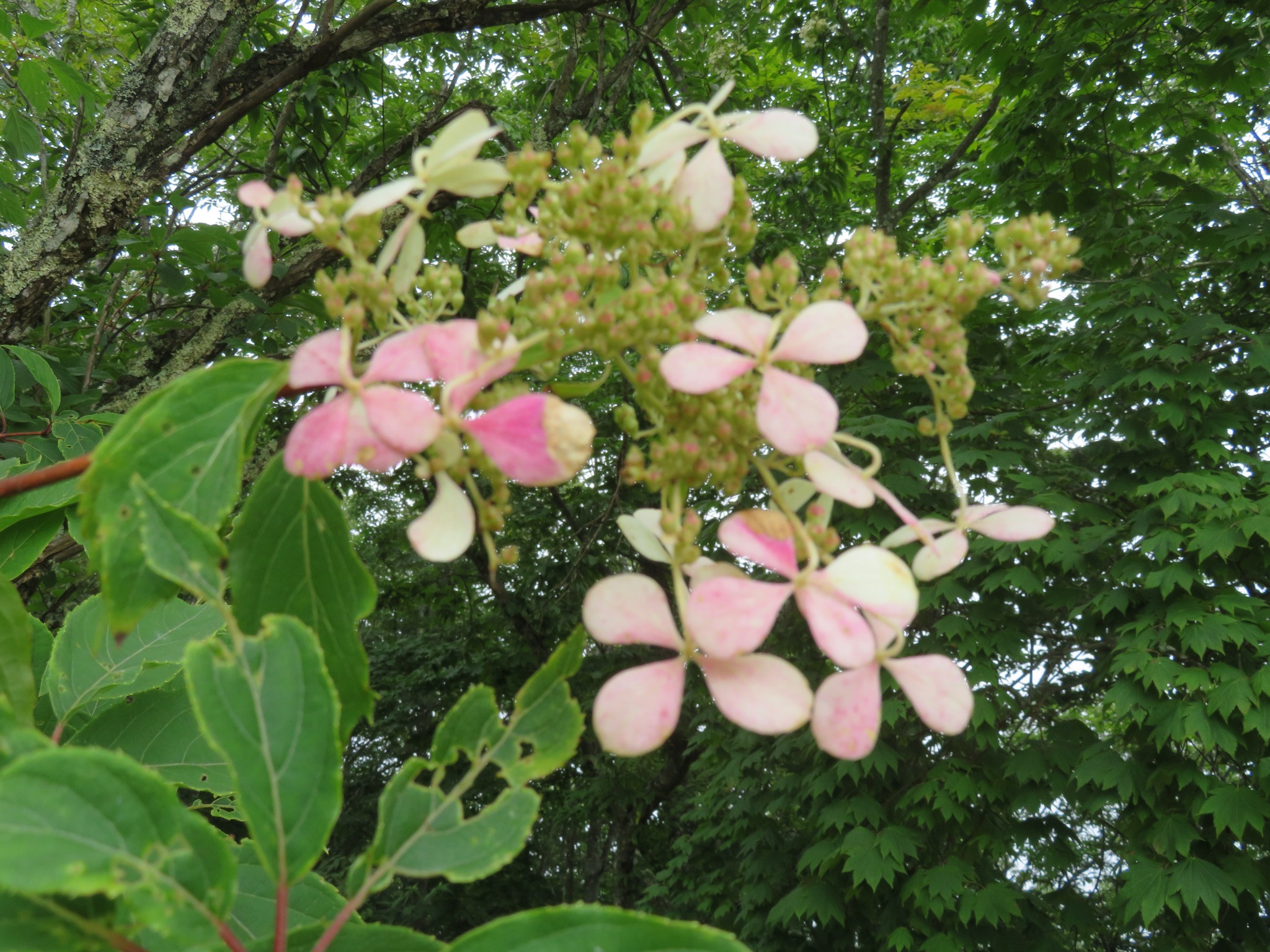
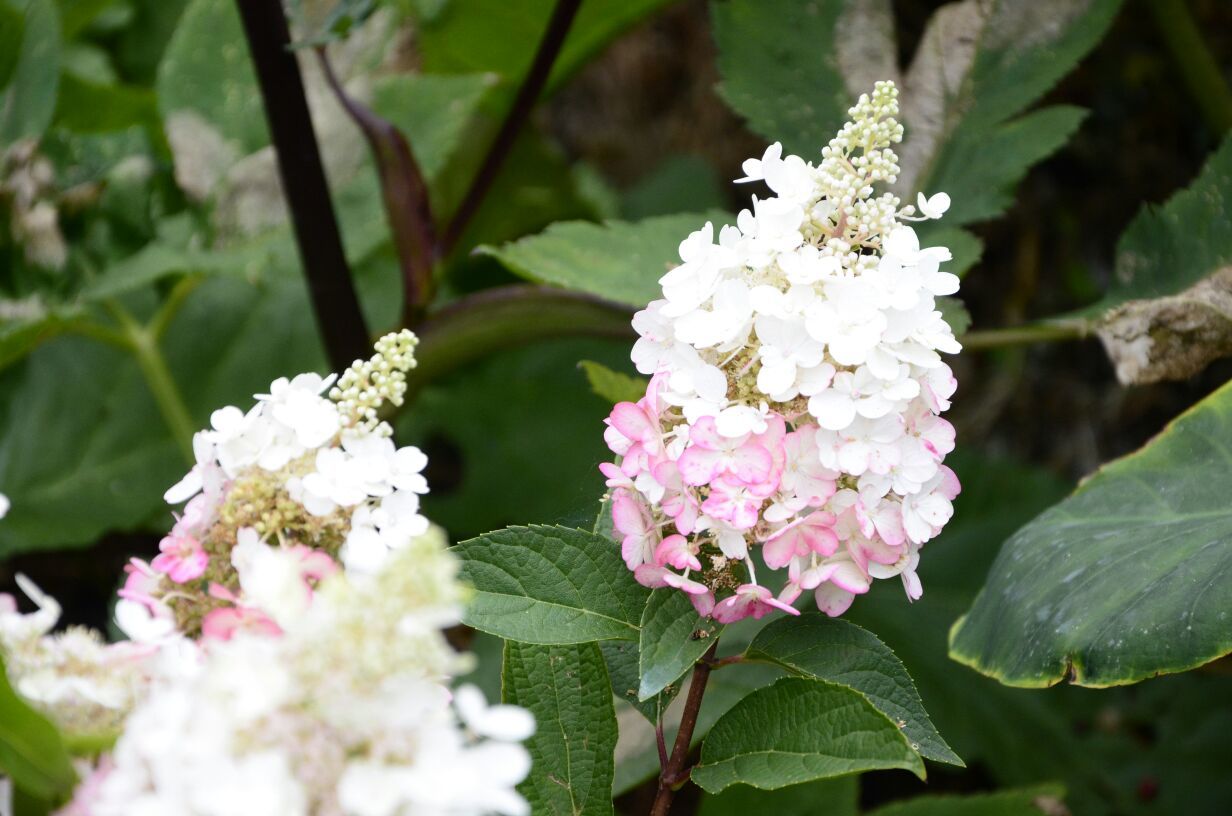
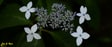
Terminal flower clusters provide the clearest field character. Large, conical panicles combine small fertile flowers with showier sterile flowers. Horticultural references describe white or cream blooms in summer, becoming pink and then brown as fall progresses. 3 4 5
Useful taxonomy
For botanical identification, retain the accepted name Hydrangea paniculata Siebold. POWO and GBIF record synonyms including Heteromalla paniculata, as well as historical forms or varieties named grandiflora, debilis, praecox and velutina. 1 2
Synonymy helps explain some nursery confusion. The RHS marks Hydrangea ‘Pee Gee’ as a misapplied synonym, while garden centers often sell cultivars under trade names or series names. Reliable identification requires separating the species, the cultivar and the sales name. 3 4
Other garden hydrangeas cause the most practical confusion. Hydrangea macrophylla often has mopheads or lacecaps and can lose flowers through pruning of old wood. H. arborescens also has pale flower heads, usually rounder, while H. paniculata combines conical panicles with flowering on new shoots. 4 5
Habitat and range
Central and southern China, Sakhalin, Japan and Taiwan form the native range recorded by POWO, whose detailed distribution also includes the Kuril Islands. NC State describes the same East Asian origin and its horticultural use in many temperate regions. 1 4
Documented introductions in POWO include Korea and several regions of North America. In metropolitan France, its recorded status is cultivated and ornamental; the taxonomic references do not treat it as a French invasive species. 1 2
In cultivation, this is a hardy temperate shrub that needs moisture during active growth. The RHS recommends moist but well-drained soil in sun or partial shade. Missouri Botanical Garden and NC State likewise emphasize rich, well-drained soil, cold hardiness and tolerance of urban conditions. 3 5 4
Growing and pruning
More sun is possible than with many other hydrangeas, especially where the soil stays moist. In hot climates or light soils, morning sun and light afternoon shade are often preferable. Deep, mulched soil allows more light and supports more abundant flowering. 4 3
Water regularly after planting and during dry summers. A practical starting point during growth is 15–25 mm (0.6–1 in) per week when rain is lacking, adjusted for soil texture, plant size and container growing. NC State notes the shallow roots and the benefit of mulch. 4 5
Pruning is simpler than for hydrangeas that flower on old wood. Hydrangea paniculata blooms on the current season’s growth, so NC State and Missouri Botanical Garden recommend late winter or early spring pruning. Structural pruning can limit height, strengthen stems and produce larger panicles when shoots are thinned. 4 5
Flower color cannot be managed as it can with blue hydrangeas. White, cream, lime-green, pink, red and brown shades depend mainly on the cultivar, the age of the flower cluster and seasonal conditions. Acidifying the soil does not turn this species into a blue-flowered hydrangea. 3 4
Life cycle, uses and risks
This deciduous woody perennial can be propagated by seed or cuttings. The RHS recommends spring sowing in a cold frame, softwood cuttings in early summer or hardwood cuttings in winter. For a named cultivar, use cuttings because seedlings do not reliably reproduce the selection. 3 4
Garden uses are chiefly ornamental: informal hedges, the back of a border, specimen shrubs, trained small trees, large containers, and cut or dried flowers. Missouri Botanical Garden highlights late-summer interest when few shrubs remain in bloom. NC State also recommends it for cutting gardens, pollinator gardens and urban conditions. 5 4
Toxicity after ingestion deserves clear attention. The ASPCA lists hydrangeas as toxic to dogs, cats and horses because of cyanogenic glycosides, with predominantly digestive symptoms. Pet Poison Helpline describes toxicity in dogs and cats as generally mild, with possible lethargy, vomiting and diarrhea. 6 7
Merck Veterinary Manual explains that plants with cyanogenic glycosides can release cyanide after chewing, although severe cases in small animals are rare without substantial ingestion. For people, Kansas Poison Center places hydrangea in its medium-risk category and notes that all parts may cause minor symptoms such as rash, vomiting or diarrhea. 8 9
Cultivars and look-alikes
Cultivars vary greatly in size, stem strength and late-season color. NC State lists ‘Grandiflora’, ‘Limelight’, ‘Little Lime’, ‘Phantom’, ‘Pink Diamond’, ‘Pinky Winky’, ‘Tardiva’ and ‘Unique’. Their panicles range from white to lime green before turning pink or brown. 4
‘Grandiflora’ has a particular place in garden history. Missouri Botanical Garden describes it as a vigorous old selection introduced into cultivation in the 19th century, with largely sterile flower clusters and often called peegee hydrangea. This name does not indicate a separate species. 5 3
Before buying, check the exact cultivar name, mature height, stem strength, aging flower color and suitability for training as a shrub or small tree. The species name alone does not describe the space needed: a dwarf container selection and a large ‘Grandiflora’ have very different footprints. 4 5
Main sources
- Plants of the World Online / Kew, Hydrangea paniculata Siebold
- GBIF Backbone Taxonomy, Hydrangea paniculata Siebold
- Royal Horticultural Society, Hydrangea paniculata
- NC State Extension Gardener Plant Toolbox, Hydrangea paniculata
- Missouri Botanical Garden Plant Finder, Hydrangea paniculata
- ASPCA, Hydrangea toxicity entry
- Pet Poison Helpline, Hydrangea
- Merck Veterinary Manual, Houseplants and Ornamentals Toxic to Animals
- Kansas Poison Center, Hydrangea
Frequently asked questions
Does panicle hydrangea bloom on new wood?
Yes. Horticultural references agree that panicle hydrangea blooms on the current season’s growth, allowing pruning in late winter or early spring.
Can I grow it in full sun?
Yes, if the soil stays moist. It is one of the more sun-tolerant hydrangeas, but scorching sun on dry soil causes wilting and leaf scorch.
Will acidic soil turn the flowers blue?
No, in practical garden terms. Flower clusters stay white, cream, green, pink, reddish brown or brown depending on cultivar and age. They do not follow the soil-driven blue/pink response of many bigleaf hydrangeas.
Is panicle hydrangea toxic?
Yes, if eaten. The ASPCA includes it among hydrangeas toxic to dogs, cats and horses, with cyanogenic glycosides. Symptoms are mainly digestive, but contact a veterinarian or poison center after ingestion.
Is panicle hydrangea invasive in France?
The references used treat it as a cultivated ornamental shrub in France, with no invasive status recorded for metropolitan France.
How does it differ from bigleaf hydrangea?
Panicle hydrangea has conical flower clusters and blooms on new growth. Bigleaf hydrangea (Hydrangea macrophylla) often has mopheads or lacecaps, and many traditional forms flower on old wood.
Similar plants
If you are unsure about a plant’s toxicity, ask a botanist or veterinarian for advice.