
Siberian pine (Pinus sibirica, )
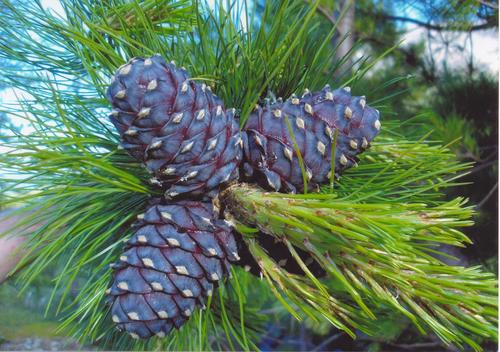
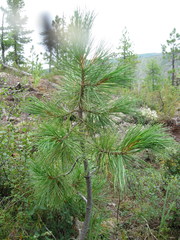
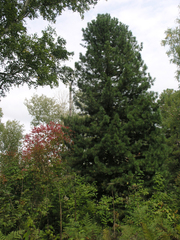
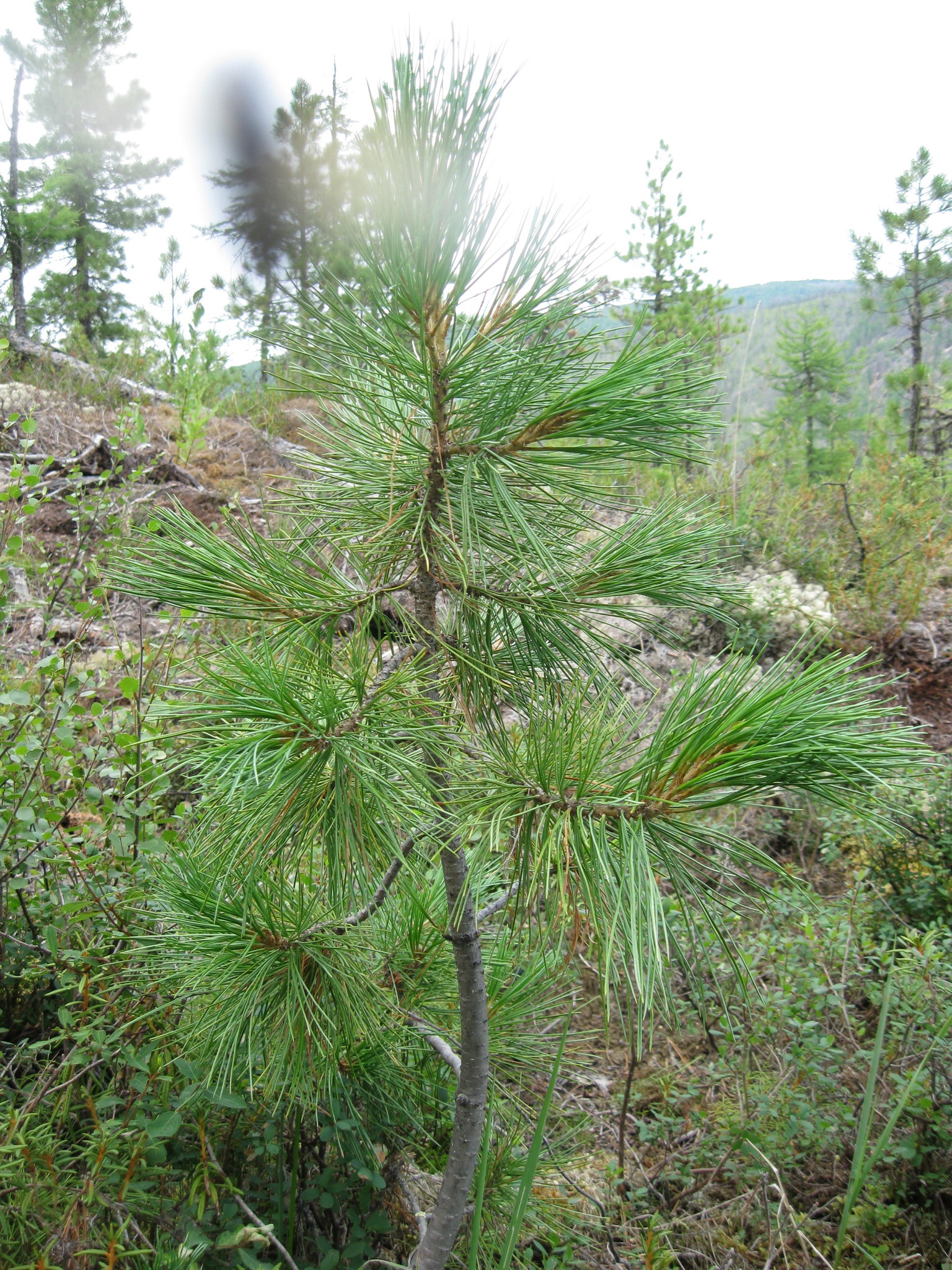
Siberian pine (Pinus sibirica) is a conifer in the Pinaceae family and a close relative of the Alpine Swiss stone pine. It dominates vast areas of Siberian taiga. Its needles grow in bundles of five and are longer than those of its Alpine relative; its nearly closed cones hold wingless seeds that depend almost entirely on nutcrackers for dispersal.
Read moreSiberian pine, Siberian stone pine and Siberian cedar
© photo
(c) ugraland, some rights reserved (CC BY) · cc-by
Фая Баландина · cc0
Oleg Kosterin · cc0




Global distribution
The native range of Pinus sibirica covers much of Russian Siberia, from the Urals to the Kola Peninsula and farther east, as well as northern Kazakhstan, northern Mongolia and northwestern China. It occupies about 450,000 km² of taiga and is one of the dominant conifers of the Siberian continental climate.
- Native4
- Russia
- Kazakhstan
- Mongolia
- China
Hexagons: regions where the plant occurs. Green dots: native range.1
Identity
Siberian pine (Pinus sibirica Du Tour, 1803), also sold as Siberian cedar and known as Siberian stone pine, belongs to the Pinaceae family and is closely related to the Alpine Swiss stone pine (Pinus cembra). Its Russian name, kedr, shares a root with ancient Greek kedros and Latin cedrus. That explains a long-standing trade-name confusion: this tree does not belong to Cedrus, the genus of true cedars. 3 4
Across extensive tracts of Siberian taiga, this pine supplies seeds sold as “Siberian cedar nuts.” They are a long-established local food and a source of oil rich in fatty acids. 8 2
Recognition
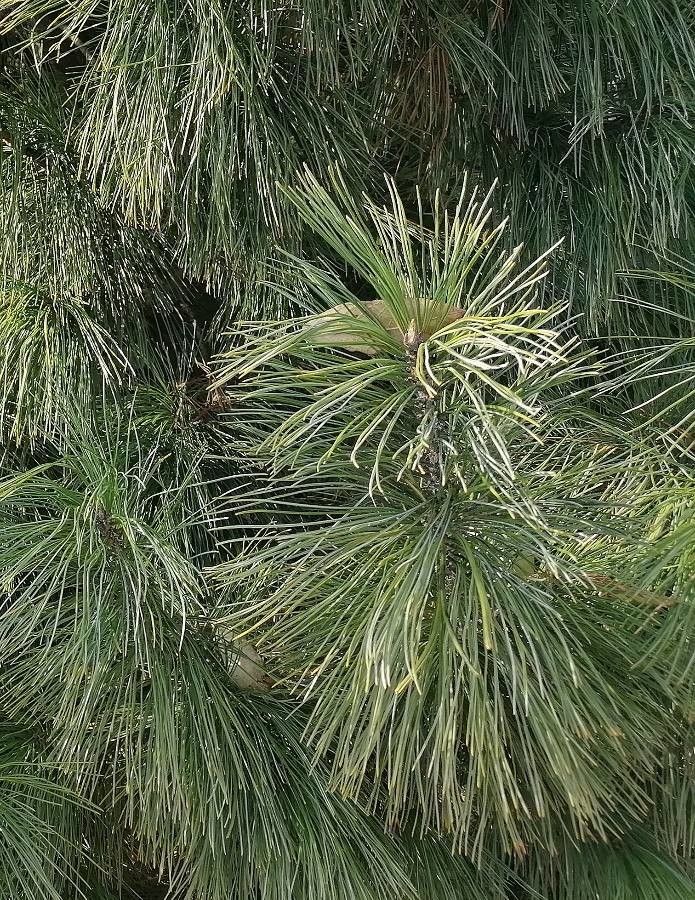
Five needles form each bundle on Pinus sibirica, as on Swiss stone pine, but they are noticeably longer: 6–11 cm (2.4–4.3 in), sometimes reaching 13 cm (5.1 in), compared with 4–9 cm (1.6–3.5 in) in P. cembra. They remain on the shoot for two to four years and have fine white stomatal lines on both inner faces. 8 3
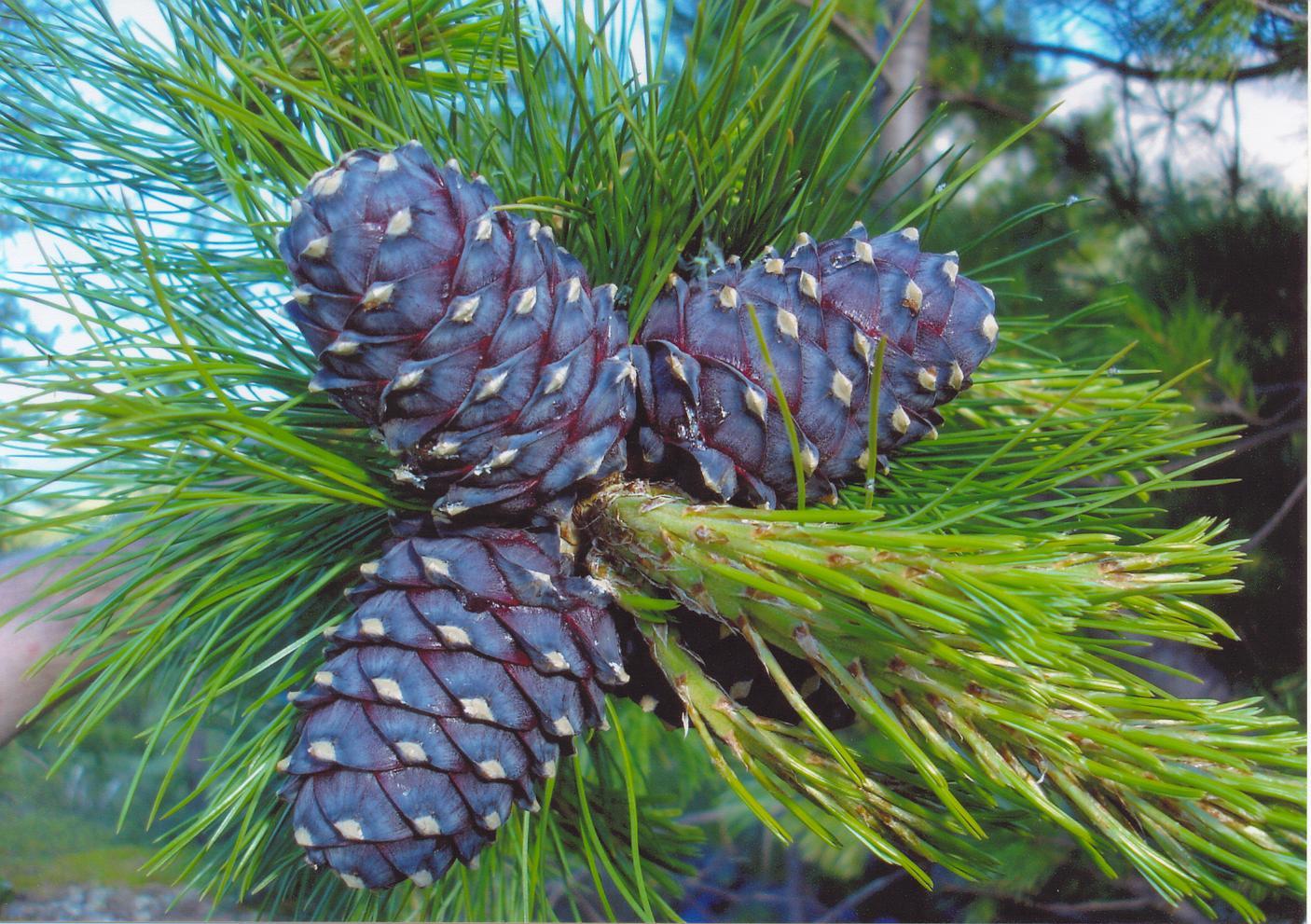
Egg-shaped to conical cones measure 7–10 cm (2.8–3.9 in) long, occasionally 12 cm (4.7 in), and 4–8 cm (1.6–3.1 in) wide. Blue-green to purplish while growing, they turn brown at maturity but remain closed or barely open on the tree. Their wingless seeds are 10–14 mm (0.4–0.6 in) long. 8
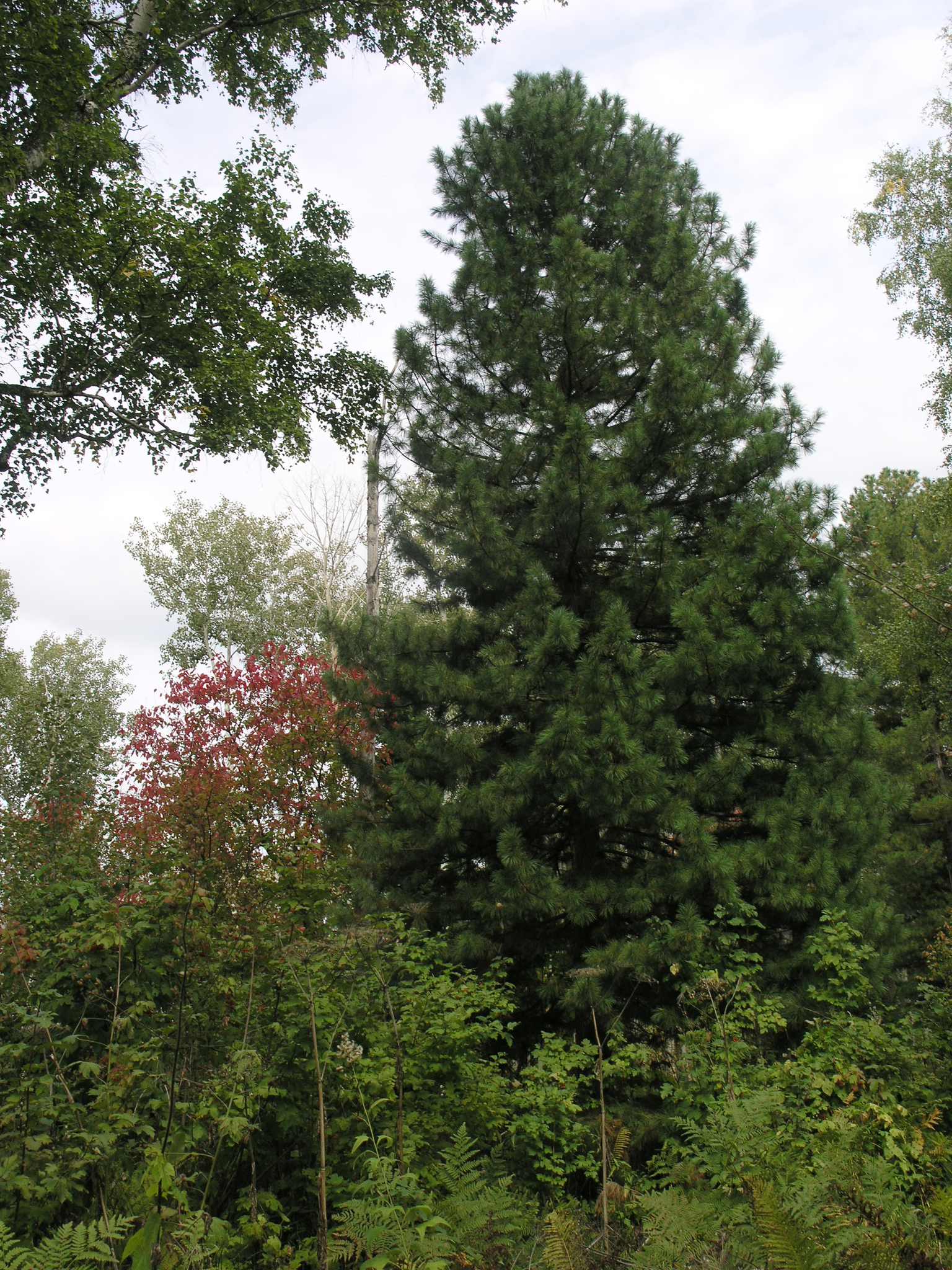
Smooth, pale brown bark gradually becomes gray, scaly and fissured. Wild trees commonly reach 35–40 m (115–131 ft), with trunks sometimes exceeding 1.5 m (4.9 ft) in diameter. A tree at Kedrovy Pass in the Altai was measured at 48 m (157 ft). Outside its native climate, cultivated trees rarely exceed about 30 m (98 ft). 8 2
Useful taxonomy
POWO/WCVP accepts Pinus sibirica Du Tour, published in 1803 by the French naturalist Du Tour de Salvert. It belongs to subgenus Strobus and section Quinquefoliae, the five-needle pines. 4 1
Most historical synonyms reflect its former treatment as part of Swiss stone pine:
- Pinus cembra var. sibirica (Du Tour) G.Don
- Pinus cembra subsp. sibirica (Du Tour) Krylov
- Pinus cembra var. sibirica (Du Tour) A.E.Murray
- Pinus sibirica var. hingganensis (H.J.Zhang) Silba, a population from the Greater Khingan in China
The name hingganensis marks a useful distinction. This Chinese population was described as a separate variety but is now included in the species without separate botanical status. Comparison with Pinus cembra remains the most reliable guide: Siberian pine has longer needles and cones with thinner scales, and three resin canals per needle instead of two in its Alpine relative. 1 3
Habitat and range
Much of Russian Siberia falls within its native range, from the Urals to the Kola Peninsula and farther east, together with northern Kazakhstan, northern Mongolia and northwestern China, including Heilongjiang, Inner Mongolia and Xinjiang. Its Russian range extends roughly from 55° E to 125° E. 8 3
Continental taiga occupied by the species covers about 450,000 km² (174,000 sq mi). It grows on northern plains at elevations of 100–200 m (330–660 ft), rising to 2,400 m (7,870 ft) in southern mountains, where it reaches the upper tree line. Larch, birch, fir and spruce often accompany it in continental conifer forests. 8
Local harvesting for timber and seeds has not prevented the International Union for Conservation of Nature from classifying Pinus sibirica as Least Concern. It remains widespread across its 450,000 km² (174,000 sq mi) of native taiga. 6
Life cycle and reproduction
Both sexes occur on Pinus sibirica: it is monoecious, bearing male cones that release windborne pollen and female cones on the same shoot. At maturity, the cones remain closed or open only slightly, so the wingless seeds cannot disperse on their own. 8
Most seed dispersal therefore depends on the spotted nutcracker (Nucifraga caryocatactes). The bird extracts and carries seeds, burying many as winter food stores. Forgotten caches germinate in spring, allowing stands to spread beyond the parent tree. 8
Even favorable conditions produce slow growth throughout the tree’s life. This is accompanied by exceptional longevity: at least one documented Mongolian tree reached nearly 1,200 years, an unusual age even among long-lived conifers. 2 8
Uses and risks
Centuries of local harvesting have made the seeds, sold as Siberian cedar nuts, the species’ main commercial product. In some years, Altai harvests reach 300 kg per hectare (268 lb per acre). Chemical analyses show that the resulting pine nut oil contains over 90% unsaturated fatty acids, including 66% polyunsaturated fatty acids, supporting its use in food and cosmetics. 8 7
Soft, light, pinkish timber is used in Siberia for construction and furniture, and less often for carving. Resin is sometimes used to make turpentine. 8
This species is not classified as toxic to cats or dogs. Resin and sawdust can, however, cause irritation or contact dermatitis in sensitive people, as with most resinous conifers. 2
Varieties, look-alikes and related plants
Specialist conifer nurseries sell several dwarf forms, but their names are less settled than those of Swiss stone pine cultivars such as 'Stricta' and 'Glauca'. Most trees sold are the typical species, raised from seed or grafted. 8
Other five-needle pines account for the most frequent identification problems:
- Pinus cembra, Alpine Swiss stone pine, has shorter needles and cones, with two resin canals per needle rather than the three in Pinus sibirica;
- Pinus koraiensis, Korean pine, is another large five-needle pine from the Far East with edible seeds;
- Pinus pumila, a dwarf, creeping pine from northeastern Asia, has a low habit unlike the upright trunk of Pinus sibirica.
Bundles of five needles immediately exclude two- and three-needle pines. Needle and cone length, together with the number of resin canals, provide the most dependable distinction between Siberian pine and its close Alpine relative. 3 1
Main sources
- Plants of the World Online / Kew, Pinus sibirica Du Tour
- Plants For A Future, Pinus sibirica (Pinus cembra sibirica)
- Trees and Shrubs Online, Pinus sibirica
- USDA GRIN Global Taxonomy, Pinus sibirica Du Tour
- Integrated Taxonomic Information System (ITIS), Pinus sibirica Du Tour, TSN 822573
- IUCN Red List of Threatened Species, Farjon A. 2013, Pinus sibirica assessment
- European Journal of Lipid Science and Technology, chemical composition of Pinus sibirica nut oils
- The Gymnosperm Database (conifers.org), Pinus sibirica
Frequently asked questions
Is Siberian pine a true cedar?
No. The name Siberian cedar comes from Russian kedr, which shares its root with Latin cedrus. The species belongs to Pinus, however, rather than Cedrus, the genus of true cedars.
How does Siberian pine differ from Swiss stone pine?
Pinus sibirica was long treated as a variety of the Alpine Swiss stone pine. Siberian pine has longer needles and cones, and three resin canals per needle rather than two.
Why do Siberian pine cones barely open?
The wingless seeds cannot disperse on the wind by themselves. The nearly closed cones leave most dispersal to nutcrackers, which extract the seeds and bury some as food stores.
Is Siberian pine toxic to cats and dogs?
It is not classified as toxic to these animals. Resin and sawdust can nevertheless cause irritation or contact dermatitis in sensitive individuals.
Can you eat Siberian pine seeds?
Yes. Sold as Siberian cedar nuts, they have long been harvested locally. They yield an oil rich in unsaturated fatty acids, used in food and cosmetics.
How long does Siberian pine live?
It is among the longest-lived conifers in its range, with natural stands several centuries old and at least one documented tree in Mongolia approaching 1,200 years.
Is Siberian pine threatened?
The IUCN lists it as Least Concern. It remains widespread across a vast taiga range, despite local logging and seed harvesting.
Similar plants

If you are unsure about a plant’s toxicity, ask a botanist or veterinarian for advice.