
Eastern white pine (Pinus strobus, )

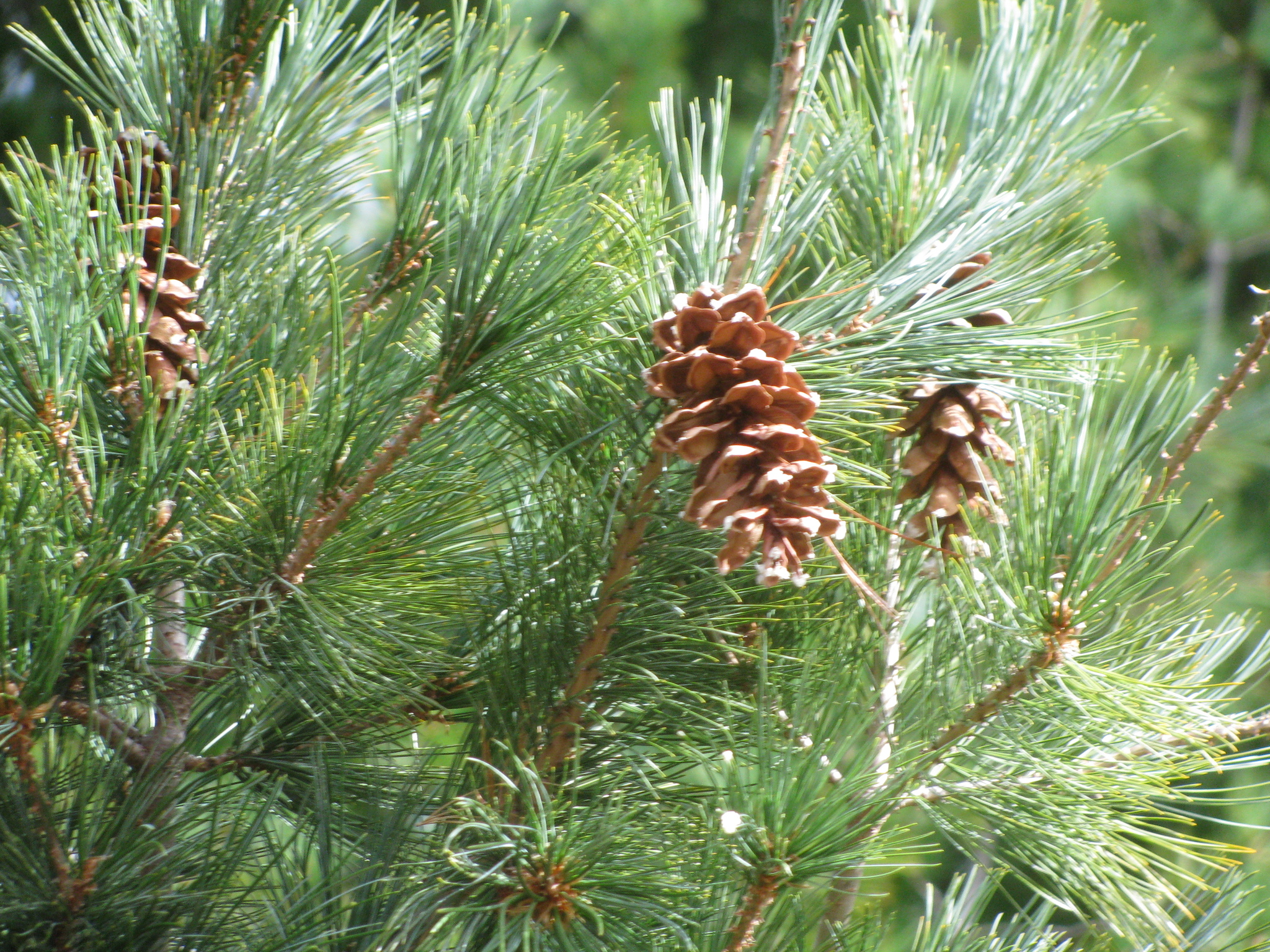
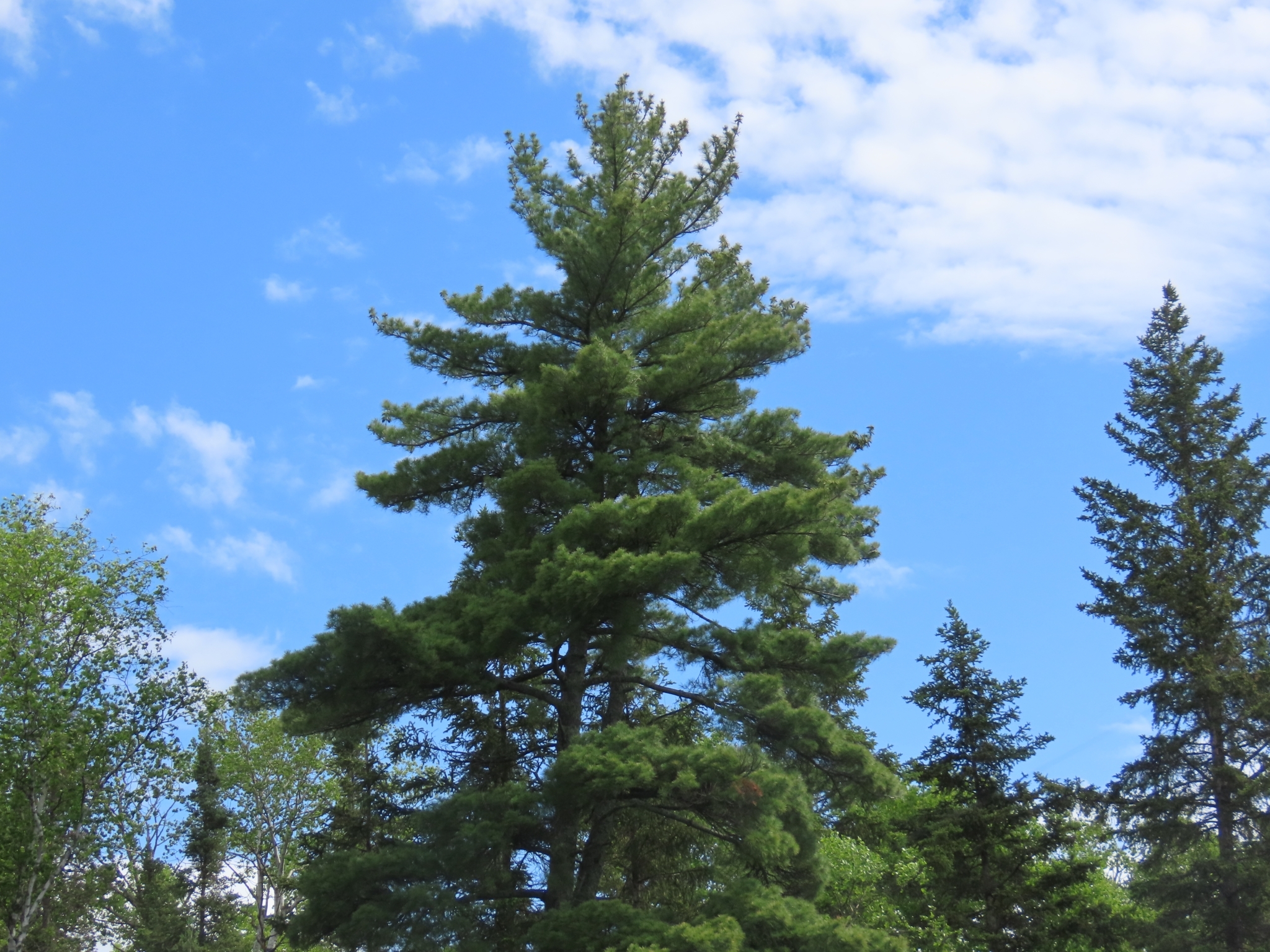
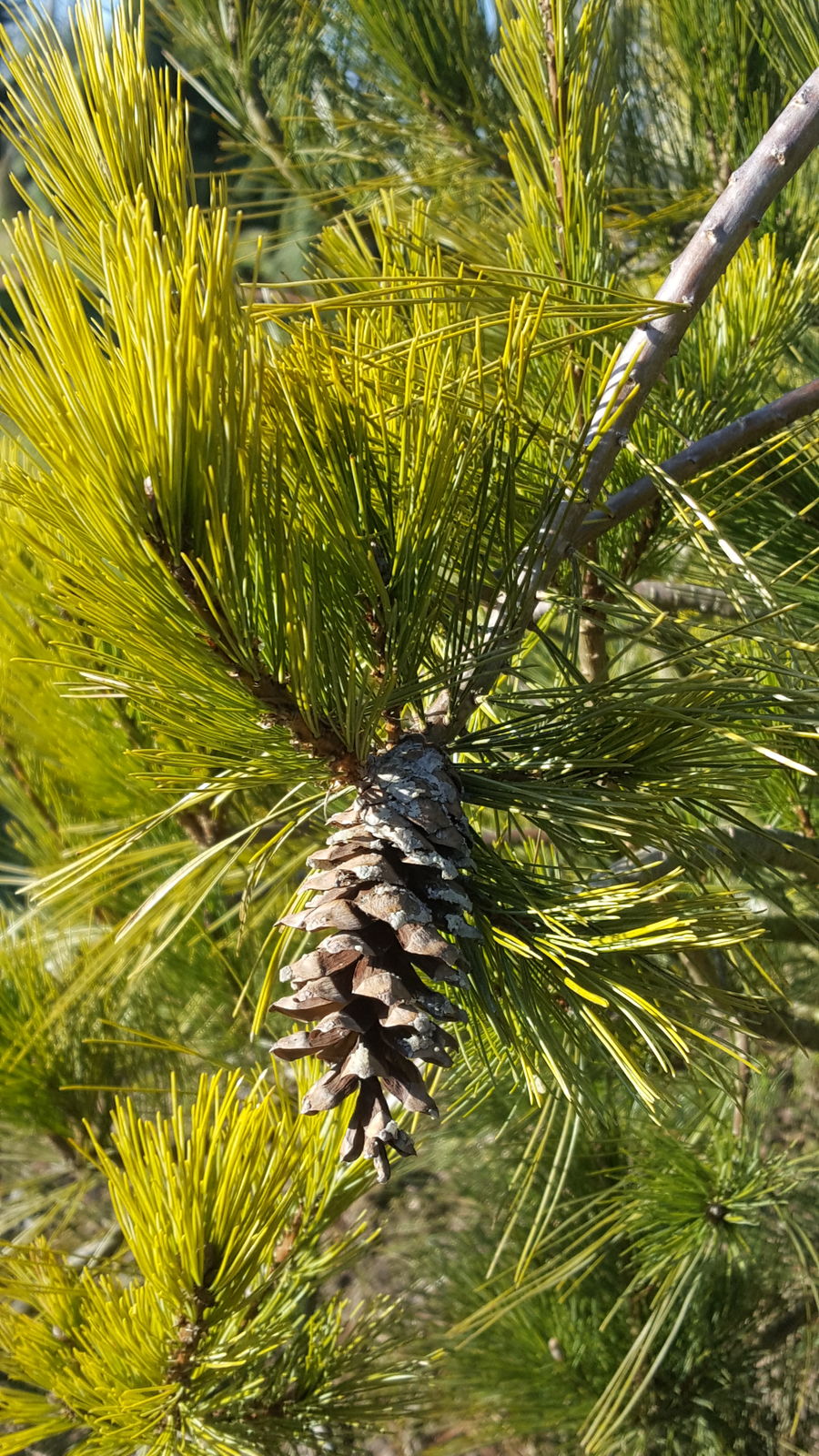
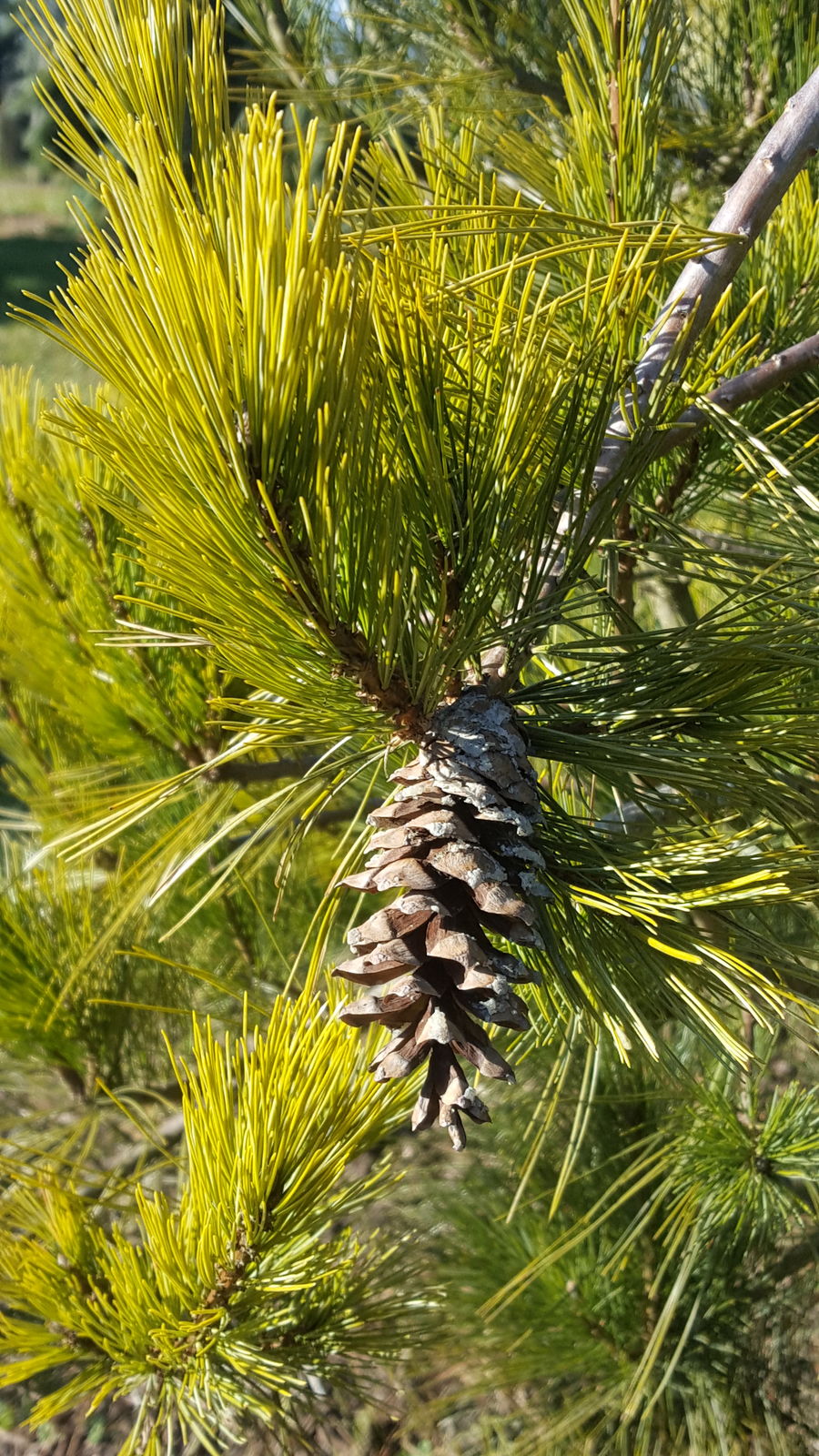
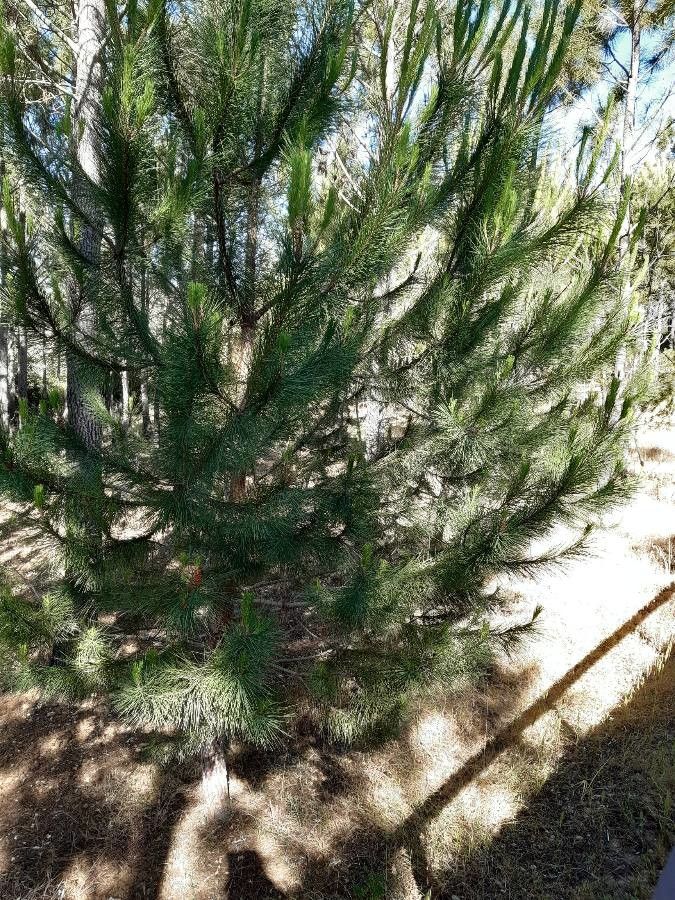
Eastern white pine (Pinus strobus) is a conifer in the Pinaceae family, native to eastern Canada and the northeastern United States. Its long, flexible blue-green needles grow in bundles of five. Hanging cylindrical cones, twice as long as those of European Scots pine, provide another identifying feature.
Read moreEastern white pine, Northern white pine, White pine, Weymouth pine and Soft pine


© photo
Kent P. McFarland · cc0
(c) Forest and Kim Starr, some rights reserved (CC BY) · cc-by
Carter Dorscht · cc0
Taken Aug 19, 2022 by Wheeler Nicholas (cc-by-sa)
Taken Jun 6, 2020 by Alex Litni (cc-by-sa)
Taken Nov 3, 2016 by Yoan MARTIN (cc-by-sa)
Taken Jun 9, 2021 by Greta (cc-by-sa)
Taken Dec 6, 2020 by oliveira sarah (cc-by-sa)
© copyright of the Board of Trustees of the Royal Botanic Gardens, Kew.




Global distribution
Eastern white pine is native from Newfoundland and southeastern Manitoba in Canada to Minnesota and northern Georgia along the Appalachian Mountains in the United States. It is rare in northeastern Alabama and Indiana. In Europe, it is mainly grown for ornament and forestry, with no documented naturalization in France.
- Native2
- Introduced1
- Canada
- United States
- New Zealand
Hexagons: regions where the plant occurs. Green dots: native range.1
Identity
Eastern white pine (Pinus strobus L., 1753), also called Weymouth pine, Northern white pine, White pine or Soft pine, is a conifer in the genus Pinus and family Pinaceae. Carl Linnaeus described it in his 1753 Species Plantarum. It grows naturally from Newfoundland in Canada to the Appalachians of northern Georgia in the United States. 1 3
Lord Weymouth gave his name to the Weymouth pine after planting it extensively on his English estate in the early 18th century. Its early popularity led Europeans to regard it for many years as a British tree, despite its North American origin. 2 8
Recognition
Flexible, blue-green needles grow in bundles of five, each 6–14 cm (2.4–5.5 in) long, with fine whitish stomatal lines on the inner face. Five needles per bundle clearly distinguish Eastern white pine from Scots pine and black pine, both of which have only two. 3 2
Long, cylindrical cones hang down and reach 10–20 cm (4–8 in), much longer than those of common European pines. Resinous and slightly curved, they mature in a little over a year and release winged seeds in summer. 2 3
Young bark is smooth and gray-green; older trunks become reddish brown to dark gray, with broad, fissured plates. Wild trees commonly grow 25–50 m (82–164 ft) tall. The Boogerman Pine in Great Smoky Mountains National Park reaches 57.55 m (189 ft), making it one of the tallest precisely measured trees, broadleaf or conifer, east of the Rocky Mountains. 3 7
Useful taxonomy
For this species, POWO/WCVP accepts Pinus strobus L., described in the 1753 Species Plantarum. Geographic varieties and horticultural forms were named during the 19th and 20th centuries; most are now treated as synonyms or simply cultivated forms:
- Pinus strobus f. fastigiata (Beissn.) Beissn., historical synonym
- Pinus strobus f. umbraculifera (Carrière) Beissn., historical synonym
- Pinus strobus f. prostrata (Beissn.) Fernald & Weath., historical synonym
- Pinus strobus subsp. cumberlandensis Silba, historical synonym
The former variety chiapensis illustrates the opposite situation. Long included within Pinus strobus, it is now accepted by POWO as the distinct species Pinus chiapensis, endemic to southern Mexico and Guatemala. Its historical synonymy should not lead to confusion with Eastern white pine. 1
Habitat and range
From Newfoundland and southeastern Manitoba in Canada, its native range reaches Minnesota and extends south along the Appalachians and upper Piedmont to northern Georgia in the United States. It is rare at the edge of its range in northeastern Alabama and Indiana. 7 3
Sandy, acidic, well-drained soils offer this pine a foothold where competition from broadleaf trees is limited. It also grows along riverbanks and, less often, in wetlands. In Europe, Eastern white pine is mainly planted for ornament and forestry; naturalization has not been documented in France. 4
Despite substantial local losses from blister rust since the early 20th century, the International Union for Conservation of Nature lists Pinus strobus as Least Concern. Its extensive range and generally stable population underpin that assessment. 6
Life cycle and reproduction
On a single Pinus strobus tree, cylindrical yellow male cones and pale green female cones tinged with red develop separately: the species is monoecious. Cone production takes place in spring, when wind carries pollen to the female cones. 3
Pollinated cones mature in a little over a year, releasing winged seeds in July and August in the native Northern Hemisphere range. A well-lit, isolated tree may first produce cones at 5–10 years, earlier than Scots pine. 3 4
Seed propagation of the typical species follows six weeks of cold stratification. Grafting is needed to preserve a particular cultivar, such as the weeping habit of 'Pendula' or the columnar shape of 'Fastigiata'. 4
Uses and risks
Straight-grained, soft, light timber was long used for ship masts. During the 18th century, the British Crown marked the finest New England trees with a carved royal broad arrow, reserving them for the Royal Navy. This monopoly helped provoke colonial revolts, including the Weare riot of 1772. 8 7
Although not classified as toxic to cats or dogs, needles and resin can mildly irritate the mouth if swallowed. For the tree itself, a serious documented threat is white pine blister rust (Cronartium ribicola), introduced from Europe. It caused 50–80% mortality in some stands before campaigns to eradicate currants and gooseberries, its obligatory alternate hosts, reduced that risk to about 3%. 4 7
Gardeners plant white pine as an elegant specimen, a windbreak or a Christmas tree. Sensitivity to deicing salt and air pollution makes it a poor choice beside heavily traveled roads. 3
Varieties, look-alikes and related plants
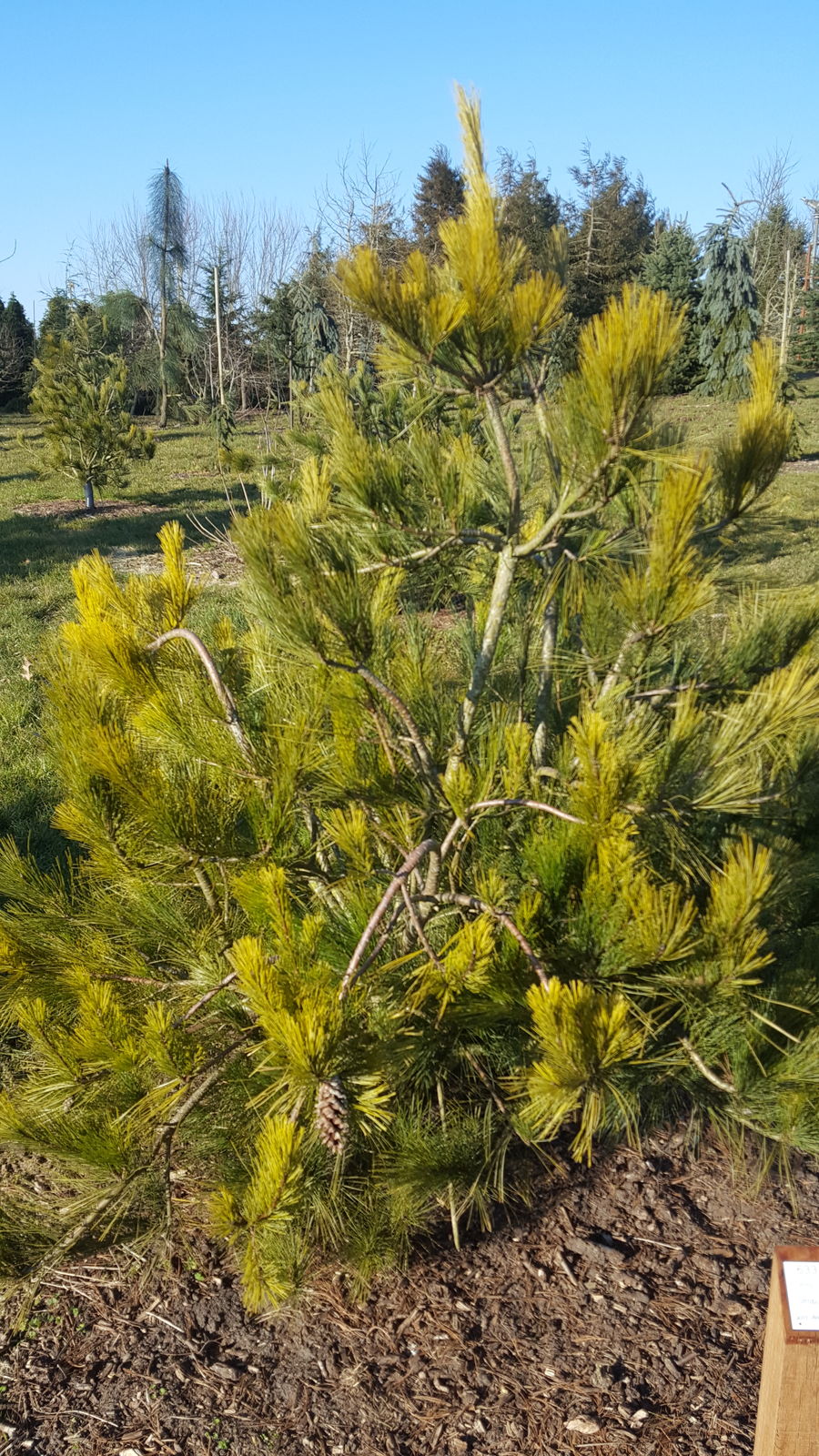
Four cultivars make up much of the selection for modest gardens: 'Fastigiata', narrow and columnar; 'Pendula', with drooping branches trained on a stake; 'Nana', a group of rounded dwarf forms suited to rock gardens; and 'Macopin', compact and slow-growing. Grafting preserves their individual characteristics. 5
Three other five-needle pines can cause confusion. Himalayan pine (Pinus wallichiana) has longer, more drooping needles; western white pine (Pinus monticola) looks similar but bears shorter cones; Macedonian pine (Pinus peuce) has a more compact, regular crown. Five needles per bundle immediately exclude European pines with two or three needles. Cones 10–20 cm (4–8 in) long then help distinguish Pinus strobus from these three five-needle relatives.
Main sources
- Plants of the World Online / Kew, Pinus strobus L.
- Royal Horticultural Society, Pinus strobus - Weymouth pine
- NC State Extension, Pinus strobus (Eastern White Pine)
- Plants For A Future, Pinus strobus
- Missouri Botanical Garden, Pinus strobus
- IUCN Red List, Pinus strobus assessment
- USDA PLANTS Database, Pinus strobus (PIST)
- Encyclopaedia Britannica, White pine tree (Pinus genus)
Frequently asked questions
How do you identify Eastern white pine?
Flexible blue-green needles in bundles of five, measuring 6–14 cm (2.4–5.5 in), are the most reliable feature. Hanging cones 10–20 cm (4–8 in) long help distinguish it from other pines grown in Europe.
Is Eastern white pine toxic to cats and dogs?
It is not classified as toxic to these animals. Needles and resin may nevertheless cause mild mouth irritation if swallowed, with no serious effects documented.
Why does white pine blister rust kill trees?
Cronartium ribicola, a fungus introduced from Europe in the early 20th century, needs an alternate host in the genus Ribes, such as a currant or gooseberry, to complete its life cycle. Mortality reached 50–80% in some stands before Ribes eradication campaigns.
Where does the name Weymouth pine come from?
Lord Weymouth planted the species extensively on his English estate in the early 18th century. This popularized the name in Europe, long before the French name meaning American white pine became established.
What is the story behind mast pines and the royal broad arrow?
In the 18th century, the British Crown reserved the tallest New England white pines for Royal Navy masts, marking them with a carved broad arrow. This timber monopoly fueled colonial tensions, including the Weare riot of 1772.
Is Eastern white pine threatened?
The IUCN lists it as Least Concern, reflecting its broad range and generally stable population, despite localized losses caused by blister rust over the past century.
How can you tell white pine from Himalayan pine?
Both have five needles per bundle, but Himalayan pine (Pinus wallichiana) has longer, more drooping needles and cones that are often more resinous and sticky at the base.
Similar plants

If you are unsure about a plant’s toxicity, ask a botanist or veterinarian for advice.