
Asian plantain (Plantago asiatica, )
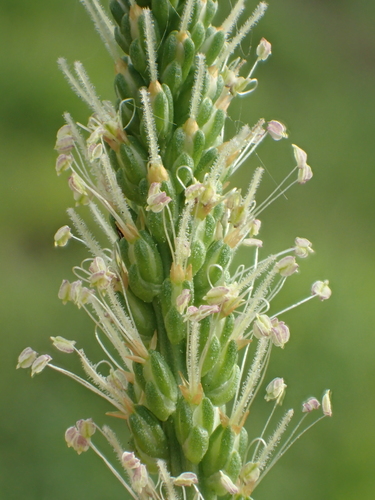


Asian plantain (Plantago asiatica L., 1753) is a herbaceous perennial in the Plantaginaceae family, native to temperate and subtropical Asia from China and Japan to India and Southeast Asia. Its veined leaf rosettes thrive on banks, roadsides and disturbed soil. The seeds, sold in East Asia as che qian zi, have a centuries-old traditional role as a mucilaginous laxative and diuretic.
Read moreAsian plantain, Chinese plantain, Che qian cao and Ōbako
Allow a few hours of direct sun per day, preferably morning or evening.
Full sun to light partial shade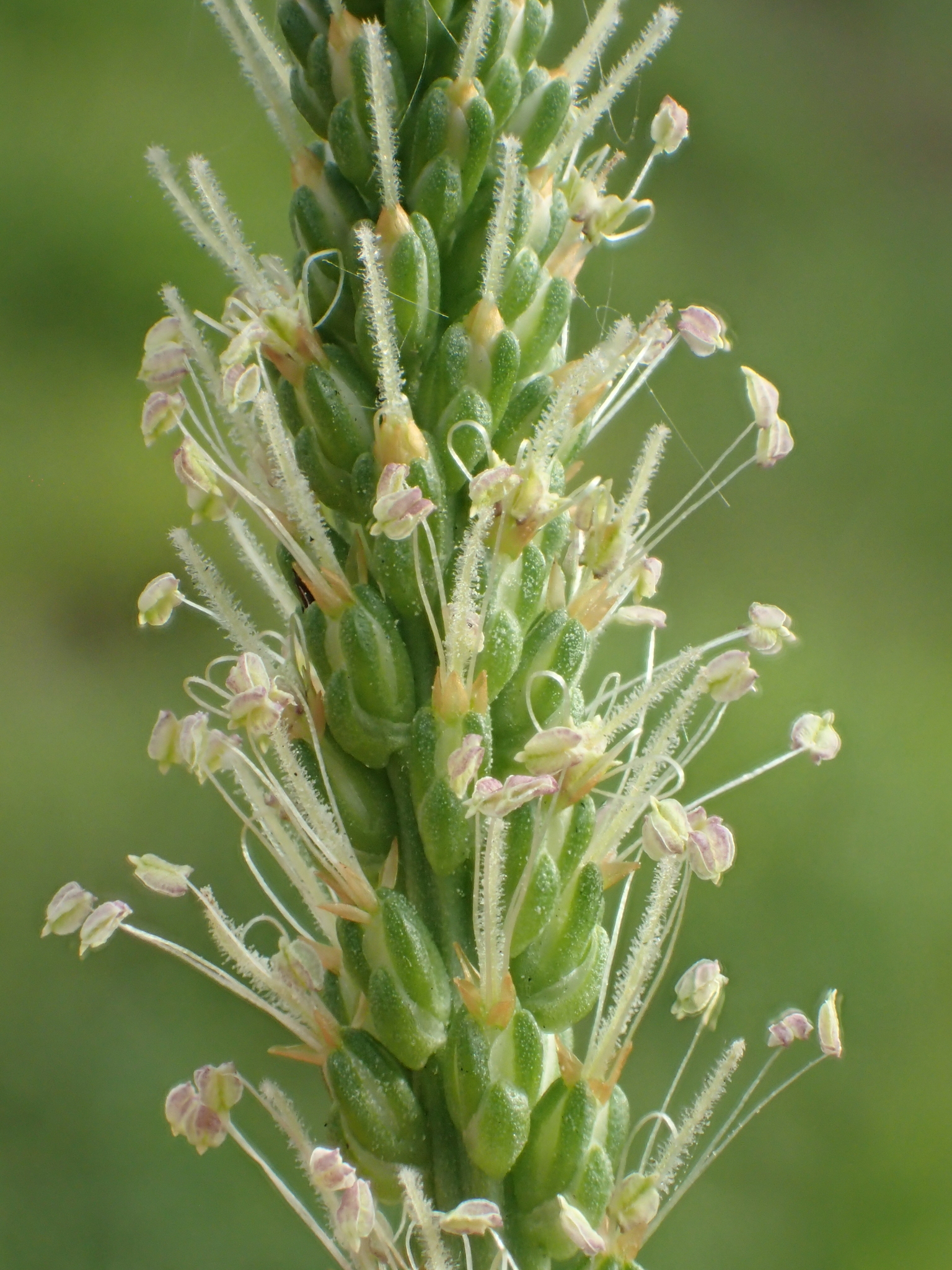


© photo
no rights reserved, uploaded by 葉子 · cc0
Wikimedia Commons · CC BY-SA or Public Domain


Global distribution
Plantago asiatica is native to temperate and subtropical Asia, from China, including Taiwan, and Japan, from Hokkaido to the Ryukyu Islands, through Korea and south to India, Indochina and Malaysia. Beyond this range it is mainly cultivated on a small scale for medicinal seeds rather than widely naturalized.
- Native6
- China
- Taiwan
- Japan
- Korea
- India
- Malaysia
Hexagons: regions where the plant occurs. Green dots: native range.1
Identity
Asian plantain (Plantago asiatica L., 1753), also known as Chinese plantain or by its Chinese name Che qian cao, is a herbaceous perennial in the genus Plantago, family Plantaginaceae. Carl Linnaeus published it in 1753 in the first volume of Species Plantarum. Plants of the World Online still accepts Plantago asiatica as its name. 1 2
Chinese che qian, meaning in front of the cart, describes a plant found in cart ruts and along traveled roadsides, habitats it still occupies. Its Japanese name Ōbako, literally large leaf, instead emphasizes the rosette. The dried seeds, sold as che qian zi, have a long-established place in East Asian traditional medicine. 3 4
Recognition
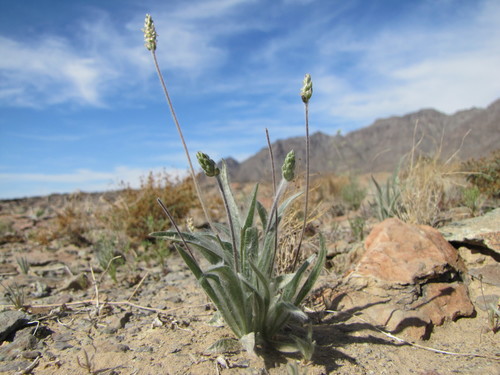
Basal rosettes carry ovate to elliptical leaves with distinct stalks and relatively few parallel veins. Their blades are narrower than those of broadleaf plantain, a useful first clue when comparing the species. Cultivated plants commonly reach 50 cm (20 in) high and 30 cm (12 in) across; wild plants may grow larger on rich soil. 5 3
One or more upright, leafless flower stalks, 20–45 cm (8–18 in) tall, carry dense spikes of tiny whitish flowers from spring through late summer. The fruit is a pyxis, a capsule whose lid detaches along a circular line when ripe, releasing small black, mucilaginous seeds. A rosette with no visible flower stalk is not necessarily diseased: it may simply be immature or too shaded to flower. 5
Useful taxonomy
For this plant, Plants of the World Online accepts Plantago asiatica L., published in Species Plantarum 1: 113 (1753). Several subspecies are recognized, including: 1
- Plantago asiatica subsp. asiatica, the most widespread form in the native range;
- Plantago asiatica subsp. densiflora (J.Z.Liu) Z.Yu Li, described from Tibet to south-central China;
- Plantago asiatica subsp. erosa (Wall.) Z.Yu Li, occurring from the Indian subcontinent to China.
Distinguishing it taxonomically from Plantago major has long been difficult. Some floras treated asiatica as a variety of broadleaf plantain, Plantago major var. asiatica, before later revisions restored it as a distinct species. 1
Habitat and range
Temperate and subtropical Asia contain its native range: China, including Taiwan; Japan, from Hokkaido to the Ryukyu Islands; Korea; and, farther south, India, Indochina and Malaysia. 3 5
Roadsides, mountain slopes and ravines, riverbanks, cultivated fields and disturbed ground all support the species, from lowlands to middle mountain elevations. Its range spans northern Japan's temperate climate and the subtropical Ryukyus, explaining its broad temperature tolerance. Plantago asiatica withstands frost to about -15 °C (5 °F) and is placed in USDA zones 6–9. 5
Beyond Asia, small-scale cultivation for medicinal seeds is more characteristic than the extensive naturalization seen in its close relative Plantago major. 3
Life cycle and reproduction
Self-fertile flowers appear on upright stalks from spring into late summer, corresponding to April–August in the Northern Hemisphere reference climate. Wind rather than insects carries their pollen. Capsules subsequently ripen from early summer into early fall, June–September in that same climate, releasing small black seeds. 5
When wet, the seeds swell because their coats are rich in mucilage, reported at up to about 30% of seed weight. Similar to psyllium (Plantago ovata), this swelling explains both dispersal through contact with shoes and animal fur and the seeds' traditional use as a laxative fiber. 5
Garden propagation uses late-winter sowing in a cold frame or direct spring sowing, followed by transplanting young seedlings in early summer. Dividing an established clump provides a secondary method. 5
Uses and risks
Dried seeds, che qian zi, and the whole plant, che qian cao, have a long history in East Asian traditional medicine, where they have been used for liver disorders, urinary inflammation and digestive problems. 3 4
Three compounds or pathways help explain the research surrounding these uses. Plantamajoside, extracted from leaves and seeds, inhibits cellular glycation in published experiments, a mechanism associated with aging and diabetes. 6 Seed extract also modulates lipid metabolism through the PPAR pathway, with effects documented in mouse models of obesity. 7 Acteoside, another seed compound, inhibits xanthine oxidase, a mechanism investigated for lowering uric acid in gout. These findings concern experimental research rather than established treatments. 8
Ordinary food or medicinal use has no documented toxicity. As with other plantains, however, wind-dispersed pollen is a late-summer allergen. Excessive mucilage-rich seeds taken without enough water may cause digestive discomfort rather than a toxic effect. 5
Varieties, look-alikes and related plants
Medicinal seed production rather than decorative planting accounts for this species' cultivation. No ornamental cultivar comparable to 'Rubrifolia' of Plantago major is documented for Plantago asiatica. 3
Broadleaf plantain, Plantago major, is the most frequent source of confusion, with broader leaves and more numerous veins. Another close East Asian species, Plantago depressa, has narrower, more densely hairy foliage and shares the same disturbed habitats. 1
Blade width and parallel vein number provide the most reliable field clues: a narrow blade with fewer veins points to Plantago asiatica, while a broad, rounded blade points to Plantago major.
Main sources
- Plants of the World Online / Kew, Plantago asiatica L.
- International Plant Names Index, Plantago asiatica L.
- USDA ARS GRIN Global Taxonomy, Plantago asiatica
- Integrated Taxonomic Information System, Plantago asiatica L.
- Plants For A Future, Plantago asiatica
- Phytotherapy Research, plantamajoside anti-glycation activity in Plantago asiatica
- International Journal of Molecular Sciences, Plantago asiatica seed extract and PPAR-mediated lipid metabolism
- BioMed Research International, Plantago asiatica seed extract and xanthine oxidase inhibition
Frequently asked questions
Is Asian plantain toxic?
No toxicity is documented with ordinary food or medicinal use. Its pollen is a common late-summer allergen, and excessive mucilage-rich seeds taken without enough water can cause digestive discomfort.
Can you eat Asian plantain?
Young leaves can be cooked in soups or sautéed after removing tough fibers. Raw leaves quickly become fibrous and slightly bitter as they age.
What is che qian zi?
Che qian zi is the name for dried Plantago asiatica seeds, used for centuries in East Asian traditional medicine for their diuretic, anti-inflammatory and laxative properties.
How can I distinguish Plantago asiatica from Plantago major?
Leaf width and the number of parallel veins provide the quickest clues. Plantago asiatica has narrower blades and fewer veins than the broad, rounded leaves of broadleaf plantain.
Where does Asian plantain come from?
US GRIN distribution records place its native range in temperate and subtropical Asia, from China and Japan through Korea to India, Indochina and Malaysia.
Is Asian plantain invasive?
It is a common weed of disturbed ground within its native range, without documented large-scale invasive status outside Asia, unlike Plantago major.
Why are the seeds used as a laxative?
The seed coat contains up to about 30% mucilage, which swells on contact with water in a similar way to psyllium (Plantago ovata). This explains its traditional use as a laxative fiber.
Similar plants

If you are unsure about a plant’s toxicity, ask a botanist or veterinarian for advice.