
Oriental plane (Platanus orientalis, )
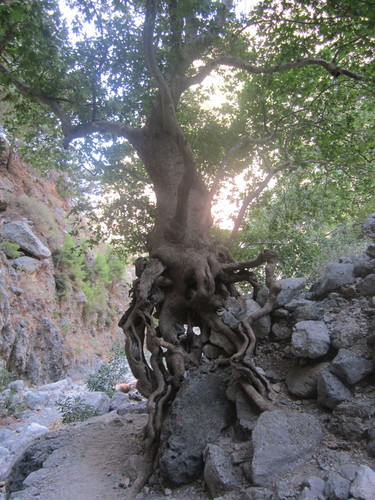
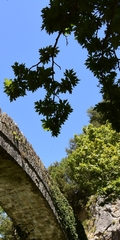
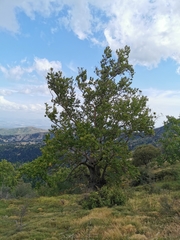
Oriental plane (Platanus orientalis) is a large deciduous tree in the Platanaceae family, native to southeastern Europe and western Asia as far as Iran. Its leaves have five to seven deep lobes, its bark peels in pale patches, and its fruit balls hang in groups of three to six on one stalk, distinguishing it from American and hybrid plane trees.
Read moreOriental plane, Chinar and Oriental plane-tree
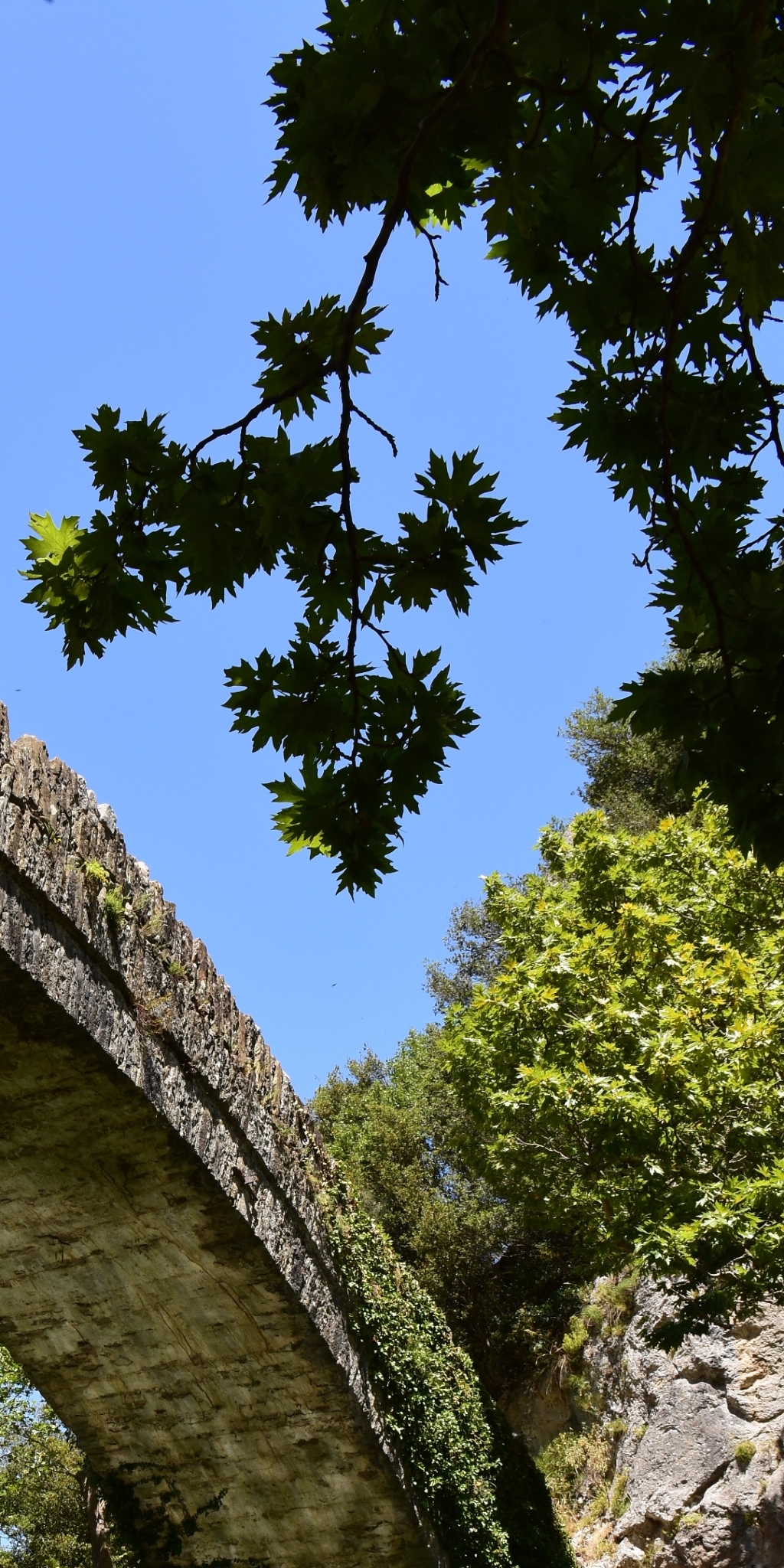
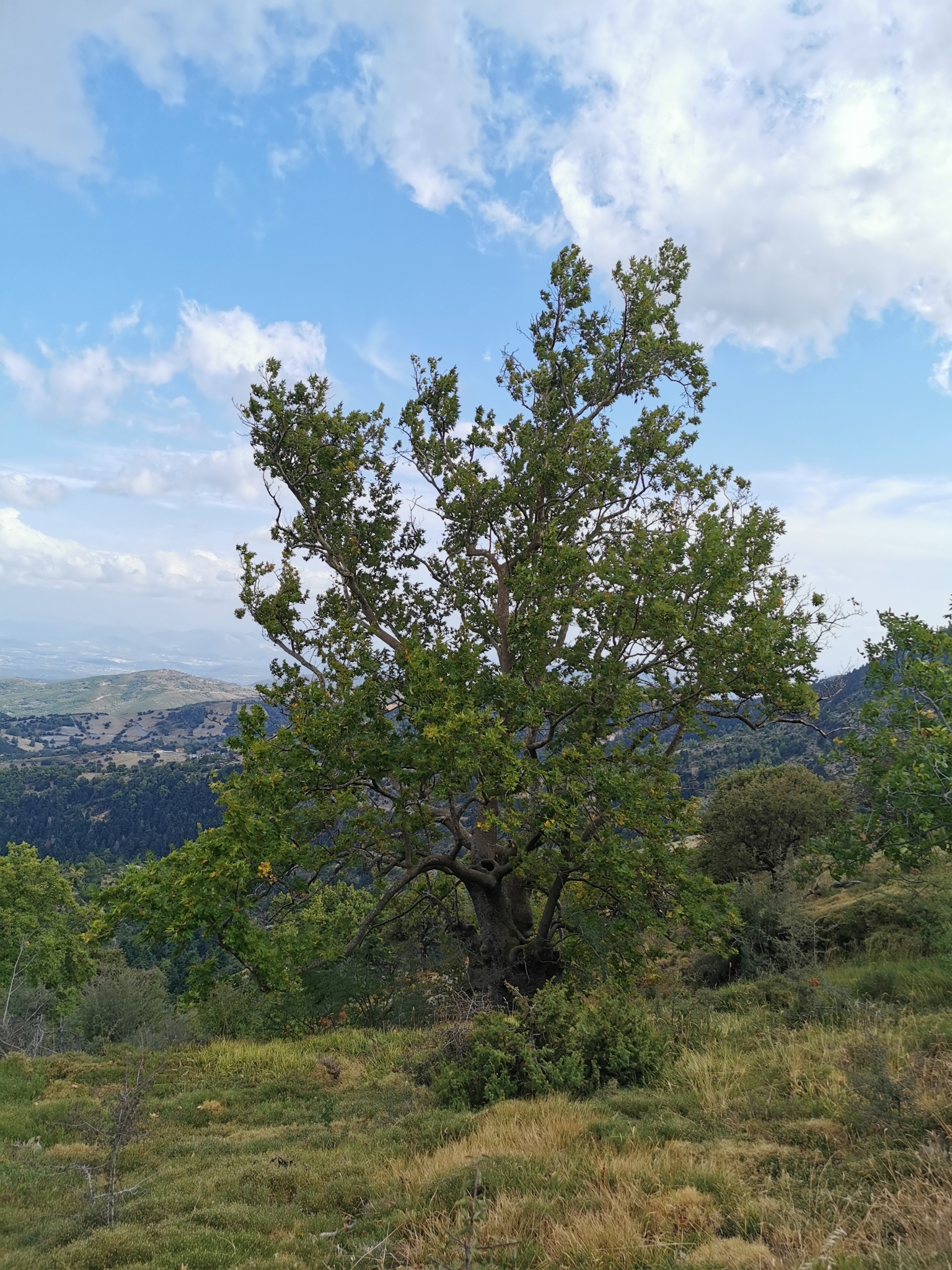


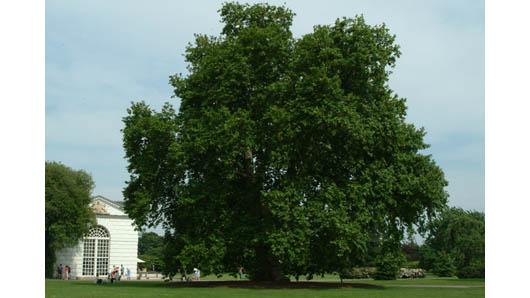
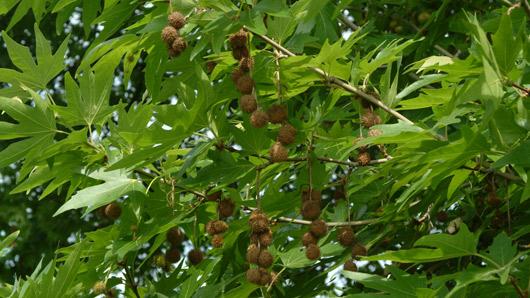
© photo
Fippe · cc-by
Zac Peterson · cc-by
Thor-Rune Hansen · cc-by-sa
Taken Dec 15, 2018 by Photoflora - Jean-Luc TASSET (©)
Taken Sep 15, 2001 by Photoflora - Jean-Luc TASSET (©)
Taken Sep 9, 2020 by Stoyan (cc-by-sa)
Taken May 6, 2020 by El Mojito (cc-by-sa)
Taken Jun 25, 2022 by Pl@ntNet (cc-by-sa)
© copyright of the Board of Trustees of the Royal Botanic Gardens, Kew.


Global distribution
Platanus orientalis is native from southeastern Europe, including Italy and the Balkans, through Turkey and the Caucasus to Iran. It grows almost exclusively beside rivers and springs in mountain areas up to 1500 m. Cultivated since antiquity in Persia and later in the Middle East and South Asia, it was subsequently introduced to western Europe as an ornamental and avenue tree.
- Native5
- Greece
- Turkey
- Iran
- Italy
- Azerbaijan
Hexagons: regions where the plant occurs. Green dots: native range.1
Identity
Oriental plane (Platanus orientalis L., 1753), also called chinar, is a large deciduous tree in the Platanaceae family, reaching 25 to 40 m (82–131 ft) at maturity. Two features distinguish it from its American relative, Platanus occidentalis, described by Linnaeus in the same work: leaves with five or seven deep lobes, and fruit balls grouped three to six on one stalk. The epithet orientalis contrasts their geography: this species is Eurasian, while its relative comes from the eastern and central United States. 1 2
The plane-tree name derives from ancient Greek platys, meaning broad, describing both the foliage and the mature trunk, often massive and short in very old trees. In Persia and later South Asia, the tree is known as chinar. Mughal emperors popularized it for shade and gardens in the sixteenth century, especially in Kashmir, where it remains a strong regional symbol. 5
On Kos, a Greek island, an old plane tree is traditionally associated with Hippocrates, said to have taught medicine beneath its branches in the fifth century BCE. The tree visible today is far younger than the legend suggests, but preserves a site linked to this story since antiquity. 5
Recognition
Deep leaf divisions identify Oriental plane even before its bark does. Five to seven narrow lobes, separated by pronounced sinuses, cut much farther into the blade than in American sycamore or London plane. Young leaves are aromatic and covered in star-shaped hairs that quickly fall away as they dry. 5 4
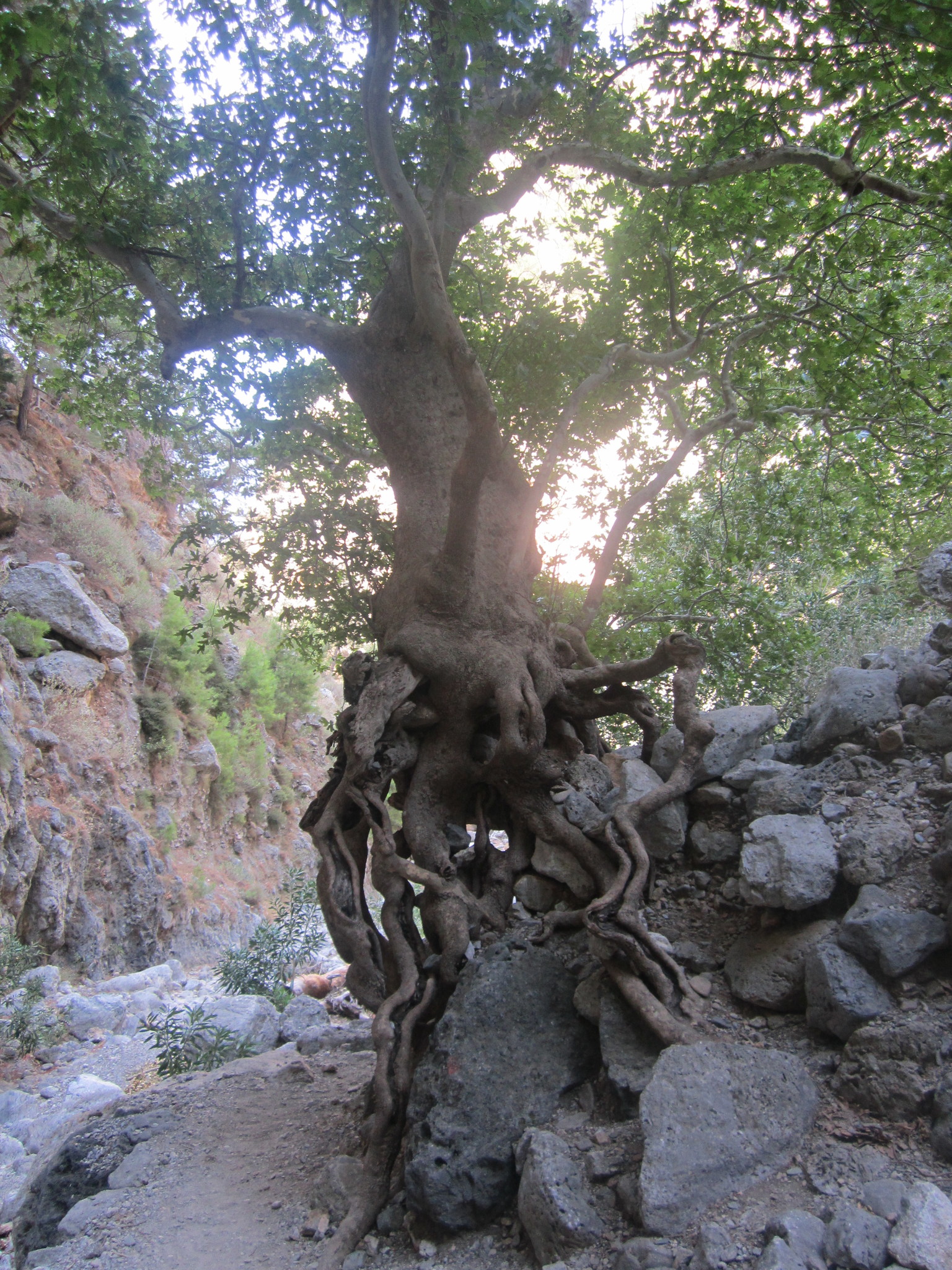
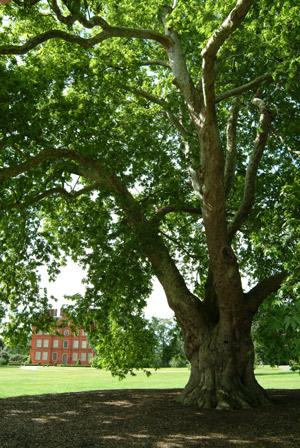
Mature specimens commonly stand 25 to 40 m (82–131 ft) tall, with massive, sometimes twisted limbs on the oldest trees. Bark flakes away in brown and whitish patches and becomes darker and fissured at the trunk base, creating a pattern visible at a distance in any season. 5 3
A downy brown fruit ball measures about 2 to 2.5 cm (0.8–1 in) across and almost never hangs alone. Groups of three to six share one stalk, distinguishing the species from American sycamore, which bears one, and London plane, which usually bears two. 5 4
Useful taxonomy
Botanical references retain Platanus orientalis L. as the accepted name within the small, isolated Platanaceae family, represented by only a handful of species in Platanus. Its synonymy includes several historical varieties now placed under the typical species. 1
- Platanus vulgaris proles orientalis (L.) Cadevall, a historical synonym
- Platanus orientalis var. insularis A.DC., a historical synonym
- Platanus orientalis var. cuneata (Willd.) Loudon, a historical synonym
- Platanus orientalis var. acerifolia Aiton, a historical synonym
London plane, Platanus × hispanica, is a particularly relevant relative: it is the hybrid of Platanus orientalis and Platanus occidentalis. This hybrid, rather than the pure Eurasian species, lines most French streets and canals. 2 5
Habitat and range
Southeastern Europe, including Italy and the Balkans, forms the western end of a native range extending through Turkey and the Caucasus to Iran. There, Oriental plane grows almost exclusively in riverside woods and around mountain springs, up to 1500 m (4920 ft), in habitats similar to those of its American relative. 5 6
Ancient cultivation in Persia preceded widespread planting in South Asia and the Middle East. Later introductions to western Europe established it as an ornamental and avenue tree, valued for its tolerance of air pollution and compacted soil. 6 3
The IUCN assessment places Oriental plane in Data Deficient, reflecting a lack of reliable population monitoring throughout its range. Widespread hybridization with London plane also makes it difficult to identify remaining pure wild populations. 8
Life cycle and reproduction
Spring brings small, reddish, rounded flower heads, with male and female heads on the same monoecious tree and pollination by wind. Fruit matures in fall as groups of three to six balls, gradually breaking apart through winter to release seeds. These seasons describe its native Northern Hemisphere cycle. 4 5
Seed germination follows two months of cold stratification, a requirement that helps explain synchronized emergence in the spring after dispersal. Seed propagation produces the typical species; mature-wood cuttings taken in fall or grafting are the reliable ways to preserve a particular cultivar. 6
Longevity is remarkable even among Eurasian trees. Exceptional Oriental planes, particularly in the Caucasus, are reported to exceed two thousand years, with massive, short and often hollow trunks. 5
Uses and risks
Shade and avenue planting have been its principal landscape uses since antiquity, thanks to fast growth and dense foliage. Maintenance is demanding because twigs, bark plates and fruit balls fall each year. Restricted urban rooting space encourages strong, shallow roots that can lift sidewalks and nearby foundations, so generous separation from buildings is necessary. 4 3
Chemical poisoning has not been documented for this species. Its contact risk instead comes from the fine star-shaped hairs on young leaves and fruit, which can irritate skin, eyes and airways with prolonged exposure. 5
Two serious diseases affect the genus Platanus. Plane anthracnose causes early leaf browning in cool, wet springs without endangering the tree in the long term. Canker stain is a severe disease regulated in France; it affects the whole genus, including Oriental plane and its extensively planted urban hybrid. 3
Varieties, look-alikes and related plants
Cultivar differences concern habit and foliage. Digitata has even narrower, deeper, almost fingerlike lobes than the typical form, while Minaret has a narrow, upright crown suited to urban avenues with little ground space. Autumn Glory was selected for reliable, pronounced fall color. 5
In French cities and along canals, the main identification problem is separating the pure Eurasian species from the dominant hybrid, Platanus × hispanica. Count the fruit balls on each stalk: three to six in Platanus orientalis, usually two in the hybrid, and one in Platanus occidentalis. 5
Sycamore maple, Acer pseudoplatanus, creates another confusion through its name despite being botanically unrelated. Leaf arrangement is quicker to check than fruit counts: plane leaves alternate along a twig, while maple leaves are opposite, settling the distinction in seconds in the field.
Main sources
- Plants of the World Online / Kew, Platanus orientalis L.
- International Plant Names Index, Platanus orientalis L.
- Royal Horticultural Society, Platanus orientalis - Oriental plane
- Missouri Botanical Garden, Platanus orientalis
- Trees and Shrubs Online, Platanus orientalis
- Plants For A Future, Platanus orientalis
- Tela Botanica, Platanus orientalis L.
- IUCN Red List of Threatened Species, Platanus orientalis assessment
Frequently asked questions
Are Oriental plane and London plane the same species?
No. London plane (Platanus × hispanica) is a hybrid of Platanus orientalis and American sycamore, Platanus occidentalis. This hybrid, rather than the pure Eurasian species, lines most streets in France.
How can I identify an Oriental plane among city trees?
Fruit is the most reliable clue: Platanus orientalis bears balls in groups of three to six on one stalk, compared with usually two in London plane and one in American sycamore. More deeply lobed leaves provide a second clue.
Is Oriental plane toxic to cats and dogs?
No chemical toxicity is documented for this species. Only the fine hairs on young leaves and fruit may irritate skin, eyes or airways after prolonged contact; this is distinct from food poisoning.
Why is Oriental plane associated with Hippocrates?
On the Greek island of Kos, a plane tree traditionally linked to the physician is presented as the place where he taught in the fifth century BCE. The tree seen today is much younger than the legend, but preserves the site associated with the story.
What is the chinar of Kashmir and Iran?
Chinar is the name used for Platanus orientalis in Persia and South Asia. Mughal emperors popularized it as a garden and shade tree in the sixteenth century, especially in Kashmir, where it remains a strong regional symbol and a protected heritage tree.
Can Oriental plane develop canker stain?
Yes. This serious fungal disease, regulated in France, affects the whole genus Platanus, including Oriental plane and its widely planted urban hybrid. Contaminated pruning tools pose a high risk of spreading it.
How long can an Oriental plane live?
The species can live for several centuries. Exceptional trees, especially in the Caucasus, are reported to exceed two thousand years. Such old specimens often develop a massive, short, hollow trunk with large twisted branches.
Similar plants
If you are unsure about a plant’s toxicity, ask a botanist or veterinarian for advice.