
Balloon flower (Platycodon grandiflorus, )
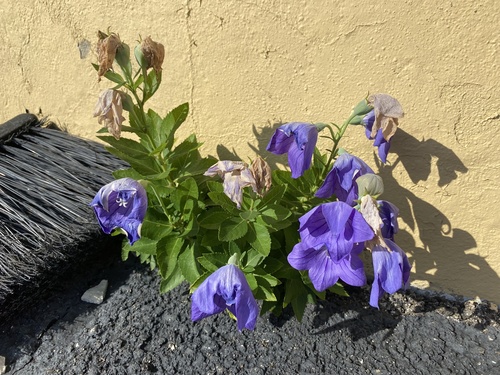

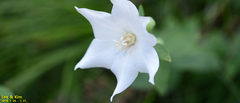
Balloon flower (Platycodon grandiflorus) is an herbaceous perennial in the Campanulaceae family, native to East Asia and the sole member of its genus. Its most recognizable feature is a flower bud that swells like a balloon before opening into a broad, star-shaped violet-blue bell.
Read moreBalloon flower, Chinese bellflower, Platycodon and Doraji
Allow a few hours of direct sun per day, preferably morning or evening.
Full sun to light partial shade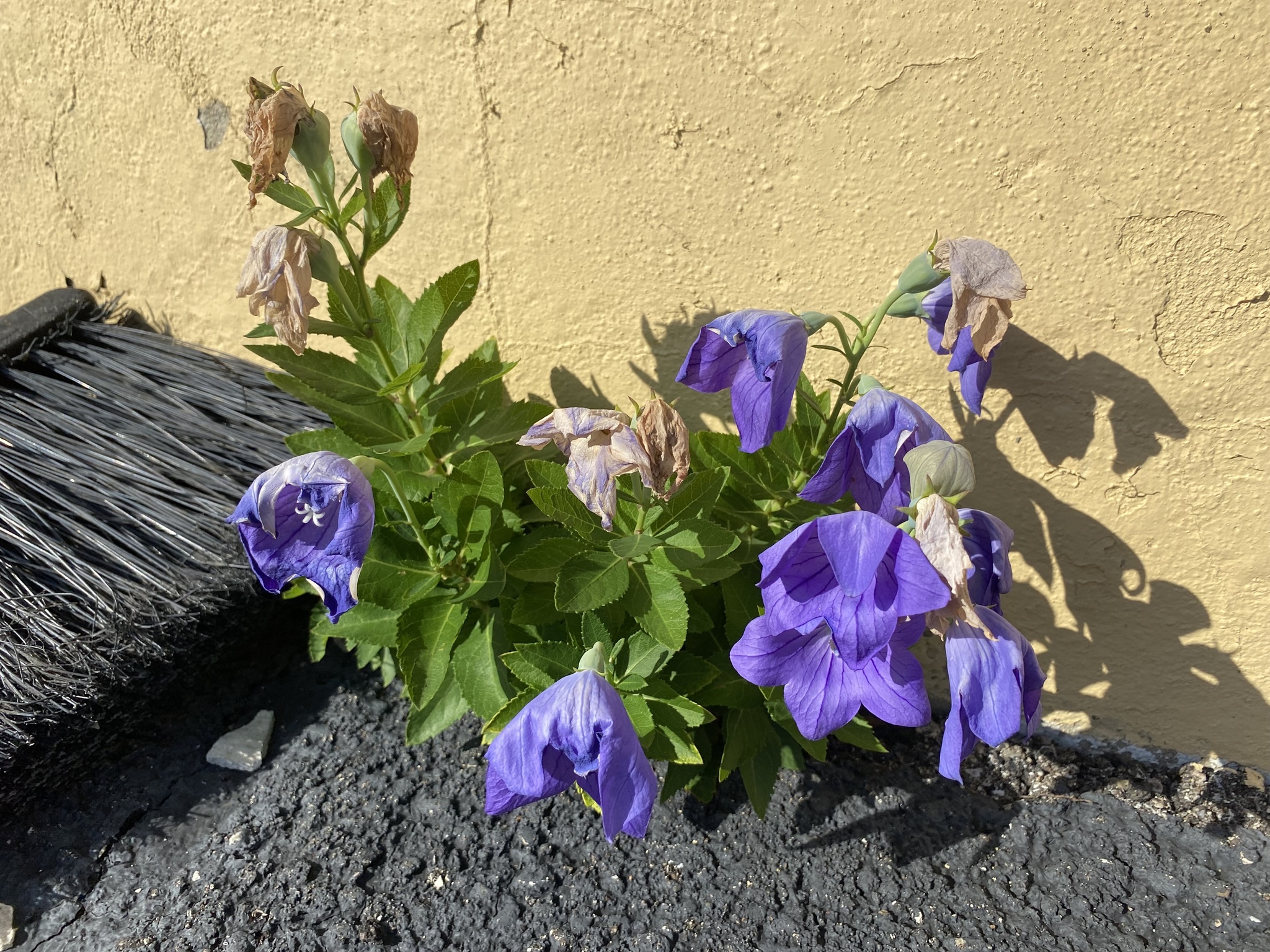


© photo
Yann Kemper · cc0
(c) safechrislaurie, some rights reserved (CC BY-NC), uploaded by safechrislaurie · cc-by-nc
Kim, Hyun-tae · cc-by
Taken Jul 26, 2020 by Guido Bonetti (cc-by-sa)
Taken Jul 4, 2021 by J Howard (cc-by-sa)
Taken Aug 24, 2022 by George G (cc-by-sa)
Taken Jul 2, 2020 by franchi Gianni (cc-by-sa)
© copyright of the Board of Trustees of the Royal Botanic Gardens, Kew.


Global distribution
Platycodon grandiflorus is native from the Russian Far East through northeastern China to the Korean Peninsula and Japan. It is cultivated far beyond this range in temperate European and North American gardens, where it is not considered invasive.
- Native5
- Russia (Far East)
- China
- South Korea
- North Korea
- Japan
Hexagons: regions where the plant occurs. Green dots: native range.1
Identity
Balloon flower (Platycodon grandiflorus (Jacq.) A.DC., 1830), also known as Chinese bellflower, is an herbaceous perennial in the Campanulaceae family. POWO treats it as the only accepted species in Platycodon: a monotypic genus, with no other recognized species alongside it. 1 7
Nikolaus von Jacquin first described this species as Campanula grandiflora in 1777. Alphonse de Candolle transferred it to a new genus, Platycodon, in 1830; the authority (Jacq.) A.DC. records both steps. The genus name combines Greek platys, broad, and kodon, bell, describing the widely flared corolla when open. 1 8
Recognition
An inflated, sealed flower bud identifies Balloon flower faster than an open bloom does. Before opening, it swells into a small balloon, a stage absent in typical bellflowers of the genus Campanula. The English common name refers directly to this swelling, already evident while the flower is still in bud. 7 5
Opened flowers form broad, star-shaped bells with five fused lobes, measuring 4 to 8 cm (1.6–3.1 in) across depending on the cultivar. Violet-blue predominates in the typical species, while horticultural selections include white and pink. Upright stems carry toothed, blue-green leaves, arranged alternately or in whorls, and release milky sap when cut, as do other Campanulaceae. 2 5
A deep, fleshy taproot supports a clump 30 to 90 cm (12–35 in) tall, depending on the cultivar. Another useful diagnostic feature is late spring emergence, often after most neighboring border perennials, which can lead gardeners to assume the plant has died. 5 2
Useful taxonomy
Historical names for the same plant include Platycodon glaucus (Thunb.) Nakai, Platycodon chinensis Lindl. & Paxton and Platycodon sinensis Jacques & Hérincq. POWO now places all of them in the synonymy of Platycodon grandiflorus. 1
One misleading name deserves particular care: Platycodon homallanthinus is not a variant of Balloon flower but a synonym of a different plant, Campanula expansa, classified in another genus. This overlap illustrates the taxonomic uncertainty surrounding the group before modern revisions clarified it. 1
Using Platycodon grandiflorus, the accepted binomial, resolves that ambiguity. POWO recognizes no other species within the monotypic genus Platycodon, so identifying the genus in the field also identifies the species. 1 8
Habitat and range
From the Russian Far East, the native range reaches northeastern China, the Korean Peninsula and Japan. POWO summarizes it as extending from southeastern Siberia to Japan and China. 1 8
Across its native territory, Balloon flower occupies sunny grassy hillsides, mountain and lowland meadows, and open woodland edges, always on soil that drains rainwater effectively. Full sun and good drainage, the conditions observed in its natural habitat, also underpin garden cultivation advice. 5 2
Beyond East Asia, Platycodon grandiflorus is chiefly an ornamental in temperate gardens of Europe and North America. Despite longstanding, widespread cultivation there, it is not reported as an invasive species. 5 6
Life cycle and flowering
Blooms appear from July through September in Northern Hemisphere gardens, depending on climate and cultivar. Bees and bumblebees force open the swollen buds, and the flowers later develop capsules filled with small seeds. 5 2
Surface sowing in spring is the main propagation method; allow about two years for abundant flowering. Division is possible but risky because cutting the taproot often compromises establishment. Gardeners therefore reserve it for cultivars that would not come true from seed. 6 2
An established crown returns every year from the same root, with its characteristic delay: spring shoots can appear several weeks after neighboring perennials. Marking the site at the end of the growing season prevents accidental digging into a dormant crown. It tolerates frost down to USDA zone 3 if winter drainage is good; cold, wet soil can rot the taproot before frost alone damages it. 5
Uses and safety
Garden use centers on ornamental planting in sunny beds, borders and rock gardens, or deep, large containers that accommodate the taproot. Dwarf cultivars suit pots, while taller forms supply cut flowers. 2 5
Food and traditional medicine provide other longstanding uses for the root in East Asia. In Korea, it is prepared as doraji, after soaking and blanching to reduce the bitterness of platycodin saponins. Traditional East Asian medicine uses it as an expectorant for coughs. 6 7
Available toxicity information classifies Platycodon grandiflorus as non-toxic to cats and dogs, while its status for horses remains uncertain. Eating large amounts of raw root may nevertheless cause digestive irritation because of its saponins, supporting preparation before consumption rather than eating it raw. 6
Varieties and look-alikes
RHS-listed selections include Mariesii, a compact, very free-flowering cultivar suited to borders and large pots. The Apoyama Group comprises even smaller, dwarf alpine forms useful in rock gardens. 3 4
Commercial series such as Fuji and Astra offer tall cut-flower forms and dwarf border plants in the three principal colors: blue, white and pink. A naturally white form, described as f. albiflorus, shows that color variation occurs in wild plants as well as horticultural selections. 2 1
Ordinary Campanula bellflowers are the closest visual source of confusion. The bud inflated before opening, the more broadly star-shaped corolla and the monotypic genus distinguish Platycodon grandiflorus clearly from its more familiar garden relatives. 7 1
Main sources
- Plants of the World Online / Kew, Platycodon grandiflorus (Jacq.) A.DC.
- Royal Horticultural Society, Platycodon grandiflorus
- Royal Horticultural Society, Platycodon grandiflorus Mariesii
- Royal Horticultural Society, Platycodon grandiflorus Apoyama Group
- Missouri Botanical Garden Plant Finder, Platycodon grandiflorus
- Plants For A Future, Platycodon grandiflorus
- Wikipedia EN, Platycodon
- NCBI Taxonomy, Platycodon grandiflorus
Frequently asked questions
Why do Balloon flower buds look like balloons?
The bud fills with air before its petals open, a mechanism distinctive among cultivated Campanulaceae. This swelling explains the name Balloon flower.
Can I divide an established Balloon flower?
Division is risky because the taproot does not tolerate cutting or moving well. Spring sowing gives better results for propagation.
Is Balloon flower toxic to cats or dogs?
Available information classifies it as non-toxic to cats and dogs. Its root contains saponins that may irritate the digestive system if eaten raw in large amounts.
Why is my Balloon flower slow to emerge in spring?
Late emergence is normal for this species, often after most neighboring border perennials. Marking its position prevents mistaking it for a dead plant and accidentally digging it up.
Is Balloon flower root edible?
Yes. In Korea it is prepared as doraji after soaking and blanching to reduce the bitterness of its saponins. It is also used as an expectorant in traditional East Asian medicine.
How does Balloon flower differ from Campanula bellflowers?
Platycodon grandiflorus belongs to a separate, monotypic genus. Its inflated bud and more broadly star-shaped corolla distinguish it from familiar garden Campanula species.
Similar plants
If you are unsure about a plant’s toxicity, ask a botanist or veterinarian for advice.