
Jaboticaba (Plinia cauliflora, )
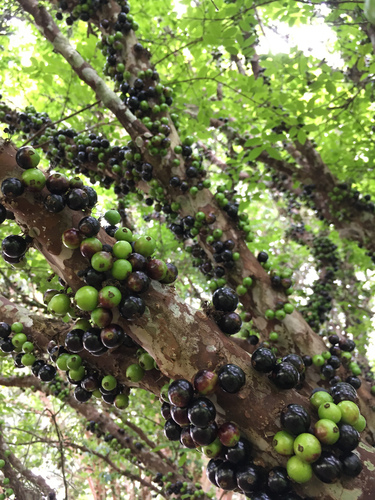

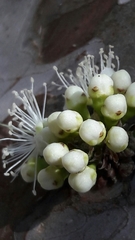
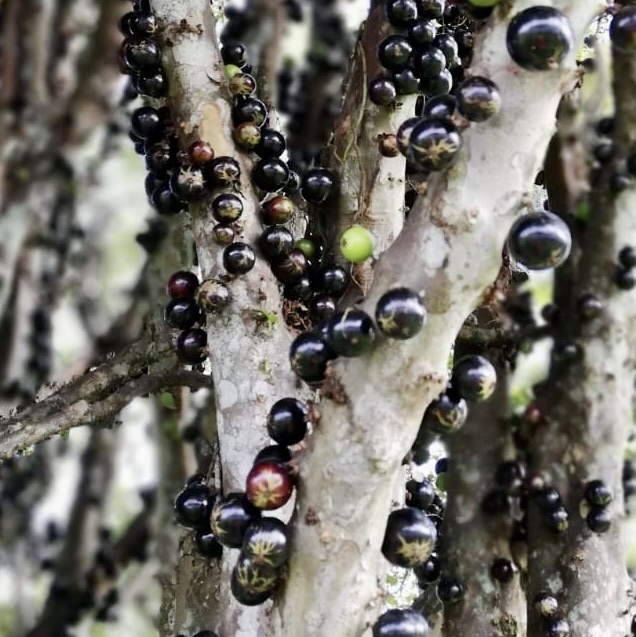
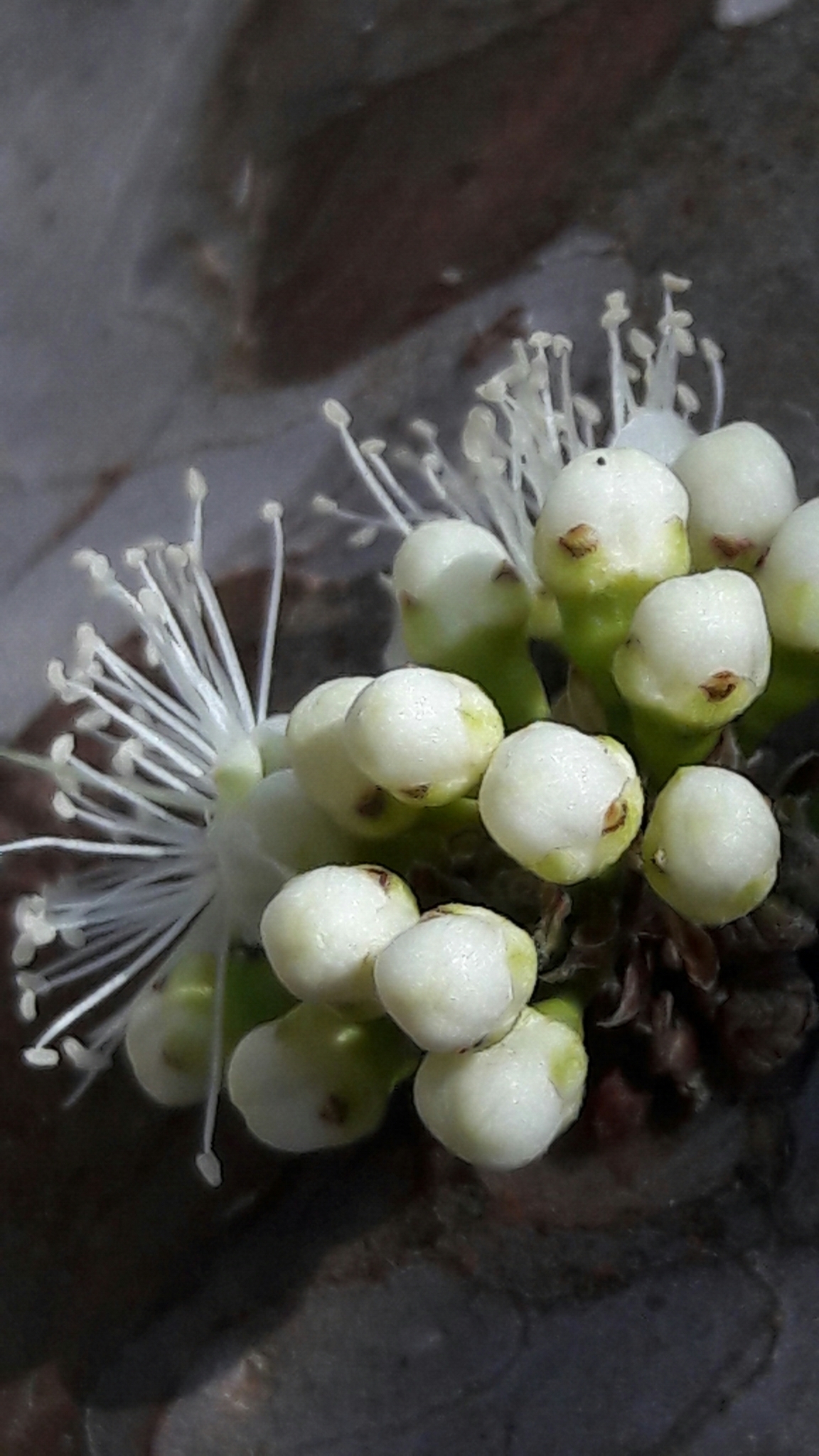
Jaboticaba (Plinia cauliflora), also called Brazilian grapetree, is an evergreen fruit tree in the Myrtaceae family, native to southeastern Brazil and eastern Bolivia. Its unusual cauliflory produces clusters of flowers, then fruit, directly on the trunk and large branches rather than on the current season’s shoots.
Read moreJaboticaba, Brazilian grapetree and Jabuticaba
Allow a few hours of direct sun per day, preferably morning or evening.
Full sun to light partial shade

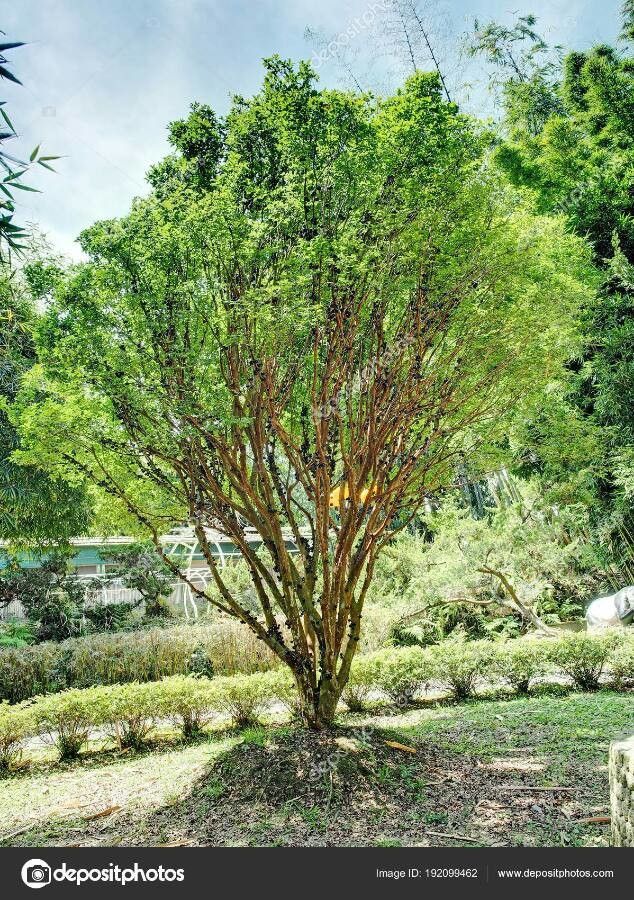
© photo
(c) Diego Monsores, some rights reserved (CC BY-NC), uploaded by Diego Monsores · cc-by-nc
Andrew J. Crawford · cc0
Douglas · cc-by
© copyright of the Board of Trustees of the Royal Botanic Gardens, Kew.




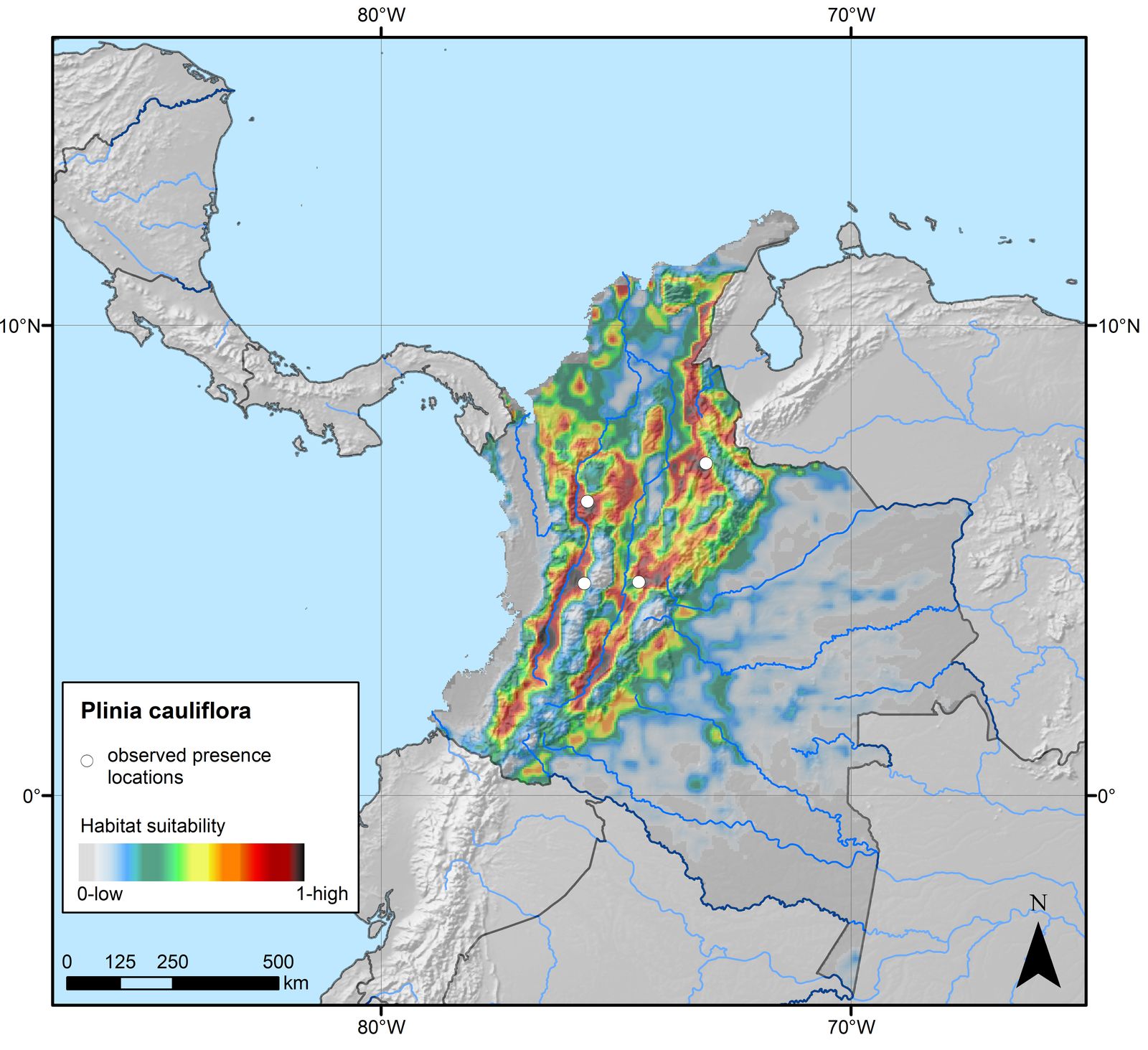
Global distribution
The precise native range of Plinia cauliflora remains debated. Plants of the World Online places it from eastern Bolivia to Brazil, from Pernambuco to Paraná. Several horticultural sources restrict it to the Brazilian states of Rio de Janeiro, Minas Gerais, Goiás and São Paulo, on the edges of the Atlantic Forest. No invasive naturalization is documented beyond this area.
- Native2
- Introduced1
- Brazil
- Bolivia
- Florida (United States)
Hexagons: regions where the plant occurs. Green dots: native range.1
Identity
Jaboticaba (Plinia cauliflora (Mart.) Kausel, 1956), also known as Brazilian grapetree, is an evergreen fruit tree in the genus Plinia, family Myrtaceae. Most fruit trees flower and fruit on young shoots; Jaboticaba produces them directly on its trunk and large branches, a botanical feature called cauliflory. 1 4
Carl Friedrich von Martius first described the species as Myrtus cauliflora in 1823. It changed genera several times before Kausel placed it in Plinia in 1956. Its common name comes from Tupi îaboti, tortoise, and kaba, a root also interpreted in dictionaries as “tortoise fat,” referring to the white fruit pulp. 2
Recognition
Slow growth eventually produces an unpruned tree commonly 10 to 12 m (33–39 ft) tall, with a similarly broad crown reaching 14 m (46 ft) across in old specimens. Container and bonsai cultivation keep it much smaller than its dimensions in the ground, a use widespread in Taiwan and the Caribbean. 4
Yellowish-white flowers grow in small clusters directly on the bark of the trunk and branches. They give way to round, thick-skinned purple to black fruit about 2.5 to 4 cm (1–1.6 in) across. White or pinkish, gelatinous flesh surrounds one to four large, hard seeds. 4 3
A compact habit and fruit borne directly on the wood distinguish Jaboticaba from most fruit trees cultivated in France, whose flowers and fruit grow on the current season’s shoots. 5
Useful taxonomy
Several synonyms fall under the accepted name Plinia cauliflora. Some circulated for a long time as separate species before being placed under this taxon:
- Myrtus cauliflora Mart., basionym published in 1823
- Eugenia cauliflora (Mart.) DC., a synonym
- Myrciaria cauliflora (Mart.) O.Berg, a synonym
- Eugenia jaboticaba (Vell.) Kiaersk., a synonym
- Myrciaria jaboticaba (Vell.) O.Berg, a synonym
- Plinia jaboticaba (Vell.) Kausel
The trade name “jaboticaba” actually covers several closely related Plinia species, including Plinia trunciflora, sometimes distinguished as jaboticaba-café. The accepted scientific name, Plinia cauliflora, remains the dependable reference; the IUCN assessed it as Least Concern in 2019. 1 7
Habitat and range
Uncertainty surrounds the original range of Jaboticaba. Plants of the World Online places its native distribution from eastern Bolivia to Brazil, from Pernambuco to Paraná. English-language horticultural sources instead restrict it to the Brazilian states of Rio de Janeiro, Minas Gerais, Goiás and São Paulo, around the Atlantic Forest margins. 1 3
Brazilian cultivation dates to precolonial times, but Jaboticaba remains primarily a garden and small-orchard fruit tree. Its very perishable flesh starts fermenting only three to four days after harvest, leaving it almost absent from international trade. 4
Outside Brazil, ornamental cultivation predominates. The species was introduced to Florida, where it tolerates brief frosts, unsuccessfully tried in California as early as 1904, widely grown as bonsai in Taiwan, and cultivated in containers on Réunion and Guadeloupe. No invasive naturalization is documented outside its native range. 4 5
Life cycle and reproduction
Warm, humid conditions throughout the year can allow trees planted in the ground in Brazil to flower and fruit five or six times annually. Polyembryonic seeds often produce four to six seedlings from a single seed, but germinate slowly and rapidly lose viability once dry. 6 4
Seed-grown Jaboticaba takes eight to fifteen years to bear its first crop; grafted or air-layered trees take about seven years. Approach grafting, budding and air-layering remain the reliable methods for reproducing a selected cultivar true to type. 4
Uses and risks
Fruit production is the principal use. Fresh pulp is eaten directly by squeezing the fruit into the mouth, or made into jelly, juice, liqueur and Jaboticaba wine. Winemaking is an established tradition in Brazil, including among communities of Italian descent that used it as a substitute where local grapes were unavailable. 4
Ripe fruit has no documented toxicity to humans, cats or dogs; tolerance in horses remains unrecorded in current databases. The main caution concerns its tannin-rich, astringent skin. Traditional decoctions have been used for diarrhea or inflammation, but frequent, prolonged consumption of the skin alone is discouraged. 4
Climate is the main cultivation constraint. Young shoots are damaged below -3 °C (27 °F), and the species tolerates neither prolonged freezing nor salt spray. In metropolitan France, cultivation therefore relies on containers brought under cover for winter rather than permanent planting in the ground. 3 5
Varieties, look-alikes and related plants
Brazilian selections differ in fruit size and flavor. Paulista produces large, slightly astringent fruit; Ponhema is highly productive and mainly used for jelly; Précoce fruits frequently but has fragile, thin skin; and Vermelha has a low habit and wine-red fruit. 4
Sabará causes the most frequent confusion, often sold as Brazil’s most widely planted variety. It corresponds to Plinia jaboticaba, placed in the botanical synonymy of Plinia cauliflora by some authors but treated as a separate species, Myrciaria jaboticaba, by other Brazilian botanists. This taxonomic variation explains why similar-looking jaboticaba trees can bear different scientific names depending on the author or reference work. 1
Three close relatives also complicate identification: Plinia trunciflora, jaboticaba-café, has smaller fruit; Plinia peruviana, cabinho jaboticaba, has a thinner stalk; and Myrciaria glazioviana, yellow jaboticaba, produces amber rather than purple fruit.
Confirming Plinia cauliflora among its many relatives sharing a common name relies most strongly on the accepted scientific name, directly observed cauliflory and fruit about 2.5 to 4 cm (1–1.6 in) across.
Main sources
- Plants of the World Online / Kew, Plinia cauliflora (Mart.) Kausel
- International Plant Names Index, Plinia cauliflora (Mart.) Kausel
- Missouri Botanical Garden, PlantFinder, Plinia cauliflora
- Julia F. Morton, Fruits of Warm Climates, jaboticabas (Purdue University New Crop Resource Online Program)
- NC State Extension, Plant Toolbox, Plinia cauliflora
- University of Hawaiʻi at Mānoa CTAHR, Jaboticaba (F&N-20)
- IUCN Red List, Plinia cauliflora assessment 2019
- GBIF Backbone Taxonomy, Plinia cauliflora (Mart.) Kausel
Frequently asked questions
Is Jaboticaba toxic to pets?
No toxicity is documented for humans, cats or dogs from ripe fruit. Tolerance in horses remains unrecorded in current databases. Only the tannin-rich skin calls for moderate consumption.
Why does Jaboticaba fruit grow on the trunk?
This feature is called cauliflory. Flowers and then fruit grow directly from the bark of the trunk and large branches rather than the current season’s shoots, a phenomenon also found in cacao.
Can Jaboticaba grow outdoors in a frosty climate?
In metropolitan France, it is grown in containers brought into a conservatory or heated greenhouse for winter. Young shoots are damaged at -3 °C (27 °F), ruling out planting in the ground except in very mild or tropical climates.
How long does Jaboticaba take to bear fruit?
A seed-grown tree often takes eight to fifteen years to produce its first crop. Grafting or air-layering reduces this wait to about seven years.
How does Jaboticaba differ from sabará?
Sabará, the most widely planted variety in Brazil, corresponds to Plinia jaboticaba. Some authors place it in the synonymy of Plinia cauliflora, while others treat it as a distinct species, Myrciaria jaboticaba. This explains the different scientific names used in different sources.
Is Jaboticaba fruit edible?
Yes. The fresh pulp is eaten as it is or made into jelly, juice or wine. The fruit ferments quickly after harvest, explaining its rarity outside production areas.
Where does the name Jaboticaba come from?
It derives from Tupi îaboti, tortoise, and kaba. Authors interpret the name as either a place of tortoises or tortoise fat, referring to the fruit’s white, rich pulp.
Similar plants
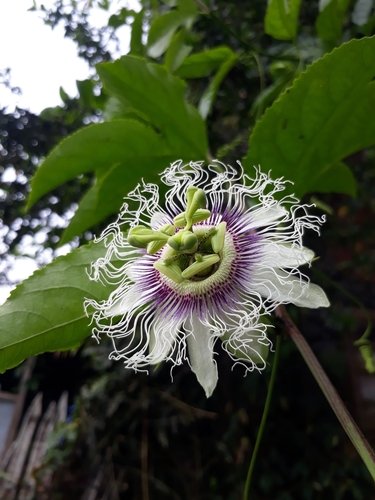
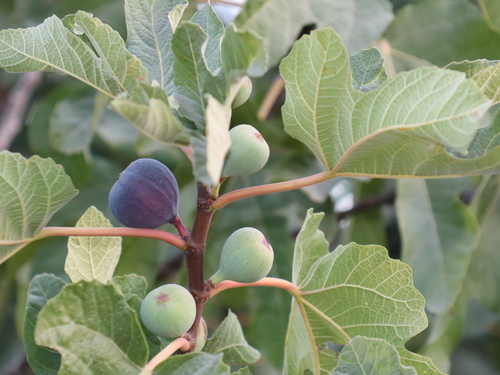
If you are unsure about a plant’s toxicity, ask a botanist or veterinarian for advice.