
Common water hyacinth (Pontederia crassipes, )
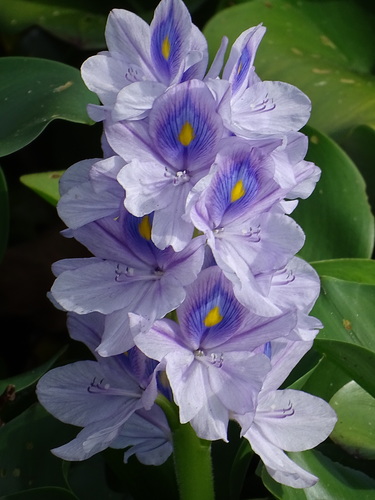
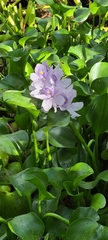
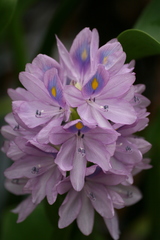
Common water hyacinth (Pontederia crassipes), long classified as Eichhornia crassipes, is a free-floating aquatic in the Pontederiaceae family, native to the Amazon and Río de la Plata basins in South America. Inflated, spongy leaf stalks and spikes of purple flowers distinguish it. Its biomass can double within days, and IUCN lists it among the world’s 100 most damaging invasive species.
Read moreCommon water hyacinth, Water hyacinth, Aguapé and Jacinto de agua
Allow a few hours of direct sun per day, preferably morning or evening.
Full sun to light partial shade


© photo
no rights reserved, uploaded by 葉子 · cc0
ritirene · CC BY-NC
Mattia Menchetti · cc-by
© copyright of the Board of Trustees of the Royal Botanic Gardens, Kew.
Global distribution
Pontederia crassipes is native to South America, in the Amazon and Río de la Plata basins (Brazil, Argentina, Uruguay and Paraguay). Spread through ornamental trade from the late 19th century, it now occurs on every continent except Antarctica. It has been listed as an invasive alien species of Union concern in the European Union since 2016.
- Native3
- Introduced1
- Invasive5
- Brazil
- Argentina
- Uruguay
- Mainland France
- United States
- Kenya
- China
- Australia
- India
Hexagons: regions where the plant occurs. Green dots: native range.1
Identity
Common water hyacinth (Pontederia crassipes Mart., 1823) is a floating aquatic in the Pontederiaceae family, long known as Eichhornia crassipes. Warmth above 25 °C (77 °F) strongly stimulates multiplication: biomass doubles in 10–18 days, helping place it among the 100 most damaging invasive species listed by IUCN. A phylogenetic revision published in 2018 showed that Eichhornia was not a natural group distinct from other Pontederia and included it in that genus. The old name nevertheless remains dominant in scientific literature and regulatory texts. 3 1 2
Its epithet crassipes means ‘thick-footed’, referring to the inflated leaf stalk, a spongy, air-filled structure. The former genus name Eichhornia honored Prussian minister Johann Albrecht Friedrich von Eichhorn. The common comparison with garden hyacinths concerns the appearance of the flower spike, not a close botanical relationship. 10 8
Recognition
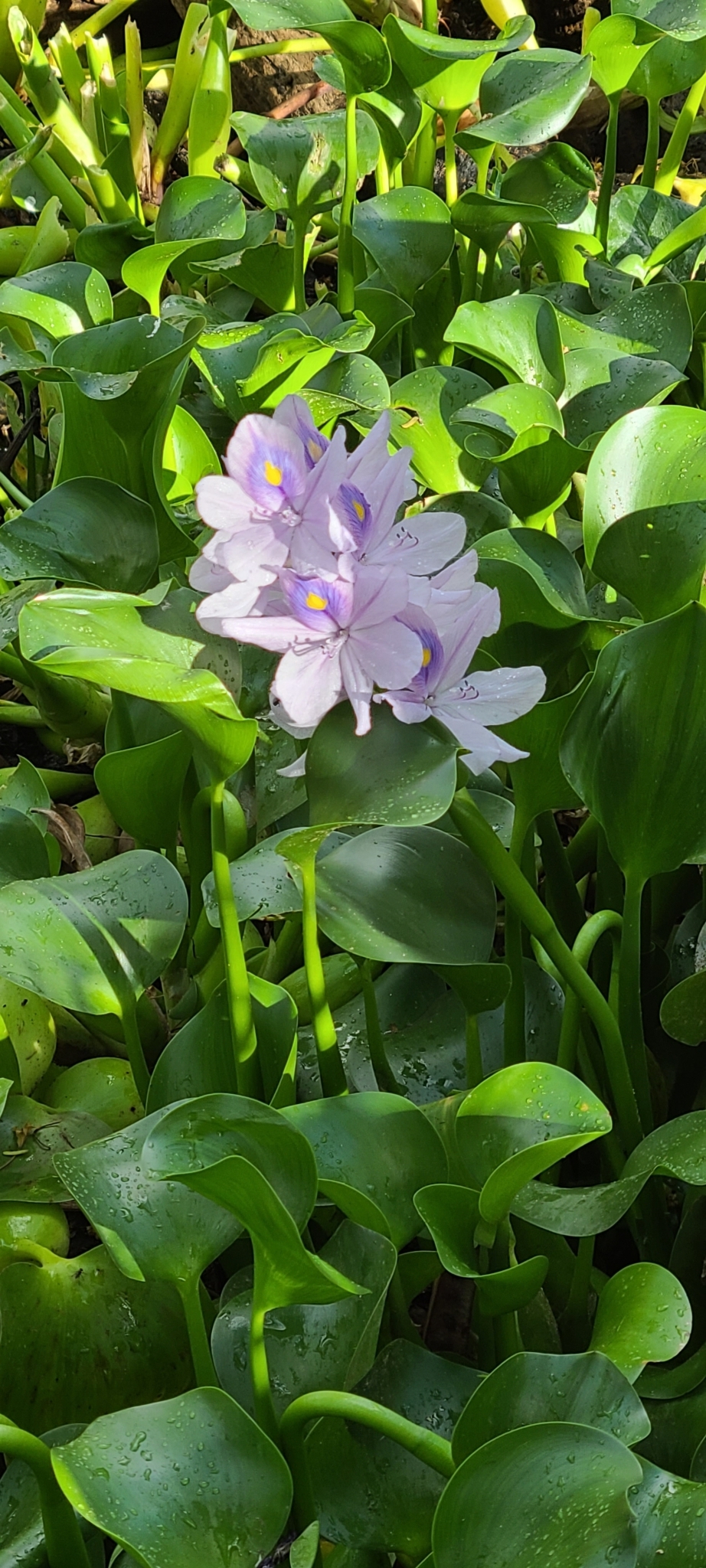
Glossy, leathery, oval to nearly round leaves form a floating rosette, with no visible stem between foliage and roots. The most reliable identification feature is the bulbous leaf stalk, swollen into a spongy float. Neither Pistia stratiotes, with velvety leaves and flat stalks, nor bottom-rooted Pontederia cordata has this structure. 6 7
Beneath each rosette hang feathery roots, blue-black to purplish, which can reach 1 m (3 ft) long in deep water. They serve both as ballast and as organs for absorbing dissolved nutrients from the surrounding water. 7
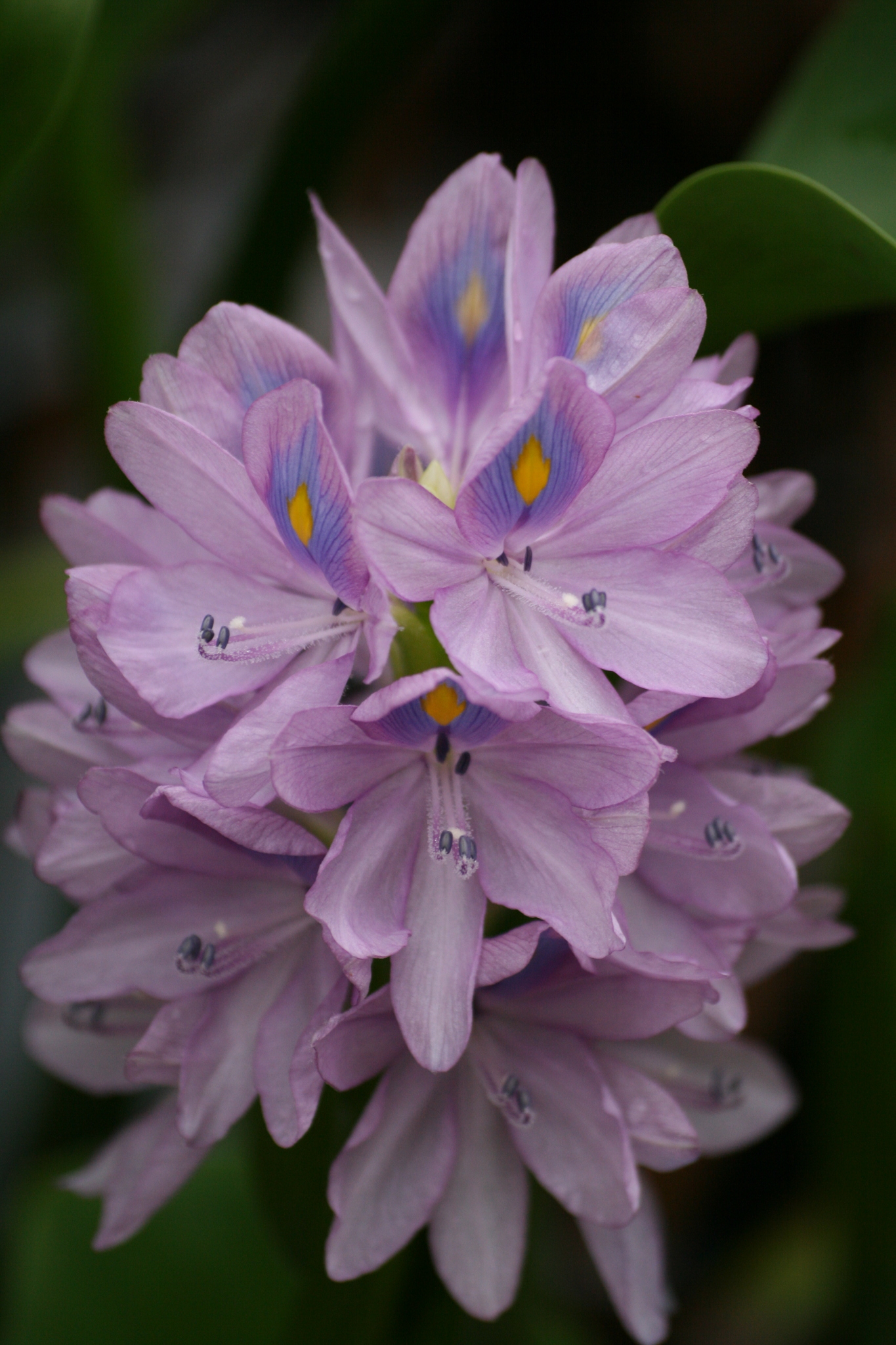
An upright flower stalk 20–50 cm (8–20 in) tall carries a spike of 8–15 purple to violet flowers, each with a yellow patch on its upper petal. Each flower opens for only one day, but staggered opening keeps the whole spike attractive for several days. 6
Useful taxonomy
The former genus Eichhornia, now included within Pontederia, dominated older classifications of this plant and generated numerous redundant names. Important synonyms include:
- Eichhornia crassipes (Mart.) Solms
- Piaropus crassipes (Mart.) Raf.
- Oshuna crassipes (Mart.) A.Haines
- Eichhornia crassicaulis Schltdl.
- Eichhornia speciosa Kunth
- Heteranthera formosa Miq.
- Pontederia crassicaulis Schltdl. (historical scientific names)
The name Eichhornia crassipes remains more widely used than Pontederia crassipes. European restrictions in force since 2016 under Regulation 1143/2014 still refer to the old name, as do most publications before 2018. The accepted scientific name is nevertheless Pontederia crassipes Mart. 1 4
Habitat and range
South America’s Amazon and Río de la Plata basins form the native range, spanning Brazil, Argentina, Uruguay and Paraguay. Introduced as an ornamental from the late 19th century, notably at an 1884 exhibition in New Orleans, the plant spread through pond and aquarium trade into almost all tropical and subtropical regions worldwide. 3 10
Every continent except Antarctica now has records of the species, which IUCN includes among the 100 worst invasive species. Well-documented populations include Lake Victoria in East Africa, the Nile Delta and numerous South Asian irrigation systems. In mainland France it is an introduced species monitored for its risks. Since 2016, it has been listed as an invasive alien species of Union concern under EU Regulation 1143/2014, prohibiting import, keeping, growing and sale throughout the EU to protect uninfested aquatic habitats. These restrictions describe the EU context rather than a worldwide rule. 3 9 4
Life cycle and reproduction
New water bodies are colonized mainly through vegetative reproduction. Horizontal stolons extend from rosette bases and produce daughter plants at their tips, allowing biomass to double in just 10–18 days in warm, nutrient-rich water. 3 9
Sexual reproduction also occurs. One plant can produce several thousand seeds annually, and buried seeds can remain viable in mud for more than 28 years. This dormant seed reserve explains why populations can return years after plants have been removed. 10
Temperatures of 25–30 °C (77–86 °F) favor optimal growth. Cold below 5 °C (41 °F) and frost threaten the rosette; in temperate climates, the plant is consequently treated as a seasonal pond annual, reintroduced in spring only where keeping it is permitted. 6
Uses and risks
ASPCA classifies the plant as non-toxic to dogs, cats and horses. Its principal documented danger is ecological and economic rather than poisoning, a distinction that does not reduce the consequences of releasing it into waterways. 5
Dense mats block light and reduce dissolved oxygen in the water below, sharply reducing aquatic biodiversity, obstructing navigation and fishing, and providing breeding sites for disease-vector mosquitoes. Conversely, the species is studied as a hyperaccumulator of heavy metals and dissolved nutrients for wastewater phytoremediation. Harvested biomass is also used for biogas, compost and fiber crafts. 3 7
Biological control mainly uses two Neochetina weevils and a defoliating moth, Niphograpta albiguttalis. These insects have been introduced in several countries to slow proliferation without relying heavily on herbicides. 9
Varieties, look-alikes and related plants
Botanically stable cultivars are not recognized for this species. Nursery names such as Major, referring to larger rosettes, describe size variation without a taxonomic status separate from Pontederia crassipes.
Other floating freshwater plants are frequent sources of confusion:
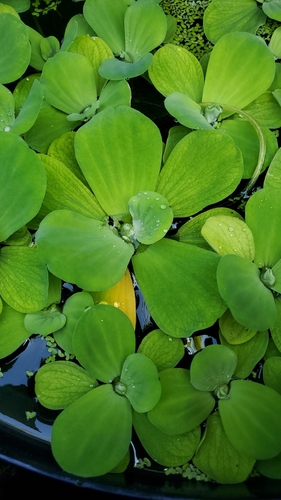
- Water lettuce (Pistia stratiotes) forms a velvety rosette without inflated leaf stalks or showy flowers;
- Common duckweed (Lemna minor) is tiny, without an individually conspicuous rosette;
- Pontederia cordata roots in the bottom, with lance-shaped leaves and no bulbous floating leaf stalk.
When comparing Pistia stratiotes, Lemna minor and Pontederia cordata, look for inflated floating leaf stalks on a free-floating rosette. When flowering, the purple spike with yellow-marked flowers provides an additional reliable distinction. 6
Main sources
- Plants of the World Online / Kew, Pontederia crassipes Mart.
- International Plant Names Index, Pontederia crassipes Mart.
- IUCN Global Invasive Species Database, Eichhornia crassipes
- EPPO Global Database, Pontederia crassipes (EICCR)
- ASPCA, Water hyacinth toxicity entry
- Missouri Botanical Garden Plant Finder, Eichhornia crassipes
- USGS Nonindigenous Aquatic Species, Eichhornia crassipes species profile
- Wikipedia FR, Water hyacinth
- OFB Invasive Alien Species Resource Center, Water hyacinth: nuisance or resource?
- Bugwoodwiki, Eichhornia crassipes species account
Frequently asked questions
Is common water hyacinth poisonous?
ASPCA classifies Pontederia crassipes as non-toxic to dogs, cats and horses. Its documented risk is mainly ecological rather than toxicological.
Why is common water hyacinth banned in the European Union?
Since 2016 it has been on the EU list of invasive alien species of Union concern under Regulation 1143/2014, prohibiting import, keeping, growing and sale across the EU. These are EU restrictions; rules elsewhere depend on the jurisdiction.
How does common water hyacinth reproduce?
Vegetative reproduction by stolons greatly outweighs seed reproduction. Each rosette produces daughter rosettes that can double total biomass in 10–18 days in warm, nutrient-rich water.
Where does Pontederia crassipes come from?
It is native to the Amazon and Río de la Plata basins in South America. Ornamental plant trade spread it worldwide from the late 19th century.
How can I distinguish it from water lettuce?
Common water hyacinth has inflated floating leaf stalks and a conspicuous purple flower spike. Water lettuce (Pistia stratiotes) stays low, with velvety leaves lacking swollen stalks, and tiny hidden flowers.
Why did the scientific name change from Eichhornia to Pontederia?
A phylogenetic revision published in 2018 showed that Eichhornia was not a distinct natural group and included it in Pontederia. Eichhornia crassipes remains widely used in existing literature and regulations.
Does common water hyacinth benefit the environment?
It efficiently absorbs nitrogen, phosphorus and some dissolved heavy metals, making it useful in phytoremediation. Dense mats deprive the water below of light and oxygen, however, making it one of the worst aquatic weeds listed by IUCN.
Similar plants

If you are unsure about a plant’s toxicity, ask a botanist or veterinarian for advice.