
Water spinach (Ipomoea aquatica, )
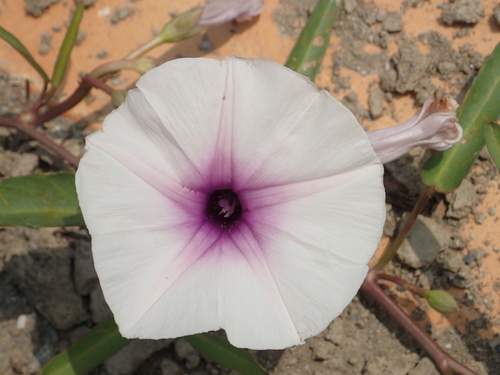
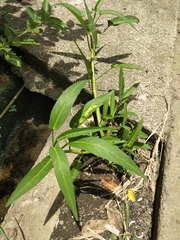
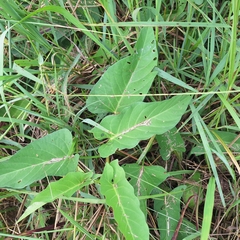
Water spinach (Ipomoea aquatica) is a semi-aquatic member of the Convolvulaceae cultivated as a leafy vegetable in Asia under the name kangkong. Hollow stems creep over mud or float before their tips turn upward. Very rapid growth makes it both an easy crop and a weed monitored in several countries.
Read moreWater spinach, kangkong and swamp morning-glory
Allow a few hours of direct sun per day, preferably morning or evening.
Full sun; tolerates light partial shade
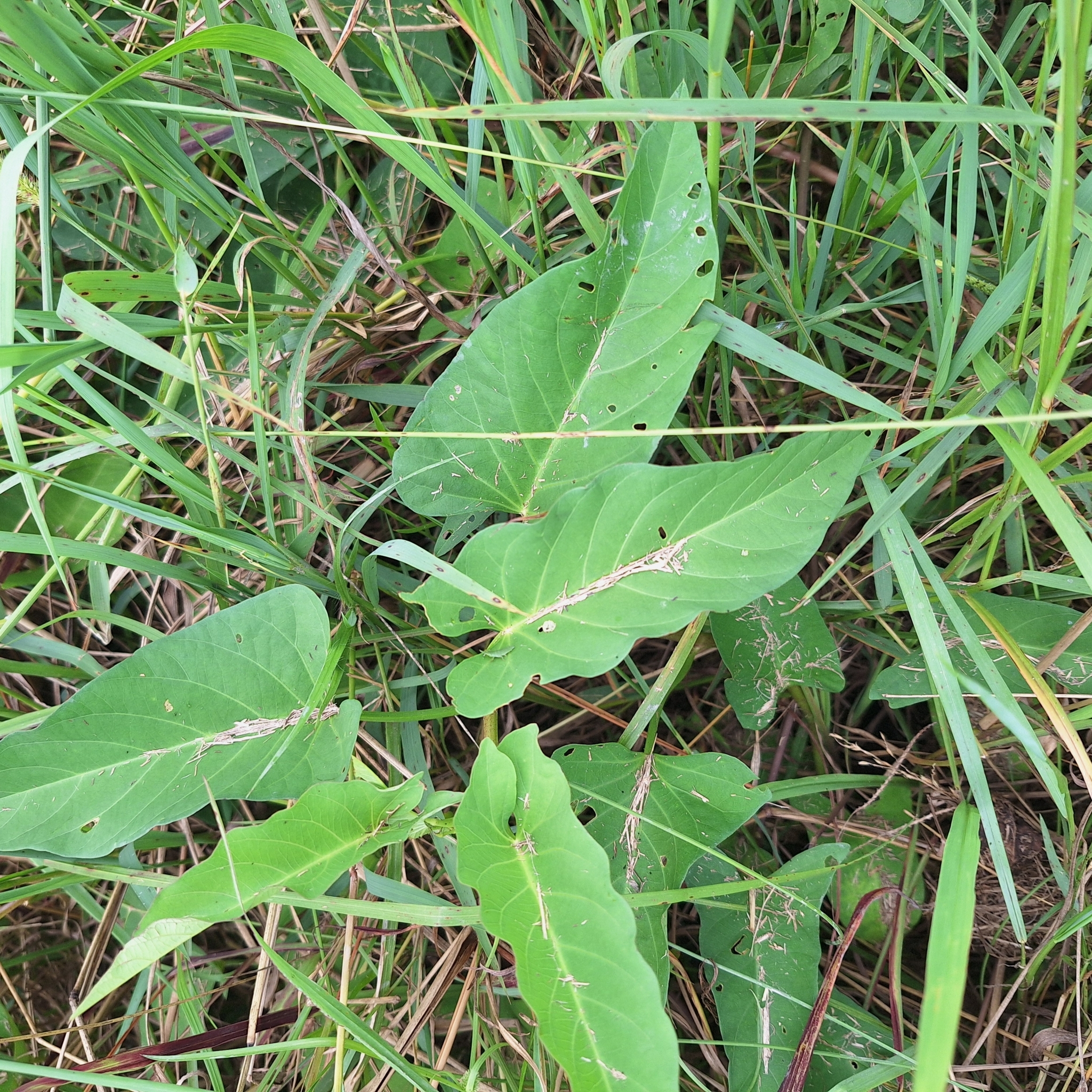


© photo
no rights reserved, uploaded by 葉子 · cc0
Greg III Espera · cc-by
Greg Tasney · cc-by-sa
Taken Nov 18, 2022 by Blue Bottle (cc-by-sa)
© copyright of the Board of Trustees of the Royal Botanic Gardens, Kew.


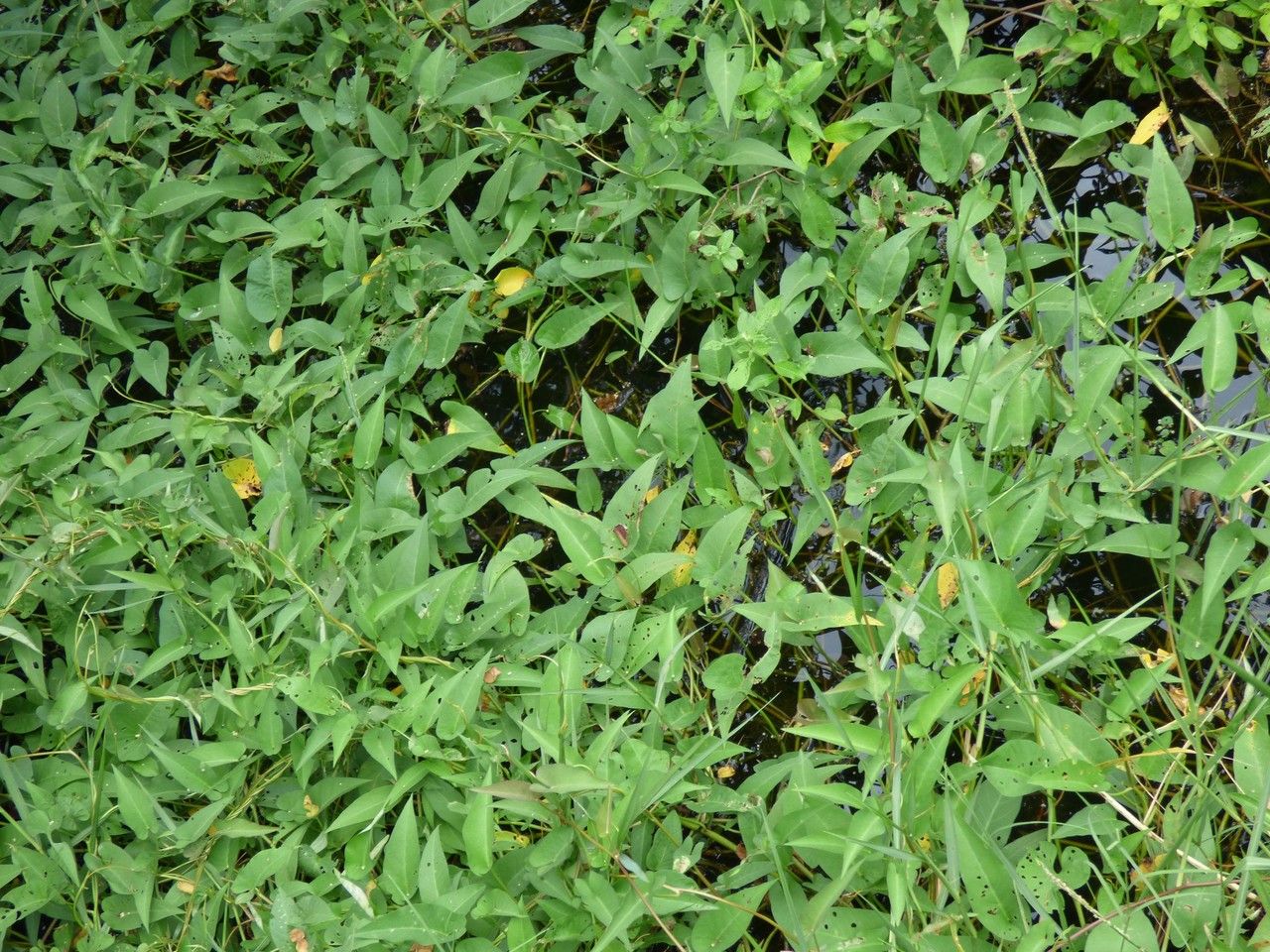


Global distribution
Its precise native range remains disputed. The IUCN identifies a center in China, India, Sri Lanka and Thailand; other assessments extend it to tropical Africa and the Arabian Peninsula, where Forsskål described the species in 1775. Domestication is generally associated with Southeast Asia. Widely cultivated and introduced elsewhere, it is federally listed as a noxious weed in the United States. No naturalization is known in metropolitan France, where winter interrupts its outdoor cycle.
- Native4
- Invasive4
- China
- India
- Thailand
- Yemen
- United States
- Philippines
- Australia
- Fiji
Hexagons: regions where the plant occurs. Green dots: native range.1
Identity
Hollow stems and edible young shoots distinguish water spinach (Ipomoea aquatica Forssk., 1775), also known as kangkong or swamp morning-glory. It belongs to the morning glory family, Convolvulaceae. Swedish naturalist Pehr Forsskål described it during his work on the flora of Egypt and Arabia, published after his death in Yemen. 1 7
The epithet aquatica reflects its amphibious growth: this relative of ornamental morning glories thrives both in water and in saturated soil. 2
Long cultivated as a leafy vegetable in Southeast, East and South Asia, kangkong is an everyday food in much of that region. 6 Water warmer than 20 °C (68 °F) stimulates stem growth of several centimeters daily. That speed helps explain both its productivity as a crop and its invasive behavior in the tropics. 4
Recognition
Unlike solid-stemmed bindweeds, kangkong has hollow, cylindrical stems, often marked purple at the nodes. They creep across mud or float on the water before turning upward at their tips. The Chinese vegetable name literally means “hollow-hearted vegetable,” directly describing this feature. 6 7
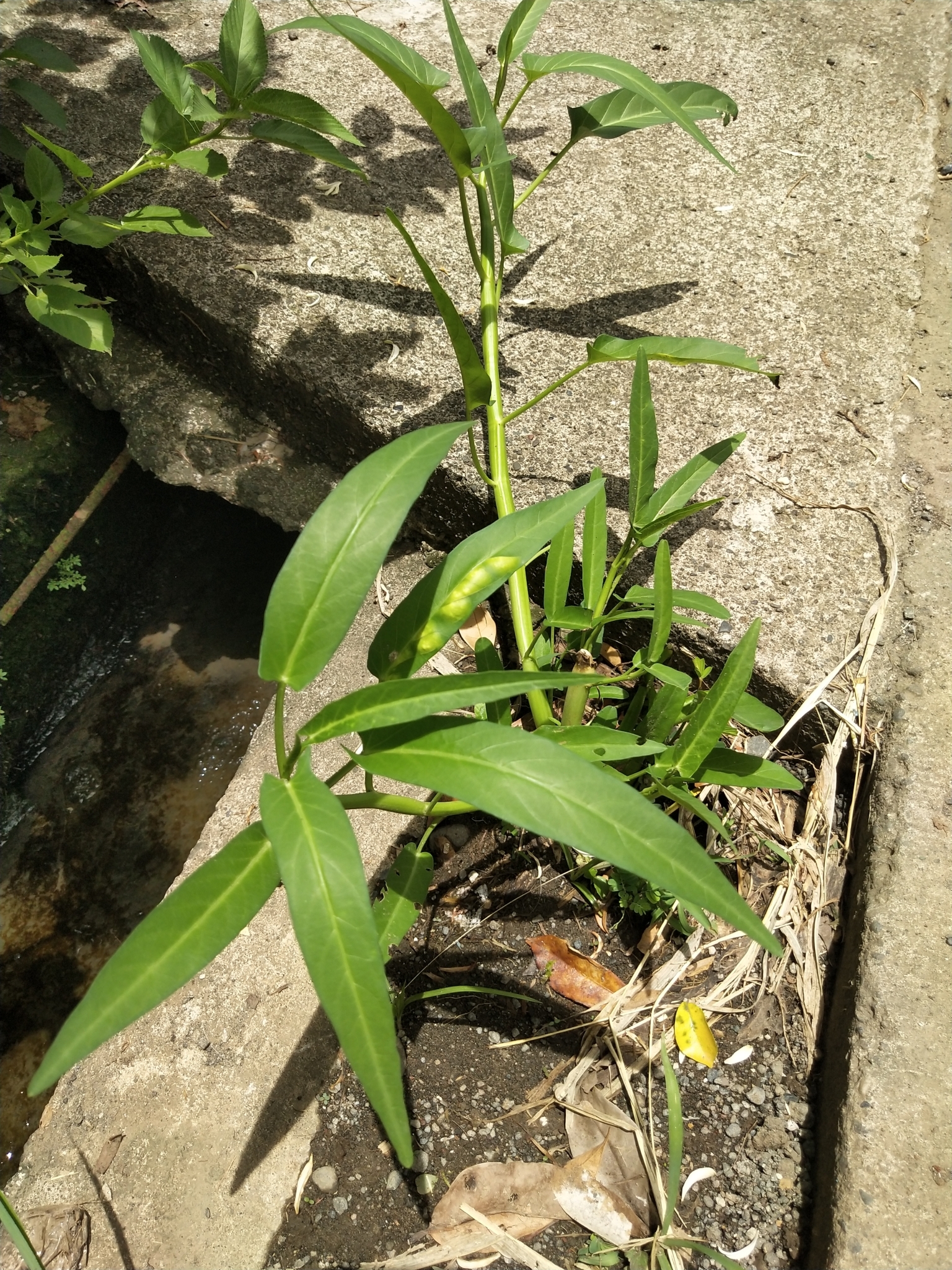
Alternate leaves are arrow-shaped or elongated and heart-shaped, with smooth blades and distinct veins. Wherever a node touches water or waterlogged soil, fine white roots develop, anchoring the stem and helping it occupy the available surface quickly. 3
Funnel-shaped flowers are white with purple centers, sometimes tinged pink or pale mauve. They open in the morning, as in other morning glories, and are followed by capsules containing several hard seeds. 3
During the warm growing season, stems can extend several centimeters a day. Frequent harvesting keeps the young shoots from becoming tough. 2
Useful taxonomy
The accepted name is Ipomoea aquatica Forssk., in the Convolvulaceae. Locally described varieties include Ipomoea aquatica var. aquatica, the typical aquatic form, and Ipomoea aquatica var. parviflora Trimen, described from Sri Lanka for a small-flowered form. 1
Its genus also includes sweet potato (Ipomoea batatas) and ornamental climbers such as Ipomoea purpurea and Ipomoea tricolor. Water spinach differs in its aquatic or marshland life and hollow stems, whereas those relatives grow on drier ground and are cultivated for flowers or tubers. 2
Asian growers sell two commercial forms as kangkong. A broad-leaved aquatic form grows in ponds or flooded rice fields. A terrestrial form grows in moist soil, with narrower leaves and stems that are less hollow. 6
Habitat and distribution
The precise native range remains disputed. The IUCN Global Invasive Species Database identifies a center in China, India, Sri Lanka and Thailand. Other assessments extend the native range to tropical Africa and the Arabian Peninsula, where Forsskål described the species in the 18th century. Domestication as a vegetable is generally associated with Southeast Asia. 4 6
In tropical and subtropical climates, water spinach occupies still or slowly moving freshwater: ponds, ditches, flooded rice fields and muddy banks. Depending on climate, it can grow at elevations up to about 1,000 m (3,300 ft). 2
Widely cultivated beyond its original range, it has naturalized in many warm regions. In the United States it is federally listed as a noxious weed and obstructs drainage canals in Florida. It is also among the worst invasive plants in the Philippines and has colonized several Pacific islands. In metropolitan France, winter limits outdoor naturalization, and cultivation is seasonal in tubs or ponds. These regional conditions and regulations do not establish the rules for other countries. 3 8 4
Life cycle and reproduction
Water spinach is perennial in tropical climates but is killed by frost. Where temperatures remain below 10 °C (50 °F), it is grown as an annual. 2
The usual propagation method is a stem cutting with a node. A fragment placed in water or on moist soil roots in a few days to two weeks. This also allows broken stems to spread rapidly along canals and ditches. 3 4
Sexual reproduction supplements this vegetative spread. The largely self-fertile flowers produce capsules, yielding 175–245 seeds per plant per season in observations compiled by the IUCN. Floating seeds can germinate far from the parent plant. 4
Vegetable growers harvest tender shoots 15–20 cm (6–8 in) long every two to three weeks. Repeated cutting encourages branching and extends production well beyond a single flowering cycle. 2
Uses and risks
Kangkong is primarily a leafy vegetable. Tender shoots and young leaves are stir-fried, steamed or added to soups, supplying vitamin A, iron, calcium and phosphorus. 2
In wastewater or nutrient-rich water, the plant also takes up nitrogen, phosphorus and certain heavy metals. This makes it useful for phytoremediation as well as food production. 6
Contaminated growing water creates a documented health risk. Samples of wastewater-grown water spinach from Phnom Penh carried Giardia cysts (56% of samples), Cryptosporidium oocysts (17%) and helminth eggs (11%). Wash the vegetable thoroughly and cook it rather than eating it raw where sanitation is uncertain. 5
No authoritative veterinary source documents poisoning specifically from these leaves in cats or dogs. As a precaution, prevent them from eating large quantities of seeds, as with other members of Ipomoea. 2
Varieties, look-alikes and related plants
Two commercial forms dominate the kangkong market: the familiar aquatic form, with thoroughly hollow, water-filled stems, and a finer terrestrial form grown outside a pond. Both belong to the same species; the distinction concerns how they are cultivated. 6
Aquatic growth and hollow stems separate water spinach from ornamental morning glories such as Ipomoea purpurea and Ipomoea tricolor. Those are climbers of drier ground grown for their flowers rather than their leaves. Watercress can have a superficially similar aquatic habit but belongs to another family, the Brassicaceae. 2
Before eating raw leaves, check the source of the growing water. Cooking is preferable whenever the sanitary quality of the pond or ditch supplying the crop is uncertain. 5
Main sources
- Plants of the World Online / Kew, Ipomoea aquatica Forssk.
- Plants For A Future, Ipomoea aquatica
- Missouri Botanical Garden PlantFinder, Ipomoea aquatica
- IUCN Global Invasive Species Database, Ipomoea aquatica
- PubMed, parasite contamination of water spinach grown in wastewater (Phnom Penh)
- Wikipedia EN, Ipomoea aquatica
- Wikipedia FR, Ipomoea aquatica
- Atlas of Florida Plants, Ipomoea aquatica
Frequently asked questions
Is water spinach edible?
Yes. Tender shoots and young leaves are stir-fried, steamed or used in soups as kangkong in Asian cooking. They supply vitamin A, iron, calcium and phosphorus.
Can kangkong be grown in metropolitan France?
Yes, as a summer crop in a water-filled container or pond. Frost kills the plant, and temperatures below 10 °C (50 °F) limit its growth; no winter naturalization is known in the metropolitan climate.
Is water spinach invasive?
It is federally listed as a noxious weed in the United States, where it obstructs irrigation canals in Florida. That specific regulatory status does not apply in France, where winter limits outdoor spread. Rules elsewhere depend on the jurisdiction.
Why are water spinach stems hollow?
The Chinese vegetable name literally means hollow-hearted vegetable. Tubular stems help the plant float and quickly colonize the water surface.
Is water spinach poisonous to cats and dogs?
No authoritative veterinary source documents poisoning specifically from the leaves in cats or dogs. As a precaution, prevent them from eating large amounts of seeds, as with other Ipomoea species.
Should water spinach be cooked before eating?
Cooking is recommended when the growing-water source is uncertain. A Phnom Penh study detected intestinal parasites on wastewater-grown samples; thorough washing and cooking reduce that risk.
How do aquatic and terrestrial kangkong differ?
Both are sold as kangkong. The aquatic form has hollow stems and is grown submerged; the terrestrial form grows in moist soil, with finer stems that hold less water.
Similar plants
If you are unsure about a plant’s toxicity, ask a botanist or veterinarian for advice.