
Water lettuce (Pistia stratiotes, )
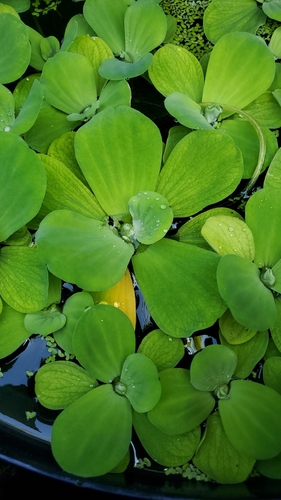
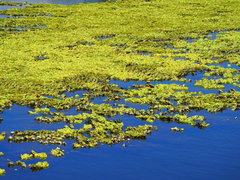
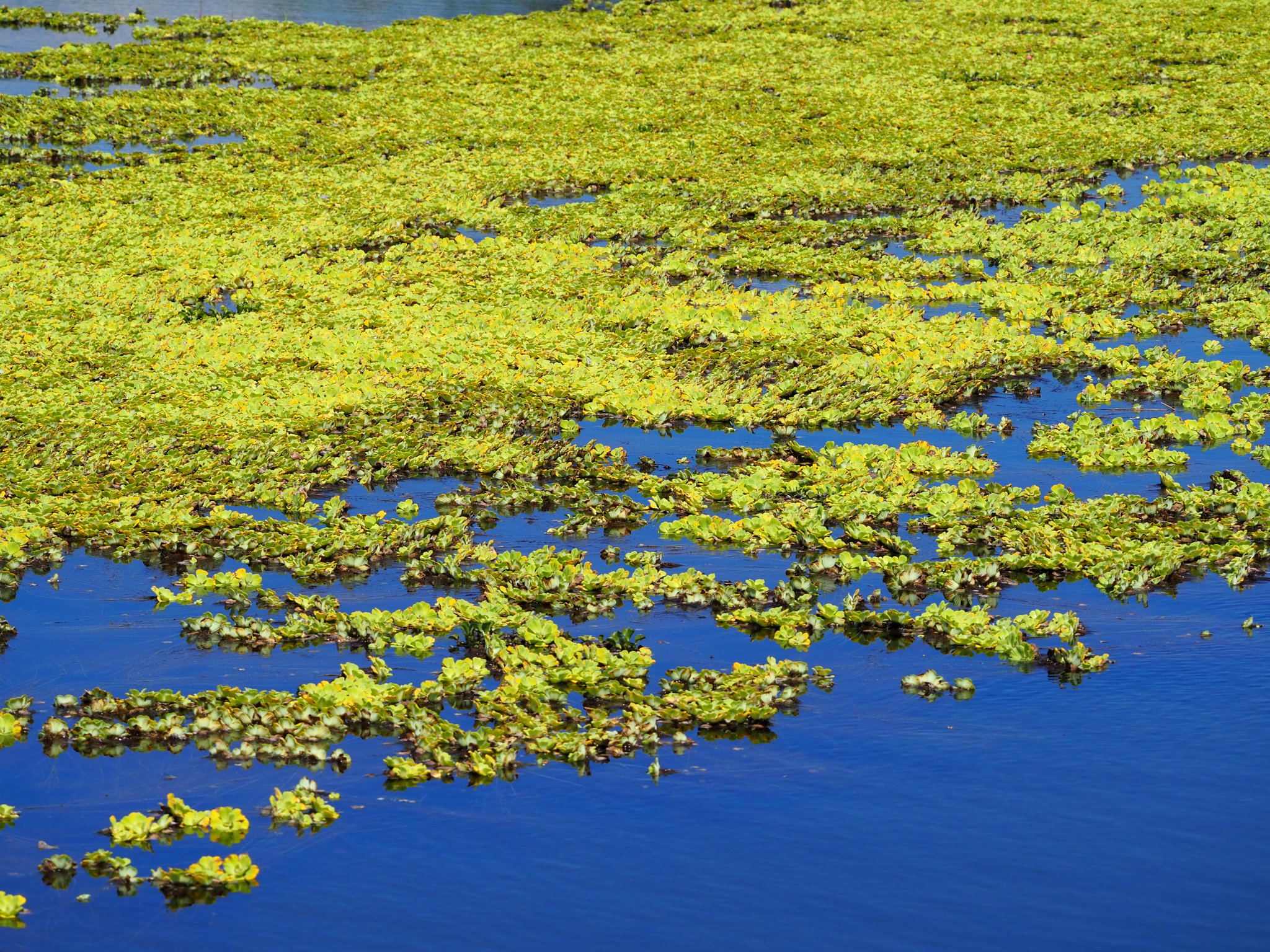
Water lettuce (Pistia stratiotes) is a floating aquatic plant in the Araceae family and the only species in its genus. Its tropical origin remains uncertain, with Africa and South America proposed. Velvety leaf rosettes can cover an entire pond within weeks. Importation and sale have been prohibited in the European Union since 2024, while cultivation in ponds and aquariums continues outside regulated areas.
Read moreWater lettuce, Water cabbage, Shellflower and Nile cabbage
Allow a few hours of direct sun per day, preferably morning or evening.
Full sun to light partial shade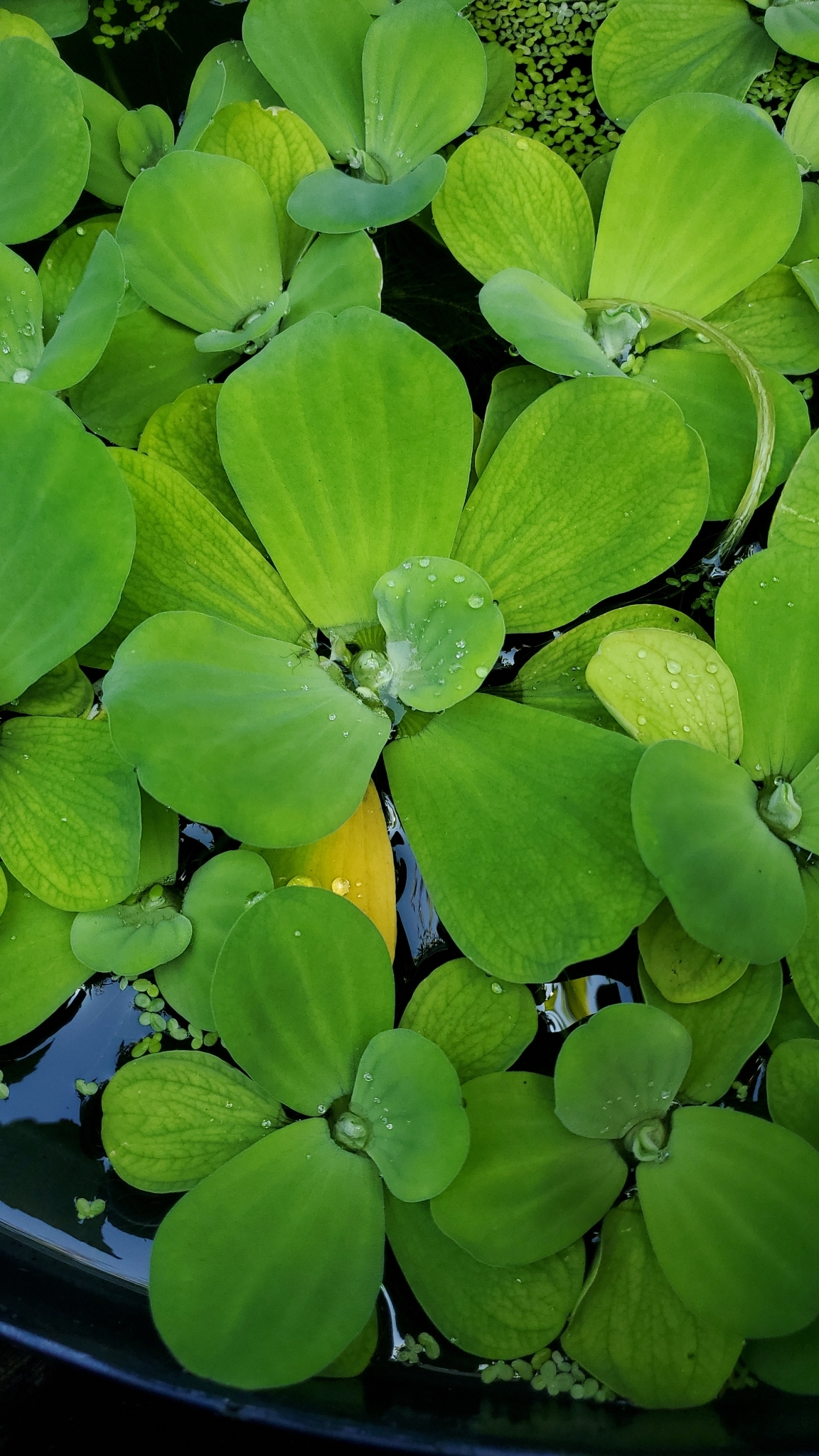



© photo
(c) amywainwright, some rights reserved (CC BY-NC) · cc-by-nc
葉子 · cc0
Jay Horn · cc-by
Taken Dec 13, 1975 by Royal Botanic Garden Edinburgh - Anonymous (cc-by-nc)
Taken Jun 6, 1983 by Royal Botanic Garden Edinburgh - Anonymous (cc-by-nc)
Taken Aug 17, 2022 by Gaël Covain (cc-by-sa)
Taken Jan 24, 2006 by Tela Botanica − Liliane Roubaudi (cc-by-sa)
Taken Nov 29, 2021 by Manuëlle (cc-by-sa)
© copyright of the Board of Trustees of the Royal Botanic Gardens, Kew.



Global distribution
The exact origin of Pistia stratiotes remains disputed between Africa, including the Nile basin where it was described, and South America, where many plant-feeding insects have co-adapted with it. Now pantropical, it has reached almost all warm freshwater regions through the aquarium and pond trade. France and the European Union have regulated it as an invasive alien species since 2024.
- Native2
- Introduced2
- Invasive4
- Egypt
- Brazil
- India
- South Africa
- United States
- Australia
- Metropolitan France
- Réunion
Hexagons: regions where the plant occurs. Green dots: native range.1
Identity
Water lettuce (Pistia stratiotes L., 1753), also known as Water cabbage, Shellflower or Nile cabbage, is a free-floating aquatic plant and the sole species of Pistia in the Araceae family. 1 Its velvety leaf rosette floats without rooting in a substrate, unlike most terrestrial or pot-grown aroids. Carl Linnaeus described it in 1753 from populations observed on the Nile near Lake Victoria, the geographical association behind the name Nile cabbage. 9
The epithet stratiotes derives from the ancient Greek stratiôtês, meaning soldier. It refers to the sword-shaped leaves of Stratiotes, an unrelated aquatic genus with which Linnaeus compared the plant. 9 Water lettuce describes the resemblance of its floating rosette to a head of lettuce; it has no botanical relationship to the vegetable.
Recognition
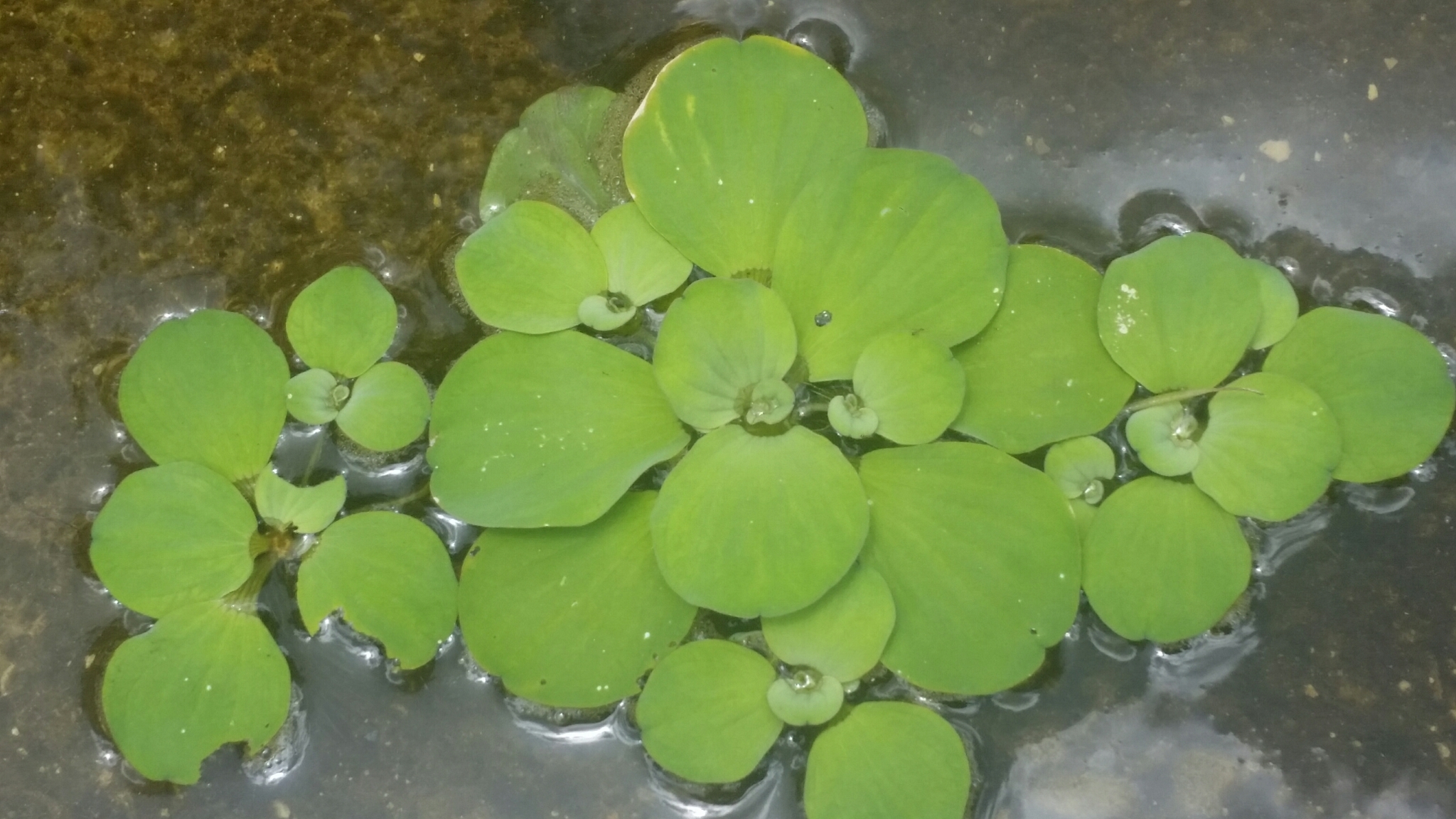
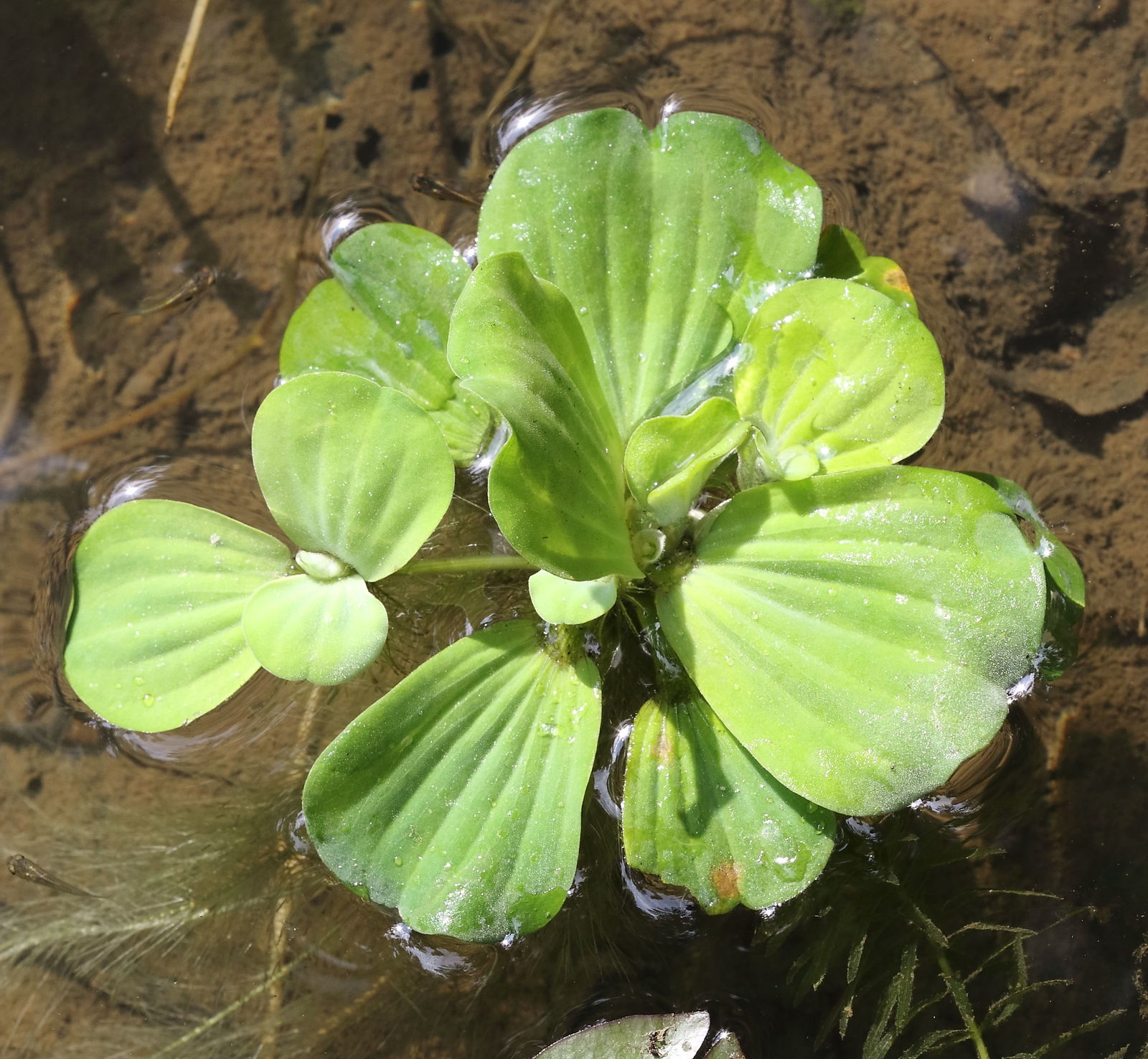
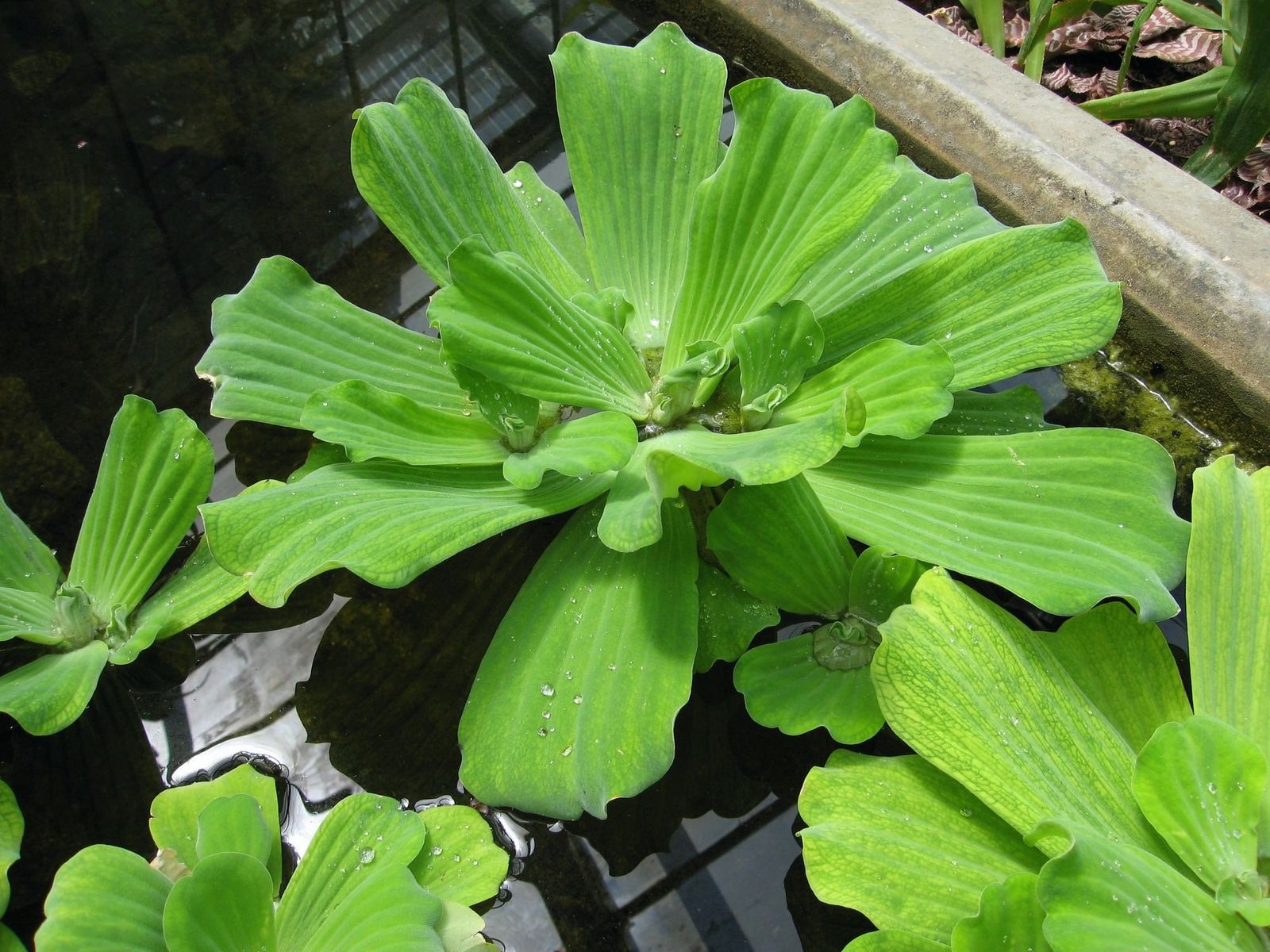
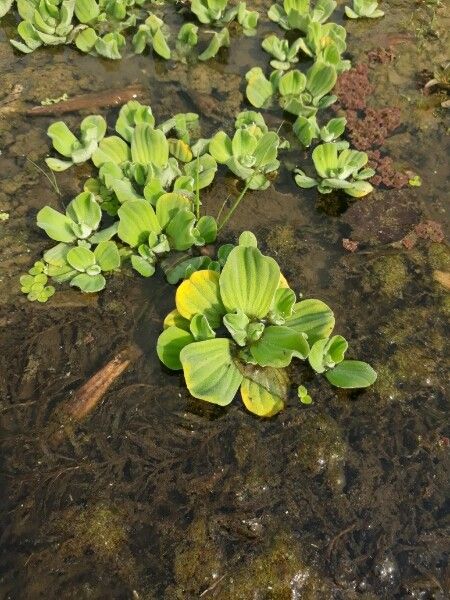
A floating rosette holds pale green, velvety, obovate leaves 5–20 cm (2–8 in) long, with 5–13 prominent parallel veins. 9 Fine hairs trap air bubbles, helping the leaves remain at the surface. 2
Feathery roots hang freely below the rosette and may reach 50 cm (20 in) in deep water. They provide relative anchorage and absorb dissolved nutrients. 9 Individual rosettes usually stand 8–15 cm (3–6 in) high and span 15–45 cm (6–18 in), although a continuous mat can cover several square meters within weeks. 2
Flowers remain almost hidden in the rosette center. A tiny white, green and yellow spadix, enclosed by a reduced spathe, carries a single female flower surrounded by male flowers. 2
Useful taxonomy
The monotypic genus Pistia contains one species, placed in the isolated tribe Pistieae within the Aroideae subfamily. 1 Its unusual position helps explain the many regional names once assigned to it and now treated as synonyms:
- Pistia africana C.Presl, an African name;
- Pistia amazonica C.Presl, an Amazonian name;
- Pistia brasiliensis Klotzsch, a Brazilian name;
- Pistia natalensis Klotzsch, a regional African name;
- Pistia obcordata Schleid., a historical synonym;
- Pistia spathulata Michx., another historical synonym;
- Pistia texensis Klotzsch, a Texan name.
These seven names, published from Africa, South America and then the United States between 1803 and 1878, initially suggested several continent-specific species. Botanical revisions ultimately united them under one cosmopolitan species, Pistia stratiotes L. 1
Habitat and range
Whether Water lettuce originated in Africa or South America remains disputed. It was first described from the Nile, yet the long co-adaptation of several South American plant-feeding insects also supports a South American origin. 3 This uncertainty reflects its long history of dispersal: today it is pantropical, occurring on every continent except Antarctica. 9
Aquarium and ornamental pond sales remain the principal introduction route beyond its native range. Discarding aquarium water or unwanted plants into a natural pond can establish a population. 3 The species has been recorded in 44 US states. 3
Metropolitan France treats this nonnative plant as a regulated invasive alien species, found mainly in the south and around the Mediterranean. Records also include Guadeloupe, Martinique, Mayotte, Réunion, French Guiana and French Polynesia. 5 Since August 2, 2024, European Union restrictions associated with the list of invasive alien species of Union concern prohibit its importation, cultivation and sale throughout the EU. 6
Life cycle and reproduction
Stolons drive colonization far more than seeds. Horizontal runners grow from the leaf bases and produce daughter rosettes at their tips, allowing biomass to double in 10–15 days in warm, nutrient-rich water. 11 10
Such rapid doubling lets a mat cover an entire pond within a few weeks. Light and dissolved oxygen then decline in the water beneath it. 3
Warm water at 22–30 °C (72–86 °F) favors optimum growth; below 10 °C (50 °F) growth slows markedly, and no frost is tolerated. 5 In temperate climates it consequently behaves as a pond annual, dying in fall and requiring replacement the following spring wherever cultivation remains permitted. 2
Uses and risks
Floating rosettes are grown mainly as ornamentals in ponds and aquariums, shading the surface and limiting algae. 2 Water lettuce is also studied as a hyperaccumulator of heavy metals such as cadmium, copper and mercury, and used in phytoremediation of some wastewater and pesticide-contaminated water. 9 7
Indian traditional medicine uses dried leaves or poultices for skin disorders and fungal infections. Extracts show antifungal, diuretic and antioxidant effects in laboratory studies, but these uses lack clinical validation. 7
Chewing the leaves can cause mouth irritation, burning and nausea because they contain calcium oxalates, particularly concerning in children, even though the plant is not classified as toxic by ingestion. 2 Its ecological risks are better documented: dense mats lower dissolved oxygen, obstruct navigation and provide egg-laying habitat for mosquitoes that transmit disease. 4
Varieties, look-alikes and related plants
Aquatic nurseries mainly supply the wild form, alongside 'Ruffled', a compact selection with more crinkled leaves suited to small ponds. This is a horticultural selection of Pistia stratiotes, without a separate botanical rank.
Other floating aquatics can cause confusion:
- Water hyacinth (Eichhornia crassipes) grows taller, with showy purple flowers and swollen leaf stalks that act as floats;
- Duckweed (Lemna minor) is tiny and lacks an individual rosette visible to the unaided eye;
- Salvinia has rounded leaves with brushlike hairs rather than an elongated rosette.
Look for an obovate rosette with parallel veins, no conspicuous flower or inflated leaf stalk, and feathery submerged roots. This combination separates Water lettuce from water hyacinth and duckweed. 2
Main sources
- Plants of the World Online / Kew, Pistia stratiotes L.
- NC State Extension Gardener Plant Toolbox, Pistia stratiotes
- USGS Nonindigenous Aquatic Species, Pistia stratiotes species profile
- IUCN Global Invasive Species Database, Pistia stratiotes
- Office français de la biodiversité, Water lettuce (Pistia stratiotes)
- EPPO Global Database, Pistia stratiotes (PIIST) reporting
- PharmaTutor, Pharmacological updates of Pistia stratiotes
- IUCN Red List assessment, Pistia stratiotes
- Wikipedia FR, Pistia stratiotes
- Mississippi State University Extension, Water Lettuce (Pistia stratiotes)
- Revista de Biología Tropical, density-dependent allocation in Pistia stratiotes
Frequently asked questions
Is Water lettuce toxic?
It is not classified as toxic when ingested, but its leaves contain calcium oxalates that can cause mouth irritation, burning and nausea when chewed, particularly in children.
Why is Water lettuce banned in the European Union?
Since August 2, 2024, Pistia stratiotes has been subject to the European list of invasive alien species of Union concern, prohibiting its importation, cultivation and sale throughout the EU.
How does Water lettuce reproduce?
Vegetative spread by stolons greatly outweighs seed reproduction. Each rosette produces daughter rosettes that can double total biomass in 10–15 days in warm, nutrient-rich water.
Where does Pistia stratiotes come from?
Its origin remains uncertain. First described from the Nile, it may instead originate in South America, where several insects have long co-adapted with it.
How can I tell Water lettuce from water hyacinth?
Water hyacinth (Eichhornia crassipes) is taller, with showy purple flowers and swollen, floating leaf stalks. Water lettuce stays low, without conspicuous flowers or swollen stalks.
Can Water lettuce overwinter outdoors?
Not in a temperate climate. Growth already slows below 10 °C and the plant cannot tolerate frost. It is commonly treated as a pond annual and replaced in spring where cultivation is permitted.
Does Water lettuce benefit the environment?
It efficiently absorbs some dissolved heavy metals and pesticides, making it useful for phytoremediation. Dense mats, however, deprive the water below of light and oxygen, so its ecological effects require close attention.
Similar plants

If you are unsure about a plant’s toxicity, ask a botanist or veterinarian for advice.