
King protea (Protea cynaroides, )
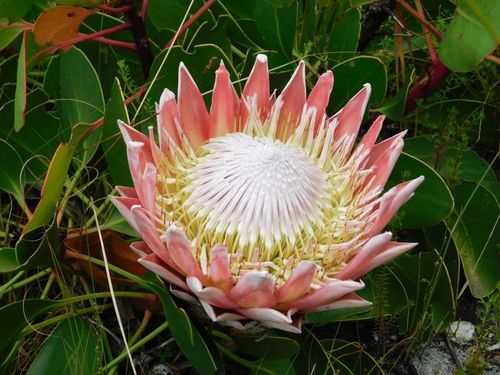
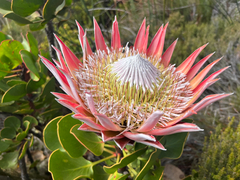
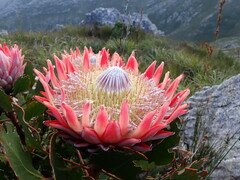
King protea (Protea cynaroides) is a low Proteaceae shrub endemic to South African fynbos. Its flower head, the largest in Protea, combines rigid cream to crimson bracts around a mass of florets. A thick underground stem allows it to resprout after vegetation fires, and it is South Africa’s national floral emblem.
Read moreKing protea, Giant protea, Honeypot and King sugar bush

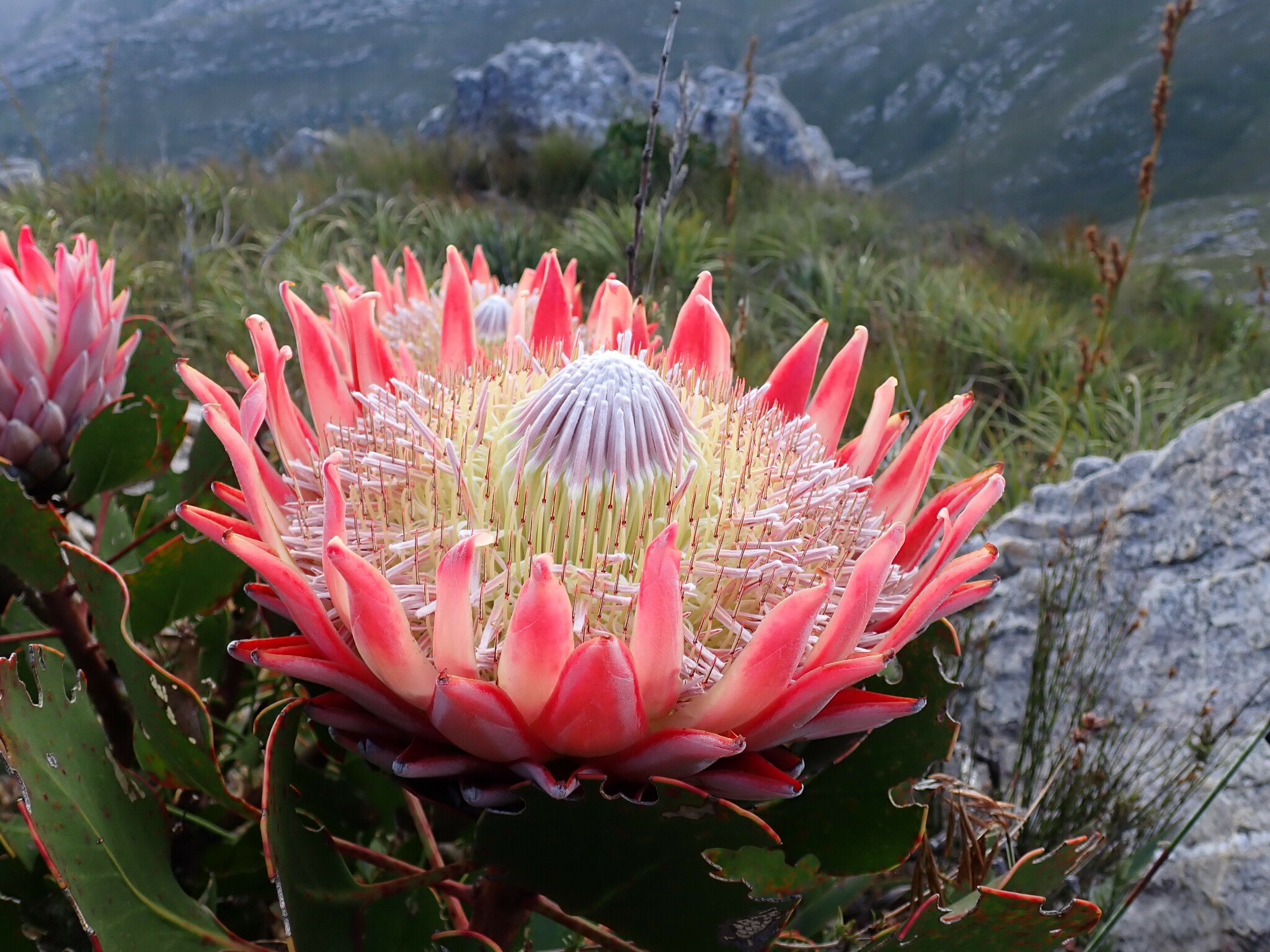


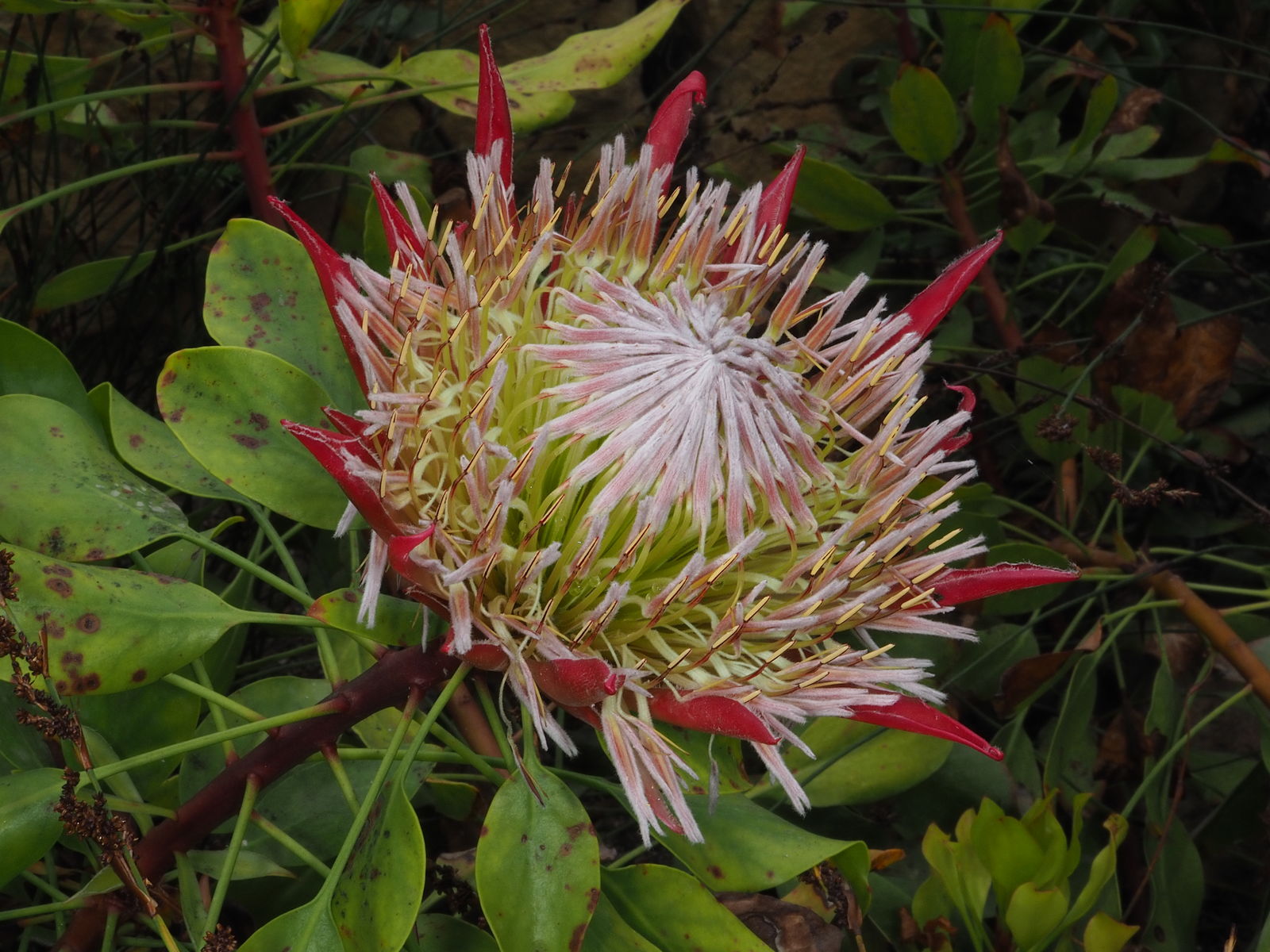
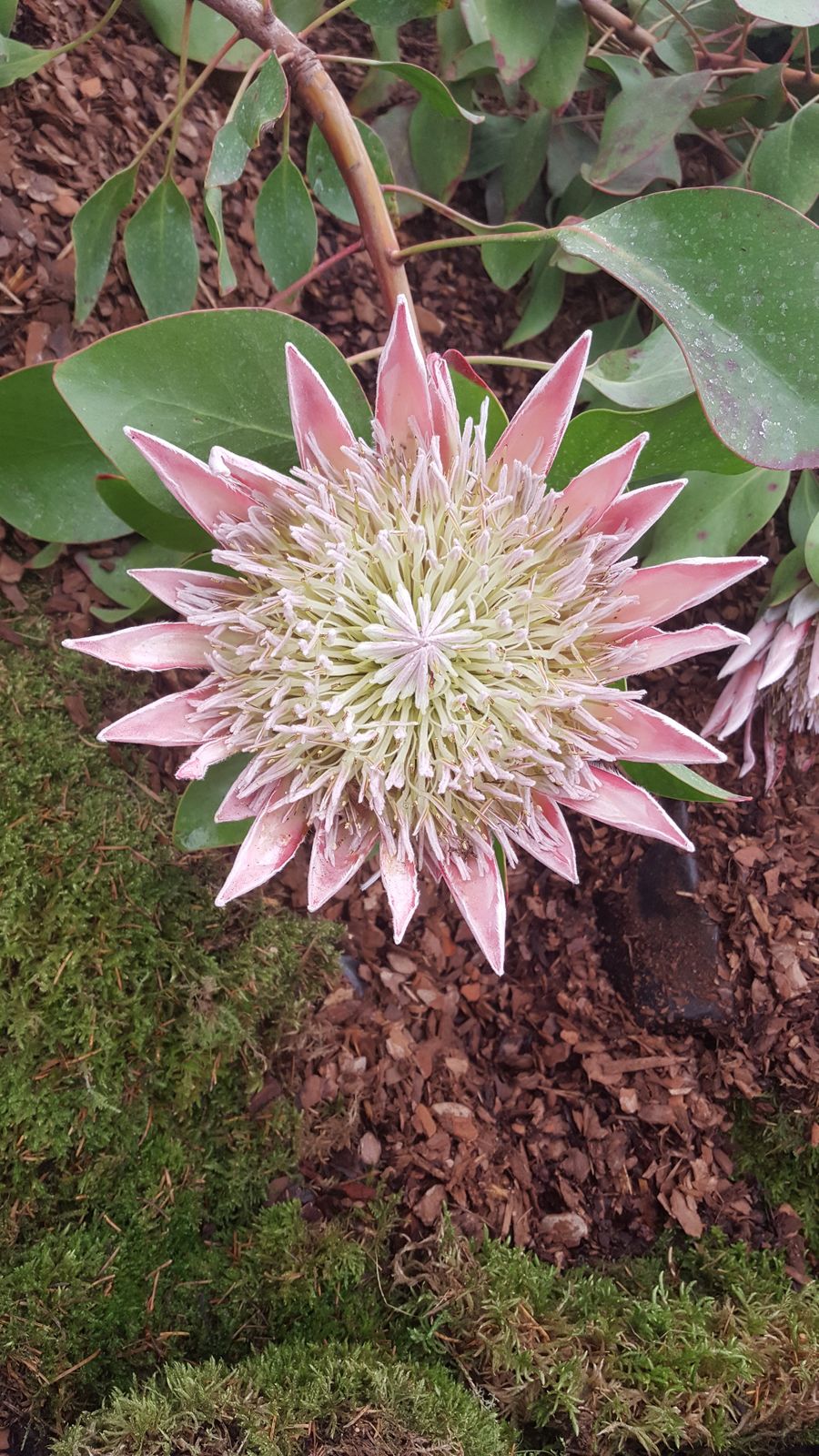
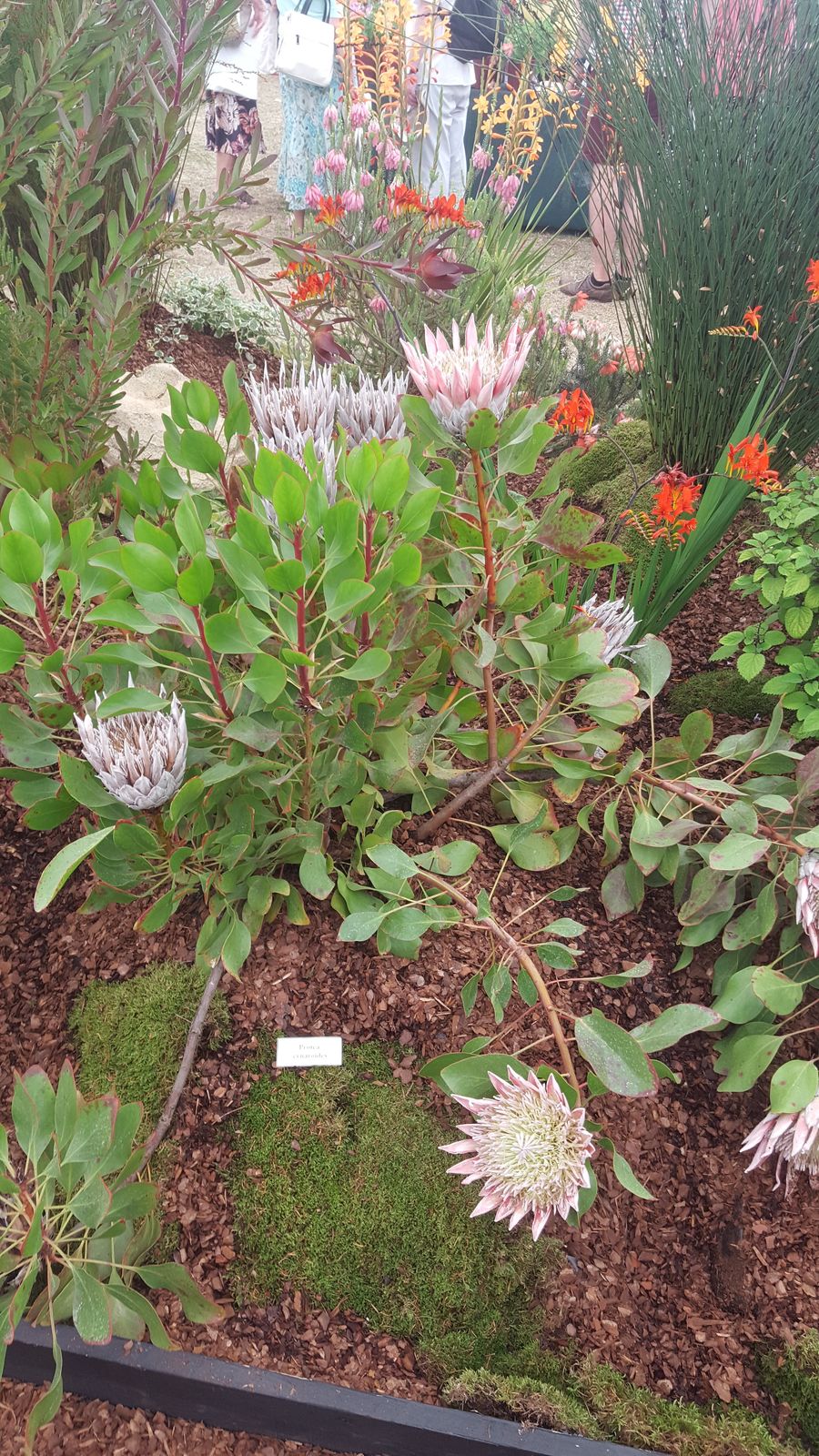
© photo
no rights reserved, uploaded by Klaus Wehrlin · cc0
iNaturalist User · cc0
Ren Hoekstra · cc-by
Taken Apr 19, 2016 by Daniel Barthelemy (cc-by-nc)
Taken Nov 15, 2012 by Photoflora - Benoit BOCK (©)
Taken Oct 15, 2022 by Jim Knopf (cc-by-sa)
© copyright of the Board of Trustees of the Royal Botanic Gardens, Kew.




Global distribution
Protea cynaroides is native only to the fynbos of Western Cape and the southern fringe of Eastern Cape, from the Cederberg mountains to east of Grahamstown. It is not naturalized outside South Africa; elsewhere it is grown ornamentally in Mediterranean or subtropical climates, in sheltered ground or under glass.
Identity
King protea (Protea cynaroides (L.) L., 1771), also called giant protea, is a low Proteaceae shrub 35 cm–2 m (14 in–6.5 ft) tall, endemic to South African fynbos at elevations of 100–1,500 m (330–4,900 ft). The epithet cynaroides means “artichoke-like,” referring to the densely layered outline of its flower head and the artichoke genus Cynara. 1 2
Originally described by Carl Linnaeus as Leucadendron cynaroides in 1753, the species was transferred by Linnaeus himself to Protea in 1771, the classification still used today. The genus takes its name from Proteus, the shape-changing Greek sea god, alluding to the extraordinary diversity of its more than 100 species. 1 8
South Africa recognizes king protea as its national flower. The national cricket team's name, the Proteas, also comes from the plant. 6
Recognition
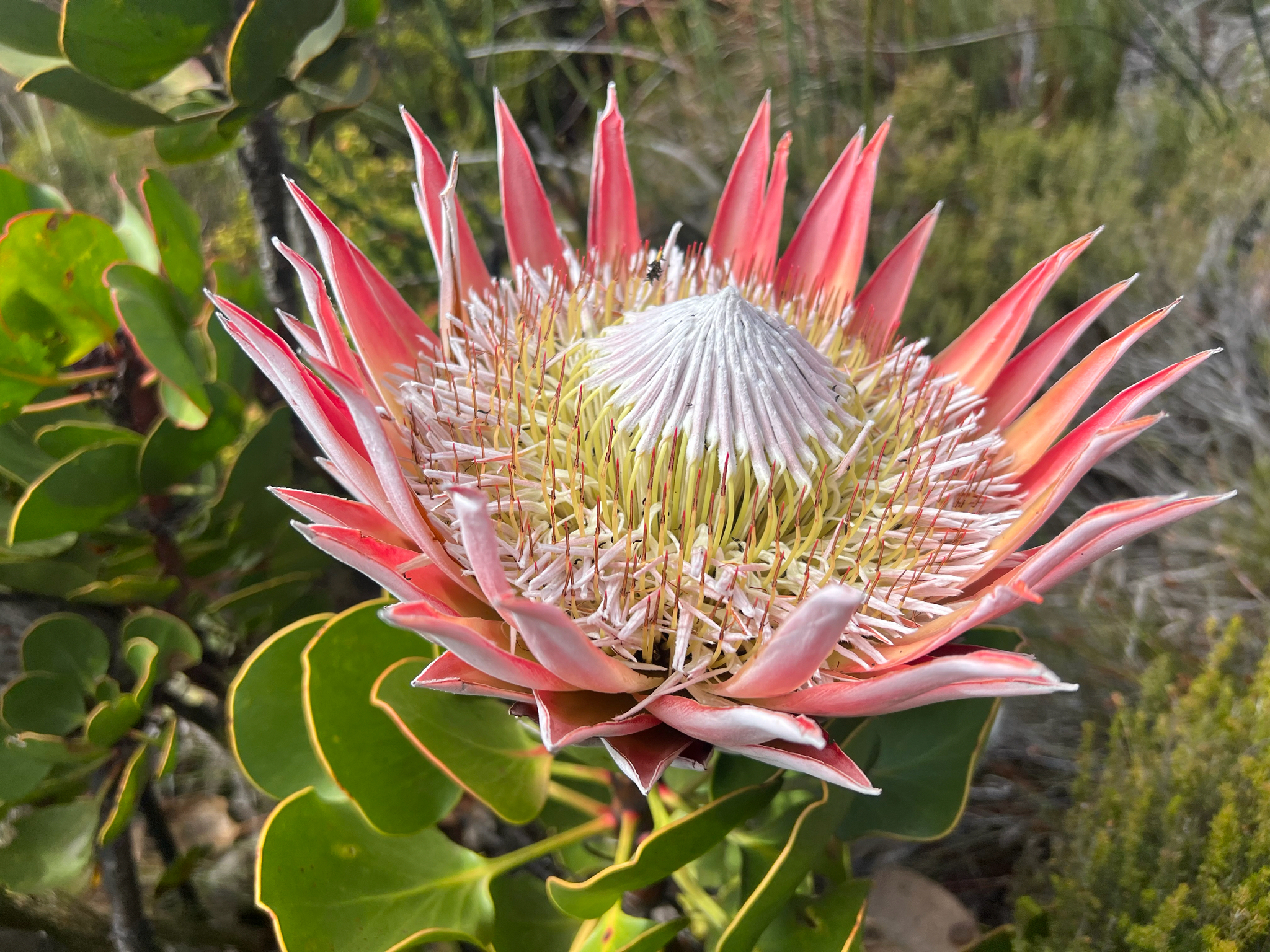
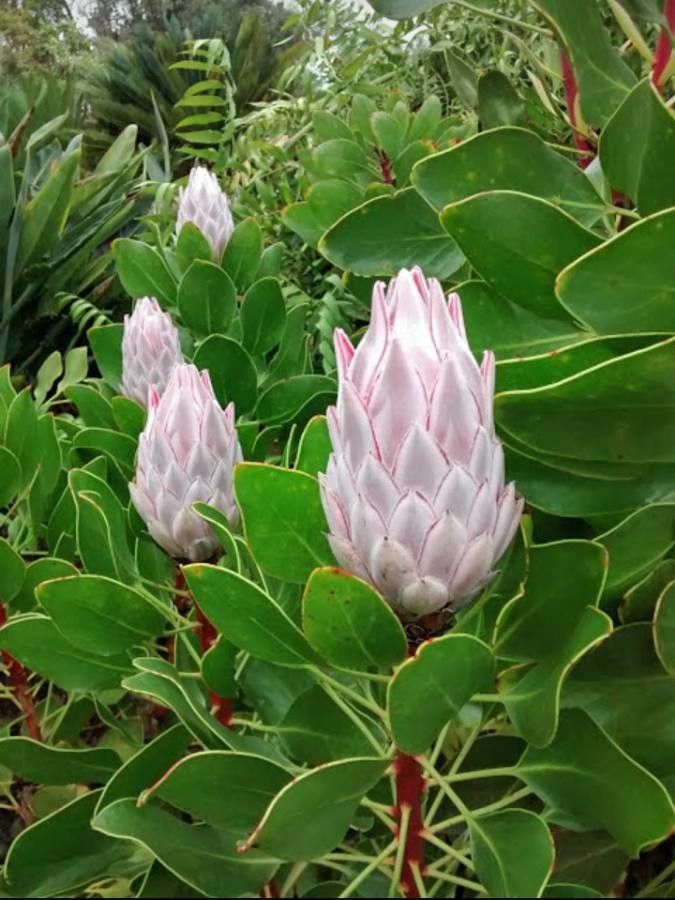
A flower head 12–30 cm (5–12 in) across makes this the largest-flowered member of Protea. A tightly packed central mass of florets is surrounded by stiff, pointed bracts ranging from creamy white to deep crimson. Pale pink shades are particularly prized in horticulture. 4 2
Depending on its site, the shrub stands 35 cm–2 m (14 in–6.5 ft) tall, with about 1 m (3 ft) the most common mature height. Dark green, glossy, leathery leaves measure 10–14 cm (4–5.5 in) long and limit water loss in the dry fynbos climate. 2 4
Two root systems coexist underground: a deep taproot reaches water, while cluster roots, also called proteoid roots, form a dense mat of shallow rootlets that capture phosphorus from nutrient-poor fynbos soils. A vigorous plant produces 6–10 flower heads per season; the most productive specimens have a documented maximum of 40. 5
Useful taxonomy
Within Proteaceae, king protea belongs to Protea alongside more than a hundred other South African species with varied flower forms. Sequencing published in 2023 produced the first assembled genome in Proteales, revealing a whole-genome duplication about 68 million years ago, around the time of the Cretaceous–Paleogene extinction. 7
Chang and colleagues' 2023 study also found that modern Proteaceae have lost genes required for arbuscular mycorrhiza, the most widespread root symbiosis in plants. This loss explains why king protea relies on its cluster roots to obtain nutrients from poor soil rather than on a fungal partnership. 7
Despite the more than 80 horticultural varieties recorded, the accepted name Protea cynaroides remains the taxonomic reference. These garden forms do not alter the botanical identity of the species. 1
Habitat and distribution
From the Cederberg mountains to east of Grahamstown, its native distribution follows fynbos in Western Cape and the southern fringe of Eastern Cape. This range is confined to South Africa. 6
Poor sandy soils, acidic to neutral, support the shrub at 100–1,000 m (330–3,300 ft) elevation. Isolated populations occupy rock crevices as high as 1,500 m (4,900 ft). 5
Its fynbos habitat receives winter rain on the western coast and summer rain on the eastern coast, extending inland toward the semiarid Karoo. These contrasting rainfall patterns help explain much of the variation in color and form between populations. Outside South Africa, king protea is not naturalized; its presence reflects ornamental cultivation alone. 2
Life cycle and reproduction
Sporadic flowering can occur throughout the year, without a clearly documented seasonal peak, an unusual pattern among Cape Proteaceae. Flowering therefore does not fit one simple seasonal window across the species. 2
Large bracts mainly attract nectar-feeding birds, especially the malachite sunbird and Cape sugarbird. These push their bills into the flower head and leave with pollen on their foreheads. Cape honeybees and protea beetles also contribute to pollination alongside the birds. 7
When fynbos burns, a natural and recurring event in this ecosystem, the aboveground parts burn but the plant resprouts from a thick underground stem, the lignotuber. This ability to resprout distinguishes king protea from other proteas that die in fire and regenerate only from seeds held in their flower heads. 2
Seed sown in late summer after fungicide treatment, in very sharply drained soil, germinates in 3–4 weeks. First flowering nevertheless takes 4–5 years, and a planted specimen needs 5–10 years to reach mature size. 2 3
Uses and risks
Cut-flower production is its main use: the heads have an exceptionally long vase life and also dry readily for lasting decoration. Their structure remains useful after the fresh display has ended. 4
In containers or in the ground, the plant is intolerant of root disturbance. Poorly handled repotting or moving an established plant can cause decline, so plants are commonly kept in their pots until final planting. Excess fertilizer is another hazard: above moderate doses, phosphorus and nitrogen become toxic to cluster roots, a marked difference from garden shrubs that tolerate generous feeding. 5
Available data do not classify king protea as toxic to cats, dogs or humans, while information for horses remains unavailable. The principal documented risk concerns the plant itself and its sensitivity to rich soil rather than the people or animals around it.
Varieties, lookalikes and related plants
Among more than 80 recorded horticultural varieties, two established cultivars are common in trade. Little Prince is a densely branched dwarf selection about 1 m (3 ft) tall, suited to containers. Madiba, a hybrid with Protea neriifolia, has dark crimson to almost black bracts and was named in honor of Nelson Mandela.
Other large Protea species with substantial flower heads, including Protea neriifolia and Protea magnifica, are common sources of confusion. The related genus Leucospermum has brushlike inflorescences that look distinctly different at close range. The scientific name and head diameter, often greater than 20 cm (8 in) on an adult plant, remain the most reliable identification guides.
Main sources
- Plants of the World Online / Kew, Protea cynaroides (L.) L.
- South African National Biodiversity Institute, PlantZAfrica, Protea cynaroides
- Royal Horticultural Society, Protea cynaroides
- Missouri Botanical Garden PlantFinder, Protea cynaroides
- Plants For A Future, Protea cynaroides
- Government of South Africa, National Flower - King Protea
- Chang et al. 2023, The genome of the king protea, Protea cynaroides, The Plant Journal
- International Plant Names Index, Protea cynaroides (L.) L.
Frequently asked questions
Is king protea toxic to cats and dogs?
Available data do not classify it as toxic to cats, dogs or humans. Information for horses is unavailable, so reasonable caution remains appropriate for that animal.
Why is the king protea flower head so large?
It combines many small florets surrounded by rigid bracts, maximizing the surface available to nectar-feeding birds such as the Cape sugarbird. At 12–30 cm (5–12 in) across, it is the largest flower head in Protea.
Why should king protea not receive much fertilizer?
Its cluster roots are adapted to phosphorus-poor fynbos soils. Too much phosphorus or nitrogen becomes toxic to these roots, unlike those of most garden shrubs accustomed to conventional feeding.
Does king protea regrow after fire?
Yes. Its thick underground stem, or lignotuber, produces new shoots after fire. This differs from Protea species that die in fires and regenerate only from seeds stored in their flower heads.
When does king protea flower?
Flowering is described as sporadic throughout the year, without a clearly documented seasonal peak, which is unusual among Cape Proteaceae.
Can king protea grow outdoors in France?
Only in Mediterranean areas without prolonged frost, on very well-drained, poor soil. Elsewhere it is limited to a conservatory, cool greenhouse or container moved under cover for winter.
What does cynaroides mean?
It means artichoke-like, referring to the genus Cynara and the tightly layered outline of the flower head, a resemblance also reflected in the names of related species.
Similar plants
If you are unsure about a plant’s toxicity, ask a botanist or veterinarian for advice.