
Aloe vera (Aloe vera, )
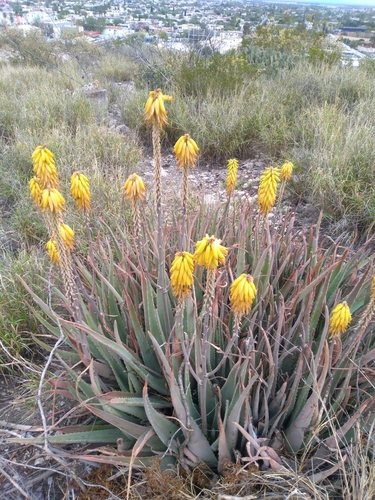
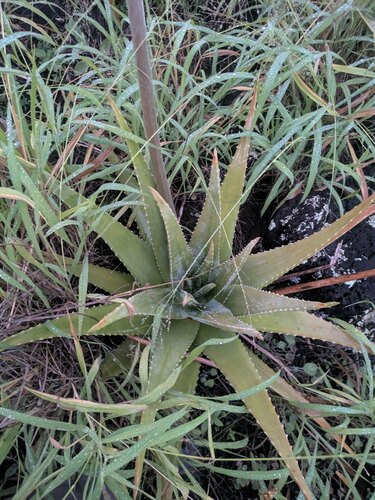
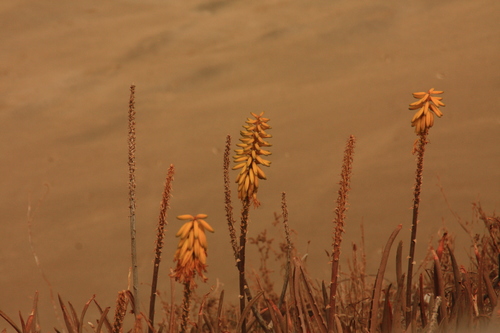
Aloe vera is a perennial succulent in the Asphodelaceae, accepted by POWO as Aloe vera (L.) Burm.f., published in 1768. Its long history of use accounts for the wealth of synonyms and trade names attached to it.
Read moreBarbados aloe, True aloe, Medicinal aloe and Aloe
Place in full sun, with intense direct light all day long.
Global distribution
The plant probably originates from dry parts of the Arabian Peninsula, but centuries of cultivation blur the line between native range, naturalization and planting. Modern records are best read as presence statuses.
- Native2
- Introduced2
- Saudi Arabia
- Yemen
- India
- Mexico
Hexagons: sourced regions. Green dots: native range. Statuses according to POWO (Kew).
Identity
Aloe vera (Aloe vera) is a perennial succulent in the Asphodelaceae, accepted under that name by POWO. People have grown it for a very long time, which is why so many names still travel with it, true aloe and Barbados aloe among them. 1 2
Two points matter most. It is not a cactus, and its leaf is more than the clear gel. The skin, the yellow latex and the inner gel serve different purposes and carry different levels of risk. 3 4
Recognition
Thick, fleshy, lance-shaped leaves with slightly toothed margins make up the rosette of Aloe vera. A healthy plant looks firm: its leaves stand upright or arch outward and hold water, nothing like the thin foliage of a tropical houseplant. 5 6
Side offsets are a good sign of maturity. The flower stalk, yellow to orange depending on the source and the plant, appears mostly on adult specimens grown in strong light and spared from overwatering. 4 6
Useful taxonomy
Catalogs still use Aloe barbadensis widely, yet the accepted name is Aloe vera. Labels such as barbadensis, chinensis or variegata are best treated as common or trade names that need checking. 1 7
- Aloe barbadensis Mill.
- Aloe perfoliata var. vera L.
- Aloe indica Royle
- Aloe vulgaris Lam.
The costliest confusion is a practical one: many aloes share the same rosette shape, but not all of them can be treated as a household source of gel. 1
Habitat and range
Pinning its origin to a single country is hard, because the species has been cultivated for so long. Sources agree on hot, dry regions and record many naturalized populations in arid or garden settings. 1 5
That ecology sets the core of its care: strong light, a pot with drainage holes, a mineral mix and infrequent but thorough watering. The plant handles drought well; it copes poorly with cold, wet conditions and roots left sitting in water. 6 4 Outdoors, that points to a frost-free climate, roughly USDA zones 10 to 12; where winters bring frost, it is grown in a pot and brought indoors for the cold months.
Life cycle and reproduction
Growth is slow, first as a single rosette, then through offsets. Indoors, a plant can go years without flowering, and that is no failure as long as the leaves stay firm and the base does not rot. 5 6
The reliable way to propagate it is to separate offsets that already have roots. Leaf pieces are not a dependable method here, unlike some succulents that root from a single leaf. 6
Uses and risks
Most of its known use centers on the inner gel, mainly in cosmetic or traditional settings. That use has to be kept separate from the yellow latex and from preparations taken by mouth, since one leaf holds very different fractions. 4 6
The ASPCA lists aloe as toxic to cats, dogs and horses. The risk to animals comes mainly from the saponins and anthraquinones in the latex, which can cause vomiting, diarrhea or lethargy. 8
Varieties, look-alikes and related plants
Plants sold as Aloe vera variegata, Aloe vera chinensis or Barbados aloe should be checked by habit, leaf and botanical label. For growing, the right purchase is mainly a firm, well-rooted plant with no soft base. 6 5
Common look-alikes include:
- Aloe arborescens, shrubby, with more leaves carried on stems
- Haworthiopsis attenuata, a small striped rosette, not used as a medicinal aloe
- Agave americana, a stiffer rosette, usually monocarpic
Before using a leaf, confirm the species, the plant's health and exactly which part is being taken. 2
What to check
Start with the base of the plant, not the leaf tips. A firm, pale, well-ventilated base beats a deep green rosette sitting in dense potting soil. The mix should dry out between waterings; if the pot stays heavy for several days, the cause usually lies with the container, the mix or a spot that is too cold. 6
The leaves also show how well the plant is growing:
- thick, taut leaves: water reserves are fine;
- flat, long or soft leaves: too little light, too much water or weakened roots;
- dry patches after a summer outdoors: direct sun came on too fast;
- offsets crowded around the base: the plant is mature enough for a clean division.
At home, the cautious rule is to keep the ornamental plant, the inner gel and the yellow latex distinct. Repeated harvesting weakens a small rosette, and swallowing the latex puts pets and children at greater risk than simply touching an intact leaf. The ASPCA places aloe among plants to keep out of reach of cats, dogs and horses, so the sensible move is a high, stable spot where the pot cannot be chewed. 8 1
Main sources
Frequently asked questions
Is aloe vera toxic to pets?
Yes. The ASPCA lists it as toxic to cats and dogs, mainly because of the latex and its laxative compounds.
Why is my aloe vera going soft?
The most common cause is overwatering, made worse by cold or a dense, compacted potting mix.
Can you eat the whole leaf?
No. The gel and the yellow latex need to be kept apart; this information does not replace dietary or medical advice.
Similar plants
Botanical data compiled from reference sources (RHS, Kew Gardens, POWO). This profile is for guidance only and is not a substitute for advice from a botanist or veterinarian if you have concerns about toxicity.