
Indian snakeroot (Rauvolfia serpentina, )
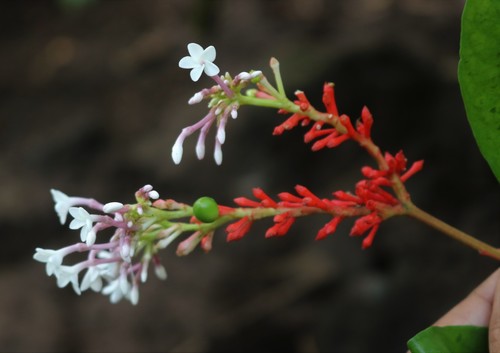

Indian snakeroot (Rauvolfia serpentina) is an evergreen undershrub in the Apocynaceae family, native to the Indian subcontinent and mainland Southeast Asia. Its twisted taproot, rich in indole alkaloids, has been used for centuries in Ayurvedic medicine as sarpagandha. In the 20th century it yielded reserpine, one of the first modern drugs for high blood pressure.
Read moreIndian snakeroot, Serpentine wood, Snakeroot, Sarpagandha, Chandrika and Devil pepper
Give plenty of ambient light without direct sun on the leaves.
Partial shade to filtered light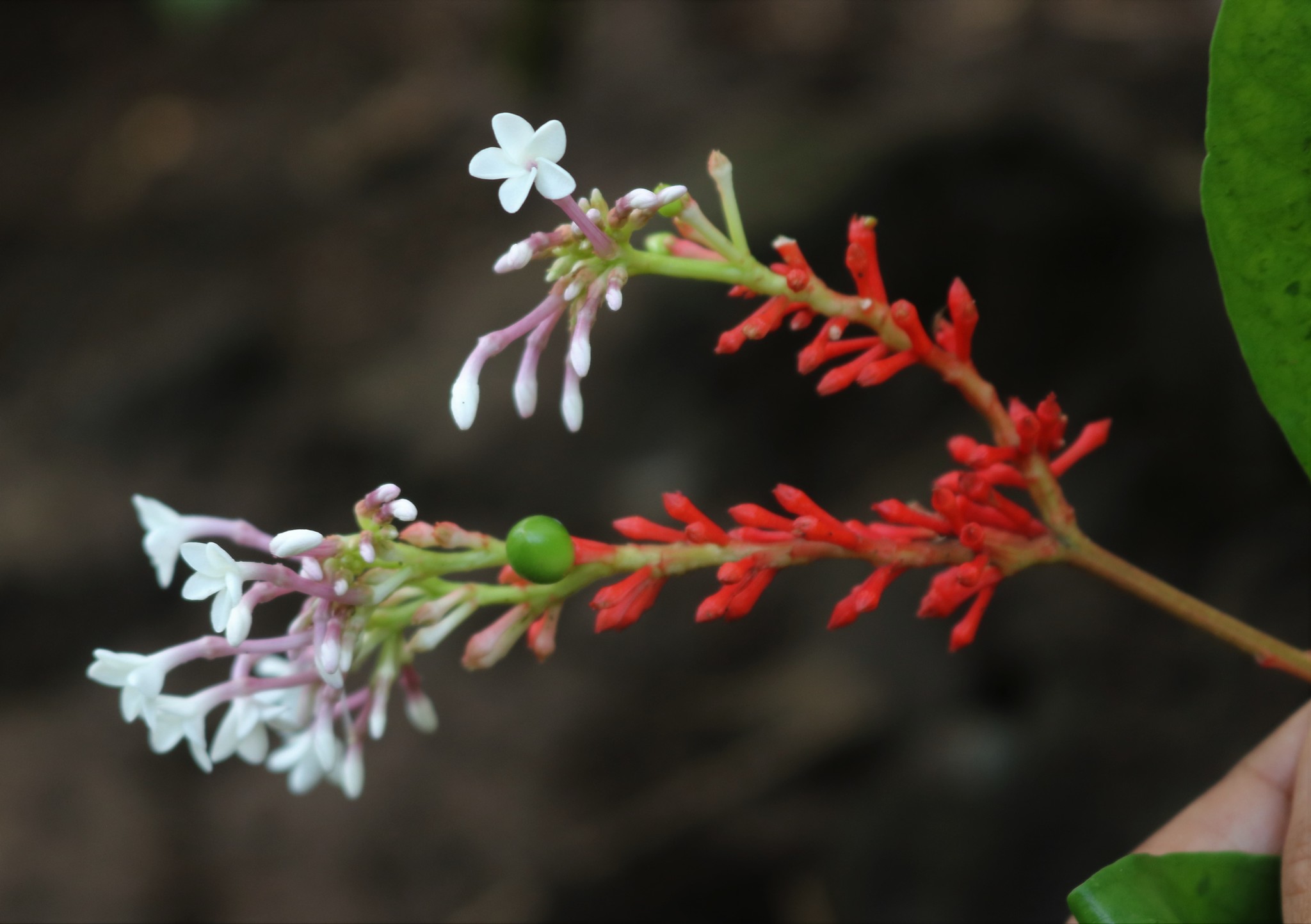


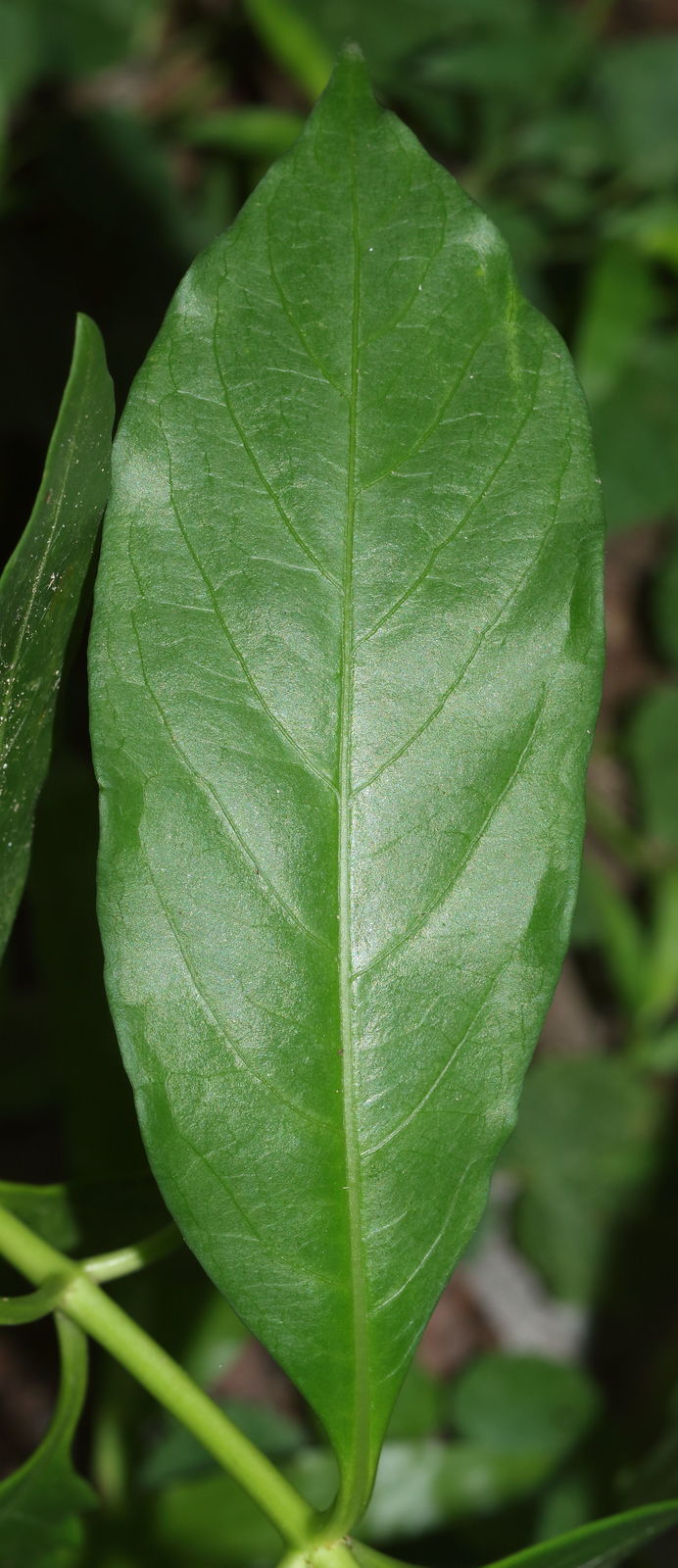
© photo
(c) Shiwalee Samant, some rights reserved (CC BY-NC), uploaded by Shiwalee Samant · cc-by-nc
Wikimedia Commons · CC BY-SA or Public Domain
Wikipedia · CC BY-SA
Taken Apr 1, 1971 by Royal Botanic Garden Edinburgh - Bhaskar Adhikari (cc-by-nc)
Taken Sep 4, 1967 by Royal Botanic Garden Edinburgh - Bhaskar Adhikari (cc-by-nc)
Taken Jun 6, 1969 by Royal Botanic Garden Edinburgh - Bhaskar Adhikari (cc-by-nc)
Taken Jun 1, 1994 by Royal Botanic Garden Edinburgh - Bhaskar Adhikari (cc-by-nc)
Taken Apr 20, 1954 by Royal Botanic Garden Edinburgh - Bhaskar Adhikari (cc-by-nc)
© copyright of the Board of Trustees of the Royal Botanic Gardens, Kew.



Global distribution
Rauvolfia serpentina is native from the Indian subcontinent to southern China and western Malaysia. It is widely grown as a medicinal crop beyond this range, particularly in India, sometimes making it difficult to distinguish wild populations from cultivated plots.
- Native9
- India
- Nepal
- Pakistan
- Bangladesh
- Myanmar
- Thailand
- China
- Malaysia
- Indonesia
Hexagons: regions where the plant occurs. Green dots: native range.1
Identity
Indian snakeroot (Rauvolfia serpentina (L.) Benth. ex Kurz, 1877), also known as serpentine wood or sarpagandha, is a perennial undershrub in the genus Rauvolfia, family Apocynaceae. Linnaeus first described it as Ophioxylon serpentinum in 1753; Bentham, published by Kurz, transferred it to Rauvolfia in 1877, the name now accepted by POWO. 1 2
Its taproot yielded reserpine in 1952, helping establish one of the earliest modern treatments for high blood pressure. Demand for its alkaloids distinguishes this modest undershrub from the better-known ornamental members of its family.
The Sanskrit name sarpagandha combines sarpa (snake) and gandha (smell or remedy). It evokes both the twisted, unbranched root and the plant's traditional use against snakebites. The Latin epithet serpentina draws on the same snake-like image. 4
Recognition
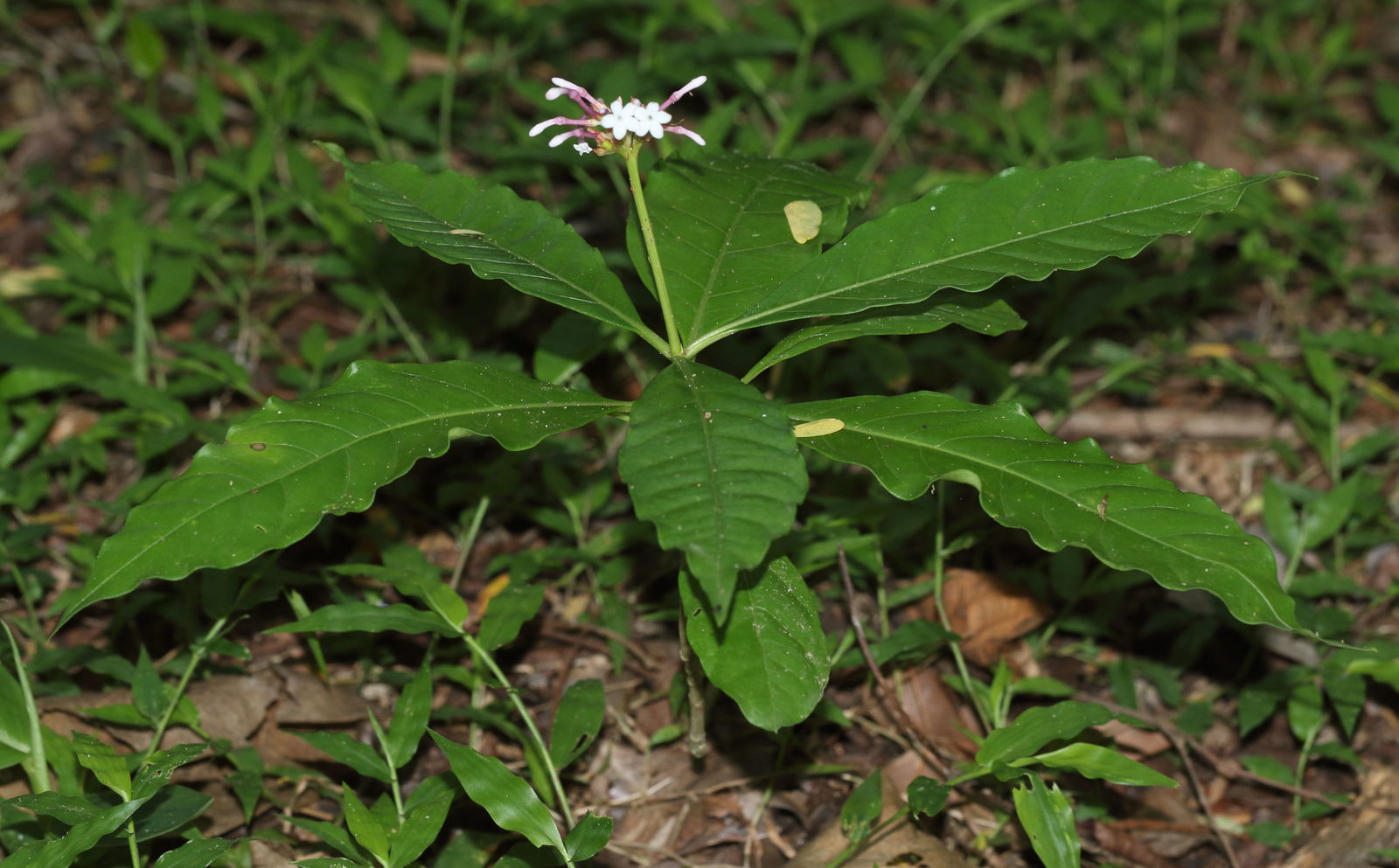
An evergreen undershrub with a thick, unbranched taproot, Indian snakeroot has yellowish-brown root bark. Wild plants commonly reach 50 cm to 1 m (1.5–3 ft) tall; under protected greenhouse cultivation they can exceed 1.5 m (5 ft). 5 4
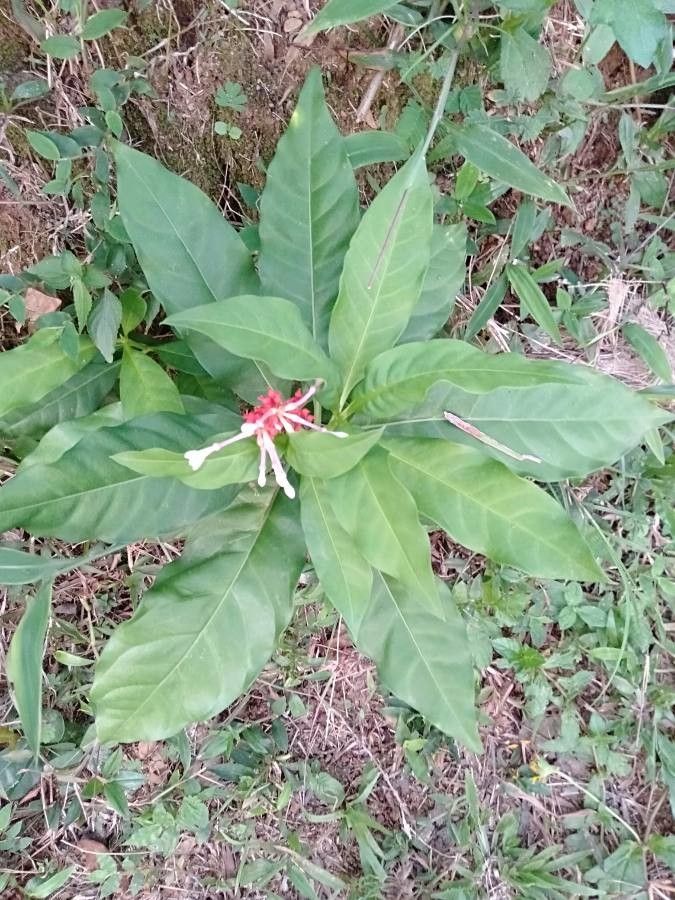
Leaves grow in whorls of three to five. They are elliptic to lance-shaped, thin-textured, hairless and glossy green above. This whorled arrangement is unusual among woody Apocynaceae, most of which bear opposite leaf pairs, and provides a quick field clue for separating the plant from other understory shrubs. 4
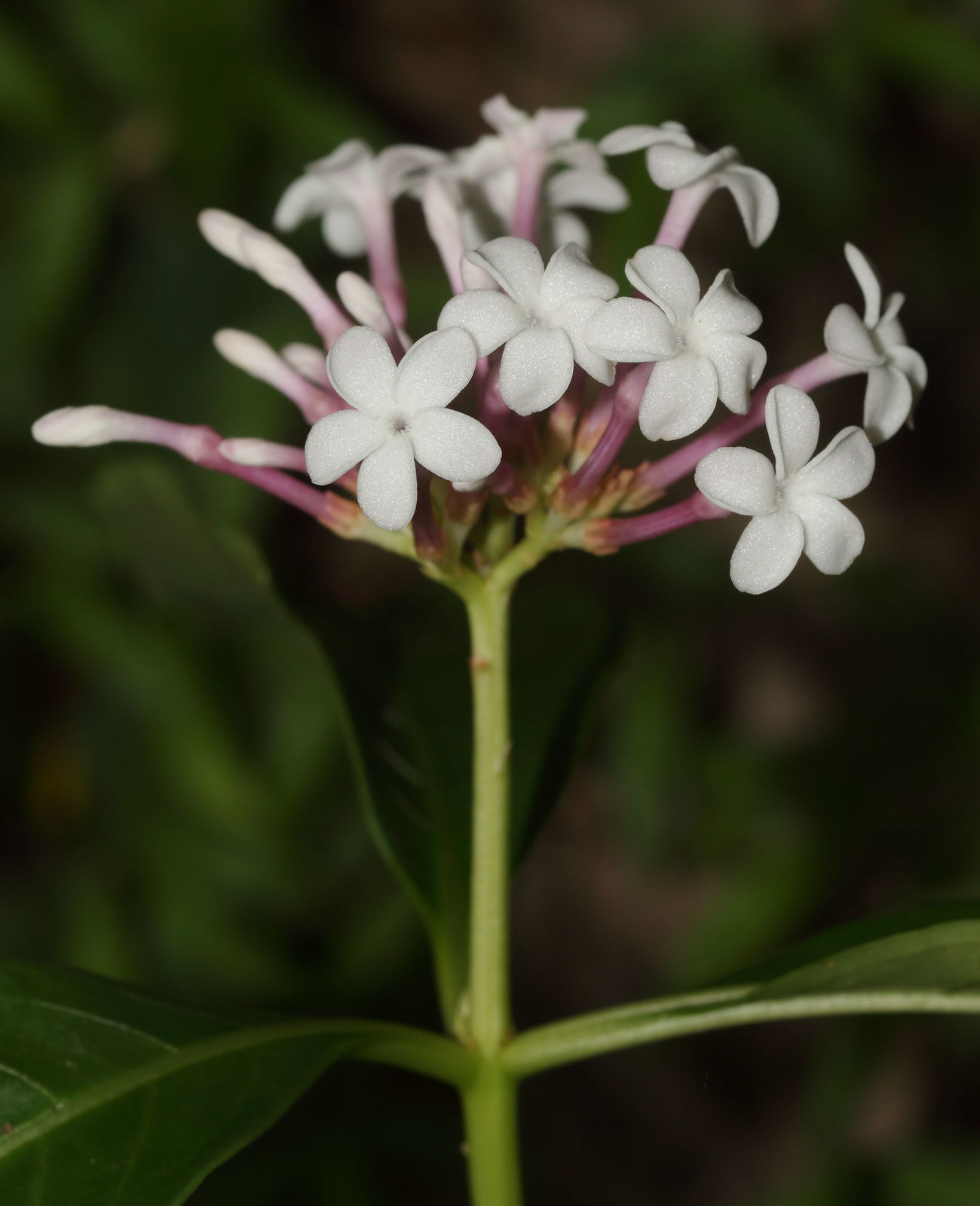
Small flowers, white to purplish pink, open in flat-topped clusters at shoot tips or in leaf axils. Each has a long corolla tube and a calyx often tinged red. Fruits form pairs of small drupes, initially green and then black at maturity. 4 5
Useful taxonomy
For Indian snakeroot, POWO/WCVP accepts Rauvolfia serpentina (L.) Benth. ex Kurz. The synonymy mainly records names in the former genus Ophioxylon, under which the species circulated before its transfer to Rauvolfia:
- Ophioxylon serpentinum L. (basionym)
- Ophioxylon album Gaertn.
- Ophioxylon trifoliatum Gaertn.
- Ophioxylon obversum Miq.
- Ophioxylon salutiferum Salisb.
- Rauvolfia obversa (Miq.) Baill.
- Rauvolfia trifoliata (Gaertn.) Baill.
The genus commemorates Leonhard Rauwolf, a 16th-century German physician and botanist whose account of travels in the Levant influenced the botany of his time. Rauvolfia contains about 60 species; only a handful, including the African Rauvolfia vomitoria, reach indole alkaloid concentrations comparable to those of Indian snakeroot. 1 3
Habitat and range
From the Indian subcontinent, Indian snakeroot's native range reaches southern China and western Malaysia. It includes India, Nepal, Pakistan, Bangladesh, Myanmar, Thailand, southern China, Malaysia and Indonesia. The plant occupies moist mountain forest and shaded understory from sea level to about 2,100 m (6,900 ft), in areas with high rainfall. 5 3
Intensive root harvesting for the pharmaceutical industry has reduced wild populations across much of that range. Since 2007, the species has been listed in CITES Appendix II, which regulates international trade without banning it. This conservation status should be distinguished from dedicated agricultural cultivation, now the main source of raw material. 7
Annual rainfall requirements are high, about 1,500–3,500 mm (59–138 in), and the soil should never dry out completely. These requirements explain its association with strongly monsoonal regions and the need for a heated greenhouse or conservatory when growing it outside suitable warm, humid climates. 5
Life cycle and reproduction
Tropical flowering extends from spring into summer, peaking during the rainy season. After fruit set, the paired fruits ripen within a few weeks, changing from green to glossy black as they mature on the plant. 4
Cultivators mainly propagate Indian snakeroot by seed, the most reliable route to a well-formed taproot. Stem cuttings are possible but produce a less dense root system. Roots become harvestable after 18 months to two years, when their alkaloid concentration reaches its maximum; harvesting generally takes place in the dry season. 5
Uses and risks
Ayurvedic medicine has used Indian snakeroot roots for centuries under the name sarpagandha, traditionally for snakebites, fever and mental disorders. These historical uses explain its medicinal importance and should be understood as traditional practice rather than directions for treatment. 4
Indian chemists isolated several root alkaloids as early as 1931. In 1949, cardiologist Rustom Jal Vakil published a study in the British Heart Journal involving 50 patients with hypertension treated with powdered root: 85% showed lower systolic pressure after four weeks. In 1952, Swiss chemists Müller, Schlittler and Bein isolated reserpine, responsible for about half the plant's activity. 6
The whole plant, especially the root bark, contains dozens of bitter indole alkaloids. Uncontrolled ingestion can cause marked low blood pressure, sedation, dizziness and digestive upset. Self-medication with the raw plant is discouraged because the margin between an active dose and a toxic dose is narrow. 8
Reserpine's role as a first-line blood pressure medicine declined sharply after the 1960s, limited by documented side effects including sedation, nasal congestion and, at high doses, depressive episodes. The molecule remains studied and prescribed in low doses, often in combination with other treatments. 6
Varieties, look-alikes and related plants
Indian snakeroot has no stable horticultural cultivar. In India it remains a medicinal crop for pharmaceutical and Ayurvedic use, and is rarely chosen as an ornamental because decorative selections are not available.
Identification problems chiefly involve the following plants:
- Rauvolfia vomitoria, an African species with similar alkaloids, sometimes substituted in herbal medicine;
- Rauvolfia tetraphylla, with leaves in whorls of four and fruits that turn red when ripe;
- young woody Apocynaceae with whorled leaves, for which flowering is needed for reliable identification.
The full scientific name, checked against a reference such as POWO, is more reliable than the common name sarpagandha alone for distinguishing Indian snakeroot from its relatives. This matters especially when buying dried roots: they take 18 months to two years to reach harvestable size, and a poorly identified batch may come from a related species with a different alkaloid profile.
Main sources
- Plants of the World Online / Kew, Rauvolfia serpentina (L.) Benth. ex Kurz
- International Plant Names Index, Rauvolfia serpentina record
- GBIF, Rauvolfia serpentina (L.) Benth. ex Kurz
- Encyclopaedia Britannica, Rauvolfia serpentina
- Plants For A Future, Rauvolfia serpentina
- Isharwal & Gupta, 2006, Texas Heart Institute Journal, Rustom Jal Vakil and Rauwolfia research
- CITES, Appendices I, II and III (Rauvolfia serpentina, Appendix II)
- USDA PLANTS Database, Rauvolfia serpentina profile (RASE4)
Frequently asked questions
What is reserpine and where does it come from?
Reserpine is an indole alkaloid isolated from Rauvolfia serpentina roots in 1952 by the Swiss chemists Müller, Schlittler and Bein. It became the basis of one of the first modern medicines for high blood pressure.
Is Indian snakeroot toxic?
Yes. The whole plant, especially the root bark, contains dozens of indole alkaloids. Uncontrolled ingestion can cause low blood pressure, sedation, dizziness and digestive problems.
Why is it called serpentina?
The epithet describes the long, twisted, unbranched root, which resembles a coiled snake. The Sanskrit name sarpagandha carries the same image and also refers to traditional use against snakebites.
Where does Indian snakeroot grow naturally?
Its native range extends from the Indian subcontinent to southern China and western Malaysia, in moist mountain forests and shaded understory up to about 2,100 m (6,900 ft) elevation.
Is Indian snakeroot protected?
The species has been listed in CITES Appendix II since 2007. This regulates international trade without banning it, in response to declining wild populations caused by intensive root harvesting.
Can Indian snakeroot grow in a temperate climate?
It needs a heated greenhouse or conservatory kept frost-free year-round. The plant cannot tolerate temperatures below 10 °C (50 °F) and needs high humidity resembling its tropical habitat.
How does Indian snakeroot differ from Rauvolfia vomitoria?
Rauvolfia vomitoria is native to Africa and contains similar alkaloids in different proportions. It is sometimes substituted for Rauvolfia serpentina in herbal medicine, making a precise scientific identification essential before any medicinal use.
Similar plants
If you are unsure about a plant’s toxicity, ask a botanist or veterinarian for advice.