
Common buckthorn (Rhamnus cathartica, )
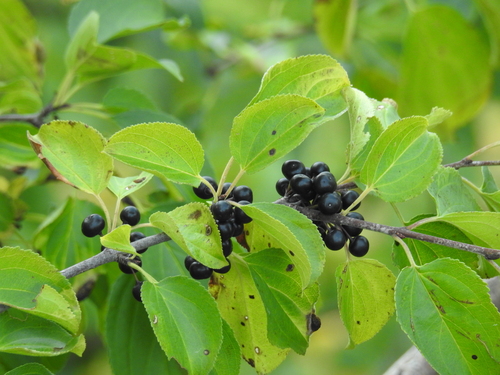
Common buckthorn (Rhamnus cathartica) is a deciduous shrub or small tree in Rhamnaceae, native to Europe, northwestern Africa and western Asia. Its twigs often end in a thorn, its leaves are nearly opposite, and its strongly purgative black berries explain the epithet cathartica. Introduced to North America as an ornamental in the early nineteenth century, it is now classed as invasive in several states and provinces.
Read moreCommon buckthorn, European buckthorn and Purging buckthorn



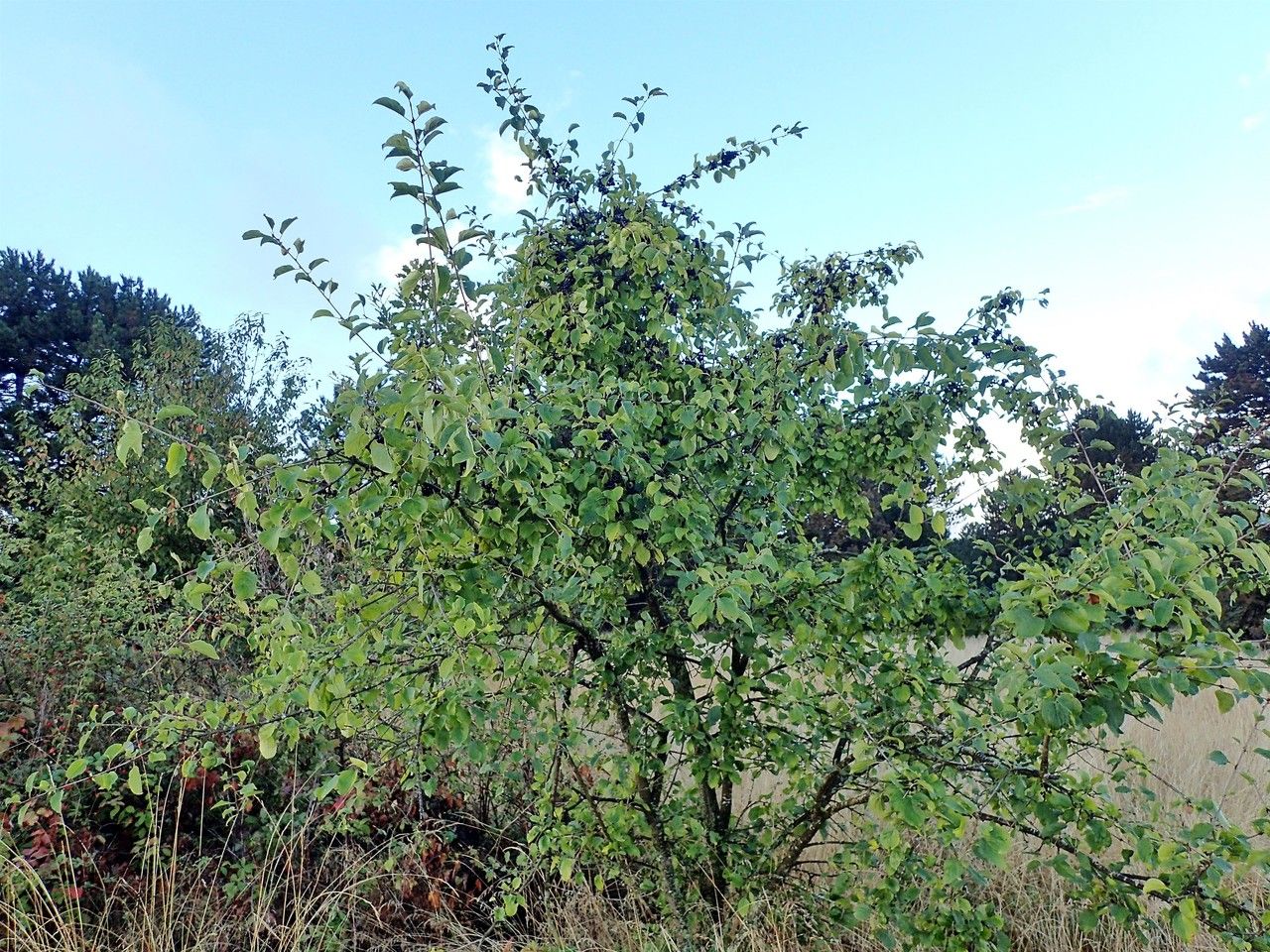
© photo
(c) Robert Flogaus-Faust, some rights reserved (CC BY) · cc-by
Tyler Smith · cc0
Daniel Atha · cc0
Taken Jul 7, 2021 by Llandrich anna (cc-by-sa)
Taken Aug 7, 2022 by Sylvain Piry (cc-by-sa)
Taken Aug 8, 2022 by Dominik Muczyński (cc-by-sa)
Taken Sep 30, 2022 by K T (cc-by-sa)
Taken Mar 3, 2022 by Irmgard Groß (cc-by-sa)
© copyright of the Board of Trustees of the Royal Botanic Gardens, Kew.




Global distribution
The native range of Rhamnus cathartica extends from the central British Isles to Morocco and east to western Siberia, Xinjiang and Kyrgyzstan. Introduced to North America as an ornamental in the early nineteenth century, it is now naturalized across the northern half of the continent and classed as invasive in several regions.
- Native4
- Invasive2
- France
- United Kingdom
- Morocco
- Western Russia
- United States
- Canada
Hexagons: regions where the plant occurs. Green dots: native range.1
Identity
Common buckthorn (Rhamnus cathartica L., 1753), also called European buckthorn or Purging buckthorn, is a deciduous shrub or small tree in the genus Rhamnus, family Rhamnaceae. Two strong field clues are a sharp thorn at the twig tip and bright orange inner wood beneath gray bark, visible at a small cut. 1 3
The epithet cathartica derives from Greek kathartikos, meaning “purifying.” It refers to the powerful purgative effect of the black fruits, formerly used for constipation but abandoned medicinally because there is no safe dosage. 4
Common names can cover several black-berried buckthorn species. Common buckthorn reflects this plant’s wide occurrence in North America, while purging buckthorn refers to its former laxative use. The French qualifier “purgatif” makes the same distinction. 9
Recognition
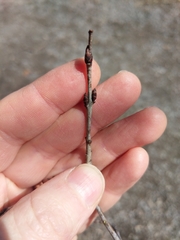
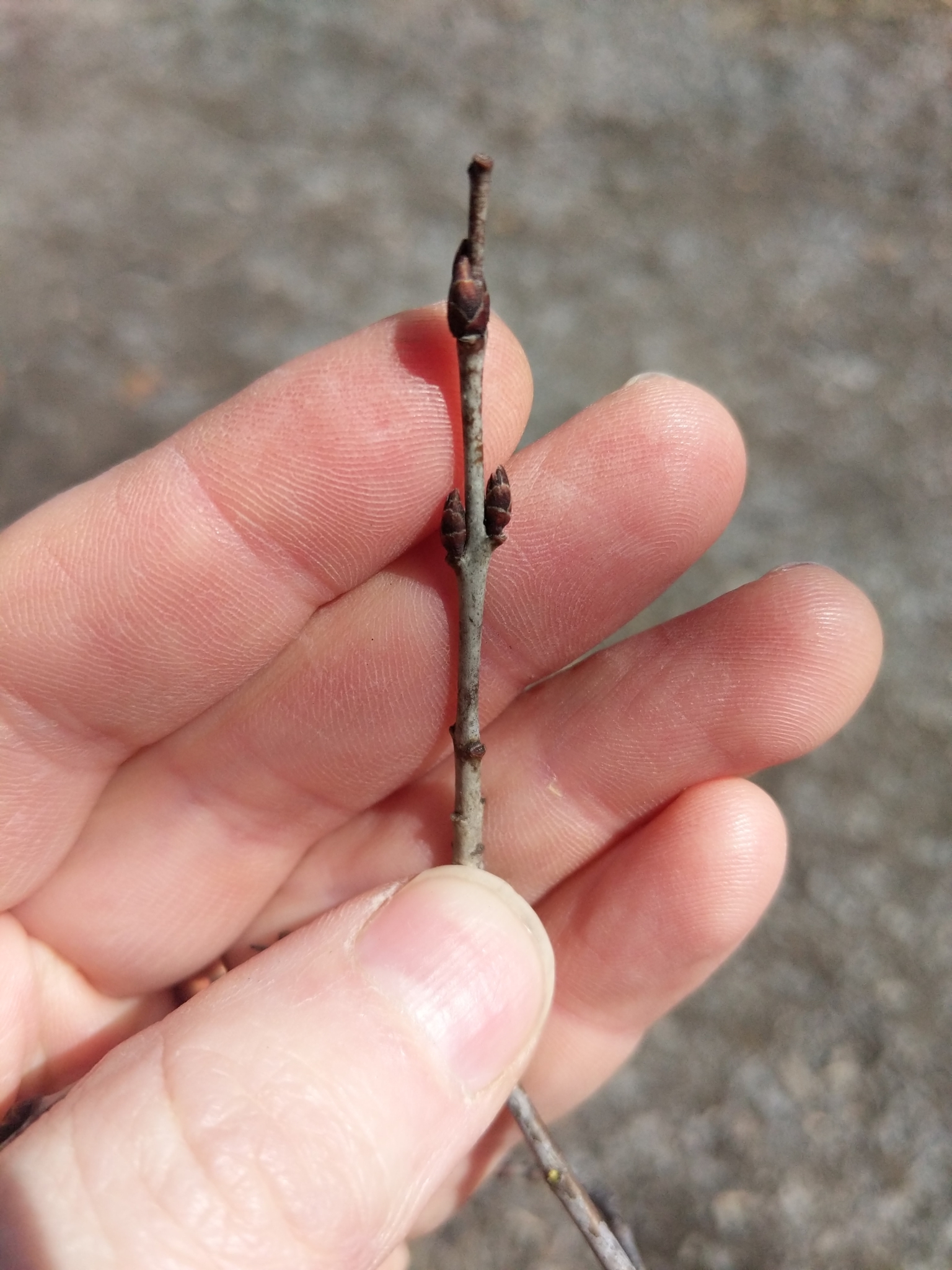
A dense bush or small isolated tree, Rhamnus cathartica generally grows 3–8 m (10–26 ft) tall and 2–4 m (7–13 ft) wide. A terminal thorn on nearly all current-year twigs distinguishes it from frequently confused alder buckthorn (Frangula alnus), which has no thorns. 2 3
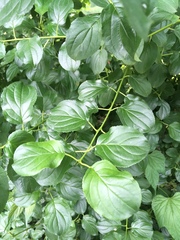
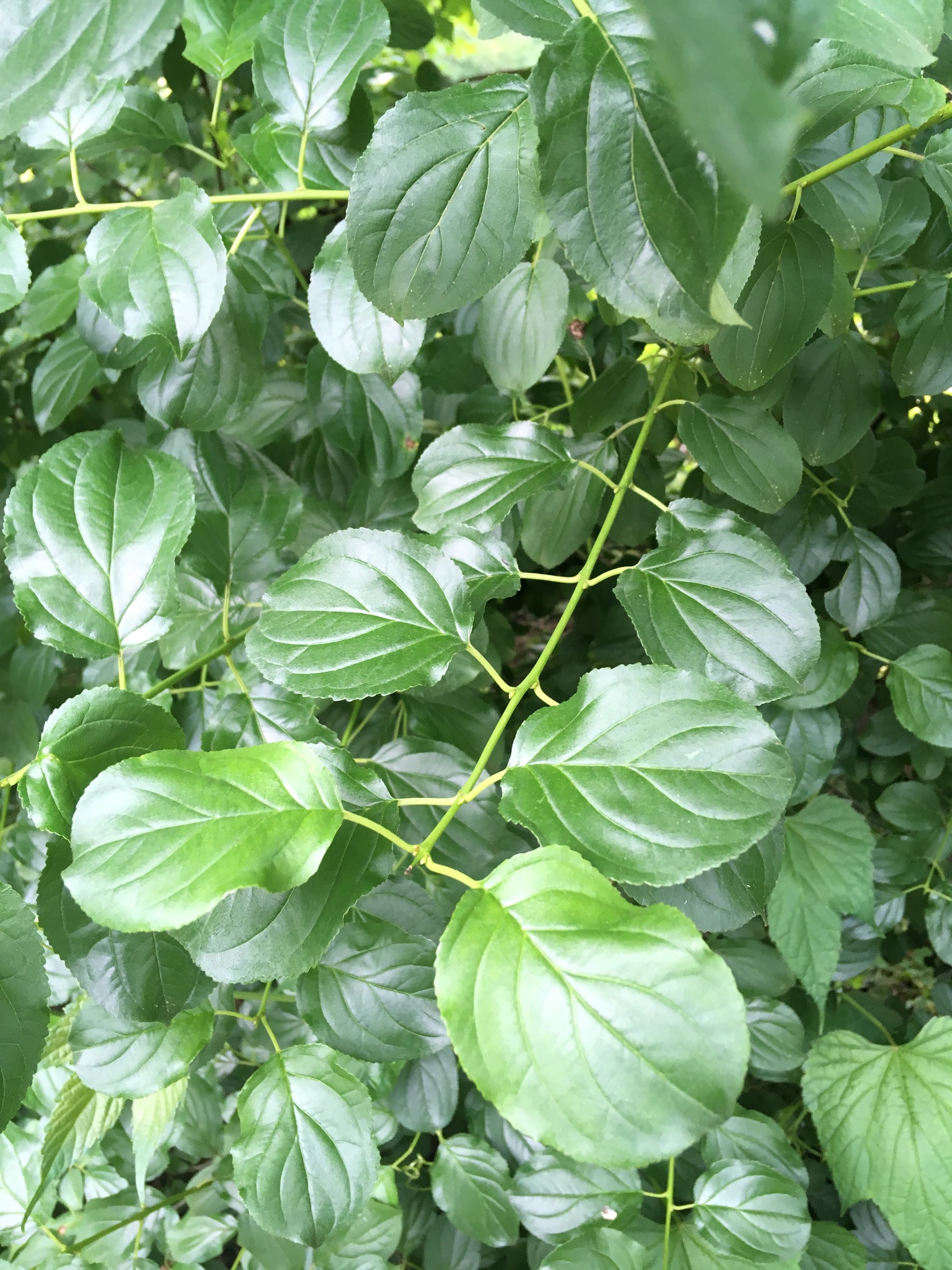
Nearly opposite, or subopposite, leaves are elliptical to oval, 5–7 cm (2–3 in) long, with finely toothed margins and three to five pairs of veins curving toward the tip. Scratched gray bark reveals bright orange inner wood, a clue available year-round even without flowers or fruit. 3 4
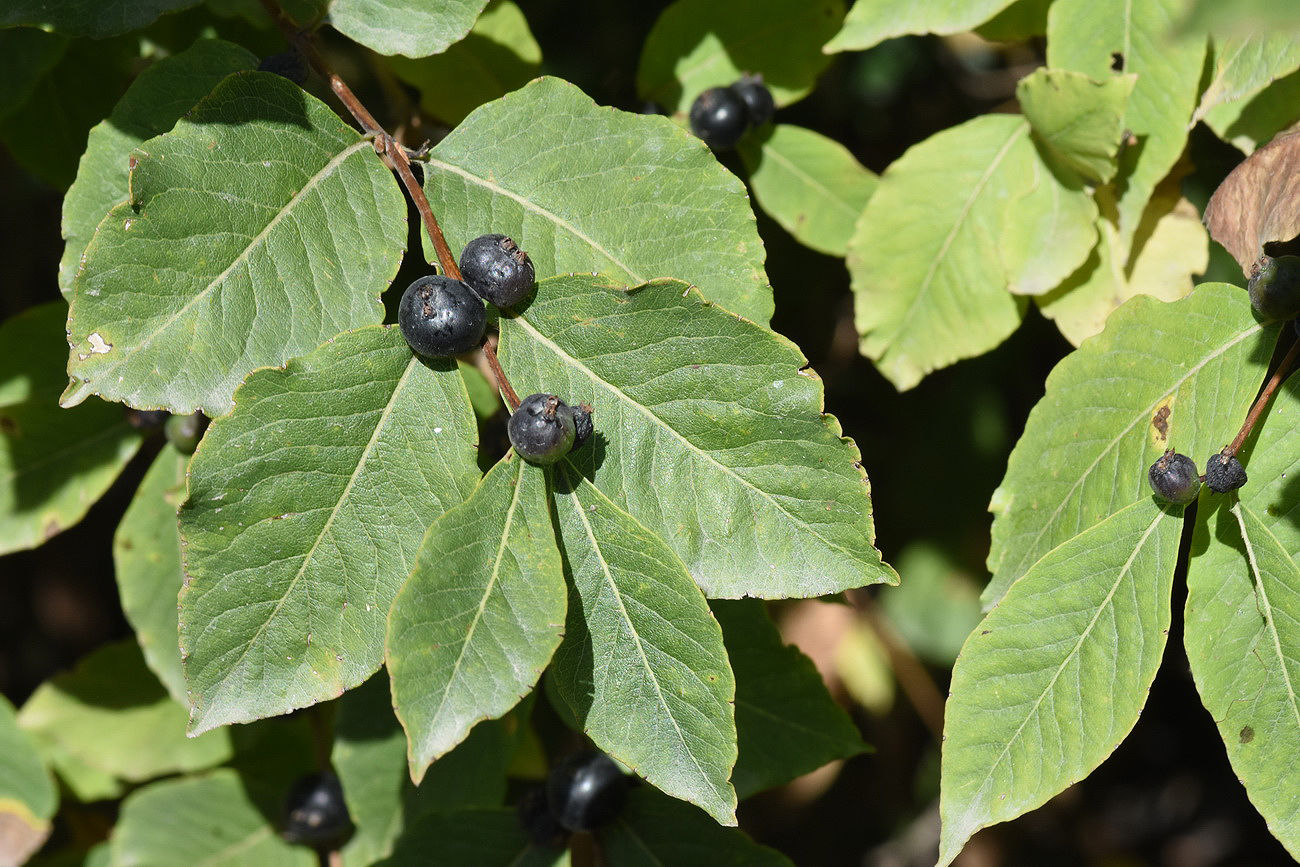
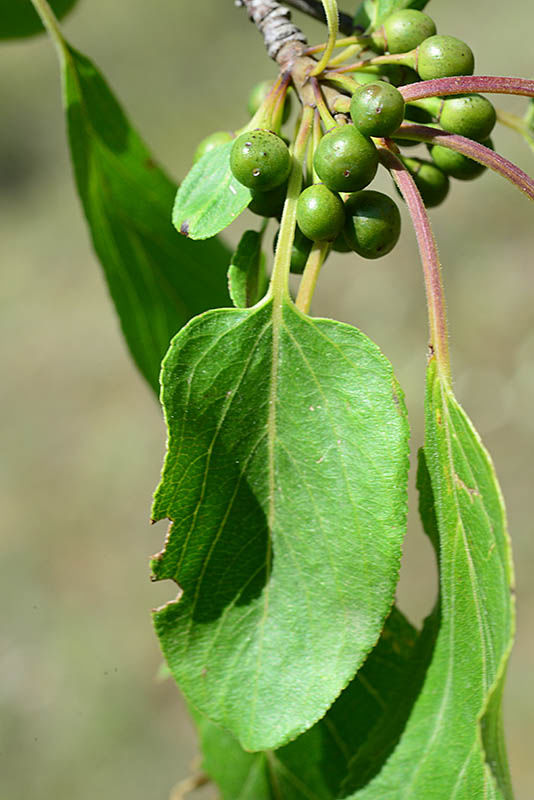
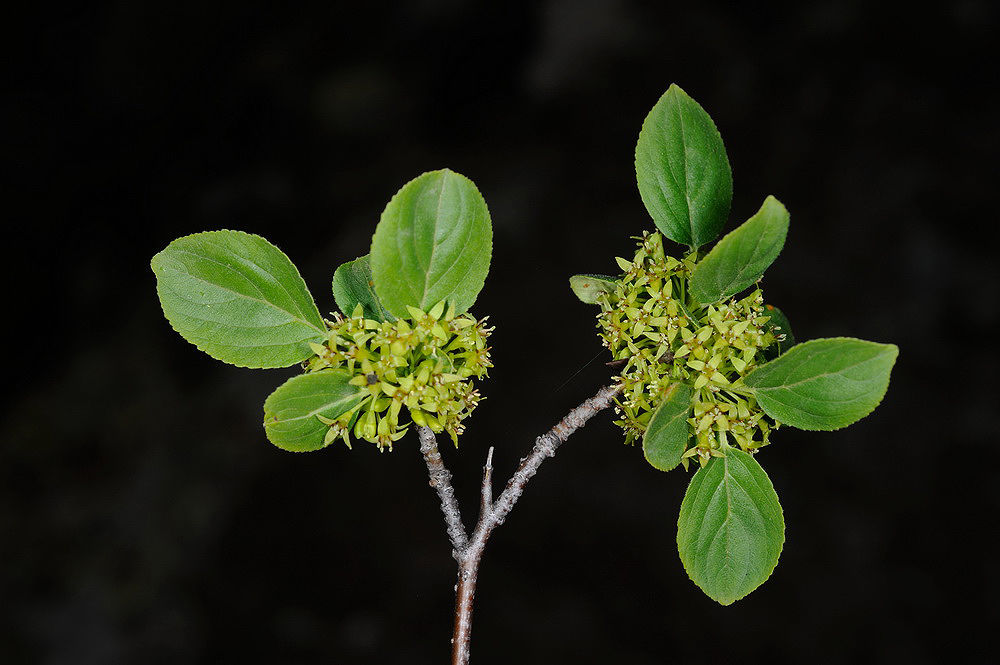
The species is dioecious, with inconspicuous greenish-yellow flowers in leaf-axil clusters from April to June in its northern temperate setting. An isolated female without pollen from a male sets no fruit. Round drupes about 6–8 mm (0.24–0.31 in) across turn from green to black in late summer and often remain through part of winter. 3 2
Useful taxonomy
Kew accepts Rhamnus cathartica L., with the autonym var. cathartica and a second accepted variety, var. caucasica Kusn., for populations in the Caucasus and northwestern Iran. Numerous other published names remain synonyms:
- Rhamnus davurica (Pall.) Maxim., a synonym
- Rhamnus coriacea Regel, a synonym
- Rhamnus sylvatica (J.Serres) Nyman, a synonym
- Rhamnus repens Hartm., a synonym
- Rhamnus seravschanica Kom., a synonym
Use the full scientific name, Rhamnus cathartica L., to identify this species consistently. “Buckthorn” also refers to other species, including thornless alder buckthorn, whose fruits lack the same pronounced purgative effect. 1
Habitat and range
From the central British Isles south to Morocco and east to western Siberia, Xinjiang and Kyrgyzstan, the native range covers Europe, northwestern Africa and temperate western Asia. Hedgerows, forest edges, scrub and open oak or ash woodland provide habitat, often on dry calcareous soils. 9 4
North American introductions as an ornamental and windbreak began in the early nineteenth century. Common buckthorn is now naturalized across the continent’s northern half and classed as invasive in several northeastern, midwestern and western US states, plus Ontario and Quebec. Birds disperse its seeds, and dense thickets suppress native regeneration, explaining its rapid expansion. 5
Life cycle and reproduction
April–June flowering varies with climate in northern temperate regions. Male and female flowers grow on separate plants: without a nearby male, an isolated female can flower annually without fruiting. Fruits ripen in late summer, turn black in September–October, and often persist through part of winter. 3
In North America, Common buckthorn serves as the primary overwintering host of the soybean aphid (Aphis glycines). The insect completes its sexual reproductive phase there before migrating to soybean crops in spring, making the shrub a surveillance target in affected agricultural regions. 7
Propagation is mainly by seed after several months of cold stratification, or by cuttings. The plant also resprouts vigorously from the stump after cutting, another factor in its invasive success. 4
Uses and risks
Former medicinal use relied on ripe fruits or bark as a drastic purgative. Historical accounts describe an infusion or 8–15 ripe fruits before a meal for a pronounced adult laxative effect; this is an abandoned practice, without a safe dosage, and unsuitable for children. High intake causes diarrhea and vomiting, with potassium loss after more than 10 days of continuous use. 4
Ingested fruits are toxic to cats and dogs, with particular concern for young animals and children who mistake the black berries for edible fruit. In North America, the species is also suspected of allelopathic effects on forest soils, suppressing native tree seedling emergence beneath its canopy. 5
Varieties, look-alikes and related plants
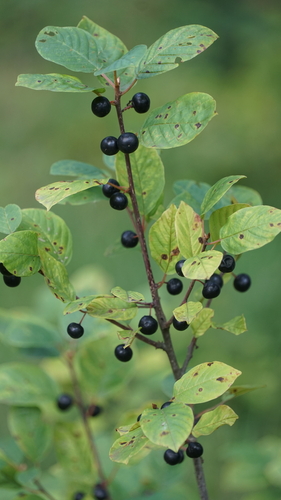
No notable horticultural selection is associated with the species. Ornamental cultivation remains marginal and is discouraged where invasion is established. The commonest confusion is with alder buckthorn (Frangula alnus), a related but thornless plant with alternate, untoothed leaves and fruits lacking the same marked purgative effect. 1
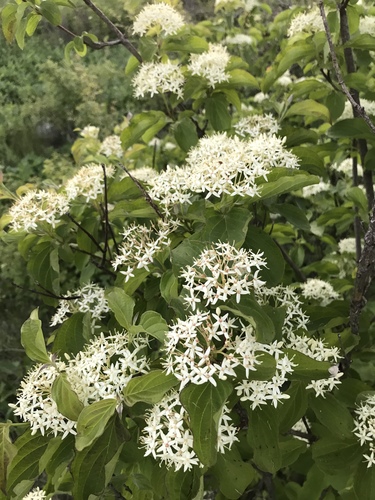
Other European hedgerow shrubs share its habitat without closely resembling it: common hawthorn (Crataegus monogyna), blackthorn (Prunus spinosa) and common dogwood (Cornus sanguinea). Thorn-tipped twigs and orange wood beneath the bark remain the most dependable field clues to Rhamnus cathartica.
Main sources
- Plants of the World Online / Kew, Rhamnus cathartica L.
- Royal Horticultural Society, Rhamnus cathartica
- Missouri Botanical Garden Plant Finder, Rhamnus cathartica
- Plants For A Future, Rhamnus cathartica
- USDA Invasive Species Info, Common buckthorn
- IUCN Red List, Rhamnus cathartica assessment
- Ragsdale, Voegtlin & O'Neil, 2004, Soybean Aphid Biology in North America, Annals of the Entomological Society of America
- Wikipedia (FR), Rhamnus cathartica
- Wikipedia (EN), Rhamnus cathartica
Frequently asked questions
Is Common buckthorn poisonous?
Yes. Its strongly purgative fruits can cause diarrhea and vomiting when eaten in quantity, and are toxic to cats and dogs. Their former medicinal use as a laxative has been abandoned because there is no safe dosage.
Why is Common buckthorn invasive in North America?
Introduced as an ornamental in the early nineteenth century, it naturalized through bird-dispersed seeds and dense thickets that suppress regeneration of native species.
How can I distinguish Common buckthorn from alder buckthorn?
Alder buckthorn (Frangula alnus) has no thorns and bears alternate, untoothed leaves. Rhamnus cathartica has thorn-tipped twigs and finely toothed, nearly opposite leaves.
What does cathartica mean?
The epithet comes from Greek kathartikos, meaning “purifying,” referring to the fruits’ strong purgative effect. Carl Linnaeus named the species in 1753.
Is Common buckthorn native to France?
Yes. It is native to French hedgerows and calcareous woodland edges; this differs from its invasive status in North America.
How is Common buckthorn linked to the soybean aphid?
Common buckthorn is the primary overwintering host of the soybean aphid (Aphis glycines) in North America. The aphid completes its sexual reproductive phase there before migrating to soybean crops in spring.
Should I plant Common buckthorn in a garden?
Planting is discouraged and may be regulated where it is invasive. In its native European range, it is rarely sold as an ornamental shrub.
Similar plants
If you are unsure about a plant’s toxicity, ask a botanist or veterinarian for advice.