
Azalea (Rhododendron, )

Rhododendron (Rhododendron) is a genus of shrubs in the Ericaceae family that includes garden azaleas. These plants favor acidic soil, bright partial shade and cool, moist conditions with good drainage. Dense flowers make red azaleas striking ornamentals, but their toxicity calls for care around animals and children.
Read moreAzalea


© photo
Hannes Dahm · cc0
Garrett Taylor · cc0
CatherineK · cc-by-sa
© copyright of the Board of Trustees of the Royal Botanic Gardens, Kew.
Identity
Rhododendron (Rhododendron L.) is the genus that includes rhododendrons and garden azaleas. Red azaleas belong within Rhododendron spp.; the term covers a group of plants rather than identifying one particular species. 1 8
POWO, WFO and IPNI all confirm this genus name. The family is Ericaceae, which includes many plants associated with acidic soils, such as heathers, blueberries and several shrubs of cool woodland. 1 2 3
Red azaleas produce a dense, almost saturated display of flowers. They perform well in acidic soil, light woodland shade and cool conditions; outside those conditions, cultivation quickly becomes more demanding. 8 5
Animal safety deserves particular attention with red azaleas. They are markedly toxic to dogs and cats, consistent with the ASPCA’s listing of rhododendrons among plants poisonous to animals. 8 7
Recognition
Rhododendron shrubs often have evergreen, leathery leaves clustered toward the branch tips. Garden azaleas may be evergreen or deciduous depending on their group, but remain included within Rhododendron. 6 5
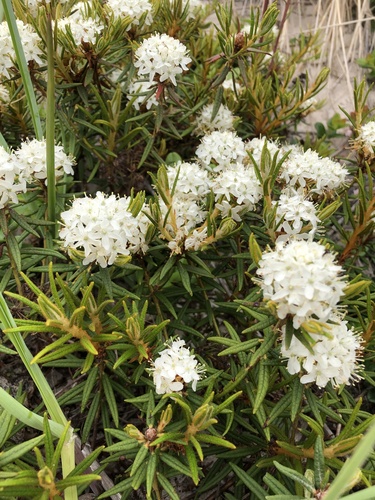
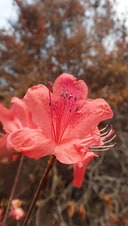
Prominent flower clusters appear at branch tips or along the stems. Colors range from white to red through pink, purple, mauve, salmon and yellow. Red forms create a dense splash of color in acidic woodland planting. 8 5
Leaf symptoms can reveal unsuitable growing conditions. Chlorosis, yellowing between the veins and weak growth often suggest excessively alkaline soil or unsuitable irrigation water rather than simply a shortage of fertilizer. 4
Air and space around the shrub matter. A rhododendron crowded against a hot wall in compacted ground suffers more than one grown in gentle light with cool roots and humus-rich, freely draining soil. 5 4
Useful taxonomy
The botanical name Rhododendron L. refers to the genus. Azaleas are not treated as a separate genus here; they belong to horticultural groups and sections within Rhododendron. 1 6
Gardeners commonly use “red azalea” as a familiar descriptive name. Scientifically, Rhododendron spp. is appropriate when no exact species is specified, provided the relationship between azaleas and rhododendrons is clear. 8 5
Enormous diversity exists within this genus: small rock-garden shrubs, garden azaleas, large evergreen rhododendrons and specialist cultivars. A red flower alone cannot narrow that diversity to one cultivar. 5 6
Understanding the shared needs of acid-soil azaleas is more useful than grouping them with unrelated red bedding plants. Similar flower color does not mean the plants require the same growing conditions. 8 4
Cultivation
Successful cultivation starts with acidic soil that is rich in humus, moist and well drained. Excessively high pH restricts iron uptake and causes chlorosis. Organic mulch helps keep the shallow roots cool. 4 5
Bright partial shade gives a suitable balance of light. Deep shade reduces flowering, while harsh sun dries the foliage and stresses the shrub, especially when the soil lacks water in summer. 5
Avoid digging around the base because the roots are shallow. Weed gently, mulch, water in dry periods and place companion plants so that they do not compete directly with the rhododendron. 4
Container growing requires an acidic, very freely draining substrate. A large container can suit compact azaleas, but a small pot heated by the sun makes moisture levels unstable and leaves the plant vulnerable. 5
Uses
Acidic woodland planting is a particularly effective use: ericaceous borders, cool woodland edges and combinations with camellias, Japanese maples, heathers, ferns and suitably adapted hydrangeas. 8 5
A red azalea provides a strong spring accent. It works well against green foliage, but the effect can become heavy when combined with too many other intensely red flowers. 8
Evergreen rhododendrons also provide winter structure. Their dark foliage forms a substantial mass, so lighter surrounding plants help prevent a border from looking dense and static. 5
Chalky gardens are poorly suited to rhododendrons without adaptation. A container may be preferable, or plants suited to neutral soil may be a better choice. Rhododendrons require particular conditions rather than fitting every garden. 4 8
Cautions
Toxicity is an essential consideration when choosing a location. The ASPCA lists rhododendrons as toxic to dogs, cats and horses, with possible vomiting, excessive salivation, weakness and heart disturbances. 7
Grayanotoxins are the compounds responsible. Leaves, flowers and nectar are involved, so keep cut flowers out of reach, remove prunings and avoid planting inside animal enclosures. 7 6
For people, particular caution applies to children and improvised food uses. A red azalea is an ornamental plant, not a flower to taste or brew into tea. 8 7
Placement needs to account for this toxicity. Avoid sites where a dog chews branches, a horse can reach a hedge or children play with fallen flowers. The appeal of red spring flowers cannot make an unsuitable position safe. 7 8
In a well-positioned acidic border, however, rhododendrons remain valuable for dense flowers, evergreen foliage and winter structure, creating a woodland character. Suitable soil, adequate separation and clear awareness of toxicity are the practical requirements. 5 4
Allow for the eventual size of the shrub. A compact azalea beside a terrace behaves differently from a large evergreen rhododendron. Buying by flower color alone often leads to crowded shrubs, unsuitable pruning and reduced flowering. 5 4
Red azaleas are best understood within the genus Rhododendron, with “azalea” explained as a garden term for groups within it. Their acidic-soil requirements and toxicity remain central to choosing and placing them. 1 8
Main sources
- Plants of the World Online / Kew, Rhododendron
- World Flora Online Plant List, Rhododendron L. — accepted genus, June 2026 classification snapshot
- International Plant Names Index, Rhododendron
- NC State Extension, Rhododendron
- Royal Horticultural Society, Rhododendron search results
- Wikipedia EN, Rhododendron
- ASPCA, Rhododendron
- Floralens, selection of red flowers
Species in this genus
If you are unsure about a plant’s toxicity, ask a botanist or veterinarian for advice.