
Red azalea (Rhododendron simsii, )
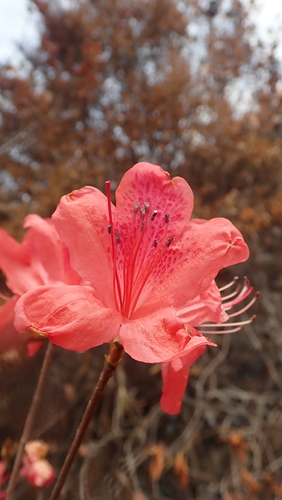

Red azalea (Rhododendron simsii Planch., 1853), also called Sims's azalea or Indian azalea in horticulture, is an evergreen to semi-evergreen shrub in the Ericaceae family. Native from southern China to Indochina, Taiwan and the Nansei Islands, it has contributed greatly to potted azaleas. Keep the whole plant away from children and animals because rhododendrons and azaleas contain grayanotoxins.
Read moreRed azalea, Sims's azalea, Indian azalea and Window azalea
Place in indirect light or in a shaded room.
Bright partial shade or filtered bright light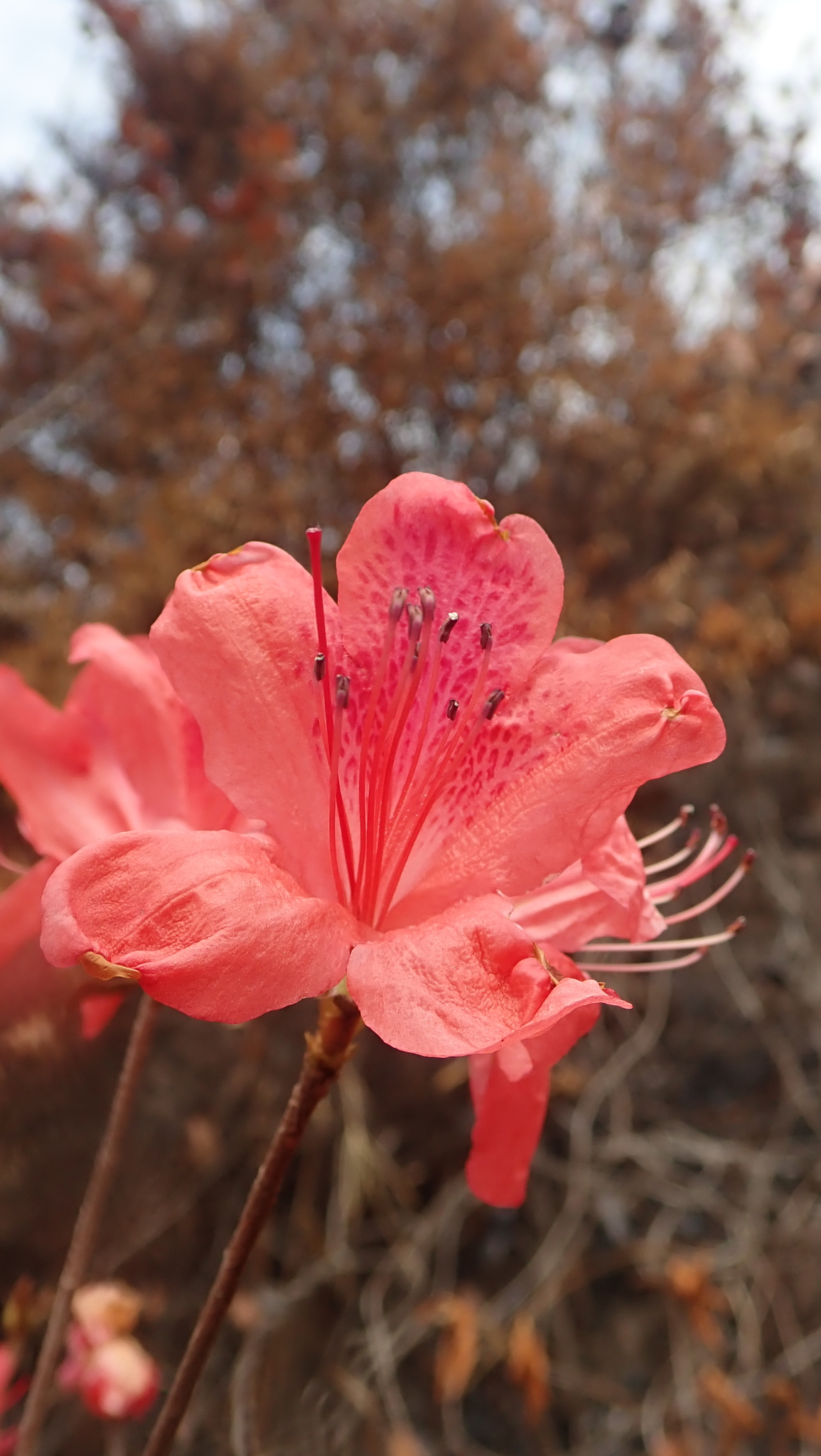


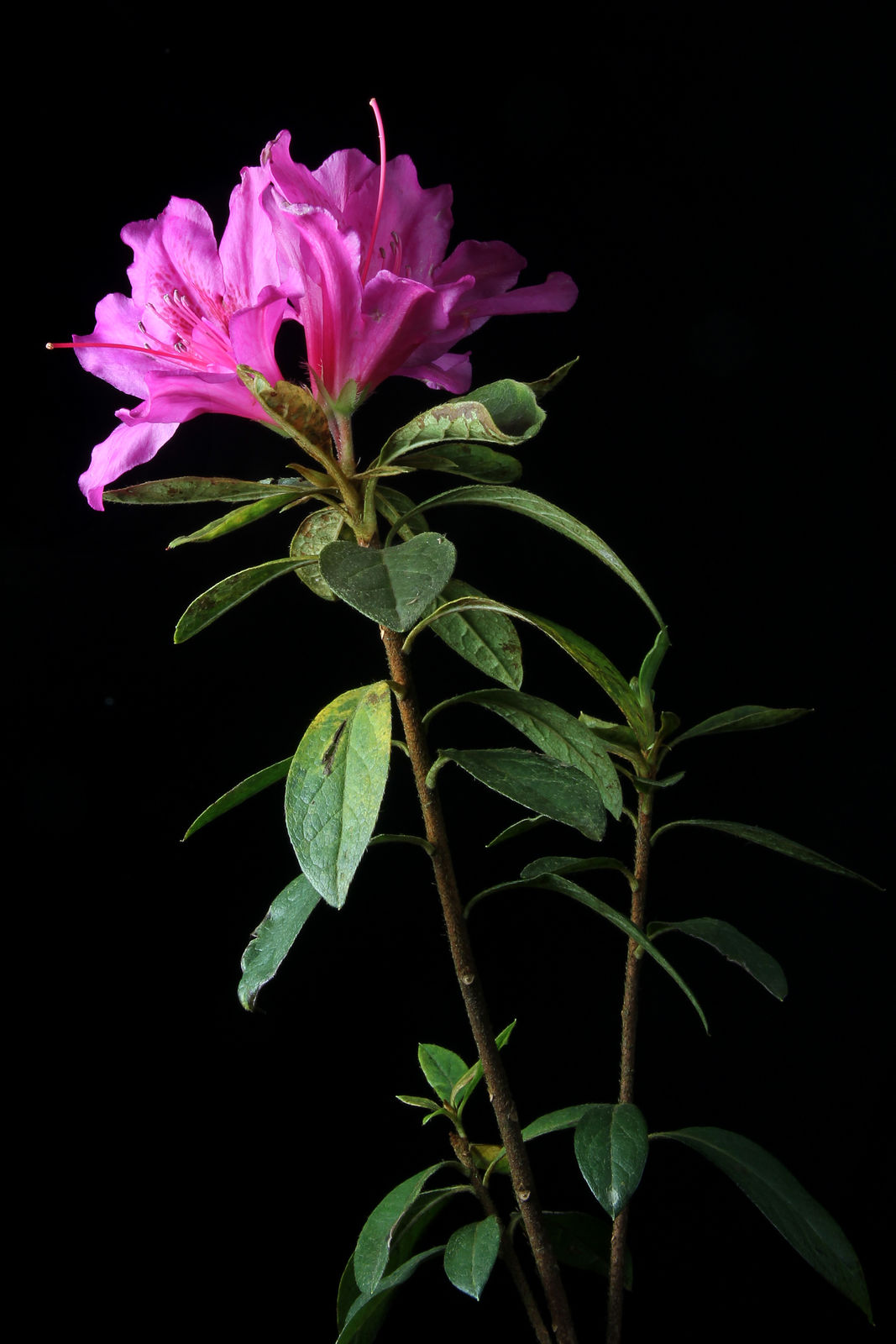

© photo
(c) H.T.Cheng, some rights reserved (CC BY-NC), uploaded by H.T.Cheng · cc-by-nc
Greg III Espera · cc-by
Wikimedia Commons · CC BY-SA or Public Domain
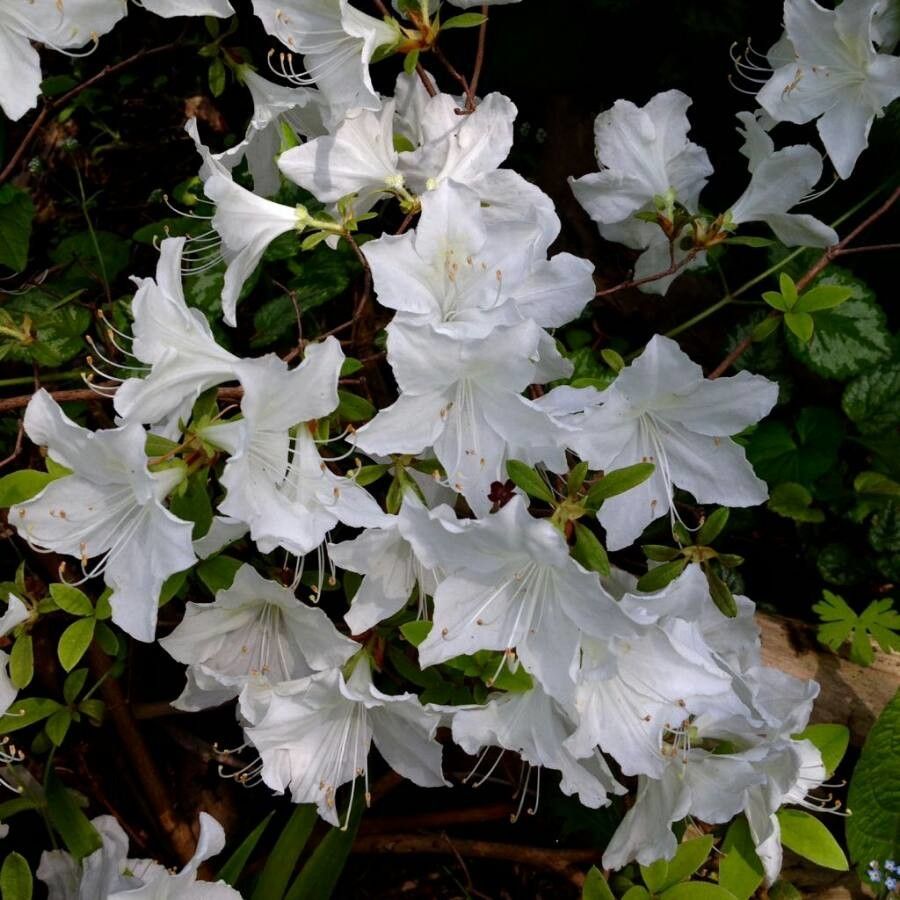
Taken Apr 9, 2022 by . (cc-by-sa)
Taken Nov 3, 2019 by sandoval manuel (cc-by-sa)
Taken Oct 13, 2020 by guich angel (cc-by-sa)
Taken Oct 8, 2020 by Hunter A (cc-by-sa)
Taken Jul 21, 2021 by Trap Hers (cc-by-sa)
© copyright of the Board of Trustees of the Royal Botanic Gardens, Kew.




Global distribution
The native range extends from southern China to Indochina, Taiwan and the Nansei Islands. In France the plant is cultivated as an ornamental, with no established invasive status.
- Native9
- Introduced1
- South-Central China
- Southeastern China
- Tibet
- Taiwan
- Nansei Islands
- Laos
- Myanmar
- Thailand
- Vietnam
- Korea
Hexagons: regions where the plant occurs. Green dots: native range.1
Identity
Red azalea (Rhododendron simsii Planch., 1853) is an accepted species of Rhododendron in the Ericaceae family. WCVP and POWO record Planchon as the author and 1853 as the publication year. Trefle likewise recognizes the species and places its range in eastern Asia and Indochina. 1 2 3
The horticultural word azalea remains useful, especially for flowering pot plants sold for indoor display, although it no longer denotes a separate genus. This species belongs to Rhododendron. EPPO also records Sims's azalea, while RHS uses Indian azalea on its horticultural page. 7 5
Garden-center azaleas are not always pure wild species. Rhododendron simsii is a major parent of the historical Indica azaleas and potted azaleas, but plants sold as indoor azaleas may be selected cultivars or hybrids. The familiar trade name therefore describes a broader horticultural group. 5 6
Recognition
Branching evergreen or semi-evergreen stems form a shrub commonly described as 1–2 m (3–6.5 ft) tall, sometimes larger under favorable conditions. Its simple, relatively small leaves are elliptic to ovate and often cluster near shoot tips. Flora of China describes densely hairy twigs and leaf blades a few centimeters long, ranging from elliptic through oblong to obovate. 4 5
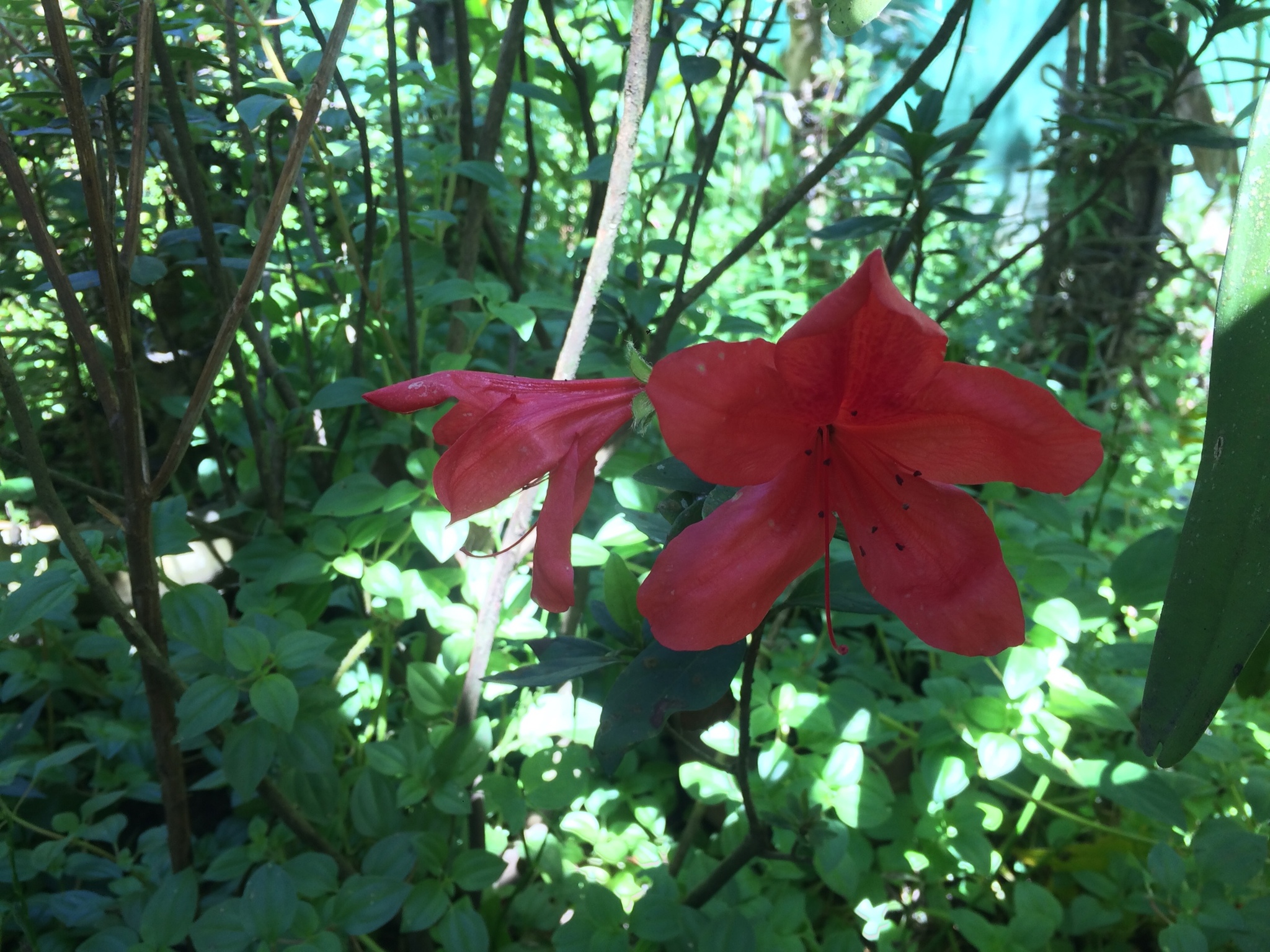
Funnel-shaped flowers provide the most conspicuous feature. They appear singly or in small terminal clusters, with red to carmine petals in the wild type. Garden forms include pink, white, purple, variegated and double flowers. RHS describes the species flowering in late spring, with carmine to rich red petals marked by darker red spots. 5 4
Counting the stamens can help distinguish related azaleas. Trees and Shrubs Online records ten stamens in R. simsii, separating it from several similar azaleas with five, particularly in older horticultural comparisons. This feature supports identification but cannot replace a full botanical key or justify treating every Indian azalea as the same species. 6
Useful taxonomy
Planchon's name Rhododendron simsii remains the accepted taxonomic reference. WCVP places several older names and infraspecific treatments in its synonymy, including Rhododendron indicum var. simsii, Azalea simsii, Azalea indica var. simsii, Rhododendron simsii var. albiflorum, var. mesembrinum and var. bellum. 2 3
Commercial names can obscure the distinction from Rhododendron indicum. The phrase Indian azalea may suggest that species directly, yet horticultural sources emphasize R. simsii as an important parent of Indica hybrids and pot azaleas. A dependable plant label therefore needs the full scientific name together with any cultivar name. 5 6
Rhododendron encompasses much more than this single species: deciduous and evergreen shrubs, hardy garden plants, potted azaleas and widely differing cultivars. Toxicity warnings covering Rhododendron spp. are relevant to safety, but size, hardiness and cultivation details must remain specific to the species or cultivar concerned. 12 8
Habitat and range
Southern China, Indochina, Taiwan and the Nansei Islands form the range recorded by WCVP. Trefle further lists South-Central and Southeastern China, Laos, Myanmar, Nansei-shoto, Taiwan, Thailand, Tibet and Vietnam within the native range. Korea is recorded as an introduction rather than part of that native distribution. 2 3
Masson pine woodland, secondary forest, roadsides, rocky slopes, open thickets and wet places are among the habitats described by Flora of China, at roughly 500–2,700 m (1,640–8,860 ft). These settings help explain its cultivation needs: bright light without scorching, acidic growing medium, aerated fine roots and consistent moisture. 4 5
France has no reliable invasive classification established for this species in the cited references. In a separate regional assessment, Florida IFAS considers it nonproblematic among nonnative plants. That assessment does not establish an absence of impact everywhere, and ornamental cultivation alone does not demonstrate invasiveness in France. 13 3
Life cycle, cultivation and flowering
Wild plants bloom mainly in spring. Horticultural pot azaleas can instead be prepared to flower in winter or early spring in cool indoor conditions. A plant bought in bloom during a Northern Hemisphere winter may therefore follow a forcing schedule rather than the species' natural flowering season. 5 4
Acidity, cool conditions and drainage govern cultivation. RHS recommends partial shade and acidic soil that stays moist while draining freely, with greenhouse, conservatory, patio and container uses. In a heated apartment, nearby radiators, dry air and lime-rich water can pose greater problems than a shortage of direct sunlight. 5
Insect dependence, self-sterility and local pollen flow were documented in a pollination study of R. simsii. Its flowers therefore have a reproductive role beyond their ornamental display: in the wild species, successful reproduction relies on pollination. The study concerns that biological cycle rather than simply the appearance of flowering pots. 14
Toxicity, edibility and precautions
Grayanotoxins account for the central safety concern. ASPCA lists Rhododendron spp. as toxic to dogs, cats and horses, with possible digestive, neurological and cardiac signs. Its plant lists include azalea, rosebay and rhododendron among names associated with toxicity to all three groups of animals. 8 9
The Merck Veterinary Manual describes rhododendron and azalea poisoning as a grayanotoxin effect on sodium channels. Depending on exposure, signs can include excessive salivation, vomiting, cardiac disturbance, weakness, seizures or coma. Keep leaves, flowers, nectar and pruning debris beyond animals' reach rather than treating any of these materials as feed. 10
Human exposure also calls for caution. Hong Kong's Toxic Plant Atlas has a specific entry for Rhododendron simsii, identifies grayanotoxins and describes poisoning after flowers were eaten. The plant has no supported edible use here, and children are explicitly among those who need protection from ingestion. 11
Honey illustrates a related but separate exposure route. Grayanotoxins occur in so-called mad honey produced from certain rhododendrons. This does not mean that every garden honey is dangerous, but it does rule out presenting the flowers or nectar as food. The distinction preserves the risk without extending it to all honey. 10 11
Cultivars, trade names and look-alikes
Indica hybrids and modern pot azaleas have a complex horticultural background. RHS identifies Rhododendron simsii as a common parent of these hybrids, while Trees and Shrubs Online describes its central role in the history of Indian azaleas. A plant marketed under that common name is not automatically a wild R. simsii. 5 6
Practical look-alikes include Rhododendron indicum, Japanese garden azaleas, indoor hybrids and hardy large-leaved rhododendrons. Check the scientific name, stamen number when flowers are available, growth habit, stated hardiness and the grower's intended use. Together these features are more informative than a broad commercial name alone. 6 7
Flower color cannot settle the identification. Red, pink, white, purple and double blooms may belong to different selections. For safety, toxicity must still be considered across the rhododendron and azalea group unless a reliable source establishes a specific exception; an attractive flower form is not evidence of edibility. 8 12
Main sources
- Plants of the World Online / Kew, Rhododendron simsii Planch.
- WCVP taxonomic record, Rhododendron simsii
- Trefle, species data, Rhododendron simsii
- Flora of China, Rhododendron simsii
- Royal Horticultural Society, Rhododendron simsii (EA)
- Trees and Shrubs Online, Rhododendron simsii
- EPPO Global Database, Rhododendron simsii
- ASPCA, Rhododendron toxicity entry
- ASPCA toxic plant list, Rhododendron spp.
- Merck Veterinary Manual, Houseplants and Ornamentals Toxic to Animals: Rhododendron spp. and grayanotoxin-containing plants
- Hong Kong Poison Information Centre, Toxic Plant Atlas, Rhododendron simsii
- NC State Extension Gardener Plant Toolbox, Rhododendron
- University of Florida IFAS, Assessment of Non-Native Plants, Rhododendron simsii
- Hahn et al. 2017, Bee pollination, self-sterility and gene flow in Rhododendron simsii
Frequently asked questions
Is red azalea poisonous?
Yes. Like other rhododendrons and azaleas, it contains grayanotoxins. It is toxic to dogs, cats, horses, children and adults; seek medical or veterinary advice after ingestion.
Are azaleas and rhododendrons the same?
Current taxonomy includes azaleas within the genus Rhododendron. Azalea remains a useful horticultural name, but it does not replace the binomial Rhododendron simsii.
Can a potted indoor azalea live outside?
The species is hardier than many forced pot plants, but plants sold for indoor use are often grown frost-free. In France, a sheltered, cool site with acidic soil must suit the particular cultivar.
Why are the leaves turning yellow?
A common cause is chlorosis linked to lime, excessive pH or waterlogged roots. Check the acidic growing medium, drainage and the use of water low in lime first.
Are azalea flowers edible?
No. Flowers, leaves, nectar and suspect rhododendron products must be treated as nonfood materials because of grayanotoxins.
Is red azalea invasive in France?
No reliable invasive status has been established for France. It is treated as a cultivated ornamental, separately from introductions recorded elsewhere.
Similar plants

If you are unsure about a plant’s toxicity, ask a botanist or veterinarian for advice.