
Velvetleaf blueberry (Vaccinium myrtilloides, )
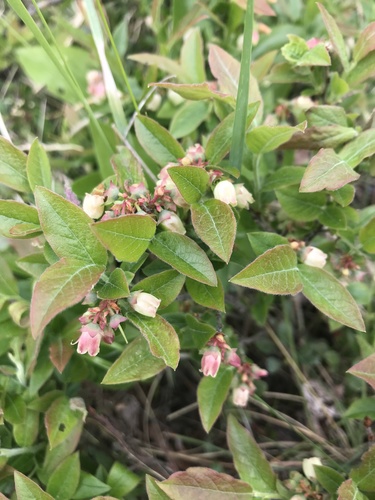
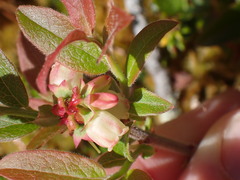
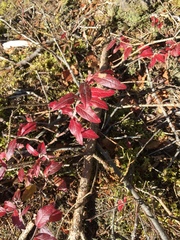
Velvetleaf blueberry (Vaccinium myrtilloides Michx.), also called Canadian blueberry or sourtop blueberry, is a deciduous subshrub in the Ericaceae family. Native to cold and temperate North America, it often forms colonies through rhizomes and bears small blue berries that are edible only after reliable identification.
Read moreVelvetleaf blueberry, Velvetleaf huckleberry, Canadian blueberry and Sourtop blueberry
© photo
(c) Michelle Holland, some rights reserved (CC BY-NC), uploaded by Michelle Holland · cc-by-nc
Shane Johnson · cc0
Paul Manning · cc0




Global distribution
POWO and FNA record a native North American range from subarctic Canada to the northern United States. No French invasive status is recorded: the distribution references describe a North American native, not a plant naturalized in mainland France.
- Native5
- Canada
- Quebec
- New England
- Great Lakes region
- Montana
Hexagons: regions where the plant occurs. Green dots: native range.1
Identity
Velvetleaf blueberry (Vaccinium myrtilloides Michx., 1803) is an accepted species of Vaccinium in the Ericaceae family. POWO traces the name to Michaux’s publication in Flora Boreali-Americana in 1803 and describes a temperate-biome subshrub or shrub native from subarctic America to the northern United States. 1
In Canadian French, bleuet refers to an edible North American Vaccinium berry, while in France the word often means cornflower, Centaurea cyanus. The binomial Vaccinium myrtilloides provides a dependable reference when reading French sources. 6 2
French names bleuet du Canada, bleuet fausse-myrtille, airelle du Canada and airelle fausse-myrtille refer here to the same taxon. Established English alternatives include velvetleaf huckleberry, Canadian blueberry and sourtop blueberry. 5 8 10
Recognition
Low colonies may be open or relatively dense. FNA describes colonies 1–11.5 dm (4–45 in) tall, with rounded, hairy, greenish to brown branches; IRIIS commonly records upright Canadian stems 20–60 cm (8–24 in) tall. These ranges reflect regional floras, natural sites and varying colony vigor rather than a contradiction. 2 5
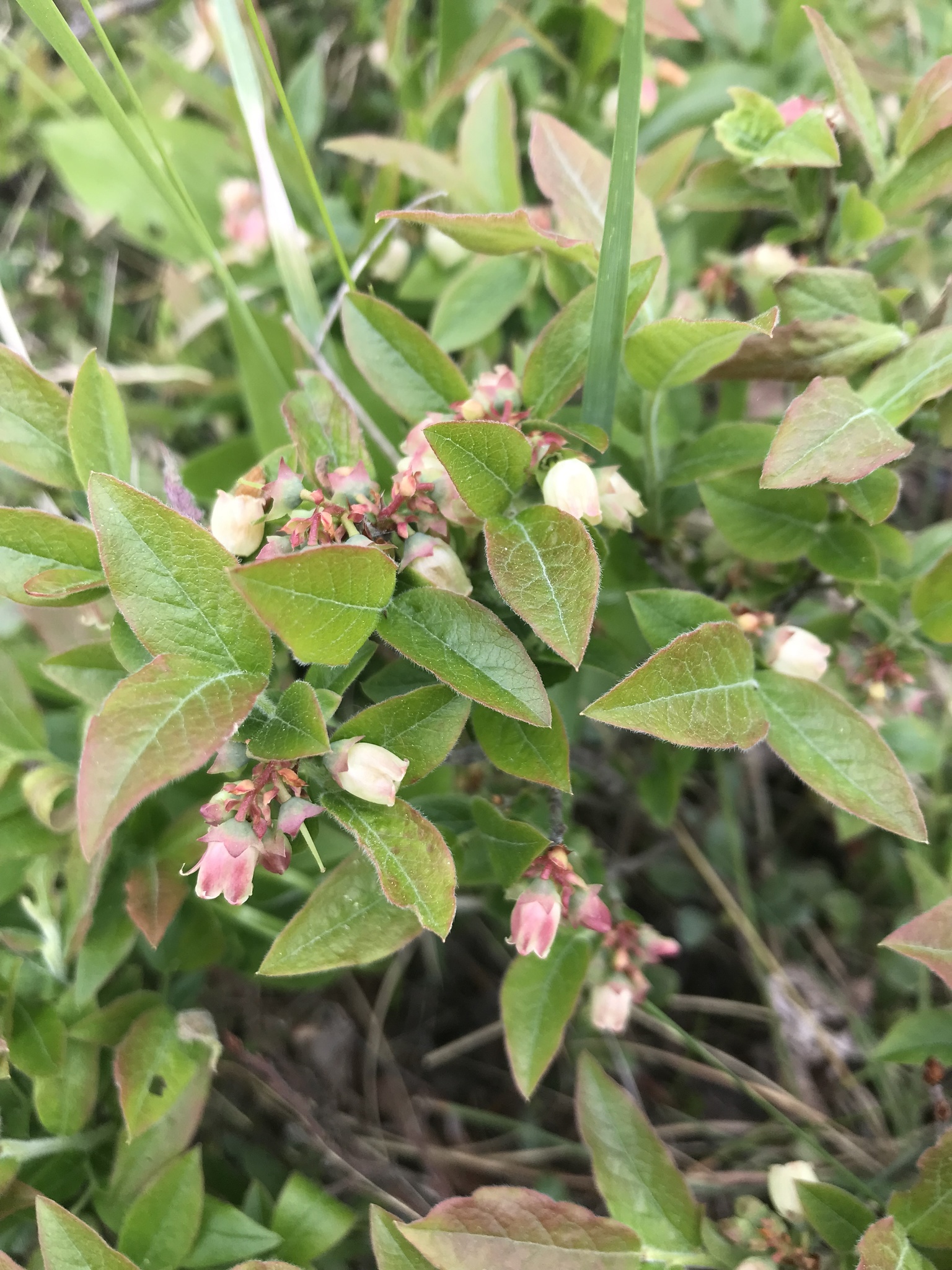
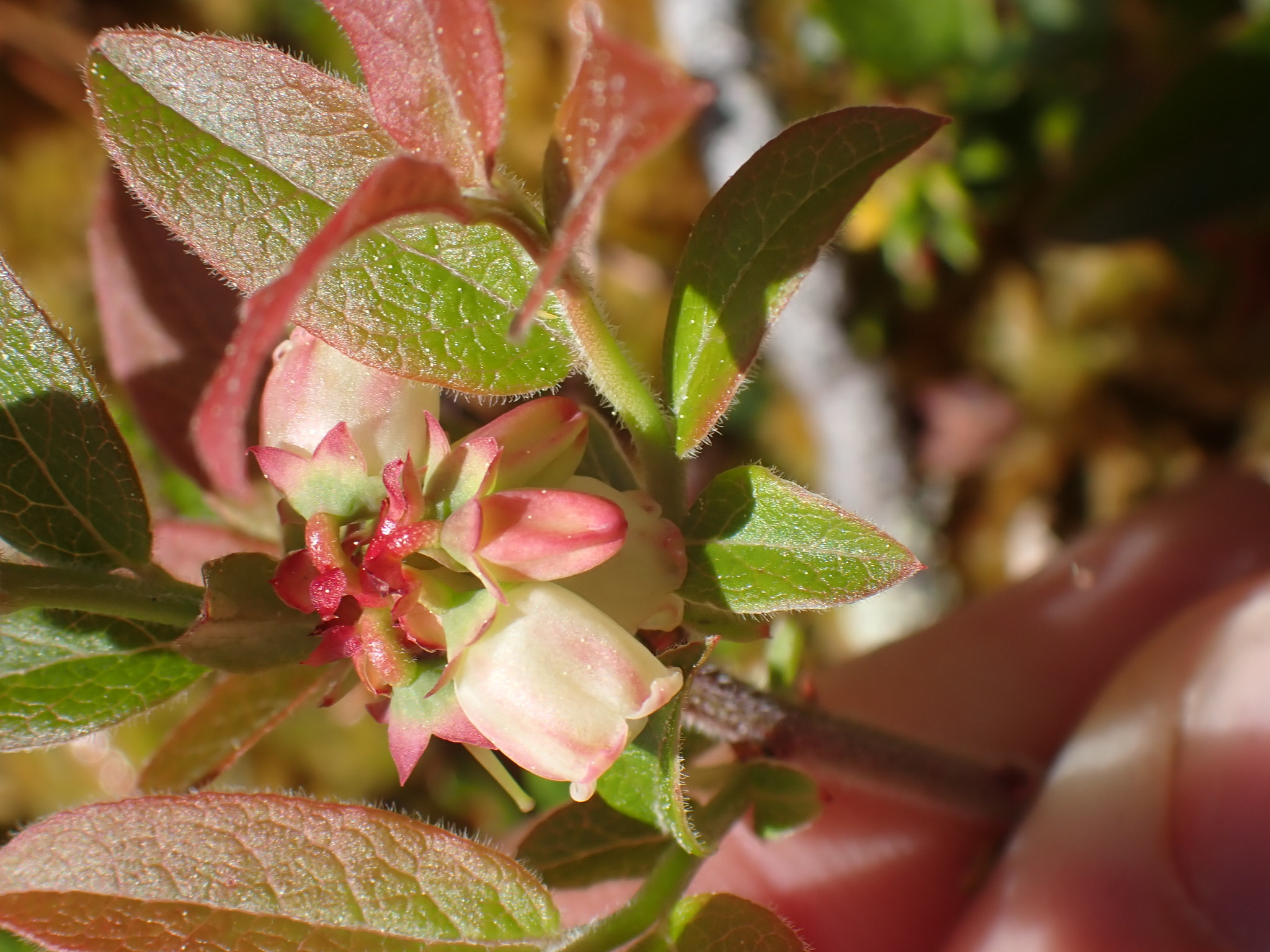
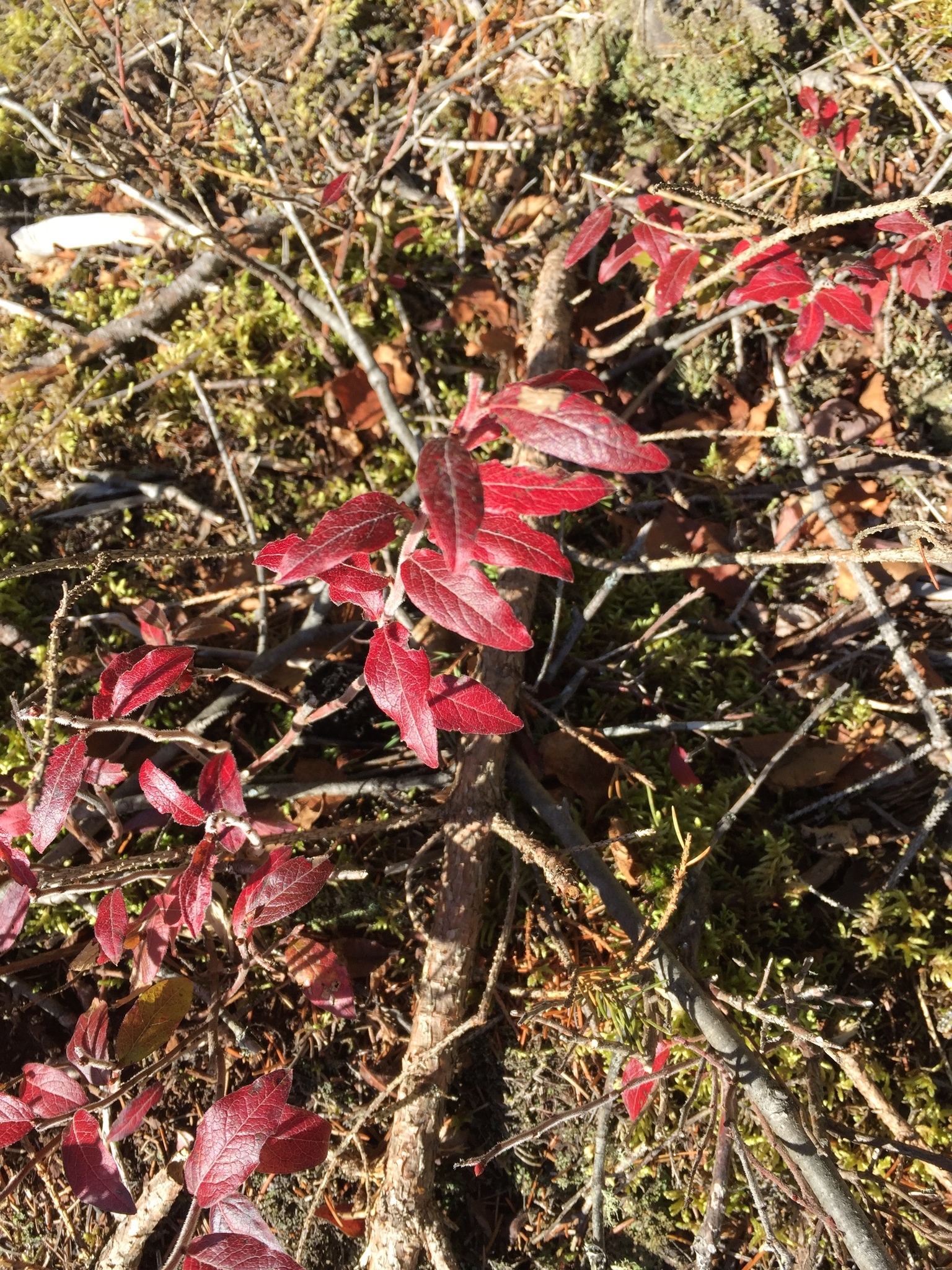
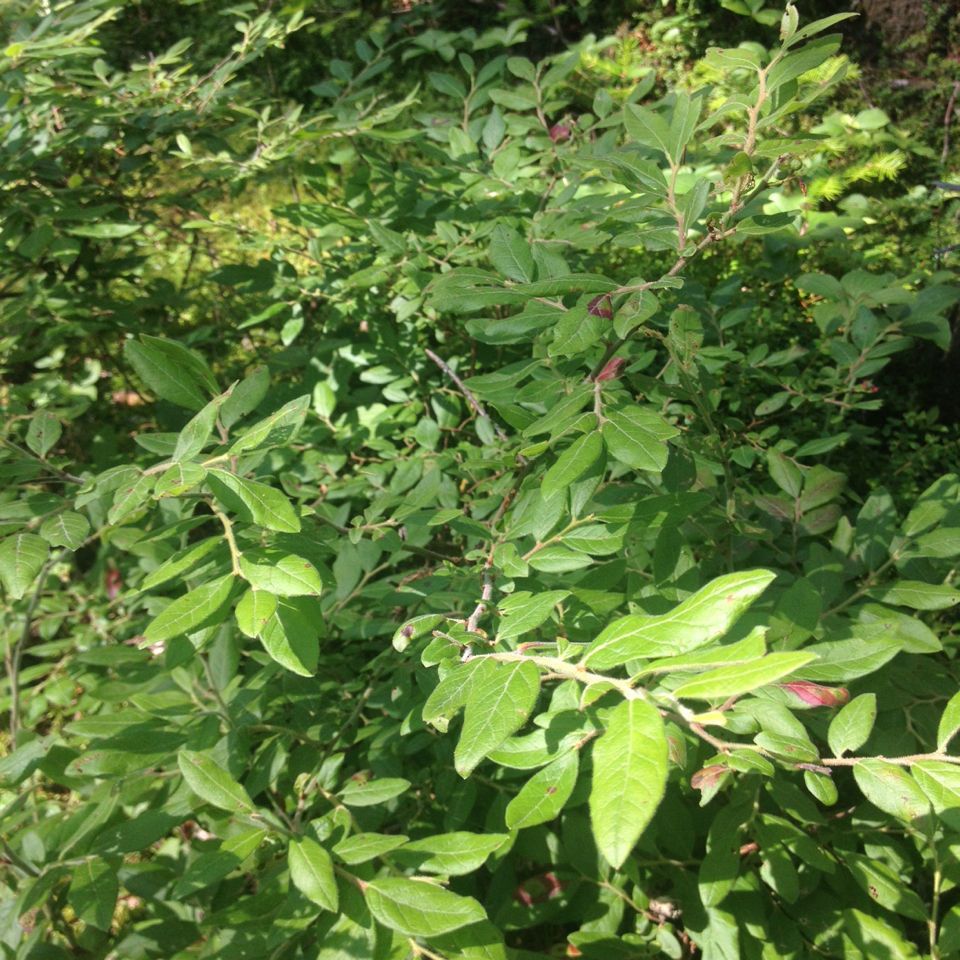
Velvety foliage explains the name velvetleaf. Leaves are simple, alternate, deciduous, elliptical, dull green and hairy on both surfaces, with entire or nearly entire margins. Go Botany emphasizes the untoothed margins and conspicuous hairs as distinctions from Vaccinium angustifolium. 3 5
Small bell- or urn-shaped flowers range from greenish-white to pinkish. Blue berries often carry a pale waxy bloom and measure about 6–10 mm (0.24–0.4 in) in the consulted floras. Blue color alone cannot identify the plant: check hairy branches, hairy leaves and leaf margins as well. 2 5
Taxonomy and related names
Taxonomic accounts in POWO, FNA, RHS and Trefle accept Vaccinium myrtilloides. Important synonyms include Vaccinium angustifolium var. myrtilloides, Vaccinium canadense and Cyanococcus canadensis. 1 2 8 10
Its main taxonomic complication involves Vaccinium angustifolium, another North American lowbush blueberry. FEIS notes that V. myrtilloides was long treated as a variety or closely related form within this group, and natural hybrids complicate field identification. 4 3
European bilberry, usually Vaccinium myrtillus, needs separate recognition. OQLF distinguishes North American bleuet from European myrtille and includes V. myrtilloides among the scientific names used for the fruit called bleuet. 6
Habitat and range
Subarctic America through the northern United States forms the native range published by POWO. FNA lists Canadian provinces and US states in the Northeast, Great Lakes and some more western sites. FEIS describes a transcontinental distribution from Labrador to British Columbia and the Northwest Territories. 1 2 4
Habitat descriptions converge on open or disturbed boreal woods, muskegs, bogs, heaths, rocky outcrops, clearings and mountain meadows. Go Botany records both terrestrial and wetland habitats in New England, with the wetland indicator category FACW. 2 3 9
No French invasive status is recorded for this blueberry. The distribution sources describe a North American species and do not report naturalization in France that would justify an invasive warning there. 1 2
Life cycle, pollination and fire
Seasonal growth follows the pattern of a small deciduous shrub. FNA places flowering in late spring to early summer. FEIS notes spring flowers before or during shoot growth, followed by ripe berries several weeks later, often in August or September in its Ontario examples. 2 4
Rhizomes are central to reproduction as well as seeds. FEIS and IRIIS describe underground stems producing new shoots and forming colonies. Seeds also occur, but germination is described as irregular; birds and mammals help disperse them. 4 5
Insect pollination matters for fruit set. FEIS describes the species as generally self-sterile and identifies bees, especially bumblebees, as effective pollinators. Agriculture and Agri-Food Canada also stresses pollinators in lowbush blueberry fields. 4 7
Fire belongs to the species’ ecology, but is not a simple home-gardening technique. FEIS explains that aboveground parts may burn while rhizomes often survive and resprout. Excessively intense fires or fires at unsuitable seasonal stages can reduce production and delay recovery. 4
Food uses and risks
Ripe Vaccinium myrtilloides berries are eaten among North American blueberries. IRIIS describes them as flavorful; FEIS reports sugar-rich fruits sought by birds and mammals. The Canadian lowbush blueberry crop profile includes V. myrtilloides alongside V. angustifolium among harvested species. 5 4 7
Food use applies strictly to correctly identified ripe berries gathered or produced as lowbush blueberries. It does not establish that leaves, stems or unidentified berries are edible, and cannot replace reliable local botanical identification before gathering. 6 5
Domestic animal safety remains uncertain. FEIS documents the fruits’ value to wildlife, but that is not veterinary guidance for cats, dogs or horses. Their status stays unknown rather than treating human consumption as evidence of animal safety. 4
Careful cultivation
Soil is the chief cultivation constraint. FEIS notes that Vaccinium species need acidic soils and can occupy nutrient-poor sites; Agriculture and Agri-Food Canada gives a very acidic optimum around pH 4.3–5.0 for lowbush blueberry stands. Calcareous soil is therefore an unsuitable starting point. 4 7
Light should remain open without extreme drying. FEIS notes survival under a closed canopy but greatly reduced flowering and fruiting in dense shade. Very dry, hot sites can instead hinder young plants, especially in containers. 4
Temperate gardens can draw on these conditions with an acidic substrate, low-lime water where possible, acidic organic mulch, limited competition and restrained feeding. This species is better suited to an acidic naturalistic garden or large container than to a conventional calcareous bed. 5 7
Useful look-alikes
The most relevant comparison is Vaccinium angustifolium. Go Botany contrasts the distinctly hairy, untoothed leaves of V. myrtilloides with the often finely toothed, sparsely hairy leaves of V. angustifolium. Both may coexist in blueberry fields, making mixed stands hard to interpret. 3 7
Language creates another possible confusion: bleuet can mean a flower in France, a fruit in Canada, or several North American Vaccinium species. Giving the scientific name at first mention clarifies which plant is intended; here, Canadian blueberry refers to Vaccinium myrtilloides. 6 2
Identification rests on several features together: a small North American shrub on acidic soil, hairy leaves and branches, entire leaf margins, small bell-shaped flowers, bloom-covered blue berries and rhizomatous colonies. A common name alone is insufficient. 2 5
Main sources
- Plants of the World Online / Kew, Vaccinium myrtilloides Michx.
- Flora of North America, Vaccinium myrtilloides
- Native Plant Trust, Go Botany, Vaccinium myrtilloides
- USDA Forest Service FEIS, Vaccinium myrtilloides
- IRIIS phytoprotection, velvetleaf blueberry (Bleuet fausse-myrtille)
- Office québécois de la langue française, Grand dictionnaire terminologique, blueberry (bleuet)
- Agriculture and Agri-Food Canada, Crop Profile for Lowbush Blueberry in Canada, 2023
- Royal Horticultural Society, Vaccinium myrtilloides, Canadian blueberry
- National Wetland Plant List, Vaccinium myrtilloides
- Trefle, species data, Vaccinium myrtilloides
Frequently asked questions
Is Canadian blueberry the same plant as cornflower?
No. Canadian blueberry is Vaccinium myrtilloides, a berry-producing member of Ericaceae. The European cornflower is Centaurea cyanus, an Asteraceae with blue flower heads. The French word bleuet can refer to either.
Are Vaccinium myrtilloides berries edible?
Yes, correctly identified ripe berries are eaten among North American lowbush blueberries. Never eat a wild berry without reliable identification.
Why does it have the French name airelle fausse-myrtille?
This French name refers to its resemblance to bilberries while identifying a North American species of Vaccinium.
How can I distinguish it from Vaccinium angustifolium?
V. myrtilloides has distinctly hairy leaves with entire or nearly entire margins. V. angustifolium often has small marginal teeth and fewer hairs.
Is velvetleaf blueberry invasive in France?
No French invasive status is recorded. The distribution sources used describe a native North American range.
Is it safe for pets?
No veterinary source specific to this species was retained. Safety for cats, dogs and horses therefore remains unknown, despite the human food use of ripe berries.
Similar plants
If you are unsure about a plant’s toxicity, ask a botanist or veterinarian for advice.