
Rugosa rose (Rosa rugosa, )
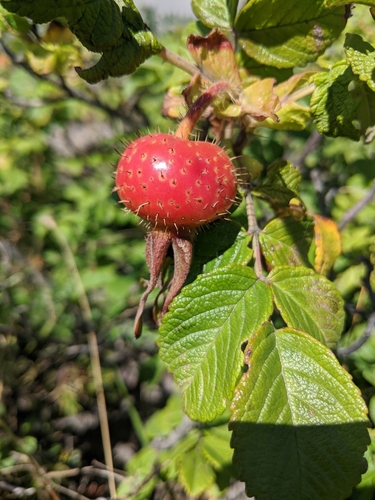
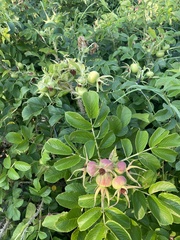
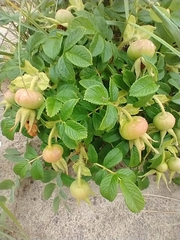
Rugosa rose (Rosa rugosa Thunb., 1784), also called beach rose or Japanese rose, is a suckering shrub in the Rosaceae family, native to the coasts of southeastern Siberia, northeastern China, Korea and Japan. Deeply wrinkled leaves, dense prickles and large orange to red hips distinguish it. Introduced to Europe and North America as an ornamental and coastal windbreak, it is now considered invasive along several coastlines.
Read moreRugosa rose, Beach rose and Japanese rose
Allow a few hours of direct sun per day, preferably morning or evening.
Full sun; tolerates light partial shade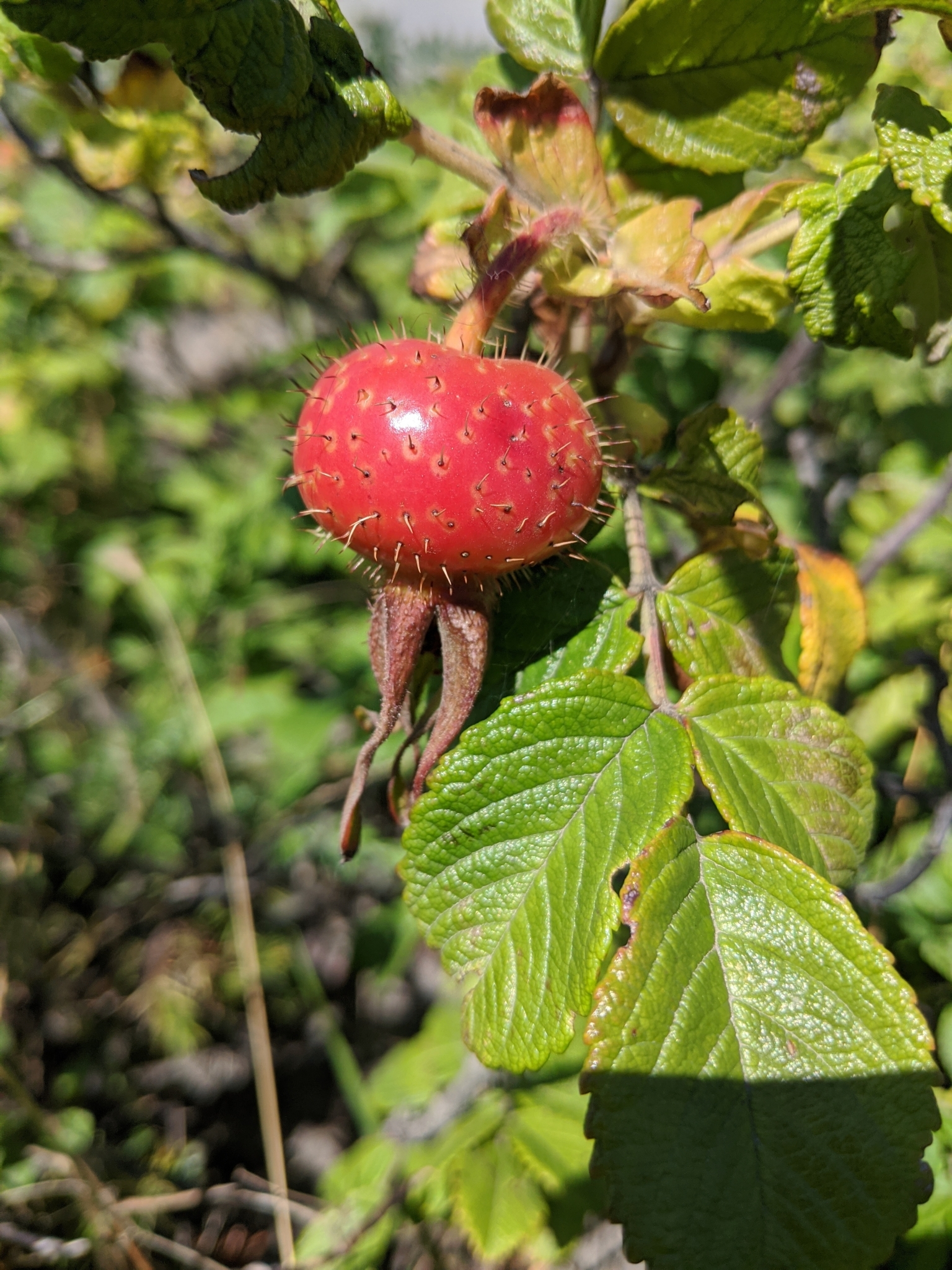
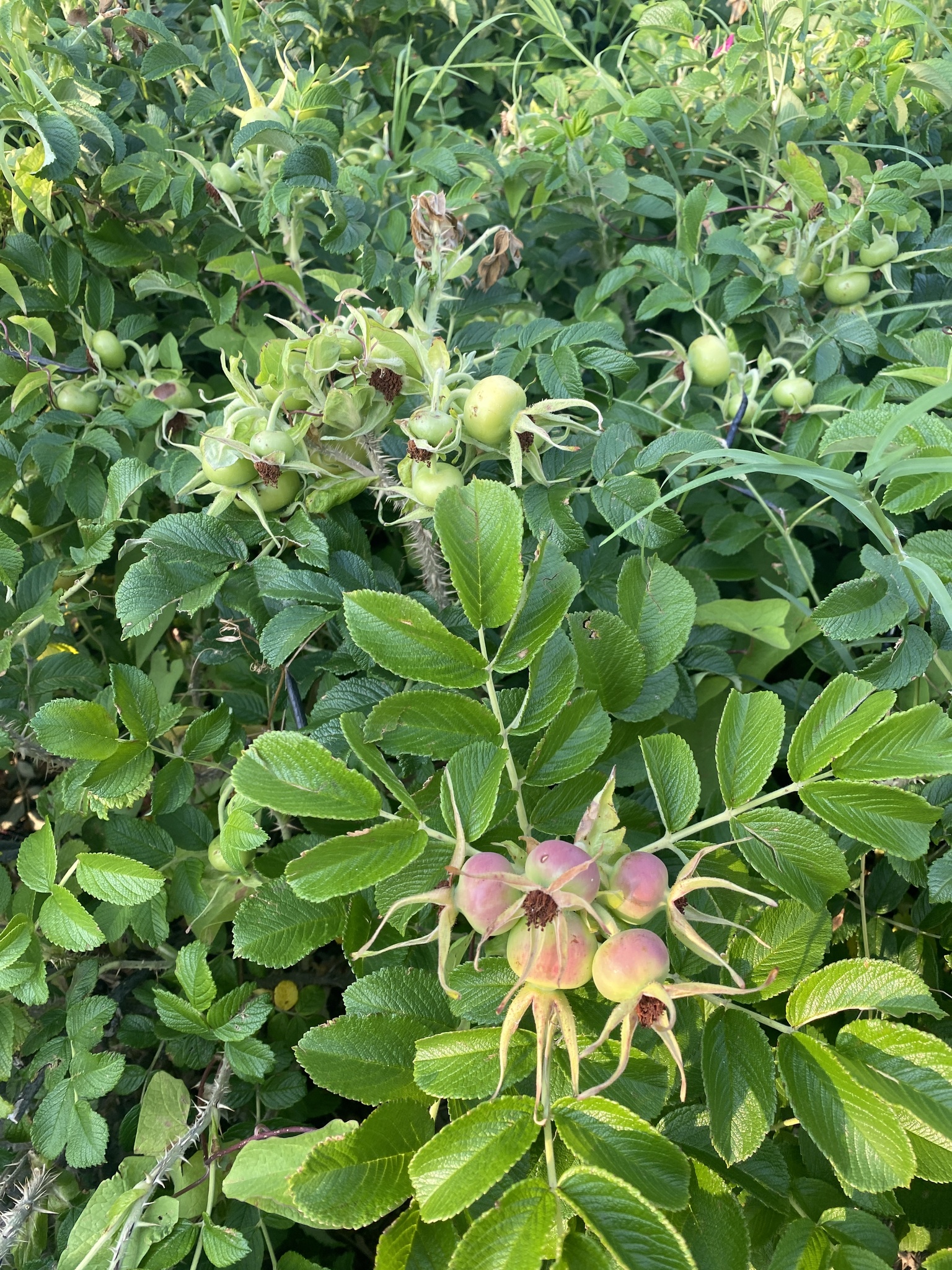
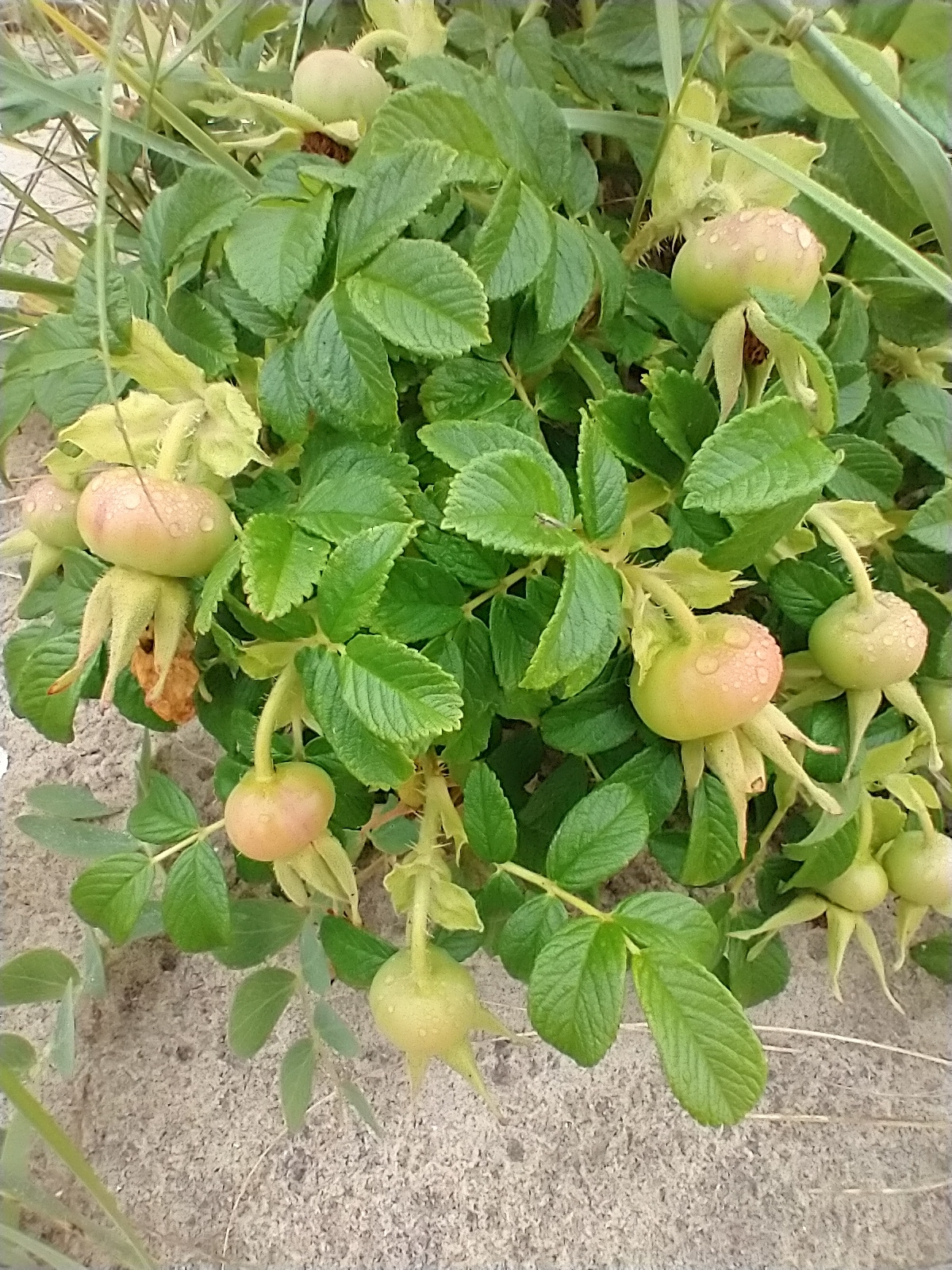


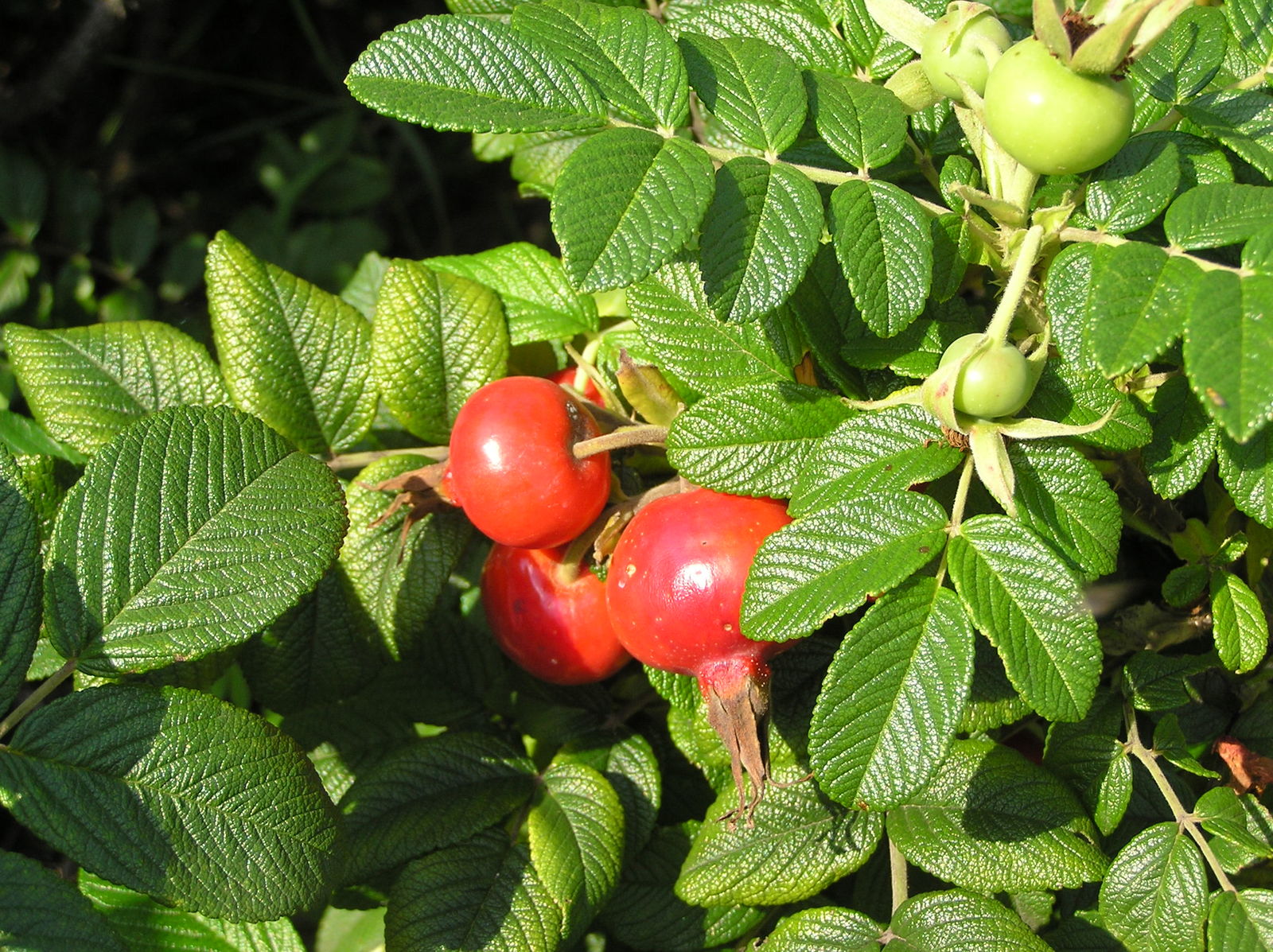
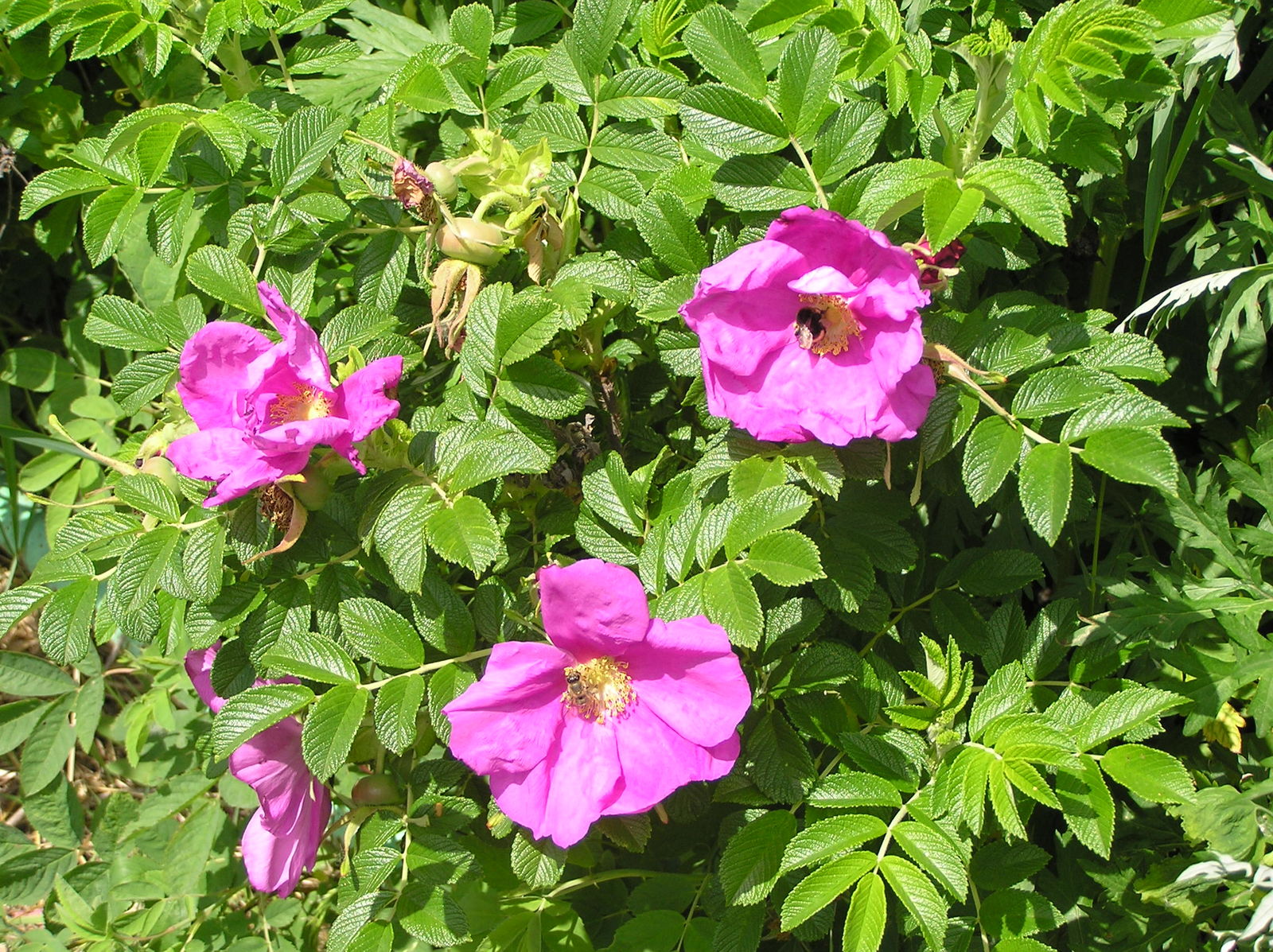
© photo
Roxanna Muller · cc0
Nathan Piechocki · cc0
Tom Norton · cc-by
Taken Aug 21, 2021 by Kathy Matos Baiona (cc-by-sa)
Taken Jun 9, 2018 by Sandy Rowley (cc-by-sa)
Taken Oct 12, 2022 by Ydwig (cc-by-sa)
Taken Jul 25, 2022 by Oğuzhan (cc-by-sa)
© copyright of the Board of Trustees of the Royal Botanic Gardens, Kew.


Global distribution
The native range of Rosa rugosa follows East Asian coasts from southeastern Siberia through northeastern China and the Korean Peninsula to Japan. Introduced to Europe and North America as an ornamental and dune windbreak, it has naturalized widely and is considered an invasive coastal plant in several countries, while wild populations have declined in parts of its native range.
- Native4
- Introduced1
- Invasive5
- Russia (Far East)
- China (northeast)
- Korea
- Japan
- Canada (Atlantic coast)
- France (northern coast)
- Germany (Baltic coast)
- Poland
- United Kingdom
- United States (Northeast)
Hexagons: regions where the plant occurs. Green dots: native range.1
Identity
Rugosa rose (Rosa rugosa Thunb., 1784), also called Japanese rose or beach rose, stands out through its deeply wrinkled leaves with 5–9 leaflets and dense, fine, straight prickles. These differ from the hooked prickles of dog rose (Rosa canina). Plants of the World Online accepts the species, published in 1784 by Swedish naturalist Carl Peter Thunberg, within the genus Rosa, family Rosaceae and order Rosales. 1 2
An East Asian coastal origin distinguishes this rose from European hedgerow roses. Its presence on European and North American shores follows ornamental introductions rather than a natural distribution. The French standardized name recorded by Tela Botanica refers to its wrinkled leaves, a more reliable identifying feature than flower color, which varies between plants. 3
Japanese speakers call the plant hamanasu, a name associated with the sandy coast where it forms dense colonies. The word has long served as a late-summer kigo, or seasonal word, in classical Japanese poetry.
Recognition
Suckering growth gives Rosa rugosa a typical height of 1–2 m (3–7 ft), with spreading roots extending the clump sideways. Fine, straight prickles densely cover the stems along their length, unlike the more widely spaced, hooked prickles of Rosa canina. 3 4
A strongly corrugated surface marks each leaf's 5–9 leaflets, shiny above and downy beneath. The epithet rugosa comes from the Latin rugosus, meaning wrinkled. This leaf texture offers a conspicuous identifying feature during the leafy season, and the foliage often turns golden yellow in fall, an unusual color among wild roses. 4
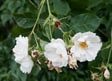
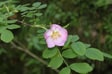
Fragrant single flowers measure 6–9 cm (2.4–3.5 in) across and range from bright pink to white. In northern temperate conditions, successive flowers appear from June to September, extending the display well beyond the brief flowering of many wild roses. Large round hips follow, 2–3 cm (0.8–1.2 in) across, orange to bright red and often compared with small tomatoes. 4
Useful taxonomy
More than a century of widespread cultivation has left Rosa rugosa with numerous historical names and forms. Six names recur particularly often in botanical literature and taxonomic records:
- Rosa kamtchatica Vent., a historical name
- Rosa ferox Lawrance, a historical name
- Rosa regeliana Linden & André, a historical name
- Rosa calocarpa André, a historical name
- Rosa rugosa var. chamissoniana C.A.Mey., a historical variety
- Rosa rugosa f. albaplena (Rehder) Rehder, a historical form
Of these, kamtchatica can be especially misleading: it evokes Russia's Kamchatka Peninsula, whereas the species is associated with the wider East Asian coastline, from southeastern Siberia to Japan. Despite these names and the many cultivated selections, Rosa rugosa remains the accepted scientific name and a stable reference for the wild species. 1 3
Habitat and range
Native populations follow the East Asian coast through southeastern Siberia, northeastern China, the Korean Peninsula and Japan. There, Rosa rugosa colonizes dunes and sandy or shingle beaches. 1 4
Nineteenth-century ornamental and coastal windbreak plantings brought this rose to Europe and North America. Suckering and salt tolerance then helped it naturalize. Its spread is restricted in some jurisdictions, and several French regional guides identify it as an invasive alien of dune systems; the applicable rules depend on location. 5 6
Wild Chinese populations face a contrasting situation. Harvesting pressure and dune degradation have reduced the species in part of its native range, where it is considered threatened. The rose spreading along Breton and Baltic coasts is therefore declining in parts of coastal China. 6
Life cycle and flowering
Repeat flowering extends from June to September in northern temperate climates, with timing varying by local conditions. Each single flower lasts only a few days, but a continuing supply of buds maintains the summer display. 4
Late summer and fall bring ripe hips containing around a hundred seeds surrounded by irritating hairs, as in most roses. The flesh is rich in vitamin C and edible once those hairs are removed. 7
Root suckers provide the main natural means of multiplication in cultivation. A single plant can become a clonal clump in two to three years, explaining its rapid coastal spread. Cold-stratified seed and semi-ripe cuttings offer further propagation methods, with cuttings retaining the parent plant's characteristics. 7 4
Uses and risks
Dense prickles make Rugosa rose an effective low barrier hedge, while salt-spray tolerance has favored coastal ornamental plantings. It was also used to stabilize dune sand, an application now discouraged because of its invasive behavior. The RHS notes disease resistance well above that of most garden roses. 5
Harvested hips are used for teas, jams and vitamin C supplements. Young shoots and petals are also eaten in some East Asian traditions. 7
ASPCA lists the genus Rosa as non-toxic to dogs, cats and horses, with no identified chemical poisoning risk. Dense prickles and irritating hairs in the hips still pose mechanical hazards. Hardiness to USDA zone 2, about −40 °C (−40 °F), allows it to survive without winter protection in most temperate climates. Ecological harm can outweigh these physical risks: near sensitive shores, plantings outside enclosed gardens can spread by suckers and bird-carried seeds at the expense of native dune plants. 8 6
Varieties, look-alikes and related roses
Garden selections and hybrids sold as Rugosa roses include 'Hansa', 'Schneezwerg' and 'Blanc Double de Coubert', with double or semi-double flowers. Extra petals often come with fewer hips than in the single-flowered wild form. 5
Dog rose (Rosa canina), native to French hedgerows, provides the most useful comparison. Its smoother leaves, hooked prickles, oval hips and single flowering period contrast with Rugosa rose's corrugated leaves, dense straight prickles, tomato-shaped hips and summer repeat flowering. In North America, Rosa rugosa can also be confused with native coastal roses in the Rosa carolina group, which the source describes as less conspicuous and non-suckering. 3
Main sources
- Plants of the World Online / Kew, Rosa rugosa Thunb.
- International Plant Names Index, Rosa rugosa Thunb.
- Tela Botanica eFlore, Rosa rugosa Thunb.
- Missouri Botanical Garden Plant Finder, Rosa rugosa
- Royal Horticultural Society, Rugosa roses
- CABI Compendium, Rosa rugosa (rugosa rose)
- Plants For A Future, Rosa rugosa (Ramanas Rose)
- ASPCA, Rose toxicity entry
Frequently asked questions
Is Rugosa rose native to France?
No. Its native range lies in East Asia: Russia, China, Korea and Japan. In France it is introduced and considered invasive along several stretches of the northern coast.
Is Rugosa rose toxic to cats and dogs?
ASPCA sources list roses in the genus Rosa as non-toxic to dogs, cats and horses. The main hazards are the dense prickles and irritating hairs inside the hips.
How can I tell Rugosa rose from dog rose?
Rugosa rose has deeply wrinkled leaves and dense, straight prickles; dog rose has smoother leaves and hooked prickles. Rugosa rose also repeat-flowers and produces larger, round hips.
Can you eat Rugosa rose hips?
Yes, after removing the irritating hairs. Rich in vitamin C, the hips are used in jams, syrups and teas in several East Asian and northern European traditions.
Why does Rugosa rose become invasive on coasts?
Root suckers quickly form clonal thickets. Its tolerance of salt and sand allows it to colonize dunes where few other shrubs establish, at the expense of local plants.
Is Rugosa rose threatened in its native range?
In part of its native Chinese range, harvesting and dune degradation have reduced wild populations, in contrast to its invasive status in Europe and North America.
Does Rugosa rose need much pruning?
No. Minimal maintenance is enough: remove dead wood in late winter and thin occasionally. Hard pruning after flowering removes many of the future hips.
Similar plants
If you are unsure about a plant’s toxicity, ask a botanist or veterinarian for advice.