
European dewberry (Rubus caesius, )
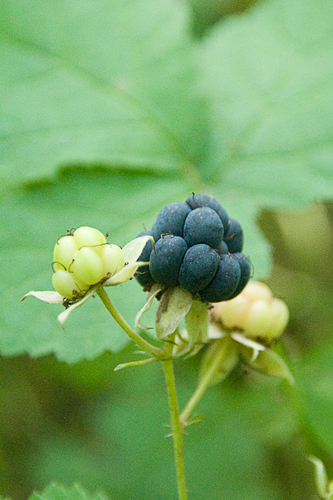
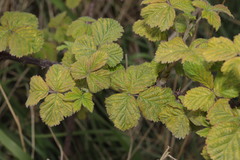
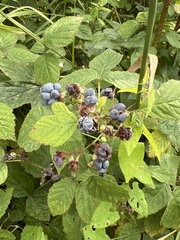
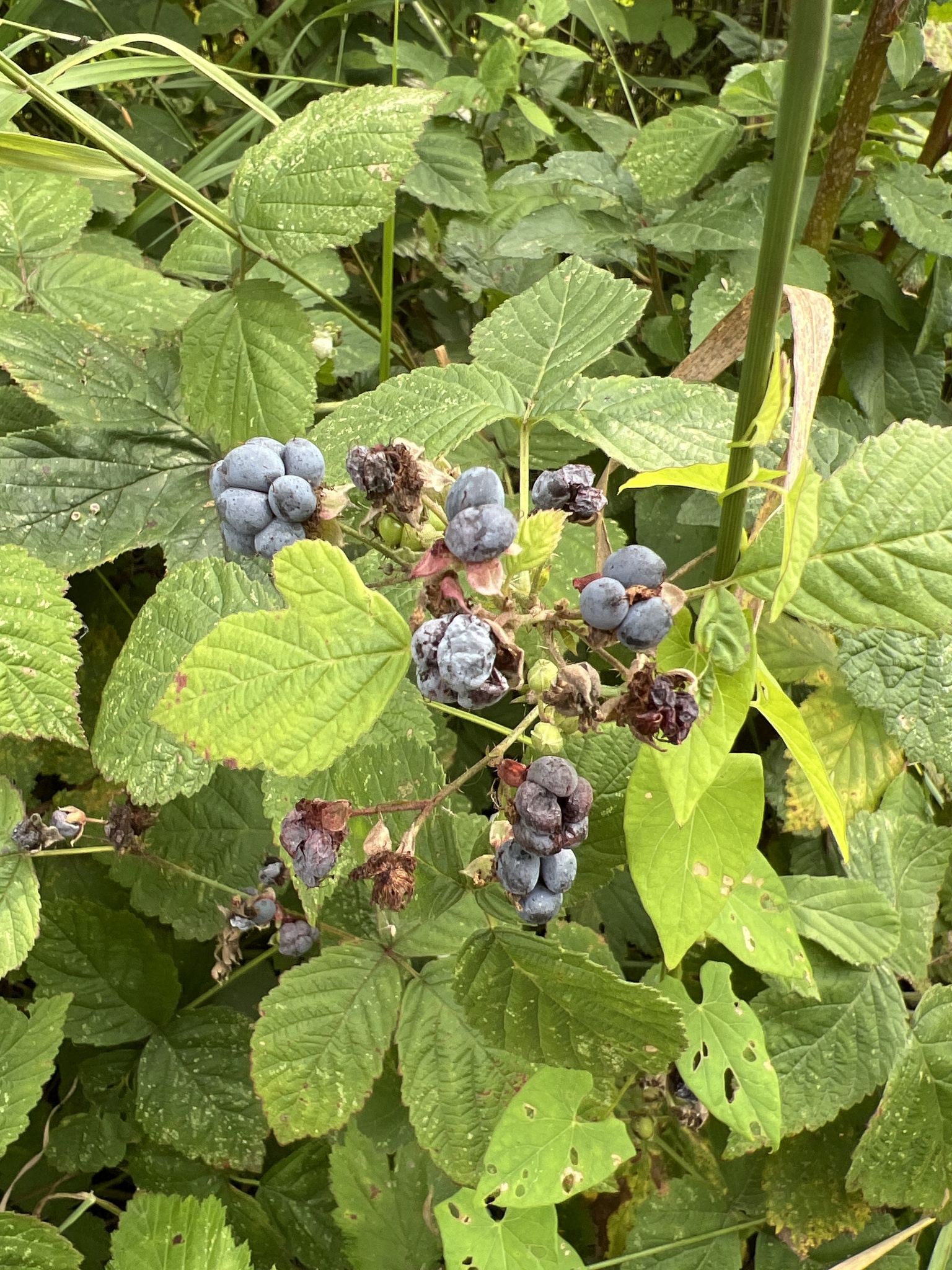
European dewberry (Rubus caesius) is a scrambling shrub in the Rosaceae family, widespread in temperate European hedgerows and woodland edges. Its trailing blue-gray stems bear fruit made of a few large drupelets covered in a waxy bloom, clearly different from common blackberry or raspberry.
Read moreEuropean dewberry and Dewberry



© photo
(c) Jordi Roy Gabarra, some rights reserved (CC BY-NC) · cc-by-nc
Stephen James McWilliam · cc0
iNaturalist User · cc0
Taken May 28, 2015 by Tela Botanica − Yoan MARTIN (cc-by-sa)
Taken Jan 1, 1800 by Tela Botanica − Thierry Pernot (cc-by-sa)
Taken Jul 27, 2019 by Geňa Eugenie (cc-by-sa)
Taken Aug 4, 2022 by Andrzej Konstantynowicz (cc-by-sa)
Taken Jul 8, 2020 by agathaha (cc-by-sa)
© copyright of the Board of Trustees of the Royal Botanic Gardens, Kew.




Global distribution
Rubus caesius is widespread in temperate Europe, from Scandinavia to Spain, extending east to Xinjiang and the western Himalayas, with populations in northwestern Africa and the southwestern Arabian Peninsula. It occurs across most of metropolitan France except the Mediterranean fringe and Corsica. Introduced to North America, it remains localized there and is not native.
- Native8
- Introduced2
- Metropolitan France
- Germany
- Spain
- United Kingdom
- Russia
- China (Xinjiang)
- Morocco
- Saudi Arabia
- United States
- Canada
Hexagons: regions where the plant occurs. Green dots: native range.1
Identity
European dewberry (Rubus caesius L., 1753) takes its scientific epithet from the Latin caesius, meaning blue-gray. The name describes the fine waxy bloom covering young stems and ripe fruit, a conspicuous field character. Described by Carl Linnaeus in 1753, this shrub belongs to the genus Rubus in the Rosaceae family. 1 2
The English name dewberry evokes the same dewy coating. Compared with common blackberry (Rubus fruticosus), European dewberry first stands out through its low, trailing growth: it does not produce its relative's long, prickly arches. 4 5
Recognition
Blue-gray, cylindrical and hairless stems carry small, fine, curved prickles rather than stout thorns. Rubus caesius rarely exceeds 1 m (3.3 ft) in height but spreads 2–3 m (7–10 ft) once its stems root along the ground. 4 5
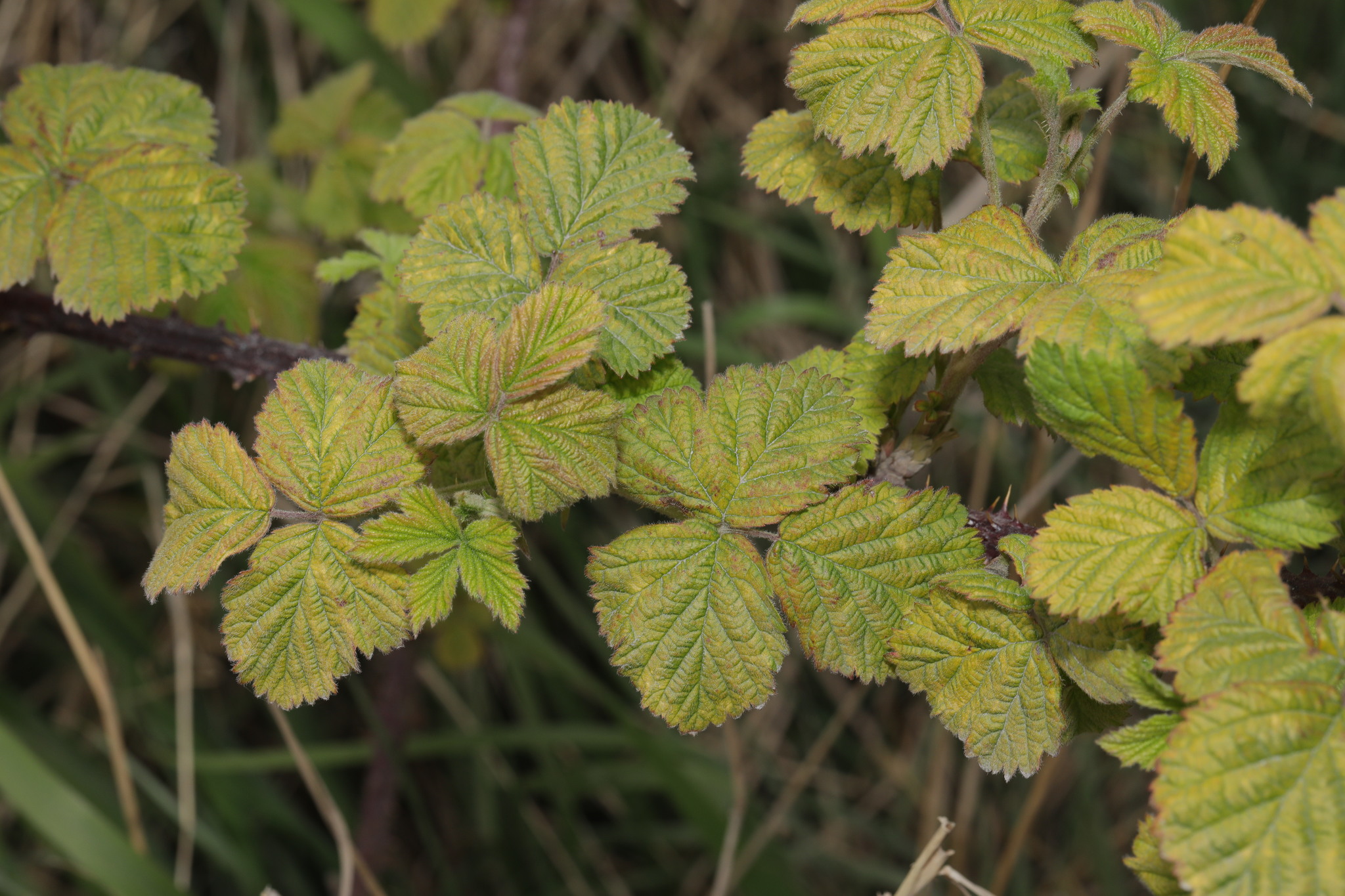
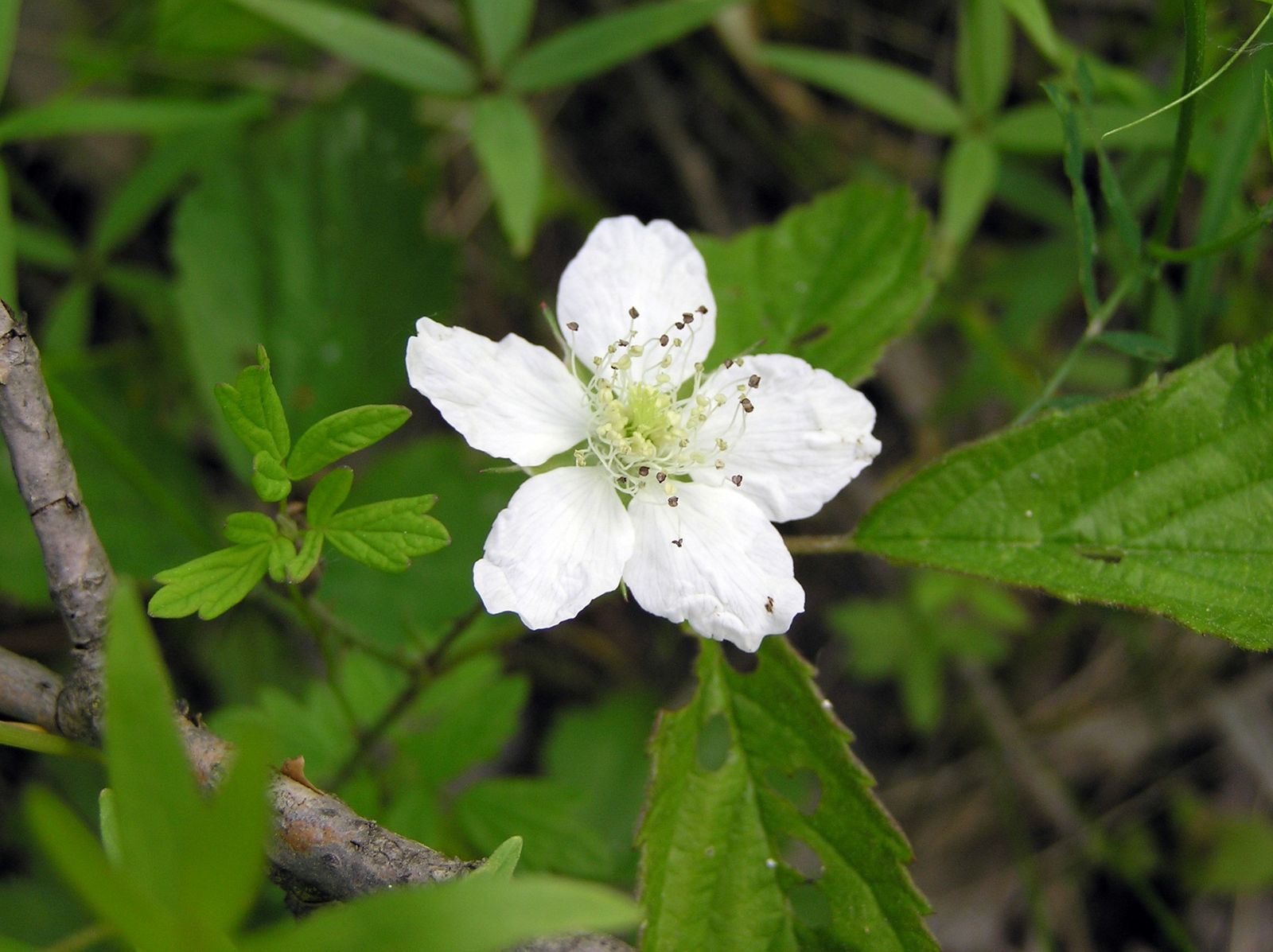
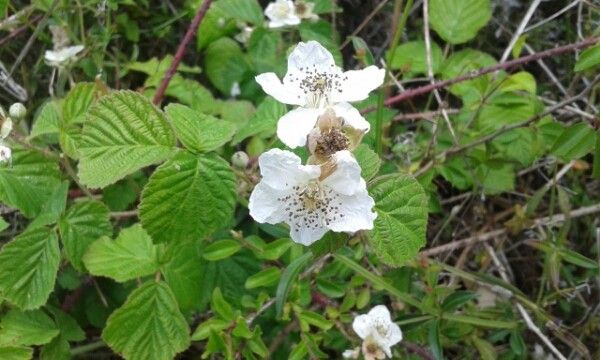
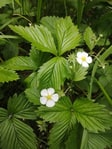
Three toothed leaflets form each compound leaf, green and hairy on both sides. This helps distinguish it from nearby members of Rosaceae with simple leaves. In May–June in its temperate European setting, small, five-petaled white flowers open in loose corymbs on long stalks, attracting bees and other pollinating insects. 3 1
Few large drupelets make the fruit especially distinctive: usually just two to five are joined together, compared with the dozens of small, shiny drupelets in common blackberry. The blue-gray wax rubs off with the fingers, adding a useful check alongside the other characters. 4 1
Useful taxonomy
Linnaeus described European dewberry in his Species Plantarum in 1753. The genus Rubus is famously complex because of apomixis, asexual reproduction that preserves small local variations as stable populations. Together with frequent hybridization between related species, this helps explain the many historical names used for European dewberry:
- Rubus fruticosus subsp. caesius (L.) Focke, a historical subspecific name
- Rubus ligerinus (Genev.) Corb., a historical synonym
- Rubus mitissimus, a historical synonym
- Rubus rivalis, a historical synonym
- Rubus sabulosus, a historical synonym
This wealth of synonyms reflects a long history of treating European dewberry as a blackberry variety rather than a species in its own right. The accepted scientific name remains Rubus caesius L., confirmed by both POWO and ITIS. 1 3
Habitat and range
Temperate Europe forms the core of its range, from Scandinavia to Spain, extending east to Xinjiang and the western Himalayas. Populations also occur in northwestern Africa and the southwestern Arabian Peninsula. 1 7
Across metropolitan France, European dewberry occurs almost everywhere except the Mediterranean fringe and Corsica, where summer dryness limits its establishment on dry soils. It colonizes rural hedgerows, woodland edges, ditches and riverside woodland on nitrogen-rich soils, sometimes reaching 1,500 m (4,900 ft) in elevation. 5 4
North American occurrences represent introductions. ITIS records European dewberry in the United States and Canada, where it remains localized, separate from its native Eurasian range. 3 6
Life cycle and reproduction
A perennial rootstock supports stems with a two-year cycle, much like raspberry canes. A young stem trails without flowering in its first year; in its second it flowers, fruits and dies back as new stems take over. 4 3
Insect-pollinated white flowers produce ripe fruit in August–September in temperate Europe. The tart flavor recalls blueberry or grape. As in blackberry, the fruit stays attached to its receptacle when picked; raspberry fruit separates completely, leaving its characteristic hollow center. 4
Trailing stem tips root spontaneously on contact with the soil. This natural layering multiplies European dewberry without a gardener's intervention. Stem cuttings, clump division and cold-stratified seed also work, though more slowly. 4
Uses and risks
Food is the main use of European dewberry. Its fruit is eaten raw or cooked into jellies and jams, although most horticultural sources judge its flavor less rich than that of common blackberry. 4 5
Fresh or dried leaves are traditionally used in herbal tea, as are raspberry leaves. No part of the plant is known to cause toxicity in people or pets, and neither fruit nor leaves present a particular poisoning risk. Stem prickles are the main nuisance, making gloves useful for pruning and picking. 4
Varieties, look-alikes and related plants
Unlike cultivated raspberry and blackberry, Rubus caesius has no recognized horticultural cultivars. Primarily a hedgerow and woodland-edge species, it has rarely been selected for gardens. Its diversity lies instead in numerous natural hybrids, since closely related species in Rubus cross readily. 3
Several relatives and intermediate forms can cause confusion:
- Rubus fruticosus agg., common blackberry, has numerous small, shiny drupelets and taller, arching growth;
- Rubus idaeus, raspberry, has fruit that comes away completely from its receptacle when picked;
- numerous hybrid forms between Rubus caesius and Rubus fruticosus appear under many local names in botanical literature, with characters intermediate between the two.
Taken together, the blue-gray waxy bloom on stems and fruit, the small number of drupelets and trailing growth provide the most reliable distinction between Rubus caesius and these similar plants. 1 4
Main sources
- Plants of the World Online / Kew, Rubus caesius L.
- International Plant Names Index, Rubus caesius L.
- Integrated Taxonomic Information System, Rubus caesius L.
- Plants For A Future, Rubus caesius
- Tela Botanica, Rubus caesius L.
- NCBI Taxonomy Browser, Rubus caesius
- USDA GRIN Global Taxonomy, Rubus caesius L.
Frequently asked questions
Is European dewberry toxic?
No. The fruit can be eaten raw or cooked in jellies and jams, and the leaves are traditionally used for herbal tea. No part is known to have notable toxicity to people or pets.
Why do European dewberry stems and fruit look blue?
A blue-white waxy bloom covers young stems and ripe fruit. It rubs off easily and gave the species its name: caesius means blue-gray in Latin.
How does European dewberry differ from common blackberry?
European dewberry fruit has only two to five large, wax-covered drupelets, while common blackberry has many small, shiny ones. Its growth is also more trailing and less arching than the long stems of Rubus fruticosus.
How does European dewberry differ from raspberry?
Like a blackberry, European dewberry fruit remains attached to its receptacle when picked, whereas a raspberry comes away leaving a hollow center. Rubus caesius belongs to the blackberry group rather than the raspberry group.
How do you propagate European dewberry in a garden?
The easiest way is to let a trailing stem root naturally where it touches the soil, then separate it from the parent. Stem cuttings and clump division also work well.
Can European dewberry take over a garden?
Its trailing stems root readily and can form a dense colony unless contained. A buried edging barrier or regular removal of new shoots is enough to restrict its spread in a garden.
Does European dewberry hybridize with other brambles?
Yes. Rubus is known for hybrids and numerous intermediate forms. European dewberry crosses readily with Rubus fruticosus and related brambles, often making field identification difficult.
Similar plants
If you are unsure about a plant’s toxicity, ask a botanist or veterinarian for advice.