
Broad-leaved dock (Rumex obtusifolius, )
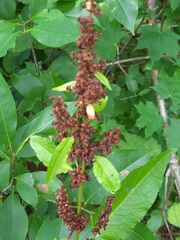
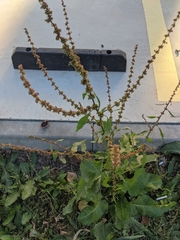
Broad-leaved dock (Rumex obtusifolius L., 1753) is an herbaceous perennial in the Polygonaceae family, native to Europe and temperate Asia and now found on almost every temperate continent. Its rosette of large oval, wavy-edged leaves precedes a branched flowering stem with small greenish flowers, followed by distinctive fruits with toothed valves.
Read moreBroad-leaved dock, Bluntleaf dock, Dock leaf, Round-leaved dock, Bitter dock and Butter dock
Allow a few hours of direct sun per day, preferably morning or evening.
Full sun to light partial shade
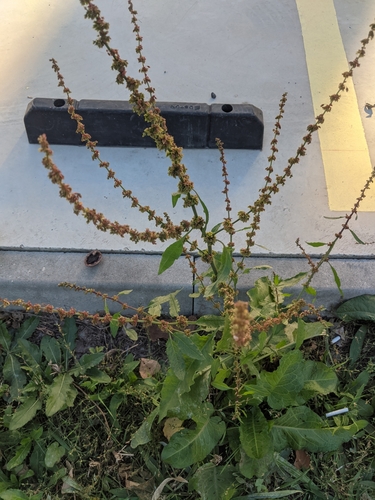
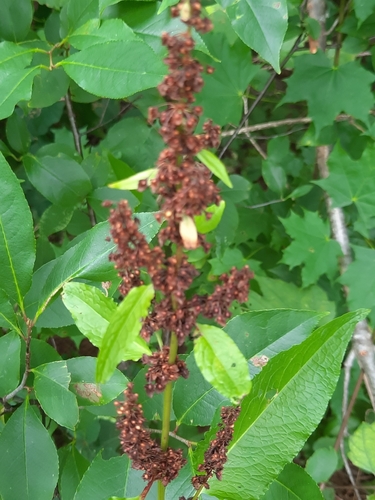
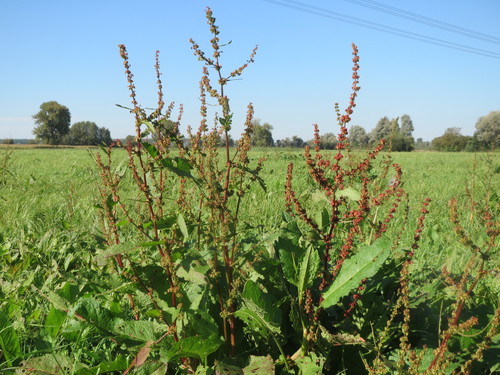
© photo
(c) Andreas Rockstein, some rights reserved (CC BY-SA) · cc-by-sa
iNaturalist User · cc0
Alexandr Stanislavschi · cc-by
(c) Alexandr Stanislavschi, some rights reserved (CC BY) · cc-by
no rights reserved · cc0
Global distribution
Plants of the World Online records the native range of Rumex obtusifolius as Europe and temperate Asia as far as central Siberia and Iran, together with northwestern Africa. The species has since been introduced to almost every temperate continent and is among the most widespread weeds of disturbed soils.
- Native4
- Introduced3
- Metropolitan France
- Temperate Europe
- Central Siberia and Iran
- Northwestern Africa
- North America
- Australia
- New Zealand
Hexagons: regions where the plant occurs. Green dots: native range.1
Identity
Broad-leaved dock (Rumex obtusifolius L., 1753), also called Bitter dock or Butter dock, is an herbaceous perennial in the genus Rumex, family Polygonaceae. Plants of the World Online accepts this name for a species native to Europe, temperate Asia as far as central Siberia and Iran, and northwestern Africa. 1 6
Rounded rather than pointed leaf tips explain the epithet obtusifolius. Compared with the narrower foliage of several other Rumex species, its wide leaves also give Broad-leaved dock its English name. 7
Recognition
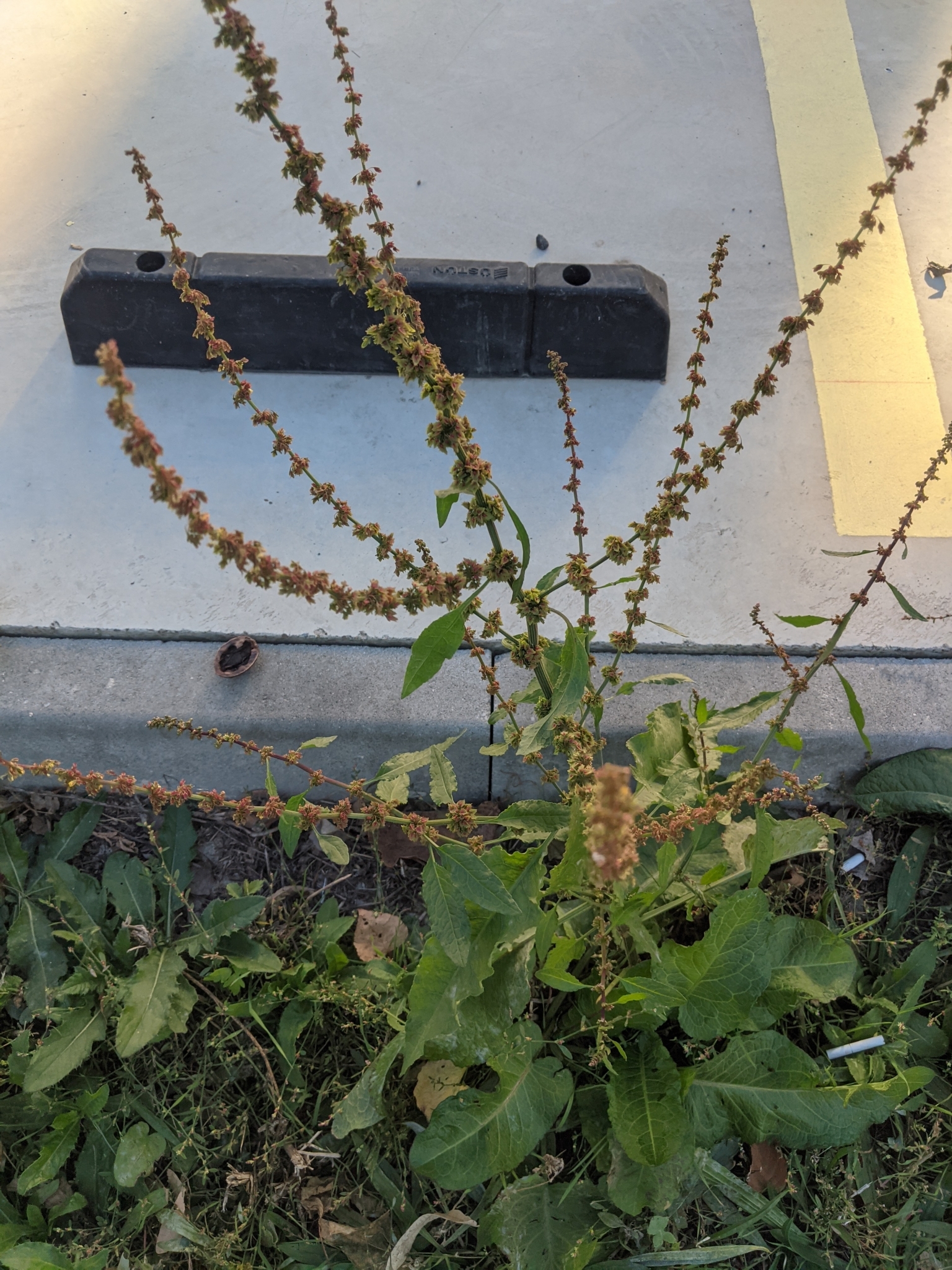
Large oval to oblong basal leaves form the first rosette of Rumex obtusifolius. They have heart-shaped bases and commonly measure 25–30 cm (10–12 in) long by 12–15 cm (5–6 in) wide. The edges are slightly wavy rather than strongly curled. 2 8
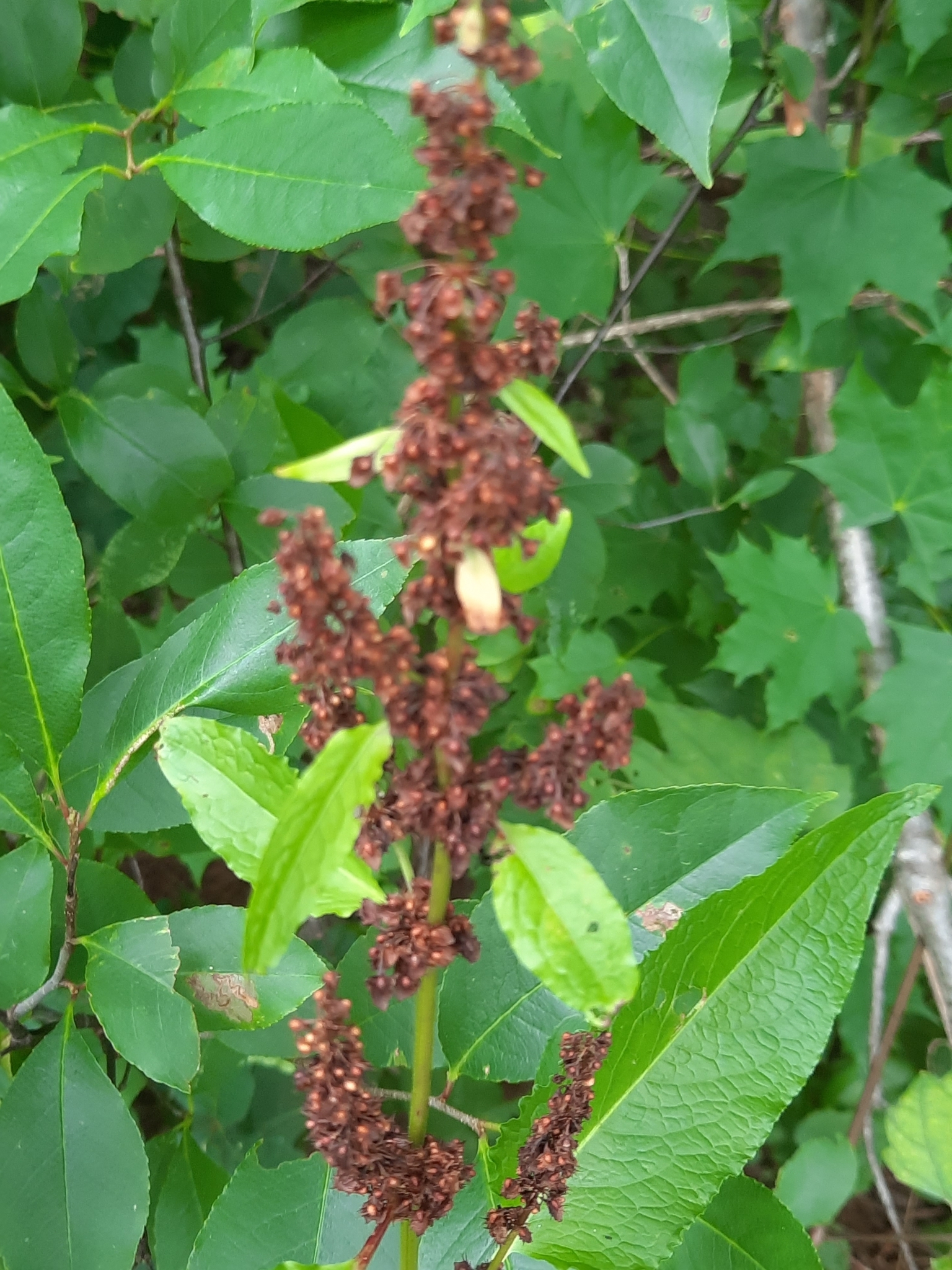
Branched flowering stems stand 40 cm–1.5 m (16–59 in) tall, with increasingly narrow leaves toward the top. Small bisexual, wind-pollinated flowers form dense whorls along the stem, turning from greenish to reddish as they mature. 2
Fruits provide a firmer identification than leaf shape, particularly in a young rosette. Each achene is enclosed by three persistent valves, 3.5–6 mm (0.14–0.24 in) long, each with 2–5 marginal teeth. Only one valve has a conspicuous central swelling, or tubercle. 8
Useful taxonomy
Under the accepted name Rumex obtusifolius L., published in 1753, Kew places this dock in Polygonaceae, subfamily Polygonoideae. 1 7
Geographic range is the main distinction among several recognized subspecies:
- Rumex obtusifolius subsp. obtusifolius predominates in western Europe and is the type subspecies;
- Rumex obtusifolius subsp. transiens (Simonk.) Rech.f. ranges from central Europe to the western Caucasus.
Regional French floras use several vernacular names referring to its blunt leaves or wild occurrence. These names all refer to Broad-leaved dock, rather than to distinct species. 6
Habitat and range
Europe, temperate Asia as far as central Siberia and Iran, and northwestern Africa constitute the native range POWO records for Rumex obtusifolius. Introductions have since brought it to almost every temperate continent. 1 9
Nitrogen-rich, repeatedly disturbed ground strongly favors establishment, whether on waste land, roadsides, riverbanks, ditches, pasture or cultivated fields. Abundant plants can indicate compacted soil overloaded with organic matter. In contrast, establishment slows markedly on poor, dry ground with little available nitrogen. 4 8
A sturdy, branched taproot reaches down to 2 m (6.6 ft). It draws on available water and nutrients even in poor soil, helping explain how the plant can persist there once established. 8
Life cycle and reproduction
Bisexual, wind-pollinated flowers appear during June–October in the temperate Northern Hemisphere calendar described here, depending on climate. A single Rumex obtusifolius flowering stem produces both pollen and seeds, unlike Rumex acetosa, whose male and female flowers occur on separate plants. 2
About 60,000 seeds can develop on one flowering stem and remain viable in soil for several years. This output explains why an infested field may stay affected for several seasons after an initial attempt at removal. 8
Besides seed reproduction, a root fragment left in soil can regenerate a whole plant. Pieces within 12 cm (5 in) of the surface regrow readily, so mechanical removal remains incomplete unless repeated. 3
Uses and risks
Food use is marginal, restricted to very young leaves sometimes described as edible after cooking. Bitterness develops early in the season, clearly distinguishing this dock from the more valued culinary sorrel, Rumex acetosa. 4
Traditional herbalism used the tannin-rich root as an astringent and in infusions for jaundice or skin eruptions. Fresh leaves were applied externally to burns and blisters. Strong clinical evidence does not currently validate any of these uses. 4
Soluble oxalates occur in the foliage. According to ASPCA, substantial ingestion of plants in the genus Rumex, which includes Rumex obtusifolius, can cause tremors and excessive salivation in dogs, cats and horses, with kidney damage a rarer risk. 5
Rubbing the underside of a leaf on a nettle sting is a widespread folk practice in the UK and Ireland. No scientific evidence confirms an effect beyond cooling contact on the skin or simple distraction. 4
Varieties, look-alikes and related plants
Horticultural selection is not documented for Rumex obtusifolius: it remains a wild weed, rather than an ornamental or vegetable crop. Only botanical subspecies, distinguished by geographic range, are recognized. 7
Two related docks and sorrels warrant comparison:
- Rumex crispus, Curled dock, has much narrower, strongly wavy leaves and fruit valves with smooth rather than toothed edges;
- Rumex acetosa, Common sorrel, is smaller, dioecious and much more acidic in taste, cultivated as a vegetable rather than treated as a weed.
Before bolting, young rosettes of Rumex crispus and Rumex obtusifolius can look very similar because fruits are not yet available for comparison. Once fruits develop, 2–5 teeth on the valve edges identify Rumex obtusifolius; their absence points toward Rumex crispus. 8
Main sources
- Plants of the World Online / Kew, Rumex obtusifolius L.
- Royal Horticultural Society, Rumex obtusifolius - broad-leaved dock
- Royal Horticultural Society, Docks - weeds advice
- Plants For A Future, Rumex obtusifolius
- ASPCA, Dock (Rumex sp.) toxicity entry
- Integrated Taxonomic Information System, Rumex obtusifolius L.
- USDA GRIN Global Taxonomy, Rumex obtusifolius L.
- Weeds Australia, Broad-leaved Dock (Rumex obtusifolius) profile
- VicFlora / Royal Botanic Gardens Victoria, Rumex obtusifolius
Frequently asked questions
Is Broad-leaved dock toxic to animals?
Its foliage contains soluble oxalates. The ASPCA lists Rumex, the genus that includes Rumex obtusifolius, as toxic to dogs, cats and horses after substantial ingestion, with possible tremors, salivation and, rarely, kidney damage.
How can you tell Broad-leaved dock from Curled dock?
Rumex obtusifolius has broader leaves with only slightly wavy edges, whereas Rumex crispus has narrower, strongly curled leaves. Fruit valves are the most reliable distinction: those of Rumex obtusifolius have 2–5 marginal teeth, while Rumex crispus has smooth valve margins.
Why does Broad-leaved dock grow in some fields?
Abundant plants often indicate compacted soil rich in organic matter or recently disturbed ground. High seed production and a deep taproot allow it to colonize bare soil quickly.
Can you eat Broad-leaved dock leaves?
Very young leaves have sometimes been reported edible after cooking, but bitterness develops early in the season. Unlike Rumex acetosa, this species is not recommended for routine food use.
How can you remove Broad-leaved dock permanently?
Dig out the root to more than 12 cm (5 in) deep to prevent regrowth. A single mowing is insufficient; combine digging with repeated cutting before fruiting to exhaust the rootstock.
Do Broad-leaved dock leaves help nettle stings?
Rubbing the underside of a leaf on a sting is a widespread folk practice in the UK and Ireland. No scientific evidence confirms an effect beyond distraction or the cooling contact of the leaf on skin.
Where does Broad-leaved dock come from?
Its native range covers Europe and temperate Asia as far as central Siberia and Iran, together with northwestern Africa. It has been introduced to most temperate continents, including North America, Australia and New Zealand.
Similar plants
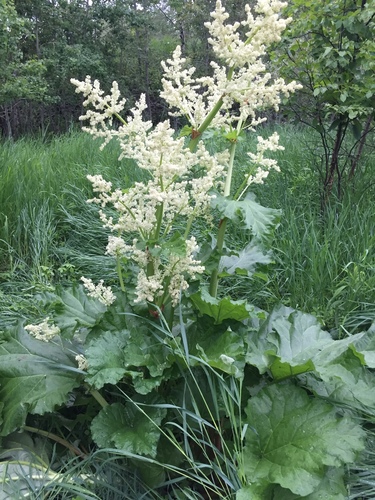
If you are unsure about a plant’s toxicity, ask a botanist or veterinarian for advice.