
Peruvian pepper tree (Schinus molle, )
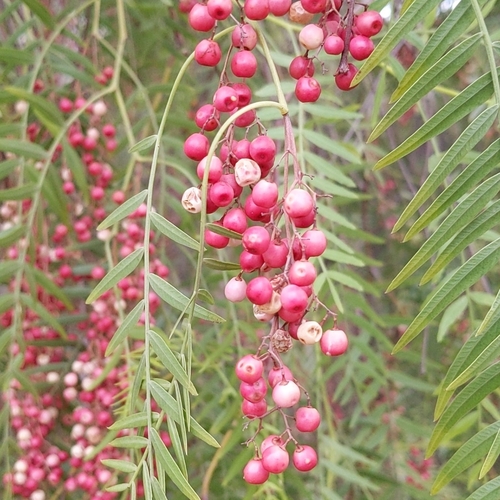
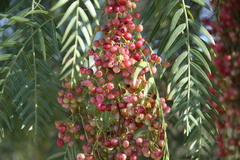
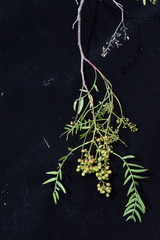
Peruvian pepper tree (Schinus molle) is a weeping evergreen in the Anacardiaceae family, native to dry Andean areas from Peru to northern Chile and northeastern Argentina. Its pink drupes are sold as pink peppercorns, are unrelated to black pepper (Piper nigrum), and are often confused with those of its invasive relative, Schinus terebinthifolia.
Read morePeruvian pepper tree, Molle, Aguaribay and Peruvian peppertree



© photo
Vasily Reinkymov · cc0
(c) altagray, some rights reserved (CC BY-NC) · cc-by-nc
principe mendoza babilòn · cc0
Taken Feb 22, 2015 by Tela Botanica − Liliane Roubaudi (cc-by-sa)
Taken Mar 1, 2020 by Andrea Soler (cc-by-sa)
© copyright of the Board of Trustees of the Royal Botanic Gardens, Kew.




Global distribution
Schinus molle is native to the arid Andes from Peru to northern Chile, with a second area from southern Brazil to northeastern Argentina. Widely introduced as an ornamental tree, it has become naturalized and sometimes invasive outside that range.
- Native4
- Introduced1
- Invasive2
- Peru
- Chile
- Argentina
- Brazil
- California
- South Africa
- Australia
Hexagons: regions where the plant occurs. Green dots: native range.1
Identity
Peruvian pepper tree (Schinus molle L., 1753), also called molle, aguaribay or Peruvian peppertree, belongs to the Anacardiaceae family. Its weeping crown reaches 8–15 m (26–49 ft) in hot, dry climates. The epithet molle comes from the Quechua mulli, the Andean name for this tree long before Carl Linnaeus described it in 1753. 1 6
Crushed foliage and fruit release a peppery scent, although the tree has no botanical connection to black pepper (Piper nigrum), a member of Piperaceae. Dried drupes sold as pink peppercorns are mixed commercially with those of Schinus terebinthifolia, often without a clear distinction between the two species. 8 4
Recognition
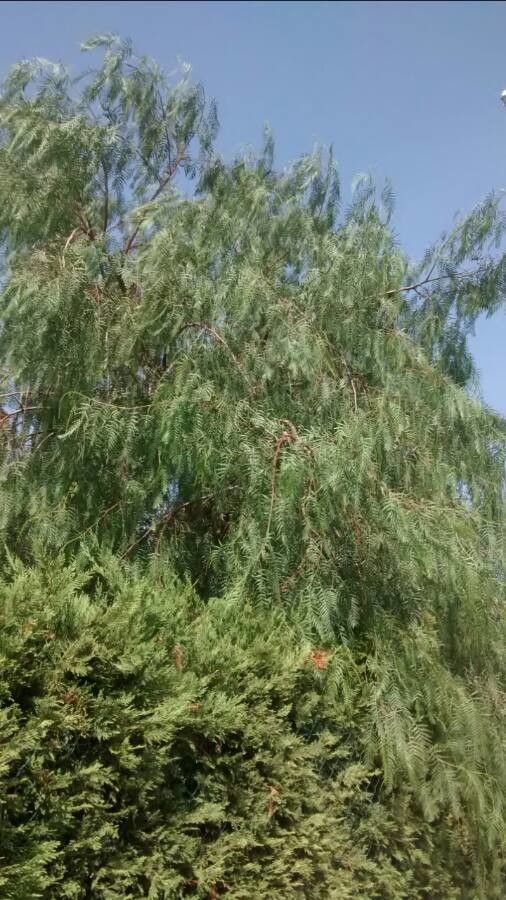
Slender, drooping twigs give Schinus molle a strongly weeping habit even when young. This evergreen reaches 8–15 m (26–49 ft) in favorable hot, dry conditions; near its climatic limits, it rarely exceeds 8 m (26 ft). Grayish bark becomes fissured with age and often exudes aromatic resin. 5 4
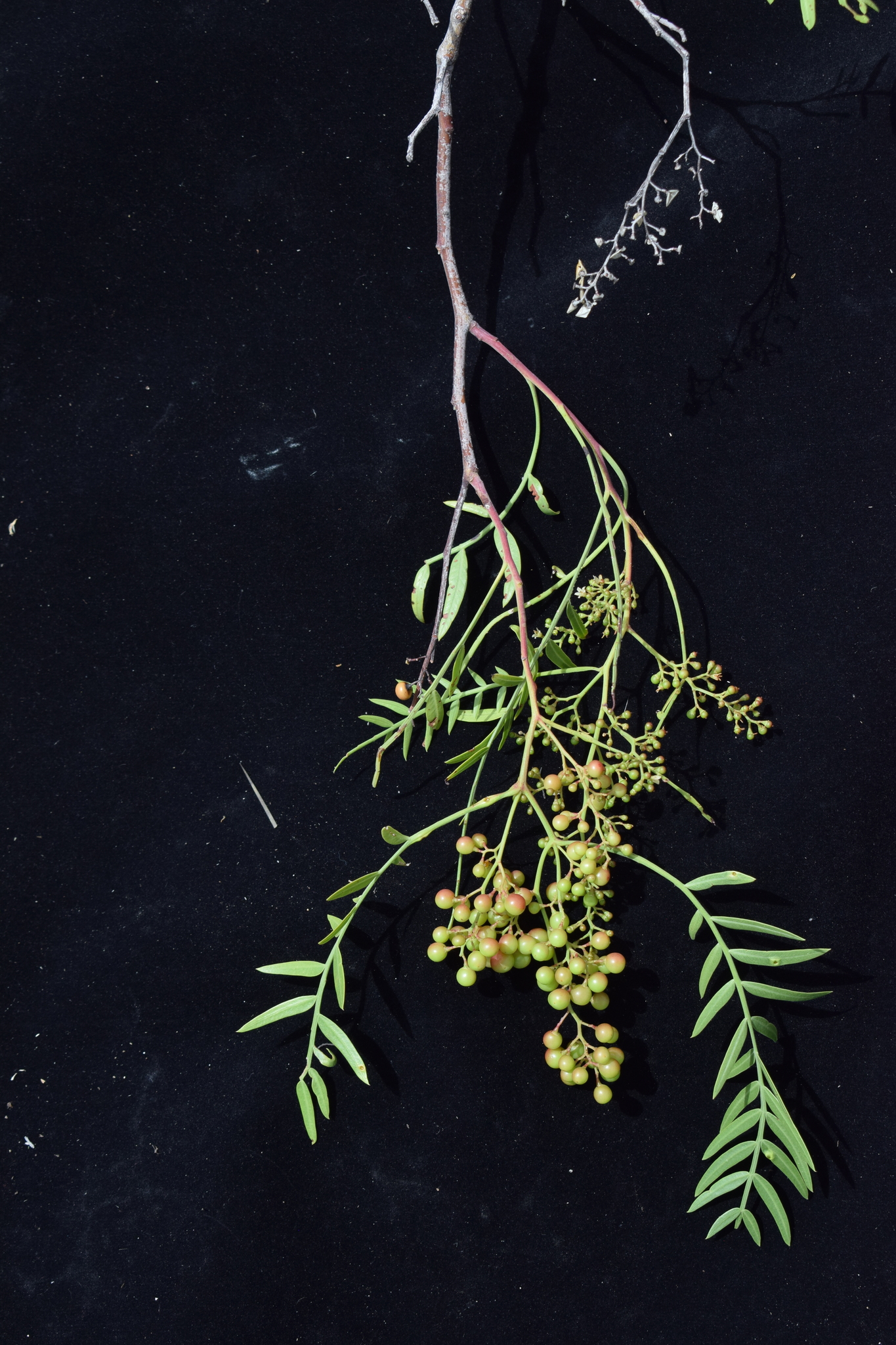
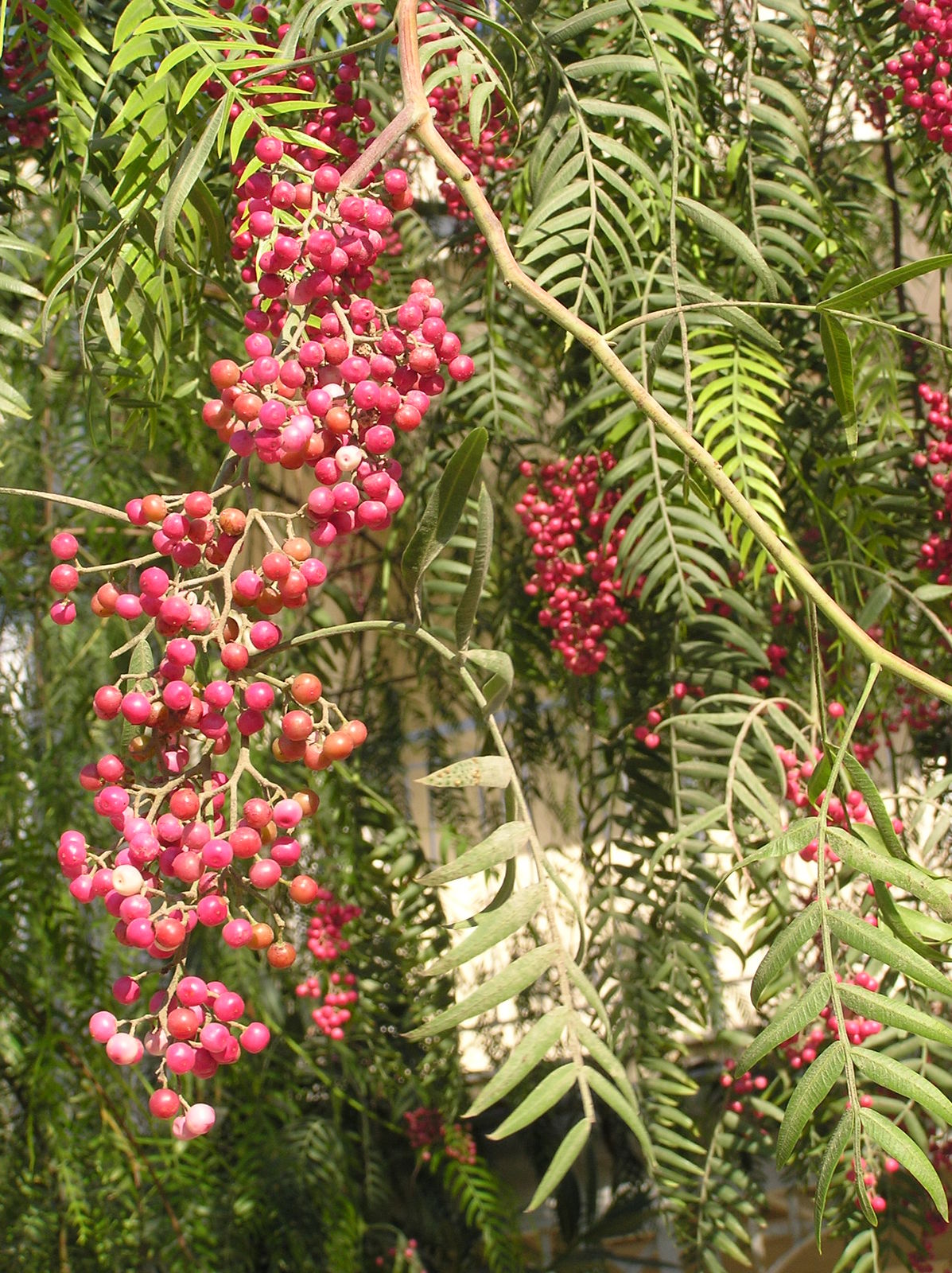
Pinnate leaves, 8–25 cm (3–10 in) long overall, carry numerous narrow, alternate leaflets and release a pronounced peppery odor when crushed. Small cream-white flowers form loose clusters at twig tips in spring. The species is dioecious, with only female trees subsequently bearing fruit. 5 6
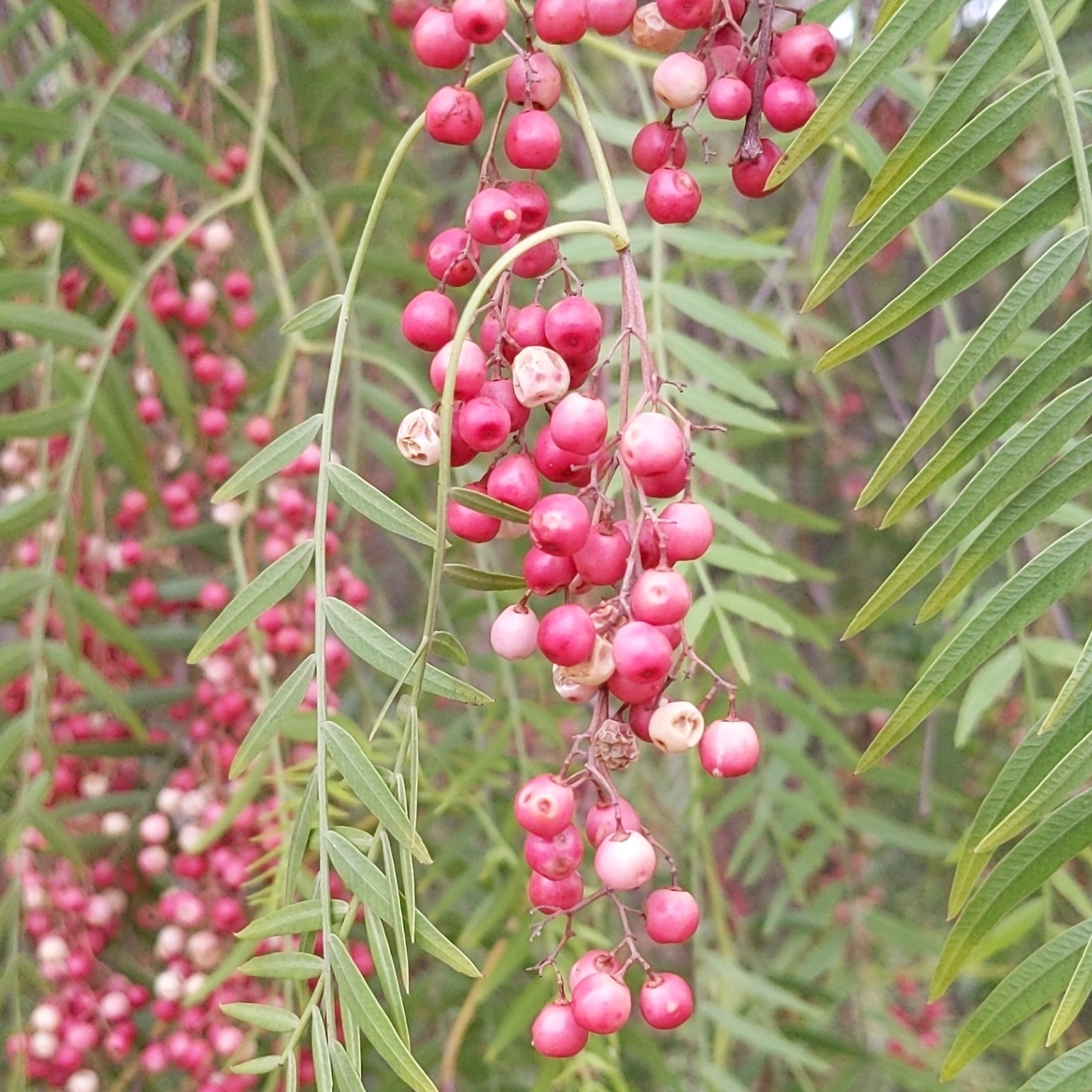
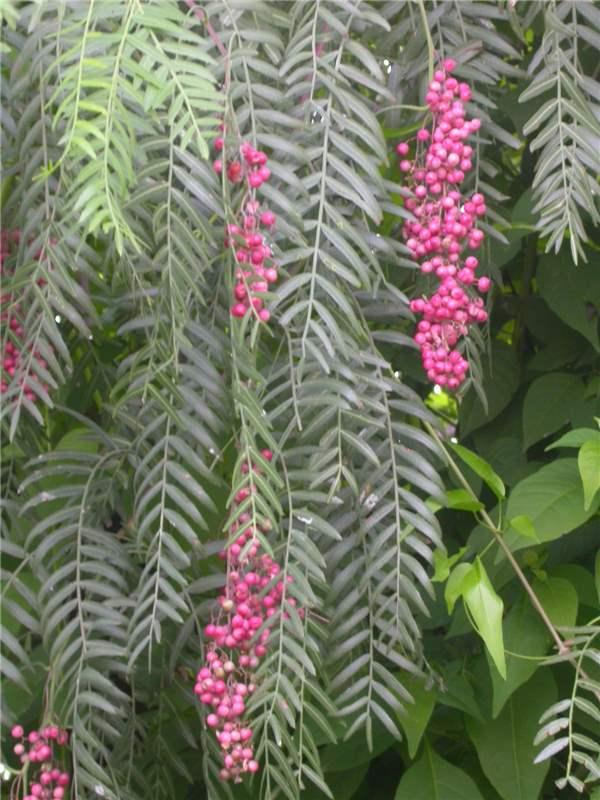
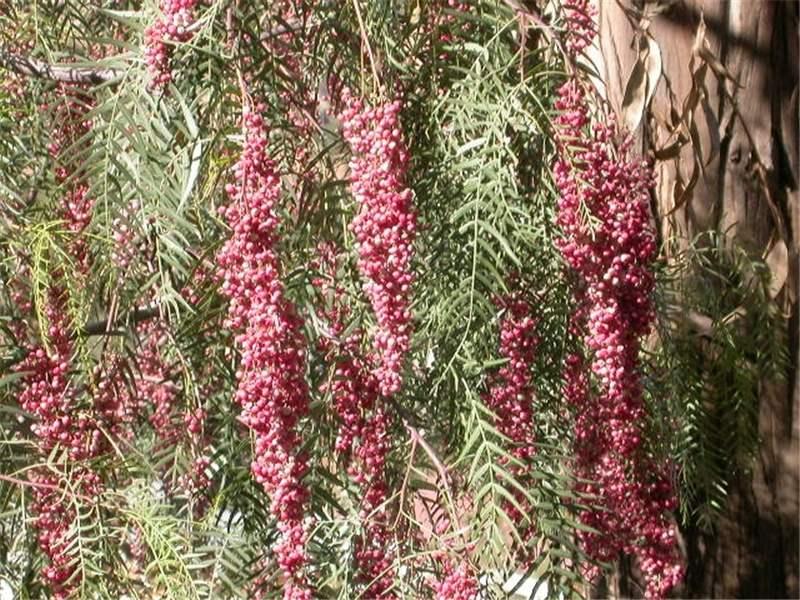
Dense clusters of round drupes, 5–7 mm (0.2–0.3 in) across, turn from green through red to pink as they ripen. These small fruits can remain on the tree for almost the entire year. 5
Useful taxonomy
Around thirty South American species belong to Schinus. Several similar names regularly cause confusion with Schinus molle:
- Schinus areira L., a distinct species in POWO/WCVP, despite common names often being used interchangeably in Argentina.
- Schinus polygama (Cav.) Cabrera, a Chilean shrub or small tree sometimes confused with it when young.
- Schinus terebinthifolia Raddi, Brazilian pepper, the species most often mixed with S. molle in the pink peppercorn trade.
Two botanical varieties are recognized: the widespread typical var. molle and var. rusbyi, restricted to desert climates in southern Peru and northern Chile. Full scientific names distinguish these plants clearly, whereas names such as molle or pepper tree can refer to several Schinus species in different regions. 1 2 3
Habitat and range
Dry Andean country from Peru to northern Chile forms the native range of Schinus molle, with a second area extending from southern Brazil to northeastern Argentina. It grows from the coast to about 3,200 m (10,500 ft) on poor, well-drained soils. 1 6
Extensive ornamental planting in Mediterranean climates has allowed Schinus molle to naturalize in California, Spain, southern Africa and Australia. In South Africa and Australia it is classified as invasive, colonizing waste ground and roadsides beyond the bounds of cultivation. 5
Life cycle and reproduction
Spring flower clusters appear at the ends of twigs. Because Peruvian pepper tree is dioecious, only female trees produce fruit; an isolated male never bears drupes, even at maturity. 5
Passage through a bird’s digestive tract weakens the hard seed coat and improves germination. Fresh seed sown in spring emerges slowly, then growth accelerates markedly at the species’ ideal 15–30 °C (59–86 °F). Basal shoots and semi-ripe wood cuttings also provide propagation routes, helping explain the tree’s vigorous recovery after cutting. 4 6
Uses and risks
Andean peoples have used Schinus molle since pre-Columbian times. Fermented drupes supplied chicha under the Wari state, before the Inca period, and resin was used to embalm royal Inca mummies. Fresh leaves remain in use for textile dyeing and in traditional remedies for infections. 5 6
Ripe, dried fruit is sold as pink peppercorns but does not have generally recognized as safe (GRAS) status with the US FDA. Unripe fruit, leaves and bark contain irritants that may cause vomiting and diarrhea in young children and digestive problems in poultry, pigs and cattle. The tree also fell out of favor with California landscapers in the nineteenth century because it hosts black scale, a pest threatening nearby citrus trees. 5 8
Varieties, look-alikes and related plants
Separating var. molle from var. rusbyi is difficult for a nonspecialist: the distinction depends on fine leaflet characters and the restricted desert range of var. rusbyi in southern Peru and northern Chile. 1
Likely look-alikes for Peruvian pepper tree include:
- Schinus terebinthifolia, with a more upright habit and broader, toothed leaflets, considered much more invasive in the tropics;
- Schinus areira, often given the same common names in Argentina but retained as a distinct species by POWO;
- Schinus polygama, a Chilean shrub with a similar outline when young.
A full scientific name distinguishes these species reliably. A common name alone cannot do so when a fruit is sold simply as pink peppercorns. 3 2
Main sources
- Plants of the World Online / Kew, Schinus molle L.
- Plants of the World Online / Kew, Schinus areira L.
- Plants of the World Online / Kew, Schinus terebinthifolia Raddi
- Plants For A Future, Schinus molle
- Wikipedia (en), Schinus molle
- Wikipedia (fr), Schinus molle, aromatic pepper tree
- GBIF Backbone Taxonomy, Schinus molle L.
- Encyclopaedia Britannica, pepper tree
Frequently asked questions
Do pink peppercorns come from Peruvian pepper tree?
Some do. Dried drupes sold as pink peppercorns come from Schinus molle and its relative Schinus terebinthifolia, often mixed without a clear commercial distinction.
Is Peruvian pepper tree related to black pepper?
No. Schinus molle belongs to Anacardiaceae, while black pepper, Piper nigrum, belongs to Piperaceae. Their peppery flavors come from each plant’s own essential oils.
Is Peruvian pepper tree invasive?
It is cultivated without a recognized invasive status in metropolitan France, but is classified as invasive in some introduced regions, particularly South Africa and Australia.
How do Peruvian pepper tree and Brazilian pepper differ?
Schinus molle has a pronounced weeping habit and narrow, entire leaflets. Schinus terebinthifolia has a more upright habit and broader, slightly toothed leaflets.
Are Peruvian pepper tree fruits poisonous?
Unripe fruit, leaves and bark contain irritants that may cause digestive problems in poultry, pigs and cattle, and sometimes young children after ingestion.
Why do some Peruvian pepper trees never bear fruit?
The species is dioecious: male and female flowers grow on separate trees. An isolated male tree never produces drupes, whatever its age.
Does Peruvian pepper tree tolerate frost?
Only to a point. Foliage suffers from −5 °C (23 °F), and prolonged exposure below −8 °C (18 °F) may kill aboveground growth, restricting outdoor planting to mild climates.
Similar plants
If you are unsure about a plant’s toxicity, ask a botanist or veterinarian for advice.