
Cup plant (Silphium perfoliatum, )
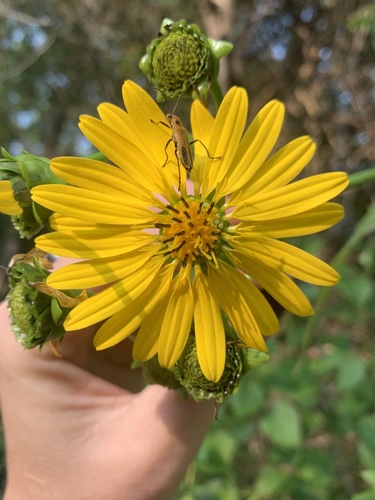
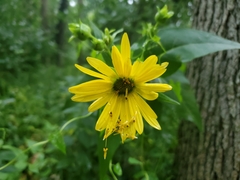
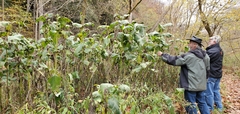
Cup plant (Silphium perfoliatum L.) is a tall perennial in the Asteraceae family, native to central and eastern North America. Its opposite leaves join around the square stem to form a small cup that holds rainwater, a nearly unique identification feature within the genus. Grown in Europe first as a nectar plant and later as a perennial energy crop to replace corn, it is also monitored for its potential to spread beyond cultivated fields.
Read moreCup plant, Cup rosinweed and Indian cup
Allow a few hours of direct sun per day, preferably morning or evening.
Full sun; tolerates partial shade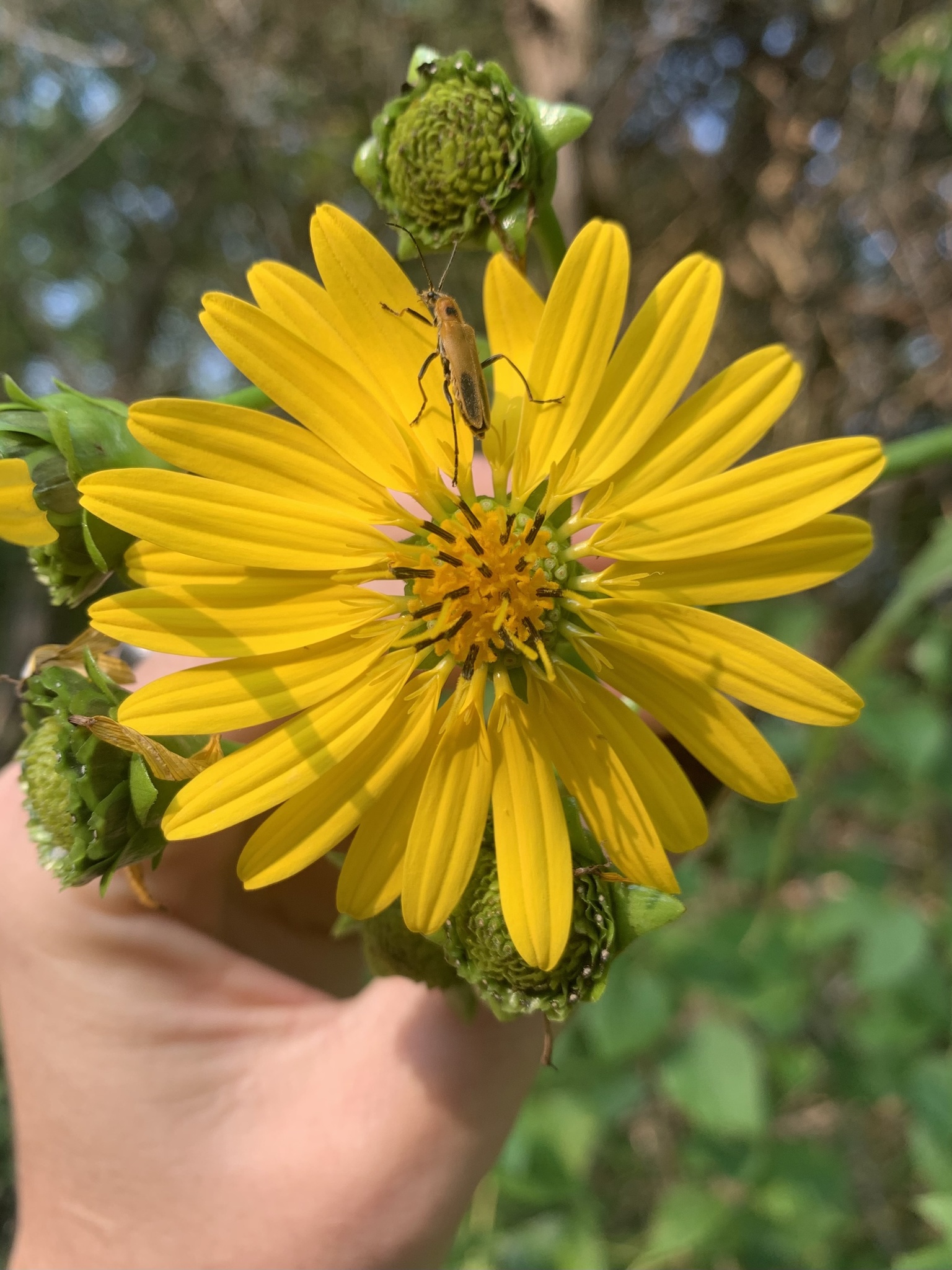
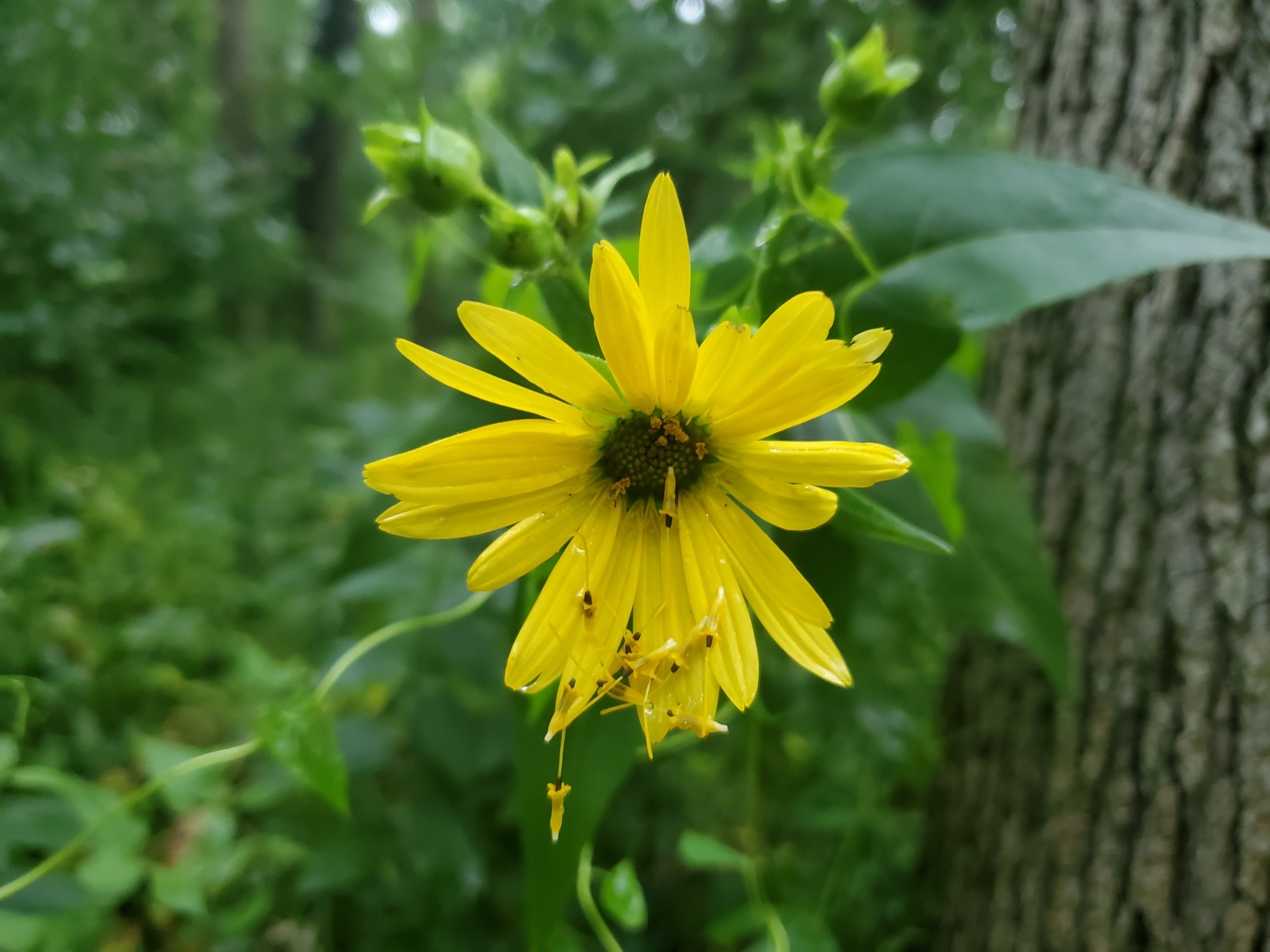
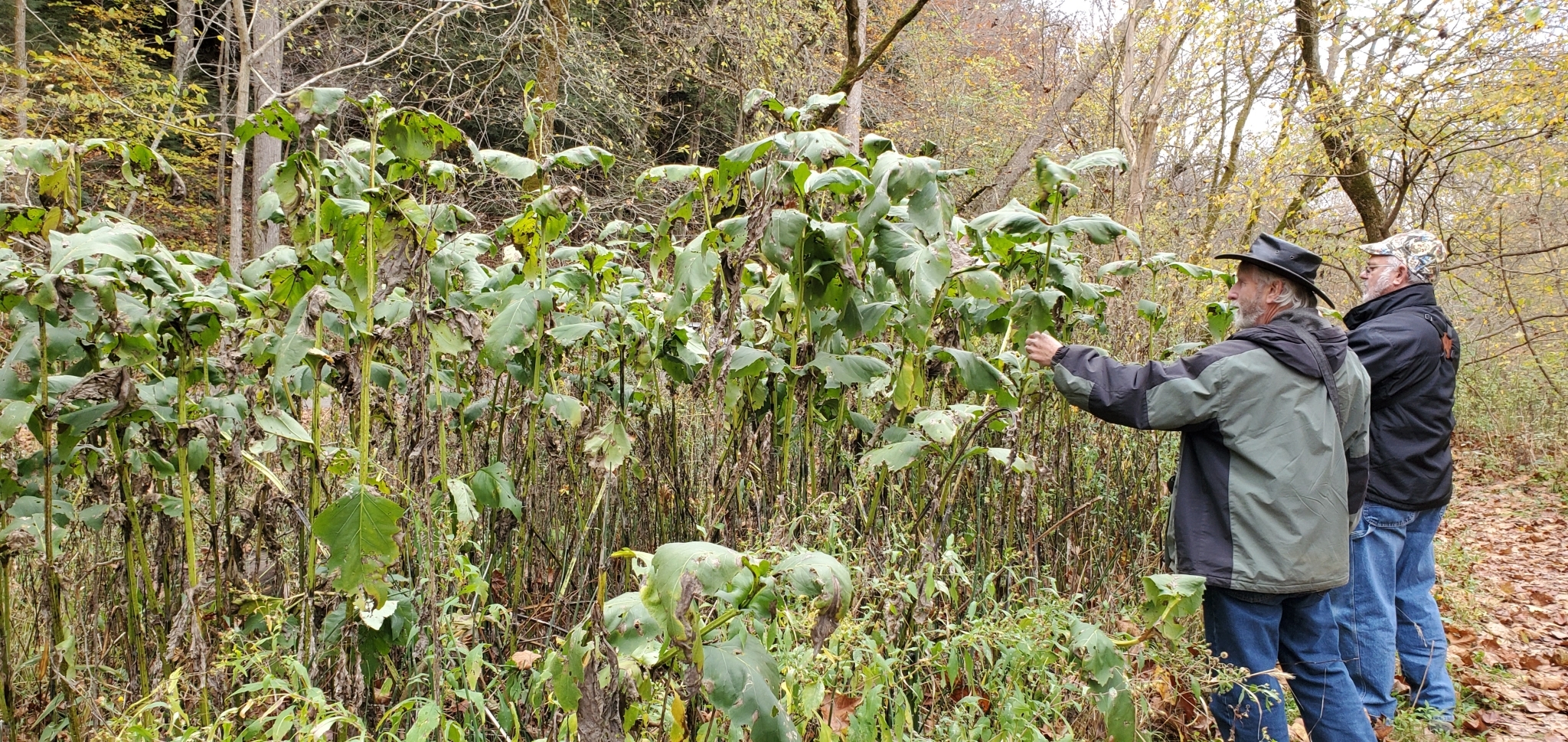


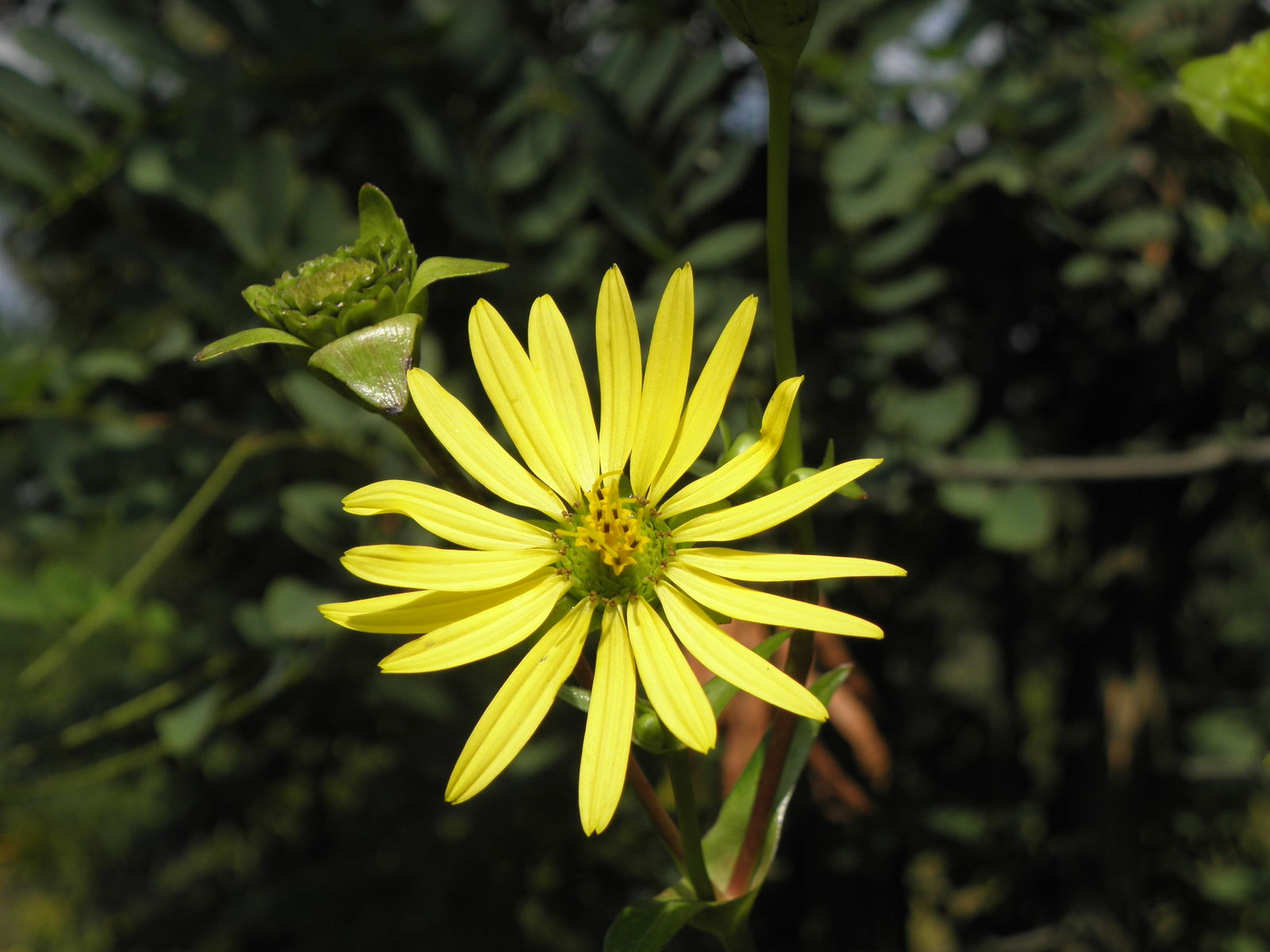


© photo
Kate Manning · cc0
Craig Martin · cc0
Carla Hall · cc0
Taken Sep 15, 2010 by Photoflora - Benoit BOCK (©)
Taken Jul 18, 2021 by Kevin Fernandes (cc-by-sa)
Taken Apr 20, 2022 by Jason Smith (cc-by-sa)
Taken Sep 15, 2013 by Photoflora - Benoit BOCK (©)
© copyright of the Board of Trustees of the Royal Botanic Gardens, Kew.


Global distribution
POWO/WCVP places the native range from southeastern Canada (Ontario and Quebec) through the central and eastern United States. Widely cultivated in Europe, especially Germany, it is used as an energy crop to replace corn. In France it remains locally naturalized in two departments and is not on the EPPO invasive alien plant list, although studies document a potential for dispersal that needs monitoring.
- Native2
- Introduced2
- Canada (Ontario, Quebec)
- United States (central and eastern)
- Metropolitan France
- Switzerland
Hexagons: regions where the plant occurs. Green dots: native range.1
Identity
Cup plant (Silphium perfoliatum L., 1759) is a perennial in the Asteraceae family, described by Linnaeus and accepted under that name by POWO/WCVP. The genus Silphium contains around twenty North American species; this one is the most widely cultivated outside its native range. It is also known as cup rosinweed and Indian cup. 1 3
Linnaeus adopted the Greek word silphion for the genus in 1753. It originally referred to the ancient silphium of Cyrenaica, a now-extinct resinous plant celebrated on ancient Greek coins. The two plants have no real botanical relationship: a resemblance between their resinous gums prompted the comparison. 7
The epithet perfoliatum describes a precise leaf feature: opposite leaves join at their bases around the stem, making the stem appear to pass through them. This detail matters more than flower color when identifying the species outdoors. 7 3
Recognition
Cup plant forms a tall, upright perennial with a smooth, square stem, usually 1.2–2.5 m (4–8 ft) tall depending on growing conditions. NC State and the Royal Horticultural Society give a typical height within this range; plants may approach 3 m (10 ft) in very fertile soil. 3 2
Unlike height, which changes with soil fertility, the leaf cup is a stable identification feature. Broad, rough, opposite leaves join at their bases around the stem, forming a reservoir for rainwater. Birds drink from these cups, while small insects sometimes drown in them accidentally. 7 2
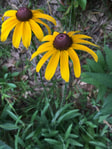
Golden-yellow flower heads measure 7–10 cm (3–4 in) across, with 20–30 ray florets around a darker central disk. They open on branching stems from midsummer into early fall, providing food for bees, bumblebees and butterflies for several weeks. 2 3
Useful taxonomy
For cup plant, the accepted POWO and WCVP name is Silphium perfoliatum L., in the family Asteraceae and tribe Heliantheae. Three infraspecific taxa are recorded: the typical form, variety connatum and a historical form now treated as a synonym. This limited synonymy causes little practical confusion for gardeners. 1
The principal infraspecific names are:
- Silphium perfoliatum var. perfoliatum, the widespread typical form;
- Silphium perfoliatum var. connatum (L.) Cronquist, with hairier stems, restricted to a few Mid-Atlantic states around the New River Valley;
- Silphium perfoliatum f. hornemannii (Schrad. ex DC.) Voss, a historical form now treated as a synonym.
Use Silphium perfoliatum as the reliable accepted name. Variety connatum concerns only a geographically limited population. 1
Habitat and range
Southeastern Canada, including Ontario and Quebec, marks the northern part of its native range, which continues through the central and eastern United States, from Iowa and Kansas to Georgia. NC State describes floodplains, streambanks, wet prairies and open woodland edges as its habitats. 1 3
European growers first valued cup plant as a nectar-rich garden perennial before adopting it as an energy crop. In Germany it occupies approximately 10,000 hectares (24,700 acres) as a perennial alternative to silage corn. A planting remains in place for several years, whereas conventional corn is sown annually. 8
French records describe naturalized populations in two departments, Aube and Haute-Saône, without inclusion on the EPPO invasive alien plant list. A recent study of seed dispersal by wind, water and rodents nevertheless supports monitoring near waterways, where high biomass production could help the plant expand locally. 6 9
Life cycle and reproduction
Cup plant germinates slowly and unevenly, with a natural germination rate of about 15–20%. Seedlings are raised in a nursery or after cold stratification. Without flowers in the first season, the young plant directs its energy toward deep rooting. 3
Established plants develop a deep taproot together with short rhizomes. Botanical garden clumps have been documented over several decades. Division is most successful on young plants and becomes risky after the first two years. 4
From midsummer into early fall, cup plant flowering depends entirely on pollinating insects: bees, bumblebees and butterflies fertilize the flower heads. Its seeds, flat, winged achenes, then disperse by wind, water and, to a lesser extent, rodents that carry them away. 4 9
Uses and risks
At the back of a naturalistic border or in a flowering meadow, cup plant provides a long flowering season and water-holding leaf cups that benefit pollinators and birds. The Royal Horticultural Society has given it an Award of Garden Merit for its performance in the British climate. 2
Central European agriculture uses cup plant on a larger scale, driven by the German bioenergy sector. A University of Bayreuth study shows that after five years of cultivation, cup plant equals or exceeds silage corn in root biomass while improving soil carbon storage, microbial activity and earthworm activity. 8
For cats, dogs and humans, no toxicity is documented; horse status remains uncertain because specific data are lacking. Historically, some Native American nations, including the Chippewa, used the root as a tonic, diaphoretic and diuretic for respiratory or joint complaints. These uses are documented history rather than common current practice. 7 4
Seed dispersal is the main concern. Because cup plant produces abundant biomass and spreads its achenes by several routes, remove faded flower heads before the seeds fully mature when growing it near a waterway or sensitive natural area. 9
Varieties, look-alikes and related plants
Selected horticultural cultivars are not normally offered for cup plant. Commercial seed almost always represents the typical species, with variety connatum sometimes available for specialist collections. Diversity comes mainly from wild populations and regional seed lots. 3
Other members of Silphium cause the most frequent identification problems:
- Silphium laciniatum, compass plant, has deeply divided leaves that never join around the stem;
- Silphium terebinthinaceum, prairie dock, has large basal leaves and stems almost without stem leaves;
- Silphium integrifolium has stalkless leaves that are not perfoliate.
Among these four species, the cup formed by fused leaves is the most reliable clue. Only Silphium perfoliatum has it among the species commonly encountered in gardens or along prairie margins. 7 3
Main sources
- Plants of the World Online / Kew, Silphium perfoliatum L.
- Royal Horticultural Society, Silphium perfoliatum - cup plant
- NC State Extension Gardener Plant Toolbox, Silphium perfoliatum
- Plants For A Future, Silphium perfoliatum
- INPN, Silphium perfoliatum L., 1759, CD_nom 123701
- Tela Botanica / eFlore BDTFX, Silphium perfoliatum
- Eloise Butler Wildflower Garden, Four Silphiums
- Universität Bayreuth, Cup plant outperforms silage maize as a sustainable bioenergy crop
- Ende, Hummel & Lauerer 2024, Dispersal and persistence of cup plant seeds, Plant Ecology and Evolution
Frequently asked questions
Why is Silphium perfoliatum called cup plant?
Opposite leaves join at their bases around the square stem, forming a small cup that holds rainwater. Birds and sometimes small insects use it as a source of water.
Is cup plant toxic to cats and dogs?
No toxicity is documented in cats, dogs or humans. Horse status remains uncertain because specific data are lacking, although no cases of illness are reported.
Why is cup plant grown as an energy crop in Germany?
A University of Bayreuth study shows that its root biomass equals or exceeds silage corn while improving nitrate retention and soil health. It is grown on approximately 10,000 hectares in Germany.
Is cup plant invasive in France?
It is not classified as invasive by EPPO and remains naturalized in only two French departments. Studies of seed dispersal by wind, water and rodents nevertheless support caution near waterways.
How do you distinguish Silphium perfoliatum from other Silphium species?
The most reliable feature is the cup formed by leaves joined around the stem. Frequent look-alikes Silphium laciniatum and Silphium terebinthinaceum lack this leaf fusion.
Why do my cup plant seeds germinate poorly?
Natural germination is around 15–20%, even in good conditions. Cold stratification or raising seedlings in a nursery substantially improves emergence before planting out.
Does cup plant have traditional uses?
Some Native American nations, including the Chippewa, used the root as a tonic, diaphoretic and diuretic for respiratory or joint complaints. These are historical uses rather than current routine medical practice.
Similar plants
If you are unsure about a plant’s toxicity, ask a botanist or veterinarian for advice.