
Jerusalem artichoke (Helianthus tuberosus, )
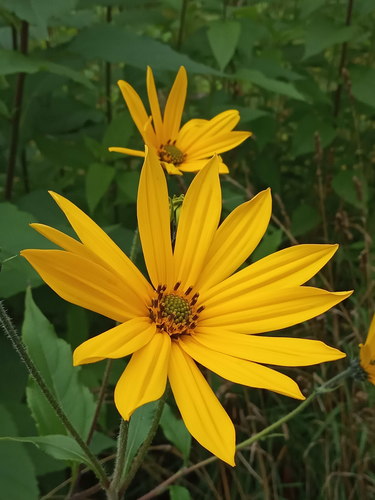
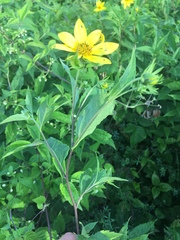
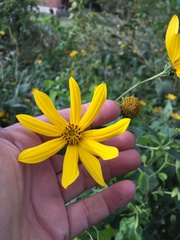
Jerusalem artichoke (Helianthus tuberosus L.) is a tall North American perennial in the daisy family, grown for edible, inulin-rich tubers. Its vigorous rhizomes regrow from overlooked fragments, making containment important. In France and other parts of Europe, naturalized colonies can become invasive, especially along rivers and on moist, disturbed ground.
Read moreJerusalem artichoke, Sunchoke, Sunroot and Earth apple
Place in full sun, with intense direct light all day long.



© photo
(c) Eduard Garin, some rights reserved (CC BY-NC), uploaded by Eduard Garin · cc-by-nc
Bill Michalek · cc0
iNaturalist User · cc-by
Taken Sep 2, 2021 by helles_Sternchen (cc-by-sa)
Taken Sep 8, 2020 by Larissa Paul (cc-by-sa)
Taken Oct 21, 2021 by Jacques Zuber (cc-by-sa)
Taken Sep 26, 2021 by bruno delag (cc-by-sa)
Taken Dec 19, 2019 by Porras Sanchez Antonio (cc-by-sa)
© copyright of the Board of Trustees of the Royal Botanic Gardens, Kew.


Global distribution
POWO/WCVP places the native range in North America, from central and eastern Canada into the United States. France is part of the introduced range. French botanical assessments and EPPO identify invasive behavior, especially in alluvial valleys; this regional status does not imply a universal planting ban.
- Native2
- Introduced4
- Invasive1
- Central and eastern Canada
- United States
- Belgium
- Switzerland
- Great Britain
- Japan
- Metropolitan France
Hexagons: regions where the plant occurs. Green dots: native range.1
Identity
Jerusalem artichoke is Helianthus tuberosus L., a tuberous perennial in the Asteraceae described by Linnaeus in 1753. POWO/WCVP accepts this name within Helianthus, the same genus as the annual sunflower. 1 2
Also called sunchoke, sunroot, or earth apple, this North American sunflower is neither a globe artichoke nor a potato. Its harvested organs are underground tubers borne on rhizomes. The familiar French names topinambour, hélianthe tubéreux, artichaut de Jérusalem, and patate de Virginie reflect its culinary and commercial history rather than a different botanical identity. 1 8
This productive vegetable also has a documented invasive history. French botanical organizations record naturalized, invasive populations in alluvial valleys, while EPPO includes the species on its invasive alien plant list for the European and Mediterranean region. Those regional assessments matter when choosing a planting site, even where growing the crop is familiar practice. 10 11
Recognition
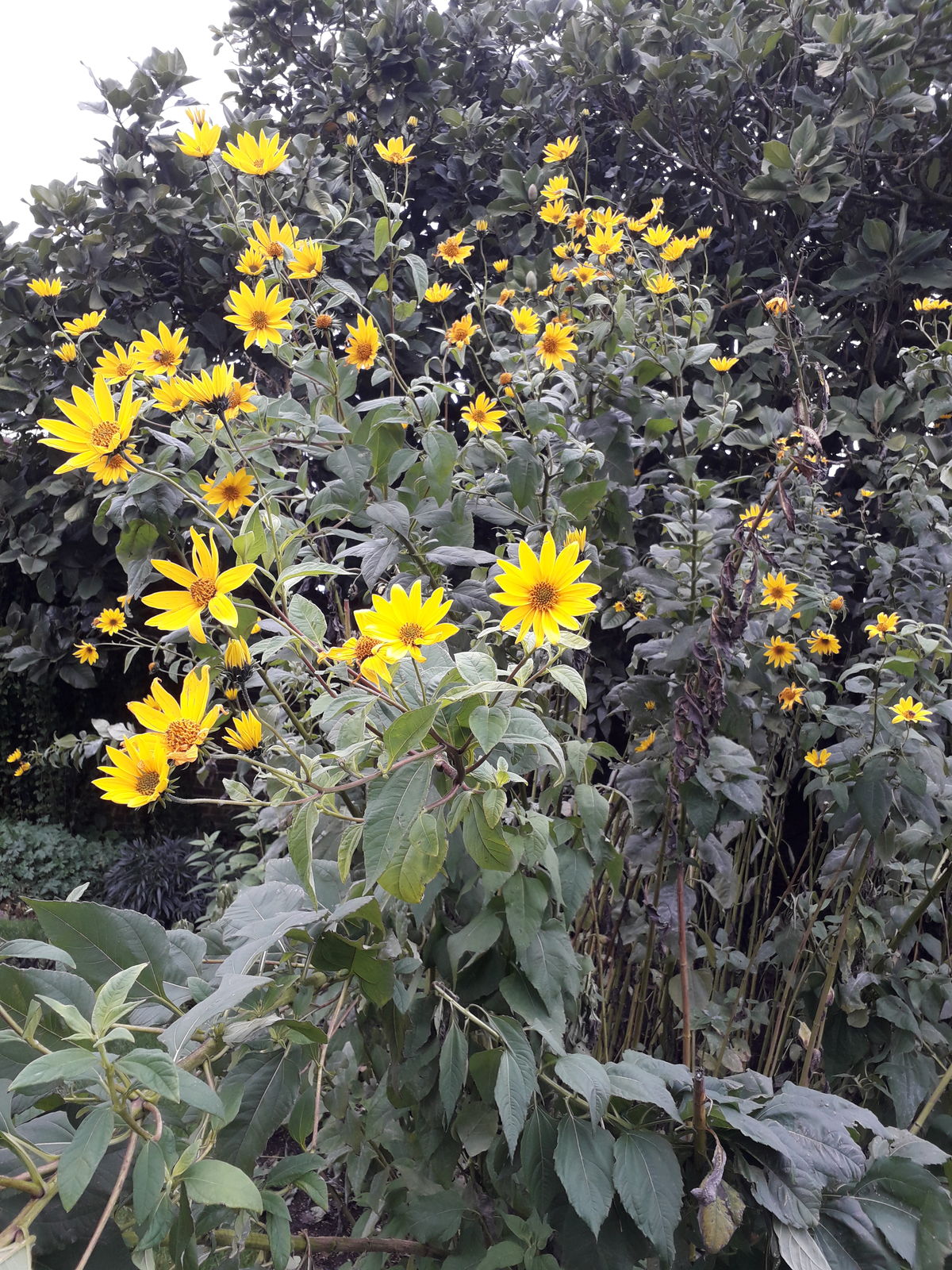
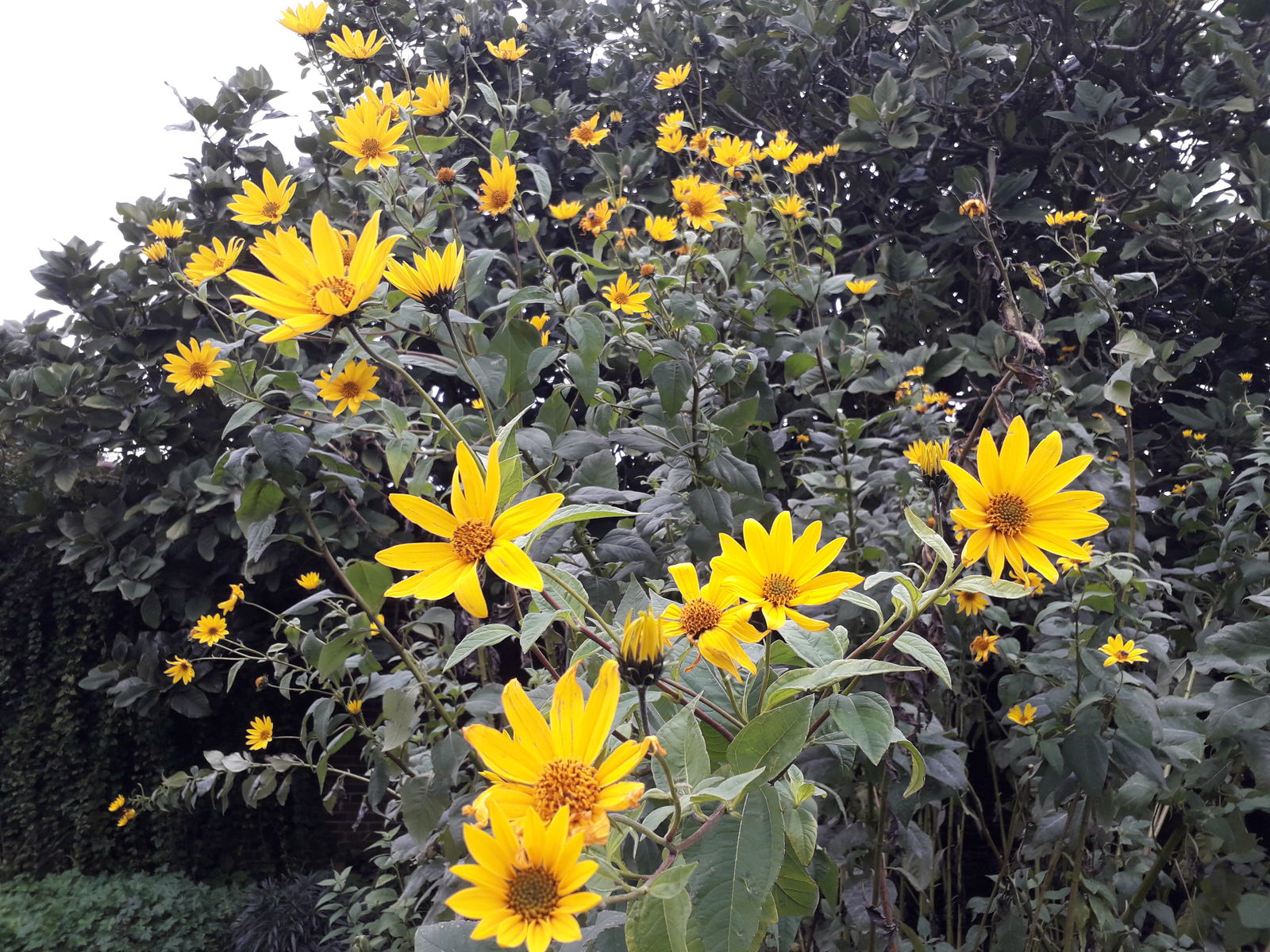
An upright, coarse-textured herb, Helianthus tuberosus can easily overtop a gardener. The FNA/WFO description gives 50–200 cm or more (about 20 in–6½ ft or more) for this rhizomatous perennial, which develops tubers late in the growing season. Garden plants in fertile soil commonly reach 1.5–3 m (5–10 ft). 4 3 5
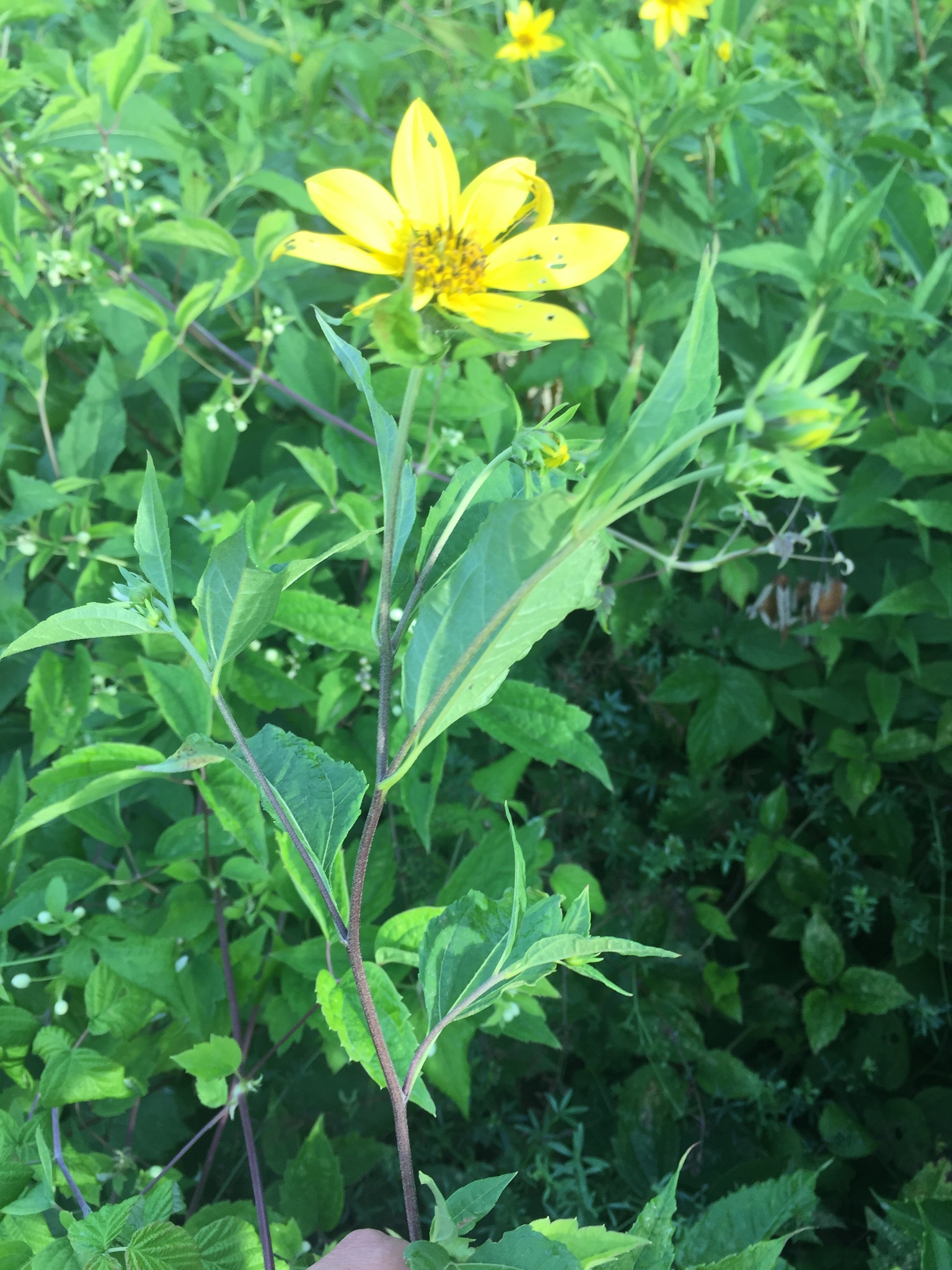
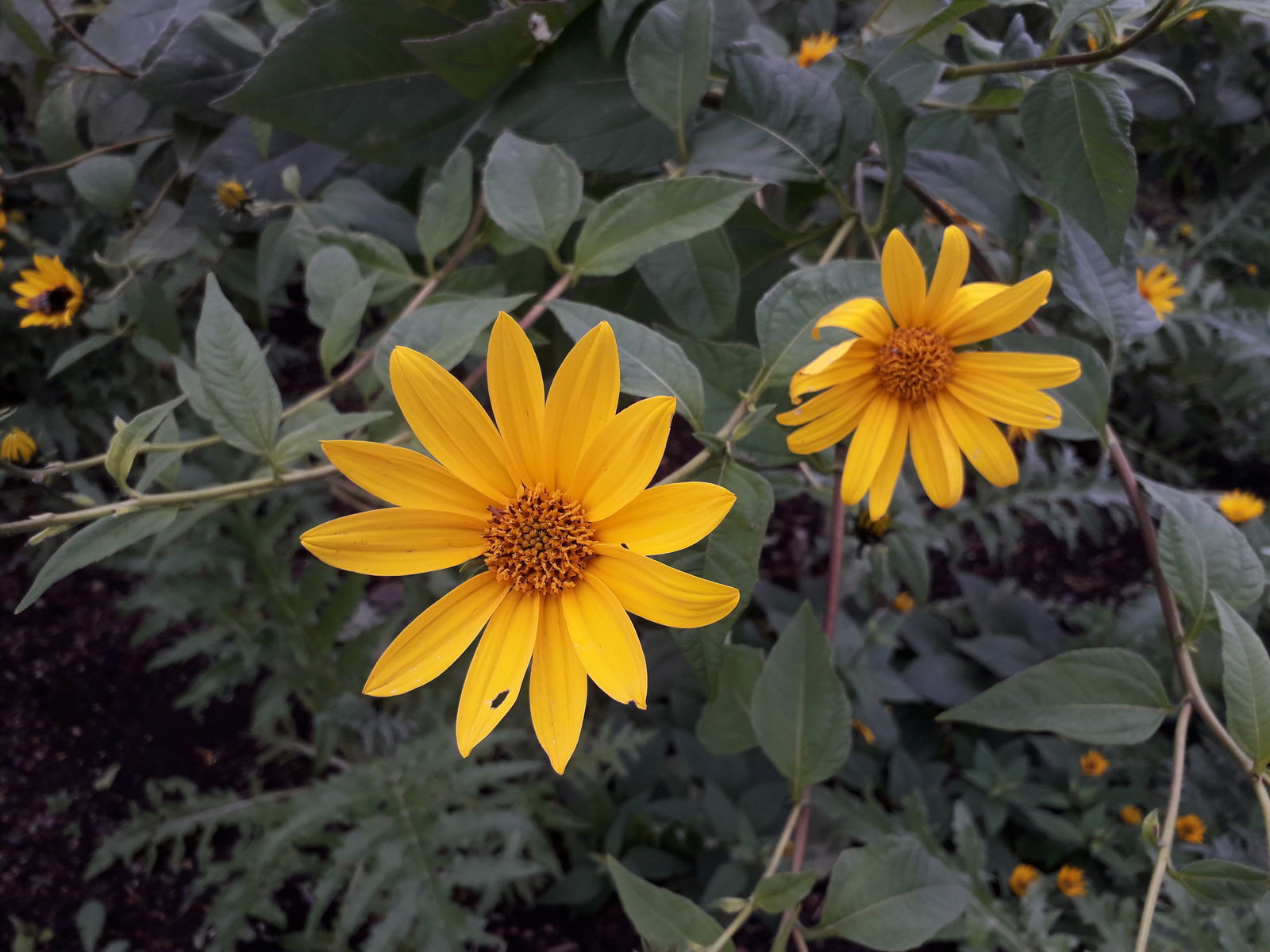
Simple, rough leaves range from oval to lance-shaped. Lower leaves are often opposite, with alternate leaves farther up the stem. Large blades may exceed 20 cm (8 in); their rough surfaces, the hairy stems, and the plant's height help distinguish it from a young annual sunflower or other tall members of the daisy family. 4 7
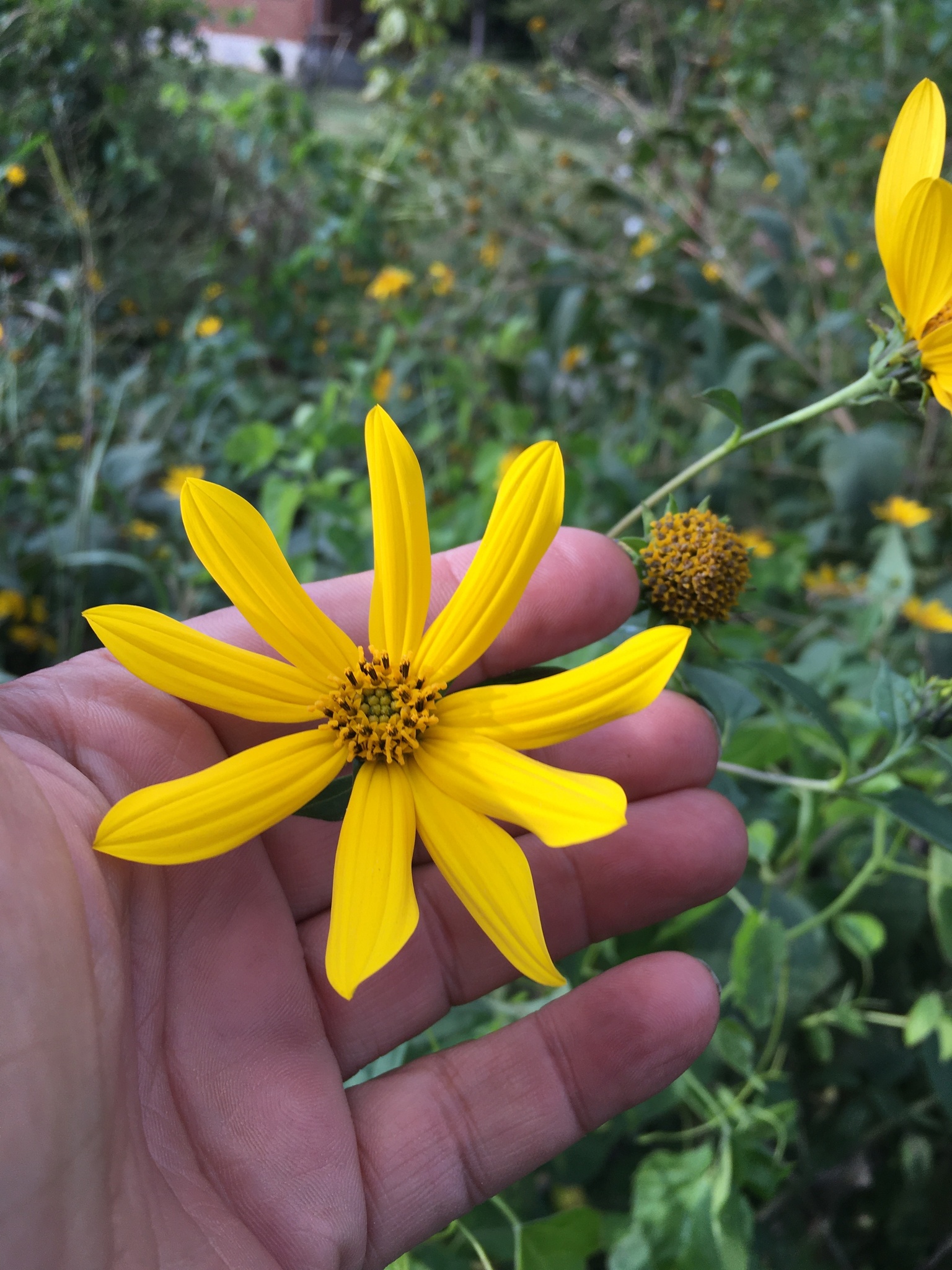
Yellow flowerheads resemble small sunflowers and generally appear in late summer or fall. NC State describes heads about 5–10 cm (2–4 in) across, with yellow rays surrounding a yellow disk. These flowers support pollinators, but identification for food also requires the tubers and the colony-forming growth habit. 7 6
Depending on the cultivated form, the tubers may be elongated, knobby, spindle-shaped, or egg-shaped, with white, cream, pink, or purple skin. They form at the ends of rhizomes late in the season. A tall yellow flower alone is insufficient for identification; the combination of rough stems, broad leaves, and rhizome-borne tubers is much more informative. 3 8
Useful taxonomy
The accepted name, Helianthus tuberosus L., provides a stable reference through a long history of botanical and horticultural names. POWO and GBIF associate numerous synonyms with this principal taxon; older names may therefore appear in catalogs or botanical literature without representing a different garden crop. 1 2
Historical and infraspecific names include:
- Helianthemum tuberosum Garsault (historical name)
- Helianthus esculentus Warsz. (historical name)
- Helianthus serotinus Tausch (historical name)
- Helianthus tomentosus Michx. (historical name)
- Helianthus tuberosus var. albus Cockerell (historical variety)
- Helianthus tuberosus var. fusiformis Cockerell (historical variety)
Confusion with Helianthus annuus is understandable because both bear yellow sunflower-type heads. Their life cycles offer a useful distinction: H. annuus is an annual grown from seed, whereas H. tuberosus is a tuberous perennial that returns from underground growth. 1 4
Habitat, distribution, and invasiveness
POWO places the native range from central and eastern Canada into the United States. Its introduced range includes metropolitan France, Corsica, Belgium, Great Britain, Switzerland, Italy, Spain, and parts of Asia and Oceania. A long cultivation history should not be confused with native status. 1
Open ground, moist soils, disturbed edges, and alluvial deposits suit the species in both native and naturalized settings. CBNFC-ORI records French populations on riverbanks, agricultural wasteland, embankments, and other disturbed sites, including major valleys such as the Rhine, Moselle, Rhône, Tarn, Lot, Allier, and Loire. 10
Vegetative spread is the main management concern. NC State notes that a small piece left in the soil can regrow; RHS likewise explains that deliberately or accidentally retained tubers sprout the following spring. In moist natural habitats, this persistence can produce dense, lasting colonies. 7 6 10
The EPPO invasive alien plant listing dates from 2004. Listing is not equivalent to a universal planting ban or inclusion on the European Union list, but it supports keeping the crop away from watercourses, ditches, wet wasteland, and natural areas. Local restrictions and invasive-plant guidance still need checking before planting. 11 2
Growth cycle and cultivation
Plant tubers in spring when the ground is workable. RHS recommends a depth of 10–15 cm (4–6 in) and spacing of about 30 cm (1 ft) in fertile, moisture-retentive but well-drained soil. A large, deep container offers an alternative where space is limited and also helps contain the crop's spreading underground growth. 6
Summer growth is vigorous. Tall stems can screen a vegetable plot or provide a temporary windbreak, but exposed plants may lean or fall. RHS advises drawing soil around the base when stems reach about 30 cm (1 ft), supporting wind-exposed rows, or shortening tall stems to around 1.5 m (5 ft) in late summer. Cutting lower may reduce the tuber crop. 6
Keep the soil moist while tubers swell, without allowing it to become waterlogged. During dry summer weather, 10–25 mm of water per week (roughly 0.4–1 in) is a working garden range; adjust irrigation for rainfall, soil, and evaporation rather than treating it as a fixed dose. Drought can leave smaller, knobbier tubers, while saturated ground encourages rotting. 6 5
Harvest from late fall through winter as needed, whenever the soil can be worked. Lifted tubers store poorly, so leaving them in the ground is convenient for cooking but makes removal of an unwanted crop harder. To clear a planting, dig thoroughly and check for new shoots during the next growing season. Seasonal timing follows the local growing cycle in either hemisphere. 6 8
Uses, edibility, and precautions
The tubers are eaten raw or cooked and have a flavor often compared with artichoke hearts. NC State describes them as edible and rich in inulin; POWO/Kew also records their use as a commercial inulin source and carbohydrate food. Their food-storage chemistry differs from that of potatoes. 7 1
Inulin and oligofructose are fermentable fibers rather than potato-like starch. The FDA dossier cited for Jerusalem artichoke reports approximately 16–20 g of inulin per 100 g of raw tuber, roughly the same amount in a 3½ oz portion. A nutritious edible crop can still cause digestive discomfort, especially when eaten in a large serving. 12
Fermentation helps explain gas and bloating in some people. A study of Jerusalem artichoke and chicory inulin incorporated into food bars recorded increased reported flatulence during the intervention, with discomfort generally mild to moderate. Introduce the vegetable gradually, particularly if fermentable fibers or FODMAPs cause symptoms. The trial concerned prepared foods containing inulin, not unrestricted consumption of raw tubers. 13
Food preparation also matters: identify the tubers correctly, discard moldy produce, and begin with modest portions. Human use of the tubers does not establish a feeding recommendation for pets or horses. Their familiar place in the vegetable garden should not be taken as a reason to offer animals large quantities or seasoned kitchen scraps. 7 12
Varieties, lookalikes, and management
Commercial variety names mainly describe tuber shape, skin color, or plant height. RHS lists 'Fuseau', with larger, smoother tubers, and 'Dwarf Sunray', a shorter choice for exposed sites. SNHF also names 'Fuseau rose', 'Violet de Rennes', 'Commun blanc', 'Commun rouge', and 'Rouge limousin' among familiar French forms. 6 8
Jerusalem artichokes and potatoes are not interchangeable crops. Their stored carbohydrates, keeping qualities, and propagation differ. Jerusalem artichoke does not share the solanine problem of green potato tubers, but its hardiness and persistent underground growth create a different challenge: a planting can be much harder to remove than to establish. 12 6
Botanical lookalikes include other perennial Helianthus species as well as the annual sunflower. Before collecting tubers outside a known planting, examine leaves, stems, flowerheads, underground organs, and habitat together. A local flora or a botanist can help confirm an uncertain identification; flower color alone is inadequate. 4 3
Plant only where the crop can be harvested and contained. Avoid moving soil carrying rhizome fragments or dumping tubers into an open compost heap. Keep plantings away from riverbanks and remove young escapes before they rebuild underground reserves. These measures address the same vigorous regrowth that makes Jerusalem artichoke so dependable in cultivation. 7 10
Main sources
- Plants of the World Online / Kew, Helianthus tuberosus L.
- GBIF Backbone Taxonomy, Helianthus tuberosus L.
- World Flora Online, Helianthus tuberosus L.
- Flora of North America, Helianthus tuberosus
- Royal Horticultural Society, Helianthus tuberosus
- Royal Horticultural Society, How to grow Jerusalem artichokes
- NC State Extension Gardener Plant Toolbox, Helianthus tuberosus
- Société Nationale d'Horticulture de France, Jerusalem artichoke
- INPN, Helianthus tuberosus L., 1753, CD_nom 101055
- CBNFC-ORI, Helianthus tuberosus L., 1753
- EPPO, List of invasive alien plants
- US FDA GRAS Notice 849, Inulin from Jerusalem Artichoke
- Kleessen et al. 2007, Jerusalem artichoke and chicory inulin in bakery products
Frequently asked questions
Is Jerusalem artichoke invasive in France?
Yes. CBNFC-ORI classifies it as a major invasive alien plant within its territory, and EPPO includes it on the invasive alien plant list for the European and Mediterranean region. Its status and any planting restrictions must be checked locally.
Can Jerusalem artichokes be eaten raw?
NC State describes the tubers as edible raw or cooked. Start with modest portions, because their fermentable inulin can cause bloating or gas in some people.
Why do Jerusalem artichokes cause gas?
The tubers store mainly inulin-type fructans rather than starch. Intestinal microbes ferment these fibers, which can produce gas in some people.
How can I keep Jerusalem artichokes from taking over the garden?
Grow them in a large container or a separate, contained area. In open ground, harvest thoroughly, avoid moving soil carrying fragments, and check for new shoots the following spring.
Is Jerusalem artichoke a potato?
No. It belongs to Helianthus in the Asteraceae and is related to sunflowers. Potatoes belong to Solanum in the Solanaceae.
When should I harvest the tubers?
Begin in late fall after the stems decline, then lift tubers as needed through winter while the soil remains workable. Follow the local growing season rather than fixed months.
Similar plants
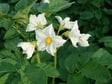
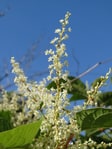
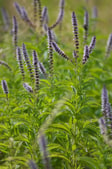
If you are unsure about a plant’s toxicity, ask a botanist or veterinarian for advice.