
Pepino (Solanum muricatum, )
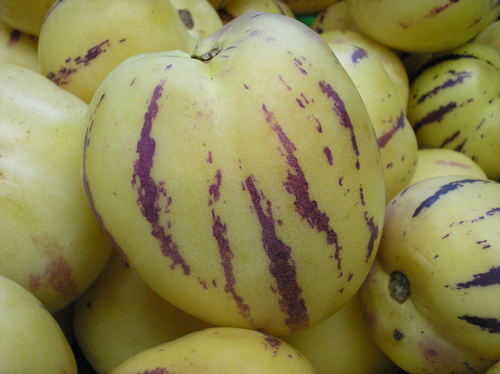

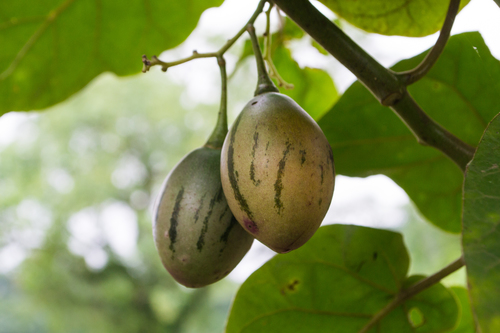
Pepino (Solanum muricatum Aiton, 1789) is a subshrub in the Solanaceae family, originating in the Andes from southern Colombia to Peru and grown for its sweet, cream-skinned fruit with purple stripes. No wild population has ever been located; it exists only in cultivation, where it is grown like a staked tomato plant.
Read morePepino, Pepino dulce, Sweet cucumber and Melon pear
Place in full sun, with intense direct light all day long.
Full sun; does not tolerate dense shade




© photo
(c) Carlos Vieira, some rights reserved (CC BY-SA) · cc-by-sa
Wikimedia Commons · CC BY-SA or Public Domain
Wikipedia · CC BY-SA
Taken Oct 16, 2022 by Espinoza-Zevallos Marco Elías (cc-by-sa)
Taken Dec 15, 2021 by gioacchino trapani (cc-by-sa)
© copyright of the Board of Trustees of the Royal Botanic Gardens, Kew.




Global distribution
The presumed native range of Solanum muricatum lies in the Andes, from southern Colombia to Peru according to Plants of the World Online, but no wild population has ever been formally located. It exists only in cultivation, now extending across many temperate and subtropical regions, from Chile to New Zealand.
- Native3
- Introduced2
- Colombia
- Ecuador
- Peru
- New Zealand
- Western Australia
Hexagons: regions where the plant occurs. Green dots: native range.1
Identity
Pepino, also called melon pear (Solanum muricatum Aiton, 1789), is a subshrub in the genus Solanum and the nightshade family, Solanaceae. The International Plant Names Index records its publication in the first volume of William Aiton's Hortus Kewensis, in 1789. The scientific name identifies the crop independently of the fruit names used in different languages. 2 1
In Spanish, pepino means cucumber, a name chosen by colonists because some fruits resemble cucumbers in shape despite their very different flavor. The French name poire-melon, literally pear-melon, instead describes the texture and taste of the ripe fruit, between a soft pear and a melon. 9 5
Recognition
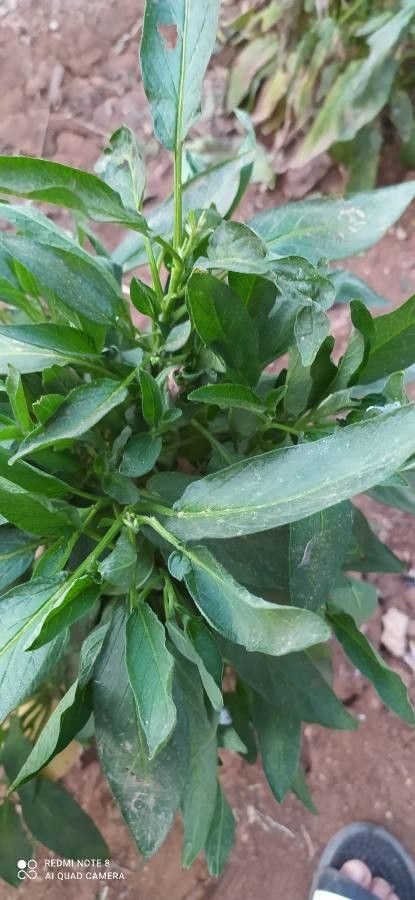
A branching bush of 50 cm–2 m (1.5–6.5 ft), Solanum muricatum spreads 50 cm–1.2 m (1.5–4 ft) wide. Its downy, light green foliage recalls that of the potato, another member of the same genus. The plant's general appearance therefore gives little hint of the sweet fruit it will eventually bear. 3 6
Small purple to bluish flowers with yellow centers have five petals and grow in clusters along the stems. They are self-fertile, and the plant can also set fruit through parthenocarpy, without a visiting insect pollinator. Pepino can therefore fruit in a closed greenhouse, although bees and bumblebees improve yields. 3 6
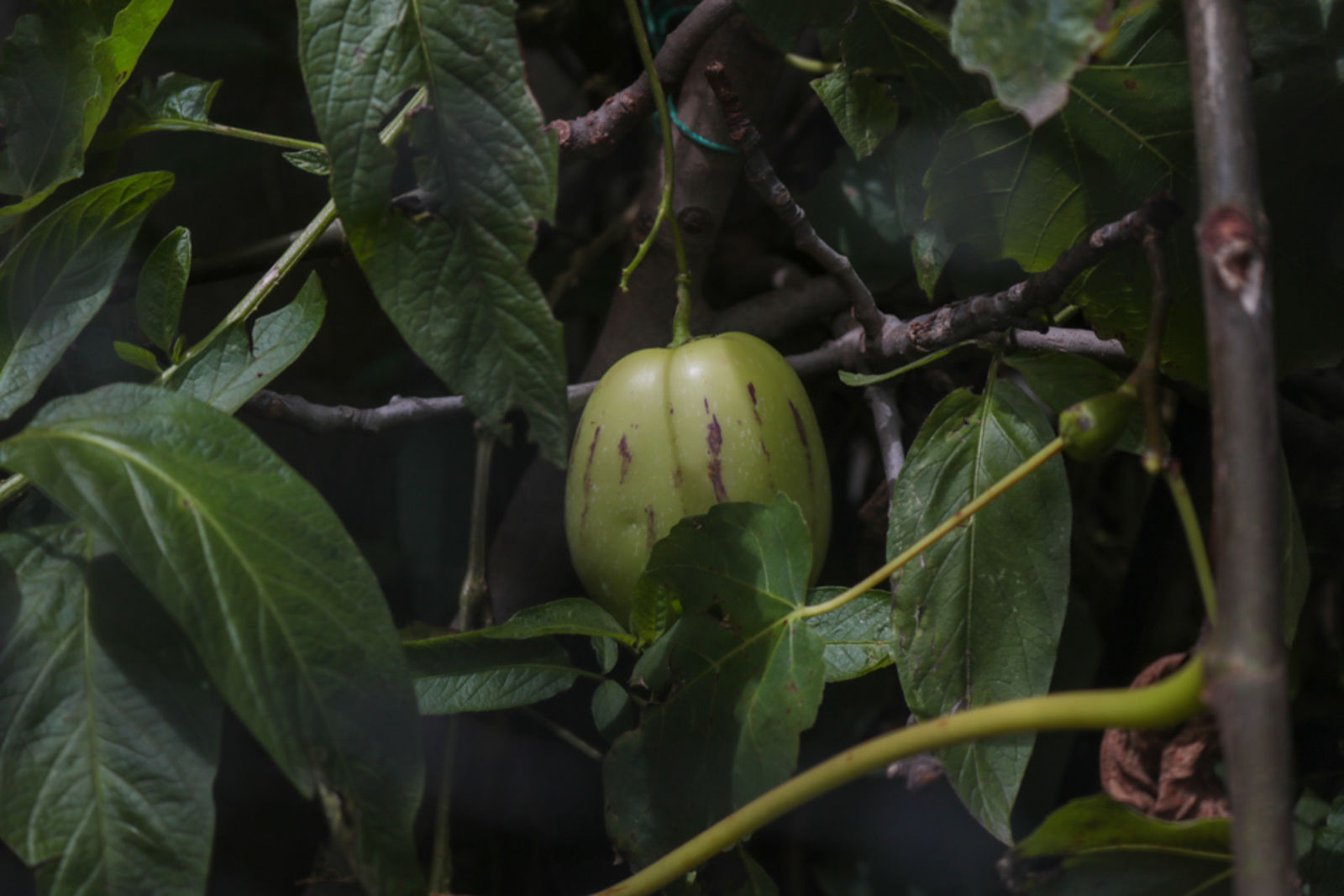
The egg-shaped fruit has cream or pale yellow skin striped purple and weighs from a few tens of grams to almost 1 kg (2.2 lb), depending on the cultivar. Its juicy yellow to orange flesh combines melon and cucumber aromas, with little acidity when fully ripe. 9 10
Useful taxonomy
Several thousand species belong to Solanum, including tomato and eggplant. Solanum muricatum belongs to the subgenus historically called Potatoe, alongside potato. This botanical relationship helps explain the similar alkaloid toxicity of foliage in these related crops. 5
Older botanical and horticultural literature used several names before Solanum muricatum became established as the accepted name:
- Solanum guatemalense Anon., an earlier name;
- Solanum variegatum Ruiz & Pav., a historical synonym;
- Solanum wallisii Carrière, another historical name;
- Solanum pedunculatum Willd., an older botanical name;
- Solanum melaniferum Moric. ex Dunal, a synonym.
Plants of the World Online accepts Solanum muricatum Aiton, with these synonyms assigned to the same species rather than treated as separate crops. 1
Origin and range
An Andean origin is presumed for Solanum muricatum, extending from southern Colombia to Peru according to Plants of the World Online. 1 Purdue New Crop Proceedings narrows the center of origin to southern Colombia and northern Ecuador. 5
Unusually for a cultivated fruit, no wild population has ever been formally located. Three related Andean species, Solanum caripense, Solanum tabanoense and Solanum basendopogon, have been proposed as possible progenitors. This leaves open whether the crop arose through very ancient domestication or later hybridization: the absence of confirmed wild plants does not settle that question. 5 7
Andean peoples cultivated pepino before European arrival and called it q'achan in Quechua. It attracted little interest from Spanish conquistadors compared with tomato and potato. Samuel Wallis introduced it to Europe in 1875, and cultivation in France began in Nice in 1877. 9
Life cycle and reproduction
Naturally perennial, pepino is often grown as an annual in temperate climates because it cannot withstand prolonged frost and dies below about −2.5 °C (28 °F). The first fruit appears 4–6 months after planting, so a plant needs a sufficiently long growing season to produce a crop. 6 4
Fruit set depends closely on temperature. It stops when nights fall below 10 °C (50 °F) and declines when daytime temperatures exceed 30 °C (86 °F). These limits explain failed fruiting both during heat waves and toward the end of a cool growing season. 7 6
Individual fruit needs 30–80 days after pollination to ripen. Harvest takes place just before full ripeness, as the skin becomes paler and its purple stripes stand out more clearly. Picked at that stage, fruit can keep for several weeks at room temperature. 7
Uses and risks
Fresh fruit is pepino's principal food use. It is peeled and eaten raw as a dessert or pressed for juice, with a flavor recalling melon and cucumber. High in water and low in calories, the fruit supplies vitamin C, potassium and polyphenols such as quercetin. 10
As in most nightshades, the foliage and green parts contain solanine-type alkaloids, which may irritate if ingested. The ASPCA lists the nightshade group as toxic to dogs, cats and horses, with clinical signs ranging from excessive salivation to digestive upset. Ripe pepino fruit, however, has no documented risk associated with it. This distinction between foliage and ripe fruit matters when assessing the plant's use as food. 8 10
In cultivation, aphids, whiteflies, spider mites and mealybugs are attracted to the plant and can generally be managed with treatment. The more serious threat is root rot in waterlogged soil, followed by late blight when foliage is kept too enclosed and poorly ventilated. 3
Varieties, look-alikes and related plants
Fruit shape and color distinguish several cultivars. El Camino has large oval fruit and is widely grown in Chile; Pepino Gold has bright yellow skin and good yields; Sweet Long has elongated fruit strongly striped purple. Ryburn is listed by the Royal Horticultural Society for greenhouse cultivation. 3
Before fruiting, a young pepino can resemble a tomato or eggplant seedling, both vegetable nightshades with a similar habit and foliage. Flowers provide the clearest distinction: pepino has purple to bluish flowers with yellow centers in clusters, while tomato flowers are yellow and occur singly or in small cymes. 5
The French name poire-melon can suggest either a true melon or a pear. Pepino belongs to neither the Cucurbitaceae nor the Rosaceae: it is a member of Solanaceae, the same family as tomato, eggplant and potato. 9
Main sources
- Plants of the World Online / Kew, Solanum muricatum Aiton
- International Plant Names Index, Solanum muricatum Aiton
- Royal Horticultural Society, Solanum muricatum (F) - pepino
- Plants For A Future, Solanum muricatum
- Purdue New Crop Proceedings, The Pepino (Solanum muricatum)
- UC Master Gardeners / UC ANR, Pepino Dulce
- Gardening Know How, Growing Pepino Plants
- ASPCA, Nightshade toxicity entry
- French Wikipedia, Pepino (Solanum muricatum)
- PMC, A Review of the Pharmacological Effects of Solanum muricatum Fruit (Pepino Melon)
Frequently asked questions
Does pepino grow in the wild?
No wild population has ever been formally located. The species is presumed to originate in the Andes, from southern Colombia to Peru, but today it exists only in cultivation.
Is pepino toxic?
Like most nightshades, its foliage contains potentially irritating alkaloids and is not intended for eating. Ripe fruit, however, has no known risk and is eaten raw.
Why is my pepino not producing fruit?
Fruit set stops below 10 °C (50 °F) at night and declines above 30 °C (86 °F) during the day. Staking to improve airflow through the foliage and a consistent full-sun position support fruiting.
How can I tell when a pepino is ripe?
The skin becomes paler and the purple stripes more distinct. Harvest just before full maturity, 30–80 days after pollination, for better storage.
Is pepino a type of melon?
No. Despite the name melon pear, it belongs to the Solanaceae family, like tomatoes and eggplants, rather than the Cucurbitaceae family of true melons.
Where does the French name morelle de Wallis come from?
It honors Samuel Wallis, who introduced the plant to Europe in 1875; French cultivation began in Nice in 1877.
Can pepino grow in a temperate climate?
Yes. Grow it like a staked tomato, in full sun and rich soil with regular watering. Protect it from frost or keep cuttings under cover for winter.
Similar plants
If you are unsure about a plant’s toxicity, ask a botanist or veterinarian for advice.